Wall Street Shorts ETH: Vitalik Knew and Front-Ran, Tom Lee Still Deluded

marsbitPublicado em 2026-03-07Última atualização em 2026-03-07

Resumo

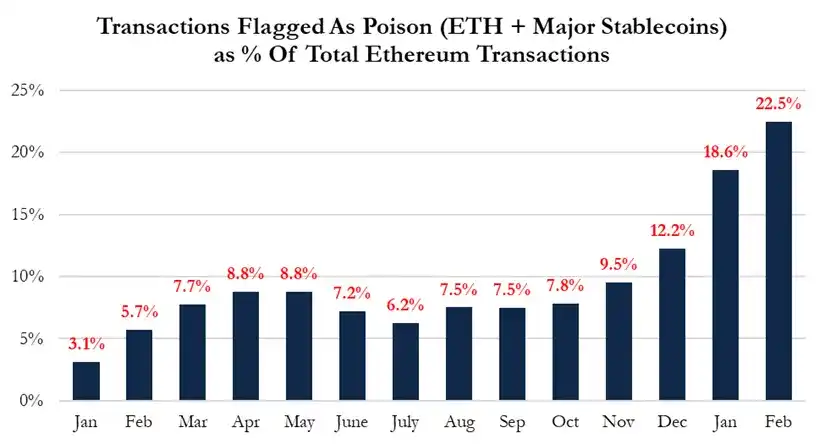
Culper Research, a Wall Street short-selling firm, has announced a short position on ETH and related securities, including Bitmine (BMNR). The firm argues that Ethereum's token economic model was broken following the Fusaka upgrade in December 2025. They claim that Vitalik Buterin and developers miscalculated Layer 1 demand elasticity using outdated models, leading to a 90% drop in gas fees instead of the predicted 10-30%. This has allegedly enabled a surge in low-value on-chain activity, such as address poisoning and dusting attacks, which now account for 22.5% of all Ethereum transactions. Culper asserts that Vitalik is aware of these issues and is selling his ETH, while prominent bull Tom Lee continues to incorrectly attribute the network's growth to genuine adoption. The report also highlights a decline in validator earnings, a loss of developer talent to Solana, and shrinking market share.

Source:Culper Research

Compiled by: Azuma, Odaily Planet Daily

Editor's Note: On March 6th, Wall Street short-selling firm Culper Research suddenly published an article announcing it is shorting ETH and related securities like BMNR. Culper Research's logic is that Vitalik and other developers miscalculated Ethereum's demand elasticity before the Fusaka upgrade, leading to the upgrade damaging ETH's token economic model. Culper Research also mentioned that Vitalik is well aware of this and is actively front-running with actions, while the deluded Tom Lee is heading towards a dead end.

In response to the firm's massive shorting, Vitalik himself and Tom Lee have not yet responded, but Vitalik's father, Dmitry Buterin (dima.eth), responded by saying: 'When you see the phrase "Vitalik knows this and is selling," you don't need to read further. They are clowns craving attention, not researchers.'

Below is the original content from Culper Research, compiled by Odaily Planet Daily. Compiling this article does not mean we agree with Culper Research's views, but is only to present the perspective and market agitation from some Wall Street institutions regarding ETH.

Latest disclosure: We are shorting ETH and ETH-related stocks, including Bitmine (BMNR).

We believe that after the Fusaka upgrade in December 2025, ETH's token economic model has been broken. Vitalik knows it and is selling; while ETH's staunchest bull, Tom Lee, continues to add ineffective investments. ETH will continue to fall.

Tom Lee's Bitmine has been defending ETH, claiming that "ETH is not in a death spiral because utility is increasing." He cited the surge in active addresses and transaction numbers on Ethereum after the Fusaka upgrade as evidence of so-called "improving fundamentals" and institutional adoption, but he is completely wrong.
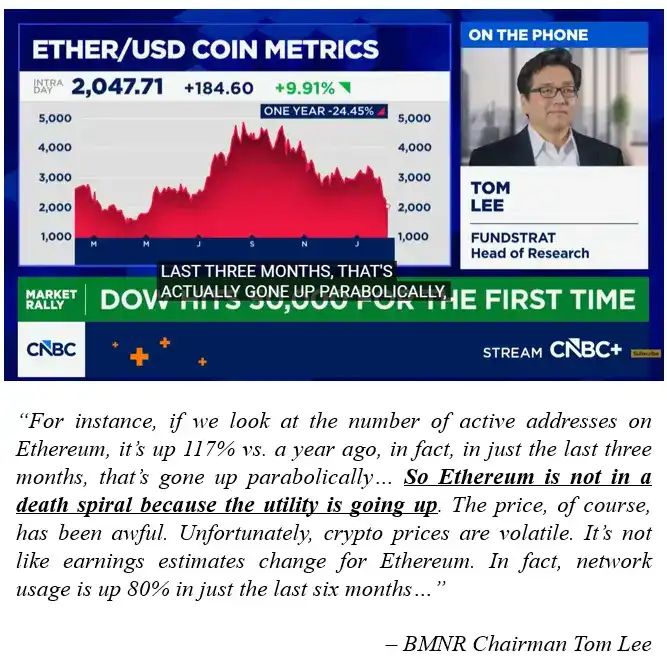
By Tom Lee's own logic, if on-chain activity on Ethereum does not reflect real usage growth and fundamental improvement, then ETH is indeed in a death spiral.

And our research shows that this is exactly what is happening.

Our comprehensive analysis of on-chain data from January 2025 to February 2026 shows that what Lee calls "activity growth from institutional adoption" can actually be explained by a large number of low-value address poisoning and wallet dusting activities. These activities were triggered by the excess block space after the Fusaka upgrade.
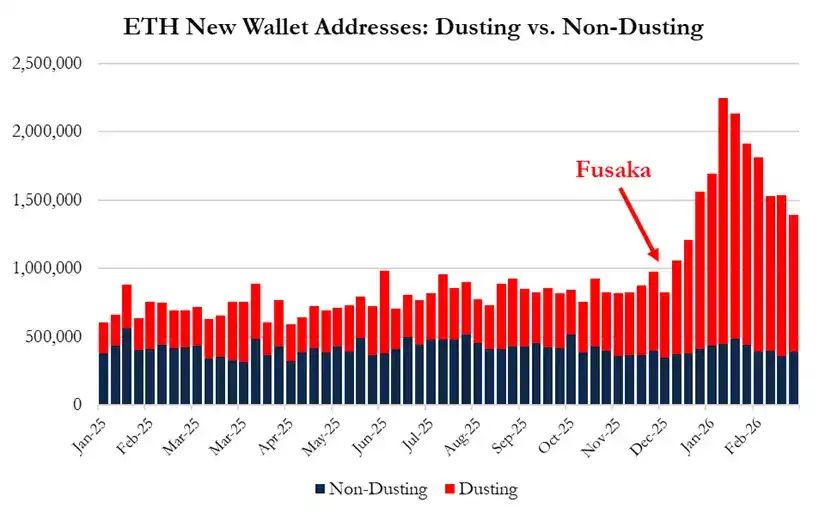
After the Fusaka upgrade:

  • 95% of new wallet growth came from newly created dust addresses;
  • Address poisoning attacks increased by more than 3 times;
  • Poisoning behavior explains over 50% of Ethereum's transaction growth;
  • Poisoning transactions now account for 22.5% of all Ethereum transactions;
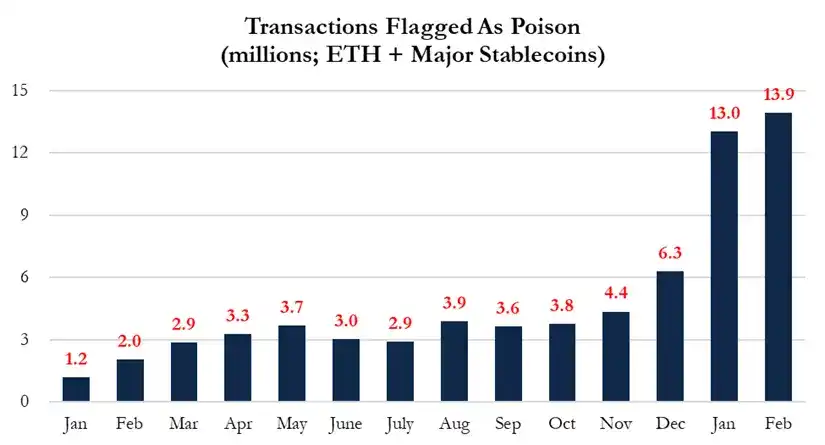
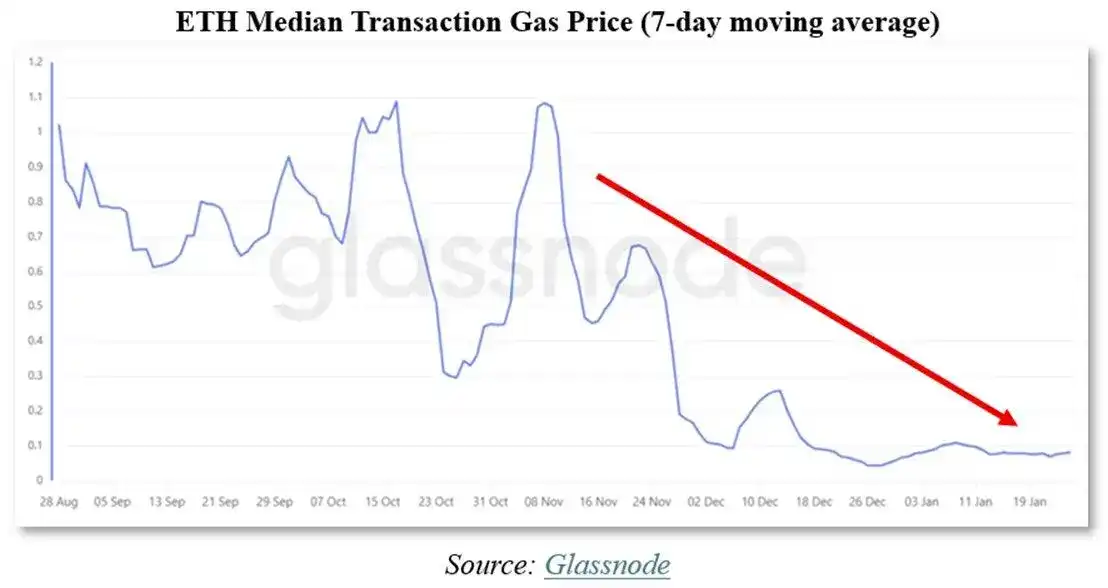
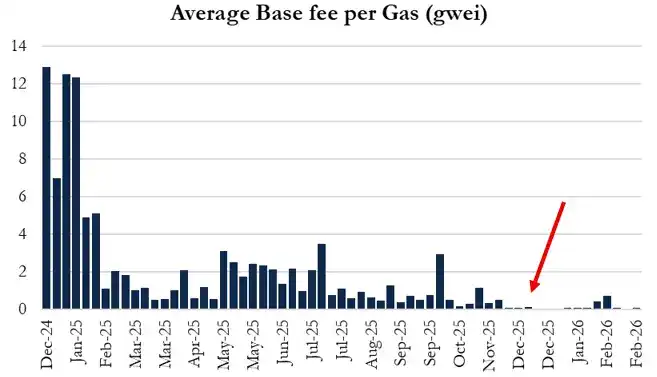
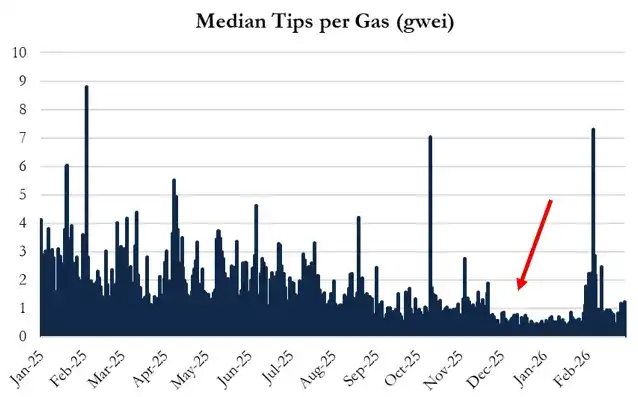
The Fusaka upgrade increased the gas limit from 45M to 60M, aiming to expand Ethereum Layer1 capacity. Vitalik and the protocol team previously预计 gas fees would drop by 10%–30%, but the reality is that gas fees dropped by about 90%.

极速飞艇

Vitalik and the validators made a serious miscalculation regarding Layer1 demand elasticity. They used outdated mathematical models (based on assumptions from before EIP-1559 and before the emergence of Layer2), thereby overestimating Layer1 demand by 3 to 9 times. This is also why we believe Vitalik is selling large amounts of ETH. On January 30th, Vitalik事先 announced he would sell 16,384 ETH to fund the Ethereum Foundation's "austerity period," but since then, he has sold over 19,300 ETH and is still selling.

Vitalik understands something Tom Lee does not — ETH's token economic model has been broken.

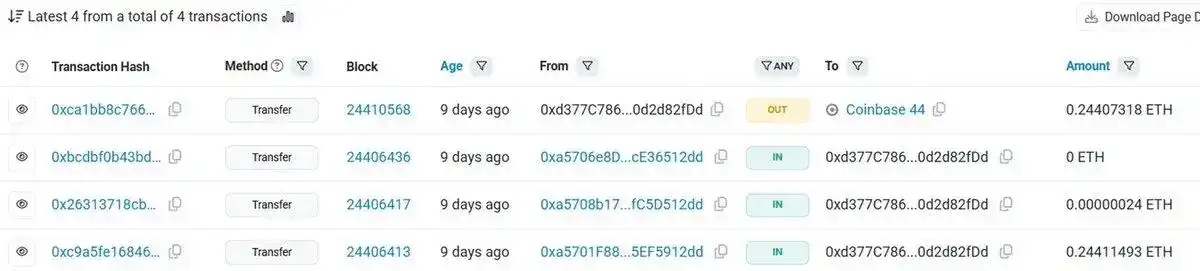
We personally recorded address poisoning on the Ethereum network. We created two new addresses and transferred between them. Within 5 minutes, we were subjected to an address poisoning attack. We encourage readers to verify this phenomenon themselves. Currently, the rate of loss due to poisoning attacks is more than 8 times higher than before the Fusaka upgrade.
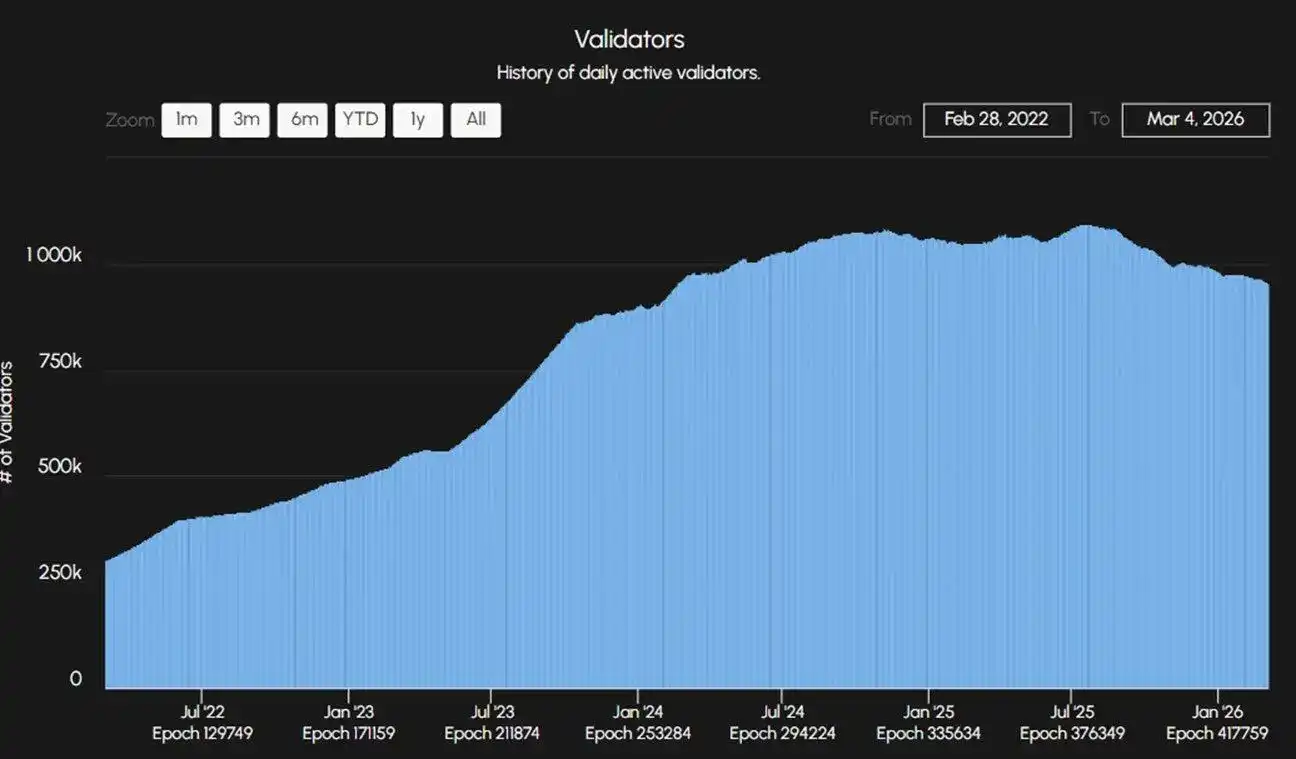
Furthermore, the increase in the gas limit has hit Ethereum's validators群体, whose tip income per unit of gas has now decreased by 40%–50%. Falling yields will weaken staking demand and high-value transaction activity, further undermining institutional adoption. This flywheel has now started to reverse.
Meanwhile, Ethereum continues to lose market share to Solana and its own Layer2 networks.

  • Solana developer count grew by 29% in 2025;
  • Ethereum developer growth was only 6%;
  • Talent is leaving the Ethereum ecosystem;
  • Institutions like Visa and Citigroup have chosen Solana for DeFi applications;
  • Solana DEX trading volume is already more than 2 times that of Ethereum.

During the dot-com bubble era, Netscape and Nokia dominated the market for over 10 years, but the real winners were Google and Apple. We believe Ethereum's situation is similar — we think Ethereum's token economic model has collapsed, Tom Lee is trapped in his own position, and the price of ETH will continue to fall.


Perguntas relacionadas

QWhat is the main argument presented by Culper Research for shorting ETH?

ACulper Research argues that the Fusaka upgrade in December 2025 broke Ethereum's token economic model. They claim the upgrade created a massive oversupply of block space, leading to a 90% drop in gas prices. This, in turn, has incentivized a surge in low-value, spam-like activity such as address poisoning and dusting attacks, which artificially inflate on-chain metrics. They conclude that the fundamental value of ETH is deteriorating, leading to their short position.

QAccording to the report, what specific on-chain activity does Culper Research claim is responsible for the perceived growth in Ethereum transactions?

ACulper Research claims that a significant portion of the post-Fusaka transaction growth is not genuine organic activity but is instead driven by malicious or spam-like behavior. They specifically cite address poisoning and wallet dusting attacks, which they say account for over 50% of the transaction growth and now represent 22.5% of all Ethereum transactions.

QWhat does the article claim about Vitalik Buterin's actions and his awareness of the situation?

AThe article claims that Vitalik Buterin is aware that the token economic model is broken and is 'front-running' the market by selling his ETH holdings. It states that after announcing a sale of 16,384 ETH to fund the Ethereum Foundation, he has actually sold over 19,300 ETH and continues to sell.

QHow does Culper Research counter Tom Lee's bullish argument about Ethereum's fundamentals?

ACulper Research counters Tom Lee's argument by asserting that the increased on-chain activity he points to as evidence of improved fundamentals and adoption is largely artificial. They argue that the data shows this growth is primarily from spam attacks (address poisoning and dusting) rather than legitimate use cases or institutional adoption, meaning the network's health is not actually improving.

QWhat negative consequences does the report attribute to the increased gas limit from the Fusaka upgrade?

AThe report attributes several negative consequences to the increased gas limit: a dramatic 90% drop in gas fees (far more than the predicted 10-30%), a severe reduction in validator tip income (down 40-50%), which disincentivizes staking, and the enabling of a massive increase in spam attacks that clog the network and distort metrics.

Leituras Relacionadas

From South Korea to the United States: Blue-Collar Jobs Are Becoming Increasingly Popular, Thanks to AI

AI is reshaping the labor market's value proposition. The traditional four-year college degree is losing its appeal as a guaranteed career path, while skilled blue-collar trades like electricians, welders, and plumbers are experiencing historic demand and wage premiums. This shift is driven by dual pressures: AI's displacement of certain white-collar roles and a booming need for physical infrastructure and data center construction. Data confirms the trend. In the U.S., vocational school revenue surged, and a significant portion of recent layoffs are AI-related. Surveys show a majority of Gen Z adults plan to pursue blue-collar work, citing better job security against AI automation. Vocational education interest has exploded recently. Experts cite a psychological shift as younger generations seek tangible, AI-resistant careers and avoid high student debt. In many cases, salaries for skilled trades now match or exceed those requiring a bachelor's degree. In South Korea, semiconductor vocational high schools boast near-total employment, with graduates securing high-paying roles at companies like Samsung. The shortage is structural, exacerbated by a retiring baby boomer workforce and massive infrastructure projects. Companies like JPMorgan Chase, Meta, and Lowe's are investing heavily in training programs. However, overcoming historical stigma and a "perception gap" around trade careers remains a key challenge to closing the talent gap.

marsbitHá 9m

From South Korea to the United States: Blue-Collar Jobs Are Becoming Increasingly Popular, Thanks to AI

marsbitHá 9m

Qualcomm: AI Hype Subsides, When Will Smartphones Emerge from the Gloom?

Qualcomm reported its Q3 FY2026 results (ending June 2026), with revenue of $9.95B, down 4% YoY but above expectations. Gross margin declined to 53.1%, pressured by rising costs across manufacturing and memory. Key business segments showed mixed performance: Handset revenue fell 19.6% YoY to $5.09B, dragged by an 11% decline in non-Apple Android shipments and weaker high-end mix. Conversely, Automotive revenue surged 61% to $1.59B, and IoT grew 9% to $1.83B. Core operating profit dropped 41% YoY due to margin compression and higher expenses. Management's Q4 FY2026 guidance projects revenue of $9.7B-$10.5B, in line with consensus, but Non-GAAP EPS guidance of $2.05-$2.25 fell short of expectations. Amidst persistent weakness in its core handset market, Qualcomm is pursuing growth in AI, focusing on Edge AI (smartphones, PCs, automotive) and Data Center AI. Its data center strategy includes four pillars: AI accelerators (e.g., AI200), commercial CPUs (Dragonfly C1000), custom silicon, and connectivity solutions. While these initiatives initially boosted its stock, concerns over AI capital expenditure sustainability have since erased those gains. The company targets $5B in data center revenue for FY2027 and $15B for FY2029. The report concludes that with the traditional handset business still under pressure, the data center opportunity is currently viewed as a longer-term option, and a more conservative valuation based on core operations may be warranted until AI contributions materialize.

marsbitHá 14m

Qualcomm: AI Hype Subsides, When Will Smartphones Emerge from the Gloom?

marsbitHá 14m

From TPU to Self-Evolving Agents: How Jeff Dean Predicts the Next Step in AI

At the 2026 YC Startup School, Jeff Dean outlined his vision for AI's next phase, shifting focus from simply scaling models to building intelligent, autonomous systems. He believes AI's progress is no longer just about creating smarter models, but about integrating them into systems capable of long-term, iterative work, automated experimentation, and continuous learning. This evolution moves the competition from "who has the bigger model" to "who can best organize intelligence." Dean suggests AI capabilities are now comparable to a junior engineer, enabling the automation of complex workflows. However, the true challenge and opportunity lie in managing these AI "workers" at scale. He emphasizes the importance of **context engineering**—structuring tools, memory, and feedback loops—over raw model power. For startups, this means building deep expertise in niche domains where general models currently fail (near 0-1% success rates), leveraging proprietary data, specialized tools, and domain-specific evaluators. A recurring theme is re-examining fundamental constraints. Dean's past work, like moving Google's search index to memory or creating the TPU, stemmed from questioning outdated assumptions about hardware and cost. He sees similar inflection points today, particularly in **specialized inference hardware** to drastically reduce latency and energy consumption for real-time Agent operation. Notably, he points out that in modern AI systems, the dominant cost is often not computation but **data movement**. Reliable, long-running Agents require robust system design, borrowing concepts from distributed computing like checkpointing, state management, and parallel exploration to handle failures and maintain progress over days or weeks. As AI automates execution, the scarcest human skills will shift to **defining clear specifications**, **judging what problems are worth solving** (taste), and designing effective feedback loops. Ultimately, Dean's framework prioritizes understanding the problem deeply, identifying the true bottlenecks, and systematically building closed-loop systems where AI can not only perform tasks but also improve AI itself.

marsbitHá 14m

From TPU to Self-Evolving Agents: How Jeff Dean Predicts the Next Step in AI

marsbitHá 14m

Trading

Spot
活动图片