Vibe Coding, Possibly a New Narrative for Web3

深潮Publicado em 2025-12-19Última atualização em 2025-12-19

Resumo

"Vibe Coding, the Next Web3 Narrative" explores how AI-assisted development, or "Vibe Coding," is poised to transform Web3 application landscape, similar to how Pump.fun revolutionized token creation. Key signals from Web2 indicate rapid growth: programming-related LLM queries grew from 11% to 50% of all usage in under a year, and leading AI development platforms saw valuations surge 72x. Studies show 84% of developers use or plan to use AI tools, with 41% of code now AI-generated. While Web3 Vibe Coding platforms are still emerging, early examples include: - @dreamspaceHQ for no-code website and dashboard creation with multi-chain data aggregation. - @Minidevx for building mini-apps on Farcaster. - @Poofnew, a chain-based Replit alternative for creating apps via prompts. - @RemixGG_ for creating and playing games on Base. The movement empowers non-developers (especially degens) to rapidly experiment with consumer apps, trading terminals, SocialFi, and more—accelerating innovation and narrative cycles. The article concludes that Vibe Coding could do for Web3 apps what Pump.fun did for tokens, marking 2026 as a pivotal year for adoption and signaling.

Author:miguelrare

Compiled by: Deep Tide TechFlow

Pumpfun has brought hundreds of thousands of new tokens to the market,

and Vibecoding will bring the same transformation to Web3 applications.
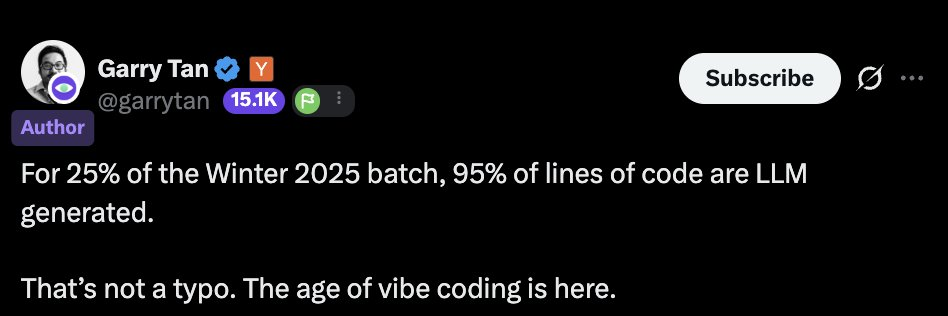
$GOAT is a pioneer in the field of AI agents.

It successfully combined two major hot narratives at the time: AI agents + Meme coins, instantly making "token value" clear to speculators (degens).

However, $GOAT did not appear out of thin air; its success relied on a series of important catalysts from Web2—the infrastructure provided by X and the growing momentum of OpenAI.

If you were active in the market at the time, you probably remember what happened next.

Shortly after $GOAT was launched, everyone started talking about Virtual Protocol. This was a project that existed before the narrative exploded, and its FDV (fully diluted valuation) had hovered between $20 million and $50 million for nearly a year.

Now, a very similar pattern is forming around Vibecoding. This term has only recently emerged. Some speculators are already doing Vibecoding for simple on-chain projects, but due to a lack of infrastructure, especially in the Web3 space, these applications have failed to gain enough attention.

Here is a detailed analysis:

  • The rise of Vibecoding in Web2

  • Its inevitable impact on Web3

  • The formation of early on-chain infrastructure

  • Bullish signals from Web2

Bullish Signals from Web2

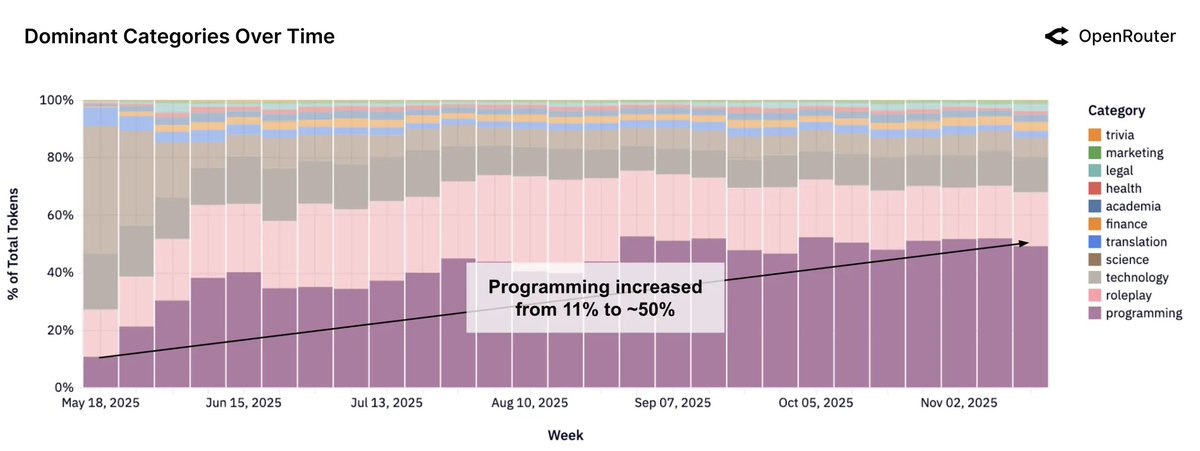
From May 2025 to December 2025, the proportion of all LLM queries related to programming grew from 11% to 50%.

In less than a year, programming queries accounted for half of all LLM usage categories.
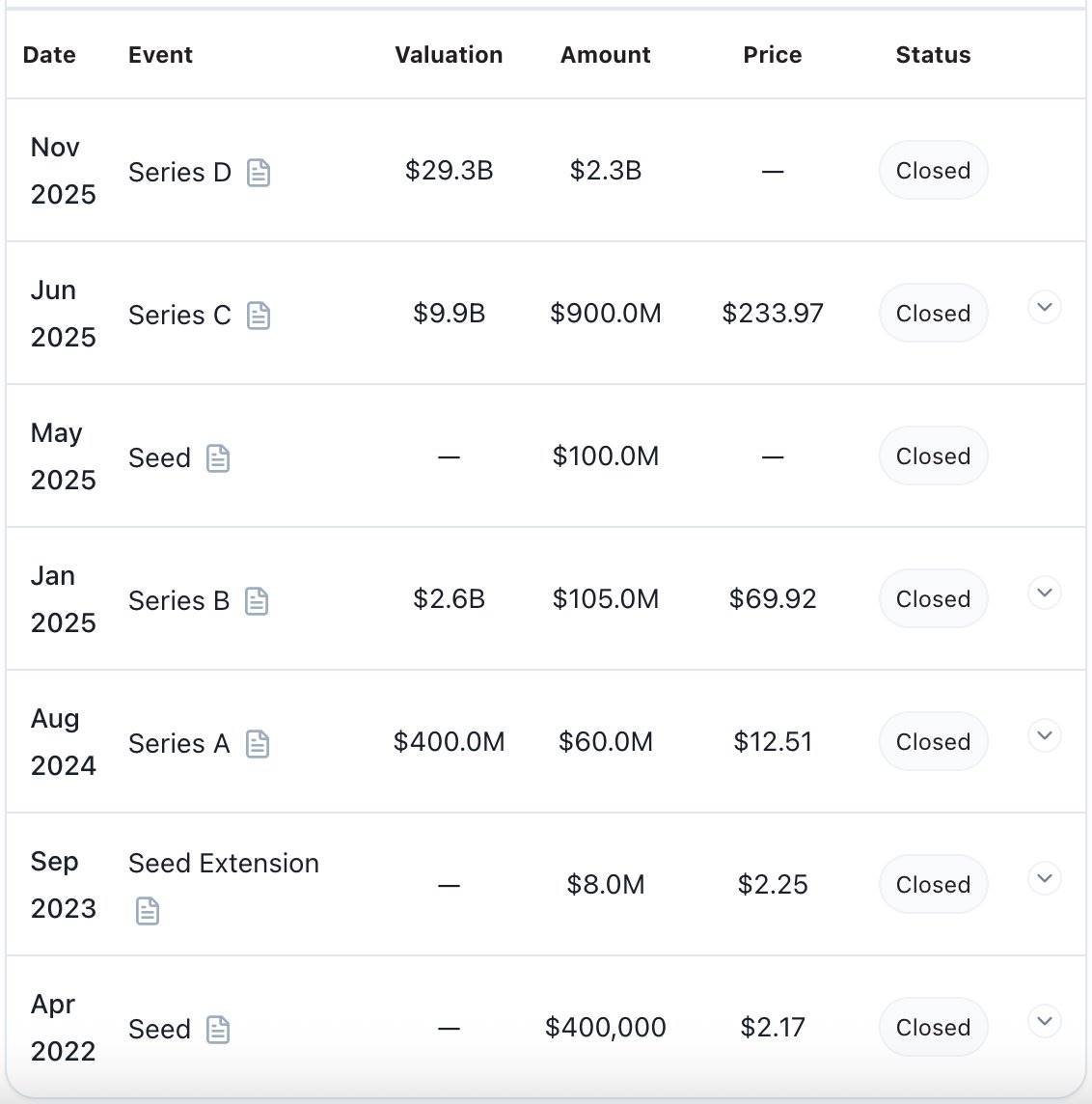
At the same time, the valuation of the most popular AI-driven development platform surged 72 times in one year, from $400 million to $29.3 billion.
If we zoom out and look at survey data and research reports, there are three important signals worth noting:

  • 84% of respondents are using or plan to use AI tools in their development process.

  • 41% of code is now generated by AI.

  • Developers report that AI tools improve productivity by an average of 10%-30%.

At the same time, it is important to clarify that Vibecoding is not the same as AI-assisted development.

For complex production-level systems, relying solely on Vibecoding may be risky. However, given the astonishing expansion speed of this field, more and more developers will begin to incorporate Vibecoding into their workflows.

(According to the 2025 Stack Overflow Developer Survey, only 17% of developers are currently using Vibecoding, which means there is still huge room for growth.)

The PumpFun Effect

A few years ago, issuing your own token was not easy. Teams tried various issuance mechanisms until PumpFun introduced an extremely simple model. PumpFun provided creators with a simplified way to issue tokens and also brought a new trading experience to speculators (degens). So, why can't we see a similar pattern replicated in Web3 applications?
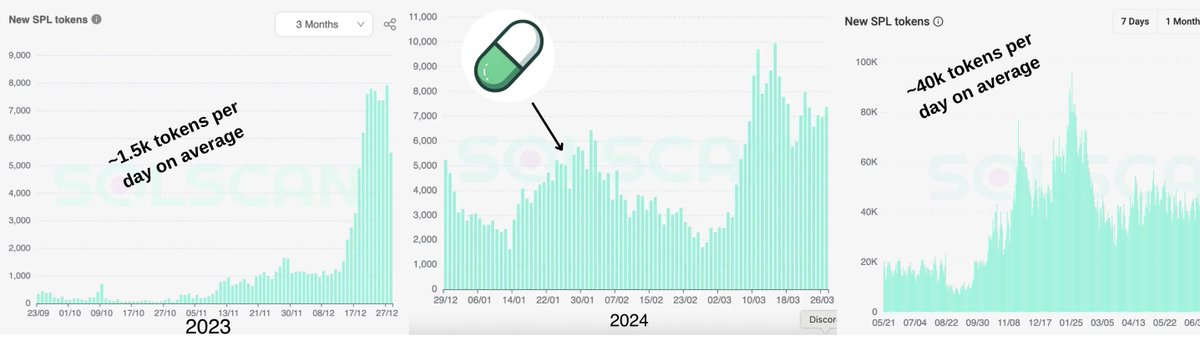
Speculators (Degens) are always the first users and early adopters of emerging narratives.

Many of them know exactly what products the market currently needs, how to launch these products, and what Crypto Twitter (CT) truly cares about—because they have been observing new project launches for years.

Empowering degens to turn ideas into products without coding skills or high costs essentially provides the front line with fresh ideas to experiment with.

Therefore, we may see hundreds of creative experiments emerging across multiple tracks:

Consumer applications, trading terminals, SocialFi, prediction markets, GameFi Ponzi projects, and more.

This phenomenon, in turn, may accelerate the growth of specific market narratives.

Beyond the Front Line: AI Integration into Core Protocols

Beyond the abstract concept of "frontline narratives," there is another direction that excites me—AI directly integrated into large protocols.

The simplest example is trading terminals.

Delta-neutral strategies, points farming, arbitrage operations—all of these can be transformed into personalized bots or features by users entering simple prompts on the platform.

For example:

Monitor the funding rates of tokenized stocks and automatically open positions when significant spreads appear between two perpetual decentralized exchanges (perps DEXes).

In practice, this approach allows platforms to meet thousands of small user needs that are often relatively simple but overlooked by teams.

"We already have Cursor, Replit, Lovable—why do we need a Web3 fork?"
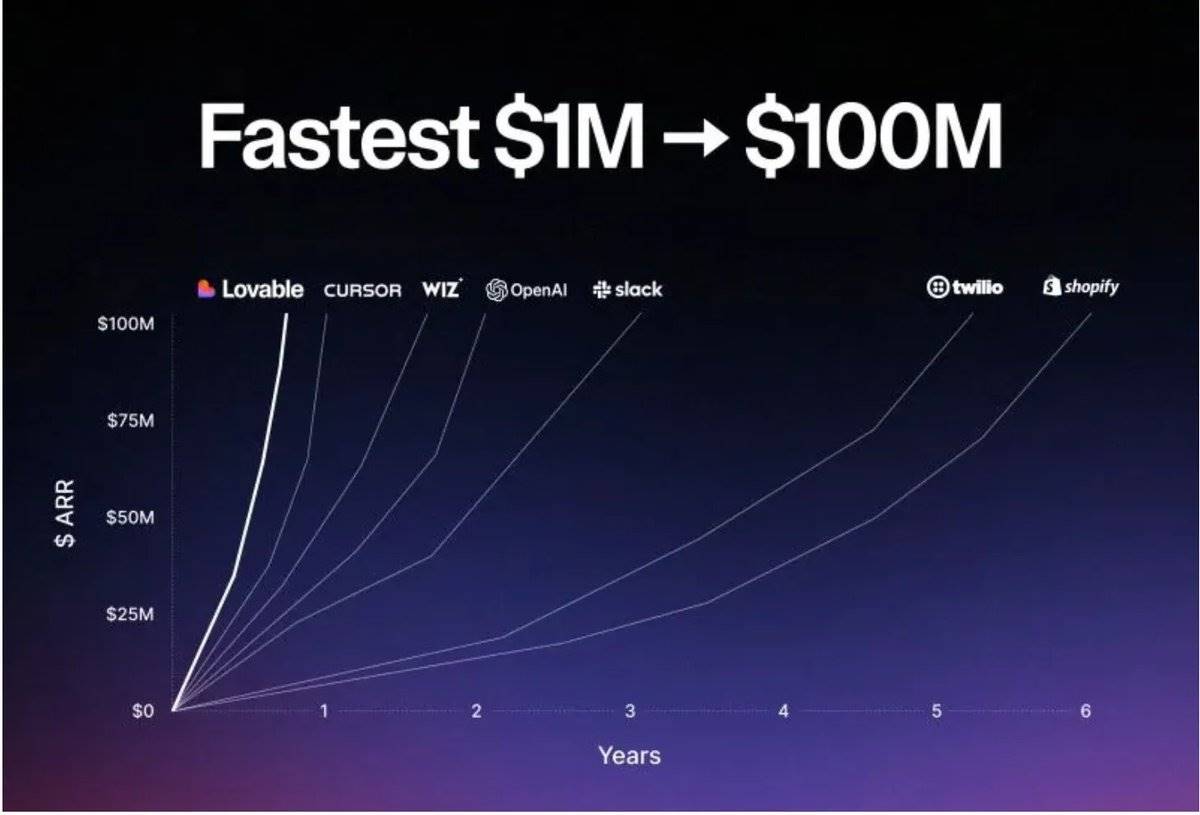
For a while, I asked myself the same question.

But after extensive research, the answer became very clear.

Even in the Web2 Vibecoding space, there is no absolute winner. Each platform has its unique features, including its own priorities, functions, and target user groups.

Some products excel at solving one or two specific problems,

while others try to do everything and end up achieving nothing.

Web3 Vibecoding platforms will not be hindered by competition with Lovable or Replit.

Their infrastructure is specifically built for on-chain creativity, not for Web2 applications.

Web3 Vibe Ecosystem
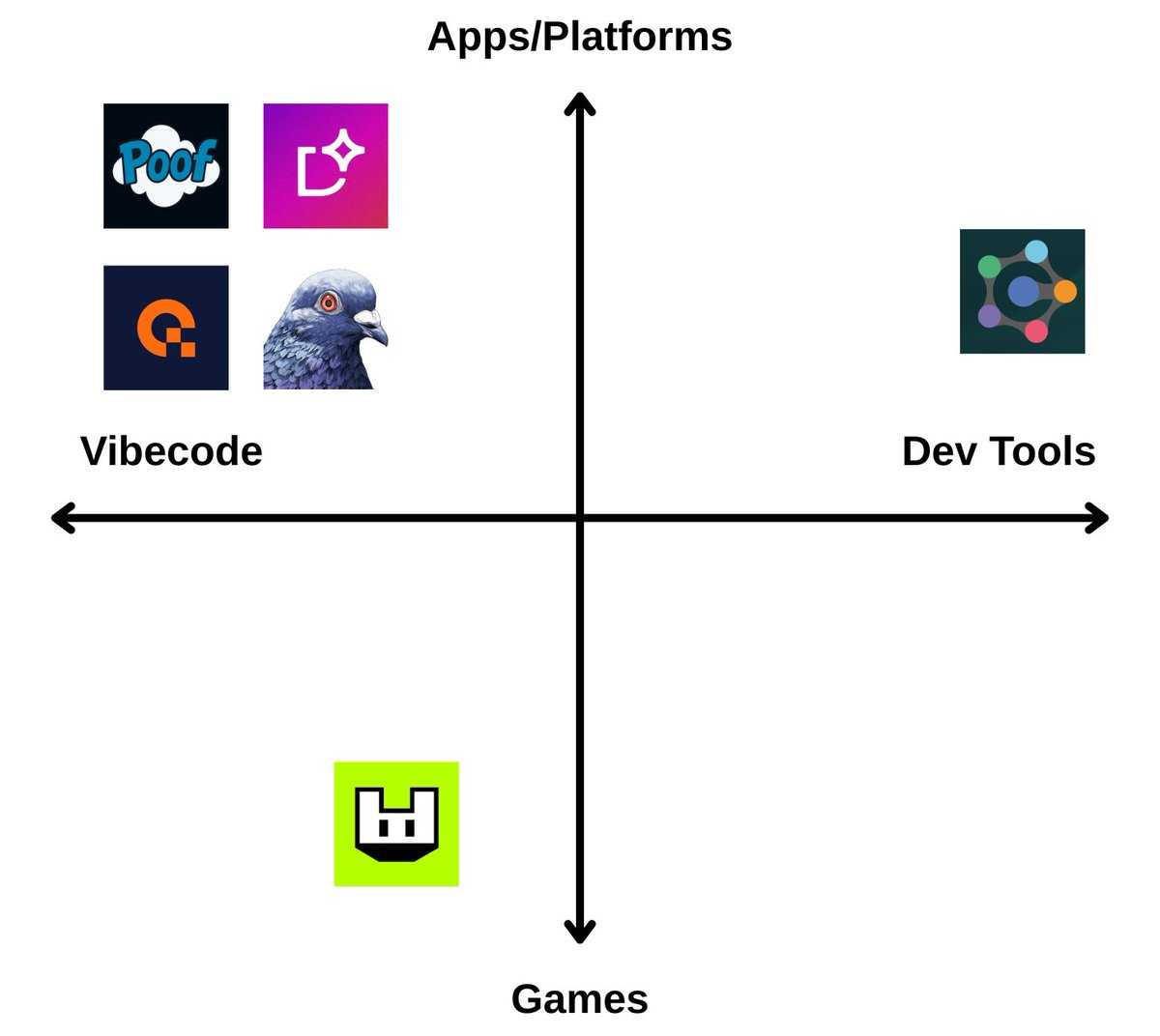
As of December 2025, there are still very few Web3 projects focused on Vibecoding or development tools, and cases of non-developers successfully launching meaningful Web3 products are even rarer.

Nevertheless, I believe it is still very important to sort out the current industry landscape.

Application/Platform Overview

@dreamspaceHQ—Without any coding knowledge, you can create websites, platforms, and dashboards.

The core advantage of Dreamspace is that, in addition to creating or connecting smart contracts through prompts, you can also aggregate data across multiple chains: BTC, ETH, zkSync, Sei, Base, and even Stellar, WTF?

@Minidevx—A Vibecoding platform based on Base, focused on building mini-apps on Farcaster.

Currently, the product is still in its early stages, with relatively few launched applications.

Minidev launched its token $MINI about a month ago—which may seem a bit rushed. Nevertheless, @0xjenil is still actively launching and improving the product, so I wouldn't be surprised to see high-quality applications emerging on Minidev soon.

@Poofnew —An on-chain version of Replit

Poof allows you to create on-chain websites and applications through prompts, which are passed to an agent and then assigned to three specialized agents: UI Agent, Smart Contract Agent, and Actions Agent.

In July of this year, the team showcased an application built entirely using Poof, where two users could duel for a "Waifu" and bet SOL in the process.

This kind of project demonstrates the flexibility of Poof as an experimental field.

Games

@RemixGG_ —A Vibecoding platform where you can create games on Base through prompts or play hundreds of games created by other users.

Some of these games are really quite good.

This application is extremely simple: download it to your phone, no wallet required, swipe through the content, try out games, or create your own.

In my opinion, this is exactly the kind of product that can attract Web2 users—they won't even realize they are using Web3 infrastructure.

Development Tools

@CodigoPlatform—Codigo is an AI-driven development platform built specifically for Solana.

It combines a cloud IDE, specially trained AI models, and complete build and deployment tools.

However, unlike Poof, Codigo is difficult to classify as a Vibecoding platform—you still need some programming skills.

Trading Bots

@pigeon_trade —A trading bot with built-in AI.

In addition to spot, perpetual, and prediction market trading, you can chat with Pigeon and Vibecode custom functions, such as:

  • Monitor funding rates on specific DEXes, set alerts, or automatically open positions

  • Track selected wallets and copy trades

  • Look for arbitrage opportunities on Polymarket and more.

Final Thoughts

Currently, there are still very few high-quality Web3 Vibecoding platforms.

Most existing projects are either still in development or have not found product-market fit (PMF), which is completely normal.

As mentioned earlier, Virtual Protocol also took a long time to form a complete narrative.

Often, the product is not bad; it is just launched too early.

I firmly believe that 2026 will be the year we start to see real signals:

Non-developers will independently build profitable Web2 companies based on creativity, large platforms will integrate Vibecoding tools, and the number of users and annual recurring revenue (ARR) of Cursor, Replit, and Lovable will continue to grow exponentially.

As always, degens will be the first users.

In a few months or a year, we will look back and compare the starting point of the Vibecoding narrative to the rise of PumpFun.

The only difference?

Pumpfun brought us hundreds of thousands of new tokens -> Vibecoding will bring the same transformation to Web3 applications.


Criptomoedas em alta

Perguntas relacionadas

QWhat is the core argument made about Vibecoding in relation to Web3?

AThe article argues that Vibecoding will bring a transformative change to Web3 applications, similar to how Pump.fun revolutionized token creation by enabling the launch of hundreds of thousands of new tokens. It suggests that Vibecoding will empower non-developers to easily build and experiment with on-chain applications, accelerating innovation and adoption in the Web3 space.

QAccording to the article, what are some key bullish signals from Web2 that support the rise of Vibecoding?

AKey bullish signals from Web2 include: programming-related LLM queries growing from 11% to 50% of all queries between May and December 2025; the valuation of a popular AI-driven development platform surging 72x from $400M to $29.3B in a year; 84% of surveyed developers using or planning to use AI tools; 41% of code now being AI-generated; and AI tools boosting developer productivity by 10-30% on average.

QHow does the article compare the potential impact of Vibecoding to the 'Pump.fun effect'?

AThe article compares Vibecoding to the 'Pump.fun effect' by stating that just as Pump.fun simplified token creation and launched a massive wave of new tokens, Vibecoding platforms will democratize the creation of Web3 applications. It will allow degens and non-coders to easily turn ideas into on-chain products, leading to hundreds of creative experiments across various sectors like consumer apps, trading terminals, SocialFi, and GameFi.
QName three Web3 projects mentioned in the article that are building Vibecoding infrastructure and briefly describe their focus.

A1. @dreamspaceHQ: A platform for creating websites, platforms, and dashboards with no coding, with a core strength in aggregating data across multiple blockchains. 2. @Poofnew: An on-chain version of Replit that uses AI agents to build on-chain websites and applications from prompts. 3. @RemixGG_: A Vibecoding platform focused on creating and playing games on Base, designed to be simple and accessible to attract Web2 users.

QWhat is the author's outlook for the Vibecoding narrative in 2026?

AThe author believes that 2026 will be the year we start to see real signals of Vibecoding's impact: non-developers independently building profitable Web2 companies, large platforms integrating Vibecoding tools, and continued exponential growth in user numbers and Annual Recurring Revenue (ARR) for platforms like Cursor, Replit, and Lovable. Degens will be the first users, and the narrative's rise will be compared to that of Pump.fun.

Leituras Relacionadas

To Hike or Not Tonight: Economists Unanimous on 'No', Markets Price in a 30% Chance

Federal funds futures are repricing ahead of the July FOMC decision, as traders pay a higher premium for the risk of a surprise rate hike or more hawkish signals. This contrasts with economists, where a Reuters survey of 104 analysts unanimously expects rates to remain unchanged at 3.50%-3.75%, with 78 foreseeing no change through year-end. Yet, futures markets have priced in about a 30% probability of a 25-basis-point hike. The core debate, especially under new Fed Chair Kevin Warsh, centers on how the Fed will respond to the oil price shock from Middle East tensions. The market is not necessarily predicting a hike tonight but is hedging against two tail risks: an immediate rate increase, or a hold combined with communication that seriously opens the door for a September hike. This hedging activity has driven up open interest in Fed funds futures. Analysts are divided on how to weight the oil price surge in the Fed's reaction function. Hawkish voices (e.g., BofA) worry that completely dismissing the price pressure could challenge the Fed's inflation credibility in Warsh's first major test. Dovish views (e.g., Citi) argue the shock is primarily supply-driven and that overreacting with rate hikes could unnecessarily hurt growth, unless clear signs of secondary inflation emerge. Warsh's new tenure amplifies policy path uncertainty, as markets lack a stable baseline for his communication style. This environment forces traders to price in a wider range of outcomes, explaining the divergence between unanimous economist forecasts and market hedging. The key focus will be on Warsh's post-meeting commentary. If he downplays the oil shock and stresses anchored long-term expectations, hawkish pricing may recede. If he emphasizes the risk of broader price spillovers and prioritizes returning to 2% inflation, the market will interpret this as reopening the door for a September hike. This would sustain support for the USD, keep pressure on JPY (testing intervention thresholds), and challenge risk assets like stocks and crypto through higher discount rates and weaker sentiment. The baseline remains no action in July, but the communication will determine how far this repricing extends.

marsbitHá 10m

To Hike or Not Tonight: Economists Unanimous on 'No', Markets Price in a 30% Chance

marsbitHá 10m

The Semiconductor Industry's Most Obscure Chokepoint Material: It Has Multiplied in Price Unnoticed, and China Just Banned Its Export

"Helium: The Silent Choke Point in Semiconductors" Helium, despite being the universe's second most abundant element, is critically scarce on Earth. It cannot be synthesized artificially and escapes Earth's gravity once released, making it a non-renewable resource. Yet, it is indispensable for advanced semiconductor manufacturing, requiring ultra-high purity (99.9999%) for processes like wafer etching, leak detection, and thermal management in lithography tools, with no viable substitutes. This low-profile resource, whose price has doubled unnoticed, suddenly gained attention when China imposed an export ban on July 10th. The ban is a response to a severe global shortage triggered months earlier. In March, missile attacks damaged the world's largest helium production hub in Qatar's Ras Laffan, halting a third of global supply with repairs expected to take 3-5 years. Concurrently, Russia tightened export controls, and the US sold off its federal helium reserve. Approximately 200 specialized transport containers, each worth ~$1 million, were stranded with perishable cargo. Global spot prices skyrocketed, and chipmakers like TSMC warned of potential impacts. China, which imports over 84% of its helium (primarily from Qatar and Russia), faces a severe squeeze. Despite being helium-poor, China has developed domestic extraction technology over five years, processing byproduct gases from LNG plants to produce ultra-pure helium. Domestic output, while still only covering less than 20% of demand, enabled the recent export ban aimed at securing domestic supply for its own expanding chip industry. The industry now faces "Helium Shortage 5.0." With key global sources constrained for years, this invisible gas—once wasted on party balloons—has become a critical, geopolitically charged bottleneck for chips, healthcare (MRI machines), and beyond, forcing the world to finally treat it as the finite strategic resource it is.

marsbitHá 50m

The Semiconductor Industry's Most Obscure Chokepoint Material: It Has Multiplied in Price Unnoticed, and China Just Banned Its Export

marsbitHá 50m

Early Investor of Unitree Bets on a Brain-Computer Interface Company

"Wabo Technologies, a brain-computer interface (BCI) startup, has secured new funding from Vertex Ventures (under Temasek), Hongtai Fund, Chengdu Future Industry Fund, and Huifengda Capital. Vertex Ventures is known for its early bet on Unitree Robotics. Inspired by the sci-fi film "Avatar," founder Zhang Xingzhi has pursued human-machine interaction for over a decade. He established Wabo in late 2025, coinciding with China's push for BCI as a future industry. Unlike companies focused solely on medical hardware, Wabo positions itself as a model company. Its core mission is to develop a "Human Neural Intent Model" that decodes EEG, EMG, and behavioral signals to understand a user's goals, confirmations, corrections, and stop intentions before physical action, translating them into standardized control signals for machines, robots, or smart devices. The young, full-stack team, backed by academic collaborators from Tianjin University and Fudan University, quickly attracted investors. The company had previously raised a seed round from Ceyuan Capital. Investors were impressed by Wabo's systematic capabilities in data collection, signal processing, and engineering, seeing potential beyond a single hardware product toward a reusable layer of human intent interpretation. Applications span medical rehabilitation, smart homes, embodied AI, and even space exploration, with Wabo partnering with Tianjin University on pioneering "space BCI" research. Wabo plans a dual-headquarters strategy, with Shanghai focusing on high-end R&D and model development, and Chengdu handling hardware, product development, and supply chain. The BCI sector in China is heating up, with over 30 financing deals in early 2026. Zhang believes future competition will center on who can build a sustainable data-model-scenario loop. He predicts industry consolidation within three years, with only companies that master this闭环 surviving. The vision from "Avatar" is inching closer to reality."

marsbitHá 1h

Early Investor of Unitree Bets on a Brain-Computer Interface Company

marsbitHá 1h

ChangXin Technology: A Cyclical Stock Standing Atop the Cycle Peak

Changxin Technology: A Cyclical Stock at the Peak On July 27, 2026, Changxin Technology topped the A-share market with a market capitalization of 3.28 trillion yuan, surging 465% on its first trading day. The company, which lost 16.3 billion yuan in 2023, reported an estimated net profit of 50-57 billion yuan for the first half of 2026. Its dramatic reversal mirrors the volatile DRAM (Dynamic Random Access Memory) cycle. The DRAM industry is inherently cyclical, with booms and busts every 3-4 years. This is due to product standardization and a significant time lag in supply adjustment. When prices rise, manufacturers expand capacity, but new production takes 2-3 years to come online, often leading to oversupply and price crashes when demand cools. Changxin's performance perfectly tracks this cycle. It recorded deep losses in 2023-2024 during the industry downturn, turned its first annual profit in 2025, and saw profits skyrocket in Q1 2026. This surge is primarily price-driven. The AI boom has led major players like Samsung and SK Hynix to shift 70-80% of new capacity to high-margin HBM (High Bandwidth Memory), creating a severe shortage and price explosion in general-purpose DRAM markets where Changxin competes. However, a massive global capacity expansion is underway. The top three manufacturers have announced nearly $70 billion in capital expenditure for 2026. Changxin itself plans to expand from three to seven 12-inch wafer fabs. This investment will translate into significant new supply in 2-3 years. While DRAM prices are expected to remain high through 2026-2027, price growth is already slowing, and a potential downturn is forecast for around 2028 as new capacity ramps up. A key challenge for Changxin is catching up in the critical HBM segment. While it has delivered HBM3 samples, leaders are already mass-producing more advanced HBM3E. Success in HBM is crucial for gaining true cyclical resilience. In conclusion, Changxin is a commendable company that has broken foreign monopolies in DRAM. Its long-term growth narrative—driven by import substitution and AI—is valid. Yet, its current valuation of 5-6x forward P/E, typical for a cyclical stock at its peak, suggests much future growth is already priced in. AI may extend the current cycle but cannot eliminate the industry's inherent volatility. For investors, the critical question is preparedness for the inevitable downturn when the cycle turns.

marsbitHá 1h

ChangXin Technology: A Cyclical Stock Standing Atop the Cycle Peak

marsbitHá 1h

Trading

Spot

Artigos em Destaque

Como comprar O

Bem-vindo à HTX.com!Tornámos a compra de O1 exchange (O) simples e conveniente.Segue o nosso guia passo a passo para iniciar a tua jornada no mundo das criptos.Passo 1: cria a tua conta HTXUtiliza o teu e-mail ou número de telefone para te inscreveres numa conta gratuita na HTX.Desfruta de um processo de inscrição sem complicações e desbloqueia todas as funcionalidades.Obter a minha contaPasso 2: vai para Comprar Cripto e escolhe o teu método de pagamentoCartão de crédito/débito: usa o teu visa ou mastercard para comprar O1 exchange (O) instantaneamente.Saldo: usa os fundos da tua conta HTX para transacionar sem problemas.Terceiros: adicionamos métodos de pagamento populares, como Google Pay e Apple Pay, para aumentar a conveniência.P2P: transaciona diretamente com outros utilizadores na HTX.Mercado de balcão (OTC): oferecemos serviços personalizados e taxas de câmbio competitivas para os traders.Passo 3: armazena teu O1 exchange (O)Depois de comprar o teu O1 exchange (O), armazena-o na tua conta HTX.Alternativamente, podes enviá-lo para outro lugar através de transferência blockchain ou usá-lo para transacionar outras criptomoedas.Passo 4: transaciona O1 exchange (O)Transaciona facilmente O1 exchange (O) no mercado à vista da HTX.Acede simplesmente à tua conta, seleciona o teu par de trading, executa as tuas transações e monitoriza em tempo real.Oferecemos uma experiência de fácil utilização tanto para principiantes como para traders experientes.

275 Visualizações TotaisPublicado em {updateTime}Atualizado em 2026.06.29

Como comprar O

Como comprar PROS

Bem-vindo à HTX.com!Tornámos a compra de Pharos (PROS) simples e conveniente.Segue o nosso guia passo a passo para iniciar a tua jornada no mundo das criptos.Passo 1: cria a tua conta HTXUtiliza o teu e-mail ou número de telefone para te inscreveres numa conta gratuita na HTX.Desfruta de um processo de inscrição sem complicações e desbloqueia todas as funcionalidades.Obter a minha contaPasso 2: vai para Comprar Cripto e escolhe o teu método de pagamentoCartão de crédito/débito: usa o teu visa ou mastercard para comprar Pharos (PROS) instantaneamente.Saldo: usa os fundos da tua conta HTX para transacionar sem problemas.Terceiros: adicionamos métodos de pagamento populares, como Google Pay e Apple Pay, para aumentar a conveniência.P2P: transaciona diretamente com outros utilizadores na HTX.Mercado de balcão (OTC): oferecemos serviços personalizados e taxas de câmbio competitivas para os traders.Passo 3: armazena teu Pharos (PROS)Depois de comprar o teu Pharos (PROS), armazena-o na tua conta HTX.Alternativamente, podes enviá-lo para outro lugar através de transferência blockchain ou usá-lo para transacionar outras criptomoedas.Passo 4: transaciona Pharos (PROS)Transaciona facilmente Pharos (PROS) no mercado à vista da HTX.Acede simplesmente à tua conta, seleciona o teu par de trading, executa as tuas transações e monitoriza em tempo real.Oferecemos uma experiência de fácil utilização tanto para principiantes como para traders experientes.

270 Visualizações TotaisPublicado em {updateTime}Atualizado em 2026.06.29

Como comprar PROS

O que é VERONA

I. Introdução ao Projeto VERONA é uma blockchain construída para todos, em todo o lado, através da abstração da cadeia. Utilizando a sua camada de Abstração Generalizada, a VERONA distingue-se por integrar funcionalidades complexas de blockchain, como contas, assinaturas e interoperabilidade, diretamente ao nível do protocolo. Esta abordagem permite a interação com aplicações de blockchain sem a necessidade de compreender as tecnologias subjacentes.1) Informação Básica Nome: VERONA (VERONA)III. Links Relacionados Link do site oficial: https://xion.burnt.com/ Whitepaper: https://xion.burnt.com/whitepaper.pdf Exploradores: https://explorer.burnt.com/ Mídias Sociais: https://x.com/burnt_xion Nota: A introdução ao projeto provém dos materiais publicados ou fornecidos pela equipa oficial do projeto, que é apenas para referência e não constitui aconselhamento de investimento. A HTX não se responsabiliza por quaisquer perdas diretas ou indiretas resultantes.

914 Visualizações TotaisPublicado em {updateTime}Atualizado em 2026.06.22

O que é VERONA

Discussões

Bem-vindo à Comunidade HTX. Aqui, pode manter-se informado sobre os mais recentes desenvolvimentos da plataforma e obter acesso a análises profissionais de mercado. As opiniões dos utilizadores sobre o preço de A (A) são apresentadas abaixo.

活动图片