VC "Dead"? No, the Industry is Undergoing a Brutal Shakeout

marsbitPublicado em 2025-12-18Última atualização em 2025-12-18

Resumo

The article addresses the prevailing sentiment that "VC is dead" in the crypto industry, arguing that while some venture capital firms have indeed failed, the sector as a whole is not dying but undergoing a severe shakeout. The author, a former VC investor, states that many Asian VCs have been hit hardest, with top firms shutting down or scaling back significantly. Even second- and third-tier Western VCs are now facing similar challenges, marked by reduced investment pace and difficulty in exiting portfolios. This downturn is seen as a delayed effect of the 2022 market collapse, exacerbated by broken four-year cycle expectations, overvalued deals, and extended token lockups that strain returns. However, the piece contends that VCs won’t disappear entirely. They remain essential for funding early-stage projects and supporting innovation. Well-vetted VC backing has been behind nearly all major successful crypto projects, and quality ventures continue to attract interest. The industry is moving toward a maturity phase with higher barriers to entry—akin to Web2. VCs will need stronger reputations and expertise to compete. Projects are increasingly judged by real user adoption and revenue, not just narratives or token launches. Hyperliquid and Polymarket are cited as examples of projects that built sustainable traction before launching tokens. Despite current challenges, the author remains optimistic: top talent continues to enter the space, and foundational areas like stable...

As a former VC investor, how do I view the current "VC is dead" sentiment on CT?

It's a paid question, so I'll answer it seriously. I've had a lot of thoughts about this sentiment myself.

Let's start with the conclusions -

1. It is an undeniable fact that some VCs are dead

2. Overall, VCs will not die; they will continue to live on, driving the industry forward

3. VCs, much like projects and talent, are entering a phase of "liquidation" and "survival of the fittest," somewhat similar to the dot-com bubble in 2000. This is the "debt" from the previous crazy bull run. After spending a few years paying it off, the industry will enter a new phase of healthy growth, but the barriers to entry will be much higher than before.

Let me elaborate on each point.

1. Some VCs Are Dead

Asian VCs have probably been hit the hardest this cycle. Since the beginning of this year, several top firms have shut down or dissolved. The remaining ones may not make a single investment in months, focusing instead on exits for their current portfolio. Raising new funds has also become quite difficult.

Second and third-tier欧美 (Europe/US) VCs were relatively okay in the first half of the year, related to their LP structure and fund size. However, in the second half, especially in the last month or two, they have clearly started to show trends similar to Asian VCs, with decreasing investment frequency. Some have simply stopped investing or pivoted to pure Liquid Funds. Investment managers/partners have started telling me on TG, "It's too hard, exits are difficult." The impact of the 1011 massacre on altcoin liquidity was fatal and is now starting to affect VC confidence.

The top-tier欧美 (Europe/US) firms seem largely unaffected, at least on the surface.

Actually, this "bear market" for VCs is a "delayed effect" from the Luna crash in 2022. The secondary market turned bearish then, but the primary market—both project valuations and the amount of capital VCs raised—wasn't greatly affected. Many new VCs were even established after the Luna crash (e.g., ABCDE). The thinking back then wasn't wrong: star projects from the DeFi Summer like MakerDAO and Uniswap were built during the 18-19 bear market, and the VCs from that 18-19 wave made a killing in the 21 crazy bull market. Be a VC in the bear market, invest in good projects, and profit when the bull market comes!

But the ideal is丰满 (plump), the reality is骨感 (bony). There are three reasons:

First, the 21 narrative combined with money printing was too疯狂 (crazy). The gap between VCs who invested in good vs. bad projects in 18-19 wasn't huge; everything went to the moon, with any project seeing tens or even hundreds of times returns. This created an anchoring effect, keeping valuations and funding amounts in the 22-23 primary market relatively high even during the bear market, not greatly affected by the secondary market. This is the "delayed effect" of the bear market in the primary market I mentioned above.

Second, the four-year cycle has been broken. There was no所谓的 (so-called) "altseason" in 2025. Reasons include macro factors, too many altcoins and insufficient liquidity, disillusionment with narratives and no longer buying into just PPTs and VC endorsements, the AI explosion and the siphoning effect of "real value investing" in US stocks on crypto funds... Anyway, the previous pattern isn't repeating. The dream of replicating the 19-invest, 21-100x-exit is impossible.

Third, even if the four-year cycle repeated, the terms for VCs this round are completely different from the last. Some portfolios we invested in early '23 are, 2-3 years later, still haven't launched their token (TGE). Even after TGE, there's a one-year lockup, followed by a vesting period of another two or three years. A project invested in in '23 might not receive the final token tranche until '28-'29, directly traversing one and a half cycles. In crypto, how many projects can survive traversing cycles and still do well? Very few.

2. VCs as a Whole Will Not Die

This isn't really something to worry about. As long as the industry doesn't die, VCs won't die either. Otherwise, who will provide the resources to realize new ideas, new technologies, new directions? Can't rely solely on ICOs or KOL rounds, right?

ICOs are more for bringing some retail and community on board + creating momentum. KOL rounds are mainly for传播 (propagation). These happen in the mid-to-late stages of a project. In the earliest stage, with just one or two founders and a PPT, only VCs can truly understand and actually provide funding. During my over two years at ABCDE, I talked to 1000+ projects and only invested in 40. Even these carefully selected 40 will probably see 20-30 die. Many projects you see on the market that you think are "垃圾" (trash) are already the relatively "精品" (boutique) ones after many rounds of screening. If all 1000+ projects did ICOs or KOL rounds, could retail investors, even including KOLs, keep up and分辨 (distinguish) them?

Just think about the phenomenal projects from the last cycle to this one. Except for极个别 (very rare) cases like Hyperliquid, which one didn't have VCs behind it? Whether it's Uniswap, AAVE, Solana, Opensea, PolyMarket, Ethena... No matter how much Anti-VC sentiment there is emotionally, this industry still needs to be pushed forward by the combined efforts of Founders and VCs.

A few days ago, I talked to a prediction market project, completely different from most Polymarket/Kalshi copycats,极其差异化 (extremely differentiated). I recommended it to some VCs and KOLs recently, and the feedback was that it's very interesting, wanting to schedule chats. See, good projects won't die, and good VCs won't either.

3. The Bar for VCs, Projects, and Talent Will Rise, Trending Towards Web2

VCs - Reputation, capital, and professionalism are clearly entering a stage where the strong get stronger.

A VC's reputation and brand aren't最重要的是 (most importantly) about how famous you are among retail, but about whether Developers, or rather Founders, are willing to take your money, and why they take your money over another VC's. This is the real moat for a VC. This cycle, VCs, similar to CEXs, are明显 (clearly) transitioning from a pyramid structure to a thumbtack structure.

Projects - We've transitioned from looking at narratives and whitepapers in the cycle before last (or not even looking at whitepapers, like when Li Xiaolai raised hundreds of millions with just an idea in '17), to looking at TVL, VC backing, narrative, transaction volume in the last cycle... to looking at real user numbers, protocol revenue in this cycle... It feels like we're finally gradually moving closer to the direction of the US stock market.

Jeff from Hyperliquid once said in an interview that the only business model for the vast majority of crypto projects is selling tokens because at TGE they have nothing—just a mainnet, no ecosystem, no users, no revenue... so they can only sell tokens. Imagine a company going public on the US stock market with just a corporate entity and a bunch of employees, maybe some factories and workshops, but no customers, no revenue. There's no way they'd let you list on Nasdaq! Why can we in Web3 just do a TGE or Listing directly?!

This cycle, Polymarket and Hyperliquid set the best examples. One spent years first achieving massive real users and revenue, even propping up a new sector, before considering a token. The other indeed used token airdrop expectations as incentives to attract early users, but their product is无敌 (invincible); people kept using it after the token launch. The project itself is a cash cow, with 99% of its revenue used to buy back tokens. When a project has non-farmer real users + real revenue, then we can talk about TGE, then talk about Listing. That's when our circle will truly be on the right track.

Talent - A big reason I've always been confident in Web3 is because this industry gathers some of the smartest people in the world. As I've written before, of the 1000+ projects I've talked to, close to half had founders and core teams graduating from Ivy League schools. Domestic founders are almost exclusively from Tsinghua and Peking University, occasionally seeing a few other 985s like Zhejiang University, Shanghai Jiao Tong University, Xiamen University.

This isn't about唯学历论 (solely judging by academic credentials); I didn't graduate from a famous school myself. But不可否认 (it's undeniable) that from a statistical perspective, with so many high-IQ talents gathered here, even if it's because of the wealth effect, they will definitely折腾出 (stir up) some useful/fun things.

So, as I said before, even though the market is bearish, the entrepreneurial directions this cycle are actually quite clear: stablecoins, Perps, everything on-chain, prediction markets, Agent Economy are all directions with definite PMF. Good Founders + good VCs will definitely be able to build truly good stuff. Polymarket and Hyperliquid have set the best examples. I believe we will see more star products emerge in the next year or two.

For ordinary people, Web3 is still the most promising place to go from a nobody to a somebody—of course, this "most promising" is compared to the炼狱难度 (hellish difficulty) of the incredibly卷 (competitive) Web2 side. Compared to the cycle before last or the last one, the difficulty has already changed from Easy to Hard. I remember reading a tweet from a Web3 VC partner a couple of days ago saying he received over 500 resumes in a few days for a junior intern position, many from名校毕业 (prestigious school graduates), which scared him into直接关了 (directly closing) the job ad.

So, in the end, it's still that saying - The pessimist is always right; the optimist is always moving forward.


Criptomoedas em alta

Perguntas relacionadas

QAccording to the article, why are some VCs considered 'dead' in the current market?

ASome VCs have shut down or dissolved, with many struggling to raise new funds or make new investments, focusing instead on managing existing portfolios. This is due to a delayed effect from the 2022 market downturn, broken four-year cycles, and unfavorable investment terms with long lock-ups.

QWill the venture capital (VC) industry as a whole disappear, based on the author's perspective?

ANo, the VC industry as a whole will not disappear. It remains essential for funding early-stage projects and driving innovation, especially when ideas are just concepts or PPTs. The industry will continue to evolve but with higher barriers to entry.

QHow is the VC industry changing in terms of structure and requirements?

AThe VC industry is shifting towards a 'survival of the fittest' model, where reputation, capital, and professionalism matter more. It is moving from a pyramid structure to a 'thumbtack' structure, with stronger VCs dominating and higher standards for projects, such as requiring real users and revenue before token generation events (TGE).

QWhat examples of successful models does the author mention for projects in the current cycle?

AThe author cites Polymarket and Hyperliquid as successful models. Polymarket built a large user base and revenue before considering a token, while Hyperliquid used token incentives but focused on product excellence and became a cash cow, with 99% of revenue used to buy back tokens.

QWhat does the author say about the talent entering the Web3 space?

AThe author notes that Web3 attracts highly intelligent talent, with many founders from top universities like Ivy League schools in the U.S. and Tsinghua in China. Despite market conditions, this concentration of smart people continues to drive innovation in areas like stablecoins, prediction markets, and agent economies.

Leituras Relacionadas

Bitmine Increases Holdings to 5.7 Million ETH, Included in Russell 1000 Index, Tom Lee Says Only One Step Away from '5% Target'

Bitmine Increases Ethereum Holdings, Nears 5% Supply Target and Joins Russell 1000 Bitmine Immersion Technologies (BMNR) acquired an additional 27,084 ETH last week, bringing its total holdings to 5,700,040 ETH, which represents 4.7% of Ethereum's total supply. This puts the company at 94% of its goal to own 5% of ETH's circulating supply. Despite a challenging week where ETH price fell 8% and BMNR's stock dropped 13%, Bitmine continues its accumulation strategy, with Chairman Tom Lee attributing the market weakness to quarter-end "window dressing" by investors. In a significant development, Bitmine was added to the Russell 1000 large-cap index on June 26. Lee expects this inclusion to attract hundreds of institutional investors, as passive funds and ETFs rebalance to match the index. The company's total assets, including crypto, cash, and securities, stand at $9.8 billion. Of its ETH holdings, 4,879,157 are currently staked, generating an estimated annualized revenue of $211 million. Lee projects this could rise to $246 million once all ETH is staked through its MAVAN network. Bitmine remains the world's largest corporate Ethereum treasury and the second-largest overall corporate crypto treasury, behind Strategy's substantial Bitcoin holdings. Lee reaffirmed the company's commitment to steady buying throughout 2026, expressing belief that the crypto market is still in the early stages of a spring cycle. At the time of writing, ETH was trading around $1,565, while BMNR stock was near $13.56, down over 90% from its 52-week high.

marsbitHá 30m

Bitmine Increases Holdings to 5.7 Million ETH, Included in Russell 1000 Index, Tom Lee Says Only One Step Away from '5% Target'

marsbitHá 30m

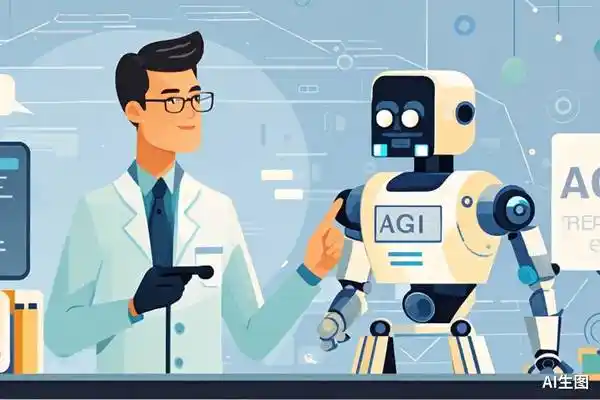
AGI Countdown: OpenAI's Chief Research Officer Makes Major Statement — The Window for Humanity is 'Very Small'

The countdown to AGI has begun, according to OpenAI's Chief Scientist Mark Chen, who states the window for human-centric progress is "very small." Chen argues that AI is reaching a point where models can perform "self-sustaining research," autonomously driving innovation in fields from mathematics to programming. He points to the proliferation of AI's "superhuman" insights—akin to AlphaGo's legendary "Move 37"—across disciplines as evidence of this shift. Chen firmly dismisses claims that scaling laws are plateauing or that pre-training is dead, asserting the field remains on an exponential curve. He cites OpenAI's successful bet on reasoning models like o1 as proof that fundamental breakthroughs are still possible. The future of research, he suggests, lies with "Vibe Researchers"—humans who provide high-level direction and "taste" while AI handles execution and orchestration of complex, long-horizon tasks. However, significant hurdles remain. Chen highlights a "benchmarking crisis," where models can overfit to existing tests without gaining true generalization. He also notes the "jagged frontier" of AI capabilities, where systems excel at advanced reasoning but struggle with contextual, continual learning from everyday experiences. Despite these challenges, he expresses confidence that these gaps will be closed. In a personal reflection, Chen shares that post-AGI, his wish is to open a noodle shop—a metaphor emphasizing that when AI masters knowledge and innovation, uniquely human experiences, warmth, and storytelling will become the ultimate form of value.

marsbitHá 45m

AGI Countdown: OpenAI's Chief Research Officer Makes Major Statement — The Window for Humanity is 'Very Small'

marsbitHá 45m

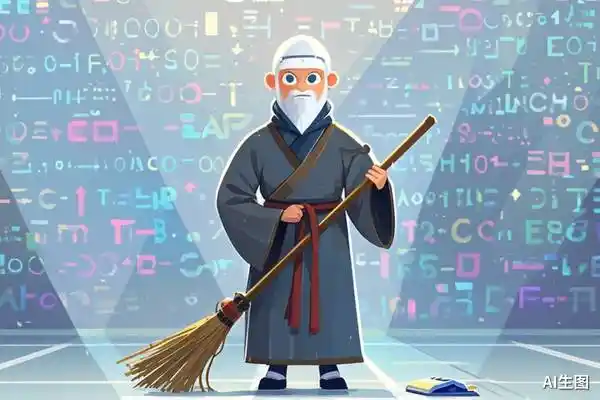
China's No.1, Closing in on OpenAI, Mysterious "Sweeping Monk" Rises to Top Seven Globally

A mysterious Chinese AI project named "MopMonk" (meaning "Sweeping Monk") has achieved a top-ranking result on the globally recognized CyberGym cybersecurity benchmark. With a 73.1% success rate, it ranks seventh worldwide and first among Chinese entries, performing closely behind OpenAI. The significance lies in the benchmark itself. CyberGym, created by UC Berkeley, is considered a premier "Olympics" for AI security. It tests models on over 1500 real-world software vulnerabilities, requiring them to not just identify but actually generate working exploits (PoCs) in a complex, offline environment. This moves beyond simple knowledge to testing an AI's practical "execution" capabilities. MopMonk's approach is notable. It uses the open-source MiniMax M3 model from Shanghai as its powerful reasoning "brain," leveraging its strong coding skills and long context window. However, the key to its performance is a custom-built, multi-agent security framework—its "Harness." This system uses structured "vulnerability memory" to efficiently guide the search for exploits, allowing multiple agents to explore in parallel while sharing lessons learned from failures. This engineering layer effectively translates the model's intelligence into actionable, iterative testing steps. The project remains highly secretive, with no official website or team information, embodying the "dark horse" spirit of its literary namesake. Its success highlights a potential industry shift: beyond simply scaling model size, the engineering of specialized agent systems (the Harness) is becoming a critical differentiator for real-world AI application performance, especially in complex domains like cybersecurity.

marsbitHá 1h

China's No.1, Closing in on OpenAI, Mysterious "Sweeping Monk" Rises to Top Seven Globally

marsbitHá 1h

Trading

Spot

Artigos em Destaque

Como comprar NASDAQ100

Bem-vindo à HTX.com!Tornámos a compra de Nasdaq-100 Index (NASDAQ100) simples e conveniente.Segue o nosso guia passo a passo para iniciar a tua jornada no mundo das criptos.Passo 1: cria a tua conta HTXUtiliza o teu e-mail ou número de telefone para te inscreveres numa conta gratuita na HTX.Desfruta de um processo de inscrição sem complicações e desbloqueia todas as funcionalidades.Obter a minha contaPasso 2: vai para Comprar Cripto e escolhe o teu método de pagamentoCartão de crédito/débito: usa o teu visa ou mastercard para comprar Nasdaq-100 Index (NASDAQ100) instantaneamente.Saldo: usa os fundos da tua conta HTX para transacionar sem problemas.Terceiros: adicionamos métodos de pagamento populares, como Google Pay e Apple Pay, para aumentar a conveniência.P2P: transaciona diretamente com outros utilizadores na HTX.Mercado de balcão (OTC): oferecemos serviços personalizados e taxas de câmbio competitivas para os traders.Passo 3: armazena teu Nasdaq-100 Index (NASDAQ100)Depois de comprar o teu Nasdaq-100 Index (NASDAQ100), armazena-o na tua conta HTX.Alternativamente, podes enviá-lo para outro lugar através de transferência blockchain ou usá-lo para transacionar outras criptomoedas.Passo 4: transaciona Nasdaq-100 Index (NASDAQ100)Transaciona facilmente Nasdaq-100 Index (NASDAQ100) no mercado à vista da HTX.Acede simplesmente à tua conta, seleciona o teu par de trading, executa as tuas transações e monitoriza em tempo real.Oferecemos uma experiência de fácil utilização tanto para principiantes como para traders experientes.

27 Visualizações TotaisPublicado em {updateTime}Atualizado em 2026.06.18

Como comprar NASDAQ100

O que é RE

I. Introdução ao Projeto1. O Que É o Re Protocol?O Re Protocol é um protocolo de resseguro descentralizado que conecta capital em stablecoin a mercados de resseguro regulamentados no mundo real. Os utilizadores depositam stablecoins no contrato inteligente da Insurance Capital Layer (ICL). Os fundos depositados são utilizados para apoiar contratos de resseguro totalmente colateralizados, e os depositantes recebem recompensas em troca. O rendimento é derivado de fontes tanto on-chain como off-chain, além de spreads específicos de tokens. O protocolo opera em várias cadeias, incluindo Ethereum, Avalanche e Arbitrum.2. Como Funciona o Re Protocol?Os utilizadores depositam ativos aprovados (como USDC, USDe, sUSDe) em contratos inteligentes ICL para cunhar um de dois tokens que geram rendimento. Os fundos são agregados diariamente em um cofre de custódia Fireblocks, mantido sob controle de múltiplas assinaturas, com saldos publicados diariamente para oráculos Chainlink. Quando os resseguradores licenciados retiram fundos de acordo com uma Surplus Note, uma parte do capital é transferida para contas de confiança de resseguro §114 domiciliadas nos EUA, servindo como colateral em conformidade para as apólices do ressegurador. À medida que os contratos de resseguro vencem e a equipe atuarial libera capital, a liquidez flui de volta para o protocolo, apoiando os resgates de reUSD e acumulando rendimento para ambos os tokens.O protocolo oferece dois tokens correspondentes a diferentes tranches na estrutura de capital:reUSD (Basis-Plus, Tranche Sênior): O rendimento é uma taxa misturada (média ponderada da taxa SOFR e da taxa sUSDe de 7 dias) mais um spread de 250 pontos base. Oferece maior liquidez e suporta resgates instantâneos quando há capacidade disponível.reUSDe (Insurance Alpha, Tranche Júnior): O rendimento é a mesma taxa misturada mais um spread de 850 pontos base, em troca de absorver perdas antes da tranche sênior. Os resgates são trimestrais. O reUSDe tem um período mínimo de detenção de pelo menos 40 dias.Camadas de Proteção de Capital: O próprio capital do ressegurador absorve as perdas primeiro, seguido pelo reUSDe, com o reUSD como a tranche mais sênior protegida pelas duas camadas abaixo dela.3. Quem Fundou o Re Protocol?Karn Saroya, Co-Fundador e CEO, graduou-se no MIT. Anteriormente, fundou a plataforma insurtech apoiada por capital de risco Cover (uma corretora licenciada, que mais tarde cessou operações) e anteriormente fundou o aplicativo de moda Stylekick (adquirido pela Shopify em 2015). Ele também trabalhou anteriormente em consultoria de serviços financeiros.Detalhes de Financiamento:Setembro de 2022: O Re completou uma rodada de Seed de $14 milhões liderada pela Tribe Capital (incubada através do seu Tribe Crypto Labs), com participação da Framework Ventures, Morgan Creek Digital, Defy VC, Stratos, Exor, SiriusPoint, entre outros.Maio de 2024: Completou uma rodada de financiamento de $7 milhões liderada pela Electric Capital.4. Tokenomics do Re ProtocolRE é o token de governança do Re Protocol com um fornecimento total fixo de 1 bilhão de tokens, sem mecanismo inflacionário e sem plano de cunhagem contínua. O token é utilizado para governança através de um modelo de stake-to-vote, cobrindo acesso ao mercado, orçamentos de incentivos, staking e delegação, comitês, atualizações do protocolo e capital de resiliência compartilhado.Distribuição de tokens:Ecosistema (50%): Usado para recompensas de staking, participação na governança, liquidez, integrações, subsídios, expansão de mercado e crescimento do ecossistema. 159,6 milhões de tokens estão em circulação no TGE, com o restante sujeito a um vesting linear ao longo de 48 meses.Contribuidores Principais (20%): Inclui contribuintes principais e consultores que constroem o protocolo, sistemas de governança, integrações, estruturas de risco e infraestrutura de mercado; 12 meses de cliff mais 36 meses de vesting linear.Investidores (17%): Apoios estratégicos; 12 meses de cliff mais 36 meses de vesting linear.Reserva para Desenvolvimento do Ecossistema (13%): Reserva de longo prazo para futuras contribuições e contribuintes.5. Cronograma de Principais MarcosSetembro de 2022: O Re completou uma rodada de Seed de $14 milhões, estreou publicamente e se posicionou como o primeiro protocolo de resseguro alimentado por blockchain, inicialmente construído na Avalanche.Maio de 2024: Completou uma rodada de financiamento de $7 milhões liderada pela Electric Capital.18 de junho de 2026: O token $RE foi oficialmente lançado.​II. Informação sobre o TokenNome do token: RE(Re)III. Links RelacionadosWebsite:https://re.xyz/Exploradores:https://etherscan.io/token/0x526526528f35ac738177003b8773b402b8df8143Twitter:https://twitter.com/reNota: A introdução ao projeto provém dos materiais publicados ou fornecidos pela equipa oficial do projeto, que é apenas para referência e não constitui aconselhamento de investimento. A HTX não se responsabiliza por quaisquer perdas diretas ou indiretas resultantes.

256 Visualizações TotaisPublicado em {updateTime}Atualizado em 2026.06.29

O que é RE

Como comprar RE

Bem-vindo à HTX.com!Tornámos a compra de Re (RE) simples e conveniente.Segue o nosso guia passo a passo para iniciar a tua jornada no mundo das criptos.Passo 1: cria a tua conta HTXUtiliza o teu e-mail ou número de telefone para te inscreveres numa conta gratuita na HTX.Desfruta de um processo de inscrição sem complicações e desbloqueia todas as funcionalidades.Obter a minha contaPasso 2: vai para Comprar Cripto e escolhe o teu método de pagamentoCartão de crédito/débito: usa o teu visa ou mastercard para comprar Re (RE) instantaneamente.Saldo: usa os fundos da tua conta HTX para transacionar sem problemas.Terceiros: adicionamos métodos de pagamento populares, como Google Pay e Apple Pay, para aumentar a conveniência.P2P: transaciona diretamente com outros utilizadores na HTX.Mercado de balcão (OTC): oferecemos serviços personalizados e taxas de câmbio competitivas para os traders.Passo 3: armazena teu Re (RE)Depois de comprar o teu Re (RE), armazena-o na tua conta HTX.Alternativamente, podes enviá-lo para outro lugar através de transferência blockchain ou usá-lo para transacionar outras criptomoedas.Passo 4: transaciona Re (RE)Transaciona facilmente Re (RE) no mercado à vista da HTX.Acede simplesmente à tua conta, seleciona o teu par de trading, executa as tuas transações e monitoriza em tempo real.Oferecemos uma experiência de fácil utilização tanto para principiantes como para traders experientes.

78 Visualizações TotaisPublicado em {updateTime}Atualizado em 2026.06.29

Como comprar RE

Discussões

Bem-vindo à Comunidade HTX. Aqui, pode manter-se informado sobre os mais recentes desenvolvimentos da plataforma e obter acesso a análises profissionais de mercado. As opiniões dos utilizadores sobre o preço de A (A) são apresentadas abaixo.

活动图片