USDT usage at 35% in 2026 – What’s the key factor driving investors to stablecoins?

ambcryptoPublicado em 2026-07-13Última atualização em 2026-07-13

Resumo

Investor preference for stability over risk is driving increased usage of stablecoins, with Tether [USDT] projected to reach 35.1% usage by July 2026, up from 29.0% in 2021. This growth is fueled by their expanding real-world utility, particularly in cross-border payments and corporate treasury operations. Major payment firms like Visa, Mastercard, PayPal, and Stripe are integrating stablecoins into their infrastructure, supporting a surge in daily active addresses and a total market value nearing $312 billion. While institutional investors continue to favor stablecoins for efficient transactions over speculative assets like Bitcoin or Ethereum, the growing corporate adoption for practical settlement and payment use cases is strengthening blockchain's long-term foundation beyond mere cost savings.

Despite crypto adoption rising rapidly, investor sentiment is currently favoring stability over risk. The desire for a safe investment choice is increasingly evident, as evidenced by the increase in Tether [USDT] usage as the dominant form of currency throughout the entire market.

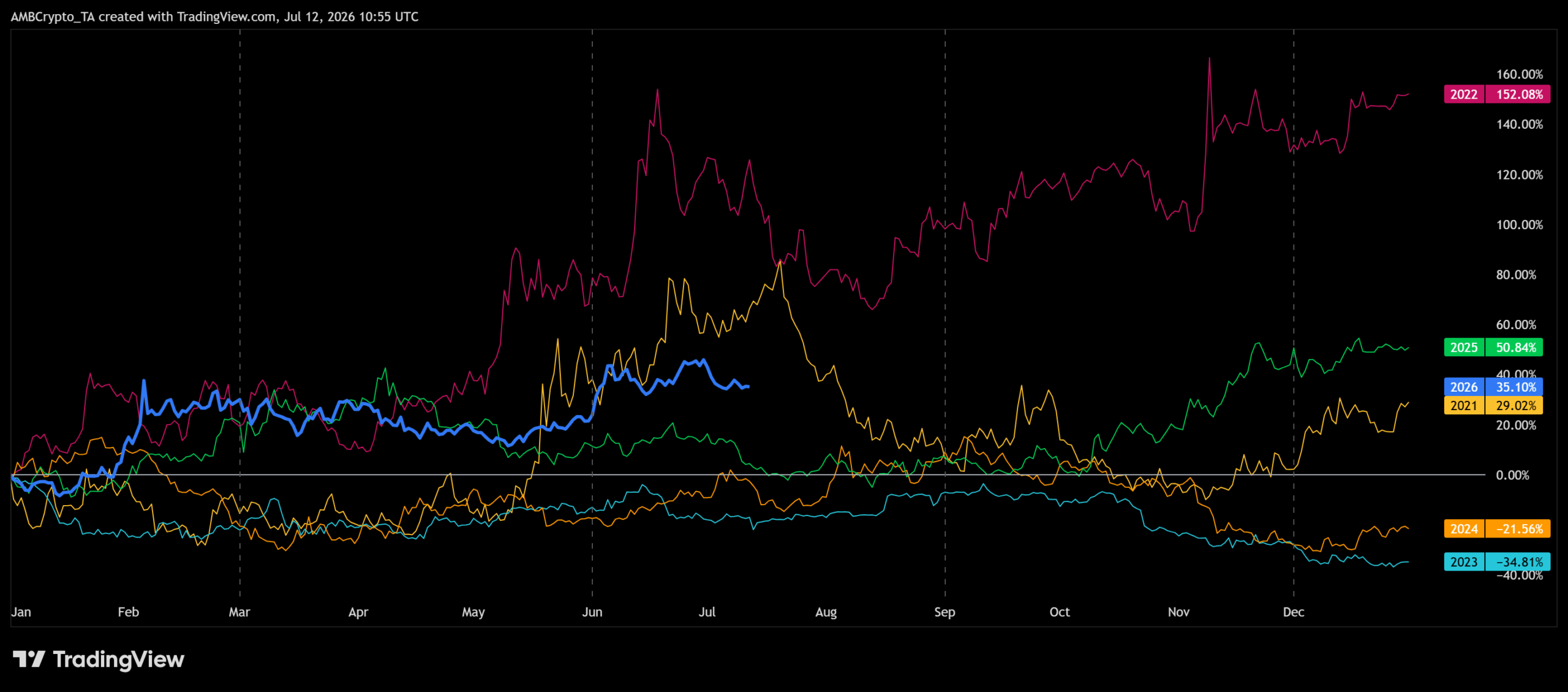
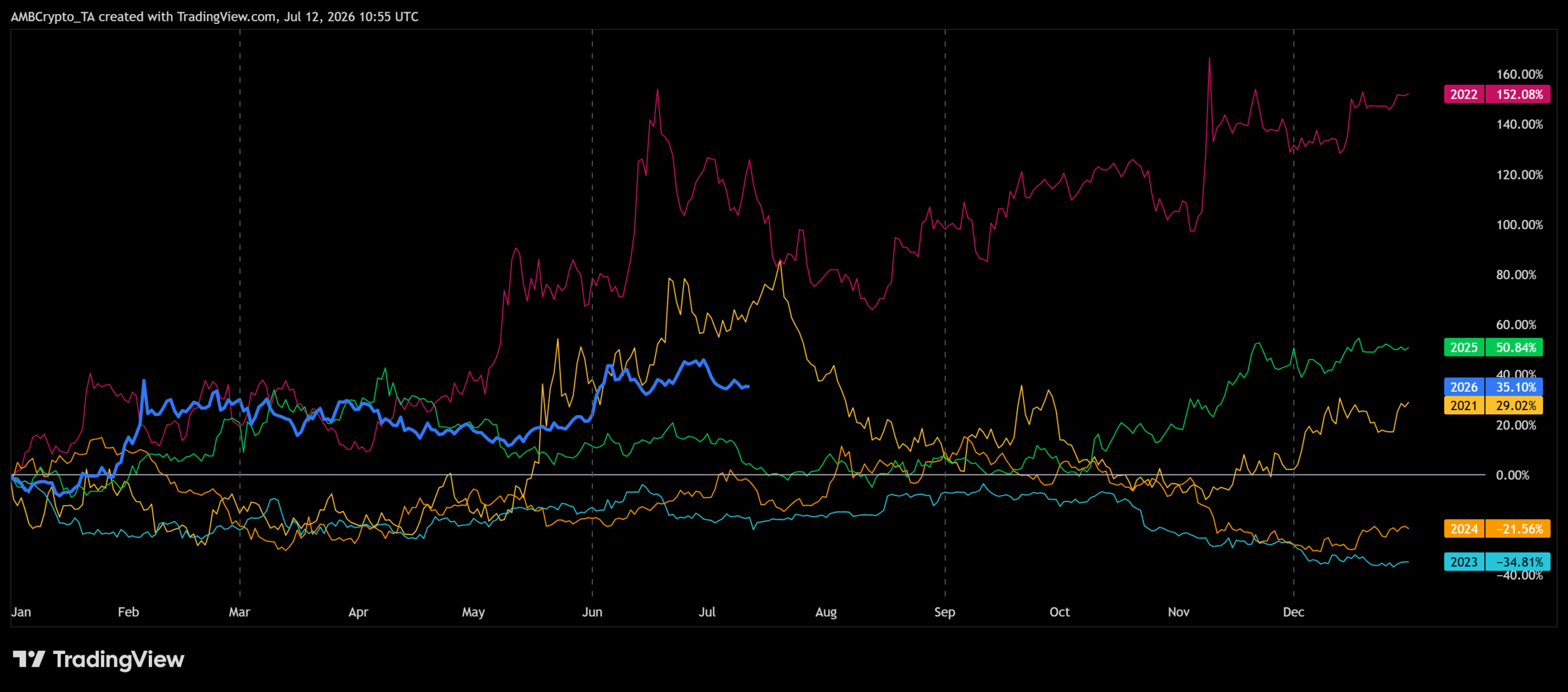
Seasonal data shows USDT usage at 35.1% by July 2026, outperforming 2021’s 29.0% in the same period.
Source: TradingView

It also stands well above 2024, during which usage remained in negative territory.

Cross-border payments drive stablecoin utility

That growing stablecoin preference is no longer reflecting caution alone. It is increasingly supporting real economic activity across blockchain networks.

As global payment firms expand stablecoin settlement, users are interacting with these assets far more frequently than in previous cycles.

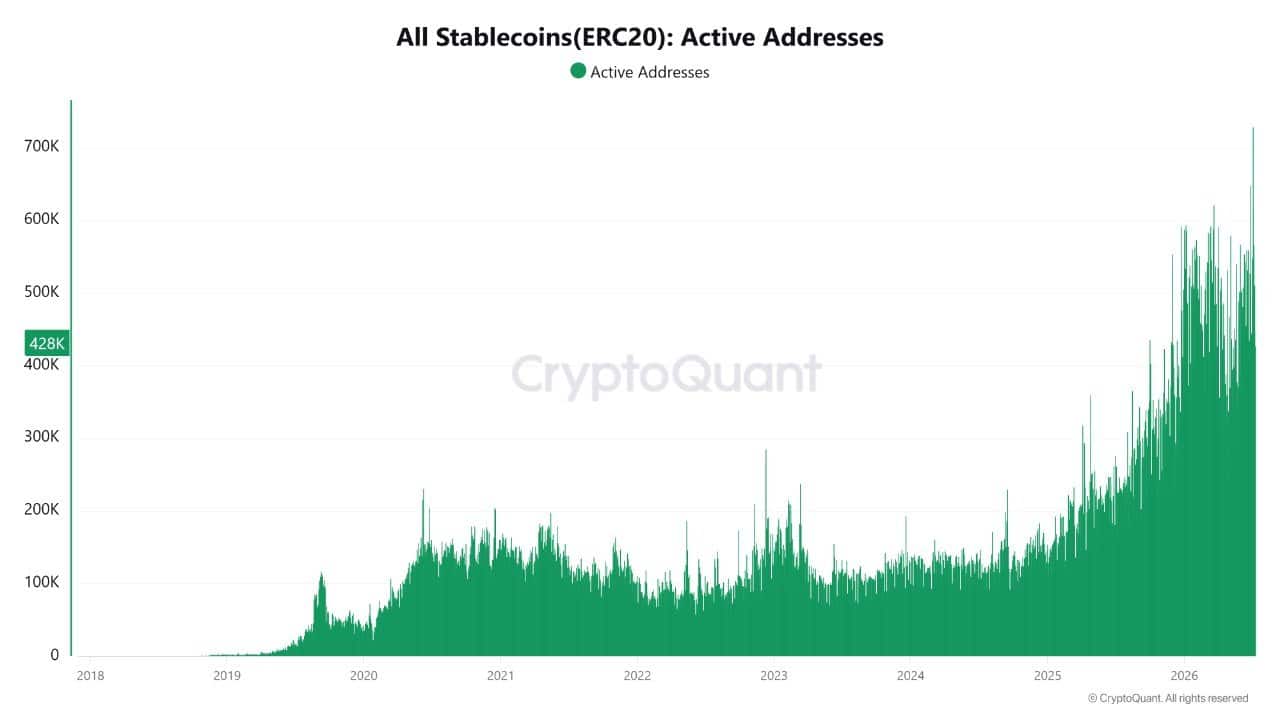
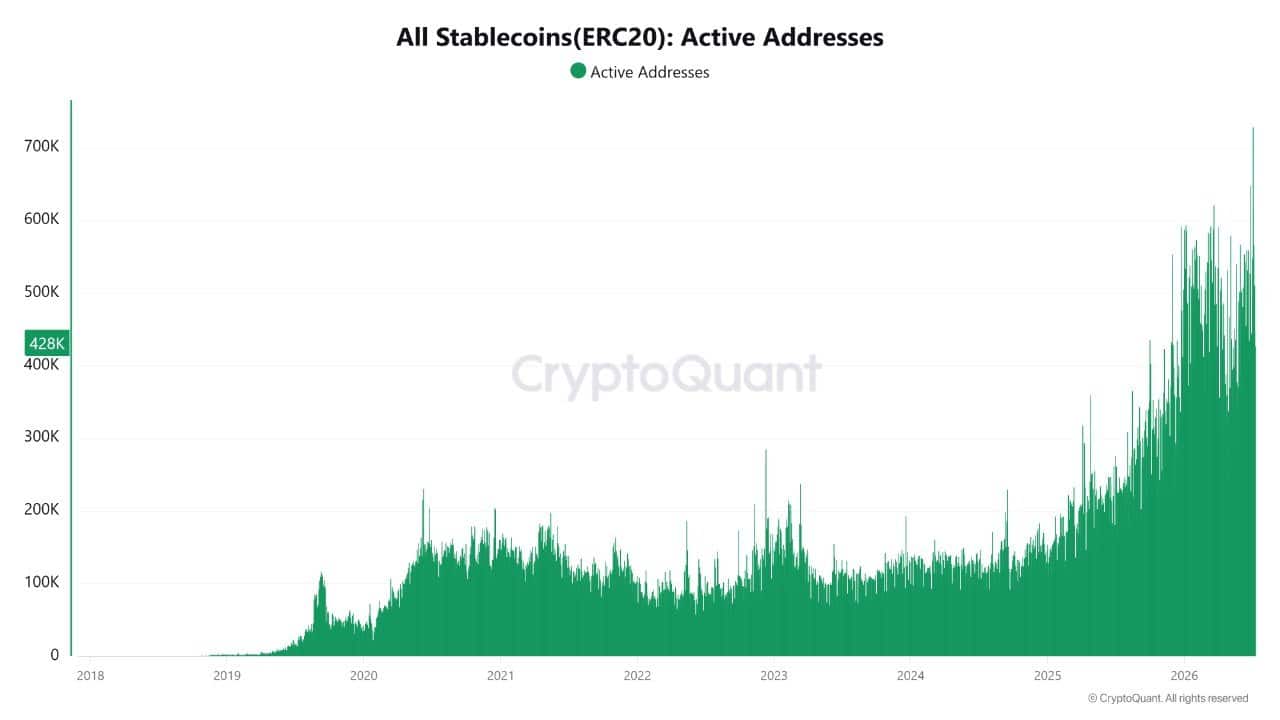
That shift is clear in the amount of ERC-20 stablecoin activity, which has increased significantly. Active addresses have surged, hovering between 400,000 and 700,000 daily since 2025.
Source: CryptoQuant

Stablecoins are being increasingly utilized by enterprises to support their cross-border settlement processes and treasury operations. This expansion coincides with Visa, Mastercard, PayPal, and Stripe integrating stablecoins into cross-border payment infrastructure.

Meanwhile, the market has expanded to nearly $312 billion, reinforcing that demand now extends beyond crypto-native participants. If payment adoption accelerates, transaction utility could emerge as a primary growth driver.

As stablecoins gain wider acceptance in global payments, corporate adoption is beginning to strengthen blockchain’s long-term foundation.

The primary motivation for corporations to develop financial products utilizing stablecoins is no longer solely the cost savings associated with reducing settlement costs.

However, institutional investors have yet to rotate their investment into Bitcoin [BTC] or Ethereum [ETH]. This indicates continued preference by institutional investors for cost-efficient transactional outcomes versus speculative returns.

If sustained, corporates will play an increasingly pivotal role in blockchain adoption. This will be through delivering stability through real-world utility rather than cycle-driven speculation.


Final Summary

  • USDT’s demand increasingly reflects payment utility alongside defensive investor positioning.
  • Stablecoin adoption continues expanding as corporate integration strengthens blockchain’s long-term utility.


Perguntas relacionadas

QAccording to the article, what percentage of the market is USDT usage projected to reach by July 2026, and how does this compare to 2021?

AUSDT usage is projected to reach 35.1% by July 2026. This outperforms the 29.0% usage in the same period in 2021.

QWhat is identified as a major real-world factor driving the increased utility and demand for stablecoins like USDT?

AThe major factor is their use in cross-border payments and settlements by enterprises, facilitated by integration from major payment firms like Visa, Mastercard, PayPal, and Stripe.

QWhat does the significant rise in daily active addresses for ERC-20 stablecoins (between 400,000 and 700,000 since 2025) indicate?

AIt indicates that users are interacting with stablecoin assets far more frequently than in previous cycles, reflecting growing real economic activity and utility on blockchain networks.

QWhat shift in corporate motivation for using stablecoins does the article describe?

AThe primary motivation is no longer solely cost savings from reduced settlement costs. It is increasingly about gaining stability through real-world utility and supporting treasury operations and payment infrastructure.

QBased on the article's 'Final Summary', what two key points summarize the current state and future of stablecoin adoption?

A1) USDT's demand increasingly reflects payment utility alongside defensive investor positioning. 2) Stablecoin adoption continues expanding as corporate integration strengthens blockchain's long-term utility.

Leituras Relacionadas

In Jinjiang, Fujian, a Storage Super Unicorn Lies Quiet

In Fujian's Jinjiang, a city known for sportswear, lies a quiet semiconductor giant: Fujian Jinhua Integrated Circuit Co. (JHICC). Once a promising domestic DRAM manufacturer alongside Yangtze Memory and ChangXin Memory Technologies (CXMT), its journey was derailed in 2018 when the U.S. placed it on an Entity List and filed criminal charges for alleged trade secret theft. This halted production for years. A turning point came in February 2024 when a U.S. federal court found JHICC not guilty. However, it had lost crucial time. While CXMT soared to become a top-valued A-share company in 2024, JHICC, with an estimated valuation of 80 billion RMB, was just restarting. Its current output is primarily customized DDR4 chips, not the advanced DDR5/HBM demanded for AI, but it still benefits from the broader memory chip upcycle. JHICC's story is tied to Chen Zhengkun, a veteran engineer who left Micron to lead the venture. Founded in 2016 with state-backed funding, JHICC partnered with Taiwan's UMC to develop DRAM technology. Rapid progress was cut short by the U.S. actions, which Micron initiated, partly due to its heavy reliance on the Chinese market. Post-sanctions, Chen's team worked to rebuild the production line with reduced reliance on U.S. technology. According to its records, JHICC achieved small-scale production and revenue growth under immense pressure. It now focuses on the stable "niche" DRAM market (e.g., TVs, routers) with a monthly capacity of ~40,000 wafers, aiming for 60,000 by 2026. It holds over 1,000 patents but remains on the Entity List. For Jinjiang, investing in JHICC was a bold industrial leap. The local government provided unwavering financial and logistical support during the crisis, helping the company survive. JHICC has become the anchor for a growing local semiconductor cluster. Though its scale lags behind domestic peers, JHICC's persistence symbolizes a hard-won foothold in a global market long dominated by Samsung, SK Hynix, and Micron. Having missed one boom, it seeks a place in the new AI-driven memory supercycle.

marsbitHá 1h

In Jinjiang, Fujian, a Storage Super Unicorn Lies Quiet

marsbitHá 1h

Trading

Spot
活动图片




