US Government Shutdown Again? Why the Somali Immigration Fraud Case Ends with the Crypto Market Footing the Bill

marsbitPublicado em 2026-01-26Última atualização em 2026-01-26

Resumo

U.S. Government Shutdown Risk Surges to 79%, Triggering Crypto Market Sell-off According to Polymarket, the probability of a U.S. government shutdown by the end of January has dramatically increased from 9% to 79%. This sudden spike, occurring over a weekend, caused an immediate negative reaction in the cryptocurrency market, leading to a sharp price decline. The potential shutdown stems from a political impasse over funding for the Department of Homeland Security (DHS). The current funding, a temporary "Continuing Resolution" from a compromise bill passed in November, is set to expire on January 30th. The deadlock is directly linked to recent aggressive immigration enforcement actions. Following a massive welfare fraud case involving Somali immigrants in Minnesota (with confirmed losses of $240 million and potential losses up to $9 billion), former President Trump called for a crackdown. This led to the deployment of approximately 2,000 ICE agents to Minneapolis. During these operations, ICE agents shot and killed two U.S. citizens, sparking major public controversy. Senate Democrats are now opposing the House's funding bill for DHS, demanding accountability and reform for ICE's conduct. Republicans, however, are pushing for their border security agenda. This funding stalemate is the direct cause of the heightened shutdown risk. The crypto market absorbed the initial shock of this political news over the weekend, acting as the first "payer" for the crisis. The sell-off r...

Author: Demir, C Labs Crypto Observer

According to data from Polymarket, the probability of a US government shutdown by the end of the month has suddenly surged from 9% to 79%!
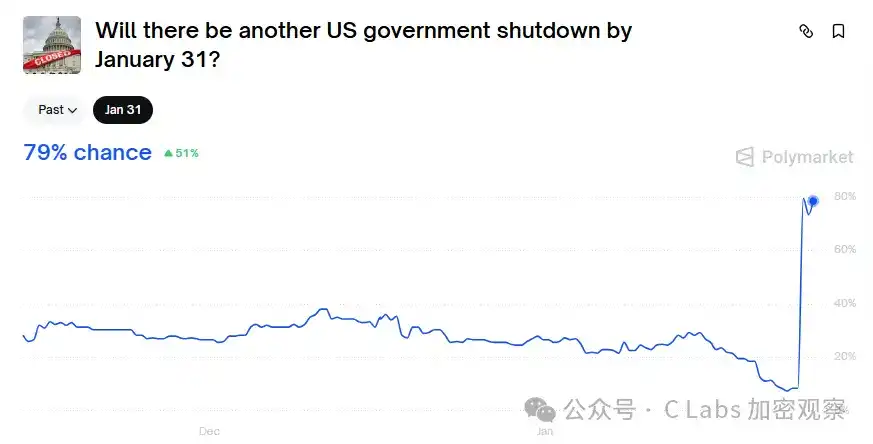
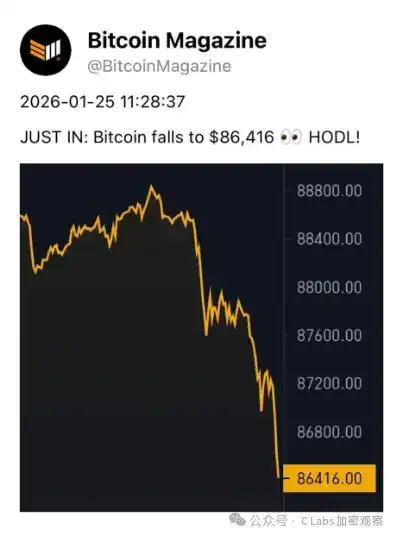
Due to the sudden nature of the event and it being a weekend, the crypto market has already taken a hit:
It's important to remember that the US government had already experienced a record 43-day shutdown starting on October 1st of last year, which ultimately ended on November 12, 2025, with the passage of a compromise bill (While the Binance community was celebrating, the US government had already been shut down for two weeks...).

Now, barely over two months have passed since that compromise bill, so why is there another potential shutdown?

01. Why is the government shutting down again?

The reason for this potential US government shutdown is that the bill passed last year was only a "Continuing Resolution" (CR), which temporarily extended funding authorization for most government agencies until January 30, 2026.
Only a few departments (such as the Department of Agriculture, Veterans Affairs, and Congressional operations themselves) received full-year funding.

Congress must pass a new, longer-term bill before January 30th; otherwise, agencies without full-year funding will face another lapse.
The reason for this shutdown threat is that Democrats disagree with the funding allocation plan for the Department of Homeland Security (DHS), citing recent shootings involving Immigration and Customs Enforcement (ICE) agents.

02. Originating from Somali Immigrant Fraud

Trump has recently been heavily focused on the Somali immigrant fraud case in Minnesota, using it as a pretext to intensify crackdowns on illegal immigration in the area.

However, ICE agents conducted two enforcement operations in Minneapolis, resulting in the fatal shootings of two US citizens, which has caused significant controversy in US public opinion.

The relief fund fraud case involving Somalis has confirmed losses of over $240 million, with other reports suggesting total losses could be as high as $9 billion.

Trump consequently made strong public statements, saying Somalis should "get out of the US," and accused officials of "inciting rebellion."

Using this as a pretext, the Department of Homeland Security (DHS) escalated its enforcement actions against illegal immigration, deploying approximately 2,000 additional ICE agents to Minneapolis, the capital of Minnesota. The initial targets of the operation were Somalis with final orders of removal.
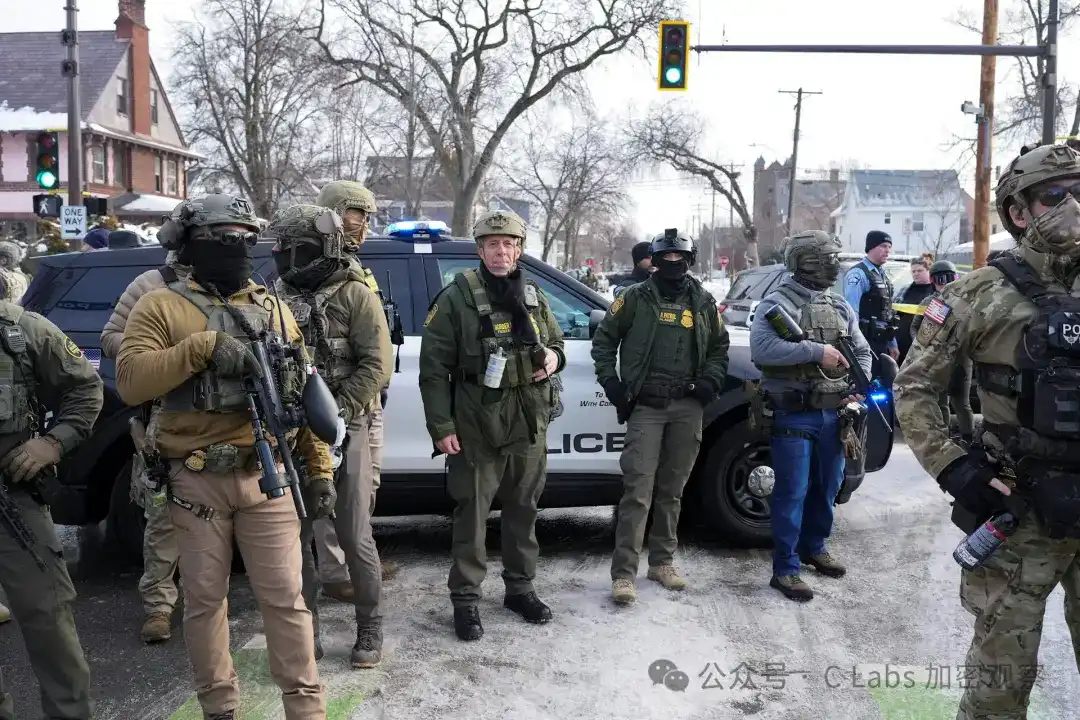
But it was these aggressive enforcement actions and the subsequent shootings of US citizens by ICE agents that have now led Senate Democrats to oppose the House appropriations bill containing DHS funding.

Democrats are demanding accountability and reform for ICE's actions, while Republicans want to continue pushing their border security agenda.
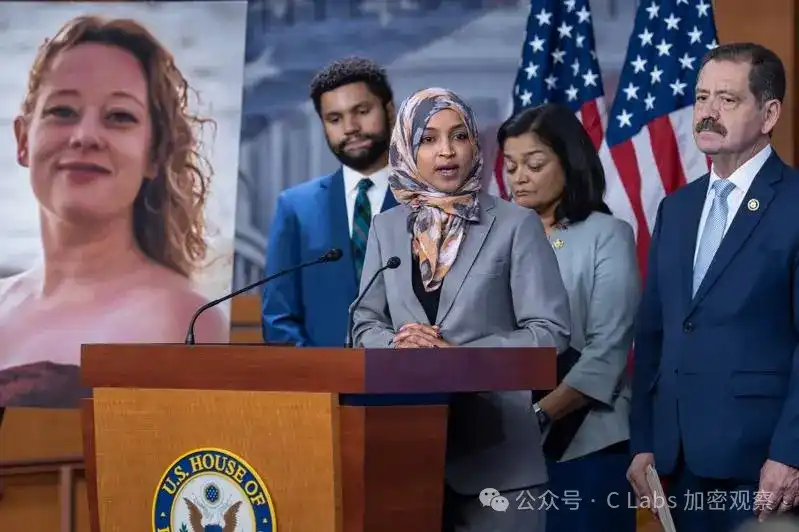
This deadlock directly leads to the current risk of a government shutdown.

03. Crypto Market Becomes the "Payer"

The Somali fraud case appears massive, with confirmed losses of $240 million and potential total involvement up to $9 billion.
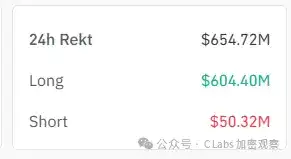
Because Democrats suddenly raised objections over the weekend to the funding for DHS, it is once again the crypto market that is bearing the brunt of this shock.

Today's crash in the crypto market, caused by the risk of a US government shutdown, has already resulted in over $600 million in long positions being liquidated in a single day, and the crypto market capitalization has evaporated by more than $30 billion in one day...

So, the money defrauded from US government welfare by Somalis in Minnesota has finally been paid for by the crypto market today.

As for how the US stock market will react, we'll have to wait until it opens tomorrow to find out~


Perguntas relacionadas

QWhy is the U.S. government facing another potential shutdown at the end of January?

AThe U.S. government is facing a potential shutdown because the previous continuing resolution (CR) that funded most government agencies expires on January 30, 2026. A new, longer-term funding bill must be passed by Congress before this date to avoid a shutdown for agencies that did not receive full-year funding.

QWhat specific event triggered the Democratic Party's opposition to the Department of Homeland Security (DHS) funding bill?

AThe Democratic Party's opposition was triggered by recent U.S. Immigration and Customs Enforcement (ICE) agent shootings that resulted in the deaths of two American citizens during enforcement actions in Minneapolis, leading to demands for ICE accountability and reform.

QWhat was the connection between the Somali immigrant fraud case and the increased ICE enforcement actions?

AFormer President Trump used the massive Somali immigrant relief fund fraud case (involving up to $9 billion) as a reason to intensify crackdowns on illegal immigration, leading to the deployment of approximately 2,000 additional ICE agents to Minneapolis and the subsequent controversial enforcement actions.

QHow did the cryptocurrency market react to the increased probability of a U.S. government shutdown?

AThe cryptocurrency market reacted negatively, experiencing a sharp decline over the weekend. This led to over $6 billion in long positions being liquidated in a single day and a loss of more than $30 billion in market value.

QWhich government agencies were already funded for the full year and thus not affected by the potential shutdown?

AA few departments, including the Department of Agriculture, the Department of Veterans Affairs, and the operations of Congress itself, had already received full-year funding and would not be affected by the potential shutdown.

Leituras Relacionadas

Must-Watch Events Next Week|CLARITY Act Could Face Senate Vote; SpaceX, Circle to Report Earnings (8.3-8.9)

**Summary: Key Events and Developments to Watch (August 3-9)** The upcoming week is marked by significant financial disclosures, key legislative deadlines, and notable product updates. **Major Financial Events:** Several companies are scheduled to release their Q2 2026 earnings. American Bitcoin (ABTC) will report on August 3, followed by SpaceX and Hut 8 Mining Corp. on August 4, and Circle on August 5. Notably, a significant portion of SpaceX shares (up to 12% of total shares) will be unlocked on August 6 following their earnings release. **Key Legislative Deadline:** The U.S. Senate faces an August 7 deadline to secure 60 votes for the CLARITY Act, a bipartisan bill aiming to establish a federal regulatory framework for cryptocurrencies. The Senate may hold a full vote on the bill during the week. **Economic Data:** The U.S. July Non-Farm Payrolls report will be released on August 7, providing crucial labor market data. **Technology & Product Updates:** * **Shutdowns:** DeFi portfolio tracker Zapper and wallet app Ctrl Wallet will cease operations on August 3. * **Upgrades:** LayerZero will deprecate its v1 relayers on August 3. XRP Ledger's new version 3.3.0, featuring five new functions, is expected next week. * **AI:** Elon Musk announced that the advanced Grok 4.6 AI model is set for release around August 7. * **Bitcoin:** The BIP-110 forced signaling for a potential Bitcoin network change is scheduled to begin around August 8. **Other Notable Events:** Chinese robotics firm Unitree Tech has set its preliminary price inquiry for its IPO for August 5. South Korean exchange Upbit will delist AQT and AERGO tokens on August 3.

marsbitHá 2h

Must-Watch Events Next Week|CLARITY Act Could Face Senate Vote; SpaceX, Circle to Report Earnings (8.3-8.9)

marsbitHá 2h

Stocks Are Plummeting More Sharply Than Cryptocurrencies. Where Has the Money Gone?

Stock Markets Plunge Deeper Than Cryptocurrencies: Where Did the Money Go? In late July, Seoul's Kospi index triggered circuit breakers for two consecutive days, plummeting over 40% from its June high. The collapse was led by heavyweight stocks like SK Hynix, whose record profits still disappointed investors, and devastating leveraged ETFs, with one major product losing over 83% of its value. This signaled a global, forced deleveraging targeting the most crowded trades. Interestingly, while stocks exhibited extreme volatility akin to crypto markets, Bitcoin rose nearly 15% in July after a prior steep drop. Analysis shows the money fleeing equities did not flow into Bitcoin. Instead, Bitcoin had already absorbed its sell-off in May-June, when U.S. spot Bitcoin ETFs saw historic outflows. The true safe-haven beneficiary was gold, whose price rose over 20% year-on-year, highlighting a decoupling between Bitcoin and gold as "digital gold." The sell-off was a targeted unwinding of leveraged positions in tech and semiconductors, accelerated by broker-dealer risk management and shifts in the AI narrative, including new competition from Chinese memory chipmakers. The retreat path was clear: from high-valuation tech stocks to cash and U.S. Treasuries, then to gold. For Bitcoin to attract sustained institutional inflows, conditions like eased global liquidity pressure, a "soft-landing" Fed rate cut, and U.S. regulatory clarity via legislation like the stalled CLARITY Act are needed. Currently, Bitcoin is not a safe haven but an already-cleared asset. Its low correlation with tech stocks, however, makes it a potential diversification play for institutional portfolios once the storm passes. The money isn't here yet, but the positioning is underway.

marsbitHá 2h

Stocks Are Plummeting More Sharply Than Cryptocurrencies. Where Has the Money Gone?

marsbitHá 2h

In Conversation with Ray Dalio: We Are Currently in an AI Bubble, with 1% of My Portfolio in Bitcoin

Ray Dalio, founder of Bridgewater Associates, warns in an interview that the current AI boom shows classic bubble characteristics, which could lead to significant economic downturns as seen in past cycles like 1929 or 2000. He explains that speculative enthusiasm, fueled by debt and overvaluation, often precedes a crash when rising rates or taxation force asset sales, causing widespread losses and recession. Dalio also outlines his "Big Cycle" theory, describing an approximate 80-year pattern where widening wealth gaps, massive government deficits, and shifting geopolitical power (like China's rise) create internal conflict and global instability. He emphasizes that we are in a late-cycle, transitional phase where traditional powers like the US and UK face decline. For personal wealth protection, Dalio advises diversification beyond cash into assets like stocks, bonds, real estate, and particularly gold, which he prefers over Bitcoin. While he holds about 1% of his portfolio in Bitcoin as a non-printable hard asset, he views gold as more secure from technological or governmental threats. Regarding AI's impact, Dalio believes it will disproportionately benefit capital owners, worsening inequality by replacing both physical and cognitive labor. He suggests that human intuition and emotional intelligence, combined with AI, will be key for future workers. On taxation, Dalio argues that wealth taxes are impractical and risk triggering asset sell-offs, reducing productive investment. He points to the UK as a cautionary example of debt, low productivity, and political strife. Geopolitically, Dalio foresees a more regionalized world, with the US showing weakness in prolonged conflicts like with Iran, akin to past imperial declines. The ideal outcome, he suggests, is coexisting powerful blocs (e.g., Americas, China-Asia Pacific) without major war.

marsbitHá 5h

In Conversation with Ray Dalio: We Are Currently in an AI Bubble, with 1% of My Portfolio in Bitcoin

marsbitHá 5h

Trading

Spot
活动图片




