US Crypto Firms Face Prolonged Compliance Limbo as Market Structure Bill Slips

bitcoinistPublicado em 2026-01-07Última atualização em 2026-01-07

Resumo

A key U.S. legislative effort to regulate cryptocurrencies, the market structure bill (CLARITY Act), faces significant delays and may not pass until 2027, with full implementation potentially extending to 2029. According to TD Cowen analysts, political dynamics—including Democratic concerns over conflicts of interest—are stalling progress. A major point of contention is a provision restricting government officials and their families from crypto ownership, which directly impacts former President Trump’s family. A proposed three-year delay in enforcement would push the rule beyond the next presidential term. The uncertainty prolongs regulatory limbo for crypto firms, potentially hindering institutional adoption and innovation in the U.S. Meanwhile, Bitcoin trades near $94,000 as of early 2026, and international regulatory frameworks continue to advance.

A key U.S. legislative effort to regulate the cryptocurrency market is facing delays that could push the passage of the crypto market structure bill to 2027, with full implementation possibly extending to 2029.

Analysts at TD Cowen warn that political dynamics in Congress, including concerns about conflicts of interest, are slowing progress, leaving crypto firms in regulatory uncertainty.
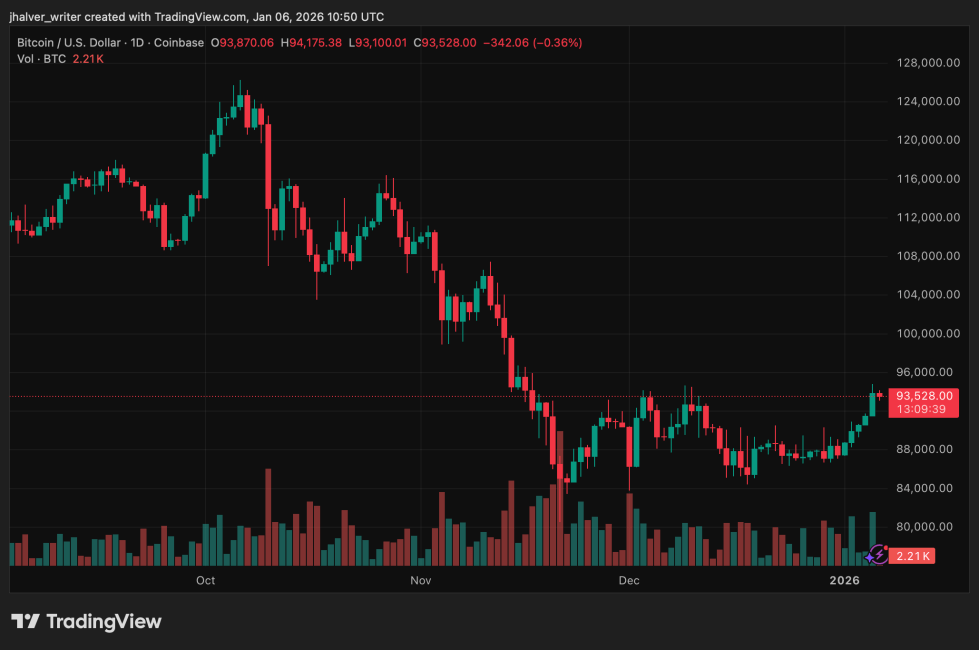
BTC's price climbs back above $90,000 on the daily chart. Source: BTCUSD on Tradingview

Political Roadblocks Delay Crypto Regulation

The crypto market structure bill, which aims to provide a clear regulatory framework for digital assets in the U.S., had been expected to advance this year. However, TD Cowen’s Washington Research Group, led by managing director Jaret Seiberg, says the bill’s approval timeline is now uncertain.

Political calculations tied to the 2026 midterm elections have reduced the urgency among Democrats to push the bill quickly, especially if they anticipate regaining control of the House of Representatives.

Seiberg notes that the Democratic Party’s insistence on strict conflict-of-interest rules, particularly those that would prevent senior government officials and their families from operating or owning cryptocurrency businesses, is a major sticking point.

This provision directly affects President Donald Trump and his family, who have reported significant crypto-related investments, including ventures in decentralized finance (DeFi) projects and bitcoin mining firms.

The proposed solution is to delay enforcement of these conflict-of-interest rules for three years after the bill’s enactment. This compromise would push the effective date beyond the next presidential term, potentially avoiding immediate impact on the Trump family’s crypto interests.

Impact on the Crypto Industry and Market Oversight

The delayed timeline means crypto firms will face ongoing regulatory uncertainty during a critical period of market growth. The bill, known as the CLARITY Act, aims to divide oversight responsibilities between the SEC and the Commodity Futures Trading Commission (CFTC), clarifying the regulation of different digital assets.

The legislation also includes provisions that could exempt certain cryptocurrencies from specific registration requirements, aiming to strike a balance between investor protection and innovation.

However, the path forward remains complicated. Senate committees are scheduled to revisit the bill later this year, but overcoming procedural hurdles, such as filibusters, will require bipartisan support, which remains uncertain.

Investors are advised to prepare for a protracted period of unclear regulatory conditions, which could influence where companies choose to invest and innovate.

Preparing for a Shifting Regulatory Landscape

Despite the delays, the crypto market remains active, with Bitcoin’s price hovering near $94,000 as of early January 2026. Still, the absence of clear rules risks slowing institutional adoption and long-term infrastructure development in the U.S.

Meanwhile, the international regulatory environment continues to evolve, with regions such as the European Union and Singapore advancing their own frameworks.

Industry groups like the Blockchain Association and Coin Center continue to engage with lawmakers, advocating for practical regulations that support growth and protect consumers.

The upcoming January 15 congressional hearing is seen as a critical moment for clarifying legislative intent, but the overall trajectory suggests that U.S. crypto firms will face extended uncertainty before comprehensive rules take effect.

Cover image from ChatGPT, BTCUSD chart from Tradingview

Perguntas relacionadas

QWhat is the main reason for the delay in the crypto market structure bill according to TD Cowen analysts?

APolitical dynamics in Congress, including concerns about conflicts of interest and the Democratic Party's insistence on strict rules that would prevent senior government officials and their families from operating or owning crypto businesses, are slowing progress.

QHow does the proposed conflict-of-interest provision specifically relate to former President Donald Trump?

AThe provision directly affects President Donald Trump and his family, who have reported significant crypto-related investments, including ventures in decentralized finance (DeFi) projects and bitcoin mining firms.

QWhat is the proposed compromise to address the conflict-of-interest issue and when would it take effect?

AThe proposed solution is to delay enforcement of these conflict-of-interest rules for three years after the bill’s enactment, pushing the effective date beyond the next presidential term.

QWhich two agencies would the CLARITY Act assign oversight responsibilities to for the crypto market?

AThe CLARITY Act aims to divide oversight responsibilities between the SEC (Securities and Exchange Commission) and the CFTC (Commodity Futures Trading Commission).

QWhat is the potential impact of the regulatory delay on the U.S. crypto industry according to the article?

AThe delayed timeline means crypto firms will face ongoing regulatory uncertainty, which could slow institutional adoption, influence where companies choose to invest and innovate, and risk slowing long-term infrastructure development in the U.S.

Leituras Relacionadas

Bitcoin Withdrawals Continue: 8 Years of Storage in a Coldcard Cold Wallet Ended in Zero

Coldcard Hardware Wallet Hacked: Losses Mount Due to Vulnerable Seed Generation A critical vulnerability in Coldcard hardware wallets has led to a continued wave of fund thefts. According to Galaxy Research, the total stolen has reached 1,367.05 BTC (approx. $88.6 million) from 4,585 addresses, a significant increase from the initial 594.5 BTC reported on July 30, 2026. Most of the stolen funds remain on the attackers' addresses. The issue is not with the current firmware, which Coinkite has updated, but with seed phrases generated on vulnerable devices between March 2021 and the release of fixed firmware versions. Due to a programmer error, devices switched from using a hardware random number generator to the software-based Yasmarang generator, which was initialized with publicly accessible data like the chip's serial number. This made the seed phrases predictable through offline brute-force attacks, meaning wallets remain at risk until funds are moved to a new wallet generated with the patched firmware. Affected devices include Mk2/Mk3 with firmware 4.0.1–4.1.9 (and up to 5.0.3), Mk4/Mk5 up to version 5.6.0, and Q models up to 1.5.0Q. The only exceptions are seeds created with a high-entropy method like at least 50 independent dice rolls or a strong unique BIP-39 passphrase. All other owners must generate a new seed on the fixed firmware and transfer their assets. A case highlighting the human impact involves a 39-year-old long-term investor who lost 2 BTC (approx. $130,000) in minutes. He had accumulated the Bitcoin over eight years through physical labor, viewing it as a financial lifeline and a retirement plan in a country suffering from hyperinflation. His story underscores that even conservative "buy and hold in cold storage" strategies can be compromised by such underlying technical flaws. From a technical perspective, this incident echoes historical failures where weak random number generators undermined cryptographic security, challenging the assumption that offline storage is automatically foolproof.

cryptonews.ruHá 1h

Bitcoin Withdrawals Continue: 8 Years of Storage in a Coldcard Cold Wallet Ended in Zero

cryptonews.ruHá 1h

Trading

Spot
活动图片





