U.S. banks can now broker Bitcoin, Ethereum, XRP, and Solana trades — officially!

ambcryptoPublicado em 2025-12-09Última atualização em 2025-12-09

The Office of the Comptroller of the Currency [OCC] has confirmed that U.S. national banks may legally conduct “riskless principal” transactions in crypto-assets.

This extends existing brokerage powers to digital assets that are not classified as securities—including Bitcoin.

In OCC Interpretive Letter #1188, released on 9 December, the OCC stated that banks can purchase crypto and immediately resell it to a customer without incurring market exposure. This thereby places crypto brokerage activity under established banking functions.

Also, the ruling effectively clears a regulatory path for banks to offer direct crypto execution without relying on external platforms.

Part of a wider realignment driven by the GENIUS Act

The OCC interpretive letter follows structural changes ushered in by the GENIUS Act. The Act removed outdated restrictions and clarified the legal basis for tokenized and digital-asset activity across federal agencies.

The OCC letter points to a shift from treating crypto as an exception to recognising its role inside the existing banking framework.

Furthermore, by treating crypto brokerage as a normal banking activity, the OCC is signalling that regulated intermediaries are now expected to participate in digital-asset markets rather than avoid them.

This creates room for banks to design client-facing crypto products under supervisory oversight, rather than pushing customers toward offshore exchanges.

OCC letter follows CFTC approval for tokenized collateral

The OCC interpretive letter arrives just one day after the Commodity Futures Trading Commission [CFTC] launched a pilot program. The program allows Bitcoin, Ethereum, and USDC to be used as collateral in U.S. derivatives markets.

That initiative also withdrew older guidance now considered outdated under the GENIUS Act. It introduced formal guardrails for tokenized settlement, custody, and capital requirements.

Together, the OCC and CFTC developments signal a coordinated regulatory approach aimed at bringing crypto trading, settlement, and collateral inside U.S. market infrastructure rather than leaving it to offshore venues.

Toward a regulated, onshore crypto market

U.S. regulators are moving from enforcement toward integration, positioning tokenization and digital assets within the supervisory perimeter.

This shift could enhance safety, reduce reliance on foreign exchange markets, and accelerate institutional adoption by providing familiar regulatory treatment.


Final Thoughts

  • The OCC interpretive letter gives banks legal clarity to intermediate crypto as part of normal brokerage functions.
  • Combined with the CFTC collateral approval, the U.S. appears to be transitioning toward regulated onshore crypto markets rather than excluding digital assets from the financial system.

Leituras Relacionadas

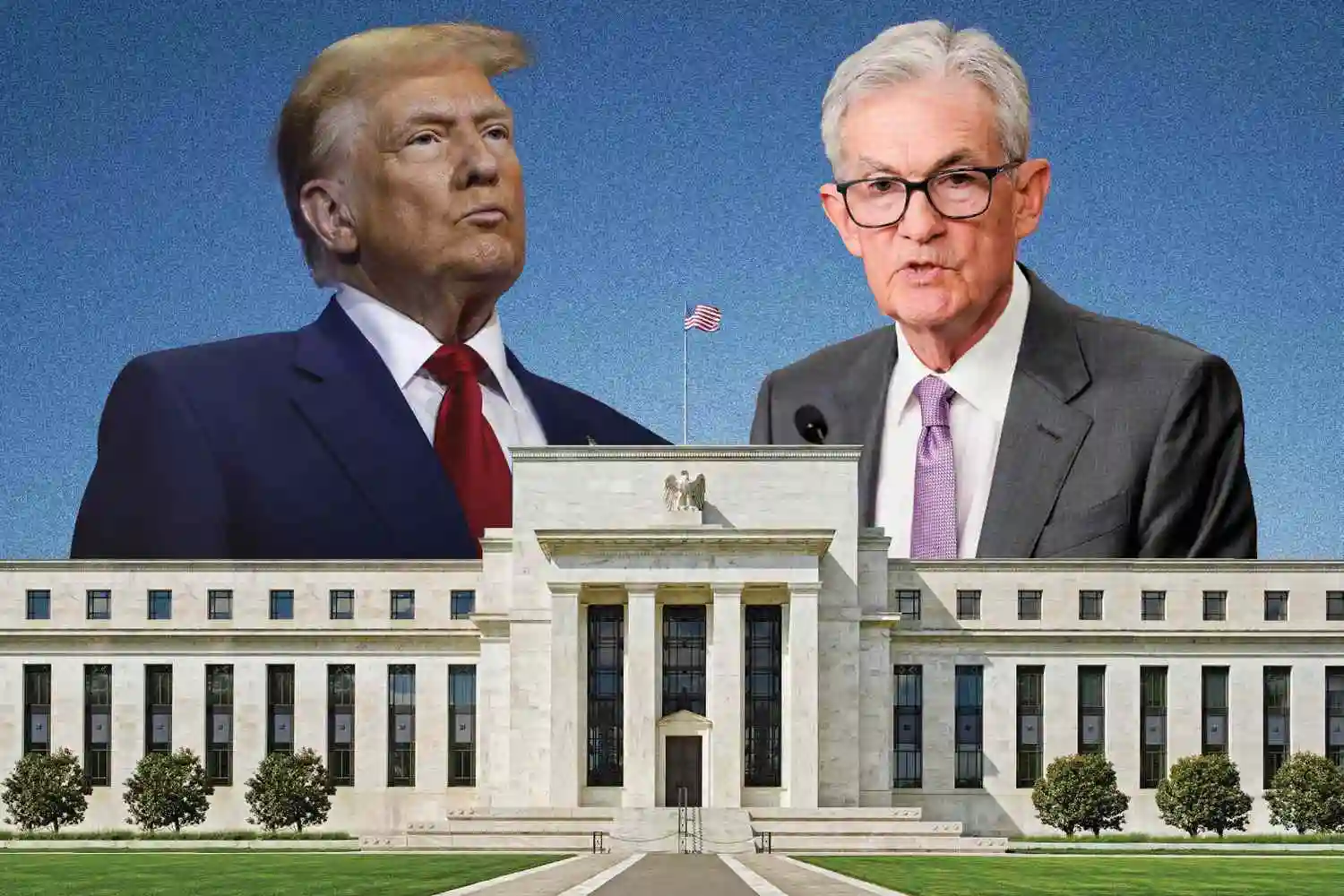
On the Night of the Fed Rate Cut, the Real Game Is Trump's 'Monetary Power Grab'

Tonight marks the Federal Reserve's most anticipated interest rate decision of the year. While a 25-basis-point cut is widely expected, the key variable for risk assets is whether the Fed will restart liquidity injections, potentially through a $45 billion monthly short-term debt purchase program starting in January. This signals a stealth return to quantitative easing. The larger tension stems from an unprecedented shift in monetary power. President Trump is rapidly reshaping the Federal Reserve, not just by replacing its chair but by redrawing the boundaries of monetary authority. The long-held principle of central bank independence is being eroded as the Treasury Department seeks to reclaim control over long-term interest rates, liquidity, and the balance sheet. This transition to a "fiscally dominated monetary era" is the underlying logic connecting recent market events. Despite a 40 billion outflow from Bitcoin ETFs, analysis suggests this was not panic selling but the unwinding of leveraged basis trades, leaving a healthier, less leveraged market. Meanwhile, led by Michael Saylor, made its largest Bitcoin purchase in months ($963 million), and Tom Lee's BitMine significantly increased its Ethereum holdings, signaling strong institutional conviction during the downturn. The macro shift implies higher market volatility as the old order fractures. While improved liquidity may provide a floor for Bitcoin, its longer-term trajectory awaits clarity within this new monetary framework, where Treasury, not the Fed, may ultimately dictate key financial conditions.

marsbitHá 11m

On the Night of the Fed Rate Cut, the Real Game Is Trump's 'Monetary Power Grab'

marsbitHá 11m

The Dark Side of Altcoins

The article "The Dark Side of Altcoins" argues that most cryptocurrency tokens inevitably fail due to a fundamental structural conflict between company equity and token holders. Most crypto projects are essentially traditional companies with equity-held founders, VC investors, and profit motives, which later issue a token. This creates irreconcilable incentives: equity seeks to capture value (revenue, profit, control) for the company and shareholders, while tokens need value (fees, buybacks, governance) to accrue to the protocol and holders. Equity almost always wins, leading to token value drainage. The piece highlights Hyperliquid as a rare success because it avoided VC equity financing entirely. Without a board or pressure to deliver value to shareholders, it could direct all economic value to its protocol and token. Legally, tokens cannot function like stocks without being deemed unregistered securities (if they offer dividends, ownership, etc.), which would trigger severe regulatory crackdowns. The optimal structure is one where the company holds no equity, captures no revenue, and all value flows to token holders via protocol mechanisms, with a DAO governing economic decisions. However, the only way to eliminate all conflict is to become a fully decentralized protocol like Bitcoin or Ethereum, with no company, no equity, and neutral, autonomously running infrastructure. The core issue is structural, not market conditions. Tokens are mathematically destined to fail if the project had VC rounds, private token sales, investor unlock schedules, or allows the company to capture revenue. Success requires value directed to the protocol, no VC equity, aligned founder/tokenholder incentives, and an economically irrelevant company. The solution is for investors to stop funding poorly designed projects. The future of the industry depends on capital flowing to projects with sound tokenomics, like those pioneered by Hyperliquid, MetaDAO, and Street.

深潮Há 15m

The Dark Side of Altcoins

深潮Há 15m

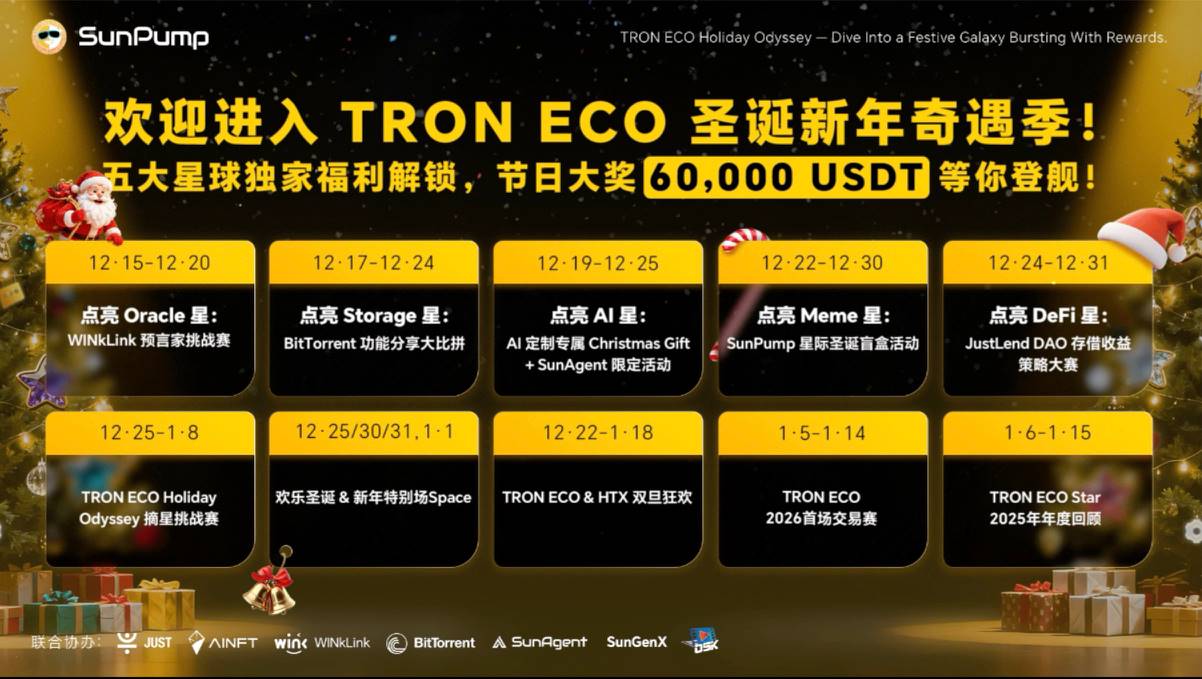
Prize Pool 60,000 USDT: "TRON ECO Holiday Odyssey" Annual Ecological Exploration Gala Set to Begin

TRON ECO launches its "Holiday Odyssey" event, a large-scale year-end celebration from December 10, 2025, to January 18, 2026, featuring a total prize pool of 60,000 USDT. The event centers around five core ecosystem projects—SunPump, JUST, AINFT, BitTorrent, and WINkLink—each representing a "holiday planet" with unique interactive tasks. Participants can complete missions to earn rewards, including limited edition TRON ECO merchandise. Key activities include planet-specific tasks such as price prediction with WINkLink, engagement with BitTorrent’s decentralized storage, AI-themed meme creation via SunGenX, a Christmas blind box event with SunPump, and a DeFi strategy competition with JUST. A major "Star Challenge" from December 25 to January 8 offers a 10,000 USDT prize pool supported by sponsors including OSK, Biconomy, and PepeOnTron. Additional features include holiday-themed Twitter Spaces sessions and a joint campaign with HTX exchange boasting over 40,000 USDT in rewards. The event highlights TRON's growing ecosystem, which recently surpassed 250 million accounts and continues to expand across DeFi, AI, and storage sectors. Recent upgrades in AI infrastructure, tokenomics, and user experience tools like SunAgent aim to strengthen TRON’s position as a leading smart contract platform. "Holiday Odyssey" invites the global community to explore TRON’s ecosystem and participate in its end-of-year festivities.

深潮Há 28m

Prize Pool 60,000 USDT: "TRON ECO Holiday Odyssey" Annual Ecological Exploration Gala Set to Begin

深潮Há 28m

Trading

Spot
Futuros
活动图片