
Author: Zen, PANews
In the US financial regulatory system, the Comptroller of the Currency (OCC) is not the position that most frequently appears in mainstream media headlines, but it is almost always at the forefront of changes in banking rules.
The OCC currently oversees over a thousand banks and related institutions, and the Comptroller is also a member of the FDIC (Federal Deposit Insurance Corporation) board, a member of the Financial Stability Oversight Council. Their judgments do not just affect a few banks, but influence how the US banking system confronts risk, innovation, and new technologies.
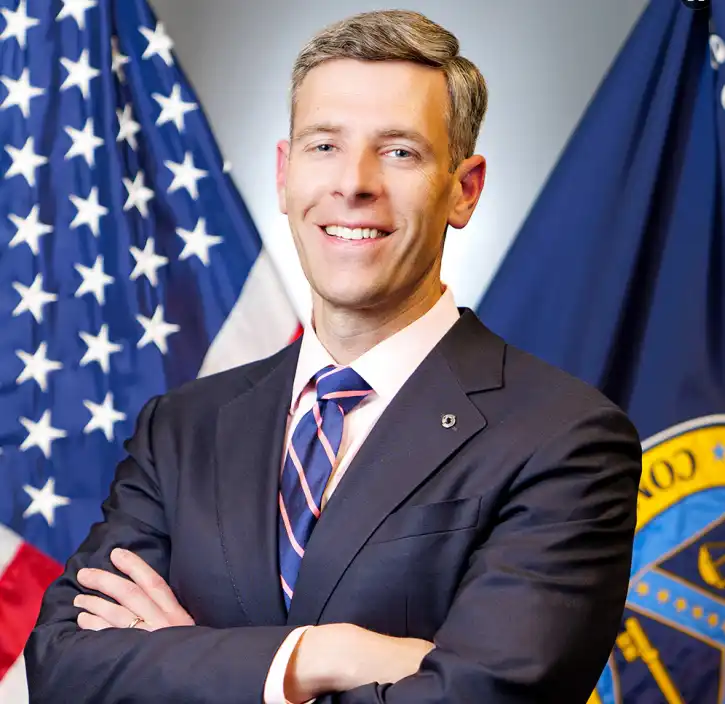
Currently at the helm of this key department, which regulates national banks and federal savings associations, is Jonathan V. Gould. His distinct regulatory approach has, over the past year, drawn the collective attention of Wall Street, Silicon Valley, and the crypto industry.
Gould does not believe the banking system should maintain safety by排斥 (excluding) new things, nor does he believe cryptocurrencies should inherently be banished from the regulated financial system. His core philosophy is that any activity permitted by law, and which can be conducted under safe and sound conditions, is best done within the banking system, because only then can regulators truly constrain and utilize it.
This has also made him one of the most noteworthy and controversial figures in Trump's second-term financial regulatory landscape.
From Financial Law Elite to Regulator
Looking at Jonathan V. Gould's career path, he is not a technocrat focused on a single field, but rather a Washington financial law elite who has moved repeatedly between Congress, regulatory agencies, law firms, consulting companies, and financial institutions.
Gould graduated from Princeton University and later received a law degree from Washington and Lee University. Early in his career, he worked on bank regulatory legal matters at the law firm Alston & Bird. From 2005 to 2008, he began working for the government, serving as Legal Counsel for the US Senate Committee on Banking, Housing, and Urban Affairs, participating in financial regulatory legislation.
Around the time of the 2008 financial crisis, Gould joined Promontory Financial Group as a Director. At this regulatory consulting firm, Gould began directly facing the survival challenges of the post-crisis banking industry, exploring how to help financial institutions meet new regulatory requirements. In 2014, he joined asset management giant BlackRock's subsidiary, BlackRock Solutions, as a senior executive, further expanding his knowledge of risk management and financial modeling.
A few years later, Gould returned to the Senate Banking Committee in 2018, becoming its Chief Legal Counsel, participating in drafting financial legislation like the 2018 Economic Growth Act. In December of the same year, he joined the OCC as Senior Deputy Comptroller and Chief Counsel. The OCC is one of the core regulatory agencies of the US federal banking system, responsible for supervising national banks, federal savings associations, and some foreign bank branches in the US.
His first stint at the OCC is what truly made Gould famous and known to the cryptocurrency industry. During this time, he was responsible for the agency's legal and licensing functions. Under his leadership, the OCC began issuing charters to new types of banking business models and issued formal legal opinions on the regulatory compliance of digital asset-related businesses. During this period, the OCC, under his guidance, began issuing charters to innovative banks and published compliance guidance for some crypto activities, such as confirming activities that are "permissible under safe and sound conditions".
After leaving the OCC, Gould further embraced the crypto industry. He served as Chief Legal Officer at the well-known crypto mining company Bitfury in 2022, and then joined the law firm Jones Day as a partner in the Financial Markets practice half a year later. In February 2025, Trump nominated Gould for the position of Comptroller of the Currency, and he officially took office on July 15th, becoming the 32nd Comptroller of the Currency.
A More Crypto-Friendly Regulator
Gould is often perceived as a regulator who is more lenient towards banks and more friendly towards crypto. However, this is not entirely accurate; in reality, he opposes vague, spillover, and politicized regulation, not regulation itself.
During his Senate confirmation hearing for Comptroller of the Currency, two of Gould's statements were particularly representative: one was that banks must be allowed to engage in "prudent risk-taking"; the other was that since the 2008 crisis, regulators have often tried to eliminate risk rather than manage it, and this short-sightedness affects credit supply, the system's ability to absorb shocks, and the adoption of new technologies and innovation.
After formally assuming the role of OCC head, Gould's approach was further institutionalized. He clearly stated that the OCC would return to a risk-based supervision grounded in law, materiality, and examiner judgment. The focus of its examinations would be on issues that truly affect safety and soundness, not arbitrary checklist tools. He also advocated for making regulatory tools more predictable and proportionate, while advancing the reconsideration of Basel capital rules, BSA/AML modernization, and targeted relief for community banks.
In March 2025, the OCC issued an interpretive letter reaffirming that national banks and federal savings associations could engage in certain crypto-related activities, including digital asset custody, certain stablecoin activities, and participation in distributed ledger networks, while revoking the previous stricter pre-approval "no objection" requirement. This move was widely seen as an important signal that federal bank regulation was reopening channels to crypto businesses.
Gould is clearly not satisfied with merely allowing traditional banks limited exposure to crypto businesses. His further goal is to provide digital asset companies themselves a path into the federal banking system. Under his tenure, the OCC has conditionally approved applications from companies like Circle and Ripple to establish or convert to national trust banks. These charters, while not allowing deposit-taking or lending, enable businesses to conduct asset custody, settlement, and some payment-related activities under a federal framework.
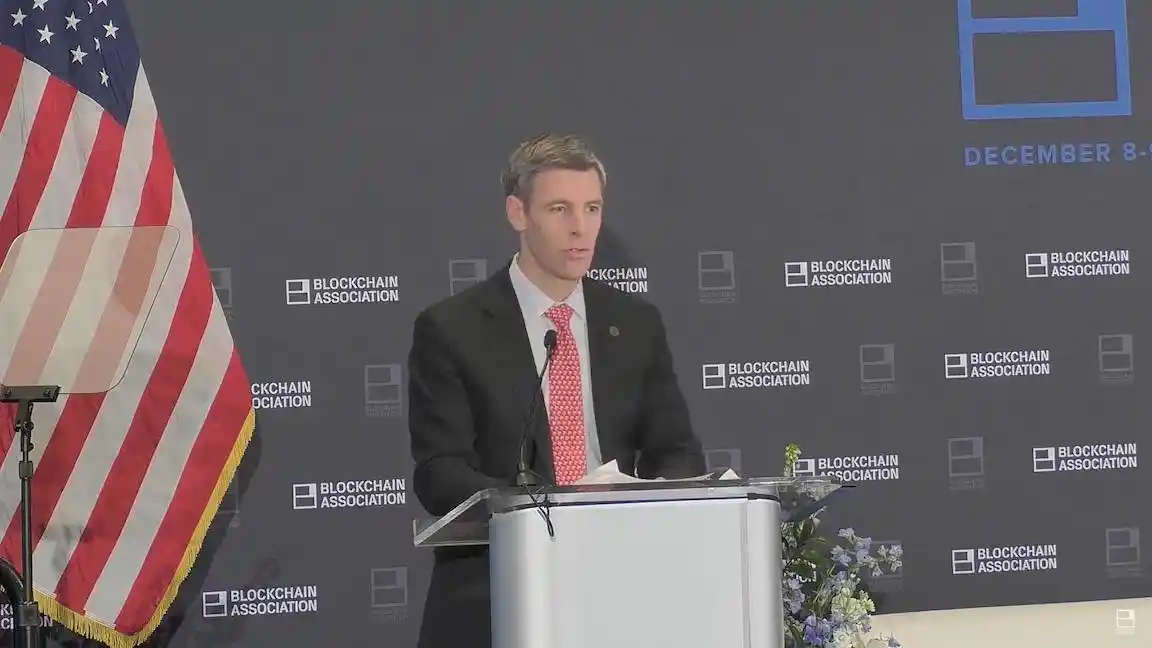
Regarding the intent of these policies, Gould expressed it very clearly at the Blockchain Association's policy summit last year. He pointed out that entities engaged in digital assets and other new technology activities should have a path to become federally regulated banks, provided they are willing and meet the OCC's licensing requirements. He also emphasized that digital custody should not be treated differently from traditional electronic custody simply because the assets are in digital form; otherwise, the banking system would fall into technologically irrelevant discrimination, ultimately causing the system to lose relevance.
In February of this year, when the OCC published proposed rules to implement the GENIUS Act, Gould further stated that the OCC had seriously considered a regulatory framework that would allow the stablecoin industry to "prosper in a safe and sound manner." The core of the proposed rules is to formally bring certain payment stablecoin issuers under the OCC's regulatory and enforcement purview, covering bank subsidiaries, federally chartered non-bank issuers, and some state-chartered issuers, and to stipulate reserve, capital, reporting, and examination frameworks.
The significance behind this is substantial. It indicates that Gould does not view stablecoins as a wild business that should be forever kept on the financial periphery, but rather as a payment tool that can be institutionalized and made prudent. More importantly, the OCC's rule design is not only prepared for traditional banks but also explicitly considers non-bank stablecoin issuers wishing to convert into federally regulated entities. This shows that Gould's openness is not just verbal promise but is reflected in the regulatory architecture design.
However, the OCC proposal also makes it clear that there will be reserve requirements, examination authority, capital assessment, information reporting, and, when necessary, interim or crypto-frequency examinations, and the OCC retains the power to deviate from the regular cycle to conduct examinations in emergency or financial stability risk situations. In other words, what Gould supports is always a licensed, continuously supervised, examinable stablecoin ecosystem, not a regulatory vacuum.
Criticized for Opening the Regulatory Gate Too Wide
Precisely because of his more open regulatory model, Gould has consistently faced controversy. Critics' doubts about him primarily center on one question—is he rebuilding a more modern regulatory framework, or is he making concessions to the crypto industry and certain political capital, opening the door too wide?
Criticism comes mainly from two directions. First, from traditional banking. Some banking organizations oppose the OCC granting national trust bank charters to crypto companies, arguing that this could allow the latter to conduct quasi-banking activities under lighter regulation and increase systemic risk. Critics worry that what Gould calls "innovative access" could ultimately evolve into regulatory arbitrage.
Second, from Democrats regarding potential conflicts of interest. In February 2026, Elizabeth Warren challenged Gould during a Senate hearing regarding the bank charter application of World Liberty Financial, a crypto project supported by the Trump family.
Although Gould expressed willingness to consider allowing senior congressional members confidential access to the application documents, he emphasized that charter approvals would follow established procedures, handled by OCC professionals according to public manuals. Faced with质疑 (queries/accusations), the legally-trained Gould is also very adept at responding. He largely avoids engaging directly in verbal battles, instead repeatedly emphasizing procedure and rules. However, in the current US political environment, this is not enough to eliminate external doubts about regulatory independence.
This skepticism also reveals a new divergence within the US financial regulatory system. Faced with digital assets, stablecoins, and fintech, should regulation lean more towards exclusion or admission? Gould's answer is clearly the latter. He believes the banking system should not maintain safety by isolating itself from reality, but should rely on clearer legal boundaries, more targeted risk management, and a more technology-neutral regulatory philosophy to bring those new financial activities that already exist into the system.
In this sense, Gould is not simply a "crypto-friendly" advocate; he is more like someone who wants to rewrite the relationship between banks and new financial technologies. It's not about abandoning regulation, but changing the starting point of regulation; not about keeping banks away from crypto, but about bringing crypto into banks; not about pretending risk doesn't exist, but about acknowledging its existence and then deciding who manages it.
In the coming years, regardless of where US crypto policy heads, Jonathan V. Gould is likely to be the person who cannot be bypassed.