UK House Of Lords Urges BoE To Ease Stablecoin Rules Over Competitiveness Concerns

bitcoinistPublicado em 2026-06-04Última atualização em 2026-06-04

Resumo

The UK House of Lords has urged the Bank of England (BoE) to revise its proposed stablecoin regulations, warning that overly strict rules could harm the country's competitiveness. While supporting core principles like 1:1 backing, a parliamentary committee criticized specific proposals. These include a requirement for issuers to hold 40% of reserves as non-interest-bearing bank deposits and suggested caps on individual and corporate holdings. The committee argued these measures create operational burdens, hinder the growth of pound-based stablecoins, and could cause the UK to fall behind other jurisdictions with clearer regimes. The report follows industry pressure, and the BoE has indicated openness to easing its "overly conservative" plans, with final rules expected soon.

The House of Lords, the upper chamber of the UK parliament, has urged financial regulators to reconsider some of their controversial stablecoin proposals, warning that the country risks falling behind global leaders if regulation is not done right.

House Of Lords Outlines Concerns Over Stablecoin Rules

On Wednesday, the House of Lords’ Financial Services Regulation Committee published a report on the regulation of stablecoins, urging the Bank of England (BoE) to review some areas of its proposed rules “where the desired balance between supporting innovation and risk mitigation appears less appropriately calibrated.”

The committee affirmed its support for many of the central bank’s proposals, including the requirement that issuers back stablecoins 1:1 and the backstop lending facility. However, it noted that aspects of the proposals “need further consideration.”

Last year, the central bank proposed that systemic stablecoin issuers hold at least 40% of the reserves backing the token as unremunerated bank deposits to ensure “robust redemption” and “public confidence.”

It also suggested a temporary cap on stablecoin ownership, setting holding limits of £10,000 to £20,000 for individuals and £10 million for businesses. The measure resembled the BoE’s proposed approach to the digital pound, aiming to mitigate financial stability risks “stemming from large and rapid outflows of deposits from the banking sector.”

The policymakers consider that regulators should reevaluate the asset allocation and redemption requirements, citing the “considerable operational burdens this would create” and potential negative impact on the sustainability of stablecoin issuers and the UK’s global market competitiveness.

In addition, the report suggested that the holding limits should be reconsidered, arguing that they could unnecessarily hinder the expansion of pound-based stablecoins and prove impractical to implement.

It also shared concerns about the lack of clarity on the transition from the Financial Conduct Authority’s (FCA) regime to joint regulation alongside the BoE, and the uncertainty surrounding HM Treasury’s plans to determine whether stablecoins are systemic and to bring them into the payments regulatory perimeter.

UK At Risk Of Falling Behind

The Committee affirmed that the shape of the pound-denominated stablecoin market will be “strongly influenced by the direction of the regulatory regime,” and authorities must “create a level playing field so that stablecoins can compete with other forms of payment in the UK.”

Therefore, the regime must be flexible, responsive, and clear to accommodate future innovations, or the UK will risk “lagging behind global counterparts, where regulatory regimes are more established and provide clarity for market participants.”

The House of Lords’ report follows pressure from industry participants and other lawmakers to fight the controversial proposals. In December, members of the House of Lords, the House of Commons, and peers sent a letter to Chancellor Rachel Reeves asking her to oppose the BoE’s stablecoin rules, arguing that they could undermine the government’s efforts to position the UK as an industry leader.

Last month, BoE’s Deputy Governor for financial stability, Sarah Breeden, stated that the central bank was preparing to ease its regulatory plans. As reported by Bitcoinist, Breeden admitted that the proposals may have been “overly conservative.” She also shared that the financial regulator was “genuinely open” to revisiting the rules and establishing a better regime in which stablecoins can thrive.

Ultimately, the committee urged regulators to adhere to current timelines and ensure that the final regulatory regime is not delayed. A BoE spokesperson told Reuters that the central bank will publish its final policy and draft rules later this month.
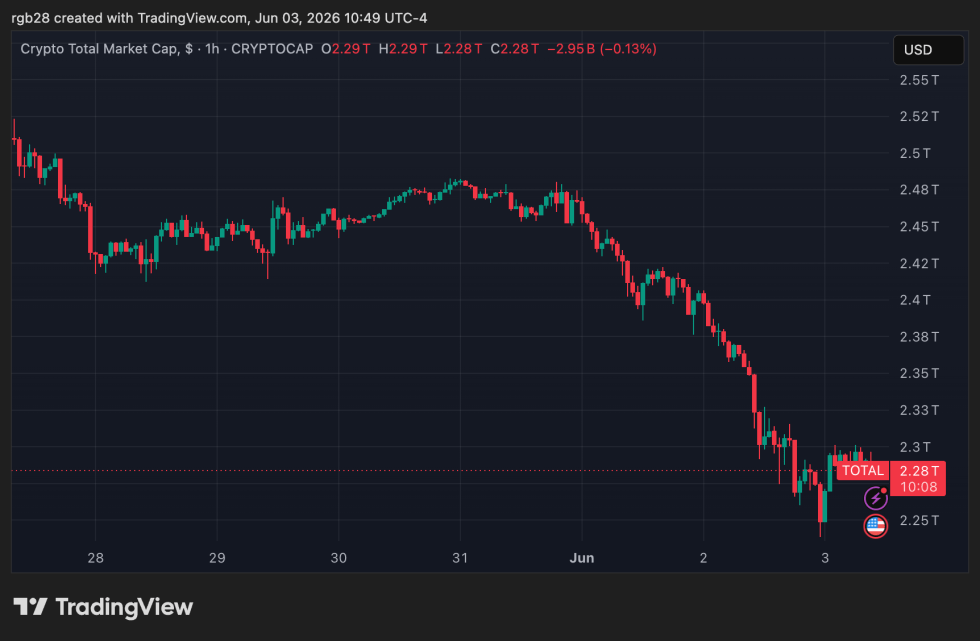
The total crypto market capitalization is at $2.28 trillion in the one-week chart. Source: TOTAL on Tradingview


Criptomoedas em alta

Perguntas relacionadas

QWhat is the main concern raised by the UK House of Lords regarding the Bank of England's proposed stablecoin rules?

AThe UK House of Lords warned that the proposed rules, if not adjusted, risk making the UK fall behind global leaders in the stablecoin and digital finance sector due to overly restrictive regulations that could stifle innovation and competitiveness.

QWhich two specific aspects of the BoE's stablecoin proposals did the House of Lords committee suggest need further review?

AThe committee suggested a review of the requirement for systemic stablecoin issuers to hold at least 40% of reserves as unremunerated bank deposits and the proposed temporary caps on holdings (£10,000-£20,000 for individuals and £10 million for businesses).

QAccording to the report, why could the proposed holding limits for stablecoins be problematic?

AThe holding limits could unnecessarily hinder the expansion of pound-based stablecoins and prove impractical to implement, potentially limiting their adoption and utility.

QWhat did BoE Deputy Governor Sarah Breeden recently state regarding the initial regulatory proposals?

ASarah Breeden admitted that the proposals may have been 'overly conservative' and stated that the central bank was 'genuinely open' to revisiting the rules to establish a better regime for stablecoins to thrive.

QWhat is the committee's final urgent recommendation to the regulators?

AThe committee urged regulators to adhere to current timelines and ensure that the final regulatory regime for stablecoins is not delayed.

Leituras Relacionadas

Within Strategy's Framework, STRC's Dividend Yield Remains at 12% as Share Price Stays Below Par Value

Michael Saylor, Executive Chairman of Strategy (MSTR), confirmed that the dividend rate for its STRC perpetual preferred shares will remain at 12.00% through August 2026. The rate has increased from 9% at its July 2025 launch to the current high via a "ratchet" mechanism, which permanently raises the rate by 0.5% whenever the share price falls below $95. This mechanism is intended to push the price back toward its $100 par value and support Strategy's "at-the-market" (ATM) program for issuing new shares to fund Bitcoin purchases. However, the mechanism has not worked as intended. STRC shares closed at $89.46 on July 31, remaining about 10-11% below par value despite the record-high dividend. Competition from rival Strive's higher-yielding SATA securities has pressured demand. The persistent discount has forced Strategy to suspend new STRC issuances via its ATM program, limiting this funding channel for Bitcoin acquisitions. STRC's struggles reflect Bitcoin's own volatility, as the preferred shares historically move in tandem. Analysts have warned the ratchet structure carries long-term, one-way risk. A law firm is investigating Strategy's ability to maintain dividend payments if Bitcoin's price stays low. Retail investors own roughly 83% of outstanding STRC shares, a group seen as prone to panic selling during downturns. In response, Strategy has established financial reserves, including a liquidity cushion covering about 26 months of dividend/interest obligations, and a $2 billion share buyback program alongside a Bitcoin monetization framework, though the company emphasized it is not obligated to sell any Bitcoin.

cryptonews.ruHá 27m

Within Strategy's Framework, STRC's Dividend Yield Remains at 12% as Share Price Stays Below Par Value

cryptonews.ruHá 27m

Analyst: Bitcoin's Price Will Drop to $60k in August, Then Rebound to $70k

Financial analyst Andrey Poroshin has provided a new forecast for Bitcoin's price dynamics in August. Poroshin, an analyst at the Bitbanker exchange, expects the cryptocurrency market to experience a downturn this month, with prices retesting the $60,000 level due to a lack of supportive macroeconomic catalysts. He noted that the recent US Federal Reserve decision to hold interest rates did not significantly impact the market, while inflation remains above the 2% target. Poroshin stated that Bitcoin is ending July under pressure from moderate volatility and a lack of new macroeconomic stimuli, leading to continued market caution. According to his base scenario, Bitcoin will drop to a range of $60,000 to $62,000 before recovering to $70,000. He pointed out that even $70,000 remains below the cost of mining in the US, which has prompted some miners to shift towards AI data center operations. Poroshin cited the winding down of BitMEX's operations as a potential catalyst for a price rebound, suggesting the exit of weaker players often coincides with market reversals and reduced short-term selling pressure. He believes Bitcoin is currently less susceptible to geopolitical shocks, such as the Iran-US conflict, and does not expect significant market changes in August related to the pending CLARITY Act. Looking ahead, Poroshin forecasts that September will bring more active price fluctuations driven by potential Fed rate decisions and possible discussions or approval of the CLARITY Act.

cryptonews.ruHá 27m

Analyst: Bitcoin's Price Will Drop to $60k in August, Then Rebound to $70k

cryptonews.ruHá 27m

Trading

Spot

Artigos em Destaque

Como comprar HOUSE

Bem-vindo à HTX.com!Tornámos a compra de Housecoin (HOUSE) simples e conveniente.Segue o nosso guia passo a passo para iniciar a tua jornada no mundo das criptos.Passo 1: cria a tua conta HTXUtiliza o teu e-mail ou número de telefone para te inscreveres numa conta gratuita na HTX.Desfruta de um processo de inscrição sem complicações e desbloqueia todas as funcionalidades.Obter a minha contaPasso 2: vai para Comprar Cripto e escolhe o teu método de pagamentoCartão de crédito/débito: usa o teu visa ou mastercard para comprar Housecoin (HOUSE) instantaneamente.Saldo: usa os fundos da tua conta HTX para transacionar sem problemas.Terceiros: adicionamos métodos de pagamento populares, como Google Pay e Apple Pay, para aumentar a conveniência.P2P: transaciona diretamente com outros utilizadores na HTX.Mercado de balcão (OTC): oferecemos serviços personalizados e taxas de câmbio competitivas para os traders.Passo 3: armazena teu Housecoin (HOUSE)Depois de comprar o teu Housecoin (HOUSE), armazena-o na tua conta HTX.Alternativamente, podes enviá-lo para outro lugar através de transferência blockchain ou usá-lo para transacionar outras criptomoedas.Passo 4: transaciona Housecoin (HOUSE)Transaciona facilmente Housecoin (HOUSE) no mercado à vista da HTX.Acede simplesmente à tua conta, seleciona o teu par de trading, executa as tuas transações e monitoriza em tempo real.Oferecemos uma experiência de fácil utilização tanto para principiantes como para traders experientes.

439 Visualizações TotaisPublicado em {updateTime}Atualizado em 2026.06.02

Como comprar HOUSE

Discussões

Bem-vindo à Comunidade HTX. Aqui, pode manter-se informado sobre os mais recentes desenvolvimentos da plataforma e obter acesso a análises profissionais de mercado. As opiniões dos utilizadores sobre o preço de HOUSE (HOUSE) são apresentadas abaixo.

活动图片












