UBS Enters the Fray, 20 Swiss Banks Now Offer Crypto Trading, Covering 2.5 Million Accounts

marsbitPublicado em 2026-05-13Última atualização em 2026-05-13

Resumo

Global wealth management giant UBS has entered the cryptocurrency market, offering Bitcoin and Ethereum trading to select private banking clients in Switzerland as of January 2026. This move is part of a broader trend in Switzerland, where approximately 20 banks now provide crypto services, collectively covering over 2.5 million accounts. Client data from Zurich Cantonal Bank (ZKB) challenges the stereotype of crypto being solely for the young, revealing that the average buyer is aged 30-50 and predominantly male. Notably, over 40% of these clients previously held no investment portfolio, indicating crypto is activating dormant capital. The business case is proving substantial. For several Swiss banks, crypto-related activities already contribute a significant and disproportionate share of profits, with unit economics often outperforming traditional banking services. This institutional adoption in Switzerland reflects a global trend, with a recent survey showing 73% of institutional investors planning to increase crypto allocations in 2026. Switzerland's early regulatory clarity through its DLT Act and established custody infrastructure have provided a foundation for this growth. However, upcoming challenges include the implementation of the OECD's Crypto Asset Reporting Framework (CARF) in 2027 and ongoing reforms by Swiss regulator FINMA. The final shape of these regulations will be crucial in determining whether Switzerland can maintain its leading position in the glob...

Author: Jakub Dziadkowiec

Compiled by: Deep Tide TechFlow

Deep Tide Guide: UBS, the world's largest wealth manager, opened Bitcoin and Ethereum trading for some of its private banking clients in January 2026. This development is not surprising in itself, but it becomes more interesting when viewed in the context of Switzerland as a whole: approximately 20 Swiss banks now offer crypto services, covering over 2.5 million accounts. Customer profile data from ZKB breaks the stereotype that "crypto is a young person's game," while financial reports from several banks show that crypto business is becoming a tangible source of profit.
UBS Has Finally Entered the Game

In January 2026, UBS officially opened direct trading of Bitcoin and Ethereum for some of its private banking clients in Switzerland.

This wealth management giant, which oversees over $4.7 trillion in assets, had maintained a relatively conservative stance towards cryptocurrencies in the past. Former Chairman Axel Weber publicly stated when Bitcoin hit its all-time high in late 2021, "Anonymous payments won't survive."

The shift is driven by client demand and competitive pressure. Morgan Stanley had already opened access to crypto funds for all its wealth management clients by the end of 2025, removing the restriction to high-risk-tolerance clients with assets over $1.5 million. JPMorgan Chase allowed some clients to use BlackRock's spot Bitcoin ETF as loan collateral. Even the final "anti-crypto fortress," Vanguard, capitulated in December 2025 by allowing clients to trade crypto ETFs.

UBS is currently selecting custody and execution partners, and the initial offering is limited to a small group of private banking clients in Switzerland. Expansion into the Asia-Pacific and US markets may follow.

Switzerland: The Global Leader in Bank Crypto Adoption

UBS's entry completes Switzerland's banking crypto landscape. Currently, about 20 Swiss banks offer crypto services, the highest number globally. Following behind are the United States (15 banks) and Germany (12 banks).

This number represents a substantial user base. Since launching crypto services in 2024, Zürcher Kantonalbank (ZKB) and PostFinance have together provided crypto trading access to over 2.5 million Swiss accounts.

PostFinance, a systemically important state-owned bank in Switzerland, opened 36,000 crypto custody accounts in its first year and processed over 565,000 transactions. This number is far beyond a "pilot phase."

Crypto Buyer Profile: Not What You Think

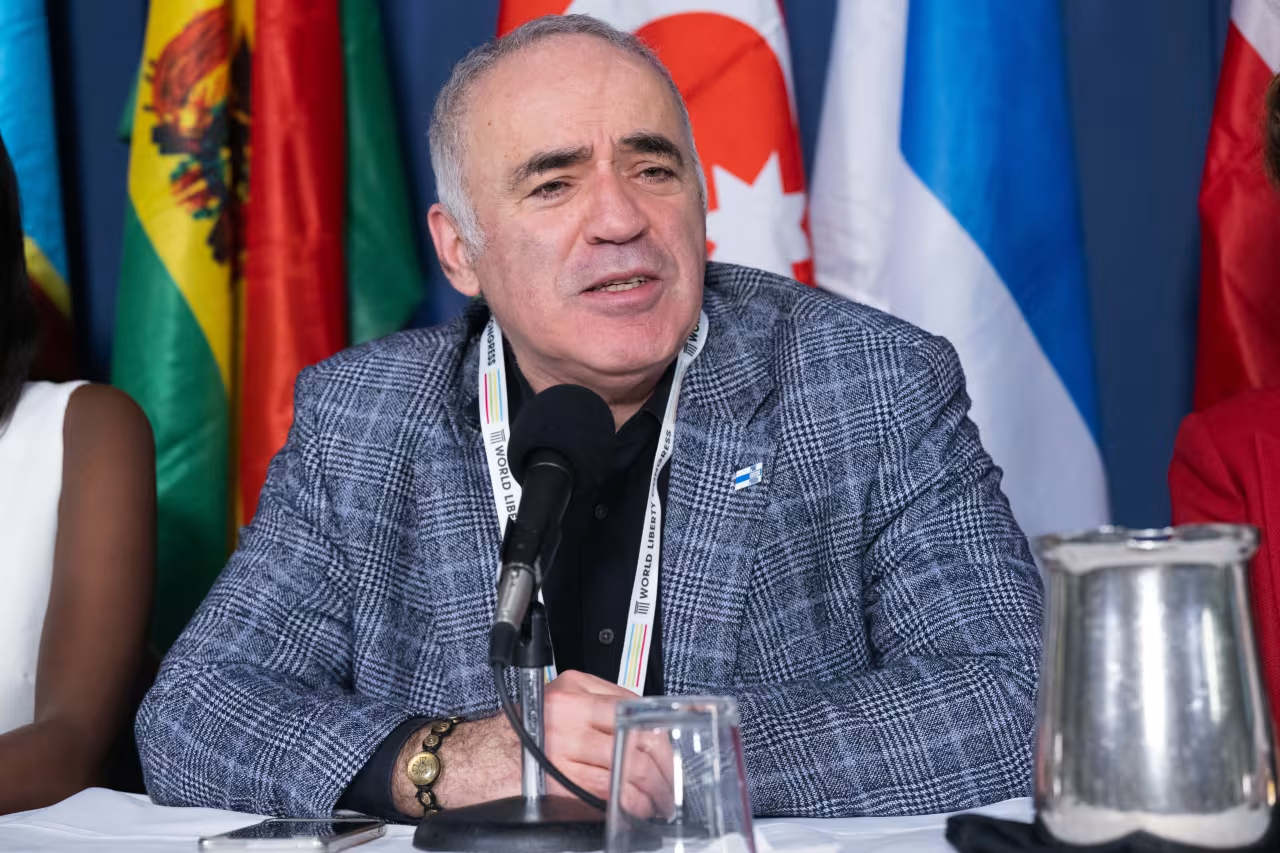
Peter Hubli, Head of Digital Assets at ZKB, admitted in an interview with The Big Whale that the bank initially expected its crypto clients to be younger.

"That was probably the biggest surprise of this launch. Like many others, we assumed it would attract a very young clientele. But it was completely different."

The reality is: The average age of ZKB crypto buyers is between 30 and 50, predominantly male, and concentrated in private banking rather than retail banking services.

An even more crucial figure: Over 40% of crypto custody clients had no investment portfolio with ZKB previously. Their cash had been sitting idle in their accounts. Crypto trading activated a pool of "sleeping capital" that otherwise would not have generated any asset management revenue.

The Crypto Business Is Already Profitable

Financial data from several Swiss banks indicates crypto is no longer in a "proof-of-concept" phase:

Over 20% of Maerki Baumann's bank profits come from digital asset business. Crypto contributes about 10% of Swissquote's total revenue. At Arab Bank Switzerland, crypto assets constitute only 5% of AUM but contribute 7% of net profit.

Despite the small scale, the profit share is disproportionately high. The unit economics of crypto services are clearly superior to traditional banking operations.

Switzerland Is Not an Isolated Case, But a Microcosm of the Global Institutionalization Wave

The moves by Swiss banks align with global institutional capital trends. EY-Parthenon and Coinbase surveyed over 350 institutional investors globally in January 2026, covering asset managers, family offices, and private banks. 73% plan to increase their crypto allocations in 2026, and 84% are already using or exploring stablecoins.

Custody security and regulatory clarity remain the top two concerns for institutional investors. Switzerland has a first-mover advantage on both dimensions: The Distributed Ledger Technology (DLT) Act passed in 2021 provides a legal framework, and bank-grade custodians like Taurus and Sygnum provide the infrastructure. The process of bank crypto adoption in Switzerland is essentially a local case study of the global institutional entry trend.

OECD Tax Framework + FINMA License Reform: Two Challenges for Switzerland's Edge

The OECD's Crypto-Asset Reporting Framework (CARF) will come into effect on January 1, 2027, ending the era of tax opacity for crypto assets. The public consultation for FINMA's license system reform closed in February 2026; it will redefine custody and stablecoin rules, aligning some provisions with the European MiCA framework.

Crypto Valley Association board member Ilya Volkov warned that excessive "regulatory micromanagement" could erode Switzerland's long-standing pragmatic advantage.

Whether Switzerland can maintain its global lead by 2027 will depend on the final form of this regulatory reform.


Perguntas relacionadas

QWhich global wealth management giant recently entered the crypto space, and for which clients did they initially open Bitcoin and Ethereum trading?

AUBS (Union Bank of Switzerland), the world's largest wealth manager, entered the crypto space in January 2026. They initially opened Bitcoin and Ethereum trading for some of their Swiss private banking clients.

QHow many Swiss banks currently offer cryptocurrency services, and roughly how many accounts do they cover?

AApproximately 20 Swiss banks currently offer cryptocurrency services, covering more than 2.5 million accounts in total.

QWhat was the surprising demographic profile of crypto buyers at ZKB, according to the bank's Digital Assets Head?

AContrary to expectations, ZKB's crypto buyers were not predominantly young. Their average age was between 30 and 50, were mostly male, and were concentrated in the private banking segment rather than retail banking.

QAccording to the article, what are two key upcoming regulatory developments that will test Switzerland's leadership in crypto banking?

AThe two key upcoming regulatory developments are: 1) The OECD's Crypto Asset Reporting Framework (CARF) taking effect on January 1, 2027, and 2) FINMA's license system reform, which will redefine rules for custody and stablecoins.

QBeyond Switzerland, what does a 2026 survey by EY-Parthenon and Coinbase indicate about the plans of global institutional investors regarding crypto assets?

AThe survey of over 350 institutional investors worldwide indicated that 73% plan to increase their crypto allocation in 2026, and 84% are already using or are interested in exploring stablecoins.

Leituras Relacionadas

Missed Out on SpaceX's IPO? Take a Look at SpaceX's Complete Supply Chain

SpaceX is now public, but its high valuation and losses may deter some investors. However, the real opportunity, as seen with Apple, Tesla, and Nvidia, may lie in its extensive supply chain. SpaceX, funded primarily by its profitable Starlink service, spends hundreds of billions annually on components for its rockets, satellites, and planned orbital AI data centers, creating significant revenue streams for suppliers. Key suppliers are categorized by their indispensability. The first group includes irreplaceable players like **NVIDIA** (GPUs for AI supercomputers), **Eutelsat (SATS)** (spectrum rights), **Filtronic** (millimeter-wave amplifiers), **Materion (MTRN)** (beryllium alloys), and **STMicroelectronics (STM)** (phased array chips). The second category comprises suppliers costly to replace due to long certification cycles or deep integration, such as **Honeywell (HON)** (flight controls), **Carpenter Technology (CRS)** (specialty steel), **Hexcel (HXL)** (carbon fiber), **Broadcom (AVGO)** (data switching), and **Linde** (industrial gases). The third group involves high-volume, cost-critical manufacturers for mass-produced items like Starlink terminals. Major players here include Taiwanese contract manufacturer **Wistron NeWeb (6285)** and several Chinese-listed firms: **Sunway Communication (300136)**, **Parker Advanced Materials (605123)**, **Western Superconducting (002149)**, and **Yingliu Co., Ltd. (603308)**. Other niche providers include **Tianyin Electromechanical**, **Tongyu Communication**, **Trimble (TRMB)**, **Astronics (ATRO)**, and **CTSH**. The timing is now relevant because: 1) SpaceX's procurement is accelerating with plans for 100 launches in 2026, 30 million Starlink terminals, and orbital data centers. 2) Its IPO has brought unprecedented transparency to its supply chain. 3) This phase mirrors early days of the Tesla supply chain boom. The investment thesis shifts from betting on SpaceX's stock to betting on the steady, order-book-driven revenues of its essential suppliers. Risks remain, such as commodity cycles, geopolitical factors, and technological shifts, but the supply chain offers a potentially less speculative path to participate in SpaceX's growth.

marsbitHá 8m

Missed Out on SpaceX's IPO? Take a Look at SpaceX's Complete Supply Chain

marsbitHá 8m

Jane Street: The Most Powerful Behind-the-Scenes Operator in the Crypto Industry

Jane Street: Crypto's Most Powerful Behind-the-Scenes Operator A recent 13F filing revealed Jane Street, the secretive Wall Street quant giant, drastically reduced its Bitcoin ETF holdings while increasing stakes in Ethereum ETFs. This move highlights its role not as a directional investor, but as a critical infrastructure player extracting "tolls" from crypto's institutionalization. The firm, founded in 2000 and famously lacking a CEO, has systematically embedded itself across crypto markets. It acts as a key Authorized Participant (AP) and market maker for major Bitcoin and Ethereum ETFs, profiting from arbitrage between ETF shares and underlying assets. Its approach combines quantitative prowess with a willingness to hold positions for structural arbitrage, differing from pure high-frequency traders. Jane Street faces allegations related to the 2022 Terra (LUNA) collapse. A lawsuit claims it used non-public information to withdraw $85 million in UST minutes before a critical withdrawal by Terraform Labs, allegedly exacerbating the crash and avoiding over $200 million in losses. The company denies the claims. Further indicating its reach, a wallet suspected to be operated by Jane Street ("JaneStreetIndia") was identified on the prediction market Polymarket. This bot executed over 11,000 high-frequency trades on short-term crypto price movements with a near-perfect win rate, showcasing a套利 strategy divorced from traditional prediction. Beyond trading, Jane Street holds equity in crypto infrastructure like Kraken, 1inch, and Arbitrum, and mining stocks. Its strategy is clear: avoid betting on winners, but secure a position in the market's essential plumbing. By becoming a ubiquitous part of the liquidity infrastructure—from ETFs to OTC trading and potentially链上 markets—Jane Street operates as a market force itself, raising questions about whether crypto's decentralized,散户-friendly alpha is being permanently eroded by traditional finance's most sophisticated players.

Foresight NewsHá 11m

Jane Street: The Most Powerful Behind-the-Scenes Operator in the Crypto Industry

Foresight NewsHá 11m

U.S.-Iran Ceasefire: How Much of a Bitcoin Rally Can a Truce Agreement Support?

Headline: "U.S.-Iran Truce: How Much Can a Ceasefire Agreement Propel Bitcoin's Rebound?" On June 15th, Bitcoin rebounded to around $67,255, marking its first return to the $67,000 level since falling below $60,000 earlier in June. Ethereum and Solana also saw significant gains. The immediate driver for this market-wide recovery in crypto and global risk assets was the signing of a U.S.-Iran ceasefire memorandum, with a formal ceremony scheduled for June 19th. The agreement, which includes reopening the Strait of Hormuz, caused oil prices to plunge roughly 5%, easing inflation expectations and boosting prospects for Federal Reserve rate cuts. This macroeconomic shift fueled a rally in U.S. equities, with the Dow Jones hitting a record high. SpaceX's spectacular post-IPO performance further energized market sentiment. However, on-chain and derivatives data from Glassnode suggest this move is more indicative of a technical rebound from deeply oversold conditions rather than a confirmed trend reversal. The crypto market is undergoing noticeable capital rotation. While Bitcoin ETFs recently saw their worst outflows on record, the bleeding has slowed significantly. Meanwhile, new altcoin ETFs for assets like XRP and Solana are attracting substantial inflows, causing Bitcoin's market dominance to drop to 58%. Despite the rebound, the Crypto Fear & Greed Index remains in "Extreme Fear" territory at 22. The price quickly retreated after touching the $67,000 resistance level, indicating selling pressure persists. Analysis shows short-term speculative supply has been heavily washed out, with holder structure shifting toward a more long-term profile. While panic is subsiding and some on-chain metrics point to accumulation at lower prices, the market currently lacks the strong, sustained institutional buying needed to establish a new bullish trend.

Foresight NewsHá 27m

U.S.-Iran Ceasefire: How Much of a Bitcoin Rally Can a Truce Agreement Support?

Foresight NewsHá 27m

Copper, the Gold of 2026

Copper: The New Gold for 2026? Market focus has shifted from AI chips to underlying infrastructure, with copper emerging as a key narrative. Its role is evolving beyond "Dr. Copper"—a traditional indicator of economic cycles—due to structural demand growth from AI data centers (requiring massive electrical infrastructure), grid expansion, EVs, and re-industrialization. Estimates suggest data centers alone could require 300,000 tons of copper by 2050. The core bullish thesis is not just demand but a severe supply constraint. New copper mines take ~17 years to develop, while ore grades are declining and new discoveries are scarce, potentially leading to a 30% supply deficit by 2035. This supply rigidity, coupled with strategic importance, is giving copper a "gold-like" scarcity narrative. Major macro investors, including Stanley Druckenmiller, are allocating to copper as a hedge against dollar weakness and for its exposure to energy transition and geopolitics. Traders like Pierre Andurand have projected prices could reach $40,000/ton. Capital inflows are visible in surging futures trading volumes. Copper mining stocks act as leveraged plays on copper prices. Companies like Freeport-McMoRan (FCX) and Southern Copper (SCCO), as well as Chinese miners like CMOC, have seen significant volatility, offering high upside but also steep drawdowns, reflecting operational and geopolitical risks. While copper remains cyclical and won't fully replicate gold's monetary role, its long-term fundamentals have shifted. Its new scarcity premium, driven by a tightening supply structure and expanding electrical demand, suggests its "goldification" is just beginning.

marsbitHá 34m

Copper, the Gold of 2026

marsbitHá 34m

Trading

Spot
Futuros
活动图片