Trump-Linked WLFI $500M UAE Stake Sparks Senate Demand For Probe

bitcoinistPublicado em 2026-02-16Última atualização em 2026-02-16

Resumo

US lawmakers, including Senators Elizabeth Warren and Andy Kim, are demanding an investigation by the Treasury's CFIUS committee into a reported $500 million investment by an Abu Dhabi-linked vehicle for a 49% stake in Trump-connected crypto firm World Liberty Financial (WLFI). The investment, tied to Sheikh Tahnoon bin Zayed Al Nahyan and finalized in January 2025, raises national security concerns over foreign access to sensitive customer data, system controls, and strategic decision-making. The deal also involved board appointments linked to G42, a company previously scrutinized by US intelligence. If CFIUS does not review the transaction, lawmakers plan to pursue oversight hearings and further document requests.

US lawmakers on Friday stepped up pressure over a reported foreign stake in a crypto firm tied to US President Donald Trump, asking the Treasury’s foreign-investment watchdog to explain whether the deal threatens national security or should be reviewed.

Trump And The $500 Million Deal

Reports say an Abu Dhabi-linked vehicle paid about $500 million for roughly 49% stake in World Liberty Financial (WLFI). That investment is said to have put a foreign investor in line to be the largest outside shareholder and to win board seats.

Based on reports, critics worry about what access a large shareholder could have to customer data, system controls, or strategic decision-making at a company that handles stablecoins and user wallets.

Sheikh Named As A Backer

Accounts point to an investment vehicle tied to Sheikh Tahnoon bin Zayed Al Nahyan. Reports say the deal closed in January 2025, a timing that has drawn extra attention from legislators, given its proximity to the transition in Washington.

Some money from the transaction reportedly flowed to entities linked to the company’s founders and affiliates. That detail has raised questions about disclosure and whether any rules governing foreign deals were followed.

BTCUSD currently trading at $70,279. Chart: TradingView

Lawmakers Want Answers

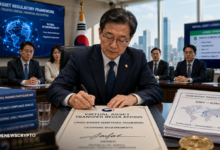
Massachusetts Senator Elizabeth Warren and New Jersey Senator Andy Kim have written to Scott Bessent asking whether the Committee on Foreign Investment in the US — CFIUS — has reviewed the transaction or should now open a formal probe into the Trump-linked crypto venture.

The lawmakers set a response deadline and asked for documents and a clear statement on any national security concerns. Their letter frames the matter as one of foreign access to sensitive financial and identity information, and of potential influence over a firm connected to a sitting president.

Image: WEEX

Board Appointments And Tech Ties Add To Scrutiny

Reports note that executives with ties to G42 were named to the company’s board after the deal. That link has prompted fresh questions, since G42 has been inspected in past US intelligence reviews for its foreign partnerships.

Lawmakers say those kinds of connections merit a close look when the investor traces back to a foreign government official or agency.

Trump-Linked Crypto: What Happens Next

If CFIUS opens a formal review, it could demand documents, interview executives, and impose mitigation steps or block parts of the deal. If no review is launched, lawmakers say they will press further through oversight hearings and document requests.

The unfolding inquiry highlights a knot of issues: foreign capital in crypto, the handling of consumer data, and how political ties intersect with cross-border investments.

Featured image from David Hume Kennerly/Getty Images, chart from TradingView

Perguntas relacionadas

QWhat is the main concern of US lawmakers regarding the $500 million investment in the Trump-linked firm WLFI?

AUS lawmakers are concerned that the foreign investment, reportedly tied to an Abu Dhabi-linked vehicle, may threaten national security by granting access to customer data, system controls, or strategic decision-making at a company handling stablecoins and user wallets.

QWho is identified as the backer of the investment vehicle involved in the WLFI deal?

AThe investment vehicle is tied to Sheikh Tahnoon bin Zayed Al Nahyan of Abu Dhabi.

QWhich US senators have demanded an investigation into this transaction by CFIUS?

AMassachusetts Senator Elizabeth Warren and New Jersey Senator Andy Kim have written to the Committee on Foreign Investment in the US (CFIUS) demanding an investigation.

QWhat additional scrutiny has arisen due to board appointments following the deal?

AExecutives with ties to G42 were named to WLFI's board, which has prompted further scrutiny because G42 has been previously inspected in US intelligence reviews for its foreign partnerships.

QWhat are the possible outcomes if CFIUS opens a formal review of the deal?

AIf CFIUS opens a formal review, it could demand documents, interview executives, and impose mitigation steps or block parts of the deal. If no review is launched, lawmakers plan to press further through oversight hearings and document requests.

Leituras Relacionadas

CPU Makes a Comeback to the Table, A $170 Billion "Power Seizure" Drama Begins

A new era is dawning for the server CPU (Central Processing Unit), driven by the shift from AI model training to large-scale reasoning and the rise of Agentic AI. This article explores how the CPU is reclaiming a central role in the AI data center. For years, the focus has been on the GPU (Graphics Processing Unit) for AI training. However, as AI moves to the inference and Agent phase—where tasks involve complex, multi-step reasoning, tool calls, and data management—the workload balance is flipping. Studies show CPUs now handle over 70% of the workload in Agentic AI, up from 10-30% in training. This is because Agent tasks generate massive intermediate data (KV Cache) that exceeds GPU memory, forcing it to be offloaded to the CPU's larger, more scalable memory pools. This increased importance is translating into market changes. Major players are taking note: NVIDIA launched its first standalone CPU line, Vera, based on ARM architecture and optimized for Agent performance. AMD doubled its server CPU market forecast to over $1200 billion by 2030. Analyst reports project the total server CPU market could reach $1700 billion by 2030, with AI-driven demand being a primary driver. Furthermore, the classic ratio of CPUs to GPUs in AI servers is rapidly changing, converging from 1:8 toward 1:1 for Agent deployments. This surge in demand has led to a rare industry-wide price increase of 10-15% for server CPUs from Intel and AMD, breaking a decade-long trend of "more performance for the same price." Demand is bifurcating into high-core-count CPUs for in-rack GPU support and moderate-core CPUs for standalone Agent task orchestration. In China, this global trend presents an opportunity for domestic CPU manufacturers like Hygon (海光信息) and Huawei Kunpeng, who are bolstered by both growing AI infrastructure needs and national policies promoting technological self-reliance ("xin chuang"). The maturity of their software ecosystems is also accelerating, evidenced by faster adaptation to new AI models. In conclusion, the narrative is shifting from a GPU-centric view to one where CPU-GPU synergy is critical. The CPU is no longer a peripheral component but a performance-defining bottleneck and a key growth driver in the AI hardware stack, opening a massive new market estimated in the hundreds of billions of dollars.

marsbitHá 2h

CPU Makes a Comeback to the Table, A $170 Billion "Power Seizure" Drama Begins

marsbitHá 2h

TechFlow Intelligence: AMD AI Director Publicly Criticizes Claude Code for "Becoming Dumber and Lazier", Trump Claims Full Ceasefire in Hormuz But Strait Still Has 80 Unexploded Mines

TechFlow Intelligence Report: This daily digest covers key developments in AI, crypto, hardware, and geopolitics. In AI, SK Telecom faces US export control scrutiny over its partnership with Anthropic, while a Gemini user reports being misled in a scam scenario, sparking safety debates. China's Z.AI launches the GLM-5.2 model, rivaling Claude Opus without NVIDIA chips. In crypto, Bithumb lists ReProtocol, and Upbit delists KernelDAO. On the hardware front, MIT researchers build a custom OS to study chips, ASML denies US claims its advanced lithography machines are in China, and Amazon considers selling its in-house AI chips. Apple's future A21 Pro chip may use TSMC's latest N2P process. Major tech issues include 10,000 GitHub repositories distributing malware and Apple patching a critical eavesdropping flaw in Beats earbuds. US stocks rise, led by semiconductors, with Intel surging 10.6%, while SpaceX falls 3.5%. Geopolitically, despite a US-Iran deal, the Strait of Hormuz remains risky with ~80 uncleared mines, stalling 80M barrels of oil on standby tankers. Iran postpones Switzerland talks, and Trump calls the agreement an "unconditional surrender." The report highlights a contrast: temporary geopolitical calm versus the ongoing, fundamental restructuring of tech supply chains and chip independence.

marsbitHá 2h

TechFlow Intelligence: AMD AI Director Publicly Criticizes Claude Code for "Becoming Dumber and Lazier", Trump Claims Full Ceasefire in Hormuz But Strait Still Has 80 Unexploded Mines

marsbitHá 2h

Trading

Spot
Futuros
活动图片