Trump lauds Chris Waller as ‘great’ after Fed chair interview, will pick within weeks

cointelegraphPublicado em 2025-12-19Última atualização em 2025-12-19

Resumo

President Donald Trump praised Federal Reserve chair nominee Chris Waller as "great" and "fantastic," confirming he will announce his selection for the role within weeks. Waller, who has expressed crypto-friendly views, is among three or four candidates on the shortlist. According to prediction platform Polymarket, Waller currently has a 14% chance of selection, trailing crypto-supportive White House adviser Kevin Hassett (53%) and former Fed governor Kevin Warsh (28%). The crypto industry is closely monitoring the appointment due to the Fed's influence on interest rates, which significantly impact digital asset markets. Lower rates often drive investors toward higher-risk investments like cryptocurrencies.

United States President Donald Trump offered positive remarks about pro-crypto Fed chair nominee Chris Waller at a recent press conference, as speculation continues over his final choice.

“I think he’s great. I mean, he’s been a man who’s been there a long time. Somebody that I was very involved with and sense of his career, and he’s a fantastic man,” Trump said during a press conference on Thursday.

Waller has recently been perceived as relatively supportive of crypto, saying in an August speech at the Wyoming Blockchain Symposium 2025 that there is “nothing to be afraid of” about crypto payments operating outside the traditional banking system.

Trump says everyone on the shortlist “would be a good choice”

Waller currently has a 14% chance of being selected, according to crypto prediction platform Polymarket, making him the third most likely pick. Crypto-friendly White House economic adviser Kevin Hassett leads at 53%, followed by former Fed governor Kevin Warsh with 28% odds.
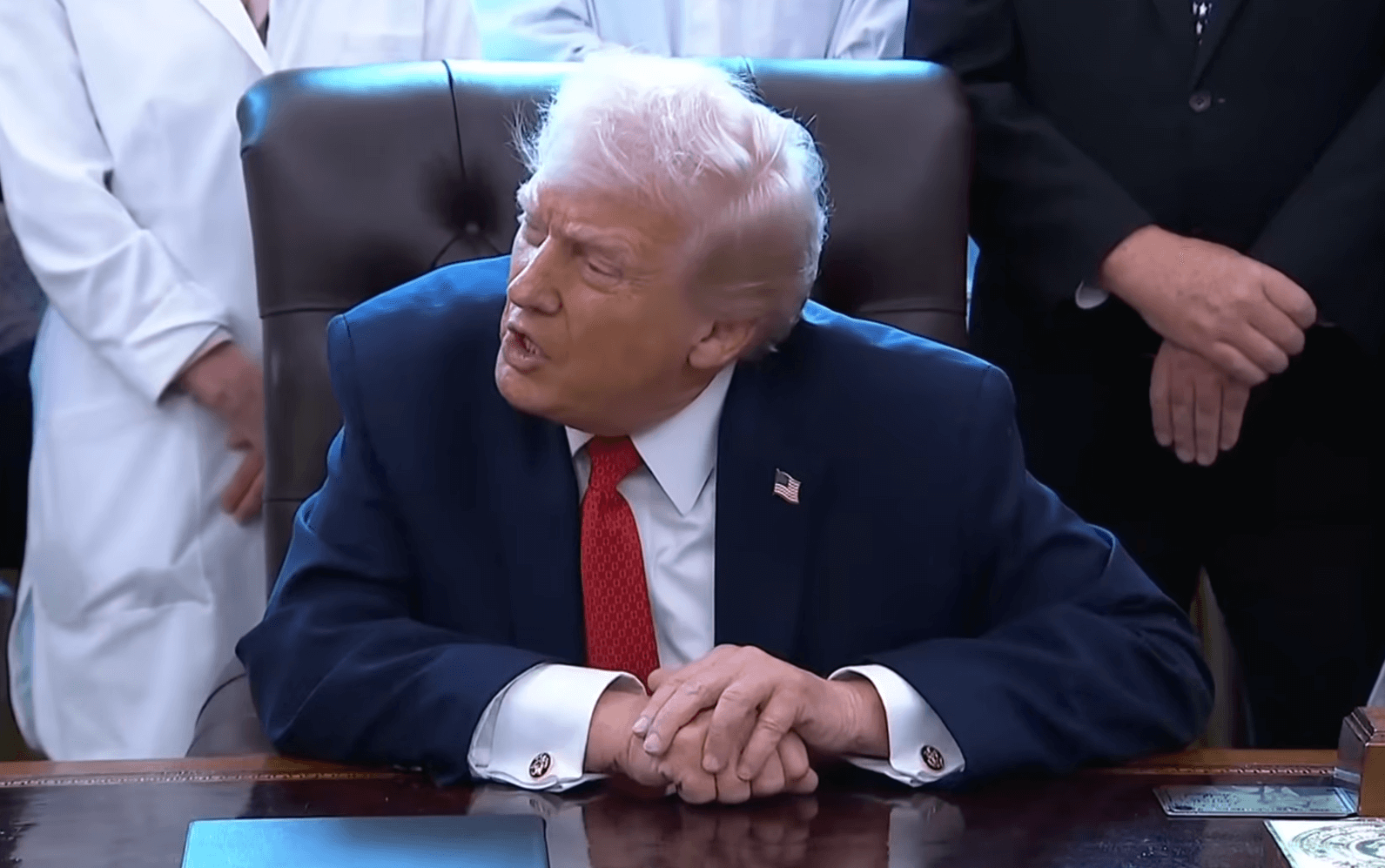
US President Donald Trump expects to make the Fed chair announcement in the next few weeks. Source: YouTube

Trump said that the list has been narrowed to three or four candidates. “I think every one of them would be a good choice, honestly,” he said.

When asked whether Fed governor Michelle Bowman was also on the shortlist, Trump did not directly answer the question, but described her as a “fantastic person.” Polymarket currently puts Bowman’s odds at 2%.

Trump said that he expects to make the announcement over the “next couple of weeks.” “I don’t know before the end of the year, but pretty soon,” Trump said.

Crypto industry has been keeping a close eye on Fed chair developments

The crypto industry has been paying close attention to developments surrounding Trump’s Fed chair nominee, with the discussion ramping up in recent months as the Fed’s role in monetary policy is often seen as affecting broader crypto market conditions.

Related: Global debt markets show dollar dominance moves in cycles, US Fed says

Interest rates, which are set by the Federal Reserve, are widely viewed as having a significant impact on the crypto market.

When rates are lowered, investors tend to seek higher-risk assets such as cryptocurrencies, as traditional investments like bonds and term deposits become less attractive.

Magazine: Big questions: Would Bitcoin survive a 10-year power outage?

Perguntas relacionadas

QWhat did President Trump say about Chris Waller at the press conference?

APresident Trump said, 'I think he’s great. I mean, he’s been a man who’s been there a long time. Somebody that I was very involved with and sense of his career, and he’s a fantastic man.'

QAccording to the crypto prediction platform Polymarket, what are the odds for the top three Fed chair candidates?

AAccording to Polymarket, crypto-friendly White House economic adviser Kevin Hassett leads at 53%, followed by former Fed governor Kevin Warsh with 28% odds, and Chris Waller is third with a 14% chance.

QWhat is Chris Waller's stance on cryptocurrency, as mentioned in the article?

AChris Waller is perceived as relatively supportive of crypto. In a speech, he stated there is 'nothing to be afraid of' about crypto payments operating outside the traditional banking system.

QWhen does President Trump expect to announce his choice for Fed chair?

APresident Trump said he expects to make the announcement in the 'next couple of weeks' and that it would be 'pretty soon,' though he was unsure if it would be before the end of the year.

QWhy is the crypto industry paying close attention to the Fed chair nomination?

AThe crypto industry is paying attention because the Fed’s role in monetary policy, particularly in setting interest rates, is widely viewed as having a significant impact on broader crypto market conditions.

Leituras Relacionadas

Huang Renxun Dramatically 'Saves' South Korean Stock Market

In early June, South Korea's stock market experienced a sharp decline, with the KOSPI index dropping over 5% and triggering a trading halt. Amid this volatility, NVIDIA CEO Jensen Huang's visit to Seoul provided a dramatic boost to market sentiment. During his trip, Huang held a dinner meeting with SK Group Chairman Chey Tae-won and SK Hynix CEO Kwak Noh-Jung. He announced that NVIDIA's new Vera CPU would utilize SK Hynix DRAM and confirmed a multi-year technical collaboration between the two companies. This partnership aims to co-develop next-generation memory for NVIDIA's AI infrastructure roadmap, covering products from data center supercomputers to personal AI devices. Huang also publicly commented that AI company stocks were attractively priced. A key announcement was that NVIDIA's upcoming Vera Rubin AI supercomputer systems will use HBM4 memory, with supply qualifications granted to all three major suppliers: SK Hynix, Samsung Electronics, and Micron Technology. Despite this multi-sourcing strategy, Huang warned that the industry-wide chip shortage, affecting everything from wafers to packaging, is expected to persist for several years due to relentless demand from global AI factory construction. The collaboration extends beyond memory supply. SK Hynix will employ NVIDIA's AI platforms and Omniverse digital twin technology to enhance its own semiconductor design, simulation, and manufacturing processes, aiming for more autonomous factory operations. This visit builds upon a prior October 2025 agreement for SK Group to build a large-scale AI data center using over 50,000 NVIDIA GPUs. Huang's itinerary also included meetings with other Korean giants like Hyundai, LG, and Samsung, indicating NVIDIA's broader strategy to deepen ties with South Korea's tech industry.

链捕手Há 2h

Huang Renxun Dramatically 'Saves' South Korean Stock Market

链捕手Há 2h

When Inference Becomes a Scarce Resource, Who Captures the Value?

When Inference Becomes the Scarce Resource, Who Captures the Value? The core AI bottleneck has shifted from model training to inference (runtime execution). While concerns persisted about an "AI compute gap"—initially a $200B, now a $600B problem—the market is now recognizing that the solution and value lie in the inference layer. Nvidia's financial restructuring around "serving tokens" and Cerebras's successful IPO highlight this shift. Inference is a recurring, usage-based cost, estimated to be 10-50x larger than the one-time training market, especially with the rise of agentic AI. The inference stack spans six layers: silicon (e.g., Nvidia), bare metal (e.g., CoreWeave), GPU rental/aggregation, deployment/optimization, model APIs, and end applications. Most companies operate in one layer. However, Hyperbolic uniquely spans three layers (GPU rental, deployment, and model APIs) without owning any hardware. It aggregates fragmented GPU supply from multiple cloud providers into a standardized pool, offering developers the cheapest available compute through intelligent routing. Its multi-cloud aggregation creates a data moat and a flywheel: more supply leads to better pricing data and liquidity, attracting more developers and providers. In contrast, applications like Venice operate at the top of the stack, reselling privacy-wrapped inference but remaining dependent on and constrained by the underlying compute costs they purchase. As inference demand explodes, value accrues not just to consumer applications but increasingly to the aggregation and routing layer that captures their cost of revenue. The coming potential GPU oversupply reinforces this dynamic. While hardware owners may suffer from depreciation, asset-light aggregators like Hyperbolic benefit from price arbitrage, routing workloads to the cheapest available capacity. The ultimate winner in the inference economy may not be the entity with the most GPUs, but the one that can most efficiently discover, aggregate, and route the world's fragmented compute.

链捕手Há 2h

When Inference Becomes a Scarce Resource, Who Captures the Value?

链捕手Há 2h

Trading

Spot
Futuros
活动图片