Trial 1314 Days Late: Mastermind Behind $40 Billion Stablecoin Collapse Sentenced to 15 Years

marsbitPublicado em 2025-12-12Última atualização em 2025-12-12

Resumo

The trial of Do Kwon, the mastermind behind the $40 billion Terra (LUNA) and UST stablecoin collapse, concluded on December 11, 2025, with a 15-year prison sentence. After 1,314 days since the catastrophic crash, Kwon was convicted of orchestrating an "epic, generational-scale fraud" that wiped out life savings for over a million victims and triggered a crypto market crisis, including the fall of FTX. Despite his defense pleading for a five-year term, citing arrogance rather than greed as motive, the judge dismissed it as absurd and deemed the prosecution’s recommended 12 years too lenient. Kwon, who had initially pleaded not guilty, eventually admitted to two counts of conspiracy and wire fraud in August, agreeing to forfeit over $19 million in assets. Victim impact statements revealed devastating losses—homes, retirement funds, and education savings vanished. Many described being misled by Kwon’s false assurances and cult-like influence. In a rare apology, Kwon expressed remorse, acknowledging his "arrogance" and the pain he caused. He may serve half his sentence in the U.S. before potential transfer to South Korea, where he faces additional charges.

Author: Nancy, PANews

On December 11, 2025, 1314 days after the Terra collapse, Do Kwon finally faced justice and was sentenced to 15 years in prison.

Although this epic fraud case has come to a close, the evaporation of over $40 billion, affecting more than a million victims, stands as an expensive and painful lesson in the history of cryptocurrency development.

Luna Dream Shattered, Sentenced to 15 Years in Prison

On December 11, Do Kwon, wearing the yellow prison uniform of the Essex County Jail in New Jersey, sat at the defense table accompanied by four lawyers. The once-flamboyant crypto tycoon faced his final judgment.

During the hearing, Kwon's defense team attempted an emotional appeal, requesting the judge to limit the sentence to five years. They argued that Kwon's crimes stemmed more from arrogance and desperation than extreme personal greed, noting that he had already served time in Montenegro and might face prosecution in South Korea.

However, this argument was strongly refuted by U.S. prosecutors. They pointed out that the stablecoin concept promoted by Terraform Labs, along with its claimed real-world applications like Chai, was built on lies from the very beginning. At its peak, Kwon's token value soared, and he even named his daughter "Luna" to commemorate what he called his "greatest invention."

Prosecutors emphasized that the $40 billion collapse of the Terra ecosystem not only triggered a chain reaction of crises across the entire crypto market but also indirectly led to the bankruptcy of SBF's FTX exchange and sparked a crypto winter. (Related reading: LUNA and UST in the 'Big Short') Faced with such devastating consequences, Kwon and his supporters attempted to construct a "counter-narrative," portraying the collapse as a black swan event or market manipulation, showing no remorse. Furthermore, Kwon's misappropriation of funds, use of fake passports to flee to Singapore and Montenegro, and even his attempt to travel to the UAE demonstrated his extremely high risk of recidivism. Based on this, prosecutors recommended a 12-year sentence.

However, U.S. District Judge Engelmayer rejected the defense's utterly absurd request for a five-year sentence, while also stating that the prosecution's suggested 12 years was too lenient and failed to reflect the devastating impact on the victims.

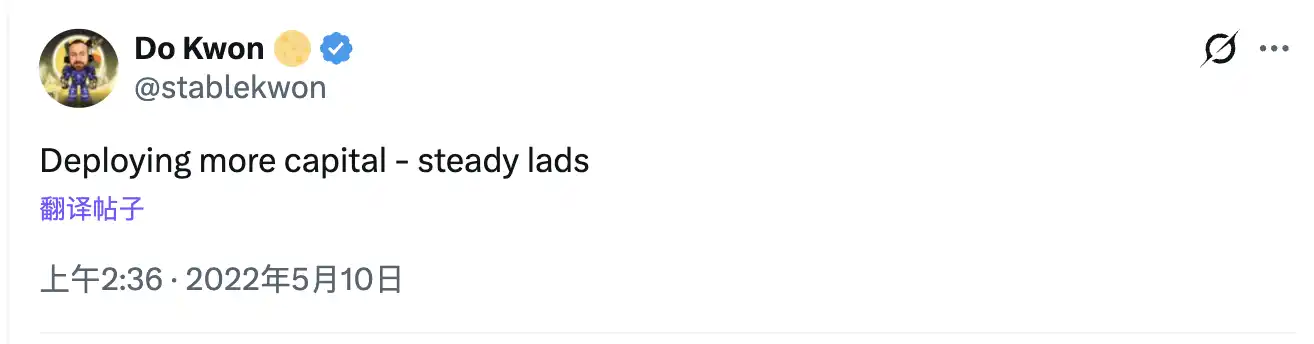
"This was an epic, cross-generational scale fraud. In the history of federal prosecutions, few frauds have caused damage comparable to this," Judge Engelmayer sternly rebuked, noting that Kwon could have chosen to tell the truth but instead chose to deceive investors who entrusted their life savings to him, taking a wrong path. He specifically mentioned the infamous tweet: "Deploying more capital – steady lads."
Ultimately, the judge sentenced Kwon to 15 years in prison.

In addition to the U.S., Kwon still faces fraud charges in South Korea. During the hearing, Kwon stated that he had not seen his family for three years and expressed a desire to serve his sentence in South Korea. U.S. prosecutors indicated that if Kwon complies with the agreement, they would support his application to be transferred to South Korea to serve the remainder of his sentence after completing half of it. In August of this year, Kwon pleaded guilty to two counts of conspiracy to commit fraud and wire fraud, and as part of the plea agreement, he also agreed to forfeit over $19 million in assets and some real estate.

Over a Million Victims, Mysterious Community Influence

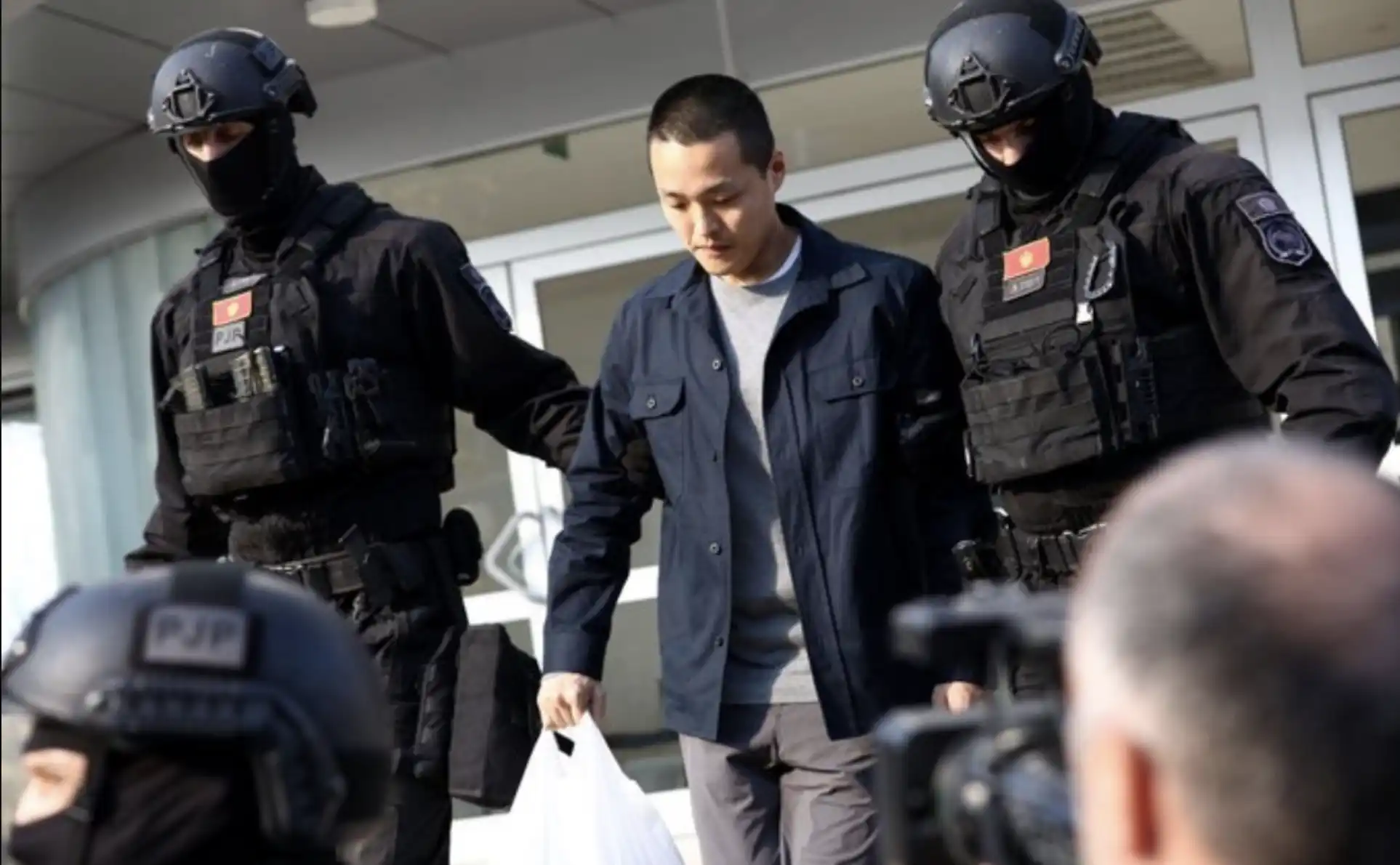
From his arrest at Podgorica Airport in Montenegro in March 2023 to his incarceration in the U.S. in December 2024, this 20-month legal battle finally reached its conclusion in a federal courtroom in New York.

Kwon's arrest once sparked an extradition battle between the U.S. and South Korea. During this period, he reached a settlement with the U.S. SEC for a staggering $4.5 billion, including $3.6 billion in disgorgement of ill-gotten gains. After more than a year of detention and diplomatic maneuvering, Montenegrin authorities finally handed him over to U.S. law enforcement late last year. Facing nine U.S. charges, including securities fraud and wire fraud, Kwon initially pleaded not guilty.

It wasn't until August this year that Kwon admitted to two counts of financial fraud, stating, "I concealed the truth about trading companies intervening to restore the peg, made false statements, and my actions were wrong." Given his guilty plea, although the statutory maximum sentence was 25 years, U.S. prosecutors recommended a sentence of no more than 12 years.
This trial was not only about Kwon's personal fate but also touched the nerves of millions of Terra victims worldwide.

However, a hiccup occurred just before the hearing. Judge Engelmayer expressed dissatisfaction with the inefficiency of the U.S. prosecutors, who did notifiy Terra victims until December 1st. The bankruptcy administrator delayed sending emails until December 8th, leaving victims almost no time to submit statements to the court. Judge Engelmayer believed that while the Terra bankruptcy case involved approximately 16,500 creditors, the number of actual victims could be as high as a million, stating, "You need to do better."

Judge Engelmayer stayed up late reading the 315 hastily submitted victim letters and stated bluntly that Kwon held an almost mystical control over Terra investors; many were like cult followers who had drunk the Kool-Aid and would never wake up.

During the hearing, the victims' accusations provided a more直观的 (intuitive - note: this Chinese word was left in the original text, meaning 'intuitive' or 'direct') sense of the devastating impact of the Terra collapse. Some lost their homes, others lost their retirement savings and their children's education funds, and some even became homeless.

One victim wrote, "All of Do Kwon's communication said everything was under control. Then the depeg happened, and I didn't dare close my eyes for four consecutive days... We were told to trust him, and then he disappeared." Another victim angrily accused, "My trust was weaponized. Do Kwon packaged himself as a visionary, and my hard-earned capital just evaporated." Another person lost $200,000 saved over 17 years overnight and pleaded in a letter, "Your Honor, please hold him accountable."

Kwon, who listened to parts of some letters via telephone, expressed a belated apology to the victims in court. "Their stories are heartbreaking and make me realize once again the enormous loss I caused. I want to tell these victims that I am sorry. For the past few years, almost every waking moment I have spent thinking about what I could have done differently then and what I can do now to make amends." In a letter submitted to the court last month, Kwon also wrote, "Looking back, I cannot understand my own arrogance... I bear the pain of everyone alone. I hope accepting any sentence can bring even a little comfort to those I have failed."

This忏悔 (repentance - note: this Chinese word was left in the original text, meaning 'repentance') contrasted sharply with his former arrogant image. Just hours before the Terra collapse in May 2022, Kwon was still mocking critics on Twitter, even leaving behind the arrogant remark, "I don't debate the poor."
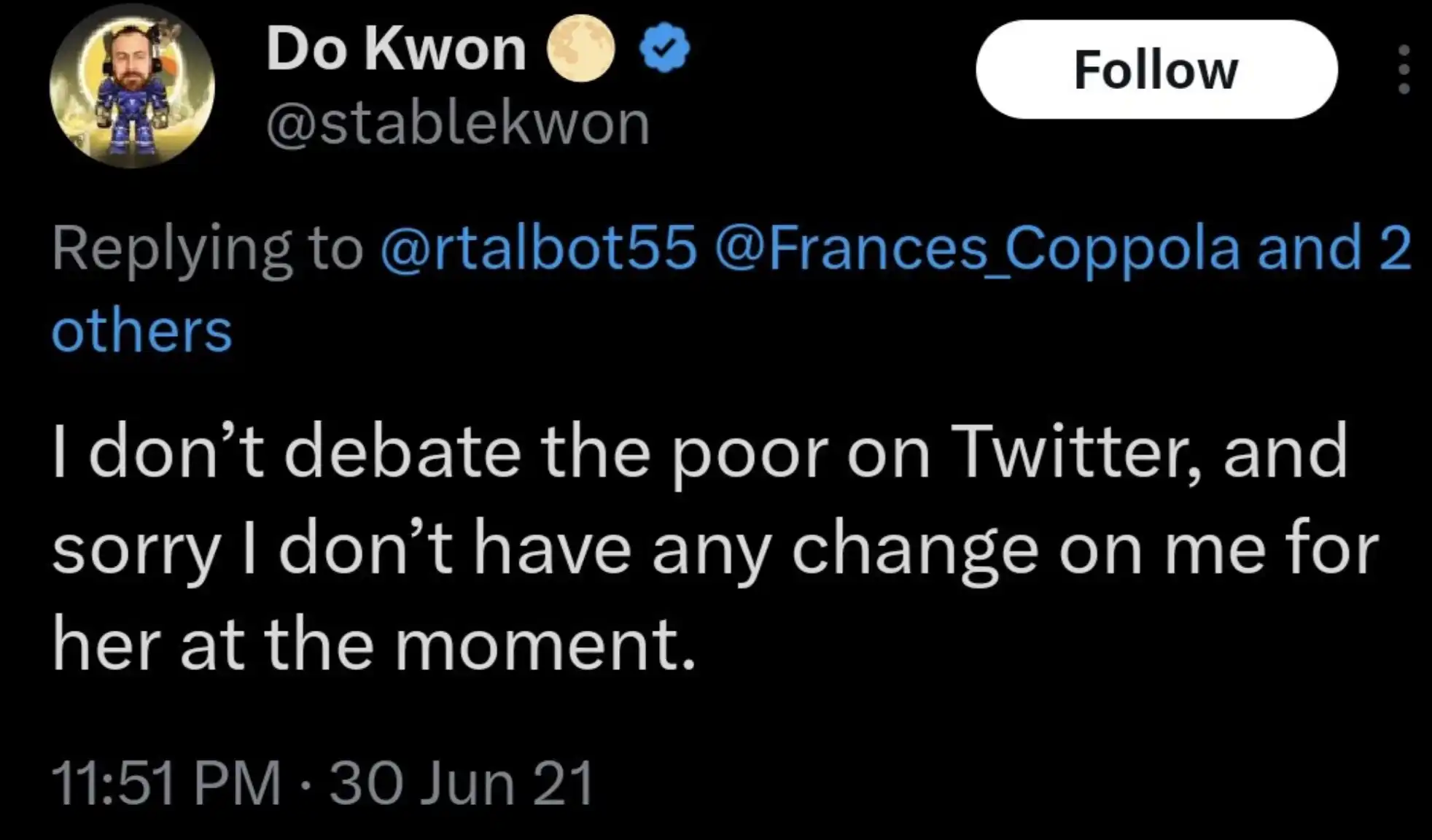
Note: Do Kwon's arrogant response to Frances Coppola's质疑 (doubts - note: this Chinese word was left in the original text, meaning 'doubts' or 'questions') about the algorithmic stablecoin design

An ironic scene also unfolded at the trial. As Kwon, wearing a yellow prison uniform and handcuffs, was escorted into the elevator, there were still many supporters applauding him, with some even shouting, "Hang in there, Do! Hold your head high!"


Perguntas relacionadas

QWhat was the sentence given to Do Kwon for his role in the Terra collapse?

ADo Kwon was sentenced to 15 years in prison.

QHow much financial damage was caused by the collapse of the Terra ecosystem according to the article?

AThe collapse of the Terra ecosystem caused $40 billion in financial damage.

QWhat was the name of the company founded by Do Kwon that was central to this case?

AThe company was called Terraform Labs.

QWhat specific charges did Do Kwon plead guilty to in August?

AIn August, Do Kwon pleaded guilty to two counts of conspiracy to commit fraud and wire fraud.

QWhat did the judge say about Do Kwon's influence over the Terra investors?

AThe judge stated that Do Kwon had an almost mystical hold over Terra investors, with many described as being in a trance-like state, akin to cult followers who would never wake up.

Leituras Relacionadas

Must-Watch Events Next Week|CLARITY Act Could Face Senate Vote; SpaceX, Circle to Report Earnings (8.3-8.9)

**Summary: Key Events and Developments to Watch (August 3-9)** The upcoming week is marked by significant financial disclosures, key legislative deadlines, and notable product updates. **Major Financial Events:** Several companies are scheduled to release their Q2 2026 earnings. American Bitcoin (ABTC) will report on August 3, followed by SpaceX and Hut 8 Mining Corp. on August 4, and Circle on August 5. Notably, a significant portion of SpaceX shares (up to 12% of total shares) will be unlocked on August 6 following their earnings release. **Key Legislative Deadline:** The U.S. Senate faces an August 7 deadline to secure 60 votes for the CLARITY Act, a bipartisan bill aiming to establish a federal regulatory framework for cryptocurrencies. The Senate may hold a full vote on the bill during the week. **Economic Data:** The U.S. July Non-Farm Payrolls report will be released on August 7, providing crucial labor market data. **Technology & Product Updates:** * **Shutdowns:** DeFi portfolio tracker Zapper and wallet app Ctrl Wallet will cease operations on August 3. * **Upgrades:** LayerZero will deprecate its v1 relayers on August 3. XRP Ledger's new version 3.3.0, featuring five new functions, is expected next week. * **AI:** Elon Musk announced that the advanced Grok 4.6 AI model is set for release around August 7. * **Bitcoin:** The BIP-110 forced signaling for a potential Bitcoin network change is scheduled to begin around August 8. **Other Notable Events:** Chinese robotics firm Unitree Tech has set its preliminary price inquiry for its IPO for August 5. South Korean exchange Upbit will delist AQT and AERGO tokens on August 3.

marsbitHá 1h

Must-Watch Events Next Week|CLARITY Act Could Face Senate Vote; SpaceX, Circle to Report Earnings (8.3-8.9)

marsbitHá 1h

Stocks Are Plummeting More Sharply Than Cryptocurrencies. Where Has the Money Gone?

Stock Markets Plunge Deeper Than Cryptocurrencies: Where Did the Money Go? In late July, Seoul's Kospi index triggered circuit breakers for two consecutive days, plummeting over 40% from its June high. The collapse was led by heavyweight stocks like SK Hynix, whose record profits still disappointed investors, and devastating leveraged ETFs, with one major product losing over 83% of its value. This signaled a global, forced deleveraging targeting the most crowded trades. Interestingly, while stocks exhibited extreme volatility akin to crypto markets, Bitcoin rose nearly 15% in July after a prior steep drop. Analysis shows the money fleeing equities did not flow into Bitcoin. Instead, Bitcoin had already absorbed its sell-off in May-June, when U.S. spot Bitcoin ETFs saw historic outflows. The true safe-haven beneficiary was gold, whose price rose over 20% year-on-year, highlighting a decoupling between Bitcoin and gold as "digital gold." The sell-off was a targeted unwinding of leveraged positions in tech and semiconductors, accelerated by broker-dealer risk management and shifts in the AI narrative, including new competition from Chinese memory chipmakers. The retreat path was clear: from high-valuation tech stocks to cash and U.S. Treasuries, then to gold. For Bitcoin to attract sustained institutional inflows, conditions like eased global liquidity pressure, a "soft-landing" Fed rate cut, and U.S. regulatory clarity via legislation like the stalled CLARITY Act are needed. Currently, Bitcoin is not a safe haven but an already-cleared asset. Its low correlation with tech stocks, however, makes it a potential diversification play for institutional portfolios once the storm passes. The money isn't here yet, but the positioning is underway.

marsbitHá 1h

Stocks Are Plummeting More Sharply Than Cryptocurrencies. Where Has the Money Gone?

marsbitHá 1h

In Conversation with Ray Dalio: We Are Currently in an AI Bubble, with 1% of My Portfolio in Bitcoin

Ray Dalio, founder of Bridgewater Associates, warns in an interview that the current AI boom shows classic bubble characteristics, which could lead to significant economic downturns as seen in past cycles like 1929 or 2000. He explains that speculative enthusiasm, fueled by debt and overvaluation, often precedes a crash when rising rates or taxation force asset sales, causing widespread losses and recession. Dalio also outlines his "Big Cycle" theory, describing an approximate 80-year pattern where widening wealth gaps, massive government deficits, and shifting geopolitical power (like China's rise) create internal conflict and global instability. He emphasizes that we are in a late-cycle, transitional phase where traditional powers like the US and UK face decline. For personal wealth protection, Dalio advises diversification beyond cash into assets like stocks, bonds, real estate, and particularly gold, which he prefers over Bitcoin. While he holds about 1% of his portfolio in Bitcoin as a non-printable hard asset, he views gold as more secure from technological or governmental threats. Regarding AI's impact, Dalio believes it will disproportionately benefit capital owners, worsening inequality by replacing both physical and cognitive labor. He suggests that human intuition and emotional intelligence, combined with AI, will be key for future workers. On taxation, Dalio argues that wealth taxes are impractical and risk triggering asset sell-offs, reducing productive investment. He points to the UK as a cautionary example of debt, low productivity, and political strife. Geopolitically, Dalio foresees a more regionalized world, with the US showing weakness in prolonged conflicts like with Iran, akin to past imperial declines. The ideal outcome, he suggests, is coexisting powerful blocs (e.g., Americas, China-Asia Pacific) without major war.

marsbitHá 5h

In Conversation with Ray Dalio: We Are Currently in an AI Bubble, with 1% of My Portfolio in Bitcoin

marsbitHá 5h

Trading

Spot
活动图片




