Tracking 118 Coins Launched in 2025: 85% Are Below Their Initial Valuation at Launch

深潮Publicado em 2025-12-22Última atualização em 2025-12-22

Resumo

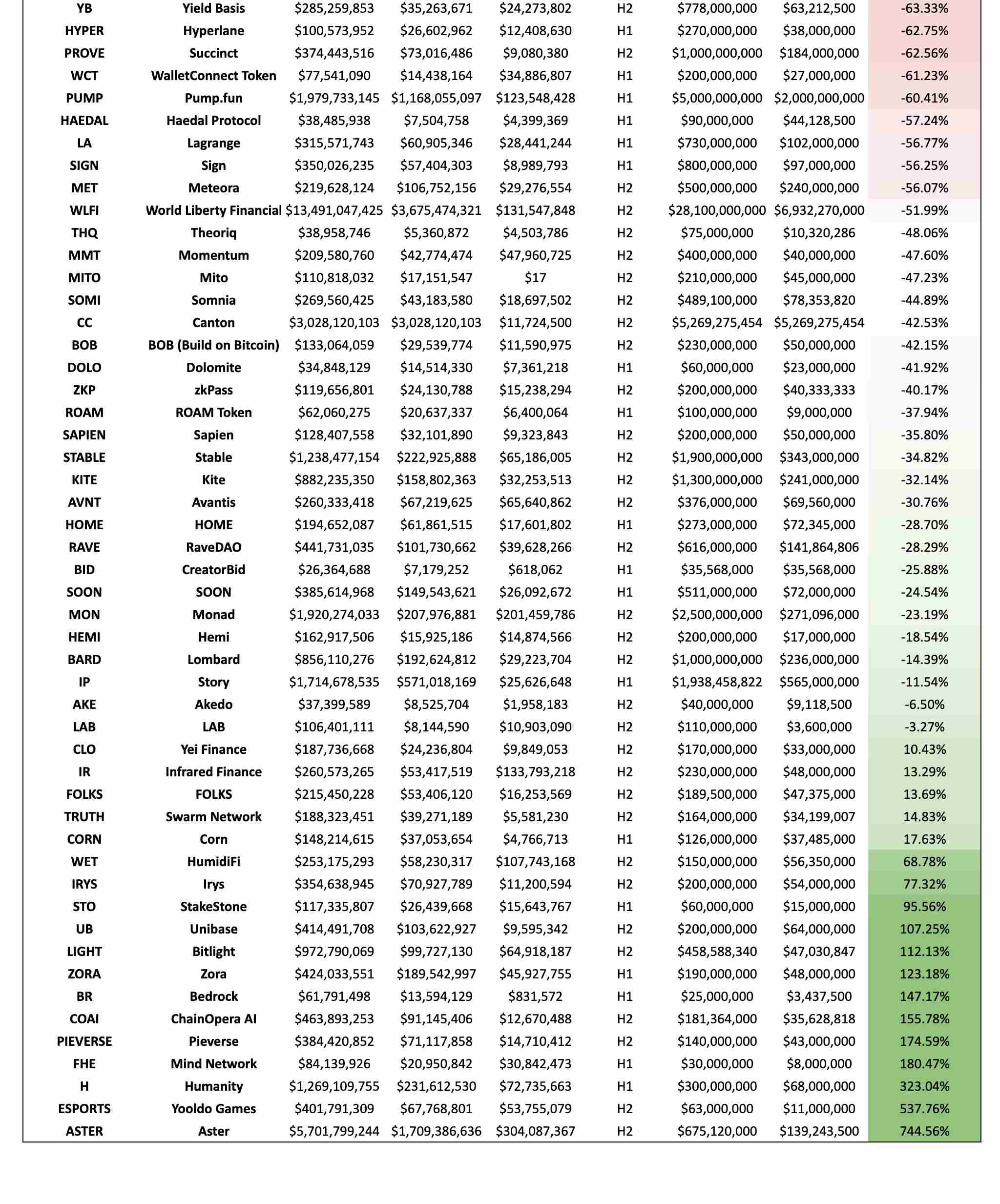
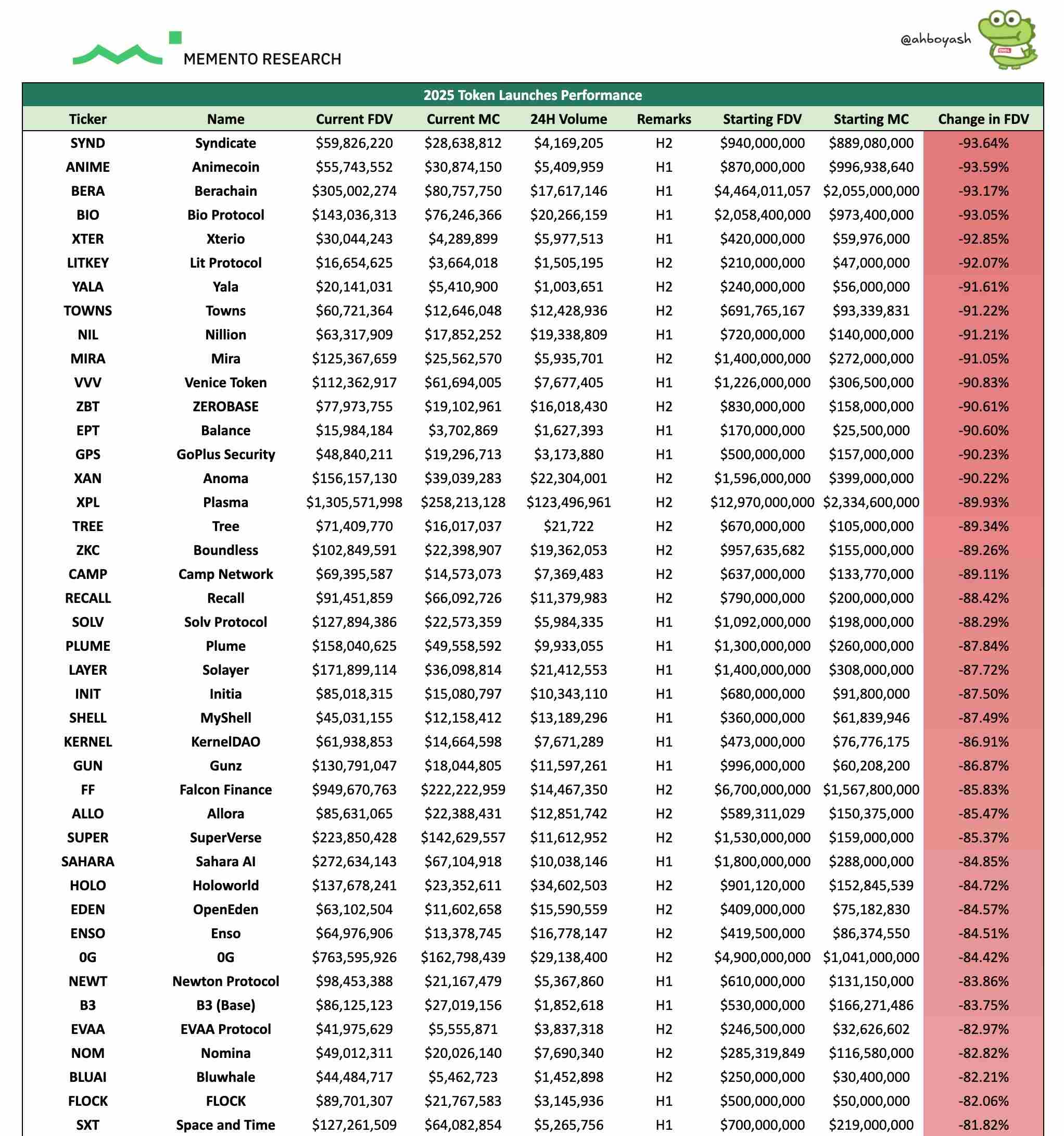
An analysis of 118 Token Generation Events (TGEs) that occurred in 2025 reveals a significant downturn in post-launch performance. The study compared each token's current fully diluted valuation (FDV) to its valuation at issuance. Key findings show that 84.7% (100 out of 118) of these assets are currently valued below their initial TGE price. This indicates that approximately 4 out of every 5 new tokens are trading at a lower valuation than at launch. The median token experienced a 71% decline in FDV (and a 67% drop in market cap) since its release. Only 15% of the tokens analyzed have maintained a valuation higher than at their TGE. The report concludes that participating in a TGE can no longer be considered a form of "early investment" under these market conditions.

Author:Ash

Compiled by: Deep Tide TechFlow

We tracked 118 Token Generation Events (TGEs) launched in 2025 and compared their current fully diluted valuation (FDV) with their valuation at issuance. The results are as follows:

  • 84.7% (100 out of 118) currently have a valuation lower than at TGE;

  • This means approximately 4 out of every 5 newly issued tokens are valued below their issuance level;

  • The median token's fully diluted valuation (FDV) has fallen by 71% since issuance (market cap down 67%);

  • Only 15% of tokens remained "green" (i.e., above issuance valuation) after TGE.

Nowadays, participating in a TGE can hardly be considered "early investment" anymore. How lamentable.

View the complete data via the link
Perguntas relacionadas

QWhat percentage of the 118 tokens tracked from 2025 TGEs are currently valued below their initial valuation?

A84.7% (100 out of 118 tokens) are currently valued below their initial TGE valuation.

QHow does the median token's Fully Diluted Valuation (FDV) perform compared to its issuance valuation?

AThe median token's FDV has declined by 71% since its issuance.

QWhat proportion of the tracked tokens maintained a valuation higher than their initial issuance?

AOnly 15% of the tokens remained 'green' (valued above their initial issuance valuation).

QAccording to the article, what is the current perception of participating in a Token Generation Event (TGE)?

AParticipating in a TGE is no longer considered 'early investment'.

QWhat metric, besides FDV, is mentioned to have declined for the median token since issuance?

AThe market capitalization of the median token has declined by 67% since issuance.

Leituras Relacionadas

Bitcoin Withdrawals Continue: 8 Years of Storage in a Coldcard Cold Wallet Ended in Zero

Coldcard Hardware Wallet Hacked: Losses Mount Due to Vulnerable Seed Generation A critical vulnerability in Coldcard hardware wallets has led to a continued wave of fund thefts. According to Galaxy Research, the total stolen has reached 1,367.05 BTC (approx. $88.6 million) from 4,585 addresses, a significant increase from the initial 594.5 BTC reported on July 30, 2026. Most of the stolen funds remain on the attackers' addresses. The issue is not with the current firmware, which Coinkite has updated, but with seed phrases generated on vulnerable devices between March 2021 and the release of fixed firmware versions. Due to a programmer error, devices switched from using a hardware random number generator to the software-based Yasmarang generator, which was initialized with publicly accessible data like the chip's serial number. This made the seed phrases predictable through offline brute-force attacks, meaning wallets remain at risk until funds are moved to a new wallet generated with the patched firmware. Affected devices include Mk2/Mk3 with firmware 4.0.1–4.1.9 (and up to 5.0.3), Mk4/Mk5 up to version 5.6.0, and Q models up to 1.5.0Q. The only exceptions are seeds created with a high-entropy method like at least 50 independent dice rolls or a strong unique BIP-39 passphrase. All other owners must generate a new seed on the fixed firmware and transfer their assets. A case highlighting the human impact involves a 39-year-old long-term investor who lost 2 BTC (approx. $130,000) in minutes. He had accumulated the Bitcoin over eight years through physical labor, viewing it as a financial lifeline and a retirement plan in a country suffering from hyperinflation. His story underscores that even conservative "buy and hold in cold storage" strategies can be compromised by such underlying technical flaws. From a technical perspective, this incident echoes historical failures where weak random number generators undermined cryptographic security, challenging the assumption that offline storage is automatically foolproof.

cryptonews.ruHá 3h

Bitcoin Withdrawals Continue: 8 Years of Storage in a Coldcard Cold Wallet Ended in Zero

cryptonews.ruHá 3h

Trading

Spot
活动图片