Top 8 crypto presales taking place in March 2026

ambcryptoPublicado em 2026-03-17Última atualização em 2026-03-17

Resumo

The crypto market has reached a $2.4-$2.5 trillion valuation by early 2026, with presales offering early access point to new projects. This article highlights eight notable presales in March 2026: Escapehub, an AI-powered virtual workspace on Ethereum; Dogemind, an AI-driven meme coin; Pepeto, a meme token with its own no-fee DEX; Blazpay, an AI-based DeFi trading platform; SpyDoge, a spy-themed memecoin; TRD Network, combining AI and DePIN for blockchain scalability; Dogeball Token, a Layer-2 GameFi project; and Remittix, a crypto-fiat bridge for payments. The piece reminds readers that presales carry inherent risks and require thorough research.

Over the past decade, the crypto market has grown into a financial system worth trillions. As of early 2026, the global crypto market capitalization sits around $2.4-$2.5 trillion, with thousands of digital assets being traded across hundreds of exchanges worldwide. This scale shows how quickly new technologies, communities, and investment opportunities are continuing to emerge in the space.

One of the easiest and earliest entry points into these new projects often occurs through crypto presales. Before a token becomes widely available on exchanges, many projects open early funding rounds where participants can purchase tokens at an initial price. For investors and crypto enthusiasts, presales offer a chance to discover emerging ideas before they reach the broader market. That said, here are the top 8 crypto presales taking place in March 2026.

1. Escapehub

Escapehub is a project that aims to make virtual workspaces more interactive through AI and blockchain. The project is designed as an AI-powered hub where users can work, interact, and manage digital identities within a blockchain-backed environment. Initially introduced as a Layer 2 solution, it has since migrated to the Ethereum blockchain, suggesting the team is aiming to provide better access and utility across a broader ecosystem, particularly in liquidity and smart contract functionality.

Furthermore, the platform aims to offer users more than basic token tools by providing a full workspace experience. This includes AI-assisted features, avatar-based interaction, and blockchain-backed user verification, with plans to expand into AR and VR environments. The token is structured as an ERC-20 asset with use cases tied to platform activity, governance, and visibility within the ecosystem.

2. Dogemind

Dogemind is an Ethereum-based meme coin project that is trying to combine AI with trading and meme creation. The idea behind the project is to build a system in which AI interprets market sentiment and social trends and uses that data to guide trading and generate content. At this stage, the project is still developing, with the presale acting as its starting point and only a limited set of official updates available so far.

The project is built around an AI-driven meme ecosystem where trading and content creation are expected to work together. This includes a smart trading agent, meme-generation features, and potential integrations that could expand the token’s use over time. The token follows the ERC-20 standard and is tied to platform activity within this ecosystem.

3. Pepeto
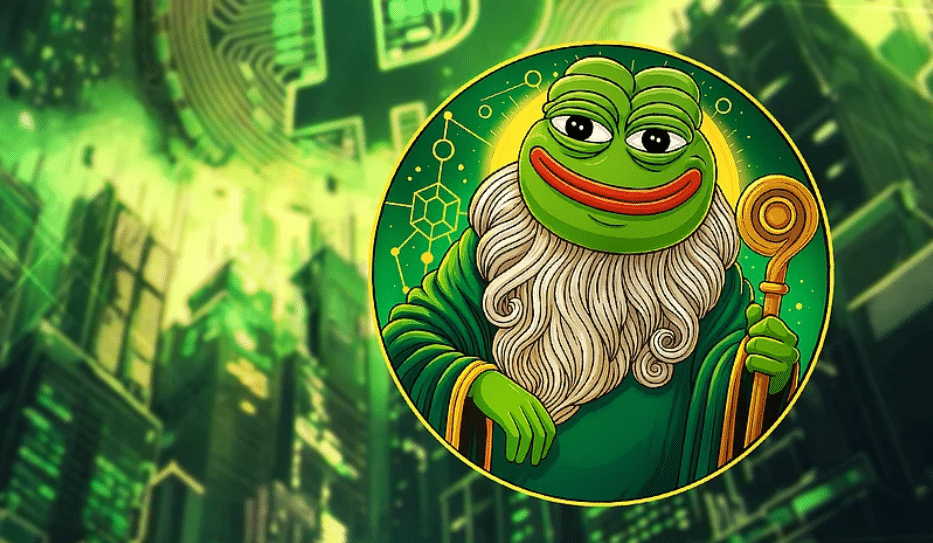
Pepeto is built around a mix of meme coin culture and exchange-based utility. Instead of existing only as a community-driven token, the project is also developing its own trading platform, indicating how the team anticipates the token will be used. It has already seen some early traction during its presale phase, along with the release of a demo for its decentralised exchange.

The project’s exchange, PepetoSwap, is designed to run without trading fees, giving users a space to trade within the ecosystem. Alongside this, there are staking options with relatively high APY, which are likely aimed at encouraging users to hold onto their tokens. The token follows the ERC-20 standard and is expected to be used across the platform for transactions and other ecosystem functions.

4. Blazpay

Blazpay is developing an AI-driven trading and portfolio management platform in the crypto space. It focuses on combining algorithm-based trading with tools that help users manage and track their assets more efficiently. The platform also incorporates DeFi elements, enabling more automated trading and portfolio insights. Based on its roadmap, the project is moving toward a public app release and eventual exchange listings.

Furthermore, the platform aims to serve as a comprehensive DeFi application rather than a single-use tool. It includes features such as a unified asset management dashboard, a multi-chain wallet, and analytics that track performance and risk. The system is also designed to use machine learning models to interpret market signals and sentiment. The project is expected to support multiple networks and offer developer integrations, with utility tied to DeFi activity, platform usage, and user incentives within the ecosystem.

5. SpyDoge

SpyDoge is a memecoin project built around a spy-themed concept, focusing mainly on community and engagement. The project brings out the humour and storytelling side of memecoins rather than trying to build out heavy utility. The project is running on Binance Smart Chain with support for Ethereum as well, which gives it slightly broader access during its presale phase. So far, it has seen some early traction, with funds already raised through its ongoing presale.

Most of what the project is planning revolves around growing its community and keeping users involved. This includes things like exchange listings, a staking setup, and a “meme vault” tied to its theme. The team has also mentioned keeping things simple on the trading side, with no transaction taxes. The token is expected to be used within this setup, with some governance elements and possible expansion across chains over time.

6. TRD Network

TRD Network is built around the idea of improving blockchain scalability by combining AI with decentralised physical infrastructure (DePIN). The project looks at how these two areas can work together to create a more efficient and secure network, especially as demand for blockchain systems continues to grow. Alongside this, there’s a focus on using AI to monitor activity and identify potential threats, which adds a layer of security to the overall setup.

One aspect of the project that appears to be extremely lucrative is how the token supply is structured. A large portion of the supply is locked in for the long term, indicating that the release of it will be more controlled over time. Furthermore, the project has also undergone multiple audits and outlines a roadmap that stretches well into future development phases, covering everything from product launches to testnet and ecosystem expansion.

7. Dogeball Token

Dogeball Token is a GameFi project built around a dodgeball-style game, with a focus on using Layer 2 infrastructure to make gameplay smoother and cheaper. It runs on Ethereum, which helps with faster transactions and lower fees, especially for in-game activity. The project is currently in its presale phase, which is planned in multiple stages leading up to a higher listing price.

The main idea is to connect the token to an actual game environment. This includes a wallet linked to the platform and a play-to-earn setup with a prize pool. The token is expected to be used for in-game purchases and other platform activity, along with governance elements

8. Remittix
Remittix is a project focused on connecting crypto with traditional finance, mainly by making it easier to move between fiat and digital assets. The platform is built around payments and transfers, with the idea of offering faster transactions and lower fees compared to traditional systems. It supports a range of cryptocurrencies and fiat currencies, which points to a broader use case around everyday transfers rather than just trading.

Running on Ethereum, the token is expected to play a pivotal role within the platform, including governance and early-stage participation benefits. The project has outlined its roadmap and documentation, covering the presale and listing phases, while also undergoing a smart contract audit.

Final thoughts

Crypto presales continue to draw attention as new projects enter the market with different ideas, use cases, and approaches to building in Web3. From AI-driven platforms and GameFi concepts to meme coins and payment-focused solutions, each project offers something slightly different, depending on what users are looking for. While presales can provide early access and potential upside, they are still early-stage by nature, which means timelines, execution, and long-term viability can vary. As with any early investment, users should always do their own research and assess each project carefully before making a decision.


Disclaimer. Readers are encouraged to do their own research. Ambcrypto is not liable for any outcomes related to the use of information, products, or services mentioned. This content may include affiliate or partner links.


Perguntas relacionadas

QWhat is the total global crypto market capitalization as of early 2026, according to the article?

AThe global crypto market capitalization sits around $2.4-$2.5 trillion as of early 2026.

QWhich project aims to make virtual workspaces more interactive through AI and blockchain and has migrated to the Ethereum blockchain?

AEscapehub is the project that aims to make virtual workspaces more interactive through AI and blockchain and has migrated to the Ethereum blockchain.

QWhat is the unique feature of PepetoSwap, the decentralized exchange being developed by the Pepeto project?

APepetoSwap is designed to run without trading fees.

QWhich two projects mentioned in the article are specifically built around a meme coin concept?

ADogemind and SpyDoge are two projects specifically built around a meme coin concept.

QWhat is the primary focus of the Remittix project?

ARemittix is focused on connecting crypto with traditional finance by making it easier to move between fiat and digital assets, offering faster transactions and lower fees for payments and transfers.

Leituras Relacionadas

Agents Take Over Traffic Distribution Power: What Are Tencent, ByteDance, and Alibaba Competing For?

In the race to dominate the AI era's entry point, China's tech giants—Tencent, ByteDance, and Alibaba—are aggressively deploying AI Agents to control the future of traffic distribution. Alibaba is pursuing a dual-track "closed loop + openness" strategy. Its Qianwen app is evolving into a super-Agent integrated across its ecosystem (Taobao, Alipay, etc.) to handle complex tasks like travel planning. Concurrently, it is opening its platform to external brands (Luckin Coffee, KFC) and has launched a B2B Agent platform, "Wukong," targeting enterprise automation. Its other flagship, Quark, aims to be an "AI super search box" for information and tasks. ByteDance is executing an omnipresent "sprawl strategy." Its Doubao app boasts over 300 million monthly active users and is evolving into a default AI entry point for daily life, with plans for paid versions and e-commerce integration. Its core weapon is the Kouzi platform, a visual "AI assembly factory" for developers to build custom Agents. ByteDance is also pushing hardware integration, collaborating on AI phones and developing smart glasses to embed Doubao everywhere. Tencent is playing its long-held "ultimate card" by quietly embedding an AI Agent directly into WeChat. This Agent, accessible via a swipe, can understand user commands and automatically execute tasks by calling upon WeChat's millions of mini-programs (e.g., finding and ordering coffee). This leverages WeChat's unparalleled 1.4-billion-user ecosystem to position the app as an AI-powered "service operating system," a move that could dramatically reshape the competitive landscape. The core battleground is shifting from competing for "user screen time" to competing to be the "default execution layer" for user intent. The business model is evolving from an "attention economy" to an "intent economy," where the Agent that can most efficiently fulfill a user's need gains control over service access and token flow. This represents a fundamental change in how users connect with digital services, making the fight for the Agent入口 (entry point) a pivotal moment for redefining industry leadership in the AI age.

marsbitHá 16m

Agents Take Over Traffic Distribution Power: What Are Tencent, ByteDance, and Alibaba Competing For?

marsbitHá 16m

From Banning Doubao to Embracing Honor: Why Did WeChat Suddenly 'Change Its Face'?

The article explores the sudden shift in WeChat's strategy towards AI assistants from mobile phone manufacturers, transitioning from strict opposition to active collaboration. For over a year, WeChat fiercely resisted attempts by phone AI assistants (like ByteDance's Doubao in late 2025) to control its features via GUI automation ("simulated clicking"), citing security and data control concerns. This stance created a significant barrier for system-level AI integration. Now, Tencent has initiated A2A (Agent-to-Agent) partnerships with major phone brands like Honor, Xiaomi, OPPO, and vivo. This model allows a phone's system AI (e.g., Honor's YOYO) to parse a user's voice command and send a structured request directly to WeChat's own internal AI agent via secure APIs. WeChat then executes the action (e.g., sending a message) and returns the result. The article attributes Tencent's "change of face" to strategic pressure. While leading in social app usage, Tencent trails rivals like ByteDance and Alibaba in standalone AI app popularity. WeChat, with its vast mini-program ecosystem, is Tencent's key asset for an AI comeback. The upcoming WeChat AI agent aims to handle tasks like booking and payments within the app. However, phone system assistants remain the primary AI entry point for most users. The A2A collaboration allows Tencent to extend WeChat's AI reach to this crucial system layer while maintaining control over its core functions and data. For phone manufacturers, embracing A2A is a pragmatic move. The GUI route proved unviable due to WeChat's blocks. A2A offers a compliant path to integrate a vital service, enhancing their AI assistants' usefulness. It allows them to focus on developing their own AI ecosystems for other services while cooperating on WeChat access. The collaboration is framed as a mutual, strategic necessity: Tencent gains a distribution channel, and manufacturers gain a key functionality. The partnership relies on a "dual authorization" mechanism for security, requiring both user and app consent for each action. While questions about long-term data privacy practices remain, experts note A2A is more secure and compliant than GUI automation. Ultimately, this cooperation is seen as a tentative, calculated truce. Tencent's long-term goal is to make WeChat an AI-powered "service OS." Phone manufacturers aim to make their system AI the central user interface. Their paths may converge or clash in the future, but for now, the A2A deal represents the opening chapter in the battle for the AI-era user入口, driven by necessity and strategic calculus on both sides.

marsbitHá 1h

From Banning Doubao to Embracing Honor: Why Did WeChat Suddenly 'Change Its Face'?

marsbitHá 1h

On-Chain Figures on the Eve of Kickoff: 1.6 Billion Traded Before the World Cup Even Begins

"On-Chain Numbers on the Eve of the World Cup: $1.6 Billion Traded Before Kick-off" Analysis of on-chain markets before the 2026 FIFA World Cup reveals significant crypto integration into football. The most striking figure is the approximately **$1.6 billion** in total trading volume on the single "World Cup Winner" contract on the Polymarket prediction market platform, accumulated before a single match was played. This represents explosive growth for a sector whose annual volume surged from ~$16B in 2024 to ~$64B in 2025. The ecosystem is maturing beyond speculation. Key developments include: 1) **Infrastructure upgrades** like Polymarket's migration to native, regulated USDC stablecoin for settlements; 2) **Reliable data oracles**, such as Chainlink, being used to resolve real-world match outcomes on-chain; and 3) **Official recognition**, with FIFA appointing its first-ever "Prediction Markets" partner. Over 100 contracts now cover everything from the outright winner to individual match results and even non-sporting risks like venue relocation. This evolution marks a fundamental shift. While crypto firms are absent from FIFA's top-tier sponsor list, the technology has deeply penetrated the tournament's financial and predictive infrastructure through regulated stablecoin settlements, decentralized oracles, and new official partnership categories. The regulatory landscape remains complex and varies by jurisdiction, but on-chain markets for the World Cup are already a multi-billion-dollar reality.

marsbitHá 2h

On-Chain Figures on the Eve of Kickoff: 1.6 Billion Traded Before the World Cup Even Begins

marsbitHá 2h

Trading

Spot
Futuros
活动图片