Tiger Research: Ten Major Shifts in the Cryptocurrency Market by 2026

marsbitPublicado em 2025-12-29Última atualização em 2025-12-29

Resumo

Tiger Research outlines ten major shifts expected in the cryptocurrency market by 2026. As the industry matures, institutional capital will remain concentrated in Bitcoin and Ethereum, avoiding unproven assets. Projects without real revenue generation will face淘汰, while unsustainable tokenomics will give way to models emphasizing buybacks and burns. Increased M&A activity will drive market consolidation. Emerging trends include the fusion of robotics and crypto-enabled gig economies for decentralized data collection, and media companies adopting prediction markets to boost engagement. Traditional finance will dominate real-world assets (RWA) via private chains, while ETH staking ETFs will accelerate growth in Bitcoin-based financial products (BTCFi). Fintech apps will surpass exchanges as primary entry points for new users. Finally, privacy technology will become essential institutional infrastructure to protect large-scale trading strategies.

This report is authored by Tiger Research. The cryptocurrency industry is entering the mainstream. Institutions have become key players in the market. Capital is flowing to projects that generate real yield. Short-term price fluctuations are no longer important. Sustainable business models have become crucial. Tiger Research predicts ten major shifts in the cryptocurrency market by 2026.

1. Institutional Capital Continues to Stay in Bitcoin
Source: Tiger Research

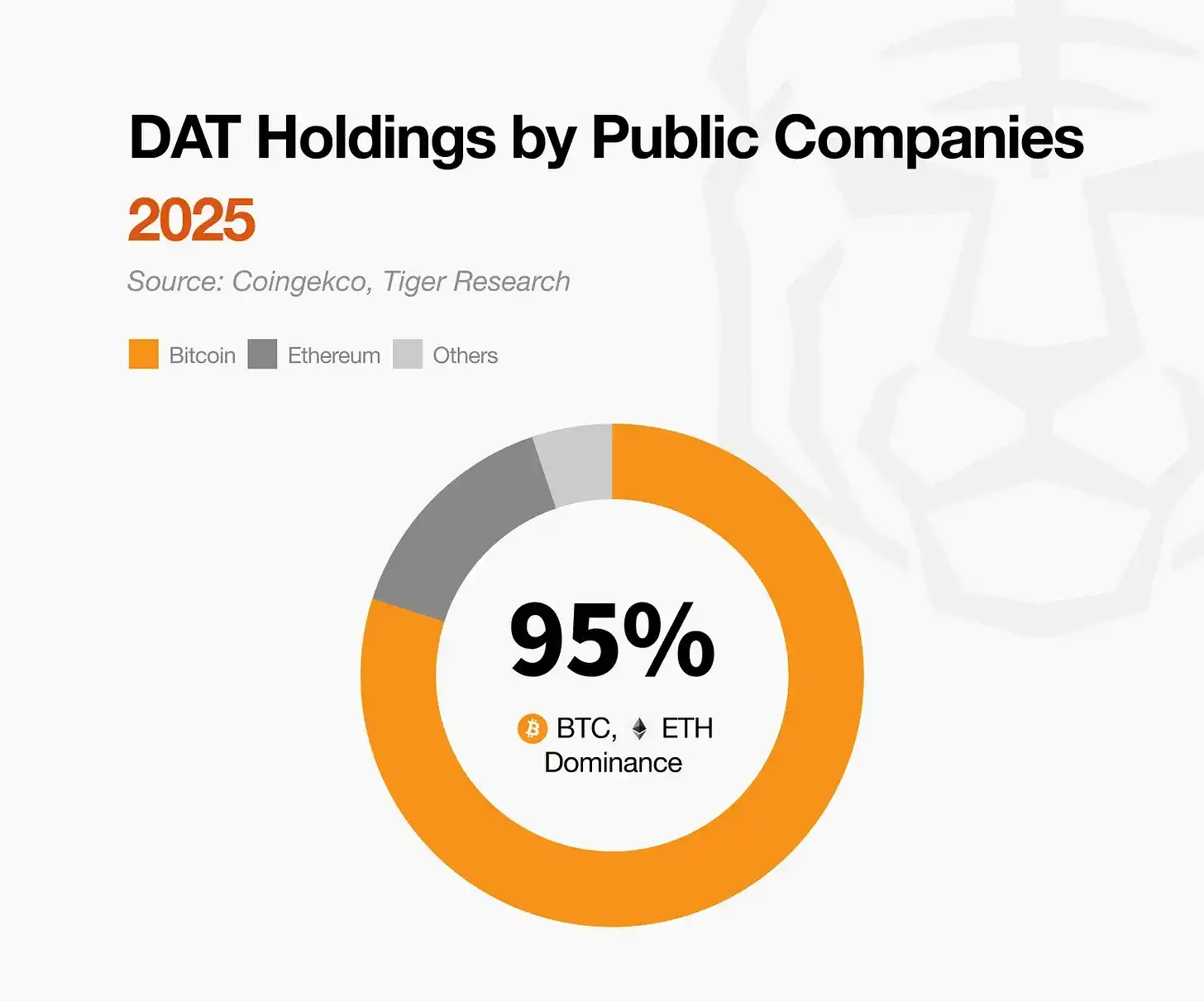
As institutions dominate the market, capital flows have become more cautious. These investors avoid unverified assets, limiting their scope to Bitcoin and Ethereum. This trend is likely to continue. Market growth will be concentrated only on assets that meet institutional standards.

2. Profitless Projects Face Market Elimination
Source: Tiger Research

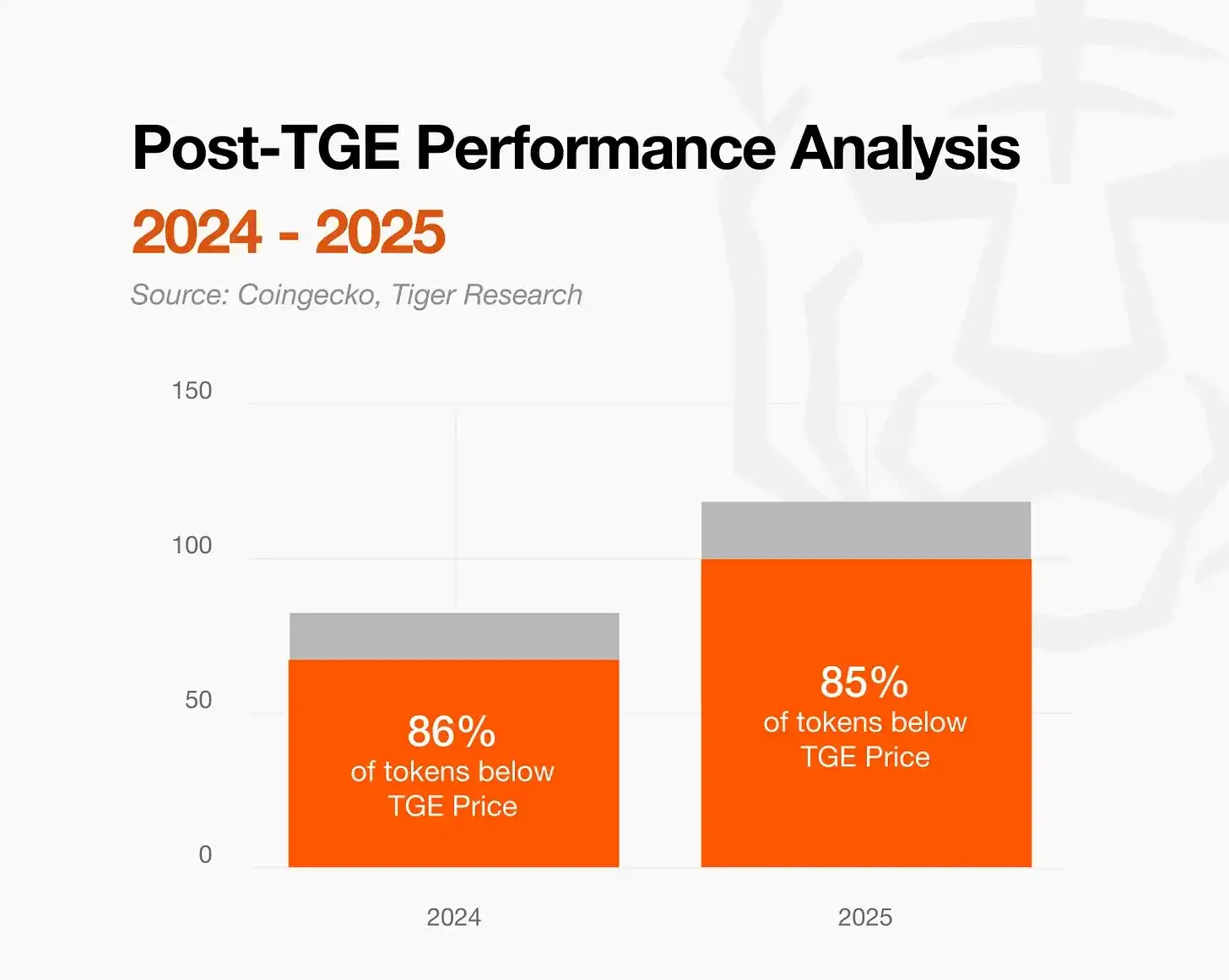
85% of new tokens decline in price after TGE, exposing the limitations of narrative-driven growth. Hype-based projects will be replaced by new trends at an increasingly rapid pace. The market will shift towards projects that generate real yield and demonstrate robust fundamentals.

3. Utility Has Failed, Buybacks Are the Only Answer

Source: Tiger Research

Tokenomics focused on utility have failed. Governance voting rights have failed to attract investors. Complex structures are unsustainable. The market now demands clear value returns. Models that provide direct returns through buybacks and burns will survive. Structures where protocol growth directly impacts token price will also survive. New innovative models will emerge from this shift.

4. Increased M&A Opportunities Between Projects

Source: Tiger Research

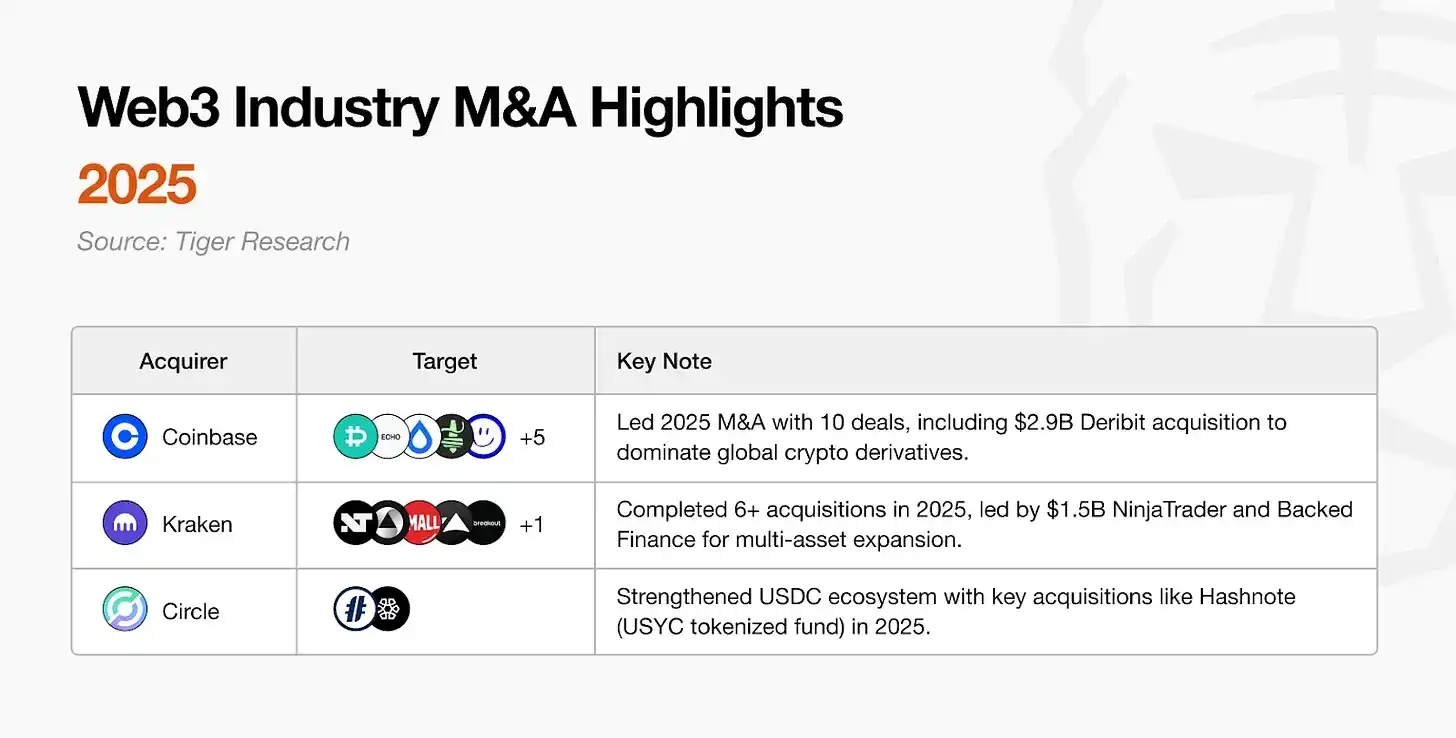
Web3 is maturing. Competition for market dominance is intensifying. Mergers and acquisitions (M&A) are now the fastest way for companies to scale and enhance competitiveness. The winners will drive aggressive M&A activity. The market will be reshaped by businesspeople who create real profits.

5. Robotics and Cryptocurrency Will Usher in a New Era of the Gig Economy
Source: figure.ai

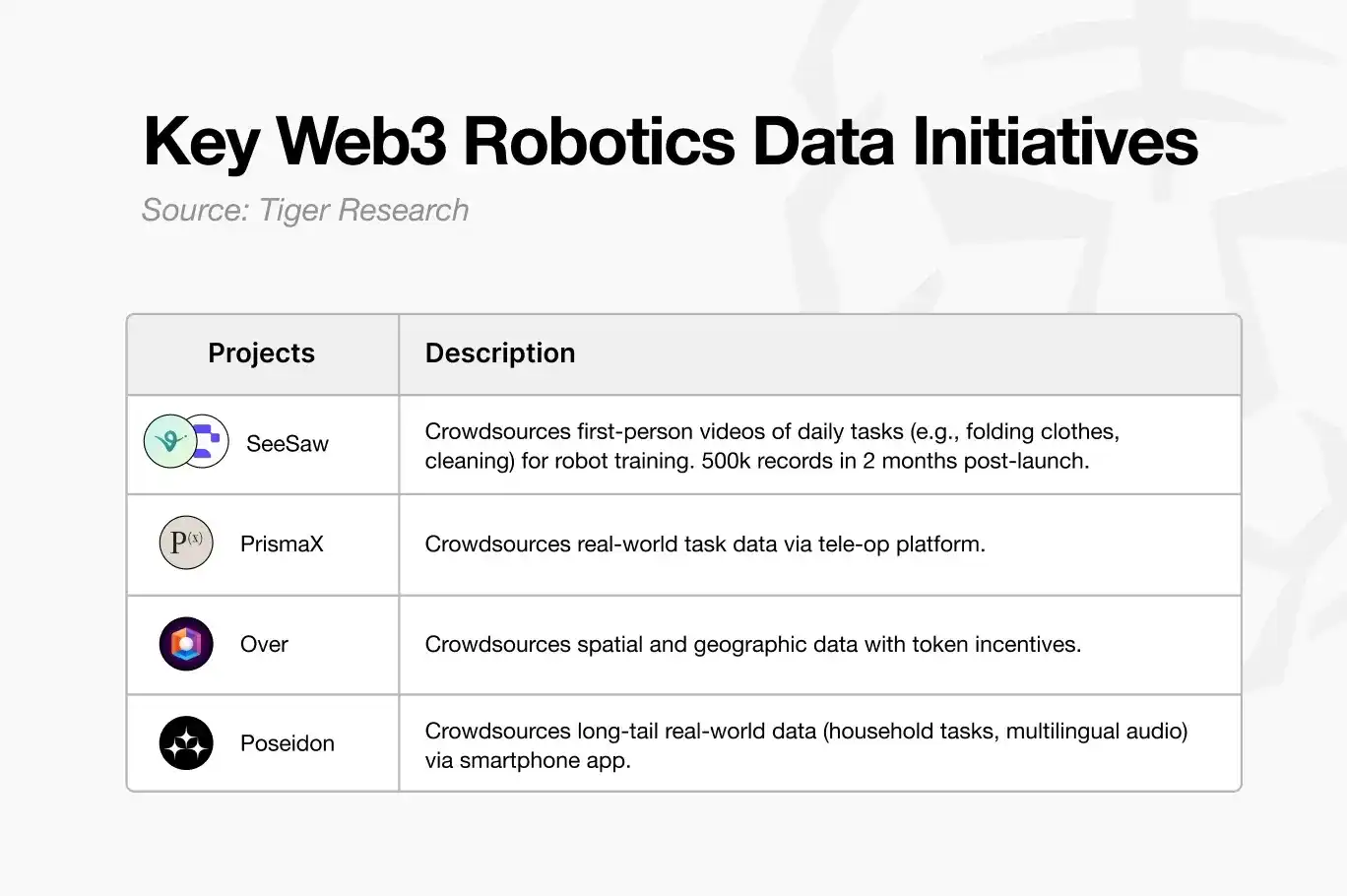
The robotics industry is growing. Real-world data for robot training has become crucial. Traditional centralized methods cannot efficiently collect massive amounts of data. Blockchain-based decentralized crowdsourcing solves this problem. It collects vast amounts of data from individuals globally and provides transparent, instant rewards. A new gig economy centered around robotics will emerge.

6. Media Companies Adopt Prediction Markets
Source: Tiger Research

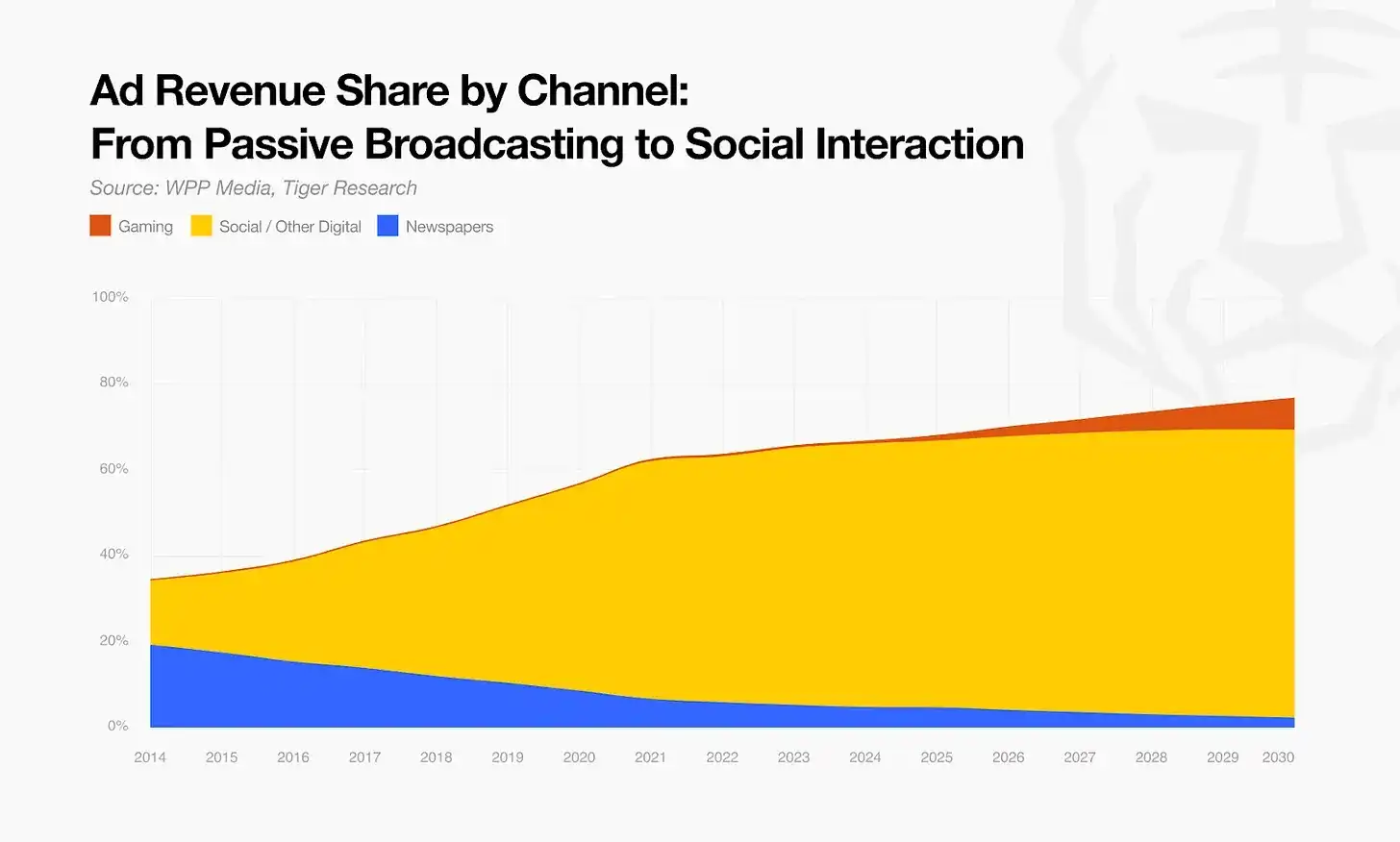
As traditional revenue models reach their limits, media companies will adopt prediction markets as a survival strategy. Readers will shift from passive consumption to active participation, placing capital bets on news outcomes. This shift will optimize revenue structures while driving deeper audience engagement.

7. Traditional Finance Dominates RWA Through Self-Built Chains
Source: Tiger Research

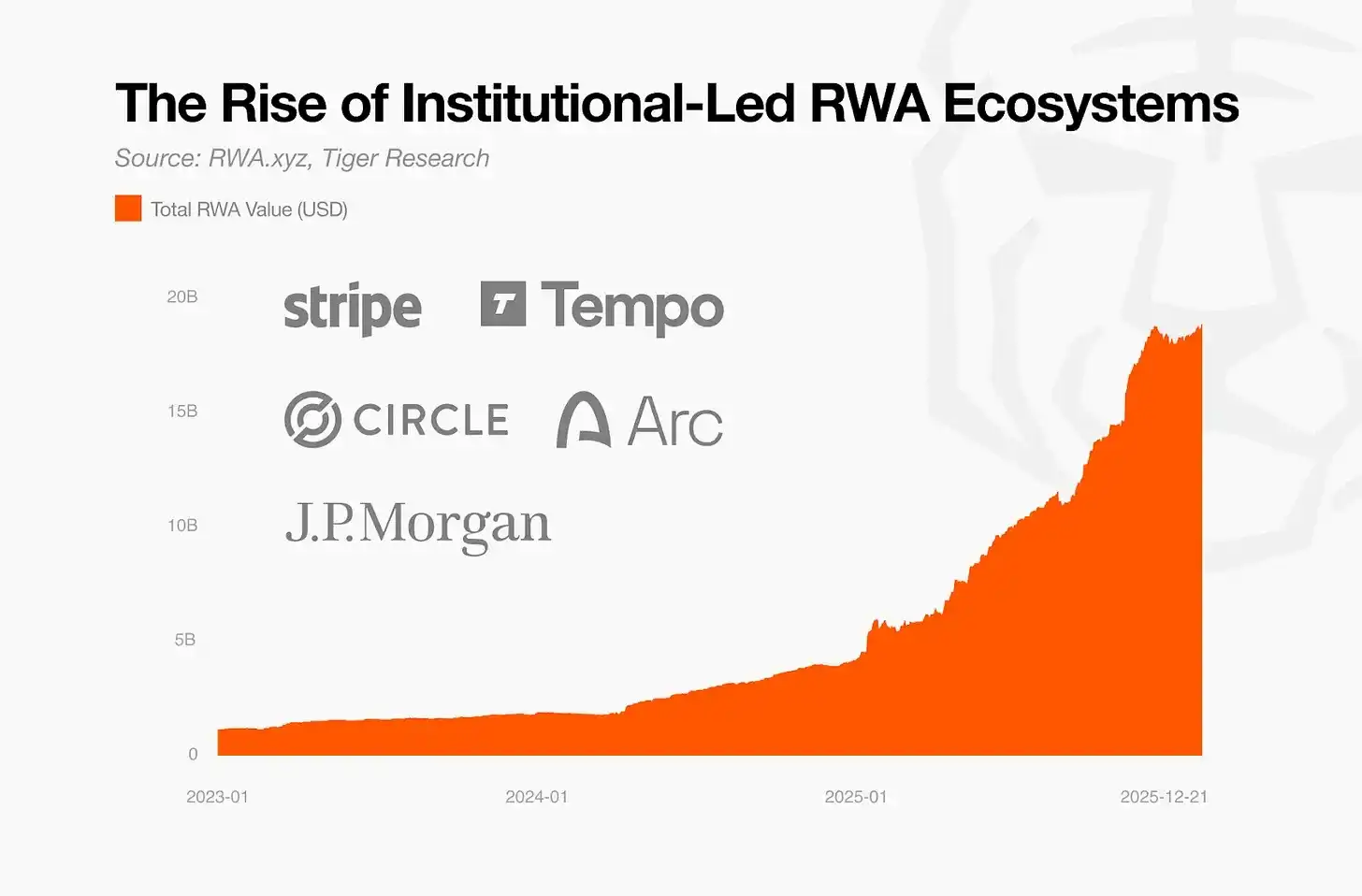
Traditional financial institutions are the main suppliers in the RWA market. Given the need for asset control and security, the benefits of using third-party platforms are minimal. These companies are likely to build their own chains to maintain market leadership. RWA projects lacking independent asset supplies will lose their competitive advantage and face elimination.

8. ETH Staking ETFs Will Drive BTCFi Growth
Source: Tiger Research

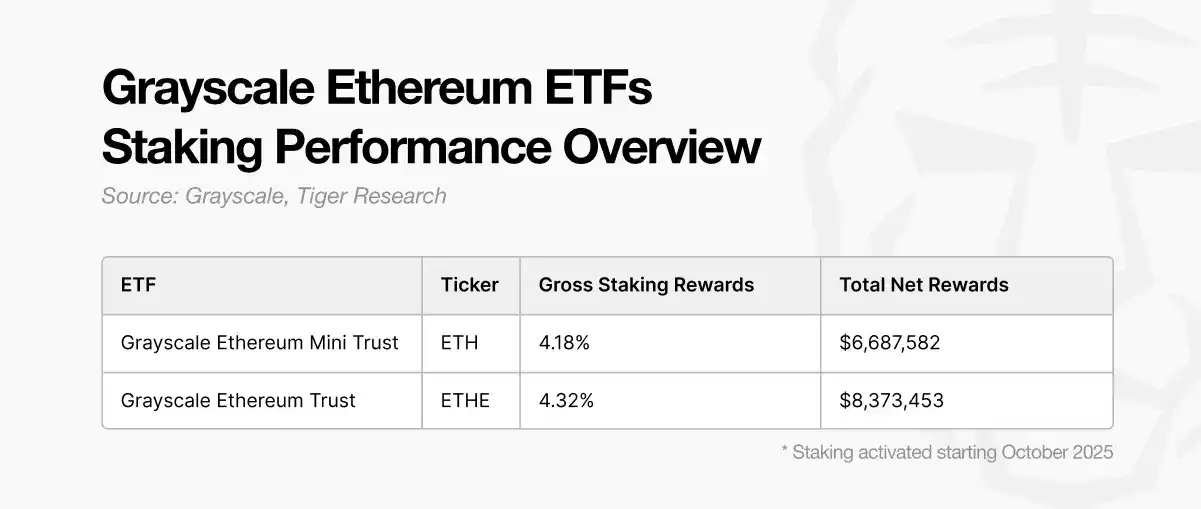
The launch of Ethereum staking ETFs will prompt Bitcoin ETF holders to seek yield. BTCFi fills this gap. As large amounts of capital enter Bitcoin, the demand for asset utility will rise. This pursuit of yield will drive the next wave of BTCFi growth.

9. Fintech Will Surpass Exchanges as the Primary On-Ramp
Source: Tiger Research

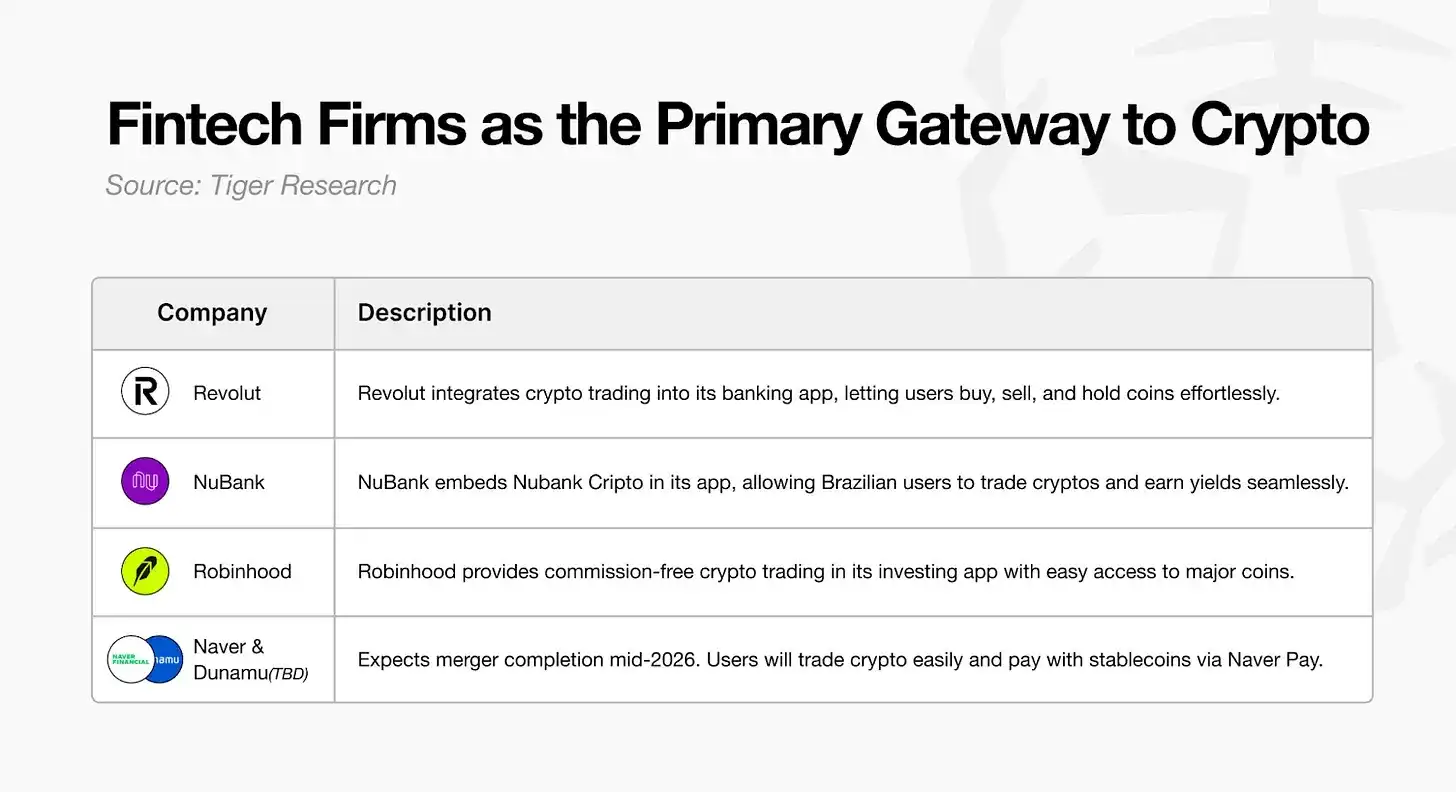
As rules become clearer, fintech applications have become the preferred choice for cryptocurrency trading. New users no longer need to use cryptocurrency exchanges. They can buy and sell directly within the applications they use daily. The next wave of growth will be led by these fintech tools.

10. Privacy Technology Becomes Core Institutional Infrastructure
Source: Tiger Research

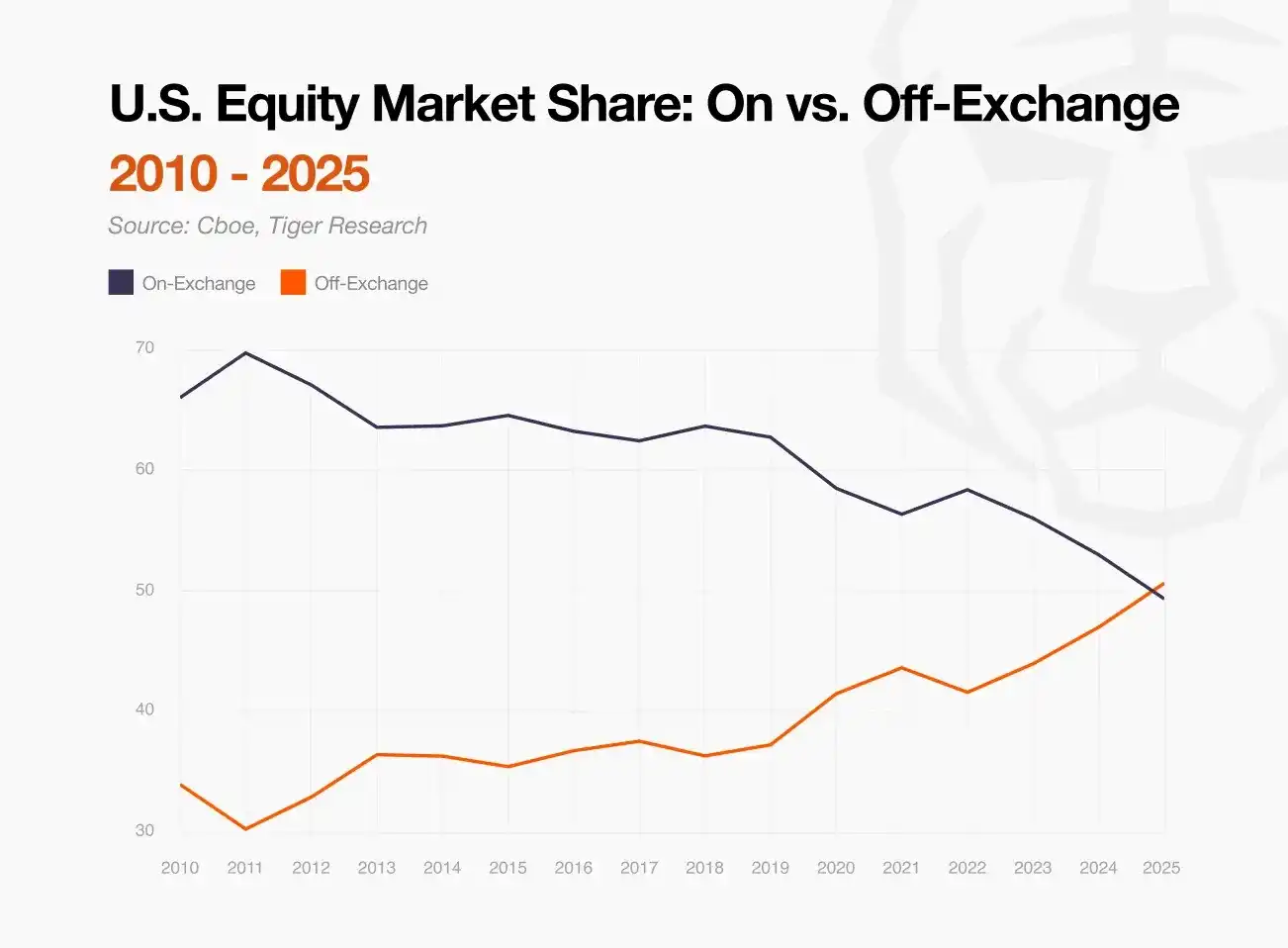
On-chain transparency exposes trading plans. This is a weakness for large institutions. High-net-worth participants must hide their movements to ensure security. Privacy technology is a key tool for these institutions to enter the market. Large-scale capital will only flow in if transaction data is secure.


Perguntas relacionadas

QWhat are the two main cryptocurrencies that institutional investors are predicted to continue focusing on by 2026, according to Tiger Research?

AInstitutional investors are predicted to continue focusing primarily on Bitcoin and Ethereum, as they are considered established and meet institutional standards.

QWhy does Tiger Research claim that utility-focused tokenomics has failed, and what model is expected to survive?

AUtility-focused tokenomics has failed because governance voting rights failed to attract investors and complex structures proved unsustainable. The model expected to survive is one that provides direct returns through buybacks and burns, or structures where protocol growth directly impacts the token price.

QHow is the convergence of robotics and cryptocurrency predicted to create a new gig economy era?

AThe convergence is predicted to create a new gig economy era by using blockchain-based decentralized crowdsourcing to efficiently collect the massive amounts of real-world data needed for robot training from individuals globally, offering transparent and instant rewards.

QWhat role are financial technology (fintech) applications expected to play in the future of cryptocurrency onboarding?

AFintech applications are expected to become the primary onboarding channel for new users, surpassing exchanges. Users will be able to buy and sell cryptocurrency directly within the everyday applications they already use.

QWhy is privacy technology considered crucial for large institutional adoption of cryptocurrency?

APrivacy technology is considered crucial because on-chain transparency exposes the trading plans of large institutions, which is a significant weakness. High-net-worth participants must hide their movements for security, making privacy tech a key tool for their market entry. Large-scale capital will only flow in if transaction data is secure.

Leituras Relacionadas

When AI Traffic Surpasses Humans, How Do You Prove You're Human?

With AI-generated web traffic surpassing human activity, websites face a crisis as AI agents bypass ads, avoid clicks, and scrape data without generating revenue. This disrupts the ad-based internet economy, diverting traffic and reducing site visits. In response, sites are blocking AI crawlers and deploying traps like Cloudflare's "honeypot" pages. Traditional CAPTCHAs are now ineffective against advanced AI. The focus has shifted to behavioral biometrics—analyzing unique human patterns such as cursor movement, typing rhythm, and keystroke dynamics. Companies like IBM and BioCatch use this data to distinguish humans from bots, even detecting fraud through behavioral inconsistencies. Two competing approaches aim to verify human identity centrally. Sam Altman’s World (formerly Worldcoin) uses iris scanning to create unique credentials, though it faces privacy concerns and regulatory bans. Alternatively, cryptographic zero-knowledge proofs offer anonymous verification without revealing personal data, championed by Vitalik Buterin to avoid centralized surveillance. However, both systems have flaws. Centralized solutions risk biometric data misuse, while decentralized models may be exploited through identity rental markets in economically unequal regions. Despite challenges, the author favors cryptographic methods for preserving privacy over pervasive behavioral monitoring that permanently captures and controls personal biometric data.

marsbitHá 11m

When AI Traffic Surpasses Humans, How Do You Prove You're Human?

marsbitHá 11m

2026 Landscape of Decentralized AI: Why is Blockchain the Inevitable "Antidote" for AI?

**The 2026 Landscape of Decentralized AI: Why Blockchain is the "Cure" AI Cannot Ignore** Decentralized AI addresses fundamental bottlenecks of centralized AI: scarce and expensive computational resources, excessive control concentration, unverifiable model outputs, and increasing difficulty in acquiring training data due to privacy and regulation. Blockchain offers a path to make intelligence open, verifiable, and economically accessible. The technical stack comprises three layers: 1. **Applications & Services**: The main crypto use cases are "Agentic Finance" (converting natural language into on-chain actions) and "Agentic Payments" for machine-to-machine commerce. Projects like Giza, Infinity Labs, Coinvest AI, and x402 (handling 173M+ transactions) are key players. 2. **Middleware**: This coordination layer enables agents to discover, identify, and transact. Notable projects include Gokite AI (specialized L1), Virtuals (an OS for the agent economy), and especially Bittensor—a network of specialized subnets forming competitive AI micro-economies. 3. **Infrastructure**: The capital-intensive layer providing raw resources. It includes decentralized compute (Akash, Render, Aethir), verifiable inference (Venice AI, OpenGradient), distributed training (Prime Intellect, Templar AI), decentralized storage (Filecoin, Walrus), and privacy/verification layers (Nillion, Arcium, Phala Network) using technologies like ZKPs, MPC, and TEEs. The outlook for 2026-2027 indicates AI demand outpacing infrastructure, with AI agents as a primary growth engine. Computation is becoming an asset class, with on-chain markets as its financial layer. Tokenomics is emerging as a structural advantage for coordinating capital, compute, and data in decentralized AI networks. While still early—with adoption uneven and revenue often trailing token incentives—projects like Bittensor, NEAR, and Virtuals demonstrate a shift from speculative narrative to a new model for coordinating intelligence.

marsbitHá 14m

2026 Landscape of Decentralized AI: Why is Blockchain the Inevitable "Antidote" for AI?

marsbitHá 14m

a16z Crypto Partner: Cash Flow is the Moat

Cash Flow as the Moat: A Playbook for Crypto Founders Historically, the most enduring businesses have been built by positioning themselves within the "flow of funds"—facilitating the creation and transfer of value in a network and extracting a portion of it. Cryptocurrency is the first modern technology natively built for this purpose. For startups, failing to architect products and businesses to leverage these principles means missing a major opportunity. Blockchains are inherently network businesses. Each transaction settles on a shared ledger, and every new participant strengthens the underlying network for all. Well-designed network tokens amplify this by aligning users, developers, and validators around growing the network, with value flowing back to contributors in a transparent feedback loop. This model is not new; companies from railroads and Standard Oil to Google, Meta, and AWS have thrived by inserting themselves into critical flows of value (goods, attention, compute). Financial markets make it even clearer: firms like Visa and major market makers generate immense revenue not by predicting markets but by being in the path of transactions. The combination of fund flow and network effects creates one of the most durable business structures. The high margins in traditional finance (payments, custody, lending, FX) represent prime targets. Crypto founders have the opportunity to build the next version—programmable, instant, global, and natively in the flow of funds. The frontier extends beyond finance to areas like computing/GPUs, AI training data, energy, robotics, and space—markets without entrenched intermediaries, ripe for building new, efficient value rails on programmable infrastructure. Founders should ask: Are you in the flow of funds today? Does your revenue scale 10x with the value of activity on your platform? Where in your target market are profit margins highest relative to value created? The opportunity is clear: embed your startup into the new flows of value and let the network effects accumulate.

marsbitHá 17m

a16z Crypto Partner: Cash Flow is the Moat

marsbitHá 17m

Trading

Spot
Futuros
活动图片