Thunderbolt Chen Lei Case: Dark Deals, Mistresses, and Cryptocurrency Black Money Under the Blockchain Frenzy

marsbitPublicado em 2026-01-15Última atualização em 2026-01-15

Resumo

Lei Chen, former CEO of Xunlei and its subsidiary Wangxin Technology, is facing a 200 million RMB civil lawsuit filed by the company in January 2026 for alleged damage to corporate interests. The case, accepted by a Shenzhen court, revives earlier accusations from 2020 that Chen embezzled company funds through fabricated transactions and false contracts, diverting tens of millions of yuan into illegal cryptocurrency speculation. Chen, a tech elite with a background at Google, Microsoft, and Tencent, led Xunlei's pivot to blockchain in 2017, launching the popular "Wanke Cloud" device and its associated "Wanke Coin" (later renamed "LinkToken"). The initiative initially boosted Xunlei’s stock, but internal governance issues emerged. An audit revealed Chen allegedly funneled money through a controlled supplier, Xingronghe, and used company resources for crypto trading—violating China’s crypto ban. The case also involves Chen’s close relationship with Dong Xia, a senior VP he appointed, with whom he had a child—contradicting his prior denials. Both left China in April 2020, hindering a criminal investigation that was later dropped. The civil case now seeks accountability, highlighting early crypto industry risks and corporate governance failures in Chinese tech.

Original Author: Ma He, Foresight News

In January 2026, Thunderbolt Company and its subsidiary Wangxin Technology filed a civil lawsuit against Chen Lei and his core team on the grounds of "dispute over liability for damaging company interests," seeking compensation of up to 200 million yuan. The case has been accepted and filed by the relevant court in Shenzhen.

This lawsuit stems from a series of allegations in 2020, including Chen Lei's suspected embezzlement of company assets through fabricated transactions and false contracts, as well as the misappropriation of tens of millions of funds for illegal cryptocurrency trading. To evade investigation, Chen Lei left the country in early April 2020 and has since remained overseas for an extended period, leading to the criminal investigation being dropped due to difficulties in obtaining evidence.

This incident not only exposed the internal governance chaos at Thunderbolt but also reflected the wild growth and regulatory risks of early Chinese internet companies venturing into the cryptocurrency space.
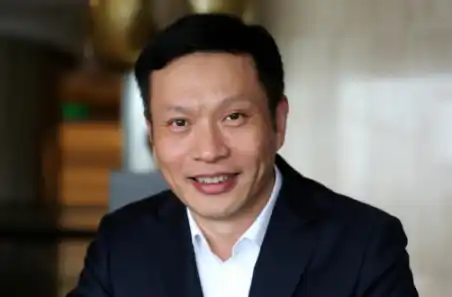
Chen Lei began learning programming in high school, enrolled in the Computer Science Department of Tsinghua University for college, pursued further studies in the United States, gained experience at Google and Microsoft, and then returned to China to join Tencent. Chen Lei is a standard sample of a technical elite.

In 2014, he joined Thunderbolt as Chief Technology Officer (CTO) when the company was facing a decline in its download business. As a former Microsoft employee, Chen Lei excelled in distributed computing and cloud computing technologies, which aligned with Thunderbolt's core P2P download business. From 2015 to 2017, he served as Thunderbolt's co-CEO, and in July 2017, he officially became CEO and director.

At this time, the global blockchain boom was rising, Bitcoin prices were soaring, and Chinese companies were actively exploring this emerging field. Chen Lei led Thunderbolt's transformation toward blockchain, viewing it as the key to the company's revival.

Wankeyun: From Glory to Decline

Thunderbolt's landmark product in the cryptocurrency space was "Wankeyun." In October 2017, Thunderbolt launched the Wankeyun hardware, a smart shared storage device where users were rewarded with "Wankey Coins" for contributing idle bandwidth and storage resources.
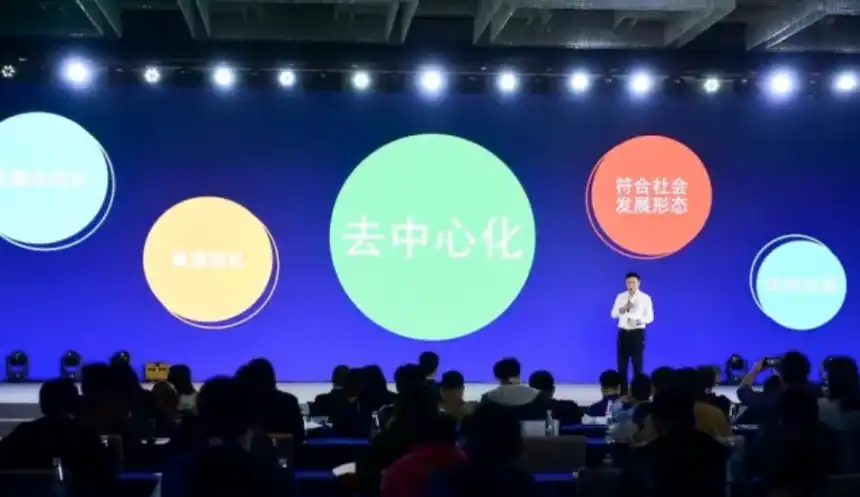
This model quickly ignited the market, with Wankeyun sales surging and the price of LinkToken soaring hundreds of times at one point. At its peak, the daily revenue from Wankeyun devices exceeded 100 million yuan, and the originally 399-yuan Wankeyun devices were resold for as much as 3,000 yuan even as second-hand items. The initial unofficial opening price of LinkToken was 0.1 yuan, and it once rose to nearly 10 yuan.

Chen Lei repeatedly emphasized in public that this was Thunderbolt's innovation in "shared economy + blockchain," aimed at building a distributed computing ecosystem. Thunderbolt also established a blockchain laboratory to promote projects like Onething Chain, attempting to position itself in the field of decentralized storage and computing.

However, in late 2017 and early 2018, due to the impact of the 94 ban and the announcement by the China Internet Finance Association, Wankey Coin was renamed "LinkToken." The price of LinkToken continued to fall, leading to protests from some investors.

Having a Child with a Lover, Misappropriating Tens of Millions for Cryptocurrency Trading

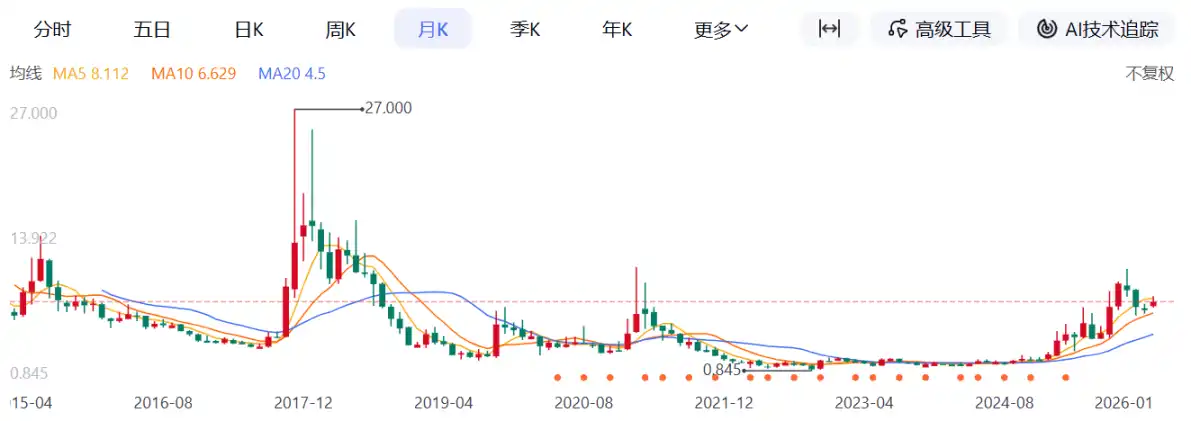
Thanks to the blockchain布局, Thunderbolt's stock price once soared from $4 to $27.
Chen Lei's cryptocurrency布局 seemed successful but埋下hidden dangers: company resources were倾斜toward blockchain, internal management was loose, and fund flows were unclear. Entering 2019, Thunderbolt's blockchain business faced bottlenecks. The global crypto market corrected, Chinese regulation tightened, and Wankeyun sales declined. Chen Lei attempted to expand edge computing through subsidiary Wangxin Technology, but internal conflicts gradually emerged.

According to informed sources, Chen Lei had a close relationship with then Senior Vice President Dong Xia, who recruited many fellow townspeople and relatives from Heilongjiang into key positions, forming a "small circle."

This provided the soil for subsequent corruption allegations. In April 2020, Thunderbolt's board suddenly dismissed Chen Lei, citing suspected job-related embezzlement. The new management's audit found that Chen Lei transferred funds through the company "Xingronghe" (a Thunderbolt bandwidth supplier) that he actually controlled. Xingronghe was established in 2019 and had frequent transactions with Wangxin Technology. Chen Lei was suspected of fabricating transaction links and creating false contracts to embezzle approximately 200 million yuan from the company.

More notably, there were allegations of misappropriating funds for cryptocurrency trading. The audit showed that Chen Lei was suspected of misappropriating tens of millions of company funds for illegal cryptocurrency trading activities explicitly prohibited by the state.

Specific details include: through close associates like Dong Xia, placing personnel in departments such as finance and procurement to create false reimbursements and overpaid salaries, with the funds ultimately flowing into the cryptocurrency market. At the time, Bitcoin prices were rebounding from lows in early 2020, and Chen Lei may have used this for speculation. This behavior violated China's ban on virtual currency transactions and涉嫌job-related embezzlement.

Additionally, Chen Lei and Dong Xia had a child together during their tenure, and their relationship was not purely professional, further fueling suspicions of利益输送.

Public information shows that Dong Xia once served as Senior Vice President of Thunderbolt Group and Marketing Vice President of Wangxin Technology, overseeing core departments such as business marketing and human resources, reporting directly to then CEO Chen Lei. The two had early interactions during the Tencent Cloud era (Dong Xia was once an ordinary public relations staff member at Tencent Cloud). After Chen Lei joined Thunderbolt in 2014, Dong Xia was gradually promoted and became an important confidant. As early as during Chen Lei's tenure, there were internal rumors that the two were lovers (or had an improper relationship).

The Thunderbolt board once questioned Chen Lei face-to-face, and he guaranteed with his "Christian reputation" that they were merely colleagues with no other relationship.

However, after Chen Lei was dismissed, the company's audit and investigation found that Chen Lei and Dong Xia had a child together during their tenure at Thunderbolt. This directly contradicted Chen Lei's previous guarantee, confirming that the two had an intimate personal relationship and formed a tight利益共同体.

To evade investigation, Chen Lei left the country with Dong Xia in early April 2020, transferring equity at low prices to relatives, making it difficult for Thunderbolt to pursue accountability.

In October 2020, Thunderbolt reported to the Shenzhen Public Security Bureau that Chen Lei and others were suspected of job-related embezzlement, and the police filed a case for investigation. The company issued a公告calling for Chen Lei to return to the country to cooperate, but to no avail. The criminal case was dropped at the end of 2022 due to Chen Lei's overseas stay and obstacles in obtaining evidence.

Five years later, in 2026, Thunderbolt restarted civil litigation, with the focus still on fund transfers and misappropriation for cryptocurrency trading. New evidence shows that Chen Lei dismissed dozens of core employees before his dismissal, causing brain drain and compensation losses.

If this case is won, it may provide an example for corporate governance in China. Chen Lei started with Thunderbolt's blockchain innovation and ended with涉嫌misappropriating funds for cryptocurrency trading, reflecting the opportunities and pitfalls of the early cryptocurrency space. Thunderbolt once revived with the blockchain concept but collapsed due to regulation and internal corruption. Chen Lei's case serves as a warning that technological innovation must comply with regulations, and personal ambition that crosses boundaries will inevitably lead to serious consequences.


Leituras Relacionadas

The Gold Buy-on-the-Dip Guide: Watch Interest Rates, Not Just War

"Gold Buying Guide: Focus on Interest Rates, Not Just War" Four months ago, gold buyers likely didn't anticipate buying at a peak that even a war couldn't sustain. After hitting a record high of $5,596 on January 29, gold entered a bear market just 91 days later, its fastest decline since 2008. A key trigger was the Fed's hawkish shift, highlighting that monetary policy, not geopolitics, is the primary driver. The article argues that the traditional "buy gold in turmoil" script has changed. While the US-Iran conflict initially boosted prices, the sustained rally in oil prices heightened inflation fears, forcing central banks to maintain or consider tighter policy. Since gold yields no interest, higher rates increase its opportunity cost, eroding its appeal. This dynamic was evident when gold fell sharply on May 18 despite positive peace talks, as lower oil prices eased inflation and thus rate hike pressures. The recent sell-off is also part of a broader market deleveraging. Correlations between gold, Nasdaq, and Bitcoin spiked as leveraged investors sold liquid assets to cover losses, creating a synchronized downturn. Historically, gold bottoms align with policy shifts, not conflict resolutions. The 2008 and 2022 bear markets ended with shifts to extreme easing and peak inflation expectations, respectively. For potential buyers, the author suggests monitoring three signals: 1) Peak interest rate hike expectations, 2) Reopening of the Strait of Hormuz (to ease oil/inflation pressure), and 3) A return to net inflows for Gold ETFs, indicating the end of forced selling. While predicting the exact bottom is impossible, the author's personal strategy involves scaling into a position across price levels like $4000, $3700, and $3500, committing no more than 30% of the intended total allocation initially, and adding the remainder only if key signals emerge. The core conclusion: In turbulent times, watching interest rates is more crucial than watching wars.

marsbitHá 8m

The Gold Buy-on-the-Dip Guide: Watch Interest Rates, Not Just War

marsbitHá 8m

Recent On-Chain Review: No Clear Narrative Under U.S. Stock Market Pressure, Just Hype

This article analyzes the current state of the Solana meme coin and community token ecosystem, highlighting a market caught between two dominant forces: attention-based PvP and a gradual return to community-centric projects. The first part explores the "Attention PvP" dynamic, where success is driven by celebrity endorsements, viral events, and speed. Examples include $JOTCHUA, which surged after its meme creator's social media activity, and $WORLDCUP, which outperformed a similar Base chain project ($PITCH) largely due to influencer support. The recent "pump.fun GO" feature, allowing bounty tasks for token promotion, is critiqued for fostering sensationalist and often negative stunts—like people getting token tickers tattooed on their bodies for rewards—reminiscent of old internet shock content. In contrast, the article points to a resurgence of organic, community-driven tokens that survive market volatility through strong holder bases and shared ideology, not just hype. Influencer Ansem is cited, arguing that durable meme coins rely on communities willing to endure losses and promote their core message daily. Examples given are older tokens like $neet (anti-work ethos), $troll, $buttcoin, and $triplet, which have maintained relative price stability. A prime example of this community-build model is the new project $KINS, the token for the browser-based MMORPG Kintara. Its success stems not from advanced graphics but from consistently delivering updates, fostering player trust, and creating genuine engagement (e.g., in-game economies, events, property auctions). It has attracted a growing player base and even notable KOLs as participants, demonstrating that sustainable growth can come from building trust rather than orchestrating pumps. The article concludes by questioning whether the market is ultimately a game of mutual trust or mutual deception, expressing hope that such reflection might lead to a healthier ecosystem.

marsbitHá 8m

Recent On-Chain Review: No Clear Narrative Under U.S. Stock Market Pressure, Just Hype

marsbitHá 8m

On-Chain Scene on Opening Day: $20 Billion Already Staked, How Do On-Chain Contracts Know Who Wins?

On the opening day of the 2026 World Cup, over $2 billion had already been wagered on just the "tournament winner" contracts on platforms like Polymarket and Kalshi. This article explores how these blockchain-based prediction markets actually function once the games begin. It breaks down the massive volume and explains how single-game and tournament-long contracts are priced, with values moving between 1-99 cents to reflect implied probabilities. A key mechanism highlighted is "elimination zeroing," where a team's "champion yes" contract immediately settles to zero once they are mathematically eliminated. The core technical question answered is: how does a smart contract "know" who won a real-world match? The answer lies in oracles. The article details two primary paradigms: UMA's "optimistic oracle" (used by most of Polymarket), which allows a challenge period after a proposed result, and Chainlink's multi-source data aggregation (used by FIFA partners like ADI Predictstreet), which automates settlement with minimal dispute windows. Finally, the article injects a note of caution, citing research estimating that a significant portion of historical trading volume on these platforms might be "wash trading" to inflate numbers. It concludes by contrasting the legal status of these "event contracts" under CFTC rules in the U.S. versus traditional, state-regulated sports betting. As the tournament progresses, the real-time operation of this multi-billion dollar machine—its settlements, eliminations, and underlying mechanisms—becomes a story as compelling as the football itself.

marsbitHá 23m

On-Chain Scene on Opening Day: $20 Billion Already Staked, How Do On-Chain Contracts Know Who Wins?

marsbitHá 23m

Sequoia Dialogue with Jensen Huang: Computing Model Undergoes a 60-Year Transformation; You Won't Be Replaced by AI, But You Will Be Dimensionality-Reduced by 'Those Who Master AI'

NVIDIA founder and CEO Jensen Huang, in a conversation with Sequoia Capital's Konstantine Buhler, argues that we are witnessing the most significant computing shift in 60 years—from retrieval-based to generative computing. Instead of just storing and retrieving data, future systems will generate highly personalized content (text, images, video) on demand, powered by massive "AI factories." Huang envisions a global "intelligence network" that will envelop the planet, following the historical patterns of energy and communication grids. He outlines a five-layer investment framework: 1) Energy, 2) Chips/Computers, 3) Infrastructure (data centers), 4) AI Models, and 5) Applications. He predicts this ecosystem will reach a scale of $20 trillion annually. Crucially, Huang pushes back against fears of AI-driven job loss. He distinguishes between specific "tasks" (e.g., typing, analyzing images) and overall "jobs" (e.g., CEO, radiologist). While AI automates tasks, it increases efficiency and demand for the higher-value problem-solving aspects of professions, thus creating more jobs and "up-leveling" careers. The real risk, he asserts, is not being replaced by AI, but being outperformed by someone who effectively leverages it. He urges everyone to embrace AI as a tool for augmented capability and innovation.

marsbitHá 1h

Sequoia Dialogue with Jensen Huang: Computing Model Undergoes a 60-Year Transformation; You Won't Be Replaced by AI, But You Will Be Dimensionality-Reduced by 'Those Who Master AI'

marsbitHá 1h

Trading

Spot
Futuros
活动图片



