Three-Year High Smashes Rate-Cut Hopes, Who's Using CPI to Clean Out Whale Holdings?

Foresight NewsPublicado em 2026-06-11Última atualização em 2026-06-11

Resumo

U.S. CPI inflation accelerated to 4.2% year-over-year in May, reaching a three-year high and dampening market expectations for Federal Reserve rate cuts in 2026. The surge was primarily driven by a sharp 23.5% annual increase in energy prices, fueled by geopolitical conflicts. While core CPI rose 2.9% year-over-year, showing relative moderation, the hotter-than-expected headline data prompted a repricing in interest rate markets. Traders now overwhelmingly expect the Fed to hold rates steady, with some even pricing in potential rate hikes for late 2026 or 2027. The report triggered declines in major U.S. stock indices and pressured risk assets like Bitcoin, which remained volatile around $61,000-$62,000. Analysts note that while the energy-driven inflation spike is concerning, the controlled core figures provide the Fed room for patience. However, the "higher for longer" interest rate narrative has solidified. For crypto markets, this translates to continued outflows from Bitcoin ETFs, heightened volatility, and a market seemingly in a "capitulation" phase, with leverage reset but sustained demand yet to materialize.


By Ma He, Foresight News


On the evening of June 10th, Beijing time, the U.S. Bureau of Labor Statistics officially released the Consumer Price Index (CPI) data for May 2026. The report showed that driven by a significant surge in energy prices triggered by geopolitical conflicts, U.S. inflationary pressures rebounded noticeably, further dampening market expectations for the Federal Reserve's interest rate cut path within the year. According to data from the U.S. Bureau of Labor Statistics, the CPI rose 0.5% month-over-month (seasonally adjusted) in May, slightly slower than April's 0.6% increase, but rose 4.2% year-over-year (unadjusted), accelerating significantly from 4.2% in April and reaching the highest level since April 2023. Core CPI (excluding food and energy) rose 0.2% month-over-month, below market expectations of 0.3% and April's 0.4%; it rose 2.9% year-over-year, slightly up from the previous reading of 2.8%, in line with market expectations.


Energy prices were the core driver of this month's inflation rebound. The energy index rose 3.9% month-over-month and surged 23.5% year-over-year. Among them, gasoline prices rose 7.0% month-over-month, soaring 40.5% year-over-year; fuel oil rose 58.9% year-over-year. The U.S. Bureau of Labor Statistics explicitly stated that the energy index contributed to over 60% of the month-over-month increase in the overall CPI for May. Geopolitical conflicts involving Iran and related tensions have continued to push up international oil prices since February, with WTI crude once breaking above $100 per barrel, directly transmitting to U.S. domestic gasoline and energy service costs.


Following the data release, by the close on June 11th, the S&P 500 index fell approximately 1.62%, and the Nasdaq index declined 1.98%. The U.S. dollar index strengthened, and the U.S. Treasury yield curve shifted upward overall.
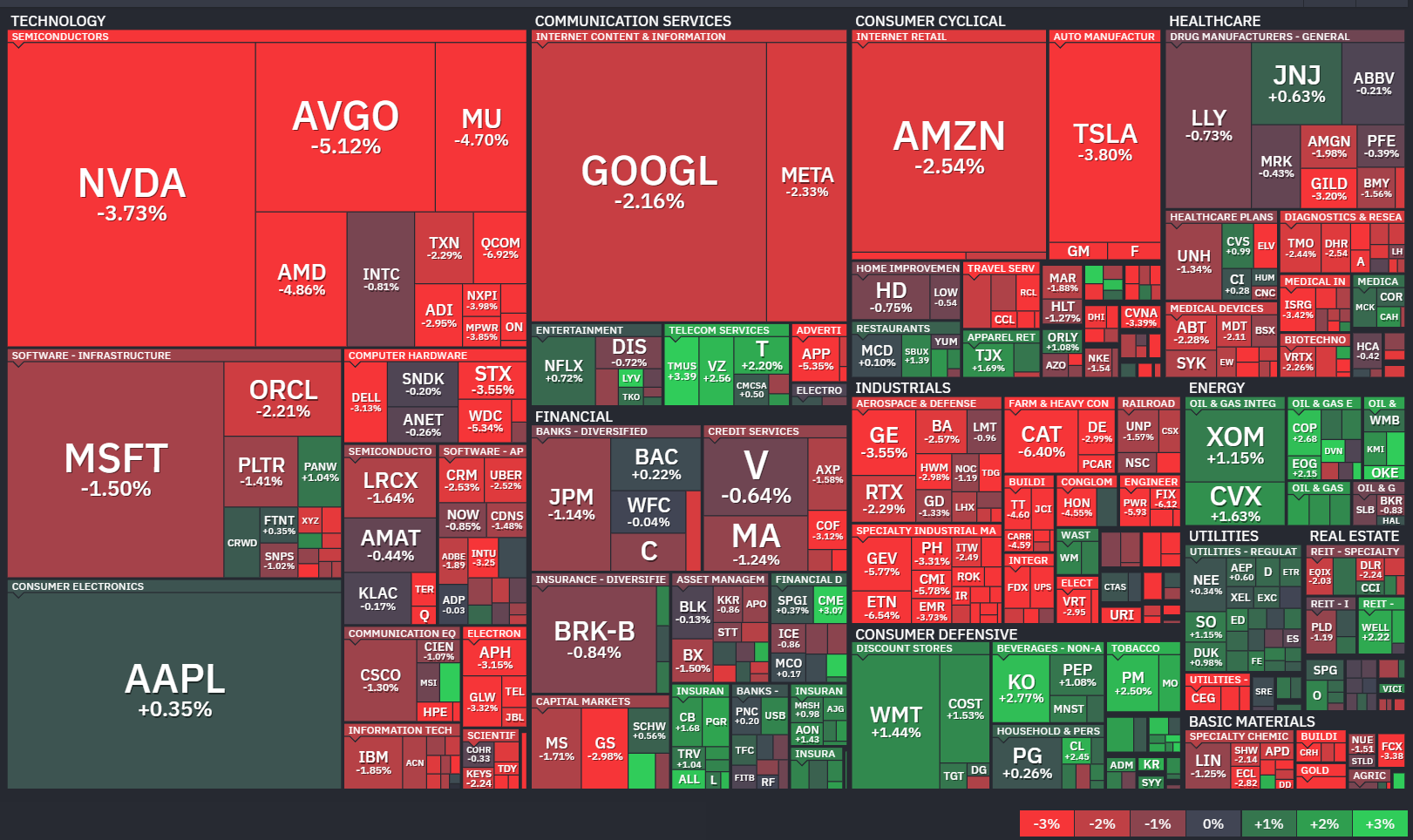


As a typical risk asset, the crypto market also faced clear pressure—Bitcoin price fluctuated between $61,000 and $62,000 around the data release, with market concerns that hot data could further squeeze liquidity expectations.


No Fed Rate Cuts This Year?


More crucial was the repricing in the interest rate derivatives market. According to the CME FedWatch Tool, the probability of the FOMC meeting on June 16-17 maintaining the federal funds rate unchanged in the current 3.50%-3.75% target range exceeds 96%. The probability of rate cuts for the entire year has significantly decreased, with some traders even starting to price in the possibility of the first rate hike at the end of 2026 or in 2027. The market had previously anticipated 1-2 rate cuts of 25 basis points in 2026, but this path has now been substantially delayed or canceled.


Most institutions believe that this CPI reinforces the expectation of 'higher-for-longer' interest rates, but there is still some distance from truly restarting a rate hike cycle.


Olu Sonola, Chief U.S. Economist at the international credit rating agency Fitch, said: "Headline inflation is indeed hot and heating up, but this isn't yet a story of panic-style rate hikes." He believes that core inflation remains relatively contained, providing the Fed with room to continue holding steady. What will truly determine the policy direction moving forward will be the upcoming months' core inflation and inflation expectation data.


Seema Shah, Chief Global Strategist at Principal Asset Management, stated that while headline inflation above 4% remains unsettling, energy is the primary driving force, and housing inflation is moderating, with no broad "second-round inflation effects" seen yet. Therefore, the Fed still has reason to remain patient.

She also pointed out that the market's current pricing for further rate hikes may be on the high side.


J.P. Morgan Asset Management believes this data may be close to a cyclical peak in this round of inflation. David Kelly, the firm's Chief Global Strategist, said that although inflation levels remain above the target range, "the most likely decision for the Fed at the upcoming policy meeting is to keep rates unchanged" and continue observing subsequent data changes.


The latest data from Kalshi shows the market's bet on the Fed holding rates steady this year has surged to 72%, while the probability of a single 25-basis-point cut has dropped to 18%.
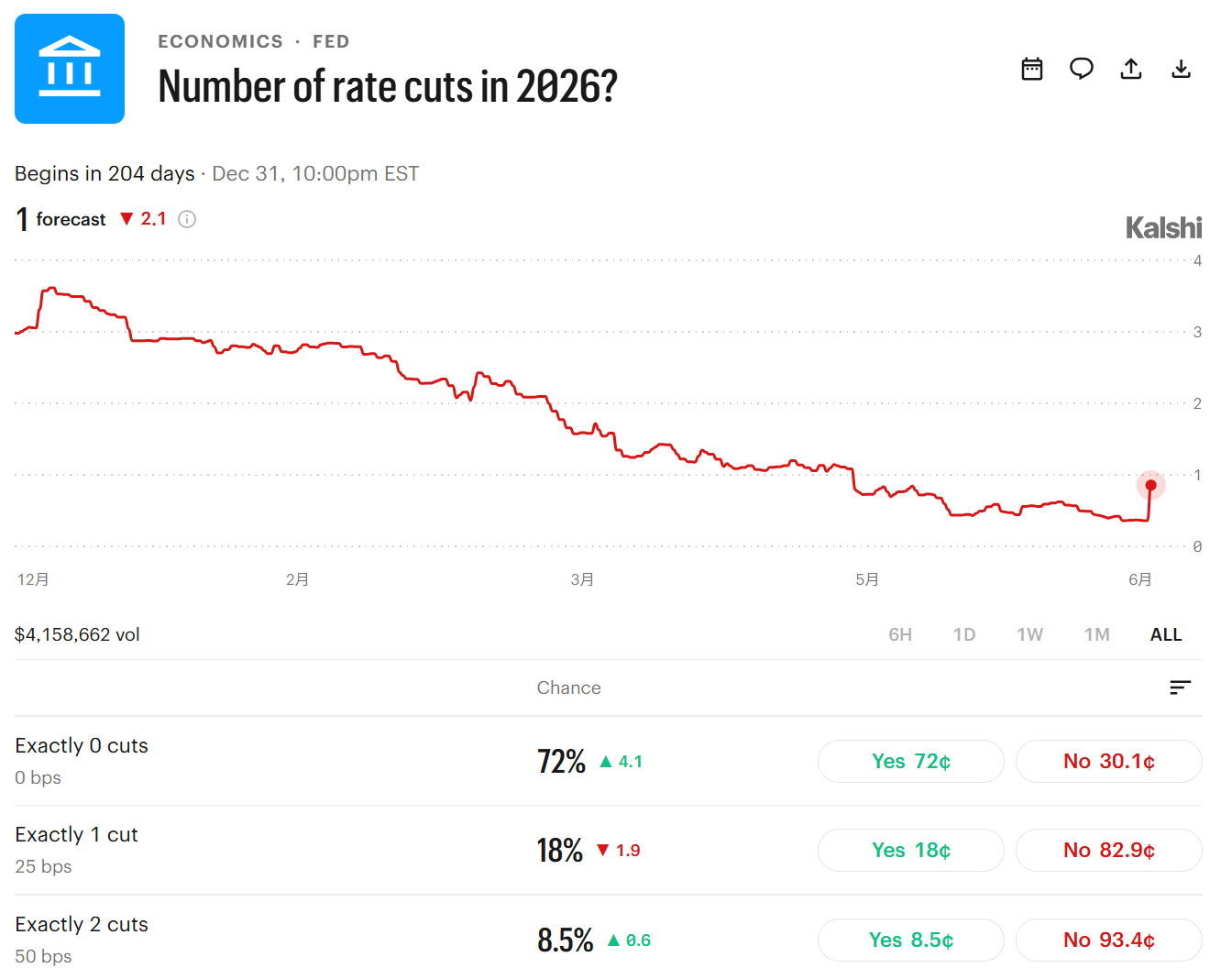


This stands in stark contrast to market expectations at the beginning of the year. In early 2026, the market generally believed the Fed would start a rate-cutting cycle against the backdrop of persistently declining inflation. April's CPI year-over-year had already risen to 3.8%, and the May data further confirmed the inflation rebound trend, making the high-interest-rate policy environment a mainstream narrative once again. While the external shock from energy prices has some temporary nature, if it transmits to core service prices, it will force the Fed to reassess the neutral interest rate level.


For the new Chair Wash, the June meeting is an important debut. Wash was formally sworn in as Fed Chair in late May 2026, succeeding Jerome Powell whose term ended. The June meeting will release a new Summary of Economic Projections and dot plot, and the market will closely watch officials' latest assessments of the inflation path, labor market, and policy rates.


Analyzing at a deeper level, the slowdown in core CPI month-over-month to 0.2% in May provided some relief signals, indicating underlying inflation pressures are not spiraling out of control broadly. However, the Fed historically places more emphasis on the "trend" of core indicators rather than single-month fluctuations, especially against a backdrop of volatile energy prices. The persistent stickiness of housing costs, potential second-round effects (energy costs pushing up other goods and services prices), and geopolitical uncertainties all add complexity to policy formulation.


Crypto and U.S. Stocks


The Fed's policy path is the core anchor for the global liquidity environment. A high-interest-rate or delayed-rate-cut environment is typically accompanied by a stronger dollar, rising U.S. Treasury yields, and pressure on valuations of risk assets. The correlation between crypto assets like Bitcoin and growth-oriented assets like Nasdaq has significantly increased over the past few years. Marginal changes in liquidity expectations are often first reflected in BTC prices and ETF fund flows.


Data from SoSoValue shows that since May this year, Bitcoin spot ETFs have seen significant and continuous net outflows, putting pressure on Bitcoin's price. BTC once fell below the $60,000 mark, later fluctuating around $62,000, with the risk of breaking down again at any time.
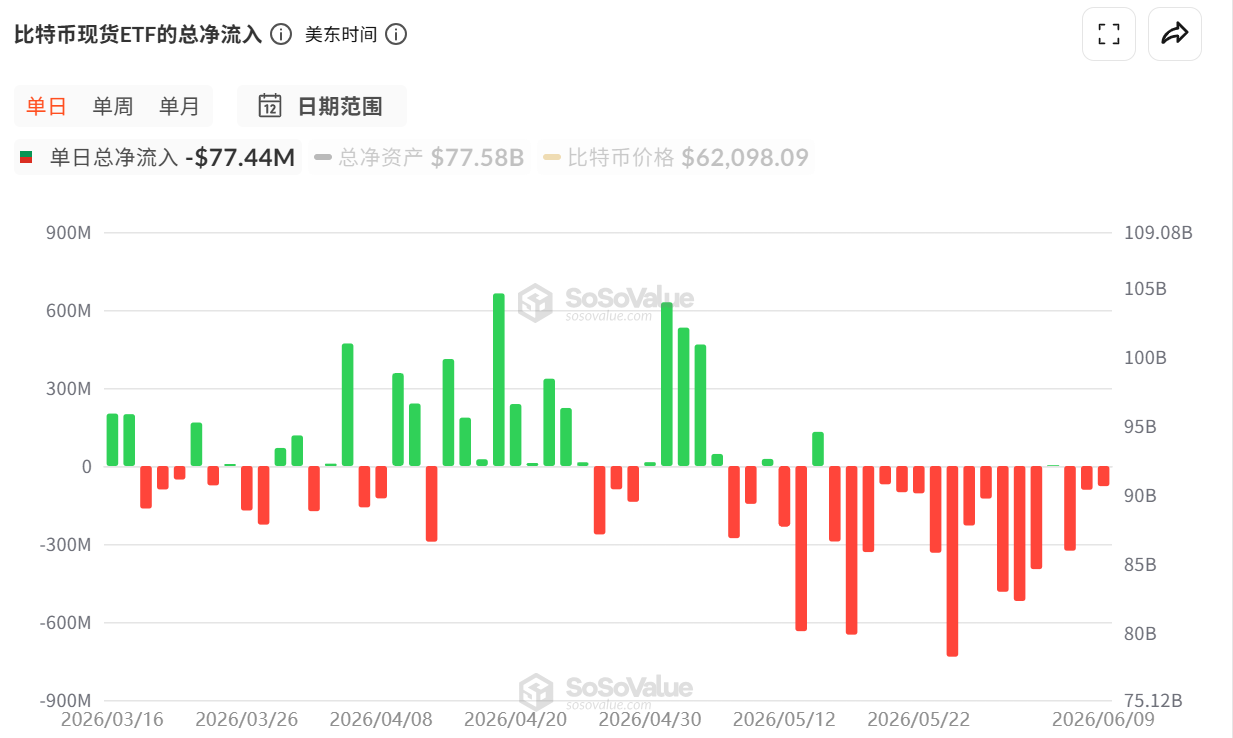


Although the current crypto ecosystem is much more mature than during the 2022-2023 bear market, in the short term, CPI data could still trigger a pullback in risk appetite, leverage unwinding, and amplification of short-term volatility.


The latest weekly report data from Glassnode shows that Bitcoin continues to exhibit characteristics of a later-stage correction, with recent buyers suffering significant losses, realized losses remaining high, and several major sources of demand substantially weakened. Bitcoin's price drop to around $60,000 triggered a significant deleveraging event, clearing a large number of speculative positions in the market. While this helps reset leverage levels, spot demand has not yet shown substantive recovery. The options market remains in a defensive posture, implied volatility stays elevated, demand for downside protection is strong, and dealer positioning is concentrated around current spot levels. Combined with declining institutional participation and slowing corporate treasury accumulation, these data points indicate that risk appetite remains low.
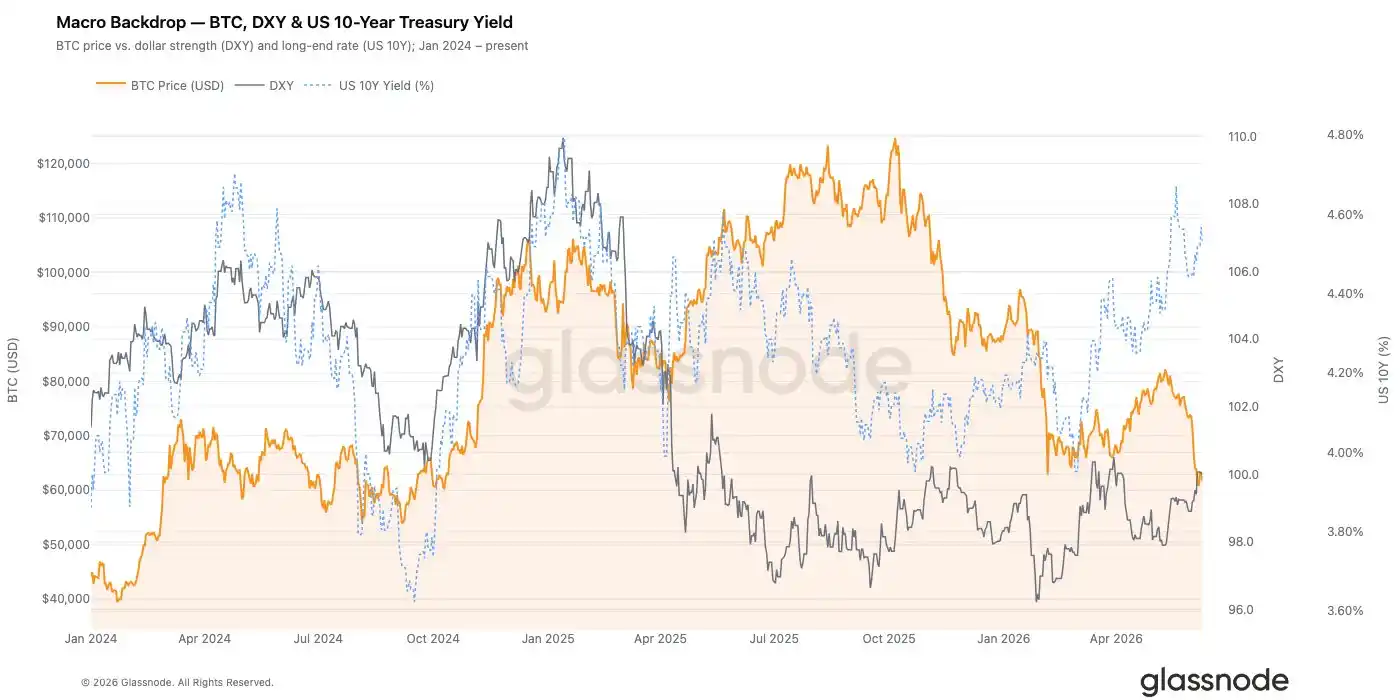


Overall, the market appears to be progressing further into a capitulation phase. Although leverage has largely been reset and valuation metrics have reached historically low levels, the demand response typically associated with long-term market lows has not yet materialized.


Historical experience shows that when inflation is mainly driven by supply-side factors like energy and core data remains relatively controlled, markets often gradually repair expectations for a "soft landing" after digesting the initial shock.


As for U.S. stocks, major investment banks maintain optimistic expectations. J.P. Morgan Asset Management believes this data may be close to a cyclical peak in this round of inflation. David Kelly, the firm's Chief Global Strategist, said that although inflation levels remain above the target range, "the most likely decision for the Fed at the upcoming policy meeting is to keep rates unchanged" and continue observing subsequent data changes.


J.P. Morgan indicates that "one-off shocks" like energy shocks may become the new normal. The AI investment cycle continues, but it also warns that inflation is higher than pre-pandemic, the correlation between stocks and bonds may structurally increase, and the 60/40 portfolio faces greater pressure.


Goldman Sachs recently raised its year-end target for the S&P 500 to 8,000 points (previously 7,600), expecting 24% EPS growth in 2026. It believes earnings growth remains the main driver of the stock market, though it noted in recent comments that the probability of Fed rate cuts this year has significantly decreased.


Perguntas relacionadas

QAccording to the article, what was the primary driver behind the unexpected rise in the US CPI for May 2026, and by how much did it contribute to the monthly increase?

AThe primary driver was energy prices, specifically due to geopolitical conflicts. The energy index contributed over 60% of the overall CPI's monthly increase.

QHow did the market's expectation for Federal Reserve monetary policy in 2026 change after the release of the May CPI data?

AMarket expectations shifted dramatically. The probability of the Fed holding rates steady for the entire year rose sharply to around 72%, while expectations for 1-2 rate cuts earlier in the year were largely abandoned. Some traders even began pricing in the possibility of a rate hike by late 2026 or 2027.

QWhat contrasting signals does the May CPI report present when comparing the 'Headline CPI' and the 'Core CPI'?

AThe report presents a contrast. The Headline CPI rose sharply by 4.2% year-over-year, a three-year high, driven by surging energy costs. However, the Core CPI (excluding food and energy) rose at a slower-than-expected pace of 0.2% month-over-month and 2.9% year-over-year, indicating that underlying, broader inflationary pressures were more contained.

QWhat impact did the CPI data have on Bitcoin and related crypto market indicators, according to on-chain data firm Glassnode?

AThe data contributed to a bearish environment. Bitcoin experienced significant deleveraging near $60,000, clearing out speculative positions. On-chain data showed severe losses for recent buyers, weakened demand, high implied volatility for downside protection, and a general lack of recovery in spot demand, indicating the market was in a 'capitulation phase'.

QDespite the hot inflation data, why do several cited economists and institutions believe the Fed is unlikely to panic and restart a hiking cycle immediately?

AThey point to the relatively controlled Core CPI figures as providing room for patience. They argue that the inflation surge is primarily driven by temporary energy shocks (supply-side) and has not yet translated into broad-based 'second-round effects' across other goods and services. Therefore, the most likely immediate action is for the Fed to hold rates steady and observe future data.

Leituras Relacionadas

The More It Rises, the More Dangerous? The Systemic Risks Behind SpaceX's Soaring Valuation

Summary: The article raises concerns about the systemic risks posed by SpaceX's skyrocketing valuation, arguing that modern market mechanics, rather than fundamentals, are driving its price discovery. Following SpaceX's market capitalization surpassing $3 trillion in after-hours trading, the author contends that the market is no longer functioning properly. The core issue is not SpaceX's business prospects but the unhealthy market structure surrounding it. With limited float and the imminent launch of options trading, the stage is set for a potential "gamma squeeze"—a feedback loop where market makers hedging call options are forced to buy shares, pushing the price higher and attracting more speculative momentum traders. This mechanism, seen previously with Tesla and meme stocks, can decouple valuation from financial reality. The danger escalates as extreme valuations force passive funds, ETFs, pensions, and major indices to hold the stock. If SpaceX grows large enough—hypothetically reaching $5 or even $10 trillion—its performance would increasingly dictate broader market indices, embedding systemic risk. The author warns that when price appreciation itself becomes the primary bullish thesis, the market transforms from a capital allocation mechanism into a self-reinforcing speculative machine, endangering the retirement savings of ordinary investors tied to passive strategies. The piece questions whether such a system can still perform its fundamental role of price discovery.

marsbitHá 4m

The More It Rises, the More Dangerous? The Systemic Risks Behind SpaceX's Soaring Valuation

marsbitHá 4m

OpenAI's Hyperliquid Pre-IPO Pricing Venture: Why Did It Last Only Half a Year?

The article discusses the rise and fall of Pre-IPO pricing markets on the Hyperliquid blockchain. Trade.xyz, an anonymous team, successfully built the largest pre-market for SpaceX (SPCX) by launching a contract with a clear anchor: the eventual Nasdaq listing price. This provided inherent price stability and validation. In contrast, Ventuals, a team backed by Paradigm, failed despite holding exclusive contracts for highly sought-after companies like OpenAI and Anthropic. Its key mistake was its pricing mechanism. For companies with no near-term IPO date, Ventuals' oracle relied partly on opaque private market transactions and, critically, partly on its own contract's moving average price. This created a self-referential feedback loop where prices were artificially propped up and detached from genuine supply and demand, leading to illiquid markets. Ventuals shut down after nine months, settling positions at final prices of $1,341.80 for OpenAI and $1,618.90 for Anthropic. Ironically, some employees and late-stage investors of these very companies reportedly used these flawed Ventuals prices for valuation reference, highlighting the acute demand for any price signal in illiquid private markets. The article concludes that while demand for pre-IPO trading is real and growing, with players like Coinbase now entering the space, the fundamental challenge remains: without a public listing to provide a definitive price anchor, these markets struggle to establish truly accurate and liquid pricing. The need for a transparent, self-correcting market is the critical lesson from Ventuals' failure.

marsbitHá 30m

OpenAI's Hyperliquid Pre-IPO Pricing Venture: Why Did It Last Only Half a Year?

marsbitHá 30m

With Daily Active Users Reaching 3-4 Times That of the Industry's Second Place, Which Crack in the Office Agent Market Has Tencent's WorkBuddy Torn Open?

Tencent's AI office assistant, WorkBuddy, has achieved daily active users (DAU) 3-4 times that of the industry's second-place product, primarily driven by non-technical users like HR, operations, and administrative staff. Its rapid growth, starting with a public beta in March 2026, highlights a key strategic divergence from competitors like OpenAI's Codex and Anthropic's Claude Code. Unlike those tools, which originated as developer-focused assistants (in command lines or IDEs) and are now expanding towards office scenarios, WorkBuddy was built from the ground up for non-technical office workers. Its development was user-driven, initiated after腾讯云's team observed non-technical employees using their CodeBuddy coding tool for general tasks. WorkBuddy's design is defined by three core decisions aimed at lowering barriers: 1) Using natural language instead of technical concepts, so users describe their goal without needing to understand prompts or agents. 2) Providing pre-packaged "Skill" templates for common office tasks like data processing, content creation, and research. 3) Natively integrating into existing腾讯 ecosystems like腾讯 Docs and WeChat, making the agent a seamless part of the user's workflow rather than a separate tool. This "scenario encapsulation" approach, prioritizing the shortest path for users to get work done, contrasts with the "underlying capability" focus of Codex and Claude, which offer more flexibility but require more technical setup. Analysts confirm WorkBuddy's leading market position in China by mid-2026, with massive user and request growth following its launch. Recognizing the same trend of surging non-technical adoption, OpenAI and Anthropic are now pivoting their products with features like role-based plugins (Codex) and a simplified desktop interface (Claude Cowork). However, adapting tools built for developers requires significant changes to interaction models and integrations. WorkBuddy currently holds an estimated six-month lead in delivering a complete solution for non-technical office users. Its recently launched enterprise version aims to solidify this advantage. The competition underscores two valid paths: embedding agent capabilities directly into familiar work environments versus building powerful, general-purpose agents that users must learn to access. WorkBuddy's early success demonstrates the effectiveness of the former strategy for mainstream office adoption.

marsbitHá 38m

With Daily Active Users Reaching 3-4 Times That of the Industry's Second Place, Which Crack in the Office Agent Market Has Tencent's WorkBuddy Torn Open?

marsbitHá 38m

Trading

Spot
Futuros
活动图片