Three CZs, Three Different Stories

marsbitPublicado em 2026-01-09Última atualização em 2026-01-09

Resumo

Three individuals share the initials "CZ" but represent vastly different paths in the era of globalization. The first, Chen Zhi, epitomized the lawless, gray-area entrepreneurship of the mid-2010s. Operating from Cambodia, he built a transnational fraud network, generating up to $30 million daily through scams and forced labor. His empire, built on exploiting regulatory gaps and weak international cooperation, collapsed in 2026 when he was arrested and repatriated to China, signaling the end of an era of unregulated profiteering. The second, Changpeng Zhao (CZ), founder of Binance, represents the tech-entrepreneurial era. A technologist at heart, he built the world's largest cryptocurrency exchange through product excellence and innovation. Unlike Chen Zhi, his venture created value but eventually faced escalating regulatory scrutiny. In 2023, Zhao and Binance pleaded guilty to U.S. charges, resulting in a $4.3 billion fine and his resignation as CEO. His story illustrates that technological innovation must ultimately adapt to regulatory frameworks to survive. The third, CZ Chen, a Millennial and COO of AI firm Manus, represents a new model of success in the AI age. As a skilled professional, she achieved rapid wealth and influence by joining the right company at the right time. Manus, hailed as the first通用 AI Agent, was acquired by Meta in 2025. However, the deal faced review by Chinese authorities, highlighting that her success is now intertwined with geopolitical tensio...

Author: Yizhiyu CoolFish

Recently, group members have been discussing three "CZs"—Binance founder Changpeng Zhao, Manus COO CZ Chen, and the recently arrested and repatriated boss of the Prince Group, Chen Zhi.

If Bao in "Blossoms Shanghai" represents a glamorous transformation in 1990s Shanghai amid era opportunities, then the following stories are three different scripts offered by three CZs choosing different paths in the wave of globalization.

Three people, three stories, spanning nearly half a century.....

I. Chen Zhi and the Era of the Unruly—The Myth of Rapid Wealth in the Gray Zone

In the mid-2010s, Chinese capital was eager to go global. It was a special moment: on one hand, China's economic strength continued to grow, foreign exchange reserves were ample, and domestic companies and investment institutions were increasingly willing to expand globally, urgently seeking new growth points in overseas markets; on the other hand, the regulatory framework for global cross-border capital flows lagged behind the pace of market changes, with entry rules and review standards in some countries still being adjusted and improved, creating a certain flexibility due to regulatory differences across markets.

There were many gray areas, and many opportunities.

Chen Zhi (abbreviated as CZ) rose against this backdrop. This 38-year-old businessman built a transnational fraud network, with daily revenues once reaching $30 million. This number is enough to make anyone's eyes widen. But more importantly, this number represents an unconstrained gray area.

In Chen Zhi's story, we see unruly entrepreneurship going global, but in the wrong direction—very wrong. He did not create value through product innovation, technological advancement, or management optimization. He accumulated wealth through direct, aggressive, and even illegal means.

He established a "fraud center" in Cambodia, using forced labor to conduct online fraud targeting victims worldwide. He attempted to launder money through financial tools, using cryptocurrencies, cross-border payments, and multi-country registrations to evade regulation.

Why could this model exist?

The answer is simple: because no one could effectively stop it. In the mid-2010s, global regulation of transnational cybercrime was not as tight as it is now. Law enforcement cooperation between countries was not close enough. A person with the courage, resources, and ability to reduce the probability of being regulated and held accountable through lobbying, regulatory favoritism, and jurisdictional immunity could survive in the gaps of the law—and even thrive.

But all this came to an abrupt end in October 2025. U.S. prosecutors filed charges against Chen Zhi. In January 2026, he was arrested in Cambodia and subsequently repatriated to China. His empire collapsed overnight. Interested friends can read my other article: "‘Even a Penny Falling from the Sky Is His’—Uncovering the Crimes and Downfall of Cambodia’s ‘Prince’ Chen Zhi."

What does Chen Zhi represent?

He represents an era that has passed. The characteristics of that era were: regulatory vacuums, numerous gray areas, and the possibility of rapid wealth accumulation. But the fate of this era is: once global regulation begins to coordinate, once countries strengthen law enforcement cooperation, once the international order begins to rebuild, this model collapses completely.

Chen Zhi's arrest is not just the tragedy of one person but the end of a gray era.

II. Changpeng Zhao and the Era of Technological Entrepreneurship—The Game of Innovation and Compliance

If Chen Zhi represents the era of gray wealth, then Changpeng Zhao represents the era of technological entrepreneurship.

This is a completely different story.

Changpeng Zhao was born in 1977 in Lianyungang, Jiangsu. His upbringing was typical: he moved to Canada at age 12, studied computer science at McGill University, and after graduation worked at Bloomberg and the Tokyo Stock Exchange, among others, developing technology and financial software.

He is a technologist, a programmer who understands finance.

This background is important. Unlike Chen Zhi, Zhao did not create value by evading regulation but by technological innovation that changed the entire industry's ecosystem.

In 2013, Zhao entered the cryptocurrency field, working at Blockchain.info and later serving as CTO of OKCoin.

Notably, in 2014, he sold his Shanghai property and invested the proceeds in Bitcoin.

After leaving OKCoin in less than a year, he founded his second company, Bijie Technology, but this was not his greatest achievement.

In 2017, Zhao founded Binance. This was a critical moment. 2017 was a big year for cryptocurrencies, with Bitcoin rising from $3,000 to nearly $20,000, and the entire crypto community was euphoric. Against this backdrop, Zhao launched Binance—an efficient, user-friendly cryptocurrency exchange.

Binance's success was astonishing. In less than eight months, it became the world's largest cryptocurrency exchange, capable of processing about 1.4 million orders per second.

Zhao himself became a legendary figure. In February 2018, Forbes magazine listed him as the "richest person in cryptocurrency." By May 2018, his net worth exceeded $1.39 billion.

But there is a key difference: Zhao's success was built on product innovation. Binance succeeded because it offered a better user experience, higher trading efficiency, and more currency pairs.

But Zhao also faced a problem: catching up. Although Binance changed the exchange ecosystem through product innovation, it did not obtain formal financial licenses in any country. This might have been acceptable in 2017 and 2018, but over time, global regulators began to focus on cryptocurrency exchanges.

Zhao faced a choice: either resist regulation or compromise and surrender to it. He ultimately chose the latter.

In November 2023, Zhao and Binance pleaded guilty to the U.S. Department of Justice, admitting violations of the Bank Secrecy Act and anti-money laundering regulations. Binance was fined $4.3 billion, and Zhao stepped down as CEO.

This is an interesting contrast. When faced with regulatory pressure, Chen Zhi chose to flee and resist, ultimately being arrested. Zhao chose to plead guilty and survived. Although Binance was severely hit, it still exists and has strengthened cooperation with U.S. regulators. In the long run, the market will become more standardized, and Binance remains the world's largest cryptocurrency exchange.

What does Changpeng Zhao represent?

He represents the typical characteristics of the technological entrepreneurship era. In this era, a entrepreneur with a technical background and product innovation capabilities can rise rapidly by changing the industry's ecosystem. But this era is also characterized by gradual regulatory catch-up. Innovators can temporarily bypass regulation but must eventually face it.

The success of the technological entrepreneurship era lies not in resisting regulation but in adapting to it. The true winners are those enterprises and entrepreneurs who can continue to innovate within the regulatory framework.

III. CZ Chen and the AI Era—New Possibilities for Leapfrogging

If Chen Zhi represents the unruly era and Changpeng Zhao represents the technological entrepreneurship era, then CZ Chen represents the great leap forward in the wave of AI.

This is a brand-new story.

CZ Chen is a post-90s generation. She is not an entrepreneur but a professional manager. She graduated with a bachelor's degree from Shanghai University of Finance and Economics and a master's degree from Columbia University. Her career trajectory is also perfect: she worked at Vanke, MM Capital (an investment bank), and finally joined Manus AI as Chief Operating Officer.

CZ Chen did not create wealth by founding a company but achieved leapfrogging through precise career choices. She joined the right company at the right time and ultimately reaped huge rewards.

The story behind Manus and its founder Xiao Hong is also interesting (for details, see my other article: "Xiao Hong: From Small-Town Youth to Manus CEO, the Long-Termism of a Bitcoin Believer").

In March 2025, Manus shocked the global tech circle, with media calling it the world's first general-purpose AI Agent. By December, Manus had achieved $100 million in annual recurring revenue (ARR), setting a record for the fastest startup to reach this milestone.
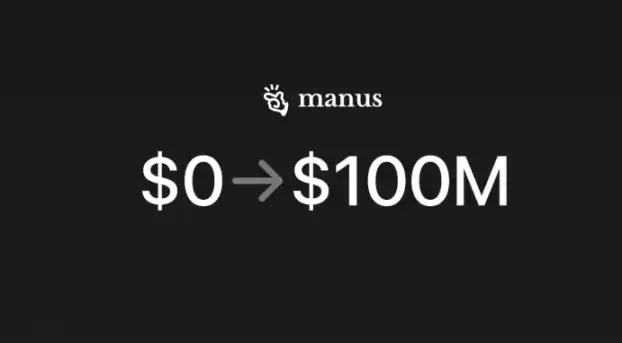
In the same month, Meta announced its acquisition of Manus. This was a huge success. As the company's COO, CZ Chen undoubtedly gained immense wealth and fame.

But the story is not over. On January 8, 2026, China's Ministry of Commerce stated that it would review Meta's acquisition of Manus to assess whether the transaction violates Chinese laws and regulations on technology export controls, imports and exports, and overseas investment.

CZ Chen suddenly seems to be facing uncertainty, but this uncertainty is entirely different from that faced by Chen Zhi or Changpeng Zhao.

Chen Zhi faced moral and legal judgment—his business model itself was illegal. Zhao faced compliance pressure—his business model needed to compromise with regulation.

CZ Chen faces geopolitical risk—her success itself is not problematic, but her success involves Sino-U.S. technological competition.

What does CZ Chen represent? She represents the new possibilities of the AI era. In this era, a well-educated, internationally minded professional elite can achieve rapid wealth leapfrogging by joining the right company and making the right choices at the right time.

In Conclusion

Times are changing, and so are the rules.

Three "CZs," three different lives, yet like three prisms, they refract three facets of the博弈 between individuals and power, technology, and national will in the wave of era development.

Some gamble on gray areas, some embrace regulatory pain, some ride the AI wave. The era's tickets are always being issued, but each era's ticket looks different.

If you can't adapt, you can only be out.

Perguntas relacionadas

QWhat are the three different stories of the three 'CZ's mentioned in the article?

AThe three stories are: 1) Chen Zhi, who represents the era of gray-area wealth accumulation through illegal means like transnational fraud networks; 2) Zhao Changpeng (CZ), who represents the technology entrepreneurship era, building innovative products like Binance while navigating regulatory challenges; and 3) CZ Chen, who represents the AI era, achieving rapid wealth and career growth by joining the right company (Manus AI) at the right time, though facing geopolitical risks.

QHow did Chen Zhi's business model operate and why did it collapse?

AChen Zhi operated a transnational fraud network, establishing a 'fraud center' in Cambodia that used forced labor to conduct online scams targeting global victims. He utilized financial tools like cryptocurrencies, cross-border payments, and multi-country registrations to evade regulation. His model collapsed in late 2025 when U.S. prosecutors filed charges against him, leading to his arrest in Cambodia and repatriation to China in January 2026, marking the end of an era with regulatory gaps.

QWhat was Zhao Changpeng's background and how did Binance achieve success?

AZhao Changpeng (CZ) was born in 1977 in China, moved to Canada at age 12, studied computer science at McGill University, and worked in tech and financial software development at companies like Bloomberg and the Tokyo Stock Exchange. He founded Binance in 2017 during the cryptocurrency boom. Binance succeeded by offering a user-friendly, efficient cryptocurrency exchange with high transaction capacity (handling 1.4 million orders per second), quickly becoming the world's largest exchange through product excellence and innovation.

QWhat challenges did Zhao Changpeng face with regulators, and how did he resolve them?

AZhao Changpeng and Binance faced increasing regulatory scrutiny over time, particularly for operating without formal financial licenses in many countries. In November 2023, they pleaded guilty to U.S. Department of Justice charges for violating the Bank Secrecy Act and anti-money laundering regulations. Binance was fined $4.3 billion, and Zhao stepped down as CEO. Unlike Chen Zhi, who resisted regulators, Zhao chose to cooperate and adapt, allowing Binance to continue operating within a more regulated framework.

QWho is CZ Chen and what risks does she face in the AI era?

ACZ Chen is a post-90s professional who graduated from Shanghai University of Finance and Economics and Columbia University. She worked at companies like Vanke and MM Capital before becoming COO of Manus AI, which developed a groundbreaking AI Agent and was acquired by Meta in December 2025. She represents the AI era's potential for rapid career advancement through strategic choices. However, she faces geopolitical risks, as China's Ministry of Commerce announced an investigation into Meta's acquisition of Manus for potential violations of technology export controls and regulations, reflecting broader Sino-U.S. tech competition tensions.

Leituras Relacionadas

Funding Weekly | Crypto.com Secures $400M Investment, CeFi and Stablecoin Sectors Continue to Attract Capital

Crypto Weekly Investment Recap: Funds Converge on CeFi, Stablecoins, and AI Last week's crypto and AI investment landscape saw significant capital concentration, with a few large deals dominating. **Crypto/Web3 Highlights (July 13-19):** Total investment exceeded **$812 million** across 17 deals. Key trends: * **Centralized Finance (CeFi) & Stablecoins** remained a major magnet, led by **Crypto.com**'s massive **$400 million** raise from Citadel Securities, valuing the exchange at $20B. * **Infrastructure & Tools** saw 7 deals, including **Cyclops** ($20M for stablecoin payments) and **ADI Chain** ($50M for stablecoin settlement infrastructure). * **DeFi** had 2 deals, such as AI-native DEX **Quote Trade** ($4M). * Other notable raises: API broker **Alpaca** ($135M), cross-border platform **Flex** ($70M), treasury firm **ORANGE JUICE** ($40M), and prediction market **Pascal** ($9M). * **Acquisitions:** Keyrock bought BlockFills' trading unit, SBI Holdings acquired Singapore exchange Coinhako, and MoonPay bought startup Glide. **AI & Robotics Highlights:** Investment momentum in AI remained very strong. * Nvidia-backed AI cloud service **Fireworks** raised a massive **$1.5 billion** at a $17.5B valuation. * In robotics, **Walden Robotics** (spun out from Toyota) secured **$300 million**, and Chinese humanoid firm ****逐际动力** **(Climax Dynamics) raised nearly **$200 million** in a Pre-IPO round. * Other significant AI raises included Indian programming platform **Emergent** ($130M) and drone company **Brinc** ($125M), backed by Sam Altman. Overall, the trend shows capital flowing heavily into established crypto financial services, stablecoin infrastructure, and large-scale AI/robotics commercialization.

marsbitHá 1h

Funding Weekly | Crypto.com Secures $400M Investment, CeFi and Stablecoin Sectors Continue to Attract Capital

marsbitHá 1h

The Gentlest Bear Market? BTC Bears Exit, ARK and Bitwise Collectively Bullish

**Title: The Mildest Bear Market? BTC Shorts Exit, ARK and Bitwise Collectively Bullish** Bitcoin continues to consolidate around $75,000 while Ethereum struggles near $1,900. Market data shows $116 million in liquidations over 24 hours, with $62.7 million from short positions, and the Fear & Greed Index remains at 35 (Fear). According to Polymarket, there's a 33% probability BTC falls below $50,000 this year. ARK Invest's Q2 2026 Bitcoin report notes technical weakness but identifies potential bottoming signals, including a record high in long-term holder supply, suggesting selling exhaustion. Bitwise's Juan Leon calls this the "structurally mildest bear market" on record, with a ~50% drawdown from highs, less severe than past cycles. He highlights institutional accumulation and a shift in investor dialogue from survival to entry points. Technical analysis from Bit suggests a potential C-wave low may have formed, with an ideal bottoming range between $50,000-$55,000. However, glassnode's CryptoVizArt warns that failure to break $66,000 could signal a local top, as new buyer accumulation is concentrated there. Analyst Darkfost identifies a critical support band between $59,000-$70,000, where 50% of BTC's circulating supply has changed hands. Notably, trader Doctor Profit announced closing all crypto short positions—including BTC shorts from $115k-$125k and over 100 altcoin shorts—for significant profit. He has begun a phased accumulation of Bitcoin spot starting at $64,000, reversing his previous $40k-$50k target, citing structural positives like regulatory clarity and institutional adoption. He argues the anticipated September/October bottom may arrive earlier than the herd expects.

Foresight NewsHá 1h

The Gentlest Bear Market? BTC Bears Exit, ARK and Bitwise Collectively Bullish

Foresight NewsHá 1h

The Evolution of Order in the AI & Web3 Era: The Competitive Dimensions and Exploratory Path of m&W

The article explores the evolution of order in the AI & Web3 era, framing the competition around establishing new foundations for human-AI collaboration. It argues that as AI Agents become core economic participants, the existing Web3 infrastructure—focused on assets, identity, and decentralized governance—is insufficient. The core challenge shifts to building trust, assessing complex contributions, and creating fair value distribution among diverse human and AI actors. The analysis positions the m&WDAO project within this landscape by comparing it to existing paradigms: Colony (human-centric DAO governance), SingularityNET (AI service exchange), Gitcoin Passport (Sybil-resistant identity), and Farcaster/Lens (open social graphs). m&W's distinct path, termed EcoFi (Ecological Finance/Order), aims to integrate these layers. Its three-phase evolution is outlined: 1) **m&W 1.0: Credit Anchoring** - filtering high-quality "Builder" nodes and converting their contributions into non-transferable SBTs (Soulbound Tokens) as a bedrock of trust. 2) **m&W 2.0: Collaborative Economy** - deploying the EcoFi protocol to enable verified, complex task collaboration with a hybrid AI/human judgment system for valuation and dispute resolution, creating a closed-loop value system. 3) **m&W 3.0: Intelligent Order** - where human-originated SBT credit enables trusted AI Agent "digital twins" to participate in a mature human-AI co-creation economy. The conclusion asserts that while other projects solve discrete problems (proving identity, governing contributions, exchanging AI capabilities), m&W's ultimate mission is to address the foundational question of a new socio-economic order for the coming era of human-AI collaborative networks.

链捕手Há 1h

The Evolution of Order in the AI & Web3 Era: The Competitive Dimensions and Exploratory Path of m&W

链捕手Há 1h

Trading

Spot
活动图片