This Cycle, Stop Paying for Stories

marsbitPublicado em 2026-08-11Última atualização em 2026-08-11

Resumo

Based on discussions with experienced on-chain participants, there is a consensus that the current market cycle demands a shift in strategy: from buying into narratives and expectations to focusing on verifiable fundamentals and cash flow. Key takeaways include: 1) Prioritize assets with real value capture. In a bear market, protocols that generate consistent fees and directly reward token holders through mechanisms like buybacks, burns, or dividends become essential. Examples cited are launchpad-related tokens and notable buyback tokens. 2) Select projects with proven Product-Market Fit (PMF) and a complete operational loop. The next cycle will likely focus on utility and real-world validation, particularly in narratives like asset tokenization and the Agentic Economy. Projects without genuine users, transaction loops, or revenue will be filtered out. Metrics such as Assets Under Management (AUM), trading volume, and fee generation are critical for evaluation. 3) Opt for assets with strong, organically grown "consensus." This refers to enduring community belief that survives market cycles, not manufactured hype. Examples include veteran meme coins and established sector leaders that maintain liquidity and community vitality over time. 4) Avoid purely VC-backed tokens. These often suffer from high Fully Diluted Valuation (FDV), low circulating supply, and continuous, large unlocks. Without inherent value capture, they typically rely on pre-launch airdrop hype and face sig...

Author: Haotian

After recent in-depth discussions with a few veteran on-chain friends, we reached a high level of consensus on the survival rules for the current cycle. The market has completely shifted from "listening to stories, speculating on expectations" to "looking at cash flow, verifying real-world implementation." Below are several crypto trading mindsets for your reference:

1) Prioritize assets with genuine value-capturing capabilities.

In a bull market, the market is willing to pay for stories and future expectations; in a bear market, it only recognizes real cash flow and verifiable buyback/burn records. The true "get-out-of-jail-free card" in this cycle is a protocol that can consistently generate fees and directly return value to token holders through mechanisms like buybacks, token burns, or dividends. Examples include launchpad concept tokens like $UNI, $PUMP, $PONS, and this cycle's buyback king, $HYPE;

2) Only select projects with proven Product-Market Fit (PMF) and a complete operational loop.

The next cycle will likely revolve around two primary narratives related to "Asset Tokenization" and the "Agentic Economy" (including Perps, Prediction Markets, Stablecoins, Payment). The market preference will shift from favoring technological roadmaps to verifying practical utility and implementation. Projects without real users, real transaction loops, or real revenue will be quickly filtered out. Following this logic, concept tokens like $ONDO, $VVV, $VIRTUAL, etc., warrant a focus on practical metrics such as actual AUM, trading volume, and fee generation capabilities;

3) Choose assets with strong "consensus."

We have to admit that after several market cycles, the only thing that has truly stood the test of time in the crypto industry is two words: "Consensus." Please note, this refers to consensus that develops organically in the market and possesses cross-cycle staying power. Do not mistake the so-called "consensus" manufactured by industrial-scale hype or a random tweet from someone like xxx. The real potential lies in those older assets that newcomers might not understand at all, yet maintain decent liquidity and continue to thrive. Examples include veteran cult meme tokens like $DOGE, $PEPE, $PEOPLE, or leading assets in various niche sectors like $ZEC, $TAO, etc. Having weathered multiple bull and bear markets, these assets possess strong, organic community vitality and are prime targets for major capital to cycle through and manipulate repeatedly;

4) Try to avoid pure VC-backed tokens.

If I said altcoins are dead, you might counter by arguing that financial markets move in cycles. But if I say VC tokens are dead, few would disagree. Tokens with high Fully Diluted Valuations (FDV), low circulating supply, and continuous large unlocks are destined to rely solely on airdrop hype around their Token Generation Event (TGE). If such a project lacks genuine value-capturing ability, it inevitably faces a lack of momentum post-launch and the awkward reality of unlocks leading to sell-offs. This is the fundamental reason for the "non-frenzied bull, painfully deep bear" nature of this cycle. With hordes of eager VCs waiting to unlock and dump, how can retail investors dare touch such tokens?

Note: The above points are merely summaries from personal discussions with friends. The mentioned tokens are used solely as examples and do not constitute investment advice.

Perguntas relacionadas

QAccording to the author, what is the most important factor for a crypto project to survive in the current market cycle?

AThe author emphasizes that a project must have real value-capturing ability. The key indicator is the protocol's ability to generate consistent fees and its mechanism (like buyback, burn, or dividends) to directly return that value to token holders. This is considered the "get out of jail free card."

QWhat is the fundamental reason for the current cycle being described as "the bull market is not crazy, but the bear market is deep"?

AThe core reason is the prevalence of VC-backed tokens with high Fully Diluted Valuation (FDV), low initial circulation, and continuous large-scale unlocks. These tokens lack value-capturing ability, creating a situation where unlocks inevitably lead to sell-offs, deterring retail investors and suppressing the market.

QWhat two major future narratives does the author predict for the next market cycle?

AThe author identifies two major narratives: "Asset Tokenization" and "Agentic Economy." Associated sectors include Perpetuals (Perps), Prediction Markets, Stablecoins, and Payment networks.

QWhat specific data metrics would the author focus on for projects in the "Asset Tokenization" or "Agentic Economy" narratives?

AThe author would focus on metrics verifying practical utility and real adoption, such as Actual Assets Under Management (AUM), real trading volume, and fee-generating capability.

QHow does the article define a strong and valuable 'consensus' in the crypto space?

AIt defines valuable consensus as something that is naturally fermented by the market and possesses cross-cycle staying power. It's not manufactured hype (like coordinated social media campaigns). True consensus is seen in assets that may seem obscure to newcomers but maintain steady liquidity and survive over time, demonstrated by cult memes or leading assets in specific sectors.

Leituras Relacionadas

China Monopolizes the Humanoid Market: The U.S. is Forced to Defend Itself

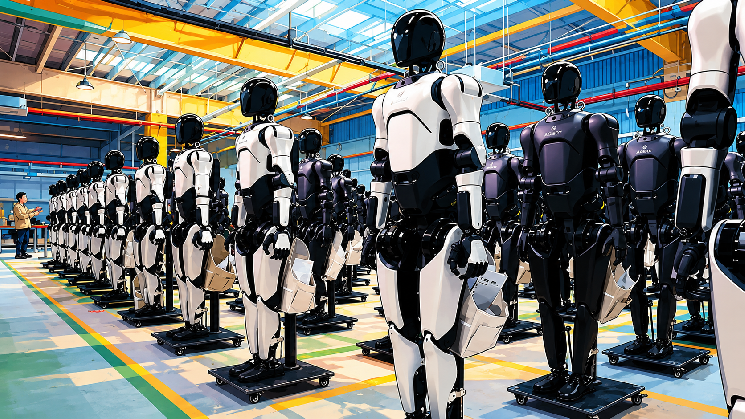
China accounted for over 97% of global humanoid robot shipments in the first half of 2026, according to research firm Smart Analytics Global (SAG). Global shipments reached approximately 19,100 units, a 272% increase year-over-year, with China itself representing over 85% of global demand. Shanghai-based AGIBOT led the market with a 44% share, followed by Hangzhou's Unitree Robotics at 31%. Together, these two Chinese firms controlled about 75% of global supply. Demand is shifting from research to practical applications, with industrial and commercial uses now comprising over 70% of shipments. SAG forecasts full-year 2026 shipments near 60,000 units. In response, the U.S. Federal Communications Commission (FCC) banned federal agencies and subsidy recipients from purchasing foreign "advanced robotic devices," including humanoids, citing national security concerns. Analysts attribute China's dominance to strong state support, abundant funding, expanding manufacturing capacity, IPO waves, and a vast domestic ecosystem for testing and deployment. Over 90% of key components for Chinese humanoid robots are now sourced domestically. The AI analysis notes potential risks beyond export controls, such as reputational issues for Chinese firms linked to the defense sector and parallels to past trade conflicts in sectors like solar panels, where rapid Chinese market capture led to protectionist measures. The low average robot price could fuel adoption but also invite dumping accusations.

cryptonews.ruHá 5m

China Monopolizes the Humanoid Market: The U.S. is Forced to Defend Itself

cryptonews.ruHá 5m

DeepSeek's Next Battlefield: The War Quietly Begins in This Fifth-Tier City

DeepSeek and other major AI players are quietly shifting their battle for supremacy to the infrastructure front, with Wulanchabu, a small city in Inner Mongolia, emerging as a key battleground. The article details a visit to the massive data center clusters there, highlighting the industry's pivot from a light-asset model of renting computing power to a strategic race to build and control foundational AI infrastructure. Wulanchabu's advantages—low electricity costs (around ¥0.32-0.35 per kWh, 90% green energy), cool climate, and proximity to Beijing—have made it China's largest AI computing cluster. Companies like Alibaba Cloud are deploying modular, prefabricated data center "cabins" that can be assembled on-site in as little as 100 days, dramatically accelerating deployment compared to traditional multi-year construction. This "new Foxconn" model standardizes components for mass production. The drive for efficiency is paramount. Alibaba’s latest architecture flattens design, integrating power distribution, backup batteries, and liquid-cooled server racks into single modules. The ultimate bottleneck is power. As AI training and, increasingly, inference demand skyrocket, electricity cost and availability become decisive competitive factors. The industry faces the challenge of aligning fast-paced computing demand with slower power grid planning. DeepSeek's significant investment in building its own computing center in Wulanchabu underscores this trend: securing large-scale, low-cost dedicated computing power is now a prerequisite for survival in the AI race. The article concludes that this Chinese manufacturing-supported paradigm for AI infrastructure, focused on modular, rapidly deployable, and cost-optimized data centers, could reshape the global AI landscape as it scales.

marsbitHá 6m

DeepSeek's Next Battlefield: The War Quietly Begins in This Fifth-Tier City

marsbitHá 6m

Trading

Spot
活动图片