This American Earns $250 Million a Year from Podcasting, and Luo Yonghao Is Learning from Him

深潮Publicado em 2025-12-23Última atualização em 2025-12-23

Resumo

American podcaster Joe Rogan earns $250 million annually from his hugely successful show, "The Joe Rogan Experience." The article details his unconventional path from comedian, reality TV host, and UFC commentator to becoming the world's most influential podcaster. His long-form, casual interview style, often lasting over three hours, has attracted top guests like Elon Musk (in a famous 2018 episode where Musk smoked cannabis), Donald Trump (a key 2024 election interview), and Nvidia CEO Jensen Huang. Rogan's success is attributed to his "outsider" approach, creating a space where guests can speak freely, unlike traditional media. This has built immense trust with his primarily young, male audience who are skeptical of mainstream news. His 2020 exclusive deal with Spotify was worth $200 million, and he renewed it in 2024 for $250 million without exclusivity. The article explores his significant cultural impact, notably his role in the 2024 U.S. election where Trump's appearance on his show was widely credited with reaching crucial voters. It also notes attempts to replicate his model in China, such as Luo Yonghao (罗永浩), but highlights challenges like a preference for short-form content and different media environment. Finally, it addresses the controversies surrounding Rogan, including spreading COVID-19 and AIDS misinformation, which critics say make him a hub for conspiracy theories, while supporters value his anti-establishment stance.

Written by: David, Deep Tide TechFlow

You might not listen to podcasts, but you must have seen this scene.

In 2018, Musk holding a rolled cigarette, surrounded by smoke, became one of his most viral iconic moments.

However, few people know where this scene took place, and even fewer care about who was sitting opposite him.

Actually, this was the recording of an American podcast.

The host handed Musk a cigarette mixed with marijuana and tobacco. Musk asked, "This is legal, right?" and then took a puff.
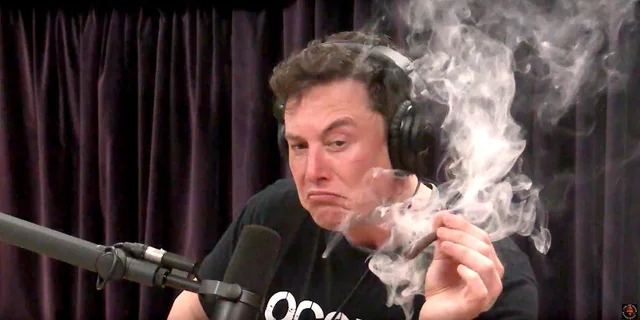
The next day, Tesla's stock price dropped by 9%.

To date, this episode has over 69 million views on YouTube, making it the most-watched episode in the podcast's history.

What kind of show, what kind of host, could make the world's richest man do such a thing on camera?

During the 2024 U.S. presidential election, Trump also spent three hours on this show for an interview. In his victory speech, he specifically thanked the host by name; two weeks ago, NVIDIA CEO Jensen Huang also sat in this studio, talking about AI and the chip war for two and a half hours, garnering over 2.8 million views within two weeks.

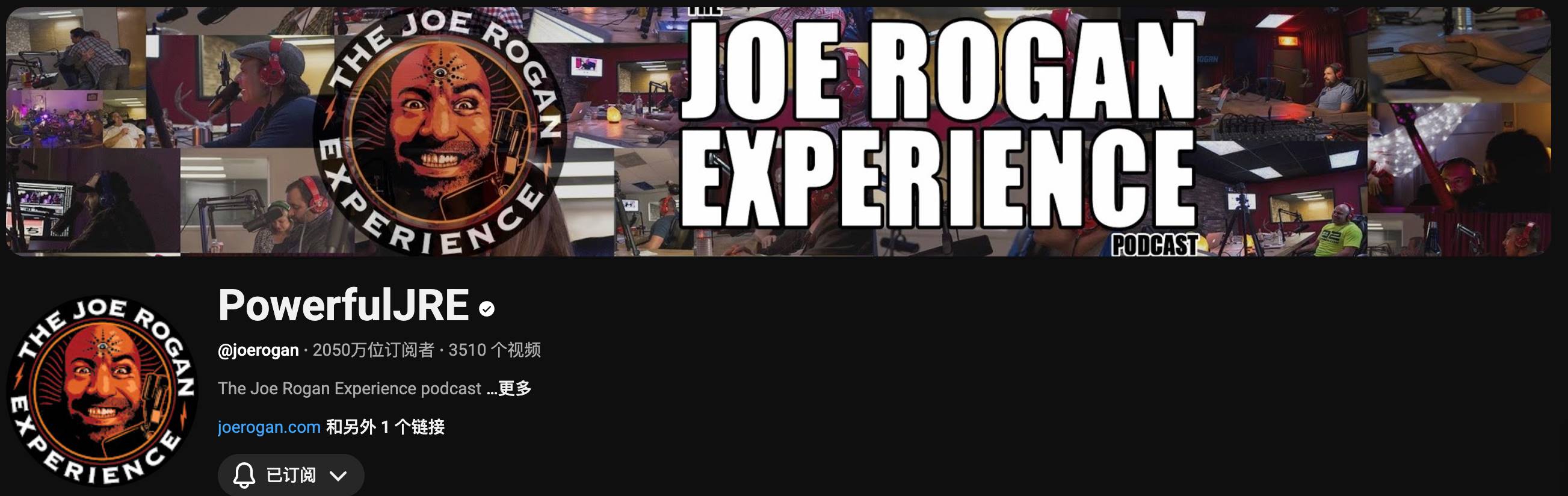
His name is Joe Rogan. His show, "The Joe Rogan Experience," is currently the world's largest podcast.

From Comedian to Podcast King: A Show Worth $250 Million

Joe Rogan's podcast influence is built on an unconventional personal resume.

Comedian, reality show host, UFC commentator. Put these three identities together, and it hardly seems like the profile of someone who would create the world's largest podcast.

He is not a traditional interview host, not the kind of straight-laced, professionally trained media personality. His background is actually in entertainment and the fighting world, not journalism.

But it is precisely this "unconventional" path that allowed him to create something completely different from traditional media; his ability to connect and his viewership far surpass many professional media programs.
Initially, Joe Rogan was a comedian, doing stand-up in Boston clubs in the 90s. Later, he moved to Los Angeles, acted in sitcoms for a few years, and hosted a reality show called "Fear Factor."

The show followed a sensationalist route, making contestants eat insects, jump from tall buildings, relying on gross-out and刺激 for ratings. In today's short video environment, it would definitely be categorized as vulgar but high-traffic content.

But what really made him break through was another job.

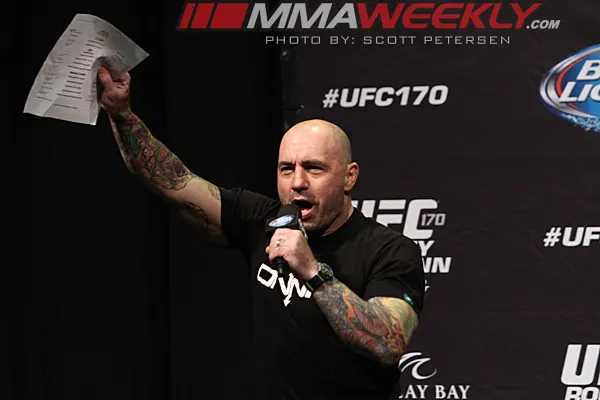
Starting in 1997, he worked as a commentator for the UFC, sitting cageside to commentate mixed martial arts fights, a job he held for over twenty years. This work solidified his standing in the fighting community and accumulated a large loyal male audience.
In 2009, he started recording podcasts at home.

Like the starting point of many podcasts, the equipment was simple, there were no sponsors, and no business plan. But each episode often lasted two to three hours, chatting with friends or guests about anything.

Looking back, all those messy previous experiences actually came in handy.

Having been a comedian, he knew how to make conversations interesting and rhythmic. Having hosted a reality show, he was also accustomed to staying relaxed in front of the camera. Being a UFC commentator for twenty years meant this audience was already used to listening to him talk.

Moreover, he isn't an expert in any particular field, which gives him an unconventional advantage:

He can unabashedly ask "dumb questions."

Facing a physicist, he'll ask about the most basic concepts; facing a politician, he doesn't press for policy details, instead asking "what do you really think." This style is something you simply don't see in traditional media.

Television interviews have strict time limits, hosts must quickly get to the point. News interviews emphasize confrontation, journalists must dig out what the interviewee doesn't want to say.

Rogan's show does the opposite, giving you three hours, unedited, uninterrupted, talking about whatever you want.

The result is that many celebrities say things on his show they wouldn't say elsewhere. Musk smoking marijuana is just one example. Zuckerberg came on to talk about MMA training, looking more like a normal person than in any Congressional hearing.

Slowly, Joe Rogan's podcast became the go-to place for celebrities to "show their real side." Traditional media interviews are performances; here, they can be themselves.

As various celebrities appeared, the show became increasingly valuable.

In 2020, Spotify acquired the exclusive distribution rights to "The Joe Rogan Experience" for $200 million, the largest deal in podcast industry history at the time.

In 2022, Rogan faced a media storm for negative comments about certain COVID-19 vaccines on his podcast, leading to protests from musicians pulling their music from Spotify.

Right at this critical moment, another video platform, Rumble, publicly offered $100 million to poach his podcast, but Rogan didn't bite.

In 2024, he renewed his deal with Spotify for distribution rights, but the price increased to $250 million.
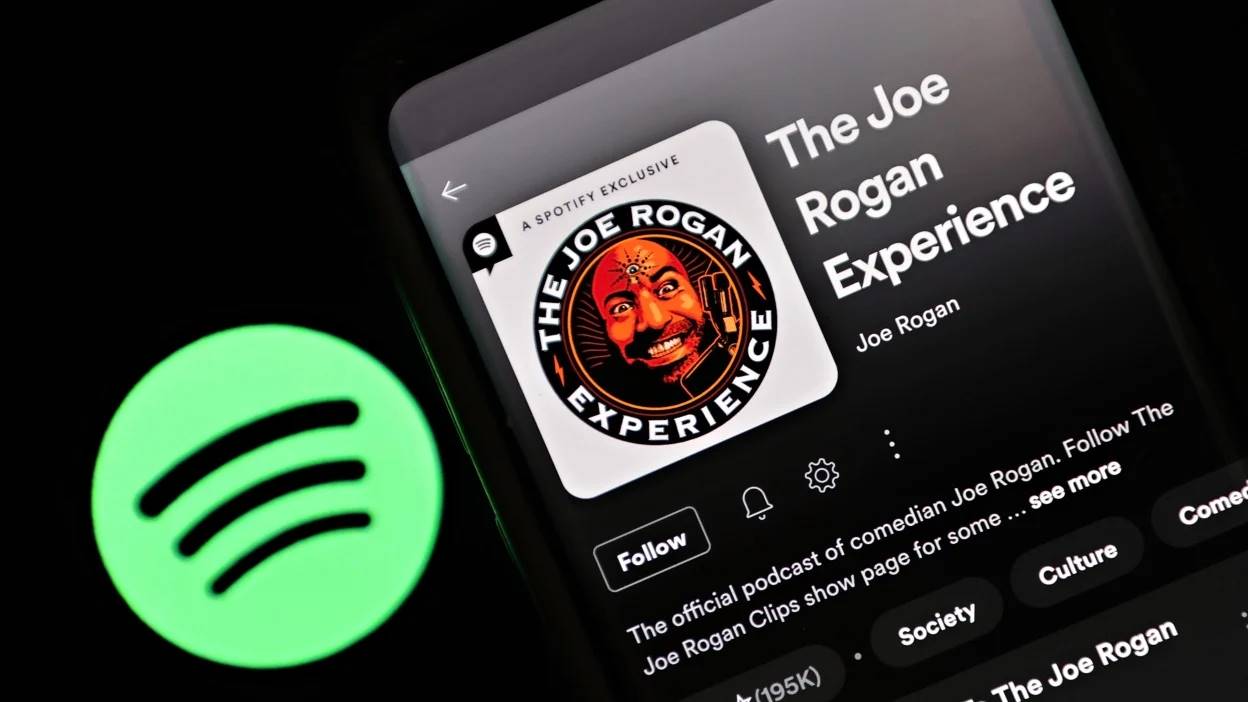
Furthermore, this time he no longer accepted exclusivity; the show returned to being available simultaneously on Spotify, YouTube, and Apple Podcasts. Spotify paid more money but got fewer rights.

In 2025, "The Joe Rogan Experience" simultaneously topped the annual podcast charts on Spotify, Apple Podcasts, and YouTube for the first time.

A chat show that started recording at home sixteen years ago is now valued higher than many traditional media companies.

Podcast Chats, Precise Vote Pulling

On October 25, 2024, during the final stretch of the election campaign, Trump sat down in Rogan's Austin studio.

The episode lasted a full three hours. After recording, Trump rushed to a campaign rally in Michigan, making thousands of supporters wait an extra three hours.

What did they talk about for three hours?

UFOs. Trump said he interviewed fighter pilots who told him they saw spherical objects moving four times faster than an F-22 fighter jet.

The White House bed. He genuinely described his feelings upon first entering the Lincoln Bedroom in the White House, thinking the bed was huge because Lincoln was six foot six.

Tariffs. Trump also proposed replacing income tax entirely with tariffs. Rogan asked: "Are you serious?"

Trump said: "Of course, why not? In the 1880s, when our country was at its wealthiest, it was based on tariffs."

These topics seem unrelated, but they share one commonality:

They are things traditional political interviews would absolutely never discuss.

TV networks ask about policy details, press on controversial statements, and stick to time limits. No serious political journalist would let a presidential candidate spend ten minutes talking about UFOs and Lincoln's bed.
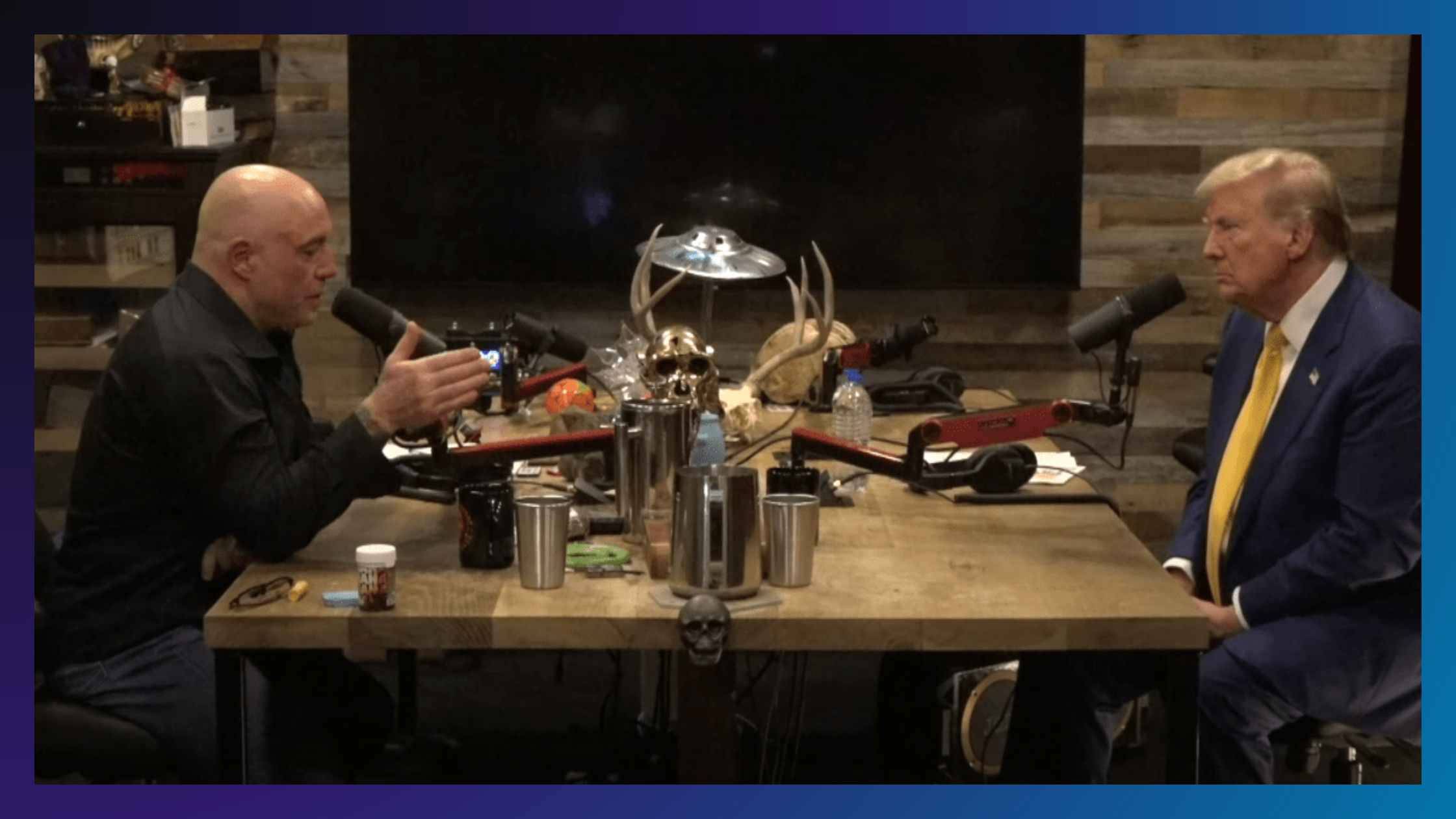
But this is precisely the characteristic of Rogan's show. Three hours, no interruptions, no set agenda, talk about whatever you want.

The audience sees not a candidate constrained by media frameworks, but a complete Trump: curious, with outrageous ideas, capable of casual conversation.

Rogan's own evaluation actually pinpoints the show's effect quite well:

"You say a lot of crazy things, but when traditional media takes those things and makes news out of them, it actually makes you more popular. Because people are tired of that scripted politician-speak. Even if they disagree with you, at least they know this person is real."

This sense of authenticity is especially effective for Rogan's audience.

Data from foreign research institutions shows that 80% of the show's listeners are male, with over half aged 18 to 34. Politically, 35% identify as independent, 32% lean Republican, and 27% lean Democratic. This group shares a common characteristic:

They don't watch traditional TV news much, generally distrust mainstream media, but they spend hours each week listening to Rogan chat.

In other words, this is a group that is hard for traditional political communication to reach. And Trump spending three hours sitting across from a host they trust, speaking in a relaxed, informal manner, was far more effective than any campaign ad.

After the episode went live, YouTube views quickly surpassed 50 million.

The entire video was cut into countless clips, spreading on X, TikTok, and Instagram. Every soundbite, every outrageous statement, became standalone content, reaching people who would never click on a three-hour video.

Meanwhile, Trump's presidential election opponent, Harris, did not appear on the show.

Reportedly, there were talks, and Rogan publicly invited her. But Harris's team wanted to limit the duration to under an hour, which Rogan refused. He said on his show:

"It's not that I didn't want to invite her, it's that she didn't want to come."

For comparison, Trump's episode garnered over 50 million views, while Harris's appearance on another podcast, "Call Her Daddy," got 600,000 views.

The election ended with Trump's victory. In his victory speech, UFC President Dana White specifically thanked Joe Rogan, listing him as one of the key contributors to the victory.

A podcast being named in the thank-you list of a presidential victory speech is a first in American political history.

Chinese Mirror: Attempts by Luo Yonghao and Others

Can Joe Rogan's model be replicated in China?

Some are trying.

In June 2025, Luo Yonghao revealed at an AI conference that DeepSeek founder Liang Wenfeng suggested he leverage his "talent for speaking." A few months later, he launched a video podcast on Bilibili called "Luo Yonghao's Crossroads," positioning it as a counterpart to Joe Rogan and Lex Fridman.
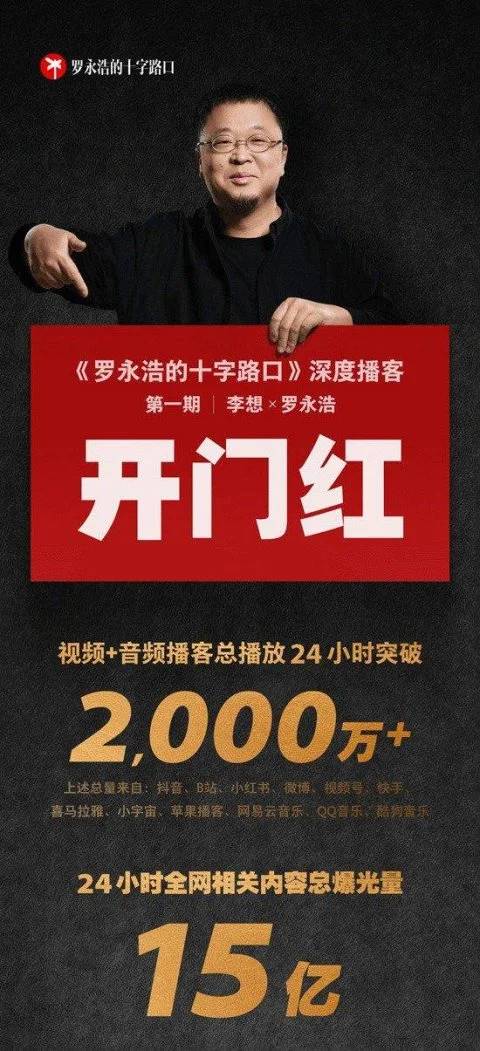
The format is very similar to The Joe Rogan Experience: long conversations, minimal editing, each episode three to five hours.

The first guest was Li Xiang, founder of Li Auto. The two talked for four hours, from childhood trauma to his relationship with Wang Xing, daring to ask and answer anything. The reaction in the comments was:

In the short video era, this kind of "long and satisfying super-sized cup" is too rare.

Luo Yonghao isn't the only one. Chen Luyu, Yu Qian, Li Dan, Yang Di—these famous hosts have all set up shop on Bilibili doing video podcasts. Bilibili has also made heavy investments, pouring billions of level traffic support during the summer, providing free recording studios in Beijing, Shanghai, Guangzhou, and Hangzhou, and planning to launch AI creation tools专属 for podcasts.

It seems that China's video "podcast元年" (first year of podcasts) has finally arrived, but it's not that simple.

When Luo Yonghao was in conversation with Tim from '影视飓风' (Cinephile Storm), he mentioned his video views were around 20-30 million, while Tim believed "you need to reach 100 million to be considered hot." This actually reveals a structural problem:

In China's internet traffic ecosystem, long-form content is inherently at a disadvantage.

Over the past few years, users have been trained by short videos into the habit of "watching a movie in three minutes." The algorithms of Douyin (TikTok) and Kuaishou reward completion rates; a three-hour video has almost no place in the recommendation pool.

More ironically, the highlight moments of many long video podcasts are often spread through几十秒 (dozens of seconds) clips on Douyin and Xiaohongshu.

At the same time, monetization is also a challenge.

The U.S. podcast industry's advertising revenue exceeded $2 billion in 2024, with top hosts securing exclusive contracts worth hundreds of millions of dollars. In China, a podcast brand with nearly 500,000 subscribers might charge less than 40,000 RMB for a single voiced ad, with annual net income possibly only around 100,000 RMB.

YouTube has a mature AdSense revenue-sharing system; the longer the video, the more ad slots, the higher the income—this incentivizes long-form content through its profit mechanism. Bilibili's monetization capability is far from reaching this level.

There's an even more fundamental issue:

A large part of Rogan's influence comes from his ability to host people like Trump, Musk, and Jensen Huang, and these people are willing to say things on his show they wouldn't say elsewhere.

This status as a "primary source of information" requires long-accumulated trust and a unique media environment.

Luo Yonghao can invite Li Xiang, He Xiaopeng, Zhou Hongyi—this is already the top tier of China's tech circle. But there are natural boundaries regarding the openness of topics.

So, can Joe Rogan's model be replicated in China?

The form can be learned, but the soil is different.

Controversy and Boundaries

Writing this far, there's an unavoidable question: Joe Rogan is a controversial figure.

In 2022, he sparked a storm by questioning the effectiveness of COVID-19 vaccines on his show. Spotify did not drop Rogan but added "content advisory" labels to all episodes discussing COVID-19 and removed over 70 old episodes.

This wasn't his first brush with trouble.

In 2024, he and a guest discussed the origins of AIDS on his show, spreading some claims that have been refuted by the medical community, drawing public criticism from the American Foundation for AIDS Research.

A Yale University study found that among the top ten most popular podcasts in the U.S., eight had spread erroneous or misleading information about climate change, with Rogan's show among them.

His show is also a hub for various American conspiracy theories.

From the Kennedy assassination to UFOs, from big pharma to government surveillance, he maintains an "open attitude" towards these topics. Critics argue this provides a platform for misinformation, while his supporters believe it challenges mainstream narratives.

In July 2025, he posted on X:

"Salute to those who still don't believe in conspiracy theories, your ability to hold your ground is admirable." This post received over 15 million views.

This is also the complexity of Joe Rogan.

He is not a person of consistent立场 (stance). For example, supporting same-sex marriage, marijuana legalization, and universal healthcare are typical liberal positions. But he also questions mainstream media and provides a platform for controversial figures, which also makes him a darling of conservatives.

His show's influence stems precisely from the fact that he doesn't belong to any single camp. Those who have lost trust in mainstream media find an "anti-establishment" alternative in him.

But the same特质 (trait) also makes him a node for spreading misinformation. When someone with an audience of hundreds of millions says "I'm just asking questions," the questions themselves shape public perception.

This is also the inherent tension of the podcast medium:

Its charm lies in being real, relaxed, and unlimited, but when its influence reaches a certain scale, "unlimited" itself becomes a problem.

Joe Rogan is a product of this era, and also a mirror of it.

Perguntas relacionadas

QWho is Joe Rogan and what is the name of his podcast?

AJoe Rogan is a comedian, UFC commentator, and the host of 'The Joe Rogan Experience', which is currently the world's largest podcast.

QWhat was the financial value of Joe Rogan's podcast deal with Spotify in 2024?

AIn 2024, Joe Rogan renewed his deal with Spotify for his podcast, which was valued at $250 million.

QHow did Joe Rogan's interview with Donald Trump impact the 2024 US election according to the article?

AThe three-hour interview on Rogan's podcast was highly effective in reaching an audience distrustful of mainstream media. It was widely disseminated in clips and was credited as a significant factor in Trump's victory, with Rogan being thanked in Trump's victory speech.

QWhat are some of the challenges mentioned for replicating Joe Rogan's podcast success in China?

AChallenges include a user base trained for short-form video content, a less mature monetization system for long-form podcasts compared to the US, and natural boundaries on the openness of topics that can be discussed.

QWhat major controversy is Joe Rogan associated with, as discussed in the article?

AJoe Rogan has been involved in several controversies, most notably for spreading misinformation, such as questioning the efficacy of COVID-19 vaccines and discussing debunked theories about AIDS origins, leading to criticism from health organizations and researchers.

Leituras Relacionadas

Will the Next Crypto Bull Run Start with On-Chain Trading of SpaceX?

This article presents a scenario-based forecast for the crypto industry from 2026 to 2029, arguing that the next major cycle will be driven not by technological narratives but by legal access to real-world assets. The author predicts that by mid-2026, pre-IPO perpetual contracts for top private companies like SpaceX, OpenAI, and Anthropic on platforms like Hyperliquid will become the primary gateway for accessing quality assets, as most crypto-native tokens fail to capture real value. The much-hyped AI x Crypto intersection largely fails except for prediction markets, which thrive on betting on AI model supremacy. By 2027, public blockchain foundations are forced to choose between catering to retail speculation or building compliant infrastructure for institutions, with many opting for the latter. Growth in stablecoins and tokenized private credit/equity hits a "triple ceiling" due to regulatory and political uncertainty rather than market demand. The pivotal shift is forecast for 2028. A major liquidation event in pre-IPO perpetuals exposes the structural flaw of synthetic markets lacking a real underlying asset anchor. In response, regulatory changes finally allow the public solicitation of private securities resales to verified accredited investors. This creates a legitimate secondary market for real company equity, which then becomes the core asset class of the new bull market, relegating synthetic perps to a niche role. By 2029, the industry becomes "boring" but foundational. Tokens without claims on real cash flows or assets cease trading. Stablecoin growth is steady but politically capped. Crypto infrastructure fades from view as it gets absorbed into traditional finance backends. The article's central thesis is that the key bottleneck for crypto's next phase is legal and regulatory channels for real asset ownership, not technology.

marsbitHá 15m

Will the Next Crypto Bull Run Start with On-Chain Trading of SpaceX?

marsbitHá 15m

The Value Distribution of Stablecoins

**Summary: The Value Distribution of Stablecoins** The article argues that stablecoins are evolving from mere trading tools into broader channels for dollar access. It divides the stablecoin ecosystem into four layers to analyze how value is distributed: 1. **Issuance Layer:** Mints stablecoins, holds reserve assets, and captures the spread between reserve yield and user costs (e.g., Tether, Circle). This layer currently earns the largest profit margin. 2. **Infrastructure Layer:** Connects stablecoins to the traditional financial system, handling fiat on/off-ramps, banking integration, compliance (KYC/AML), and asset management (e.g., Bridge, BVNK). This is the "unglamorous" but critical work, building the essential bridges between crypto and real-world finance. 3. **Acquiring/Distribution Layer:** Integrates stablecoins into merchant systems, manages payment flows, and provides enterprise financial software (e.g., Stripe, Coinbase). They act as the access point for businesses. 4. **Application Layer:** The end-users and businesses that ultimately use stablecoins for payments, settlements, or as a store of value. They benefit from convenience but have little pricing power. The core thesis is that while the issuance layer currently dominates profits, the often-overlooked **infrastructure layer holds significant long-term potential**. The real challenge and barrier to mass adoption is not the on-chain transfer of stablecoins (which is simple), but the complex "last mile" integration into existing business workflows, banking systems, and regulatory frameworks across different countries. Companies in this layer are currently in a "land grab" phase, investing heavily to build networks, secure bank partnerships, and establish compliance pathways. While their position is currently pressured by the profitable issuers above and distribution platforms below, the article suggests that if stablecoins become a default financial rail for businesses, the infrastructure providers who have done the hard work of integration will ultimately gain strong pricing power and become entrenched, essential players.

marsbitHá 6h

The Value Distribution of Stablecoins

marsbitHá 6h

The Value Distribution of Stablecoins

The Value Distribution of Stablecoins The article argues that stablecoins are evolving from a mere trading tool into a broad "dollar channel." It analyzes the industry's value chain through four layers: 1. **Issuance Layer (e.g., Tether, Circle):** The top layer that mints stablecoins, holds reserve assets, and captures the thickest interest rate spread. 2. **Infrastructure Layer (e.g., Bridge, BVNK):** Connects stablecoins to the traditional financial system, handling critical but complex "dirty work" like fiat on/off-ramps, banking integration, compliance (KYC/AML), and cross-border settlement. 3. **Acquiring/Distribution Layer (e.g., Stripe, Coinbase):** Embeds stablecoins into merchant systems, manages payment flows, and integrates with enterprise software. 4. **Application Layer:** End-users and businesses that ultimately use stablecoins for payments, settlement, or storing value. The author posits that while the issuance layer currently captures the most profit, the most overlooked and potentially critical layer is infrastructure. The core challenge for stablecoin adoption isn't the on-chain transfer (which is simple), but bridging the gap between blockchain and the real-world financial system. This involves solving practical problems for businesses: fiat conversion, reconciliation, tax handling, and user onboarding. Infrastructure companies are currently in a difficult "land-grab" phase—building networks, securing banking relationships, and achieving compliance country-by-country. They face pressure from both the profitable issuance layer above and distribution platforms below. However, the author suggests this layer is building a crucial moat. Once stablecoins become a default business rail, the infrastructure players who have done the hard work of integration may gain significant, durable value and pricing power.

链捕手Há 7h

The Value Distribution of Stablecoins

链捕手Há 7h

Trading

Spot
Futuros

Artigos em Destaque

O que é ATWO

I. Introdução ao ProjetoArena Two é uma plataforma interativa descentralizada que permite aos fãs desempenhar um papel ativo e tokenizado nos resultados de eventos em tempo real. Ao contrário dos modelos tradicionais de transmissão que reduzem os fãs a espectadores passivos, a Arena Two utiliza a tecnologia blockchain para permitir que os fãs votem diretamente em tempo real e influenciem os resultados em campo.II. Informação sobre o TokenNome do token: ATWO(Arena Two)III. Links RelacionadosWebsite:https://arenatwo.com/Exploradores:https://basescan.org/token/0x499D35eBE6cEe9B2Ac35Fd003fcBbeeB9CFc7B32Twitter:https://x.com/arenatwoXNota: A introdução ao projeto provém dos materiais publicados ou fornecidos pela equipa oficial do projeto, que é apenas para referência e não constitui aconselhamento de investimento. A HTX não se responsabiliza por quaisquer perdas diretas ou indiretas resultantes.

258 Visualizações TotaisPublicado em {updateTime}Atualizado em 2026.06.02

O que é ATWO

Como comprar ATWO

Bem-vindo à HTX.com!Tornámos a compra de Arena Two (ATWO) simples e conveniente.Segue o nosso guia passo a passo para iniciar a tua jornada no mundo das criptos.Passo 1: cria a tua conta HTXUtiliza o teu e-mail ou número de telefone para te inscreveres numa conta gratuita na HTX.Desfruta de um processo de inscrição sem complicações e desbloqueia todas as funcionalidades.Obter a minha contaPasso 2: vai para Comprar Cripto e escolhe o teu método de pagamentoCartão de crédito/débito: usa o teu visa ou mastercard para comprar Arena Two (ATWO) instantaneamente.Saldo: usa os fundos da tua conta HTX para transacionar sem problemas.Terceiros: adicionamos métodos de pagamento populares, como Google Pay e Apple Pay, para aumentar a conveniência.P2P: transaciona diretamente com outros utilizadores na HTX.Mercado de balcão (OTC): oferecemos serviços personalizados e taxas de câmbio competitivas para os traders.Passo 3: armazena teu Arena Two (ATWO)Depois de comprar o teu Arena Two (ATWO), armazena-o na tua conta HTX.Alternativamente, podes enviá-lo para outro lugar através de transferência blockchain ou usá-lo para transacionar outras criptomoedas.Passo 4: transaciona Arena Two (ATWO)Transaciona facilmente Arena Two (ATWO) no mercado à vista da HTX.Acede simplesmente à tua conta, seleciona o teu par de trading, executa as tuas transações e monitoriza em tempo real.Oferecemos uma experiência de fácil utilização tanto para principiantes como para traders experientes.

141 Visualizações TotaisPublicado em {updateTime}Atualizado em 2026.06.02

Como comprar ATWO

O que é ZEST

I. Introdução ao Projeto1. O que é o Zest Protocol?O Zest Protocol é um protocolo de empréstimos nativo do Bitcoin construído na camada 2 do Stacks que permite aos utilizadores ganhar rendimento com BTC ou emprestar ativos colateralizando BTC. Os contratos inteligentes do protocolo são escritos na linguagem Clarity, operam totalmente em cadeia e são de código aberto, com um design inspirado no Aave v3. O Zest é atualmente o maior protocolo DeFi no Stacks, com mais de 800 BTC depositados e um pico de TVL superior a 100 milhões de dólares. Em maio de 2026, o protocolo introduziu ainda os Cofres de Colateral em Bitcoin, estendendo as capacidades de empréstimo do Stacks para a rede principal do Bitcoin. Isso permite que os utilizadores emprestem stablecoins sem mover BTC da rede Bitcoin, possibilitando empréstimos com custódia própria.2. Como funciona o Zest Protocol?O Zest Protocol consiste em dois mercados. O mercado do Stacks é construído sobre o Aave v3, permitindo que os utilizadores depositem ativos como sBTC, STX e USDC para ganhar rendimento ou contrair empréstimos sobre-colateralizados. O LTV máximo padrão é de 50% (70% para sBTC). O mercado do Bitcoin opera através dos recém-lançados Cofres de Colateral em Bitcoin. Os utilizadores emprestam stablecoins ao bloquear BTC em cofres de custódia própria na cadeia do Bitcoin. O colateral permanece na rede principal do Bitcoin durante todo o processo, e os utilizadores mantêm a custódia, a menos que a posição seja liquidada.3. Quem fundou o Zest Protocol?Tycho Onnasch (Co-Fundador): Formado na Universidade de Oxford. Envolvido em pesquisa e subsídios para a Stacks Open Internet Foundation. Antigo Gestor na Trust Machines e Fundador da Deedmob. Perfil do LinkedIn: https://www.linkedin.com/in/tychokoonnasch/.Fernando Foy (Co-Fundador): Trabalhou anteriormente em consultoria de TI na Objectif Emploi. Perfil do LinkedIn: https://www.linkedin.com/in/fernando-foy/.Emil E. (Co-Fundador): Possui um Mestrado em Física pela Universidade de Warwick. Antigo Partner de Engenharia na Trust Machines, Desenvolvedor Full-Stack para projetos Web3 e Cientista de Dados no HSBC. Perfil do LinkedIn: https://www.linkedin.com/in/emil-e-49771a145/.Detalhes de Financiamento: Em maio de 2024, o Zest Protocol anunciou a conclusão de uma ronda de financiamento inicial de 3,5 milhões de dólares liderada por Tim Draper, com a participação da Binance Labs, Flow Traders, Trust Machines, entre outros.4. Tokenomics do $ZEST$ZEST é o token nativo do Zest Protocol com um fornecimento total fixo de 1 mil milhões de tokens e sem mecanismo inflacionário.Comunidade (27,83%): Usado para airdrops e incentivos aos utilizadores;Desenvolvimento do Ecossistema (24,82%): Usado para liquidez, parcerias, marketing, listagens em bolsas, etc.;Investidores (22,35%): Apoio às partes investidoras que apoiaram o desenvolvimento inicial do Zest Protocol;Equipa (25%): Alocado para colaboradores principais.Calendário de Vesting: Os tokens da Equipa e dos Investidores estão sujeitos a um período de bloqueio de 1 ano, seguido de 3 anos de desbloqueio linear.5. Cronologia dos Principais Marcos2022: O Zest Protocol é oficialmente fundado.Março de 2024: Concluída a auditoria de segurança e lançado o mercado de empréstimos do Stacks na rede principal.Em fevereiro de 2026, é lançado o Stacks Market V2, introduzindo Grupos de Risco.Em maio de 2026, foram introduzidos os Cofres de Colateral em Bitcoin, e um protótipo operacional da rede principal está agora disponível. Isso permite que os utilizadores utilizem BTC com custódia própria na L1 do Bitcoin como colateral para emprestar stablecoins em cadeias EVM, encerrando a necessidade de bridging, wrapping e custódia de terceiros. Este lançamento é dividido em duas fases. Fase 1: Utiliza transações pré-assinadas para restringir o movimento de BTC; Fase 2: Utiliza BitVM para verificação. II. Informações sobre o TokenNome do token: ZEST (Zest Protocol)III. Links RelacionadosWebsite: https://www.zestprotocol.com/Exploradores: https://bscscan.com/token/0x5506599c722389a60580b5213ea1da60d64754a1Twitter: https://twitter.com/ZestProtocolNota: A introdução ao projeto provém dos materiais publicados ou fornecidos pela equipa oficial do projeto, que é apenas para referência e não constitui aconselhamento de investimento. A HTX não se responsabiliza por quaisquer perdas diretas ou indiretas resultantes.

203 Visualizações TotaisPublicado em {updateTime}Atualizado em 2026.06.02

O que é ZEST

Discussões

Bem-vindo à Comunidade HTX. Aqui, pode manter-se informado sobre os mais recentes desenvolvimentos da plataforma e obter acesso a análises profissionais de mercado. As opiniões dos utilizadores sobre o preço de A (A) são apresentadas abaixo.

活动图片














