Thin Profit Business? No, DeFi Lending Protocols Are the Underestimated 'King of Value'

marsbitPublicado em 2025-12-25Última atualização em 2025-12-25

Resumo

In the DeFi lending ecosystem, protocols like Aave and SparkLend capture more value than downstream vaults and even upstream asset issuers, challenging the notion that distribution is king. Despite perceptions of thin margins, lending protocols generate higher revenues than the vaults built on top of them. For example, Ether.fi’s vault pays Aave $4.5M in annual interest fees while earning only $1.07M in platform fees. Similarly, Fluid and Mellow vaults contribute significantly more value to lending protocols than they capture themselves. Even compared to asset issuers like Lido, lending protocols often yield greater economic benefits due to their central role in the credit stack. The true moat of lending protocols lies in their position as the highest value-capture layer in the on-chain credit value chain.

Original Title: Why the defi lending moat is bigger than you think

Original Author: Silvio, Crypto Researcher

Original Compilation: Ding Dang, Odaily Planet Daily

As the market share of Vaults and Curators continues to grow in the DeFi world, the market has begun to question: Are lending protocols being squeezed for profit margins? Is lending no longer a good business?

But if we shift our perspective back to the entire on-chain credit value chain, the conclusion is quite the opposite. Lending protocols still occupy the most solid moat in this value chain. We can quantify this with data.

On Aave and SparkLend, the interest fees that Vaults pay to lending protocols actually exceed the revenue generated by the Vaults themselves. This fact directly challenges the mainstream narrative that "distribution is king."
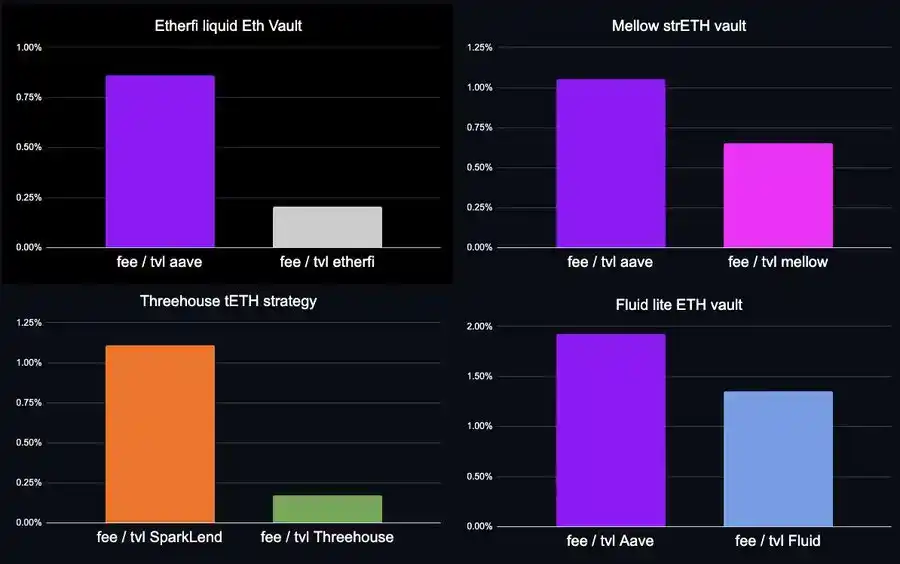
At least in the lending space, distribution is not king.

Simply put: Aave not only earns more than the various Vaults built on top of it, but also more than the asset issuers used for lending, such as Lido and Ether.fi.

To understand why, we need to deconstruct the complete value chain of DeFi lending and re-examine the value capture capabilities of each role by following the flow of funds and fees.

Deconstructing the Lending Value Chain
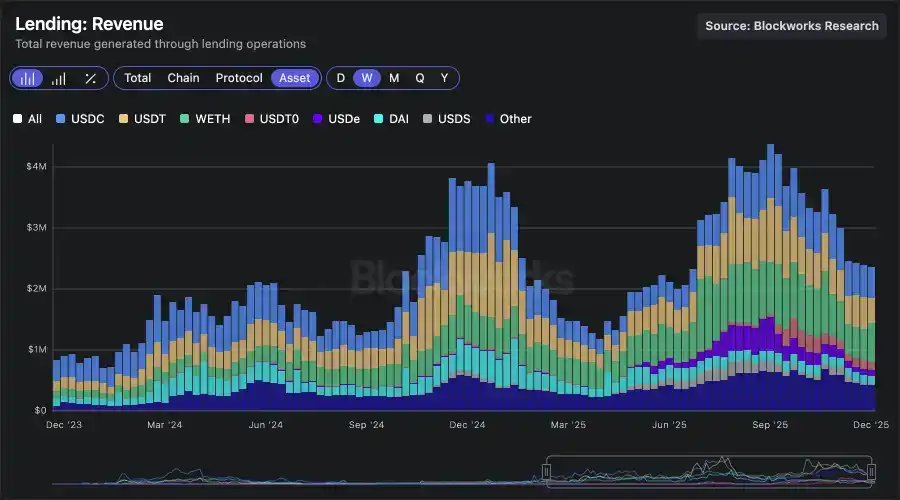
The annualized revenue scale of the entire lending market has exceeded $100 million. This value is not generated by a single link but is co-created by a complex stack: the underlying settlement blockchain, asset issuers, capital lenders, the lending protocol itself, and the Vaults responsible for distribution and strategy execution.

As mentioned in previous articles, a large number of use cases in the current lending market originate from basis trading and liquidity mining opportunities, and we have deconstructed the main strategy logic.

So, who is actually "demanding" the capital in the lending market?

I analyzed the top 50 wallet addresses on Aave and SparkLend and labeled the main borrowers.
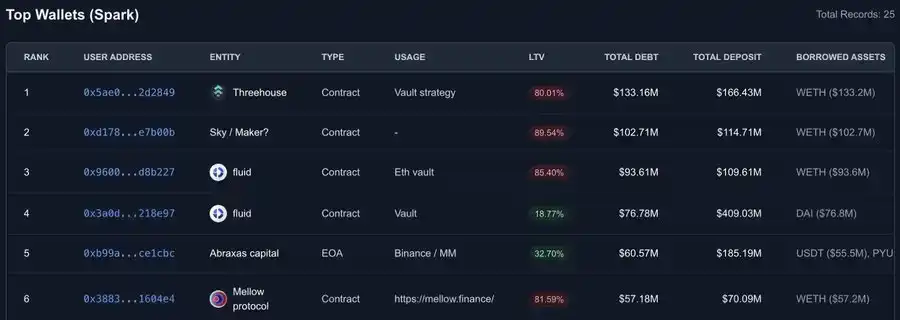
1. The largest borrowers are various Vaults and strategy platforms like Fluid, Treehouse, Mellow, Ether.fi, Lido (which are also asset issuers). They control the distribution capability to end-users, helping users obtain higher yields without having to manage complex loops and risks themselves.

2. There are also large institutional capital providers, such as Abraxas Capital, which deploy external capital into similar strategies. Their economic model is essentially very close to that of Vaults.
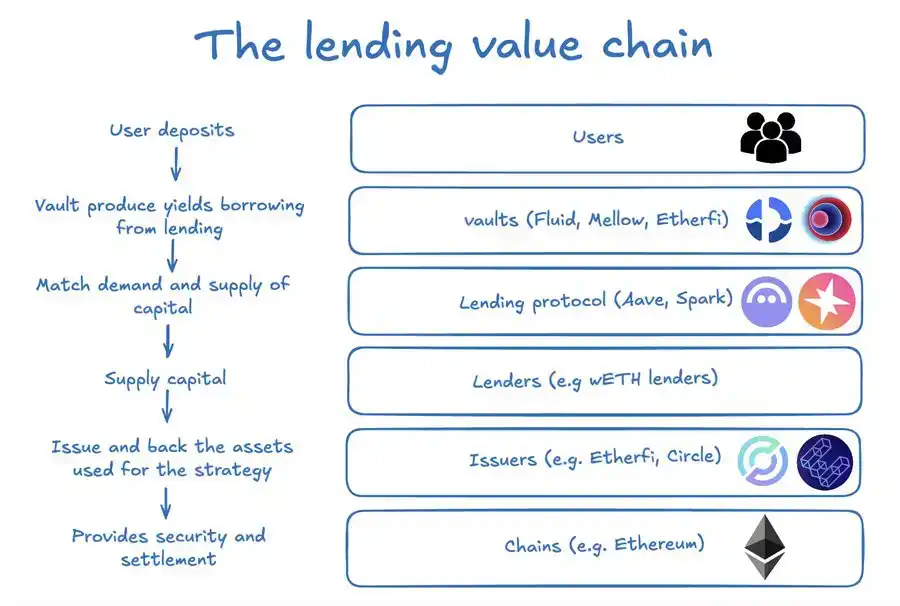
But Vaults are not the whole story. At least the following participants are involved in this chain:

· Users: Deposit assets, hoping to obtain additional yields through Vaults or strategy managers.

· Lending Protocols: Provide infrastructure and liquidity matching, generating protocol revenue by charging interest to the borrowing side and taking a certain percentage.

· Lenders: Capital providers, who can be either ordinary users or other Vaults.

· Asset Issuers: Most on-chain lending assets have underlying supported assets that themselves generate yield, part of which is captured by the issuer.

· Blockchain Network: The underlying "rail" where all activities occur.

Lending Protocols Earn More Than Downstream Vaults

Take Ether.fi's ETH liquid staking Vault as an example. It is the second-largest borrower on Aave, with an outstanding loan size of approximately $1.5 billion. The strategy itself is very typical:

· Deposit weETH (approx. +2.9%)

· Borrow wETH (approx. –2%)

· The Vault charges a 0.5% platform management fee on TVL.

Out of Ether.fi's total TVL, approximately $215 million is the net liquidity actually deployed on Aave. This portion of TVL brings in about $1.07 million in platform fee revenue annually for the Vault.

However, at the same time, this strategy pays about $4.5 million in interest fees to Aave annually (calculation: $1.5 billion borrowed × 2% borrowing APY × 15% reserve factor).

Even for one of the largest and most successful loop strategies in DeFi, the value captured by the lending protocol is several times that of the Vault.
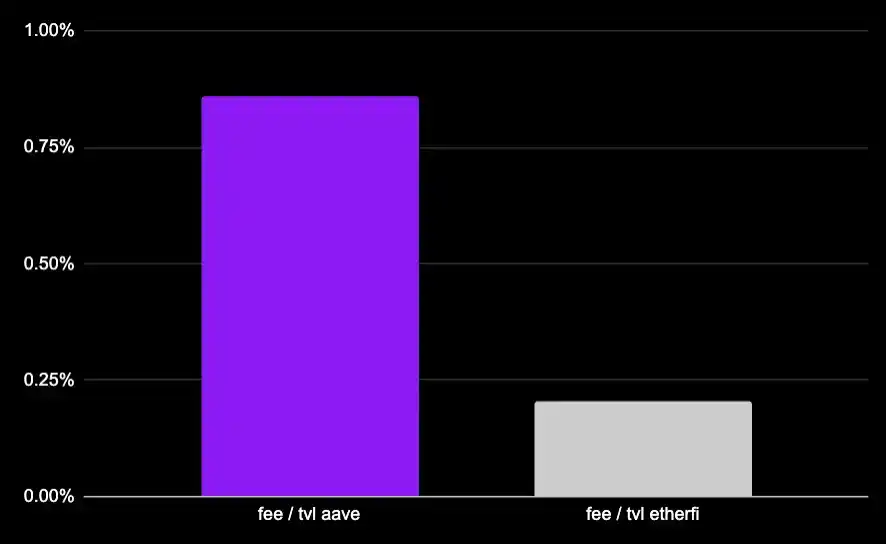
Of course, Ether.fi is also the issuer of weETH, and this Vault itself directly creates demand for weETH.
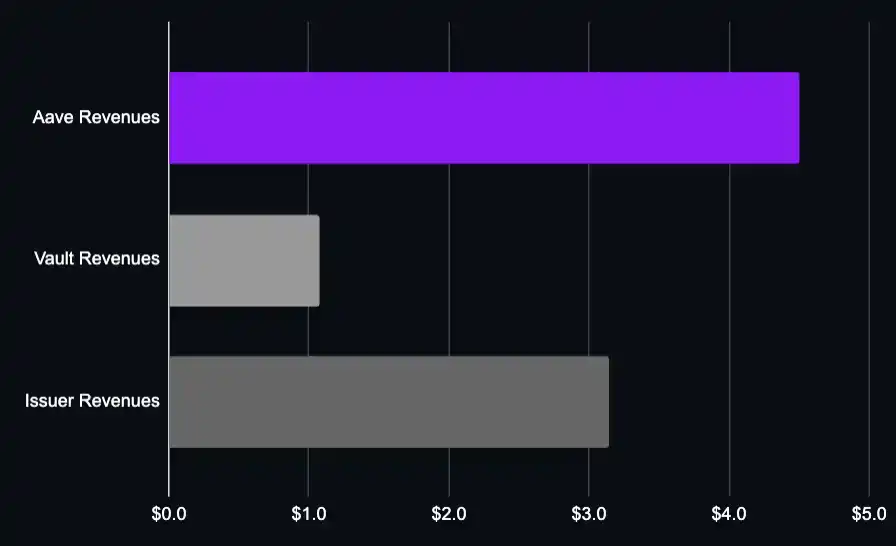
But even considering the Vault strategy yield + asset issuer yield together, the economic value created by the lending layer (Aave) is still higher.

In other words, the lending protocol is the link that creates the largest incremental value in the entire stack.

We can perform the same analysis on other commonly used Vaults:

Fluid Lite ETH: 20% performance fee + 0.05% exit fee, no platform management fee. Borrows $1.7 billion wETH from Aave, pays about $33 million in interest, of which about $5 million goes to Aave. Fluid's revenue is close to $4 million.
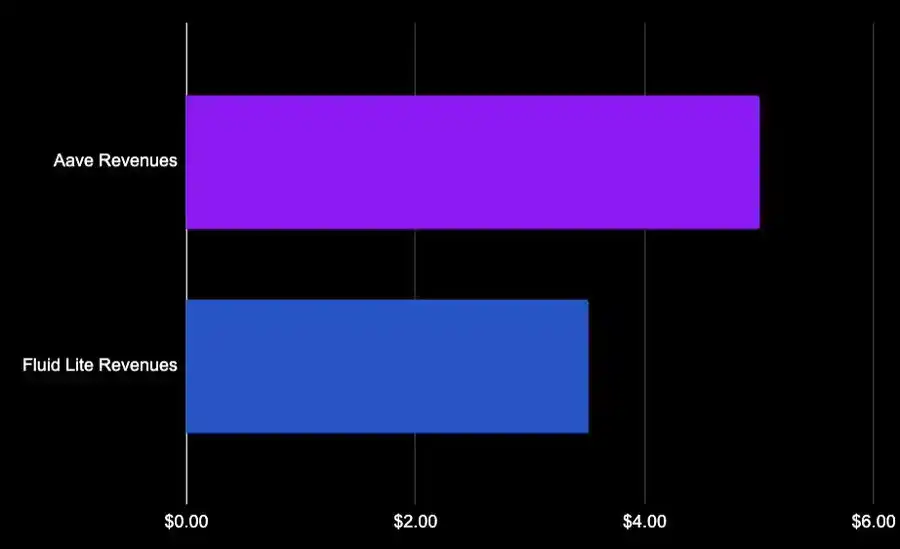
Mellow Protocol strETH charges a 10% performance fee, with a borrowing size of $165 million and a TVL of only about $37 million. Once again, we see that in terms of TVL, the value captured by Aave exceeds that of the Vault itself.
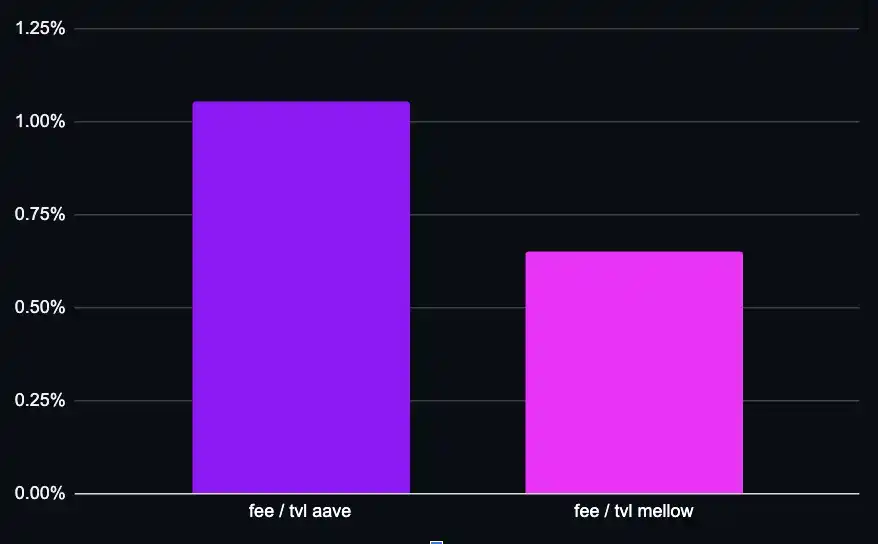
Let's look at another example. On SparkLend, the second-largest lending protocol on Ethereum, Treehouse is one of the important participants, running an ETH loop strategy:
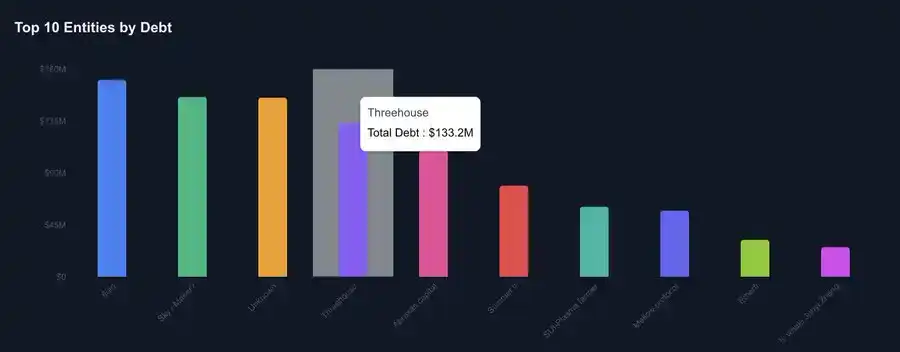
· TVL approx. $34 million

· Borrows $133 million

· Charges a performance fee only on marginal yields above 2.6%
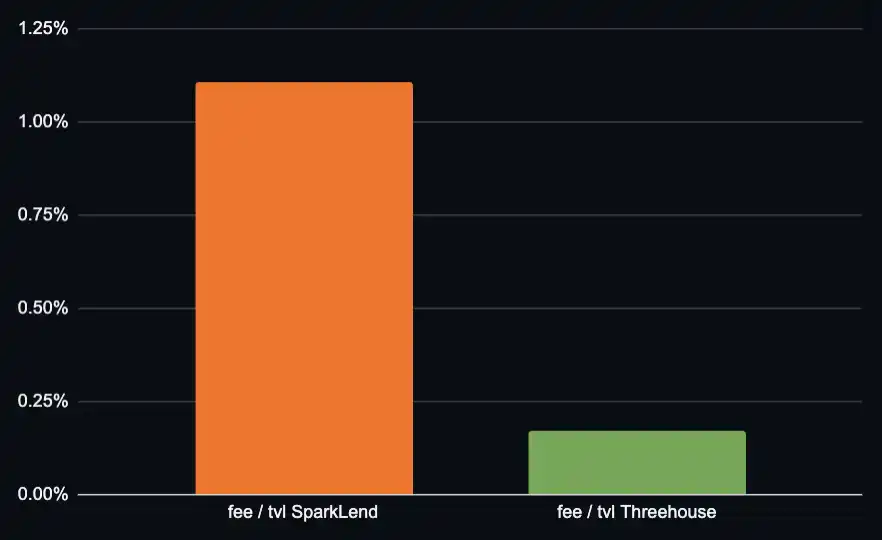
SparkLend, as a lending protocol, has higher value capture capability in terms of TVL than the Vault.

The pricing structure of Vaults greatly affects their own capturable value; but for lending protocols, their revenue depends more on the nominal borrowing size, which is relatively stable.

Even shifting to USD-denominated strategies, although the leverage is lower, the higher interest rates often offset this impact. I don't believe the conclusion would fundamentally change.

In relatively closed markets, more value might flow to curators, such as Stakehouse Prime Vault (26% performance fee, with incentives provided by Morpho). But this is not the end state of Morpho's pricing mechanism, and curators themselves are also engaging in distribution collaborations with other platforms.

Lending Protocol vs. Asset Issuer

So the question arises: Is it better to be Aave or Lido?

This question is more complex than comparing Vaults because staking assets not only generate yield themselves but also indirectly create stablecoin interest income for the protocol through the lending market. We can only make approximate estimates.

Lido has approximately $4.42 billion in assets in Ethereum core markets supporting lending positions, with annualized performance fee revenue of about $11 million.

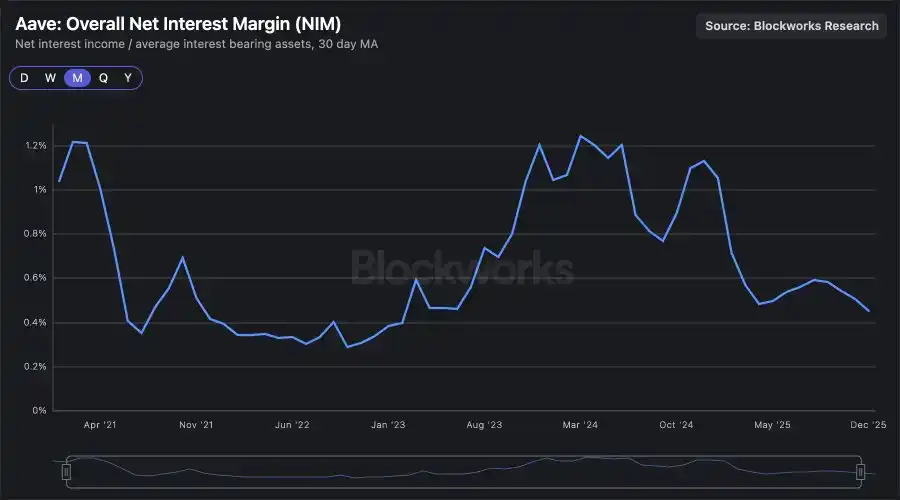
These positions roughly equally support ETH and stablecoin lending. At the current net interest margin (NIM) of about 0.4%, the corresponding lending yield is about $17 million, which is already significantly higher than Lido's direct revenue (and this is at a historically low NIM level).
The True Moat of Lending Protocols

If we only compare using the deposit profit model of traditional finance, DeFi lending protocols seem to be a low-margin industry. But this comparison ignores where the real moat lies.

In the on-chain credit system, lending protocols capture more value than the downstream distribution layer and, overall, more than the upstream asset issuers.

Viewed in isolation, lending seems like a thin-profit business; but placed within the complete credit stack, it is the layer with the strongest value capture capability relative to all other participants—Vaults, issuers, distribution channels.


Perguntas relacionadas

QAccording to the article, which layer in the DeFi lending stack captures the most value?

AThe lending protocol layer (e.g., Aave, SparkLend) captures the most value in the DeFi lending stack, exceeding the value captured by downstream vaults/curators and even upstream asset issuers.

QWhat data point is used to challenge the 'distribution is king' narrative in DeFi lending?

AThe data point is that vaults pay more in interest fees to lending protocols (like Aave and SparkLend) than the vaults themselves generate in revenue from their users.

QWho are the primary borrowers on major lending protocols like Aave and SparkLend?

AThe primary borrowers are vaults and strategy platforms (e.g., Ether.fi, Lido, Fluid, Mellow) and large institutional capital providers (e.g., Abraxas Capital) that deploy capital into yield-generating strategies.

QIn the Ether.fi vault example, how much does the vault pay to Aave annually compared to its own fee income?

AThe Ether.fi vault pays approximately $4.5 million in annual interest fees to Aave, while it only generates about $1.07 million in platform fee revenue from its users.

QWhat is identified as the true moat (competitive advantage) of DeFi lending protocols?

AThe true moat is their position as the layer that captures the most economic value in the entire on-chain credit value chain, making them more valuable than the businesses built on top of them (vaults) or the asset issuers that supply them.

Leituras Relacionadas

Will the Fed Definitely Raise Interest Rates in September? How Will Crypto and U.S. Stocks Withstand the Pressure?

The market's expectation for a September Fed rate hike surged dramatically in early August, jumping from under 50% to over 80% within a week. This shift followed a contentious July FOMC meeting, where a 9-3 vote to hold rates revealed growing dissent from hawkish members advocating for an immediate hike to combat persistent inflation. The primary catalyst for this repricing is rising oil prices, driven by renewed geopolitical tensions around the Strait of Hormuz, which threaten global supply. Energy costs directly influence inflation metrics, making the upcoming July CPI report (due August 12th) a critical data point. If it shows inflation reaccelerating, the probability of a September hike will solidify. For Bitcoin and crypto assets, this is typically bearish news. Bitcoin continues to behave as a high-beta, liquidity-sensitive risk asset. A rate hike raises the opportunity cost of holding non-yielding assets and could drive capital toward money markets, pressuring crypto prices in the short term. However, historical patterns suggest that if a hike is perceived as the end of a tightening cycle rather than the start, any negative price impact may be brief. U.S. stocks, particularly crypto-linked equities like Coinbase and growth-oriented tech stocks, are also vulnerable. Higher rates increase discount rates in valuation models, putting pressure on high-multiple companies. This coincides with a pivotal tech earnings season where investor focus has shifted from massive AI capital expenditure to tangible revenue and cash flow generation. Companies with negative cash flow and weak growth narratives could face heightened volatility if borrowing costs rise in September. In summary, a September Fed hike has evolved into a mainstream market scenario. Key factors to watch are oil prices, the July CPI report, and Fed communications, which will determine the final decision and its impact on volatile crypto and equity markets.

marsbitHá 3m

Will the Fed Definitely Raise Interest Rates in September? How Will Crypto and U.S. Stocks Withstand the Pressure?

marsbitHá 3m

A 'Overlooked' Market Event: Joint US-Japan-South Korea Intervention, Rare US Treasury Involvement, and Bessent's Quiet 'Market Rescue'?

Summary: The United States, Japan, and South Korea executed their largest coordinated foreign exchange intervention in nearly 30 years. The action targeted depreciation pressure on the Japanese yen and South Korean won. This move is seen as a significant effort by the US to stabilize the financial markets of its key allies and prevent the spillover of risks. Key details: * Japan reportedly intervened on July 30 using approximately 8.45 trillion yen (about $52.8 billion). South Korean authorities also intervened that day, selling dollars to support the won. * Notably, the US Treasury Department intervened directly in yen markets for the first time in roughly 30 years. The New York Fed, reportedly acting on behalf of the Treasury, sold euros to buy yen via Goldman Sachs and Morgan Stanley on July 31. Analysts view the use of the euro-yen pair as a way to alleviate yen pressure without adding selling pressure to the US dollar. * Prior to the action, the New York Fed conducted "rate checks" on both USD/JPY and EUR/JPY, a newer signaling tool that falls between verbal and physical intervention. The intervention is interpreted as going beyond traditional currency stabilization. Analysts, such as Michael Hartnett of Bank of America, suggest it resembles a "Price Keeping Operation" for the AI era. The core US objectives are perceived to be: 1. Preventing rapid yen depreciation from triggering a sharp rise in Japanese government bond yields. 2. Containing financial stress from spreading across Asian markets like South Korea and Japan. 3. Reducing the risk of disorderly capital flows impacting the US bond market. This coordinated action underscores the importance of Japan and South Korea as critical partners in the US semiconductor and AI supply chain. Stabilizing their financial markets is seen as vital to mitigating risks to the broader tech industry and the US market itself. The intervention coincides with market pressures, including the KOSDAQ index hitting a low since October 2022. While seen as a move to control volatility, some analysts caution it may not fundamentally reverse existing market trends.

marsbitHá 7m

A 'Overlooked' Market Event: Joint US-Japan-South Korea Intervention, Rare US Treasury Involvement, and Bessent's Quiet 'Market Rescue'?

marsbitHá 7m

Will the Federal Reserve Definitely Raise Interest Rates in September? How Will Cryptocurrencies and US Stocks Bear the Pressure?

In early August 2024, market expectations for a September Federal Reserve rate hike surged dramatically, from below 50% to over 80%, driven by renewed inflation concerns. This shift followed a contentious July FOMC meeting where a 9-3 vote to hold rates revealed a growing hawkish faction advocating for an immediate hike, citing prolonged above-target inflation. The key catalyst is escalating conflict near the Strait of Hormuz, which has pushed oil prices up approximately 20% in July, threatening to reignite inflation. The next critical data point is the July CPI report on August 12th; a hot reading could solidify hike expectations. For crypto assets, particularly Bitcoin, this represents near-term pressure. Bitcoin continues to exhibit high-beta, risk-on characteristics, making it sensitive to tightening liquidity and higher opportunity costs. However, historical precedent suggests that if a hike is perceived as the cycle's end rather than its start, the negative impact may be brief, with markets quickly pivoting to anticipate future rate cuts. U.S. stocks, especially crypto-linked equities like Coinbase and high-valuation tech stocks, face amplified volatility. Higher rates increase discount rates in valuation models, pressuring growth stocks. This coincides with a pivotal tech earnings season where investor focus has shifted from massive AI capital expenditures to demonstrable revenue and cash flow generation. Companies with negative cash flows and weak growth narratives could see severe pressure if a September hike materializes, as financing costs would rise. Key indicators to watch include oil prices, upcoming inflation data, and Fed commentary at events like the Jackson Hole symposium.

Odaily星球日报Há 7m

Will the Federal Reserve Definitely Raise Interest Rates in September? How Will Cryptocurrencies and US Stocks Bear the Pressure?

Odaily星球日报Há 7m

Trading

Spot
活动图片




