In the summer of 2026, scammers associated with the game Hamster Kombat became more active: dozens of Telegram channels with variations of its name and websites offering to sell or exchange HMSTR tokens at a favorable rate appeared. The main pretext was the announcement of the Gram crypto wallet in Telegram—while users were figuring out how it worked, scammers offered to "transfer their hamsters" to the new wallet. The summer fluctuations in the HMSTR exchange rate also fueled interest. How these schemes work is explained in the Izvestia article.
Crypto wallet as bait
Scammers targeted HMSTR token holders after Pavel Durov (listed as a terrorist and extremist in Russia) announced the Gram wallet. Malefactors took advantage of users not fully understanding how it worked yet. The situation with the token's exchange rate, which fluctuated all summer, also helped them: on June 12, HMSTR rose by approximately 30%, on July 4—by almost 40%, and on August 9 it increased to $0.00027. The project's market capitalization, however, remains small—$11.6 million.
Hamster Kombat is a Telegram game launched in 2024: users "tapped" the screen for in-game coins, and later received the HMSTR token for selling and exchanging on crypto platforms. Despite the faded hype, HMSTR continues to be traded, and price fluctuations attract the attention of former players.
According to Maxim Abramov, head of the laboratory of applied artificial intelligence at St. Petersburg Federal Research Center of the Russian Academy of Sciences, over the past month, the number of search queries for "Hamster Kombat" in Russia has grown by more than 5000%—both compared to the previous month and to the same period last year. Interest in the query "how to withdraw money" also increased sharply.
"When the launch of the Gram wallet became known, users did not understand what was happening, what kind of wallet it was, and what was supposed to appear in it. Against this background, a wave of fraud emerged, which Hamster Kombat just fell into," Vladimir Zykov, director of projects at ANO "Digital Platforms," told Izvestia.
According to him, users were offered to check their HMSTR balance in the new wallet, transfer tokens there, withdraw them, or exchange them on favorable terms. Simultaneously, scammers registered domains and Telegram channels with variations of Gram and Hamster Kombat, promising to "withdraw hamsters" or exchange them profitably. Dozens of such channels appeared in the summer, confirmed Igor Bederov, founder of the company "Internet-rozysk".
After clicking the link, the user is directed to a fake exchange, bot, or wallet connection page, where they are asked to authorize or confirm an operation. If a Telegram account is being attacked, the victim is asked for a phone number, confirmation code, and two-factor authentication password—upon obtaining them, scammers take over the account and send offers to its contacts.
"As soon as the token price jumps, links to fake bots and websites promising to profitably sell 'hamster-coin' or urgently withdraw coins appear in Telegram channels and chats. The victim provides the phone number and confirmation code, through which scammers gain access to the account," said Maxim Abramov.
Next, social engineering comes into play: 'users' appear in the chats who claim to have already withdrawn money, and scammers offer the victim help with the exchange. The fear of missing out also exerts pressure—the sharp price increase creates a sense that one must act immediately.
The target may not only be a Telegram account: when connecting a wallet, they may be asked to enter a seed phrase or sign a transaction, under the guise of which hides permission for a malicious smart contract to manage the tokens.
Phishing infrastructure with the name "Hamster Kombat" continues to operate: according to Solar AURA (Solar Group), one of the project's domains was flagged by 17 out of 91 antivirus programs at the end of July, and Cloudflare Radar classified it as phishing.
How to lose a wallet instead of selling tokens
Dissatisfaction among Hamster Kombat players is noted on various social networks, especially in thematic crypto chats.
"I stopped tapping the hamster back in 2025, but when the currency went up in June 2026, I decided to try again, without the previous fanaticism. I think you can earn something on it, especially if you automate the process," one player told anonymously.
According to the website "Sboi.RF", on August 20, Russian users again experienced problems accessing the game—more than two dozen complaints were received.
ROTSIT receives reports of digital fraud, including in Telegram—the trend indeed exists, scammers quickly adapt to new features of popular platforms, especially Telegram with its huge audience, said Mikhail Shurygin, chairman of the ROTSIT commission on cloud technologies and information security.
Such attacks are characteristic of the crypto market in general, notes Ruslan Dynda, an analyst at Alfa-Capital Management Company: in 2025, losses from crypto viruses amounted to $83.85 million across 106,000 wallets.
"It's reasonable to ignore strange buyout offers: a normal transaction does not start with a stranger writing to you first with a good exchange rate. The main marker is urgency: a two-hour window and a countdown are needed to turn off the victim's verification," noted Dynda.
HMSTR should be sold only through a service opened independently—via the official app, a saved bookmark, or a verified address entered manually. Do not give your seed phrase, private key, Telegram login codes, or backup two-factor authentication codes to outsiders. Before confirming a transaction, you need to check the network, recipient address, amount, and requested permissions—if it's unclear what exactly you are signing, you should refuse the operation. For unfamiliar exchange services, experts advise using a separate wallet with a small balance.
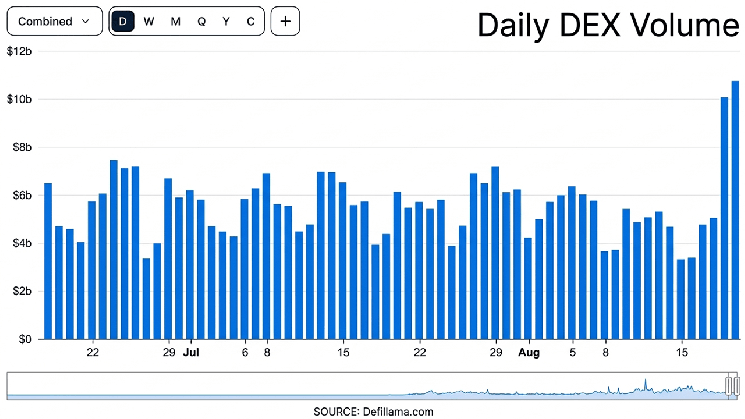
"In early August, a noticeable surge in HMSTR trading was indeed observed, but this is more of a short-term revival of interest in a low-liquidity token than a full-fledged return of the project. It is precisely such sharp movements that are attractive to scammers: they create a feeling that 'the hamster has grown again' and there is a chance to make money quickly," explained Yuri Tyurin, technical director of MD Audit (Softline Group).
As early as 2024, Kaspersky Lab specialists identified a scheme where users were offered to convert in-game coins into rubles through authorization in Telegram. In 2026, similar resources for selling HMSTR are also encountered, but less frequently than two years earlier, the company's expert Olga Altukhova reported.