The Sense of Contrast: The Core Element That Makes Web3 Narratives Stand Out?

比推Publicado em 2025-12-29Última atualização em 2025-12-29

Resumo

The article "The Sense of Contrast: The Core Element That Makes Web3 Narratives Stand Out?" argues that the key to compelling Web3 storytelling is not necessarily creativity, but the effective use of contrast. Many Web3 creators produce content that is too straightforward—listing features, data, and benefits—which fails to engage the audience. The brain is activated by unexpected changes, not linear information. Contrast, defined as a shift or transformation (e.g., from "before" to "after," or from "expectation" to "reality"), creates memorable moments and makes content relatable. The author provides an example: instead of stating "Solana is fast and cheap," a narrative with contrast would describe the personal experience of a transaction completing almost instantly. This approach often requires admitting past mistakes or uncertainties, which feels uncomfortable but builds authenticity and connection with the audience. To incorporate contrast, creators should ask what changed in their story and include elements like a former false assumption, a moment of hesitation, or an unexpected outcome. In the noisy Web3 space, contrast helps content stand out through genuine transformation rather than loud promotion.

Author:Noir

Compiled by: Deep Tide TechFlow

Original title: Today in Web3 Narratives, Everyone Loves the Sense of Contrast


Most Web3 content creators think they are not good at storytelling because they feel they "lack creativity."

But friend, that is usually not the real issue.

In fact, the real problem is:

—Your content lacks contrast.

Hey, either the content:

sounds the same,

feels flat,

or has no variation.

And when nothing changes, there is no story to tell.

What is Contrast?
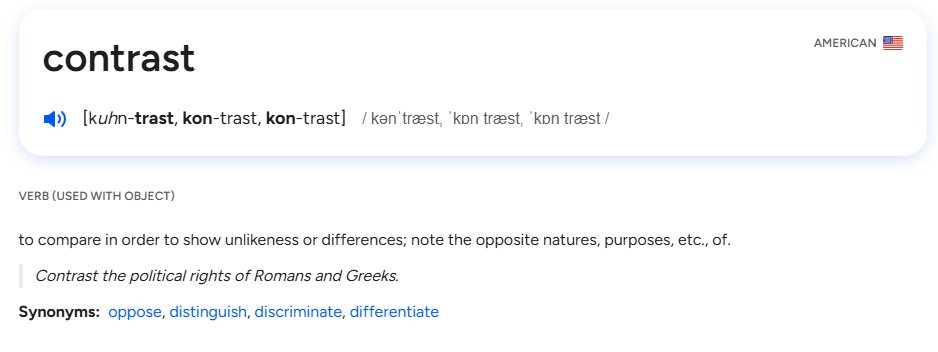
Contrast actually refers to something being different from what came before.

Yes, it's that simple.

It doesn't require:

flowery language,

surprising plot twists,

or background music.

Essentially, contrast is a transformation, such as:

from "before" to "after"

from "expectation" to "reality"

from "belief" to "realization"

Without this transformation, your content is just information.

Yes, maybe it's useful, but memorable? Hmm... unlikely.

Why does a lack of contrast make content weak?

The Web3 world is full of:

features, data, promises, roadmaps......

But most content is presented too straightforwardly:

"This is what it does."

"These are its benefits."

"This is why you should care about it."

However, the brain isn't interested in this linear information.

It wakes up when something unexpected happens.

Why Content Loses Appeal Without Contrast

The Web3 world is flooded with:

features, data, promises, roadmaps......

But most content is presented too directly:

"This is its function."

"Why it's good."

"Why you need to care about it."

However, the brain isn't activated by this straight-line information.

It only wakes up when something unexpected occurs.

A Simple Example of "Contrast"

(You must have seen it countless times)

Expression without contrast:

Solana's transactions are fast and cheap.

Your brain responds: Okay... so what?

Expression with contrast:

I clicked send, switched pages, and then realized the transaction was already completed.

The same idea, but with a completely different impact.

The second expression creates a "moment." Got it?

Why Does "Contrast" Feel Uncomfortable?

(And why this matters)

Contrast often requires you to admit:

You were wrong, you were confused, you underestimated something.

That's why most people avoid it.

But this discomfort is precisely what makes content feel authentic.

People don't like flawless things.

They connect more easily with resonance and vulnerability.

When someone thinks: "Wait... I've felt that way too."

Congratulations, you've succeeded.

How to Add "Contrast" to Your Content?

Before publishing, ask yourself one question:

"What changed here?"

If you can't answer, try adding:

  • A mistaken assumption you once had

  • A moment of hesitation

  • An unexpected result

  • A "small decision" you almost didn't make

It really doesn't require a dramatic plot.

You just need a little relatable change.

Weirdo's Summary

Don't get me wrong, creativity does play an important role in storytelling.

But not everyone is naturally creative. This article is specifically for those who truly want to learn storytelling techniques.

Its core lies in: being sincere enough to show "transformation."

In the complex and noisy world of Web3,

"Contrast" is the way to stand out without having to shout.

Remember to follow me, or else you'll...


Twitter:https://twitter.com/BitpushNewsCN

BitPush TG Group:https://t.me/BitPushCommunity

BitPush TG Subscription: https://t.me/bitpush

Original link:https://www.bitpush.news/articles/7598938

Perguntas relacionadas

QWhat is the core element that the article suggests makes Web3 narratives stand out?

AThe article suggests that 'contrast' is the core element that makes Web3 narratives stand out.

QAccording to the article, what is the simple definition of 'contrast' in storytelling?

AThe article defines 'contrast' simply as something that is different from what came before it, representing a shift or transformation.

QWhy does the lack of contrast make content uninteresting, as explained in the article?

AThe lack of contrast makes content uninteresting because the human mind is not engaged by straightforward, linear information; it is awakened when something unexpected happens.

QWhat is an example the article gives to demonstrate a narrative with contrast about Solana?

AThe article contrasts a flat statement ('Solana's transactions are fast and cheap') with a narrative that creates a 'moment': 'I clicked send, switched pages, and then realized the transaction was already complete.'

QWhy is the discomfort of admitting being wrong or confused important for creating effective content?

AThis discomfort is important because it makes the content feel authentic and relatable, allowing people to connect with vulnerability and shared experiences rather than perfection.

Leituras Relacionadas

Lowering Expectations for BTC's Next Bull Market

The author, Alex Xu, explains his decision to significantly reduce his Bitcoin holdings (from full to ~30% of his portfolio) during the current bull cycle, citing a lowered long-term outlook for BTC's price appreciation in the next cycle. He outlines six key reasons for this reduced expectation: 1. **Diminished Growth Drivers:** The narrative of exponential user adoption has largely played out with institutional ETF adoption. The next major growth phase—adoption by sovereign national reserves or central banks—seems unlikely in the near future. 2. **Personal Opportunity Cost:** More attractive investment opportunities have emerged in other assets, such as undervalued companies. 3. **Industry-Wide Contraction:** The broader crypto industry is struggling, with most Web3 business models (SocialFi, GameFi, DePIN) failing. This overall萧条 (depression) reduces the fundamental demand and consensus for Bitcoin. 4. **Strain on Major Buyer:** MicroStrategy, a major corporate buyer of BTC, faces rising financing expenses for its debt, which could slow its purchasing rate and create significant marginal pressure on the market. 5. **Increased Competition from Gold:** The emergence of "tokenized gold" has closed the functional gap (portability, divisibility) between physical gold and Bitcoin, offering a strong competitor in the non-sovereign store-of-value space. 6. **Security Budget Concerns:** The block reward halving continues to exacerbate the long-standing issue of funding Bitcoin's network security, with new fee source explorations like Ordinals and L2s largely failing. The author's decision to hold a significant (though reduced) position reflects a cautious, not bearish, outlook. He remains open to increasing his exposure if the fundamental reasons for his skepticism change or if new positive catalysts emerge.

marsbitHá 6m

Lowering Expectations for BTC's Next Bull Market

marsbitHá 6m

Can Iran 'Control' the Strait of Hormuz?

Iran has announced a comprehensive plan to assert control over the strategic Strait of Hormuz, a critical global oil shipping chokepoint. The proposed measures include requiring all vessels to obtain Iranian permission for passage, imposing fees for security, environmental protection, and navigation management—preferably paid in Iranian rials—and absolutely banning Israeli ships. Vessels from countries deemed hostile by Iran’s top security bodies may also be barred. Analysts suggest Iran’s motives are multifaceted: increasing pressure on the U.S. and Israel by leveraging control over oil transit to influence global prices and inflation; creating a new revenue stream, potentially exceeding $7.7 billion annually, to counter Western sanctions and support postwar reconstruction; and using transit permissions as bargaining chips in future negotiations, notably with the U.S. However, the plan faces significant practical and diplomatic challenges. Enforcing comprehensive interception and fee collection in the busy waterway, patrolled by international military forces, would be difficult. The U.S. has already countering with a blockade of Iranian ports and threats to intercept any ship paying fees, potentially strangling Iran’s oil exports and fee revenue. Broad international opposition, led by European and Gulf states, and legal controversies further complicate implementation. The proposal may ultimately serve more as a negotiating tactic than a feasible policy, with its execution remaining highly uncertain.

marsbitHá 1h

Can Iran 'Control' the Strait of Hormuz?

marsbitHá 1h

Trading

Spot
Futuros

Artigos em Destaque

Como comprar CORE

Bem-vindo à HTX.com!Tornámos a compra de CORE (CORE) simples e conveniente.Segue o nosso guia passo a passo para iniciar a tua jornada no mundo das criptos.Passo 1: cria a tua conta HTXUtiliza o teu e-mail ou número de telefone para te inscreveres numa conta gratuita na HTX.Desfruta de um processo de inscrição sem complicações e desbloqueia todas as funcionalidades.Obter a minha contaPasso 2: vai para Comprar Cripto e escolhe o teu método de pagamentoCartão de crédito/débito: usa o teu visa ou mastercard para comprar CORE (CORE) instantaneamente.Saldo: usa os fundos da tua conta HTX para transacionar sem problemas.Terceiros: adicionamos métodos de pagamento populares, como Google Pay e Apple Pay, para aumentar a conveniência.P2P: transaciona diretamente com outros utilizadores na HTX.Mercado de balcão (OTC): oferecemos serviços personalizados e taxas de câmbio competitivas para os traders.Passo 3: armazena teu CORE (CORE)Depois de comprar o teu CORE (CORE), armazena-o na tua conta HTX.Alternativamente, podes enviá-lo para outro lugar através de transferência blockchain ou usá-lo para transacionar outras criptomoedas.Passo 4: transaciona CORE (CORE)Transaciona facilmente CORE (CORE) no mercado à vista da HTX.Acede simplesmente à tua conta, seleciona o teu par de trading, executa as tuas transações e monitoriza em tempo real.Oferecemos uma experiência de fácil utilização tanto para principiantes como para traders experientes.

288 Visualizações TotaisPublicado em {updateTime}Atualizado em 2025.03.21

Como comprar CORE

Discussões

Bem-vindo à Comunidade HTX. Aqui, pode manter-se informado sobre os mais recentes desenvolvimentos da plataforma e obter acesso a análises profissionais de mercado. As opiniões dos utilizadores sobre o preço de CORE (CORE) são apresentadas abaixo.

活动图片