The Richest Fed Chair in History? Three Challenges Kevin Warsh Is About to Face

marsbitPublicado em 2026-04-24Última atualização em 2026-04-24

Resumo

Kevin Warsh, nominated by Trump as the next Federal Reserve Chair, faces three major challenges as he prepares to take office. With a personal investment portfolio exceeding $130 million, including holdings in crypto protocols and public chains, he is set to become the wealthiest Fed chair in history. Warsh, known for his historically hawkish stance, has recently shifted his position, arguing that AI is a powerful deflationary force that could boost productivity. However, rising CPI and energy prices pose a risk to this outlook. He strongly defended Fed independence, stating that it is eroded not by political pressure but by the institution’s own missteps, such as blurring the lines between monetary and fiscal policy during the 2021-2022 inflation period. Additionally, Warsh advocates for significant balance sheet reduction while potentially cutting rates—a combination that markets find unsettling. He also proposes modernizing inflation measurement with real-time data, including stablecoins and on-chain pricing, to improve policy responsiveness. His confirmation is currently delayed due to a political investigation into current Chair Powell, adding uncertainty to his appointment.

Author: BiBi News

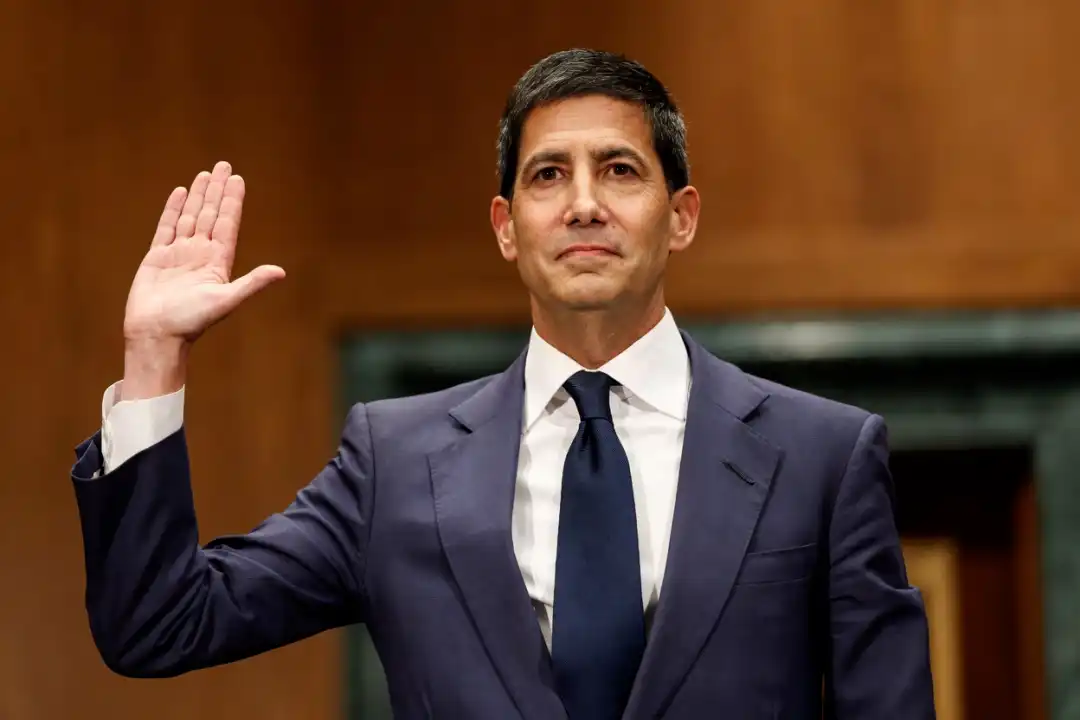
On April 21, 2026, Kevin Warsh's financial disclosure documents were released ahead of the start of his confirmation hearing.

His investment portfolio totals over $130 million. If confirmed, he would be the wealthiest Federal Reserve Chair in history. His current holdings include direct positions in the DeFi lending protocol Compound, derivatives platforms dYdX and Lighter, and the public blockchains Solana, Optimism, Blast, and Zero Gravity.

This marks the first public appearance of the candidate for Fed Chair nominated by Trump, returning to the center of policy after 15 years. Beyond his commitment to divest these holdings, the market is more concerned with how he will lead the Fed through the three major challenges he himself has outlined in his upcoming term.

Can the Premise for Rate Cuts Hold?

From 2006 to 2011, during his five years as a Fed Governor, Warsh was notoriously an inflation-first advocate.

Even at the height of the financial crisis, when unemployment exceeded 10%, he issued 13 public warnings about upside inflation risks during FOMC meetings.

In 2010, he was the most vocal opponent of the second round of quantitative easing (QE2). His resignation from the Fed in 2011 was in opposition to unlimited asset purchases.

But a shift began in May 2025. In a public interview, he stated: "We are at the frontier of AI use cases; everything touched by technology will become cheaper."

By November, in a Wall Street Journal column, he directly defined AI as a significant disinflationary force, capable of boosting productivity and enhancing U.S. competitiveness.

From late 2025 to early 2026, he repeatedly emphasized in various podcasts and interviews that AI is "the most productivity-enhancing wave of our lifetimes," and bluntly stated: if the Fed waits for official data to confirm the productivity gains before acting, it will be "too late."
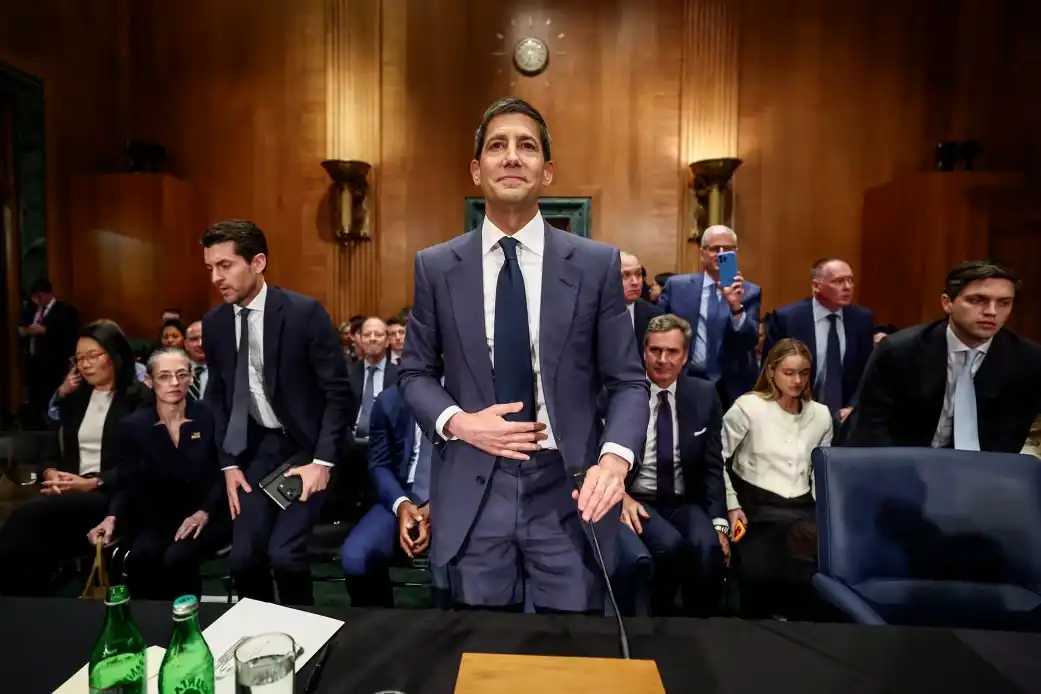
Democratic Senator Elizabeth Warren attacked him during the hearing using the term "flip-flop," suggesting he was迎合 (catering to) Trump.

Warsh countered by citing Alan Greenspan's case from the 1990s: from 1995 to 2000, U.S. nonfarm labor productivity grew at an average annual rate of 2.5%, nearly double the 1.4% of the previous eight years; output per hour in the nonfinancial business sector averaged growth of 3.5%.

At that time, the labor market was extremely tight, with unemployment hitting multi-decade lows, yet core inflation remained stable below 2%, not surging alongside economic growth. Greenspan chose not to tighten policy hastily, ultimately achieving both economic growth and price stability.

Warsh believes he is making the same judgment now—AI is the internet of this cycle.

However, this judgment is facing severe pressure from reality. The March 2026 CPI rose 3.3% year-on-year, higher than February's 2.4%, marking the highest level since May 2024; core CPI rose 2.6% year-on-year. The situation in Iran pushed up energy prices, with gasoline prices rising 18.9% month-on-month and fuel oil rising 44.2%, contributing directly to the largest single-month increase in overall inflation since June 2022.

He acknowledged during the hearing that current inflation data means "there is still work to be done," while refusing to provide any specific rate path or timeline.

The Eroded Independence

At the start of the hearing, Warren used the term "puppet" in her opening statement, citing Trump's social media post from the previous week that "rates will come down once Kevin is in," and repeatedly pressed: Have you promised the President a specific interest rate path? Can you resist pressure from the White House to cut rates if inflation rises again?

Warsh's response was: The President has never asked him to preset, promise, or fix any rate decision in any conversation, and he would not make such promises.

He stated that independence is not an automatic legal firewall but something the Fed earns by adhering to price stability and avoiding overreach. If the Fed persistently makes mistakes and constantly oversteps, the skepticism from the public and politicians is a justified cost; independence is eroded from within, and political pressure is merely an external factor.

The inflation of 2021-2022, in his characterization, was not a simple misjudgment but the result of the Fed using its credibility to endorse fiscal expansion and actively blurring the line between monetary and fiscal policy. This, he said, is the real crisis of independence—not caused by Trump, but by the Fed itself.

This logic was formed as early as 2010. He gave a speech titled "An Ode to Independence" that year, and it has reappeared in Hoover Institute interviews and Wall Street Journal columns since, centering on the same core judgment: the greatest threat to the Fed comes not from external political pressure, but from its own gradual ceding of institutional space.

The test of independence doesn't only come from Trump himself. Republican Senator Thom Tillis announced during the hearing that he would delay his support for Warsh's confirmation. The reason wasn't questioning Warsh personally, but rather that the Justice Department is currently conducting a criminal investigation into incumbent Chair Powell, nominally related to cost overruns in the Fed headquarters renovation.

Both Powell and a federal judge believe this is political pressure targeting monetary policy. Tillis's stance is that proceeding with confirmation under this shadow means the entire process is politically tainted. This implies Warsh's confirmation timeline is stalled, unrelated to his answers during the hearing.

Can Balance Sheet Reduction and Rate Cuts Be Advanced Simultaneously?

Warsh's views on the balance sheet were formed when he left the Fed in 2011 and have been his most stable position over the past fifteen years.

He used the word "bloated" to describe the Fed's current balance sheet of approximately $6.7 trillion. QE evolved from a temporary emergency measure during the 2008 financial crisis into a semi-permanent tool for the following decade-plus. This evolution brought two structural consequences:

The boundary between monetary and fiscal policy became blurred, with the Fed effectively assuming some fiscal functions; Large-scale asset purchases systematically inflated financial asset prices, benefiting those holding stocks and real estate, while ordinary households did not reap equivalent benefits.

Therefore, this balance sheet must be significantly reduced, while emphasizing that any reduction must be cautious, orderly, and fully communicated to avoid unnecessary market shocks.
This presents a combination that makes the market uneasy: he might simultaneously advance balance sheet reduction (quantitative tightening, QT) and interest rate cuts, withdrawing liquidity from the balance sheet side while sending easing signals through rates, both acting on market pricing at the same time.

His explanation is that interest rates should once again become the primary tool of monetary policy, while asset purchases return to their temporary crisis-era role—to put the misused tool away and let the right tool function again.

Following the hearing, U.S. Treasury yields rose, with the market pricing in the uncertainty of this mixed message through actual trading.

He also mentioned another specific reform during the hearing: wanting to launch a data project tracking billions of real-time price points to replace parts of the existing CPI statistical framework that rely on lagging sampling.

Reduce the frequency of officials' public forecasts of the rate path, because once a forecast is made, officials often stick to it even after the situation changes to maintain credibility, which is a source of sluggish response. He described his desired state for the FOMC as healthy internal debate, not marching to a pre-scripted, expected conclusion.

He used "regime change" to summarize this direction—a change in the entire policy regime, not just tweaking a couple of parameters.

He also mentioned that stablecoins and on-chain price data could become more real-time supplementary indicators to compensate for defects in the existing statistical framework.

This also reveals his deeper logic regarding crypto: not just an asset class that needs regulation, but also an information infrastructure that can be used to improve the quality of policy judgment. His $130 million holdings might also be understood from this perspective.


Perguntas relacionadas

QWhat are the three major challenges Kevin Warsh faces as the potential Federal Reserve Chair?

AThe three major challenges are: 1) The premise for interest rate cuts, specifically whether AI-driven productivity gains will materialize to control inflation; 2) The erosion of the Fed's independence from political pressure and past policy mistakes; 3) The possibility of simultaneously implementing balance sheet reduction (quantitative tightening) and interest rate cuts, creating market uncertainty.

QWhy is Kevin Warsh's potential appointment considered a significant shift in his stance on inflation?

AWarsh was previously known as a staunch inflation hawk who opposed quantitative easing during the financial crisis. His recent shift involves championing AI as a major deflationary force that boosts productivity, a view critics see as a reversal to align with political interests.

QHow does Kevin Warsh view the relationship between the Federal Reserve's independence and its policy decisions?

AWarsh believes the Fed's independence is not automatically guaranteed by law but must be earned through sound policy. He argues that the Fed eroded its own independence by blurring the lines between monetary and fiscal policy during the 2021-2022 inflation period, making it vulnerable to external political pressure.

QWhat is the market's concern regarding Warsh's approach to balance sheet reduction and interest rates?

AThe market is concerned that Warsh may simultaneously pursue quantitative tightening (reducing the Fed's balance sheet) and interest rate cuts. This mixed approach could create uncertainty as it pulls liquidity from the market while signaling monetary easing, potentially leading to volatile asset pricing.

QHow does Kevin Warsh propose to modernize the Federal Reserve's data and policy framework?

AWarsh proposes creating a real-time price tracking system to replace parts of the lagging CPI framework, reducing the frequency of official rate path forecasts to avoid rigidity, and incorporating stablecoin and on-chain price data as supplementary indicators for more accurate and timely policy decisions.

Leituras Relacionadas

SpaceX, OpenAI, Anthropic: The Three AI Giants Racing for IPO, Which One Is Worth Betting On?

SpaceX, OpenAI, and Anthropic are poised for historic IPOs within weeks, potentially raising a combined $180 billion—a sum exceeding the entire internet bubble's fundraising. The hosts of the Limitless Podcast argue this isn't just individual company financing but an unprecedented capital concentration for AI infrastructure, driven by an insatiable need for compute, data centers, power, and chips. SpaceX's IPO is notable for reportedly changing market index rules to allow faster inclusion, potentially funneling trillions in passive retirement funds into its stock, despite its unproven space-based data center business model. In contrast, Anthropic demonstrates explosive growth, with ARR reportedly hitting $45 billion and approaching profitability, fueled by strong enterprise adoption of products like Claude Code. Google's separate $80 billion raise highlights the immense capital pressure, even for giants. The discussion acknowledges bubble risks but leans optimistic. The hosts contend the massive spending is building essential physical infrastructure for the next technological era. A key bottleneck isn't capital but the real-world limits of chip manufacturing and construction speed. As long as demand for AI compute outstrips supply, this investment cycle represents a foundational build-out rather than a purely financial bubble. All three companies are seen as foundational bets on the future, with Anthropic often cited as the most immediately compelling due to its proven revenue trajectory.

marsbitHá 32m

SpaceX, OpenAI, Anthropic: The Three AI Giants Racing for IPO, Which One Is Worth Betting On?

marsbitHá 32m

From 'Old Guys' to 'New Favorites': How AI Is Revaluing Old Infrastructure from Dell to Nokia?

From "Vintage Tech" to "New AI Darlings": How AI Revalues Old Infrastructure One year ago, tech giants like Dell, Nokia, Cisco, and Western Data were seen as slow-growth, low-valuation stories, far from the AI spotlight dominated by players like Nvidia. Now, these legacy tech stocks are gaining market attention, sparking debate on whether this is genuine industry revaluation or a temporary narrative. As AI moves from model parameters to real-world data centers, the market is recognizing companies with proven delivery and infrastructure capabilities. This shift marks a change in the AI investment thesis: from pure model and GPU focus to the complex systems engineering required for deployment. Companies like Dell, HPE, and Corning are being revalued not for being "sexy" AI innovators, but for their decades of accumulated expertise in supply chains, enterprise delivery, and infrastructure—assets that have become critical in the AI buildout phase. The revaluation is unfolding across three key infrastructure lines: 1. **Servers & System Integration:** Dell and HPE are emerging as crucial system integrators or "general contractors" for AI data centers, translating GPU orders into complete, deployable server racks integrated with power, cooling, and networking. 2. **Networking & Connectivity:** AI's scale demands robust high-speed connections. Corning (fiber optics), Nokia (AI-RAN, 6G), and Cisco (data center switches) are gaining importance for enabling efficient data transfer within and between AI clusters. 3. **Storage:** Beyond high-speed memory (HBM/DRAM), the AI data explosion is driving demand for high-capacity hard drives (HDDs) from companies like Western Digital and Seagate to handle training data, logs, and cold storage cost-effectively. For this revaluation to be substantive and not just a narrative, three criteria are key: 1) Concrete AI-related order and revenue growth (e.g., Dell's AI server sales), 2) Upward revisions to company financial guidance, and 3) Sustainable improvements in profit quality, not just top-line revenue spikes. In essence, AI's transition to a real construction phase is re-pricing "old assets" against "new demand." The opportunity, however, is selective. Only those legacy firms that are demonstrably integrated into the capital expenditure chains of data center and enterprise AI deployment are likely to experience a true "logic re-rating" rather than just a temporary valuation bounce.

marsbitHá 38m

From 'Old Guys' to 'New Favorites': How AI Is Revaluing Old Infrastructure from Dell to Nokia?

marsbitHá 38m

The Merger of Codex and ChatGPT Marks the Beginning of a Major Reshuffle in Programming Tools

OpenAI is shifting its strategic focus from ChatGPT to Codex, merging them along with the browser tool Atlas into a unified desktop super-app. This move signals an internal belief that Codex, originally a programming tool, represents the next evolution of AI more than conversational models like ChatGPT. Over the past year, Codex's weekly active users have surged past 5 million. The key distinction is that while ChatGPT answers questions, Codex executes tasks. Enterprises increasingly value this ability to get work done over simply receiving advice. Consequently, Codex is attracting professionals beyond developers, including analysts, bankers, marketers, and product managers. OpenAI's reorganization and increased investment in Codex stem from recognizing that the future of AI competition lies in execution capabilities, not just conversation. The company is launching role-specific plugins (e.g., for data analysis, sales, design) to transform Codex into a broad knowledge work platform that automates and redefines white-collar workflows. Beyond being a tool, Codex reflects OpenAI's ambition to redefine software. New features like "Sites"—which generates interactive websites from documents—and collaborative "Annotations" aim to create a paradigm where the AI understands the goal and handles the tools and steps, functioning more like a digital colleague than traditional software. The ultimate goal is a unified experience where the user cares only about the completed task.

marsbitHá 47m

The Merger of Codex and ChatGPT Marks the Beginning of a Major Reshuffle in Programming Tools

marsbitHá 47m

Interpreting Investment Opportunities in the Age of Great Navigation, Invesco Great Wall Fund Releases '2026 Report on Chinese Enterprises Going Global'

Invesco Great Wall Fund has released its "2026 China Corporate Globalization Report," titled "The 'Great Navigation Era' of Chinese Enterprises." The report analyzes the new trends and investment opportunities as Chinese companies expand globally, moving from simple product exports to comprehensive overseas operations involving services, branding, and local production. Driven by factors like trade friction, the pursuit of higher profit margins abroad, and policy support, globalization is becoming essential for Chinese companies. The report outlines an evolution: from early product export ("Globalization 1.0") to the current "Globalization 2.0," characterized by overseas capacity, capital goods investment, consumer brand expansion, and service exports. Chinese firms' competitive advantages are highlighted, including a vast engineer talent pool, low-cost and robust infrastructure, and complete industrial clusters. Specific sectors with significant出海 potential are identified: * **Capital Goods** (e.g., engineering machinery, power equipment): Benefiting from global demand, especially in Belt & Road markets and the AI-driven power grid upgrade cycle. * **Consumer Brands**: Transitioning from cost to brand advantage, leveraging供应链 efficiency. * **Technology & Innovation**: Including AI applications, optical modules within global tech supply chains, and new energy vehicles focusing on local production. * **Pharmaceuticals**: Chinese biotech firms are becoming preferred partners for global pharma, with potential for breakthrough drugs in areas like oncology and weight loss. The report concludes that corporate globalization represents a sustained, core theme for China's capital markets, though companies must navigate challenges like geopolitics and localization.

marsbitHá 59m

Interpreting Investment Opportunities in the Age of Great Navigation, Invesco Great Wall Fund Releases '2026 Report on Chinese Enterprises Going Global'

marsbitHá 59m

Trading

Spot
Futuros
活动图片




