The Real Progress and Investment Opportunities of Decentralized AI Computing Power Networks in 2026

marsbitPublicado em 2026-05-25Última atualização em 2026-05-25

Resumo

In 2026, the AI compute market is marked by centralized GPU consolidation and a significant GPU shortage for smaller players. In this context, Decentralized Physical Infrastructure Networks (DePIN), valued at $9.4B+, have emerged as a viable, revenue-generating alternative. Leading protocols like Aethir ($150M ARR), io.net (130k+ GPUs), Akash, Bittensor, and Render are carving out distinct niches, moving beyond hype to deliver verifiable income primarily from non-crypto-native clients. The key advantage of decentralized GPU networks lies in serving latency-tolerant, cost-sensitive workloads like AI inference, fine-tuning, data preprocessing, and agent operations, offering substantial cost savings (45-80%) compared to major cloud providers. However, reliability variance, lack of robust SLAs, and fragmented tech stacks remain significant adoption hurdles. The sector is maturing with critical 2026 shifts: 1) Evolution of tokenomics towards demand-driven, revenue-linked models (e.g., Render's BME, io.net's IDE), and 2) Clearer enterprise adoption pathways, with traditional firms integrating decentralized compute. For new entrants, opportunities are now concentrated in specialized tooling layers (orchestration, verification, SLA management), vertical applications (e.g., bio-med, content generation), and innovative token designs tied to real usage, rather than generic GPU aggregation. The convergence with the emerging AI Agent economy presents a significant future growth vector.

In 2026, the global AI computing power market has entered an extremely dynamic phase. On one hand, leading technology companies are consolidating GPU resources at an unprecedented pace. For example:

  • xAI's Colossus supercomputing cluster has aggregated 550,000 NVIDIA GPUs and is progressing toward the publicly stated roadmap goal of 1 million GPUs;
  • Project Stargate, initiated by OpenAI, Oracle, SoftBank, and others, has deployed over 450,000 NVIDIA GPUs in Texas, with a target total power of 1.2GW.
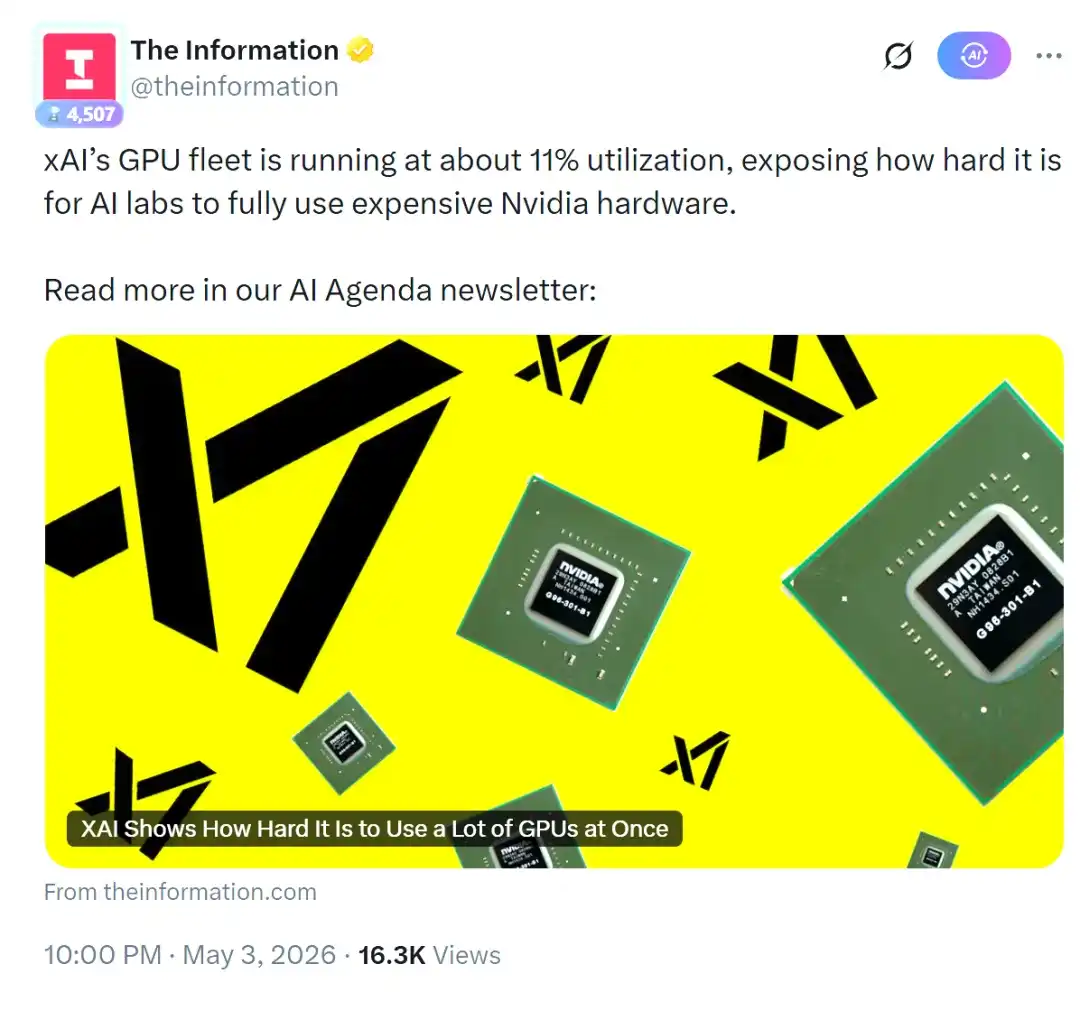
On the other hand, a large number of small and medium-sized AI startups and independent research teams are suffering from computing power shortages. AWS's H100 clusters experienced waiting periods of 8 to 12 months from 2023 to 2024, with cloud computing bills easily exceeding millions of dollars.

It is precisely in this context of severe supply shortage that the Decentralized Physical Infrastructure Networks (DePIN) track has rapidly emerged.

  • As of the end of March 2026, the total market capitalization of the DePIN track is approximately $9.423 billion, with nearly 250 active projects tracked by CoinGecko.
  • The sector reached a market cap high of about $19.2 billion in September 2025, achieving a year-on-year growth of approximately 270% compared to $5.2 billion in the same period of 2024.
  • More crucially, according to on-chain data aggregated by DeFiLlama and Dune Analytics, the annualized protocol revenue of decentralized GPU computing protocols exceeded $200 million in early 2026.

We have to admit that this sector has crossed a massive threshold that other crypto narratives have never achieved—it is generating real revenue from non-crypto-native clients.

I. Industry Panorama: From Fervent Narrative to Revenue Realization

In 2026, the DePIN computing power industry began to have verifiable revenue data, rather than just a stack of market cap tables and token emission schedules. Over the past two years, the sector has formed a clear hierarchical structure. The operational status of major protocols is shown in the following table:

Table 1: Key Data Comparison of Mainstream Decentralized Computing Networks in 2026
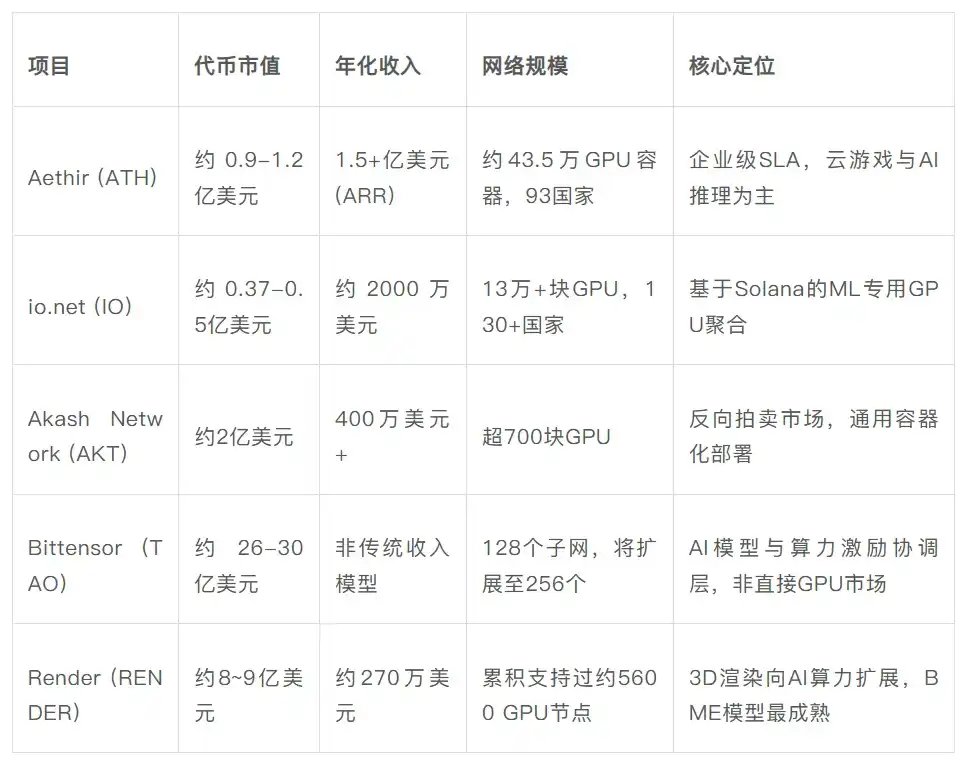
Data source: Official disclosures of each project, Messari quarterly reports, CoinMarketCap, CoinGecko / Coinbase. Data as of May 2026. Note: Bittensor does not have "protocol revenue" in the traditional sense—it is an AI model incentive coordination layer, rewarding participants via inflationary token issuance, with each subnet generating revenue independently.

As can be seen from the table above, these five protocols occupy different ecological positions.

  • Aethir leads in enterprise-level revenue, with an annualized recurring revenue of approximately $150 million. It is currently the protocol with the largest revenue scale in the decentralized computing track, serving clients including game studios, AI inference providers, and model training teams.
  • io.net focuses on orchestrating distributed ML computing clusters, covering over 130,000 GPU devices across more than 130 countries.
  • Akash has formed genuine price competition through its reverse auction pricing mechanism. Its Q1 2026 computing power expenditure broke a historical high of over $5 million, and the AKT token has risen over 72% year-to-date.
  • Bittensor is entirely different; it doesn't rent GPU hardware but incentivizes AI intelligence output itself, forming a decentralized machine intelligence market through 128 subnets.
  • Render started with 3D rendering, having cumulatively rendered over 67 million frames, and is now expanding into general AI computing.

II. Capability Boundaries: What Decentralized GPU Networks Can and Cannot Do

Decentralized GPU networks have long been caught between two extreme narratives: one side claims costs are only one-tenth of AWS's and will soon disrupt cloud computing; the other side believes distributed GPUs cannot support real AI workloads at all. Both judgments are biased.

The key to understanding this sector lies in confronting the structural characteristics of consumer-grade GPUs.

On one hand, the computing power supply of decentralized networks largely comes from consumer-grade GPUs, which have limited VRAM capacity, and inter-node bandwidth relies on home broadband. This inherently makes them unsuitable for synchronous training of frontier large models—such tasks require thousands of high-end GPUs to be interconnected with extremely low latency, a scenario designed for hyperscale clouds.

On the other hand, for workloads with higher latency tolerance and cost sensitivity, the cost-effectiveness advantage of decentralized networks is quite evident: parallel molecular screening in AI drug discovery, batch rendering for text-to-image and text-to-video, and large-scale data preprocessing pipelines are typical matching scenarios.

Furthermore, the continuous expansion of open-source models and the technological evolution of lightweight inference are systematically expanding the serviceable market for decentralized networks. An increasing number of models can run efficiently on a single or a few consumer-grade GPUs. The barriers to inference and fine-tuning are decreasing, which happens to be the most competitive range for decentralized networks.

Chart 2: Matching Relationship between AI Workloads and Computing Power Infrastructure
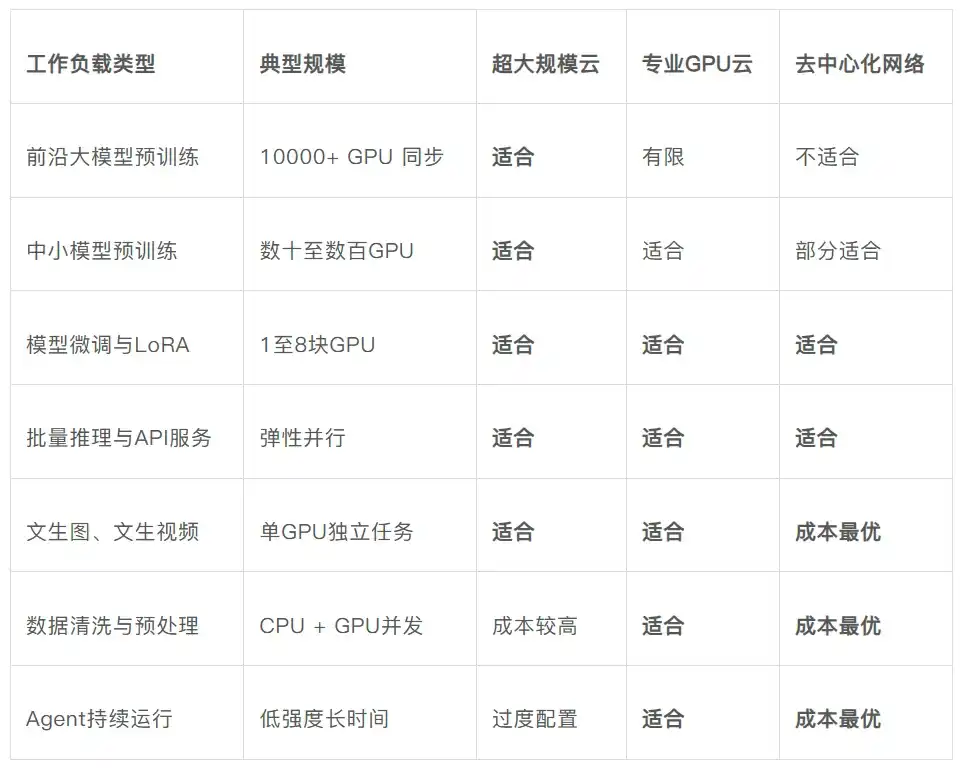
Data source: Compiled from Together AI's multi-node training report (January 2026), Dell LLM cluster network traffic technical documentation (December 2025), Cointelegraph industry analysis (January 2026).

Based on this, the real opportunity for decentralized GPUs concentrates on fragmented, distributed, and price-sensitive scenarios such as inference, fine-tuning, data preprocessing, and Agent continuous operation, rather than directly competing with hyperscale clouds in the frontier training market.

It is worth noting that from the perspective of current AI production environments, the proportion of training in total computing power consumption is now far lower than that of inference and Agent-like tasks, the latter being the main source of growth in computing power demand. This means that the market targeted by decentralized networks is not marginal in scale—it corresponds precisely to the largest and fastest-growing layer in the AI computing power demand structure.

III. Is the Price Advantage Real: Is It Really 60% Cheaper?

One reason decentralized computing power is highly sought after is the widely circulated claim of being "60% cheaper." This statement originates from a cost comparison between the two. The publicly listed price on the Akash Network website shows the hourly rental rate for an H100 GPU is approximately $1.33; after a price reduction of about 44% in June 2025, the per-GPU hourly rate for an AWS p5 instance (averaged across 8 cards) is about $3.93. This is the comparison most frequently cited in reports and the source of the claim "decentralized is over 60% cheaper."

Chart 3: H100 GPU Hourly Rental Price Comparison (Early 2026)
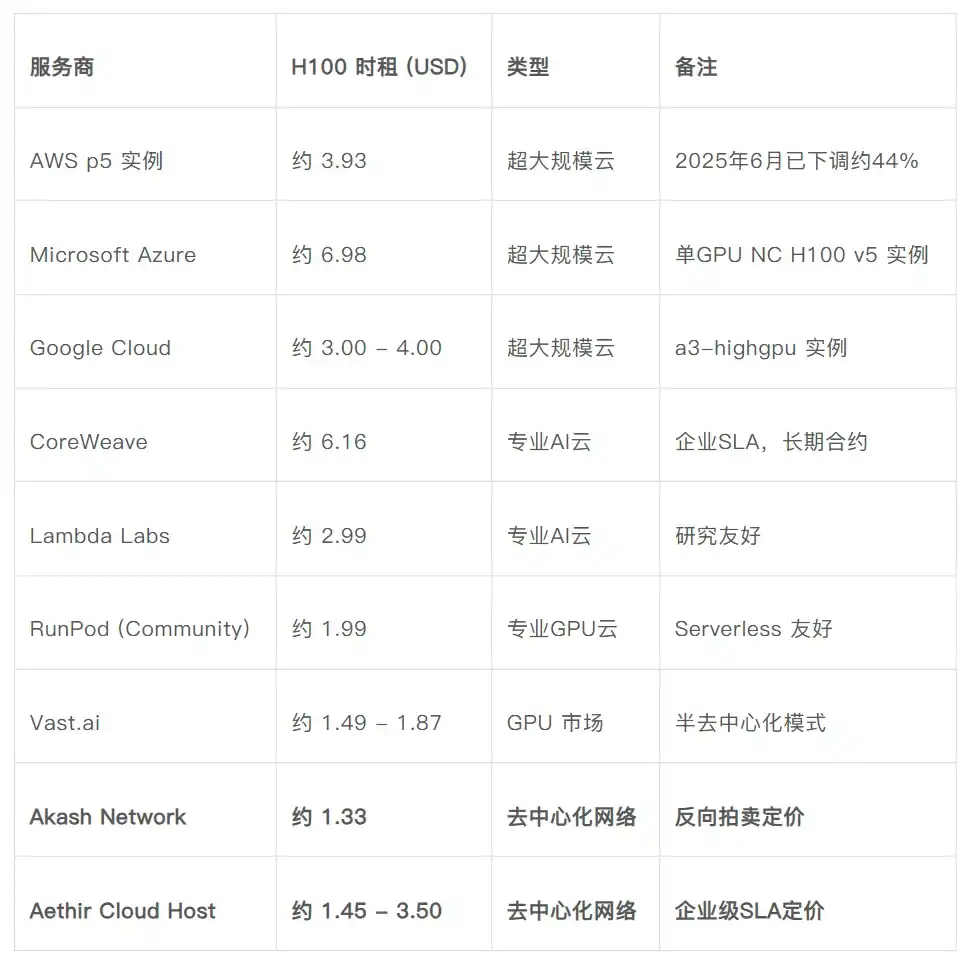
Data source: AWS, Azure, Google Cloud public pricing; Akash Network official website; Aethir official documentation; getdeploying.com (May 2026); IntuitionLabs' "H100 Rental Prices Compared" (May 2026); Silicon Data "H100 Price Spike" (January 2026).

The table above compares the price difference for H100 GPU rentals between centralized platforms and decentralized networks. The comparison leads to the following conclusions:

First, the price advantage of decentralized GPU networks over hyperscale clouds is real—approximately 60% lower compared to the AWS p5 average price, and can be as low as 75%~80% compared to single-GPU instances (AWS/Azure).

Second, compared to fully competitive professional GPU clouds (RunPod, Vast.ai), the price gap with decentralized GPU networks narrows to 15%~35%, and is basically flat in some scenarios.

Third, what truly constitutes differentiation are more structural attributes: no enterprise account required, no minimum usage commitment, on-demand start-stop, flexible geographical distribution of nodes, and no vendor lock-in—this is the real charm of decentralized GPUs.

However, one point that must be raised simultaneously is: Hidden costs cannot be ignored. The node stability of decentralized networks varies greatly. In production scenarios, redundant deployment or increased fault-tolerance mechanisms are needed. These additional costs erode the nominal price advantage to varying degrees. This is one of the main practical barriers facing large-scale enterprise adoption of decentralized GPUs in 2026.

IV. The Real Changes in the Sector in 2026

Based on existing data, the decentralized computing power sector is undergoing two observable deep-seated changes in 2026.

The first is the maturation of tokenomics. Early DePIN projects generally relied on inflationary token subsidies for hardware suppliers, a model with inherent flaws: falling token prices lead to shrinking supplier profits, supplier exits reduce network availability, which further depresses token prices, creating a vicious cycle. Between 2025 and 2026, leading projects have gradually shifted to new models that directly bind token mechanisms to real business volume.

Render Network's BME (Burn-Mint Equilibrium) model, established through RNP-001, requires creators to pay for rendering tasks at fiat prices. Payments are automatically converted to RENDER tokens and burned upon task completion. This mechanism has been operating for years.

io.net's original tokenomics relied on fixed emissions and price-sensitive supplier income, making it prone to a "death spiral." Its upcoming IDE (Incentive Dynamic Engine), slated for Q2 2026, will replace fixed emissions with a demand-driven model, stabilize supplier income pegged to the US dollar, and dynamically adjust token supply based on real-time revenue and token prices.

These two models differ in mechanism but share a common logic: linking token burning and minting to real computing power consumption and anchoring supplier income to the US dollar value. This is the first time decentralized infrastructure has a financial structural logic in token design comparable to traditional SaaS businesses.

The second is the gradual clarification of market entry paths. Early DePIN computing power networks almost exclusively served crypto-native teams, creating a natural market ceiling. Since 2025, several cases of traditional enterprises entering the decentralized computing power system through specific collaborations have emerged.
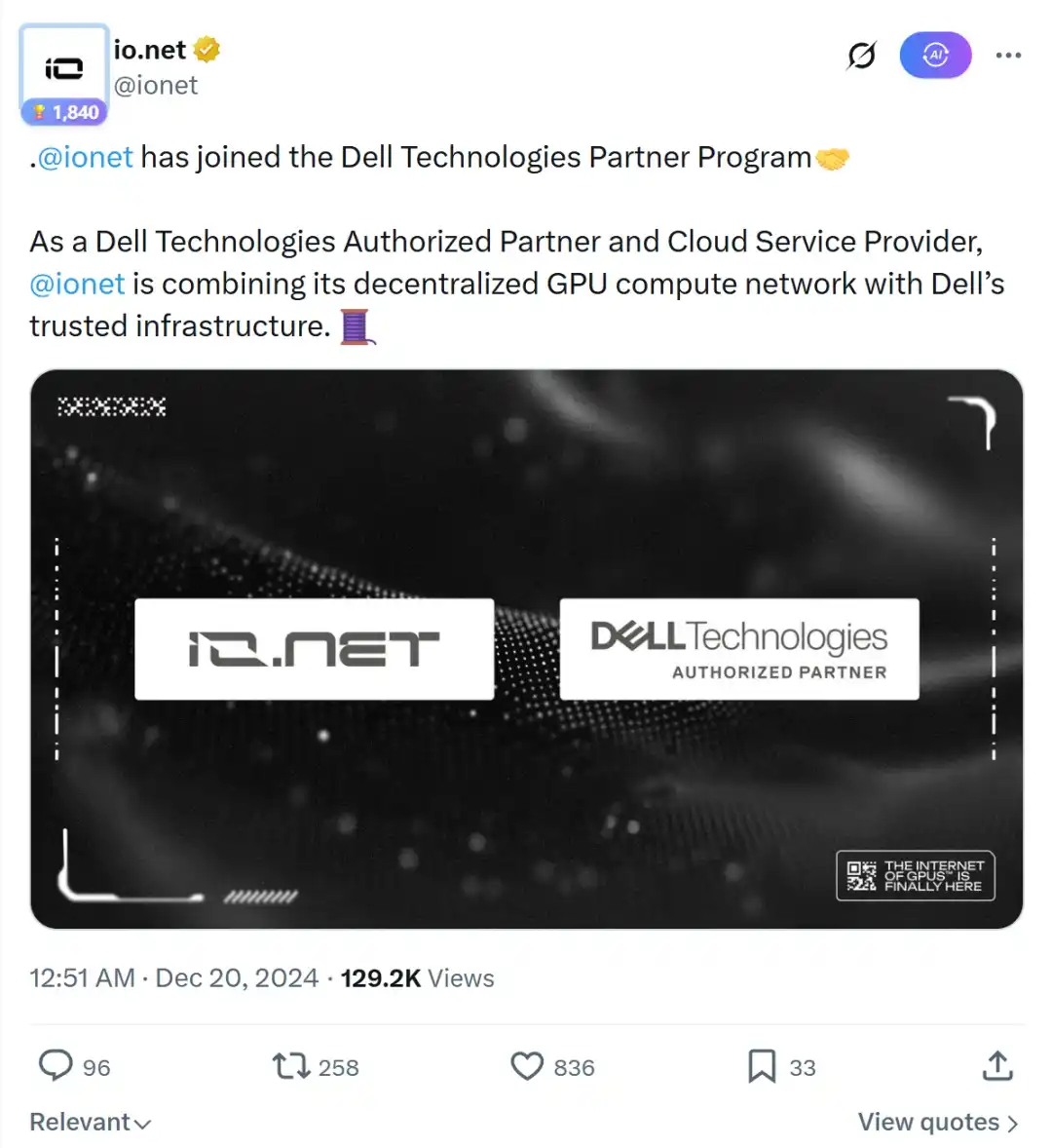
As early as December 2024, io.net joined the Dell Technologies Partner Program as an authorized partner and cloud service provider. The two sides will collaborate on marketing and demand development, enabling enterprise clients to integrate and deploy decentralized GPU computing power with Dell hardware. Prior to that, in April 2024, io.net established a partnership with the AI creative platform KREA, whose enterprise client list includes Nike, Apple, FC Barcelona, Publicis Group, and Meta. io.net provided KREA with NVIDIA A100-80GB GPU clusters at approximately one-third of the market average price.

Meanwhile, Aethir's over 150 paying enterprise clients are distributed across AI, Web3, and gaming sectors. Its Q3 2025 single-quarter revenue reached $39.8 million, with annualized revenue exceeding $147 million, covering scenarios such as AI inference, model training, and Agent platforms.

Regarding Akash, Venice.ai (a private, uncensored generative AI application) uses Akash GPUs to handle inference requests, and FLock.io (a federated learning platform) allows operators to deploy validator nodes on Akash. Both integrations were completed in 2024.

The common feature of the above cases is that non-crypto-native enterprises have begun to incorporate decentralized computing power into actual procurement and technical integration, moving beyond mere narrative levels. Although the number of cases is not vast, they represent a substantive breakthrough in market entry paths.

Chart 4: Key Metric Changes in the DePIN Computing Power Sector (2024 - 2026)
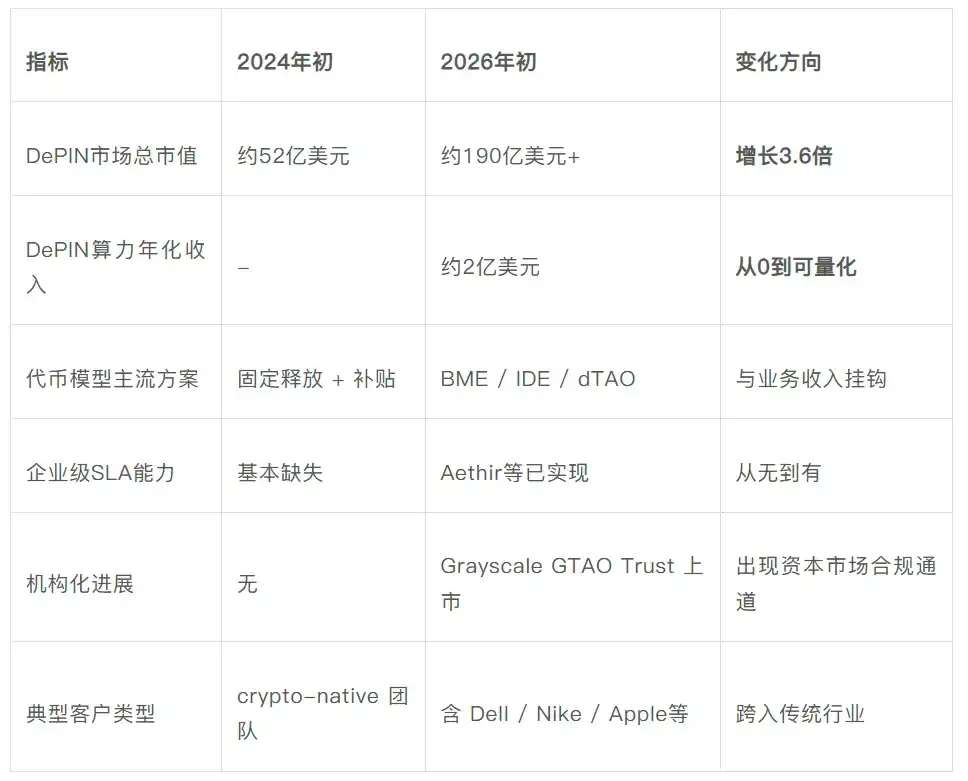
Data source: BlockEden "Decentralized GPU Networks 2026," "DePIN Revenue Inflection"; Yellow.com (May 2026); Messari project report series; CoinGecko "Top Bittensor Subnets" (April 2026).

However, it must also be admitted that: the decentralized computing power sector still faces significant unresolved core obstacles.

First, raw GPU quotes are indeed cheaper (offering discounts of 45-60%), but reliability variance often forces users to over-provision computing power, significantly eroding the nominal cost savings.

Second, enterprise adoption of decentralized computing power still faces difficulties, such as: orchestration challenges, difficulties in debugging distributed failures, and lack of enforceable SLA (Service Level Agreement) guarantees.

Third, the DePIN technology stack is highly fragmented—computing power, storage, verification, and data are scattered across different protocols. Developers must piece together multiple systems to complete production-level deployments, significantly increasing engineering costs.

An exception worth noting on the enterprise front is Aethir. Aethir maintains a 99.31% uptime across over 435,000 GPU containers, possesses enforceable enterprise-level SLAs, and is one of the few projects in the decentralized computing power sector currently capable of meeting enterprise contract-level service requirements.

Of course, the existence of these problems represents both current constraints and tangible gaps that project teams can concretely address.

V. Implications for Ecosystem Player Development Paths

For ecosystem players entering this sector in 2026, the aforementioned data points to several specific judgments:

First, avoid redundant construction of basic aggregation layers. io.net, Akash, and Aethir have already established GPU aggregation networks of considerable scale across different price points. New projects that merely enter as generic GPU aggregators, without significant differentiation—whether in geographic coverage, compliance qualifications, special hardware types, or vertical industry certifications—will find it difficult to establish sustainable advantages. Projects like Render (extending from rendering to AI computing) and Aethir (extending from cloud gaming to enterprise AI inference), which themselves have accumulated resources in specific scenarios, are more likely to gain initial users and differentiated pricing power than pure generic aggregation networks.

Second, tooling and middleware layers are more realistic entry points. Each of the aforementioned unresolved problems—reliability management, distributed debugging, SLA guarantees, cross-chain settlement, Agent-level computing power procurement, and reconciliation—corresponds to a tooling-type project that can stand independently.
  • Gensyn's Verde is an early example. It is a verification protocol specifically designed for machine learning in decentralized environments. Its core is a lightweight dispute arbitration system capable of pinpointing the first step in the training computation graph where the trainer and verifier diverge. Thus, only that single operation needs to be recomputed, not the entire task, significantly reducing verification overhead.
  • Other ideas include, for instance, what io.net proposed: utilizing the MCP protocol to enable AI Agents to directly procure and schedule computing resources without human KYC or enterprise accounts, thereby bypassing the onboarding barriers of traditional cloud services, which are unfriendly to autonomous Agents.

Building toolchains around these underlying protocols offers more clear-cut differentiation space than creating another GPU marketplace.

Third, opportunities at the vertical application layer are diverging. Specific scenarios such as AI biomedicine, AI image/video generation, AI Agent continuous operation, on-chain data analysis and backtesting, and privacy computing (combined with TEE) have different sensitivities to computing power cost, latency tolerance, and reliability requirements. Cases like the Templar subnet training the 72B-parameter Covenant model on Bittensor demonstrate that small-scale, task-specific training is feasible on decentralized networks; however, the subsequent team departure incident also indicates that the governance and team stability of vertical application projects are deeply tied to token market performance.

Fourth, tokenomics design has become a core barrier. Token models like BME and IDE, which are tied to real business volume, have become the de facto standard for the new generation of DePIN computing projects. The early path of releasing tokens first, attracting hardware to the network, and then promoting market cap to attract users has been proven unsustainable in the 2026 market environment. The token model design of new projects must answer from day one: where does the token demand side come from?

Fifth, a point needs to be added: the integration of decentralized GPU networks and the AI Agent economy has just begun in 2026. When the number of AI Agents experiences exponential growth in the next 12 to 18 months, the demand for decentralized computing power will no longer be an option for enterprise-level teams but the default entry point for non-human economic activities. This change is structurally compatible with decentralized computing power networks—the human KYC and enterprise account systems of traditional cloud services are unfriendly to Agents, while permissionless computing power markets can fill this gap.

VI. Observations from Go2Mars Research Institute

The state of decentralized GPU networks in 2026 is neither the "complete disruption of cloud computing" touted by proponents nor the "conceptual scam" claimed by skeptics. It has become a layer within the AI infrastructure stack with real revenue, clear capability boundaries, and is purchasable by enterprises—but its most suitable scenarios still concentrate in areas such as inference, fine-tuning, data preparation, and Agent continuous operation. The market for frontier foundational model training still belongs to hyperscale centralized clouds.

For ecosystem players, this means the opportunity window for the next 12 to 18 months is concentrated in three types of positions.

  • The first category is the tooling layer around the Agent economy and AI inference, including infrastructure for computing power orchestration, behavior verification, metering and billing, SLA guarantees, and cross-chain settlement.
  • The second category is the application layer tied to specific vertical industries, including cost-sensitive and latency-tolerant scenarios such as biomedicine, content generation, and on-chain data science.
  • The third category is the deep integration of next-generation tokenomics and enterprise-level payment paths, requiring direct binding of token demand side with real business volume.

The research institute team has recently engaged in in-depth cooperation with multiple AI × Crypto project teams in areas such as track positioning, technology path selection, token model design, market entry strategies, and VC connections. If a project team believes they are better suited to enter one of the three aforementioned positions, please feel free to contact us for further research and incubation support.

Perguntas relacionadas

QWhat is the current market state of decentralized GPU networks in 2026 according to the article, and what key metric indicates their real-world traction?

AIn 2026, the decentralized GPU network (DePIN) sector has matured from speculative narrative to a revenue-generating layer. The key metric indicating its real-world traction is that decentralized GPU computing protocols have achieved an annualized protocol revenue exceeding $200 million in early 2026, derived from non-crypto native customers.

QBased on the article's comparison, what are the main areas where decentralized GPU networks demonstrate true price advantages over centralized clouds, and what are the limitations?

AThe main price advantage is for on-demand H100 GPU rentals, where decentralized networks (e.g., Akash at ~$1.33/hr) can be ~60% cheaper than major cloud providers (e.g., AWS p5 at ~$3.93/hr) and up to 75-80% cheaper compared to single-GPU instances. The key limitation is the 'hidden cost' of variable node reliability, which necessitates redundant deployments and fault tolerance mechanisms, partially eroding the nominal price savings for production workloads.

QWhat are the two deep-seated changes the decentralized compute sector is undergoing in 2026, as highlighted in the article?

AThe two deep-seated changes are: 1) The maturation of token economics, with leading projects shifting to models that directly link token mint/burn mechanics to real compute consumption (e.g., Render's BME, io.net's planned IDE), anchoring provider revenue to USD value. 2) The clarification of market entry paths, with concrete examples of non-crypto native enterprises (like KREA's clients, Venice.ai, FLock.io) beginning to integrate and procure decentralized compute resources.

QWhat are the core unresolved challenges currently facing the decentralized compute sector, as per the article's analysis?

AThe core unresolved challenges are: 1) High variance in node reliability, forcing users to over-provision compute and eating into cost savings. 2) Enterprise adoption hurdles like orchestration difficulty, complex distributed debugging, and a lack of enforceable Service Level Agreements (SLAs). 3) A highly fragmented DePIN tech stack, requiring developers to integrate multiple protocols (compute, storage, verification) for production deployment, increasing engineering costs.

QFor ecosystem participants in 2026, what are the three primary opportunity areas identified by the Go2Mars Research Institute based on the sector's current state?

AThe three primary opportunity areas are: 1) The tooling layer around Agent economy and AI inference, including compute orchestration, behavior verification, metering/billing, SLA guarantees, and cross-chain settlement. 2) The application layer tied to specific verticals like biopharma, content generation, and on-chain data science, which are cost-sensitive and latency-tolerant. 3) The deep integration of next-generation token economics with enterprise payment pathways, ensuring token demand is directly tied to real business volume.

Leituras Relacionadas

Understanding Bound in One Article: The "Multi-signature + Timelock" Escape Mechanism and the Off-Chain Matching Black Box

**Title**: Understanding Bound: The Escape Mechanism of "Multi-Sig + Time Lock" and the Off-Chain Matching Black Box **Summary**: Bound Exchange, evolved from the earlier radFi platform, introduces a novel approach to Bitcoin trading by combining self-custody security with exchange-like speed. Its core mechanism relies on a 2-of-2 multi-signature (multi-sig) address for user deposits. One private key is held by the user via a passkey, and the other is held by Bound. This setup requires both keys to sign any transaction, preventing Bound from unilaterally accessing user funds (non-custodial). To address the risk of Bound becoming unavailable, a 3-month timelock is integrated into the Bitcoin script. After this period, users can withdraw their assets with just their single signature, ensuring an escape hatch. For trading, Bound operates a concentrated liquidity AMM. However, as Bitcoin L1 lacks smart contracts, the AMM curve, liquidity management, and trade price calculations occur off-chain in Bound's backend database. On-chain Bitcoin transactions serve only as final settlement receipts for pre-determined amounts. This creates a centralization point: the critical sequence of trade execution—which determines the exact price along the curve for each order—is managed off-chain by Bound in a non-transparent "black box." While the 2-of-2 setup protects user本金 (principal), the pricing and ordering of trades introduce potential operational MEV risks, as the order processing is invisible and unverifiable on-chain. In practice, users can also connect external wallets (like Unisat) for fully self-custodied trading, but this requires manually signing every transaction. The platform currently supports deposits of BTC and Runes only.

marsbitHá 5m

Understanding Bound in One Article: The "Multi-signature + Timelock" Escape Mechanism and the Off-Chain Matching Black Box

marsbitHá 5m

Technology Has No Barriers, 24/7 Trading is the Key to Hyperliquid's Success

The article argues that Hyperliquid's competitive edge lies not in technological superiority but in its 24/7 trading model, which fundamentally challenges traditional finance's fixed market hours. Based in Singapore with an 11-person team, Hyperliquid has generated significant revenue and trading volume. Its core advantage is the ability to facilitate trading continuously, including during weekends when major exchanges like the CME are closed. This was demonstrated when Hyperliquid listed a SpaceX pre-IPO perpetual contract on a Sunday, allowing the market to price the company hours before traditional institutions opened. This disruption has drawn regulatory scrutiny from traditional giants like CME and ICE, who cite risks like lack of KYC and market manipulation. However, the article suggests their concern stems from Hyperliquid eroding the "time monopoly" of established markets. The piece contrasts Hyperliquid's synthetic derivatives—pure price-betting contracts with no underlying asset or centralized issuer—with other models like PreStocks (dependent on real股权) and Ondo (licensed but targetable). Hyperliquid's code-based, decentralized structure makes it resilient to takedowns, even if founders face legal action. Ultimately, the author concludes that while it raises legitimate regulatory questions, Hyperliquid's "unforgeable" competitive barrier is the time advantage of non-stop trading, a feature legacy systems cannot replicate.

marsbitHá 11m

Technology Has No Barriers, 24/7 Trading is the Key to Hyperliquid's Success

marsbitHá 11m

New Information Laundering in Prediction Markets: How Secrets Blend into Investment Signals

"The New Information Laundering in Prediction Markets: How Secrets Infiltrate Investment Signals In late February 2026, nine linked anonymous wallets on Polymarket placed over 80 bets on specific details of a US-Iran war, winning over $2.4 million with a 98% win rate. This exemplifies 'information laundering'—a destructive flaw inherent to prediction markets. These markets function by aggregating trader supply and demand on an order book to set prices, which represent collective probability estimates. This makes them valuable real-time sentiment indicators for institutions. However, the system cannot distinguish between public information and stolen secrets. Confidential information enters one end, and 'clean' market prices—bearing no trace of their illicit origin—emerge from the other. For example, an insider knowing of an imminent strike can buy contracts at low odds, pushing the price up and disguising the secret as a savvy market signal, then profit massively when the event occurs. Analysts can sometimes uncover these schemes due to the blockchain's transparency, as seen with Bubblemaps. Paradoxically, this same transparency can inadvertently broadcast secrets to adversarial observers, providing them with low-cost intelligence. Current laws, like insider trading regulations focused on corporate information, fail to address this issue, especially concerning events like military actions with no 'issuer.' Jurisdictional challenges are amplified as platforms operate offshore, easily bypassing national bans with VPNs. Recent US congressional investigations and proposed bills aim to ban war betting and trading on non-public information by officials. The core issue is that information laundering is not a bug but a feature: a market that perfectly converts knowledge into price will inherently reward those with the best information, including those who obtained it illicitly. As prediction markets grow, potentially reaching hundreds of billions in volume, society must confront whether it can tolerate a machine that profitably transforms its most guarded secrets into public, tradable numbers."

链捕手Há 20m

New Information Laundering in Prediction Markets: How Secrets Blend into Investment Signals

链捕手Há 20m

Trump’s Dual Pressure: When the Iran Deal Meets the Midterm Elections

U.S. President Donald Trump’s efforts to negotiate a deal with Iran are triggering a political backlash within his own Republican Party, as the approach of midterm elections intensifies internal divisions. Reports of a potential agreement—involving a temporary ceasefire, phased sanctions relief, and the unfreezing of Iranian assets in exchange for discussions on Tehran diluting or transferring its stockpile of highly enriched uranium—have drawn sharp criticism from GOP hawks. Key allies like Senators Lindsey Graham and Ted Cruz warned that such concessions could allow Iran to recuperate, undermine recent U.S. military gains, and ultimately strengthen a hostile regime. The dispute highlights a broader political struggle for Trump, who must reconcile his "America First" posture with diplomatic compromise while facing a tough electoral landscape. With Republicans fighting to maintain control of Congress and Trump’s approval ratings declining, the Iran deal has quickly become a test of party loyalty and perceived toughness. Public sparring between Trump aides and critics—including former Secretary of State Mike Pompeo—underscores the internal pressure. While Secretary of State Marco Rubio defended Trump’s historically hardline stance, skeptics like Senator Thom Tillis questioned the logic of any deal that leaves nuclear materials in Iran. The outcome now hinges on whether Trump can persuade his party’s hardliners to accept a negotiated exit.

marsbitHá 23m

Trump’s Dual Pressure: When the Iran Deal Meets the Midterm Elections

marsbitHá 23m

Trading

Spot
Futuros

Artigos em Destaque

O que é GROK AI

Grok AI: Revolucionar a Tecnologia Conversacional na Era Web3 Introdução No panorama em rápida evolução da inteligência artificial, a Grok AI destaca-se como um projeto notável que liga os domínios da tecnologia avançada e da interação com o utilizador. Desenvolvida pela xAI, uma empresa liderada pelo renomado empreendedor Elon Musk, a Grok AI procura redefinir a forma como interagimos com a inteligência artificial. À medida que o movimento Web3 continua a florescer, a Grok AI visa aproveitar o poder da IA conversacional para responder a consultas complexas, proporcionando aos utilizadores uma experiência que é não apenas informativa, mas também divertida. O que é a Grok AI? A Grok AI é um sofisticado chatbot de IA conversacional projetado para interagir com os utilizadores de forma dinâmica. Ao contrário de muitos sistemas de IA tradicionais, a Grok AI abraça uma gama mais ampla de perguntas, incluindo aquelas tipicamente consideradas inadequadas ou fora das respostas padrão. Os principais objetivos do projeto incluem: Raciocínio Fiável: A Grok AI enfatiza o raciocínio de senso comum para fornecer respostas lógicas com base na compreensão contextual. Supervisão Escalável: A integração de assistência de ferramentas garante que as interações dos utilizadores sejam monitorizadas e otimizadas para qualidade. Verificação Formal: A segurança é primordial; a Grok AI incorpora métodos de verificação formal para aumentar a fiabilidade das suas saídas. Compreensão de Longo Contexto: O modelo de IA destaca-se na retenção e recordação de um extenso histórico de conversas, facilitando discussões significativas e contextualizadas. Robustez Adversarial: Ao focar na melhoria das suas defesas contra entradas manipuladas ou maliciosas, a Grok AI visa manter a integridade das interações dos utilizadores. Em essência, a Grok AI não é apenas um dispositivo de recuperação de informações; é um parceiro conversacional imersivo que incentiva um diálogo dinâmico. Criador da Grok AI A mente por trás da Grok AI não é outra senão Elon Musk, um indivíduo sinónimo de inovação em vários campos, incluindo automóvel, viagens espaciais e tecnologia. Sob a égide da xAI, uma empresa focada em avançar a tecnologia de IA de maneiras benéficas, a visão de Musk visa reformular a compreensão das interações com a IA. A liderança e a ética fundacional são profundamente influenciadas pelo compromisso de Musk em ultrapassar os limites tecnológicos. Investidores da Grok AI Embora os detalhes específicos sobre os investidores que apoiam a Grok AI permaneçam limitados, é reconhecido publicamente que a xAI, a incubadora do projeto, é fundada e apoiada principalmente pelo próprio Elon Musk. As anteriores empreitadas e participações de Musk fornecem um forte apoio, reforçando ainda mais a credibilidade e o potencial de crescimento da Grok AI. No entanto, até agora, informações sobre fundações ou organizações de investimento adicionais que apoiam a Grok AI não estão prontamente acessíveis, marcando uma área para exploração futura potencial. Como Funciona a Grok AI? A mecânica operacional da Grok AI é tão inovadora quanto a sua estrutura conceptual. O projeto integra várias tecnologias de ponta que facilitam as suas funcionalidades únicas: Infraestrutura Robusta: A Grok AI é construída utilizando Kubernetes para orquestração de contêineres, Rust para desempenho e segurança, e JAX para computação numérica de alto desempenho. Este trio assegura que o chatbot opere de forma eficiente, escale eficazmente e sirva os utilizadores prontamente. Acesso a Conhecimento em Tempo Real: Uma das características distintivas da Grok AI é a sua capacidade de aceder a dados em tempo real através da plataforma X—anteriormente conhecida como Twitter. Esta capacidade concede à IA acesso às informações mais recentes, permitindo-lhe fornecer respostas e recomendações oportunas que outros modelos de IA poderiam perder. Dois Modos de Interação: A Grok AI oferece aos utilizadores a escolha entre “Modo Divertido” e “Modo Regular”. O Modo Divertido permite um estilo de interação mais lúdico e humorístico, enquanto o Modo Regular foca em fornecer respostas precisas e exatas. Esta versatilidade assegura uma experiência adaptada que atende a várias preferências dos utilizadores. Em essência, a Grok AI combina desempenho com envolvimento, criando uma experiência que é tanto enriquecedora quanto divertida. Cronologia da Grok AI A jornada da Grok AI é marcada por marcos fundamentais que refletem as suas fases de desenvolvimento e implementação: Desenvolvimento Inicial: A fase fundamental da Grok AI ocorreu ao longo de aproximadamente dois meses, durante os quais o treinamento inicial e o ajuste do modelo foram realizados. Lançamento Beta do Grok-2: Numa evolução significativa, o beta do Grok-2 foi anunciado. Este lançamento introduziu duas versões do chatbot—Grok-2 e Grok-2 mini—cada uma equipada com capacidades para conversar, programar e raciocinar. Acesso Público: Após o seu desenvolvimento beta, a Grok AI tornou-se disponível para os utilizadores da plataforma X. Aqueles com contas verificadas por um número de telefone e ativas há pelo menos sete dias podem aceder a uma versão limitada, tornando a tecnologia disponível para um público mais amplo. Esta cronologia encapsula o crescimento sistemático da Grok AI desde a sua concepção até ao envolvimento público, enfatizando o seu compromisso com a melhoria contínua e a interação com o utilizador. Principais Características da Grok AI A Grok AI abrange várias características principais que contribuem para a sua identidade inovadora: Integração de Conhecimento em Tempo Real: O acesso a informações atuais e relevantes diferencia a Grok AI de muitos modelos estáticos, permitindo uma experiência de utilizador envolvente e precisa. Estilos de Interação Versáteis: Ao oferecer modos de interação distintos, a Grok AI atende a várias preferências dos utilizadores, convidando à criatividade e personalização na conversa com a IA. Base Tecnológica Avançada: A utilização de Kubernetes, Rust e JAX fornece ao projeto uma estrutura sólida para garantir fiabilidade e desempenho ótimo. Consideração de Discurso Ético: A inclusão de uma função de geração de imagens demonstra o espírito inovador do projeto. No entanto, também levanta considerações éticas em torno dos direitos autorais e da representação respeitosa de figuras reconhecíveis—uma discussão em curso dentro da comunidade de IA. Conclusão Como uma entidade pioneira no domínio da IA conversacional, a Grok AI encapsula o potencial para experiências transformadoras do utilizador na era digital. Desenvolvida pela xAI e impulsionada pela abordagem visionária de Elon Musk, a Grok AI integra conhecimento em tempo real com capacidades avançadas de interação. Esforça-se por ultrapassar os limites do que a inteligência artificial pode alcançar, mantendo um foco nas considerações éticas e na segurança do utilizador. A Grok AI não apenas incorpora o avanço tecnológico, mas também representa um novo paradigma de conversas no panorama Web3, prometendo envolver os utilizadores com conhecimento hábil e interação lúdica. À medida que o projeto continua a evoluir, ele permanece como um testemunho do que a interseção da tecnologia, criatividade e interação humana pode alcançar.

443 Visualizações TotaisPublicado em {updateTime}Atualizado em 2024.12.26

O que é GROK AI

O que é ERC AI

Euruka Tech: Uma Visão Geral do $erc ai e as suas Ambições no Web3 Introdução No panorama em rápida evolução da tecnologia blockchain e das aplicações descentralizadas, novos projetos surgem frequentemente, cada um com objetivos e metodologias únicas. Um desses projetos é a Euruka Tech, que opera no vasto domínio das criptomoedas e do Web3. O foco principal da Euruka Tech, particularmente do seu token $erc ai, é apresentar soluções inovadoras concebidas para aproveitar as capacidades crescentes da tecnologia descentralizada. Este artigo tem como objetivo fornecer uma visão abrangente da Euruka Tech, uma exploração das suas metas, funcionalidade, a identidade do seu criador, potenciais investidores e a sua importância no contexto mais amplo do Web3. O que é a Euruka Tech, $erc ai? A Euruka Tech é caracterizada como um projeto que aproveita as ferramentas e funcionalidades oferecidas pelo ambiente Web3, focando na integração da inteligência artificial nas suas operações. Embora os detalhes específicos sobre a estrutura do projeto sejam um tanto elusivos, ele é concebido para melhorar o envolvimento dos utilizadores e automatizar processos no espaço cripto. O projeto visa criar um ecossistema descentralizado que não só facilita transações, mas também incorpora funcionalidades preditivas através da inteligência artificial, daí a designação do seu token, $erc ai. O objetivo é fornecer uma plataforma intuitiva que facilite interações mais inteligentes e um processamento eficiente de transações dentro da crescente esfera do Web3. Quem é o Criador da Euruka Tech, $erc ai? Neste momento, a informação sobre o criador ou a equipa fundadora da Euruka Tech permanece não especificada e algo opaca. Esta ausência de dados levanta preocupações, uma vez que o conhecimento sobre o histórico da equipa é frequentemente essencial para estabelecer credibilidade no setor blockchain. Portanto, categorizamos esta informação como desconhecida até que detalhes concretos sejam disponibilizados no domínio público. Quem são os Investidores da Euruka Tech, $erc ai? De forma semelhante, a identificação de investidores ou organizações de apoio para o projeto Euruka Tech não é prontamente fornecida através da pesquisa disponível. Um aspeto que é crucial para potenciais partes interessadas ou utilizadores que consideram envolver-se com a Euruka Tech é a garantia que vem de parcerias financeiras estabelecidas ou apoio de empresas de investimento respeitáveis. Sem divulgações sobre afiliações de investimento, é difícil tirar conclusões abrangentes sobre a segurança financeira ou a longevidade do projeto. Em linha com a informação encontrada, esta seção também se encontra no estado de desconhecido. Como funciona a Euruka Tech, $erc ai? Apesar da falta de especificações técnicas detalhadas para a Euruka Tech, é essencial considerar as suas ambições inovadoras. O projeto procura aproveitar o poder computacional da inteligência artificial para automatizar e melhorar a experiência do utilizador no ambiente das criptomoedas. Ao integrar IA com tecnologia blockchain, a Euruka Tech visa fornecer funcionalidades como negociações automatizadas, avaliações de risco e interfaces de utilizador personalizadas. A essência inovadora da Euruka Tech reside no seu objetivo de criar uma conexão fluida entre os utilizadores e as vastas possibilidades apresentadas pelas redes descentralizadas. Através da utilização de algoritmos de aprendizagem automática e IA, visa minimizar os desafios enfrentados por utilizadores de primeira viagem e agilizar as experiências transacionais dentro do quadro do Web3. Esta simbiose entre IA e blockchain sublinha a importância do token $erc ai, que se apresenta como uma ponte entre interfaces de utilizador tradicionais e as capacidades avançadas das tecnologias descentralizadas. Cronologia da Euruka Tech, $erc ai Infelizmente, devido à informação limitada disponível sobre a Euruka Tech, não conseguimos apresentar uma cronologia detalhada dos principais desenvolvimentos ou marcos na jornada do projeto. Esta cronologia, tipicamente inestimável para traçar a evolução de um projeto e compreender a sua trajetória de crescimento, não está atualmente disponível. À medida que informações sobre eventos notáveis, parcerias ou adições funcionais se tornem evidentes, atualizações certamente aumentarão a visibilidade da Euruka Tech na esfera cripto. Esclarecimento sobre Outros Projetos “Eureka” É importante abordar que múltiplos projetos e empresas partilham uma nomenclatura semelhante com “Eureka.” A pesquisa identificou iniciativas como um agente de IA da NVIDIA Research, que se concentra em ensinar robôs a realizar tarefas complexas utilizando métodos generativos, bem como a Eureka Labs e a Eureka AI, que melhoram a experiência do utilizador na educação e na análise de serviços ao cliente, respetivamente. No entanto, estes projetos são distintos da Euruka Tech e não devem ser confundidos com os seus objetivos ou funcionalidades. Conclusão A Euruka Tech, juntamente com o seu token $erc ai, representa um jogador promissor, mas atualmente obscuro, dentro do panorama do Web3. Embora os detalhes sobre o seu criador e investidores permaneçam não divulgados, a ambição central de combinar inteligência artificial com tecnologia blockchain destaca-se como um ponto focal de interesse. As abordagens únicas do projeto em promover o envolvimento do utilizador através da automação avançada podem diferenciá-lo à medida que o ecossistema Web3 avança. À medida que o mercado cripto continua a evoluir, as partes interessadas devem manter um olhar atento sobre os avanços em torno da Euruka Tech, uma vez que o desenvolvimento de inovações documentadas, parcerias ou um roteiro definido pode apresentar oportunidades significativas no futuro próximo. Neste momento, aguardamos por insights mais substanciais que possam desvendar o potencial da Euruka Tech e a sua posição no competitivo panorama cripto.

481 Visualizações TotaisPublicado em {updateTime}Atualizado em 2025.01.02

O que é ERC AI

O que é DUOLINGO AI

DUOLINGO AI: Integrar a Aprendizagem de Línguas com Inovação Web3 e IA Numa era em que a tecnologia transforma a educação, a integração da inteligência artificial (IA) e das redes blockchain anuncia uma nova fronteira para a aprendizagem de línguas. Apresentamos DUOLINGO AI e a sua criptomoeda associada, $DUOLINGO AI. Este projeto aspira a unir o poder educativo das principais plataformas de aprendizagem de línguas com os benefícios da tecnologia descentralizada Web3. Este artigo explora os principais aspectos do DUOLINGO AI, analisando os seus objetivos, estrutura tecnológica, desenvolvimento histórico e potencial futuro, mantendo a clareza entre o recurso educativo original e esta iniciativa independente de criptomoeda. Visão Geral do DUOLINGO AI No seu cerne, DUOLINGO AI procura estabelecer um ambiente descentralizado onde os alunos podem ganhar recompensas criptográficas por alcançar marcos educativos em proficiência linguística. Ao aplicar contratos inteligentes, o projeto visa automatizar processos de verificação de habilidades e alocação de tokens, aderindo aos princípios do Web3 que enfatizam a transparência e a propriedade do utilizador. O modelo diverge das abordagens tradicionais de aquisição de línguas ao apoiar-se fortemente numa estrutura de governança orientada pela comunidade, permitindo que os detentores de tokens sugiram melhorias ao conteúdo dos cursos e à distribuição de recompensas. Alguns dos objetivos notáveis do DUOLINGO AI incluem: Aprendizagem Gamificada: O projeto integra conquistas em blockchain e tokens não fungíveis (NFTs) para representar níveis de proficiência linguística, promovendo a motivação através de recompensas digitais envolventes. Criação de Conteúdo Descentralizada: Abre caminhos para educadores e entusiastas de línguas contribuírem com os seus cursos, facilitando um modelo de partilha de receitas que beneficia todos os colaboradores. Personalização Através de IA: Ao empregar modelos avançados de aprendizagem de máquina, o DUOLINGO AI personaliza as lições para se adaptar ao progresso de aprendizagem individual, semelhante às características adaptativas encontradas em plataformas estabelecidas. Criadores do Projeto e Governança A partir de abril de 2025, a equipa por trás do $DUOLINGO AI permanece pseudónima, uma prática frequente no panorama descentralizado das criptomoedas. Esta anonimidade visa promover o crescimento coletivo e o envolvimento das partes interessadas, em vez de se concentrar em desenvolvedores individuais. O contrato inteligente implementado na blockchain Solana indica o endereço da carteira do desenvolvedor, o que significa o compromisso com a transparência em relação às transações, apesar da identidade dos criadores ser desconhecida. De acordo com o seu roteiro, o DUOLINGO AI pretende evoluir para uma Organização Autónoma Descentralizada (DAO). Esta estrutura de governança permite que os detentores de tokens votem em questões críticas, como implementações de funcionalidades e alocação de tesouraria. Este modelo alinha-se com a ética de empoderamento comunitário encontrada em várias aplicações descentralizadas, enfatizando a importância da tomada de decisão coletiva. Investidores e Parcerias Estratégicas Atualmente, não existem investidores institucionais ou capitalistas de risco publicamente identificáveis ligados ao $DUOLINGO AI. Em vez disso, a liquidez do projeto origina-se principalmente de trocas descentralizadas (DEXs), marcando um contraste acentuado com as estratégias de financiamento das empresas tradicionais de tecnologia educacional. Este modelo de base indica uma abordagem orientada pela comunidade, refletindo o compromisso do projeto com a descentralização. No seu whitepaper, o DUOLINGO AI menciona a formação de colaborações com “plataformas de educação blockchain” não especificadas, com o objetivo de enriquecer a sua oferta de cursos. Embora parcerias específicas ainda não tenham sido divulgadas, estes esforços colaborativos sugerem uma estratégia para misturar inovação em blockchain com iniciativas educativas, expandindo o acesso e o envolvimento dos utilizadores em diversas vias de aprendizagem. Arquitetura Tecnológica Integração de IA O DUOLINGO AI incorpora dois componentes principais impulsionados por IA para melhorar as suas ofertas educativas: Motor de Aprendizagem Adaptativa: Este motor sofisticado aprende a partir das interações dos utilizadores, semelhante a modelos proprietários de grandes plataformas educativas. Ele ajusta dinamicamente a dificuldade das lições para abordar desafios específicos dos alunos, reforçando áreas fracas através de exercícios direcionados. Agentes Conversacionais: Ao empregar chatbots alimentados por GPT-4, o DUOLINGO AI oferece uma plataforma para os utilizadores se envolverem em conversas simuladas, promovendo uma experiência de aprendizagem de línguas mais interativa e prática. Infraestrutura Blockchain Construído na blockchain Solana, o $DUOLINGO AI utiliza uma estrutura tecnológica abrangente que inclui: Contratos Inteligentes de Verificação de Habilidades: Esta funcionalidade atribui automaticamente tokens aos utilizadores que passam com sucesso em testes de proficiência, reforçando a estrutura de incentivos para resultados de aprendizagem genuínos. Emblemas NFT: Estes tokens digitais significam vários marcos que os alunos alcançam, como completar uma seção do seu curso ou dominar habilidades específicas, permitindo-lhes negociar ou exibir as suas conquistas digitalmente. Governança DAO: Membros da comunidade com tokens podem participar na governança votando em propostas-chave, facilitando uma cultura participativa que incentiva a inovação nas ofertas de cursos e funcionalidades da plataforma. Cronologia Histórica 2022–2023: Conceituação O trabalho preliminar para o DUOLINGO AI começa com a criação de um whitepaper, destacando a sinergia entre os avanços em IA na aprendizagem de línguas e o potencial descentralizado da tecnologia blockchain. 2024: Lançamento Beta Um lançamento beta limitado introduz ofertas em línguas populares, recompensando os primeiros utilizadores com incentivos em tokens como parte da estratégia de envolvimento comunitário do projeto. 2025: Transição para DAO Em abril, ocorre um lançamento completo da mainnet com a circulação de tokens, promovendo discussões comunitárias sobre possíveis expansões para línguas asiáticas e outros desenvolvimentos de cursos. Desafios e Direções Futuras Obstáculos Técnicos Apesar dos seus objetivos ambiciosos, o DUOLINGO AI enfrenta desafios significativos. A escalabilidade continua a ser uma preocupação constante, particularmente no equilíbrio dos custos associados ao processamento de IA e à manutenção de uma rede descentralizada responsiva. Além disso, garantir a criação e moderação de conteúdo de qualidade num ambiente descentralizado apresenta complexidades na manutenção dos padrões educativos. Oportunidades Estratégicas Olhando para o futuro, o DUOLINGO AI tem o potencial de aproveitar parcerias de micro-certificação com instituições académicas, proporcionando validações verificadas em blockchain das habilidades linguísticas. Além disso, a expansão cross-chain poderia permitir que o projeto acedesse a bases de utilizadores mais amplas e a ecossistemas de blockchain adicionais, melhorando a sua interoperabilidade e alcance. Conclusão DUOLINGO AI representa uma fusão inovadora de inteligência artificial e tecnologia blockchain, apresentando uma alternativa focada na comunidade aos sistemas tradicionais de aprendizagem de línguas. Embora o seu desenvolvimento pseudónimo e o modelo económico emergente tragam certos riscos, o compromisso do projeto com a aprendizagem gamificada, educação personalizada e governança descentralizada ilumina um caminho a seguir para a tecnologia educativa no domínio do Web3. À medida que a IA continua a avançar e o ecossistema blockchain evolui, iniciativas como o DUOLINGO AI poderão redefinir a forma como os utilizadores interagem com a educação linguística, empoderando comunidades e recompensando o envolvimento através de mecanismos de aprendizagem inovadores.

413 Visualizações TotaisPublicado em {updateTime}Atualizado em 2025.04.11

O que é DUOLINGO AI

Discussões

Bem-vindo à Comunidade HTX. Aqui, pode manter-se informado sobre os mais recentes desenvolvimentos da plataforma e obter acesso a análises profissionais de mercado. As opiniões dos utilizadores sobre o preço de AI (AI) são apresentadas abaixo.

活动图片