The Playground of Whales: Why Retail Investors Are Fleeing DeFi

marsbitPublicado em 2026-01-27Última atualização em 2026-01-27

Resumo

The article "Whales' Playground: Why Retail Investors Are Fleeing DeFi" argues that the era of decentralized finance as a tool for financial democratization has ended. Despite lower transaction costs due to Layer 2 solutions and reduced Ethereum gas fees, retail participation is declining. Key reasons include: - **Low Gas Trap**: Cheap transactions have turned DeFi into a high-effort, low-reward "digital factory," where users perform repetitive tasks for minimal airdrop rewards. - **Unpredictable Rules**: Projects frequently change terms retroactively (e.g., altering tokenomics, adding lock-ups, or labeling users as "sybils"), violating the "code is law" principle and eroding trust. - **Lock-up Traps**: High APY incentives often lock users’ funds long-term, while whales and insiders exit early, leaving retail investors exposed to token devaluation. - **Risk-Reward Mismatch**: Low returns (5-10%) come with high risks like smart contract exploits, phishing, depegging, and rug pulls, making DeFi less attractive than holding core assets like Bitcoin. The conclusion urges retail investors to protect capital, avoid futile interactions, and seek better opportunities elsewhere, as DeFi has become a playground dominated by whales and manipulative projects.

Author: Chen Xiaomeng

The era of DeFi that once championed financial empowerment has, in reality, come to an end.

A few years ago, we were complaining that the几十dollar Gas fees on the Ethereum mainnet were blocking retail investors. Now, Layer 2 has become a ghost chain, and even the mainnet's Gas fees have dropped to almost negligible levels after upgrades.

The barrier is gone. We expected a狂欢of retail investors, but instead, we got a silent mass exodus.

Why? Because everyone has finally come to their senses:

In this market, we take on the stress of selling cocaine, but only earn the profits of selling flour.

I. The Low Gas Trap: From Noble Chain to Electronic Factory
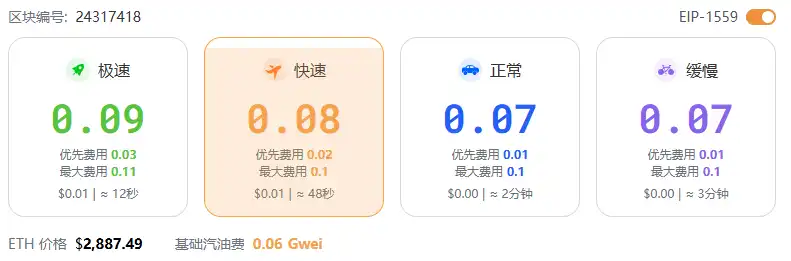
When Gas was expensive, it at least helped filter out low-quality interactions, forcing you to carefully consider every move. Now that Gas is cheap, DeFi has turned into a massive electronic assembly line.

Because interaction costs are low, projects assume you should perform a massive number of interactions. So, for that tiny potential airdrop expectation, retail investors are forced to become skilled laborers on the chain: cross-chain, swap, stake, provide LP... mechanically repeating these actions hundreds of times a day.

But this doesn't lead to higher returns. Instead, low Gas has become a tool for projects to infinitely inflate their activity metrics.

This is on-chain manual labor.

II. The Capricious Dictator: Code is No Longer Law

"Code is Law" was once DeFi's most captivating narrative. But now, DeFi protocols not only have backdoors in their code, but the teams' words are also a sickle随时waiting to fall.

This is the most hated pain point for retail investors today—the uncertainty of the rules.

Project teams have long learned how to be ruthless. They invented impossible-to-fulfill "points systems," like carrots dangling in front of a donkey, luring you to constantly invest money and time. After you've diligently grinded for half a year, eagerly awaiting the payout, the team suddenly issues an announcement:

  • "For the fairness of the community, we will strictly crack down on Sybil attacks."

  • "Our VE model needs to be modified."

  • "For the development of the community, we have added a 45-day cooldown period."

Yesterday you were their early supporter; today, because your IP address changed slightly or your funds were held for one day less, you are labeled a Sybil. The right to interpret the rules belongs solely to the project team—they change them as they please.

This feeling is like going to work for a boss who promised daily wages. After you finish the job, the boss suddenly announces: "For the long-term development of the company, we're withholding your pay. We'll see how you perform next year."

In traditional business, this is called fraud; in DeFi, it's called DAO governance.

III. The Locked-In Prisoner: Capital Hunting Under High APY
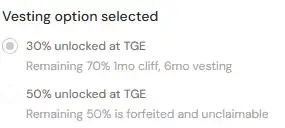
To maintain token prices, DeFi protocols are now extremely keen on locking users' funds. Various Ve models keep emerging, often requiring locks of one year, two years, or even four years.

Projects lure you with extremely tempting APY. It looks like high returns, but the outcome is already written:

  • Liquidity dries up: Your principal is locked, unable to move.

  • Whales front-run: Project teams, early investors, and whales often have special vesting schedules or can hedge their profits off-chain.

  • Price tanks to zero: When you can finally unlock, you find that while you earned a 50% return in token terms, the price has already dropped by 90%.

The essence of locking is retail investors using their liquidity to help whales cash out. You covet the interest; they eye your principal.

IV. Extreme Mismatch of Risk and Reward

Let's do some realistic math.

Current DeFi protocols, excluding those shady projects that might rug pull at any moment, offer stablecoin yields of only around 5% - 10% for mainstream ones. This seems higher than banks, but what are the risks behind it?

  • Smart contract vulnerabilities: Hackers could drain the pool at any time.

  • Front-end hijacking: Phishing sites are everywhere.

  • Depegging risk: Algorithmic stablecoins or bridged assets can go to zero instantly.

  • Project Rug Pull: Even projects with billions in TVL can disappear overnight with the funds.

Earning a 5% return while bearing a 100% risk of losing your principal. This is a classic case of high risk for low reward. This yield doesn't even cover the mental distress fee from the constant anxiety during operations. In comparison, simply buying and holding Bitcoin, or even using centralized exchange理财products, offers far better value than折腾on-chain.

Conclusion: Refuse to Become On-Chain Fuel

DeFi's innovation has stalled, but its harvesting tactics have evolved.

At this stage, for most retail investors with less than $100,000, DeFi has lost its golden attribute. It is no longer a wilderness full of opportunities, but a playground carefully designed by whales and unscrupulous project teams.

Every button, every rule, every lock-up suggestion here is designed to诱you into handing over your chips.

So, the best strategy now might be just one: Admit that current DeFi truly isn't working. Stop those meaningless interactions. Stop locking up funds for meager returns. Protect your principal. Convert it into truly valuable core assets, and then watch coldly as the whales fight amongst themselves.

Stop being an on-chain laborer. Your time and capital deserve a better place.

Perguntas relacionadas

QWhy are retail investors leaving DeFi despite lower transaction fees?

ARetail investors are leaving because low fees have turned DeFi into a high-effort, low-reward environment where they perform repetitive tasks for minimal returns, while project owners exploit the system to inflate engagement metrics without fair compensation.

QHow do DeFi projects change rules arbitrarily, and what impact does this have?

ADeFi projects frequently alter rules, such as modifying tokenomics, adding lock-up periods, or labeling users as sybils, which creates uncertainty and distrust, making investors feel cheated after investing time and resources based on initial promises.

QWhat risks do investors face with high APY lock-up schemes in DeFi?

AInvestors risk illiquidity, front-running by whales, and significant token price depreciation, often resulting in capital losses despite high nominal yields, as locked assets become vulnerable to market manipulations and project failures.

QHow does risk-reward mismatch discourage participation in DeFi?

AWith stablecoin yields around 5-10%, investors bear risks like smart contract hacks, front-end attacks, stablecoin depegging, and rug pulls, making the potential returns insufficient to justify the high probability of total capital loss compared to safer alternatives like Bitcoin or centralized exchanges.

QWhat is the author's recommended strategy for retail investors in the current DeFi landscape?

AThe author advises retail investors to stop futile interactions and lock-ups, preserve capital, and allocate it to core assets like Bitcoin, avoiding DeFi's exploitative structures dominated by whales and predatory projects.

Leituras Relacionadas

The "Impossible Triad" Is Fundamentally a Pseudo-Problem

The article argues that blockchain's fundamental limitation is not the scalability trilemma (decentralization, scalability, security), which has been largely solved, but the lack of **privacy** and, until recently, clear **legitimacy**. Blockchain is described as a slow, expensive, globally shared computer whose core value is censorship resistance and verifiability. While ideal for native digital assets like money (e.g., stablecoins), its default transparency acts as a **tax**, exposing all transactions and enabling MEV extraction, which deters serious institutional capital. Simultaneously, its permissionless nature created regulatory ambiguity. The piece contends that **privacy** is the missing critical feature. It rejects the false choice between total transparency and complete anonymity. Modern cryptography (like zero-knowledge proofs) enables **compliant privacy**: users can prove facts (solvency, KYC status, compliance) without revealing the underlying sensitive data (specific holdings, identities). This preserves auditability for regulators and eliminates the leak of financial information. With recent regulatory progress (e.g., the GENIUS Act) addressing legitimacy, adding default, provably compliant privacy becomes a pure upgrade. It transforms blockchain from a costly, public ledger into a confidential settlement layer, finally bridging the gap to mainstream institutional and individual adoption of on-chain finance.

链捕手Há 10h

The "Impossible Triad" Is Fundamentally a Pseudo-Problem

链捕手Há 10h

Optical Chips: Collective Capacity Expansion

The global optical chip industry is experiencing a massive wave of expansion driven by surging AI data center demand. Major players across the US, Japan, Europe, and China are aggressively investing to ramp up production capacity. In the US, Coherent is expanding its 6-inch Indium Phosphide (InP) semiconductor fab in Texas, supported by CHIPS Act funding and a $2 billion strategic investment from NVIDIA. Lumentum is building a new factory for InP optical devices, and Nokia is scaling its advanced photonic chip packaging and testing capabilities. NVIDIA's investments aim to secure future supply of critical lasers and optical interconnect products for AI infrastructure. Japan's JX Advanced Metals, a leading InP substrate supplier, plans a multi-billion yen investment to increase its capacity 7-10 times, strengthening its grip on the crucial upstream materials market. In Europe, IQE and Tower Semiconductor settled a patent dispute and signed a multi-year InP epitaxial wafer supply agreement, highlighting that next-generation silicon photonics platforms will integrate high-performance InP components. STMicroelectronics and Sivers Semiconductors are also expanding silicon photonics production and partnerships. China is rapidly building out its domestic supply chain. Dongshan Precision's subsidiary, Source Photonics, announced a $12 billion project to expand optical chip and module production. Companies like Sanan Optoelectronics and Yunnan Germanium are scaling up InP chip manufacturing and substrate production, moving towards vertical integration from materials to modules. While debate continues around the exact future architecture—whether CPO (Co-Packaged Optics), NPO, or pluggables will dominate—analysts like Morgan Stanley argue the underlying driver is unchangeable: the explosive growth in bandwidth demand. This will inevitably increase the volume of optical engines, lasers, and related content per GPU, regardless of the final technical path. The competition for "more light" in the AI era has intensified into a global, full-chain capacity race.

marsbitHá 12h

Optical Chips: Collective Capacity Expansion

marsbitHá 12h

Stablecoins Finally Find Real Yield: An In-Depth Look at On-Chain Reinsurance Re | A Conversation with Re Founder Karan Saroya

Stablecoin Real Yield Found: A Deep Dive into On-Chain Reinsurance with Re's Karan Saroya As stablecoin supply exceeds $170 billion, the search for sustainable, non-speculative yield intensifies. Re, an on-chain reinsurance platform, provides an answer: connecting stablecoin capital to the trillion-dollar traditional reinsurance market. Re operates as a regulated reinsurer, accepting stablecoin deposits as collateral to back US insurance companies. These insurers pay premiums, generating yield that flows back to on-chain depositors. Currently supporting 35 insurers and underwriting $500 million, Re projects scaling to over $1 billion soon. Key insights from a Bankless podcast with founder Karan Saroya and investor Avichal of Electric Capital: 1. **Uncorrelated, Real-World Yield:** Re offers stablecoin holders access to reinsurance returns (targeting 12-14%+), an asset class entirely separate from crypto or equity markets. 2. **Operational Efficiency via Smart Contracts:** Re replaces traditional, labor-intensive capital fundraising with smart contracts, allowing a ~12-person team to compete with industry giants. 3. **Regulatory Leverage:** For every $1 of collateral, regulations allow backing $5-7 in written premiums. This leverage amplifies returns from the underlying risk-free rate. 4. **DeFi Integration:** Depositors receive receipt tokens, which can be used in protocols like Morpho for "looping," potentially pushing yields to 18-20%+. 5. **The "DeFi Mullet" Model:** A compliant front-end (regulated reinsurer) paired with a decentralized back-end (smart contracts, DeFi capital markets). 6. **RE Governance Token:** Modeled on Lloyd's of London, the token governs the central capital pool's allocation, counterparty acceptance, and parameters. 7. **Real Economic Impact:** Capital funds real-world productivity (factories, clinics, businesses) via insurance, moving beyond crypto's internal loops. The discussion highlights a pivotal moment: DeFi's supply-side infrastructure is now met by real demand for productive yield, potentially kickstarting a flywheel where vast on-chain stablecoin capital seeks these real-world returns.

链捕手Há 14h

Stablecoins Finally Find Real Yield: An In-Depth Look at On-Chain Reinsurance Re | A Conversation with Re Founder Karan Saroya

链捕手Há 14h

Trading

Spot
Futuros
活动图片