The Person Who Made $69 Million from NFTs Four Years Ago Is Still Making Money

marsbitPublicado em 2025-12-09Última atualização em 2025-12-09

Resumo

Four# 1st-Project This is my first project

Author: Cookie

Beeple, the man who sold one NFT for a staggering $69 million, has long been seen as a symbol of the golden age of NFTs that once was.

Although the glory of NFTs has faded, Beeple and his team have remained active in the NFT circle. At this year's Art Basel, he brought another "golden dog" to the currently quiet NFT market—Regular Animals.

Yesterday, multiple Regular Animals sold for over 10 ETH (approximately $35,000) on OpenSea, and these works were given away for free at Art Basel, with a total of 256 pieces. At this price, Beeple essentially gave away nearly ten million dollars worth of NFTs at Art Basel.

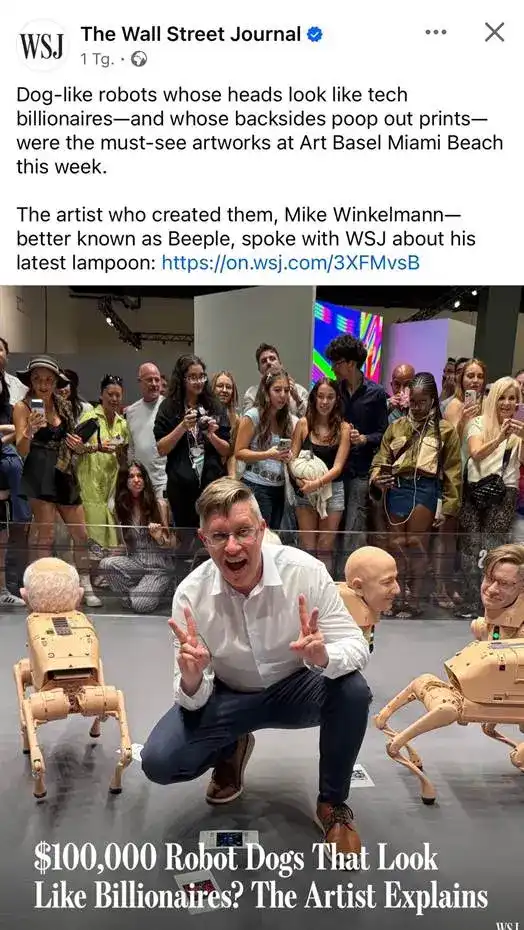
The project that Beeple and his team brought to this Art Basel is precisely Regular Animals. These are a bunch of robot dogs, as shown in the image below. They look a bit eerie because these robot dogs have human faces, and they are faces of well-known figures like Musk, Andy Warhol, Zuckerberg, Picasso, and even Beeple himself.
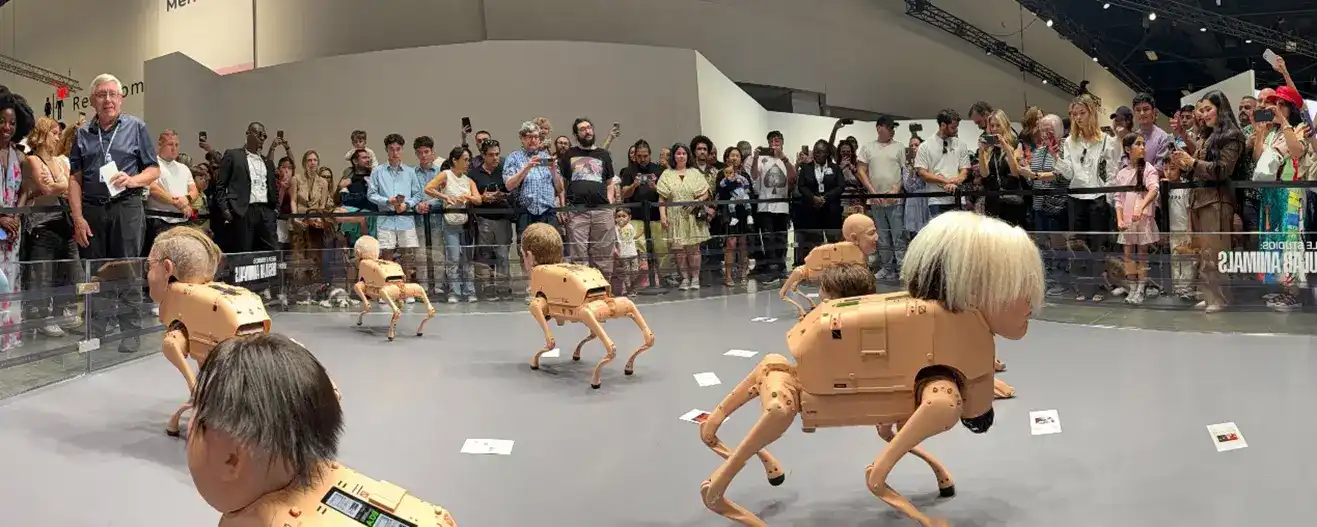
Of course, it's not just the eerie visual effect; these robot dogs use the cameras on their heads to observe their surroundings and employ an evolving visual algorithm to create artworks.
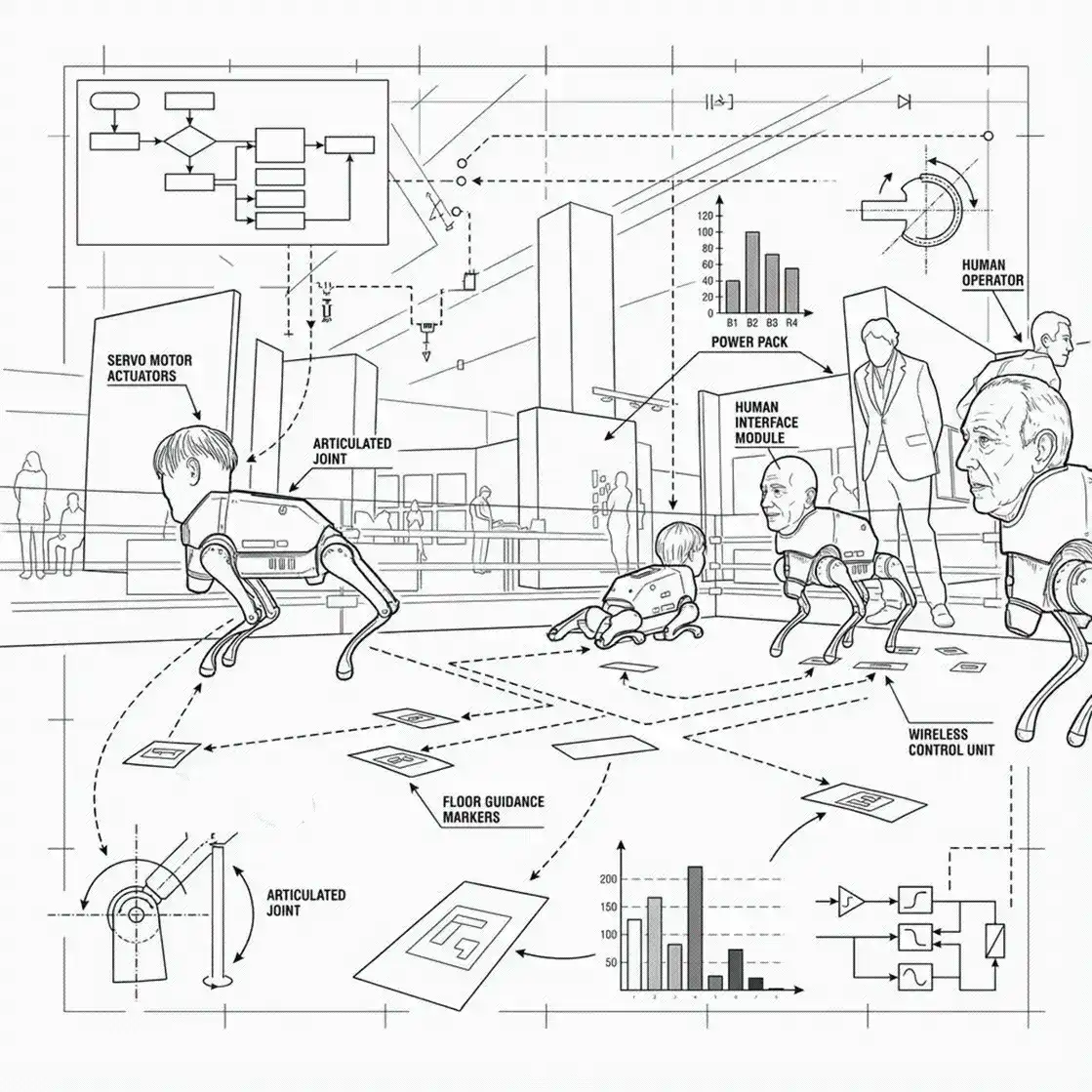
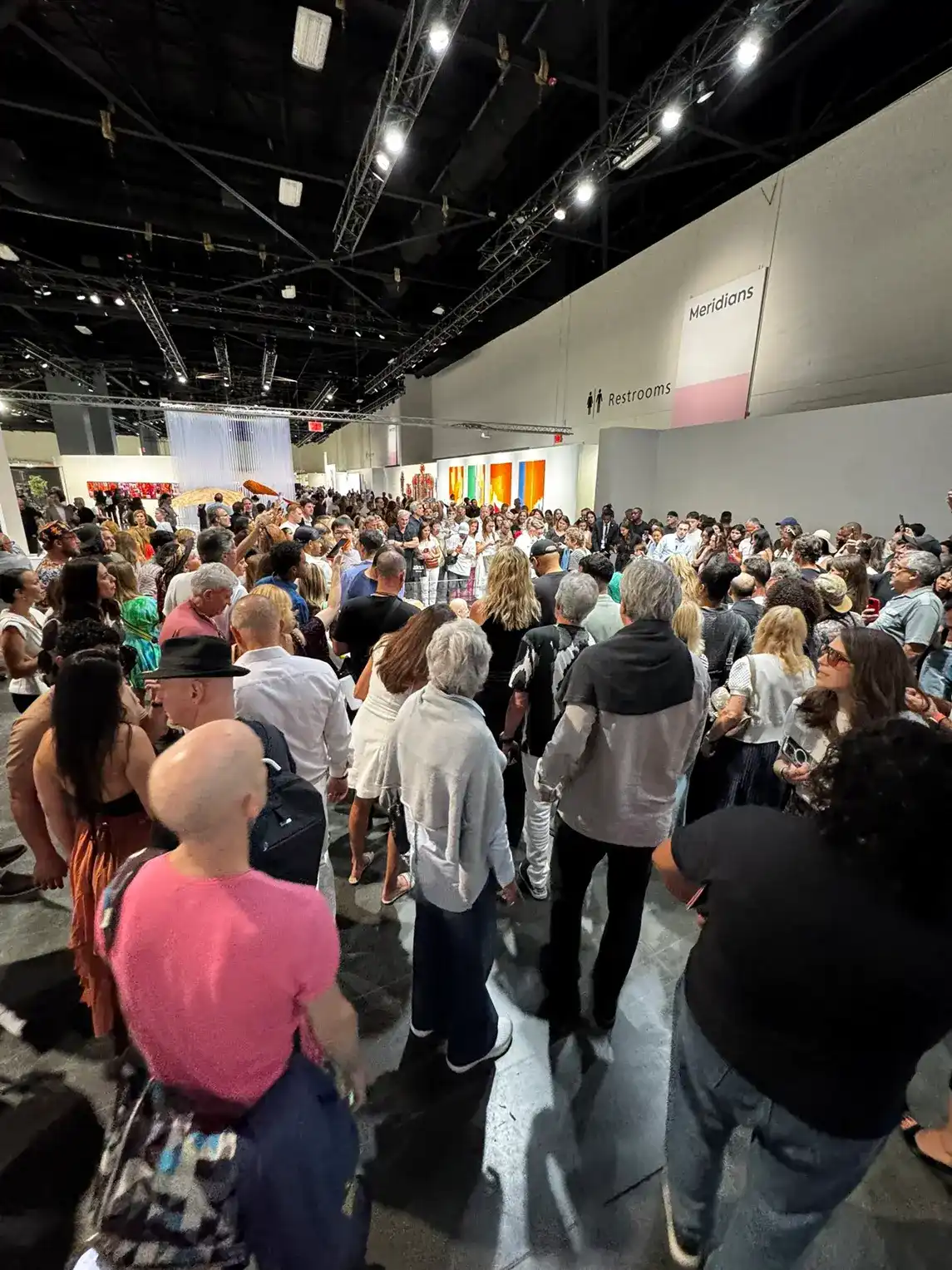
The celebrities these robot dogs portray were not chosen arbitrarily. The reason for selecting the aforementioned figures is that they have influenced how humans view the world, whether through algorithms, art, or politics. As humans, we observe the world through these perspectives, and so do these robot dogs. At Art Basel, these robot dogs and humans observed each other, and the moments of observation became the artworks created by these robot dogs—artworks that also serve as autobiographies for these machines.
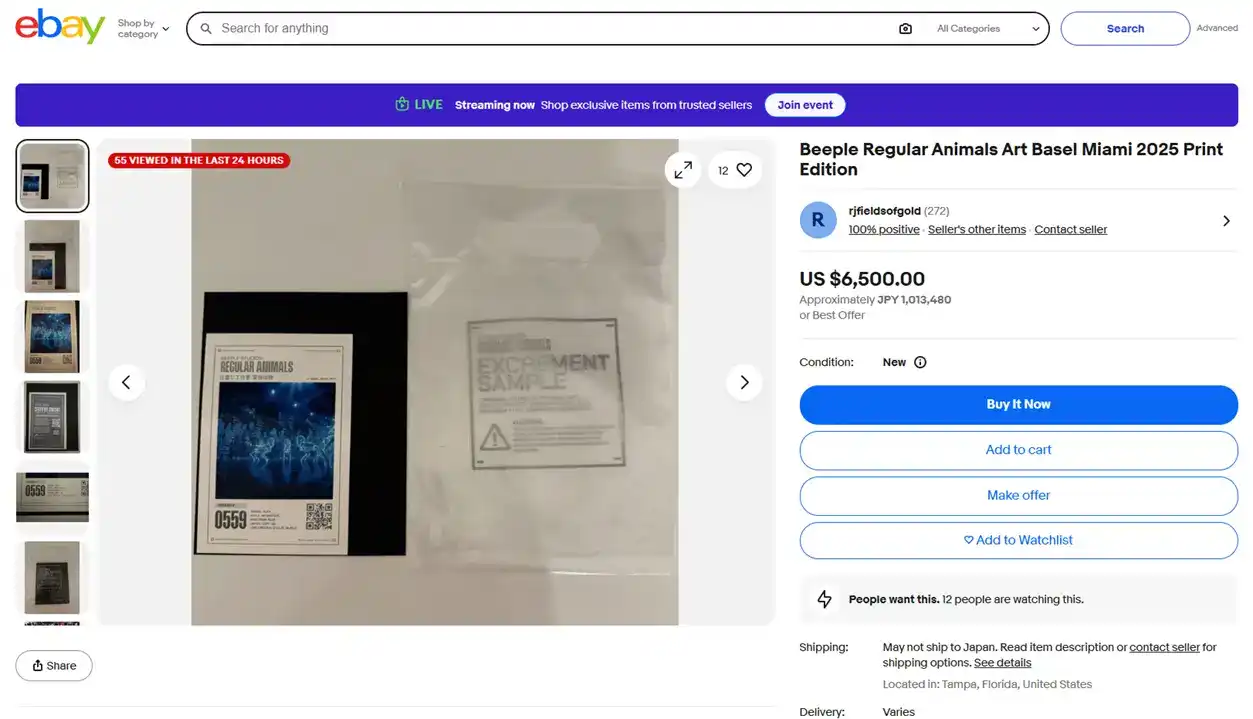
Interestingly, Regular Animals also has a physical series, with a total of 1,024 pieces. On eBay, someone has already listed one for sale at a fixed price of $6,500. The market's valuation suggests that NFTs are far more valuable than physical paintings, reminiscent of Damien Hirst's "The Currency" series years ago, which forced owners to choose between the physical and the NFT.
Before achieving great success in the NFT field, Beeple had been creating art every day since 2007 but had never sold anything for more than $100. After achieving fame and fortune, Beeple did not splurge like some artists or crypto project teams. He acquired a studio/gallery of about 460 square meters, assembled a team of dozens of 3D artists, engineers, and researchers (even including a former Boeing engineer), invited Carolyn Christov-Bakargiev, the former director of the Castello di Rivoli Museum of Contemporary Art, as an advisor, continuously exhibited at art shows around the globe, and created new artworks.

This exhibition of Beeple's robot dogs has not only gained attention in the crypto circle due to its price but has also been covered by traditional media like the WSJ.
Perguntas relacionadas

QWho is the artist that sold an NFT for $69 million four years ago?

ABeeple.

QWhat is the name of the new NFT project Beeple launched at the Art Basel exhibition?

ARegular Animals.

QHow many Regular Animals NFTs were given away for free at Art Basel, and what was their estimated total value based on secondary market sales?

A256 NFTs were given away, with an estimated total value of nearly $9 million based on sales of over 10 ETH (approx. $35,000) each.

QWhat unique feature do the Regular Animals robot dogs have that allows them to create art?

AThey use cameras in their heads to observe their surroundings and a continuously evolving visual algorithm to create artworks.

QBesides the NFT collection, how many physical pieces are in the Regular Animals series, and what was one listed price for a physical piece on eBay?

AThere are 1024 physical pieces, and one was listed for sale on eBay at a fixed price of $6,500.

Leituras Relacionadas

Casper Network Publishes the Casper Manifest, a Multi-Year Roadmap to Power Regulated Real-World Assets and the Machine Economy

The Casper Association has published "The Casper Manifest," a multi-year technical roadmap for Casper Network. Introduced at the Digital Finance Forum in Bermuda, the roadmap outlines nine coordinated initiatives designed to position the layer-1 blockchain as the infrastructure for regulated real-world asset (RWA) tokenization and the machine-to-machine economy. Key initiatives focus on: 1. **Developer Access:** Adding full Ethereum Virtual Machine (EVM) compatibility alongside its existing WebAssembly (Wasm) execution layer. 2. **User Experience:** Implementing gasless transactions, batch operations, and smart accounts with biometric authentication. 3. **Institutional Compliance & Privacy:** Building compliant security tokens aligned with the ERC-3643 standard and a multi-phase roadmap for confidential transactions with built-in audit tools. 4. **Machine Economy:** Implementing the X402 open payment standard to enable AI agents and machines to make autonomous, programmatic micropayments. 5. **Token Infrastructure:** Creating a Native Token Registry to give all tokens protocol-level status with fixed, predictable costs. 6. **Quantum Safety:** Developing hybrid accounts with both classical and quantum-resistant keys. The first initiative, X402 micropayments, is expected within weeks. Subsequent releases through 2026 and 2027 will include EVM compatibility, compliant security tokens, the Native Token Registry, gasless transactions, and quantum-safe features. The goal is to create a blockchain that is frictionless for users, trusted by institutions, and native for machines.

TheNewsCryptoHá 4h

Casper Network Publishes the Casper Manifest, a Multi-Year Roadmap to Power Regulated Real-World Assets and the Machine Economy

TheNewsCryptoHá 4h

Trading

Spot
Futuros
活动图片





