The 'PayPal Mafia' of the AI Era: From Interns to Billionaires

marsbitPublicado em 2026-04-15Última atualização em 2026-04-15

Resumo

"The article profiles a group of exceptionally talented individuals, many of whom first connected through high school Olympiad competitions and later as interns at quantitative trading firm Hudson River Trading (HRT). This circle, once inspired by the "PayPal Mafia," has now emerged as a powerful force in the AI industry. Key figures include: - **Alexandr Wang**: Founder of Scale AI (acquired by Meta for $14.3B), now leads Meta's AI division and recently launched the Muse Spark model. - **Scott Wu**: CEO of Cognition, creator of the AI software engineer Devin; company valued at $10.2B. - **Johnny Ho**: Co-founder of Perplexity (valued at $20B), with a personal net worth of $2.1B. - **Jesse Zhang**: CEO of Decagon, an AI customer service automation company valued at $4.5B. - **Demi Guo**: Co-founder and CEO of Pika, a generative AI video startup. - **Steven Hao**: CTO of Cognition, with a net worth of $1.3B. The group is characterized by their shared background in elite academic competitions, a deep understanding of engineering efficiency, and a unified vision for an AI-driven future, drawing parallels to the influential "PayPal Mafia" of the previous era."

Author|Azuma(@azuma_eth)
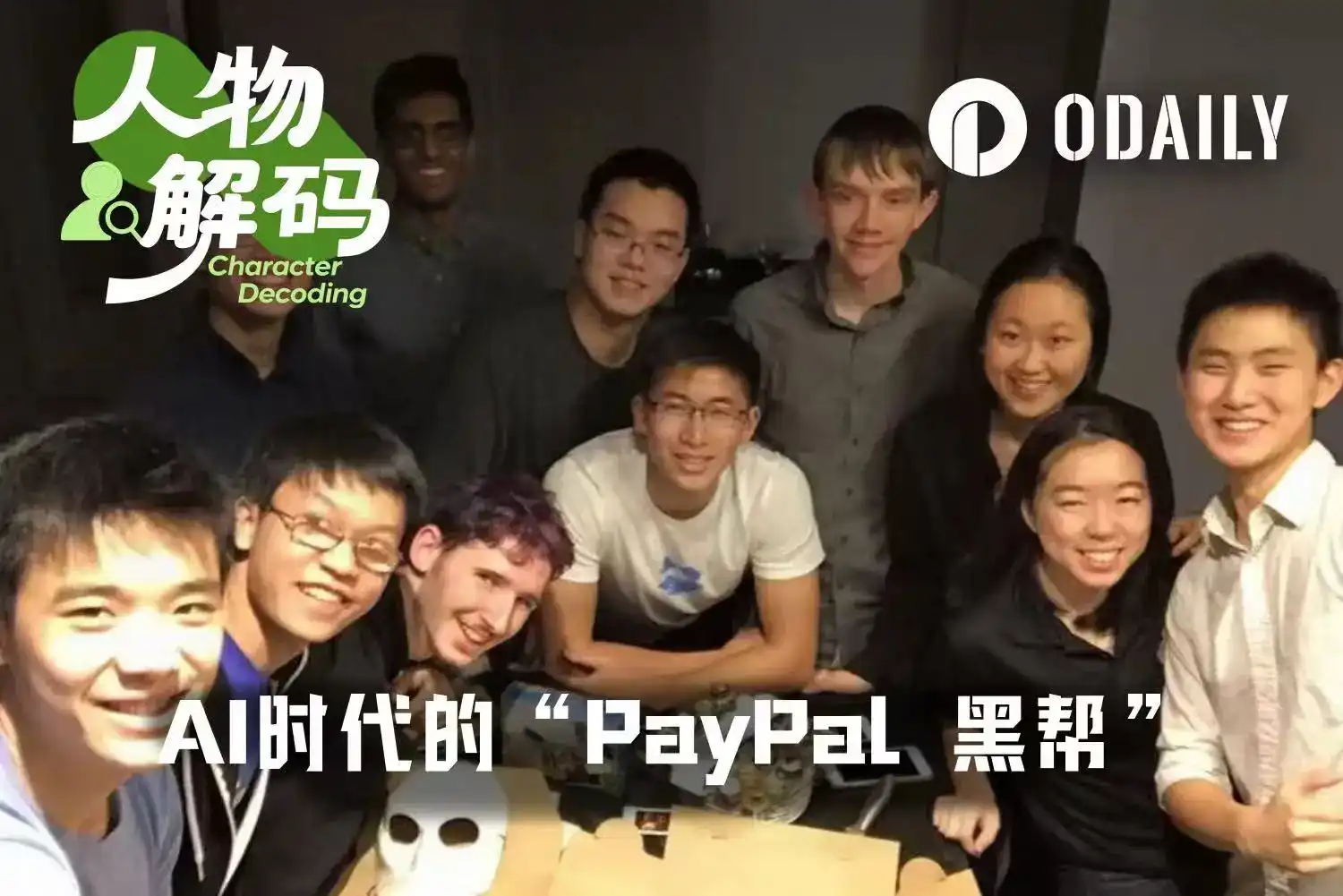
Yesterday, a feature interview with Hyperliquid founder Jeff Yan by "Colossos" magazine went viral across the internet (see "Jeff Yan's 'Hyper Life'").

In the interview, Jeff Yan revealed a little-known story — during his junior year at Harvard, he participated in the inaugural internship program of the quantitative trading giant "Hudson River Trading" (HRT). Ten interns were selected that year. Aside from Jeff Yan, who chose the cryptocurrency track, several others from the same intern cohort have now become prominent figures in the AI field, including Meta AI business line head Alexandr Wang, Decagon founder and CEO Jesse Zhang, and Cognition founder and CEO Scott Wu.
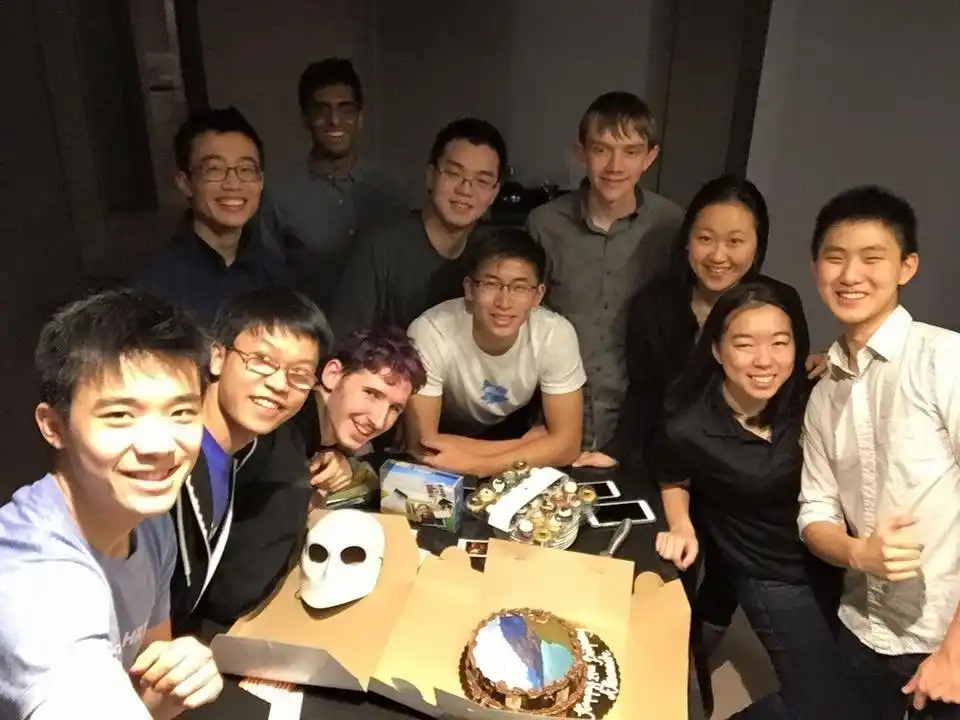
Odaily Note: A group photo of that year's interns shared by Jesse Zhang

According to additional disclosures by Scott Wu himself, the HRT internship program was not the starting point of their friendship. As early as high school, many of them had already met through Olympic competitions (Jeff Yan, Scott Wu, and several others had won gold medals). That small circle included many more notable names, including but not limited to Perplexity co-founder and CSO Johnny Ho, Pika co-founder and CEO Demi Guo, and Steven Hao, Alexandr Wang's former partner in founding Scale AI......

During the formative years of Jeff Yan, Scott Wu, and others, the "PayPal Mafia," represented by Elon Musk and Peter Thiel, was already dominating the business world. People began searching for the next similar special network. Jeff Yan's small circle had also discussed this topic. The 19-year-old Alexandr Wang once said to his friends: "Why can't it be us?"

Ten years later, Alexandr Wang's bold statement seems to be coming true. Leveraging AI, this group of young people from the Hudson River are stirring up the era in their own way.

Alexandr Wang: Zuckerberg's AI Brain

Alexandr Wang is perhaps the most well-known figure in this small circle. Born in 1997 in Los Alamos, New Mexico, Alexandr Wang is the descendant of Chinese immigrants. His parents were physicists at the Los Alamos National Laboratory — where the United States' first atomic bomb was secretly developed during World War II.

Alexandr Wang was passionate about mathematics and programming from a young age. He qualified for the Mathematical Olympiad Program in 2013, the USA Physics Team in 2014, and reached the finals of the USA Computing Olympiad in 2012 and 2013.

In 2015, Alexandr Wang dropped out of the Massachusetts Institute of Technology and founded Scale AI a year later, which annotates data used for training AI in computer vision and audio transcription. Riding the wave of the AI boom, Scale AI's valuation soared, reaching $7.3 billion by 2021. Alexandr Wang, owning 15% of the shares, saw his net worth surpass $1 billion.

In June 2025, Meta, which had clearly fallen behind in the AI race, acquired 49% of Scale AI for $14.3 billion. Zuckerberg's附加条件 was that — the soul of Scale AI, the then 28-year-old Alexandr Wang, must join Meta. Alexandr Wang subsequently joined Meta and began leading Meta's AI development team, the "Meta Superintelligence Labs" (MSL).

On the night of April 8th, Zuckerberg's big gamble paid off. MSL officially released its first self-developed AI model, Muse Spark. Muse Spark is a native multimodal reasoning model supporting tool use, visual chain-of-thought, and multi-Agent orchestration. It is the most powerful model Meta has released to date. During training, MSL observed predictable scaling improvements in the model during pre-training, reinforcement learning, and test-time reasoning phases.

Scott Wu: Olympiad Prodigy, Creator of a $10 Billion AI Unicorn
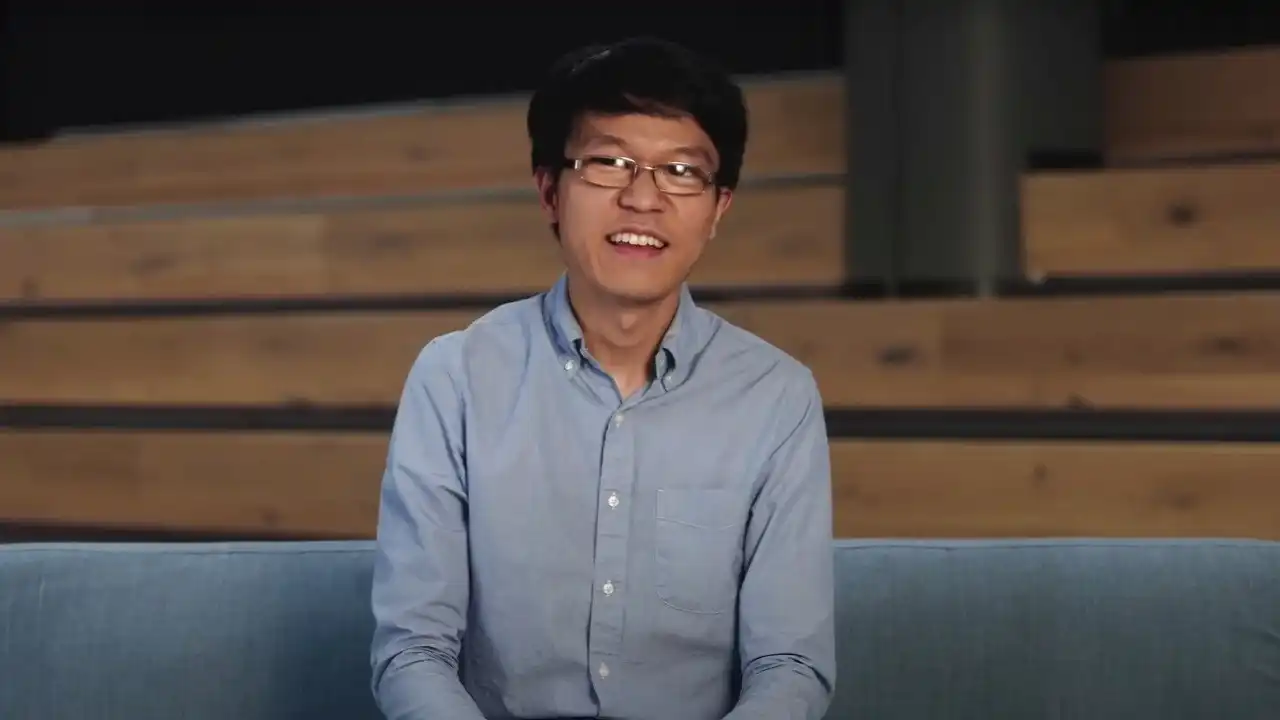
Scott Wu was born in 1997 in Louisiana to a family of Chinese immigrants. Growing up, Scott Wu actively participated in programming and mathematics competitions, winning three gold medals in the International Olympiad in Informatics, including first place in 2014.

After high school, Scott Wu attended Harvard University but dropped out after two years. While an undergraduate at Harvard College, he was a team member in the 2016 International Collegiate Programming Contest (ICPC), where his team won a gold medal and placed third overall.

In 2019, Scott Wu co-founded the social platform Lunchclub as its CTO. In 2023, Scott Wu, along with friends Steven Hao and Walden Yan (both Olympic gold medalists), co-founded Cognition, where he serves as CEO.

In 2024, the Cognition team launched the world's first autonomous AI software engineer, Devin. This product can independently complete code writing, testing, and deployment, and supports the decomposition and collaboration of complex tasks. It significantly outperformed GPT-4 in the SWE-bench benchmark test. In May of the same year, Cognition raised $175 million in a round led by Peter Thiel's Founders Fund, valuing the company at $2 billion post-money. In September 2025, Cognition raised another $400 million, skyrocketing its valuation to $10.2 billion.

By early 2026, Cognition's annualized revenue had reached $400 million.

Johnny Ho: Net Worth $2.1 Billion, Once Considered Acquiring TikTok and Chrome
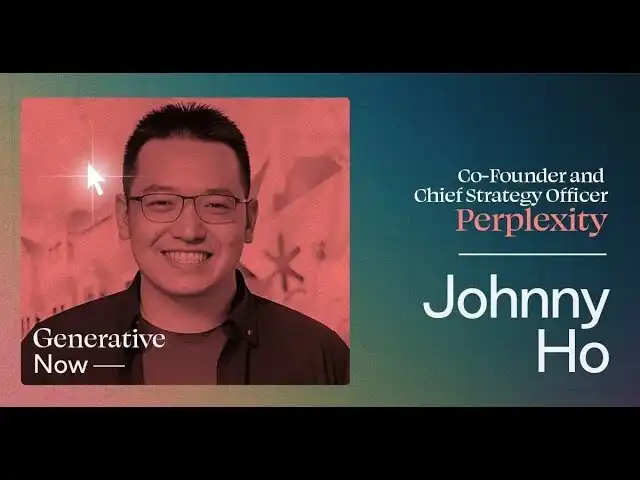
Like Scott Wu, Harvard graduate Johnny Ho won three gold medals in the International Olympiad in Informatics, achieving a perfect score and first place in 2012.

In August 2022, Johnny Ho co-founded Perplexity with Aravind Srinivas, Andy Konwinski, and Denis Yarats. Perplexity is positioned as an AI search engine company, offering a conversational search engine service that displays citation sources for answers and provides related question suggestions.

In 2023, Perplexity's monthly visits reached 10 million; by April 2024, its monthly active users reached approximately 15 million. That same year, Perplexity embarked on a疯狂融资 spree. In its fourth funding round at the end of the year, it raised $5 [Note: Likely a typo, probably meant $500 million or similar, but translating as written], reaching a valuation of $9 billion. In July 2025, Perplexity completed another $100 million in new funding, raising its valuation to $18 billion.

It is worth mentioning that Perplexity has initiated several bold "minnow-swallowing-whale" level acquisition proposals (with VCs willing to provide funds), including an offer to acquire TikTok in early 2025, proposing to merge Perplexity, TikTok's US operations, and new capital partners into a new entity, and in August 2025, proposing to Google to acquire its core product, the Chrome browser, for $34.5 billion.

According to the latest data from Forbes, Perplexity's current valuation has reached $20 billion, and Johnny Ho's personal wealth has reached $2.1 billion.

Jesse Zhang: AI Startup Valued at $4.5 Billion in Three Years
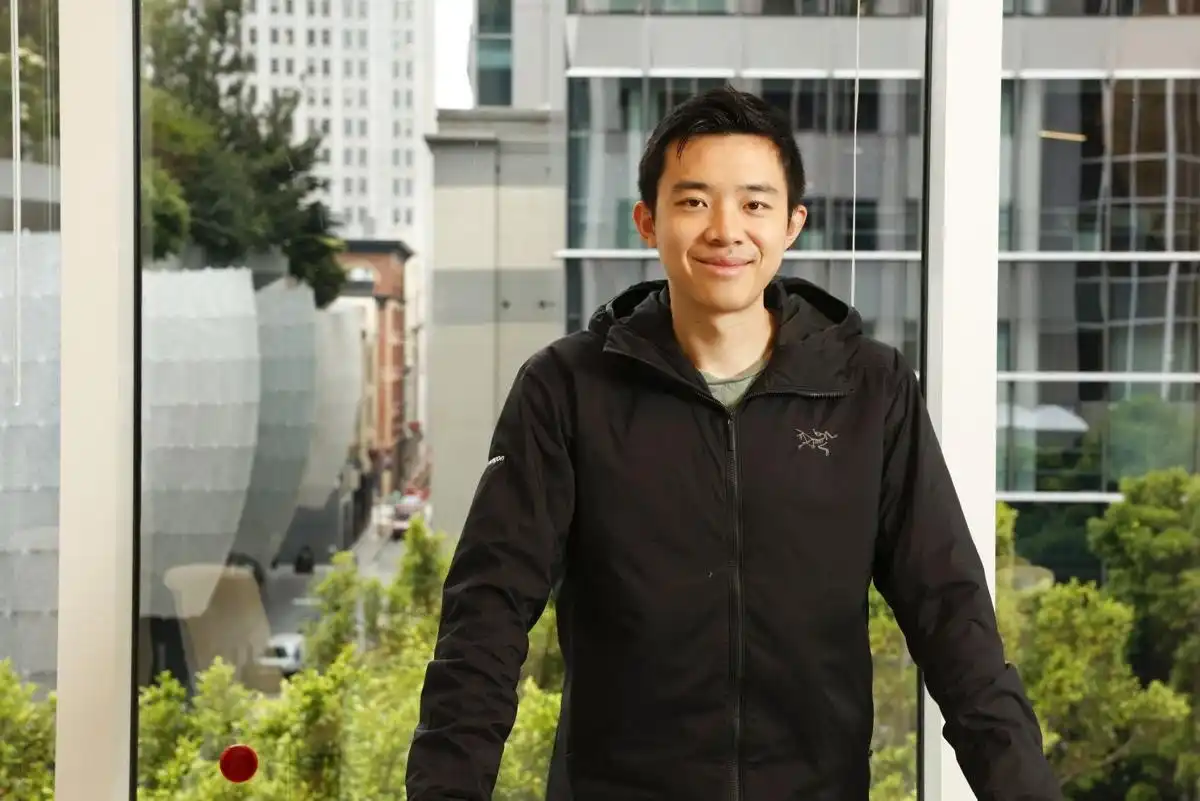
Jesse Zhang was also born in 1997 and grew up in the San Francisco Bay Area. From high school, Jesse Zhang was a typical "competition fanatic" — selected twice for the Mathematical Olympiad Program (MOP), a finalist in the Intel STS, and participated in MIT's RSI research program. After entering Harvard, Jesse Zhang completed the four-year university curriculum in just three years.

In 2018, Jesse Zhang and friends founded Lowkey, a platform for sharing gaming highlights. The project received seed funding from Y Combinator and Series A funding from a16z. In 2021, Lowkey was acquired by Pokémon GO developer Niantic for an undisclosed amount.

In 2023, Jesse Zhang co-founded Decagon with partner Ashwin Sreenivas, focusing on using AI Agents to automate enterprise customer service, solving the problems of high labor costs and low efficiency in call centers.

In June 2024, shortly after its founding, Decagon quickly raised $35 million, including a $5 million seed round led by a16z and a $30 million Series A led by Accel. Four months later, Decagon raised $65 million in a Series B round. In June 2025, a Series C round raised $131 million, pushing the valuation to $1.5 billion. In January 2026, a Series D round raised $250 million, skyrocketing the valuation to $4.5 billion... In tandem with the rising valuation was Decagon's revenue capability. By the end of 2025, the company's disclosed annual revenue had exceeded $30 million.

Demi Guo: Hangzhou '95er, Pioneer in AI Video Generation

Demi Guo was born in 1999 in Hangzhou, China, and moved to Silicon Valley, USA with her family during childhood.

Demi Guo won a silver medal at the 2015 International Olympiad in Informatics. She graduated from Harvard University with a bachelor's degree in mathematics and a master's degree in computer science, then dropped out of a PhD program at Stanford University to focus on entrepreneurship in generative AI video content creation.

In April 2023, Demi Guo co-founded Pika with Chenlin Meng, with Demi Guo serving as CEO. Pika focuses on the development of video generation AI technology. Its core products include the Pika 1.0 and Pika 2.0 models, which support 3D animation, anime, cartoon, and cinematic style generation, offering features like video extension, canvas expansion, and element replacement.

Regarding funding, Pika had already completed a $20 million seed round before its launch. It then completed a $35 million Series A round in November 2023, led by Lightspeed Venture Partners. In June 2024, Pika completed an $80 million Series B round at a valuation of $470 million, led by Spark Capital, with participation from Greycroft, Lightspeed Venture Partners, and actor Jared Leto, among others.

Steven Hao: AI Tech Guru with a Net Worth Over $1 Billion

Steven Hao, a graduate of MIT's mathematics department, also won a gold medal in the International Olympiad in Informatics (IOI). He was a partner of Alexandr Wang at Scale AI and has now joined Scott Wu's Cognition as CTO. Both companies have been详细介绍 in the previous sections, so they won't be elaborated on here.

According to Forbes data, the 30-year-old Steven Hao's personal wealth is estimated to have reached $1.3 billion.

Epilogue: We Might Be Witnessing a New Legend

I thought about giving this small circle a new name similar to the "PayPal Mafia," like calling them the "Hudson River Mafia," or the broader "Olympiad Mafia"... Although the era, background, and story trajectory are completely different, they seem to share the same core spirit as the previous generation's "PayPal Mafia" — behind the camaraderie of high-stakes competitions, what truly connects them is a shared pursuit of intellectual density, engineering efficiency, and system re-architecting capabilities, along with a profound judgment of where the future begins.

The new generation of entrepreneurs has stepped onto the stage. Before them lies the question, far more difficult than any Olympiad problem: "How will AI reshape the world?" This is their battlefield and their stage.


Perguntas relacionadas

QWho are the key members of the AI-era group compared to the 'PayPal Mafia', and what are their notable achievements?

AThe key members include Jeff Yan (founder of Hyperliquid), Alexandr Wang (head of Meta's AI division, founder of Scale AI), Scott Wu (CEO of Cognition, creator of Devin), Johnny Ho (co-founder of Perplexity), Jesse Zhang (CEO of Decagon), Demi Guo (CEO of Pika), and Steven Hao (CTO of Cognition). Their achievements include building billion-dollar AI companies, leading major AI innovations, and driving advancements in areas like AI search, autonomous coding, video generation, and customer service automation.

QWhat was the origin of the connection between these AI entrepreneurs?

ATheir connection began during high school through international Olympiad competitions (e.g., mathematics, informatics) where many won gold medals. Later, they reinforced their ties as interns in Hudson River Trading (HRT)'s first internship program during their college years at Harvard and MIT.

QHow did Alexandr Wang become involved with Meta, and what role does he play there?

AMeta acquired 49% of Scale AI for $14.3 billion in 2025, with the condition that Alexandr Wang join Meta. He now leads Meta's AI development team, the Meta Superintelligence Labs (MSL), which released the powerful multimodal AI model Muse Spark in April 2026.

QWhat is Cognition known for, and what milestones has it achieved under Scott Wu's leadership?

ACognition, co-founded by Scott Wu, is known for creating Devin, the first autonomous AI software engineer. The company reached a $10.2 billion valuation by September 2025, with annualized revenue of $400 million by early 2026, following funding rounds led by investors like Peter Thiel's Founders Fund.

QWhat bold acquisition proposals did Perplexity, co-founded by Johnny Ho, attempt?

APerplexity proposed acquiring TikTok's U.S. operations in early 2025, aiming to merge it with Perplexity and new capital partners. In August 2025, it also offered to buy Google's Chrome browser for $34.5 billion, though neither deal was completed. The company's valuation grew to $20 billion by 2026.

Leituras Relacionadas

The AI Agent Era Accelerates Its Arrival: Questflow Defines a New Paradigm of Financial Intelligence with On-Chain AI Brokerage

The AI Agent era is accelerating, with the CB Insights AI 100 list highlighting global investment confidence. The focus has shifted from whether AI works to its speed of deployment and ability to manage complex workflows, with autonomous AI Agents driving this transformation. At the forefront is Questflow, a Singapore-based startup redefining financial intelligence through its on-chain AI brokerage. Unlike tools that merely provide data dashboards, Questflow deploys AI Agents that proactively scan markets, form judgments, and execute trades via a conversational interface—operating 24/7 without requiring manual confirmation for each decision. This embodies the new AI paradigm of agents capable of executing multi-step workflows autonomously. Questflow's mission is to democratize institutional-grade trading intelligence. Historically reserved for the ultra-wealthy, this capability is now accessible starting from just $1 through Questflow's "AI Clone + Copy Trade" model. The platform charges only a 1% execution fee, aligning its incentives directly with users and eliminating traditional management or performance fees. The timing is opportune, aligning with key trends identified by CB Insights: the scalable deployment of AI Agents, accelerated AI adoption in financial services, and the maturation of on-chain infrastructure. With robust liquidity on platforms like Hyperliquid and Polymarket, alongside advancements in AI reasoning and non-custodial wallet security, Questflow is positioned to merge the roles of broker, fund, and exchange into a single, accessible platform for millions.

链捕手Há 14m

The AI Agent Era Accelerates Its Arrival: Questflow Defines a New Paradigm of Financial Intelligence with On-Chain AI Brokerage

链捕手Há 14m

Why Pricing Social Interactions is Doomed to Fail?

Titled "Why Putting a Price on Social Interaction Is Doomed to Fail," this article critiques attempts to monetize social networks directly through SocialFi models, arguing their inevitable failure stems from a fundamental misunderstanding of media dynamics. Using Marshall McLuhan's theory of "hot" and "cold" media, the author posits that social networks are inherently "cold" media. Their value isn't contained in individual posts but is co-created through user participation, interpretation, and fragmented, ongoing interaction (e.g., replies, shares). This ambiguity and need for user involvement are core to their function. The article asserts that SocialFi projects like Friend.tech failed because introducing real-time, tradable financial pricing (a definitive "hot" signal) into this "cold" environment doesn't add a layer—it replaces the medium's essence. The unambiguous price signal overshadows and nullifies the nuanced, participatory social signal. Users become traders, not participants, and when speculative profits vanish, the underlying social ecosystem—never genuinely cultivated—collapses entirely. This principle extends beyond crypto. The author argues platforms like Twitter have gradually "heated up" through metrics (likes, retweets counts, algorithmically defined value), shifting users from participants to performers and eroding organic engagement. The solution isn't to abandon capital but to manage its entry point. Successful models like Substack, Patreon, or Bandcamp allow capital to "condense" at specific, isolated nodes (e.g., subscriptions, one-time payments) without permeating and "heating" every social interaction. They preserve the core "cold," participatory medium while enabling monetization at designated boundaries. The NFT boom and bust serves as a stark parallel: the ancient "cold" medium of collecting (valued for story, community, gradual accumulation) was rapidly destroyed by platforms that introduced real-time floor prices, rarity scores, and trading dashboards, transforming collectors into speculators and vaporizing cultural value when prices fell. The core lesson: "Liquidity equals heat." Injecting high liquidity and definitive pricing into a "cold" participatory medium doesn't optimize it; it fundamentally alters and destroys its value-creating mechanism. The future lies not in pricing every social gesture but in finding precise, non-invasive points for capital to condense without overheating the entire ecosystem.

marsbitHá 22m

Why Pricing Social Interactions is Doomed to Fail?

marsbitHá 22m

Jensen Huang's CMU Speech: In the AI Era, Don't Just Watch, Build

Jensen Huang, CEO of NVIDIA and a first-generation immigrant, delivered the commencement address to Carnegie Mellon University's class of 2026. He shared his personal journey from a humble background to founding NVIDIA, emphasizing resilience, learning from failure, and the responsibility that comes with leadership. Huang framed the present moment as the dawn of the AI revolution, a shift he believes is more profound than previous computing waves. He described AI as fundamentally resetting computing—moving from human-written software to machines that understand, reason, and use tools. This will create a new industry for generating intelligence and transform every sector. While acknowledging AI's potential to automate tasks and displace some jobs, Huang distinguished between the *tasks* of a job and its core *purpose*. He argued AI will augment human capability, not replace humans. The real risk, he stated, is not AI itself, but people being left behind by those who effectively use AI. He presented AI as a generational opportunity for massive infrastructure investment—in chip factories, data centers, energy grids, and advanced manufacturing—that could re-industrialize nations like the U.S. and bridge the digital divide by making computing and intelligent tools accessible to all. Huang called for a balanced approach: advancing AI safely and responsibly, establishing prudent policies, ensuring broad access, and encouraging universal participation. He urged the graduates not to fear the future but to engage with optimism and ambition, reminding them of CMU's motto, "My heart is in the work." His core message was clear: this is their moment to actively build and shape the AI-powered future, not merely observe it.

marsbitHá 1h

Jensen Huang's CMU Speech: In the AI Era, Don't Just Watch, Build

marsbitHá 1h

Trading

Spot
Futuros

Artigos em Destaque

Como comprar ERA

Bem-vindo à HTX.com!Tornámos a compra de Caldera (ERA) simples e conveniente.Segue o nosso guia passo a passo para iniciar a tua jornada no mundo das criptos.Passo 1: cria a tua conta HTXUtiliza o teu e-mail ou número de telefone para te inscreveres numa conta gratuita na HTX.Desfruta de um processo de inscrição sem complicações e desbloqueia todas as funcionalidades.Obter a minha contaPasso 2: vai para Comprar Cripto e escolhe o teu método de pagamentoCartão de crédito/débito: usa o teu visa ou mastercard para comprar Caldera (ERA) instantaneamente.Saldo: usa os fundos da tua conta HTX para transacionar sem problemas.Terceiros: adicionamos métodos de pagamento populares, como Google Pay e Apple Pay, para aumentar a conveniência.P2P: transaciona diretamente com outros utilizadores na HTX.Mercado de balcão (OTC): oferecemos serviços personalizados e taxas de câmbio competitivas para os traders.Passo 3: armazena teu Caldera (ERA)Depois de comprar o teu Caldera (ERA), armazena-o na tua conta HTX.Alternativamente, podes enviá-lo para outro lugar através de transferência blockchain ou usá-lo para transacionar outras criptomoedas.Passo 4: transaciona Caldera (ERA)Transaciona facilmente Caldera (ERA) no mercado à vista da HTX.Acede simplesmente à tua conta, seleciona o teu par de trading, executa as tuas transações e monitoriza em tempo real.Oferecemos uma experiência de fácil utilização tanto para principiantes como para traders experientes.

452 Visualizações TotaisPublicado em {updateTime}Atualizado em 2025.07.17

Como comprar ERA

Discussões

Bem-vindo à Comunidade HTX. Aqui, pode manter-se informado sobre os mais recentes desenvolvimentos da plataforma e obter acesso a análises profissionais de mercado. As opiniões dos utilizadores sobre o preço de ERA (ERA) são apresentadas abaixo.

活动图片












