The Once-Niche Field of Philosophy Becomes a Hot Topic in "Governing" AI

marsbitPublicado em 2026-07-20Última atualização em 2026-07-20

Resumo

"Cold" Philosophy Becomes Hot in Taming AI This article explores the rising prominence of philosophical inquiry at the World Artificial Intelligence Conference (WAIC), highlighting a shift from purely technical discussions to deeper questions about AI's nature and impact. A key theme is the foundational question of intelligence itself. Philosopher Sun Ning argued that true, grounded intelligence requires embodiment, environment, interaction with others, and historical context, summarized as "Before intelligence, there is a world. Before mind, there is relationship." The forum then examined AI's expanding role in science. Researchers presented AI systems that can autonomously generate scientific papers and mathematical proofs, raising critical questions about evaluation, attribution of discovery, and potential misuse. The proposed solution is a collaborative framework: AI expands the search space, humans define value and provide rigorous constraints, and machines handle verification. As AI models begin to simulate human societies and behaviors for research, new risks emerge. Simulations can inherit and amplify societal biases from their training data, and their outputs risk being mistaken for genuine social signals. This necessitates robust governance focused on auditability, bias correction, and clear human oversight—ensuring people retain intervention, correction, and explanation rights ("human-in-the-loop"). The discussion extended to industry, where AI integrates with...

Who would have thought that philosophy, a once niche major, would become a hot topic in the current AI scene.

This was our unexpected discovery while browsing WAIC this year – the philosophical content was surprisingly high.

For example, at the parallel session “Mind and Intelligence · Youth Ecology Forum” of the WAIC Scientific Intelligence Open Forum, the first speaker was Sun Ning, a professor from the School of Philosophy at Fudan University. In the main forum discussion “Original Innovation in the AI-Native Era,” Sun Xiangchen, another professor from the School of Philosophy at Fudan University, also joined the panel for a summit dialogue.

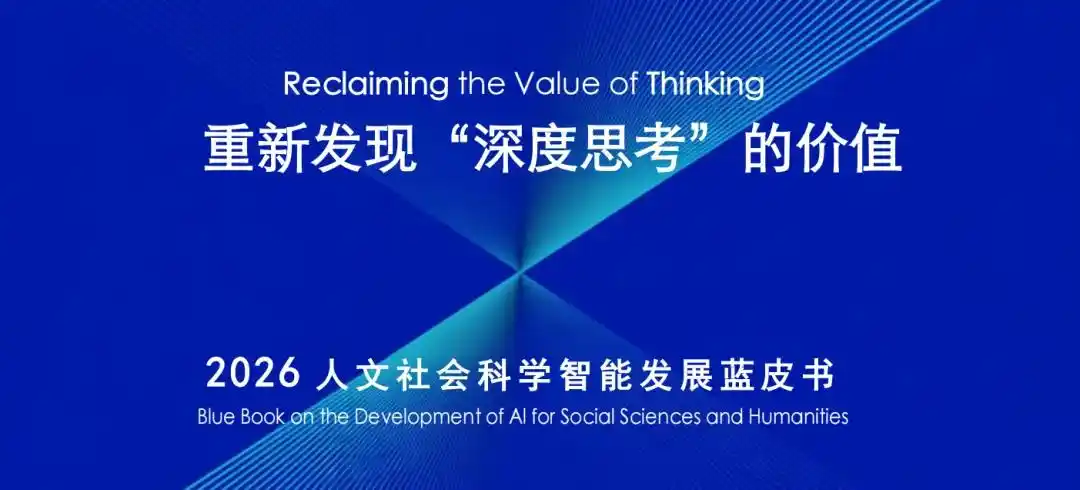
Coincidentally, during WAIC, the “2026 Blue Book on Intelligent Development in Humanities and Social Sciences” released by the National Development and Intelligent Governance Comprehensive Laboratory of Fudan University brought deep thinking, research credibility, and AI governance into the spotlight.

But to be fair, this seemingly sudden wave of philosophical interest actually has a clear trajectory.

A few years ago at AI conferences, people mostly talked about parameters, computing power, and leaderboards. Now, AI can write papers, perform mathematical proofs, generate protein conformations, and simulate societies with a group of agents.

While AI capabilities are advancing triumphantly, the ensuing problems are becoming increasingly philosophical:

  • Does a model's ability to answer questions fluently mean it truly understands?
  • If AI can autonomously discover knowledge, does it count as a new scientist?
  • If AI discovers laws that humans cannot explain but can be verified experimentally, should we believe them?

In his speech titled “Before Intelligence, There is a World,” Sun Ning brought the questions back to the source.

As early as the 1990s, cognitive scientist Stevan Harnad proposed the Symbol Grounding Problem, questioning how a symbol system acquires true meaning through perception and interaction. Around the same time, robotics engineer Rodney Brooks proposed the Physical Grounding Hypothesis, leaving behind an influential statement—the world is its own best model.
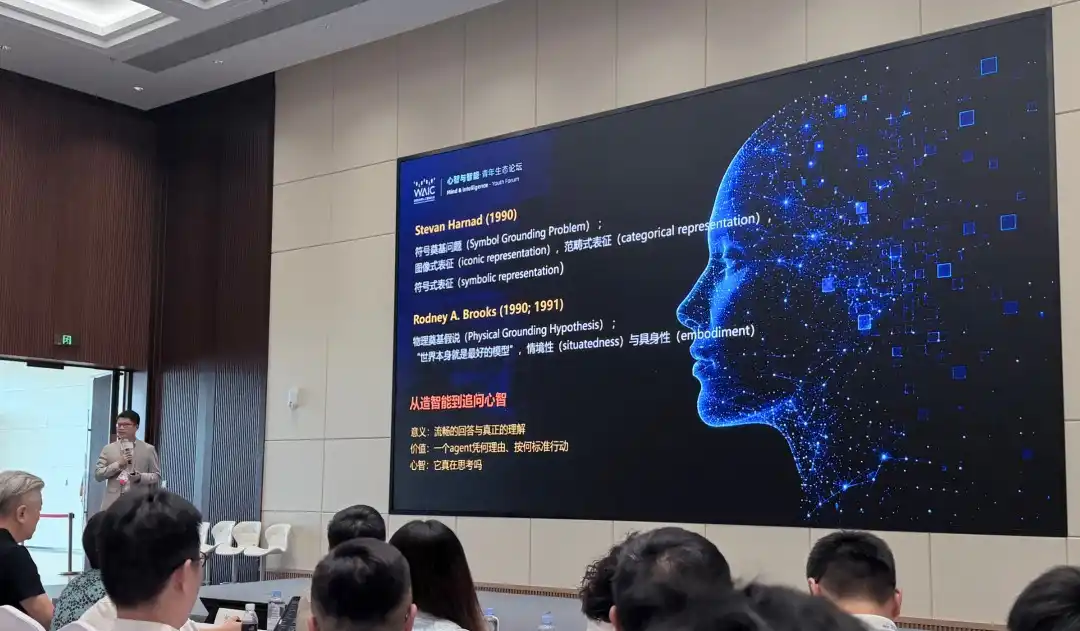
Following this line of thought, Sun Ning proposed that a kind of intelligence deeply rooted in the world requires at least a body, an environment, others, and history. The body gives action a cost, the environment provides feedback, others bring norms, and history allows failures to accumulate into experience.

He summarized it in two sentences:

Before intelligence, there is a world. Before mind, there is relationship.

This also set the tone for the day's discussions.

This Youth Forum was jointly organized by the National Development and Intelligent Governance Comprehensive Laboratory of Fudan University, Shanghai AI Lab, the School of Philosophy at Fudan University, Qingpu Fudan Future Technology Research Institute, and Datawhale.

The stage featured young scientists, philosophers, social scientists, and entrepreneurs. Conversations ranged from self-evolving models to mathematical proofs, from protein dynamics to social simulations, and finally settled on governance and industry.

Issues seemingly scattered across different disciplines were thus strung together.

AI Starts Doing Science Itself

Just after philosophers questioned “what is intelligence,” Chen Yongchao, founder of Chaoyan Intelligence, raised a more specific question—Can AI become a new scientist?
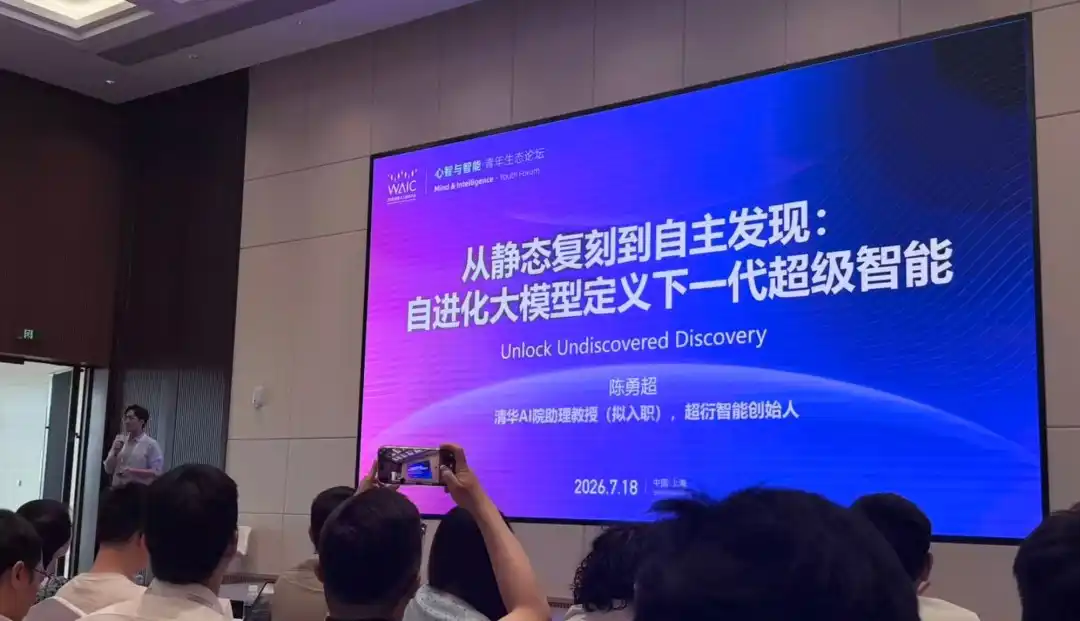
Past large models mainly learned existing human knowledge from internet data. The self-evolving models Chen Yongchao described aim to engage in real-world tasks and continuously learn from the research process and environmental feedback.

Specifically, the model can generate its own ideas, write code, run experiments, analyze data, and then incorporate the trajectories of successes and failures to adjust data, the model, and the Harness.

Chen Yongchao also showcased some eye-catching results.

The Apex Search developed by his team generated 34 papers, submitted to academic peer-review systems like ACL and ARR. According to results disclosed on-site, about 10 had the chance to enter Findings or the main conference, with two papers scoring 3.67, higher than about 95% of human submissions.
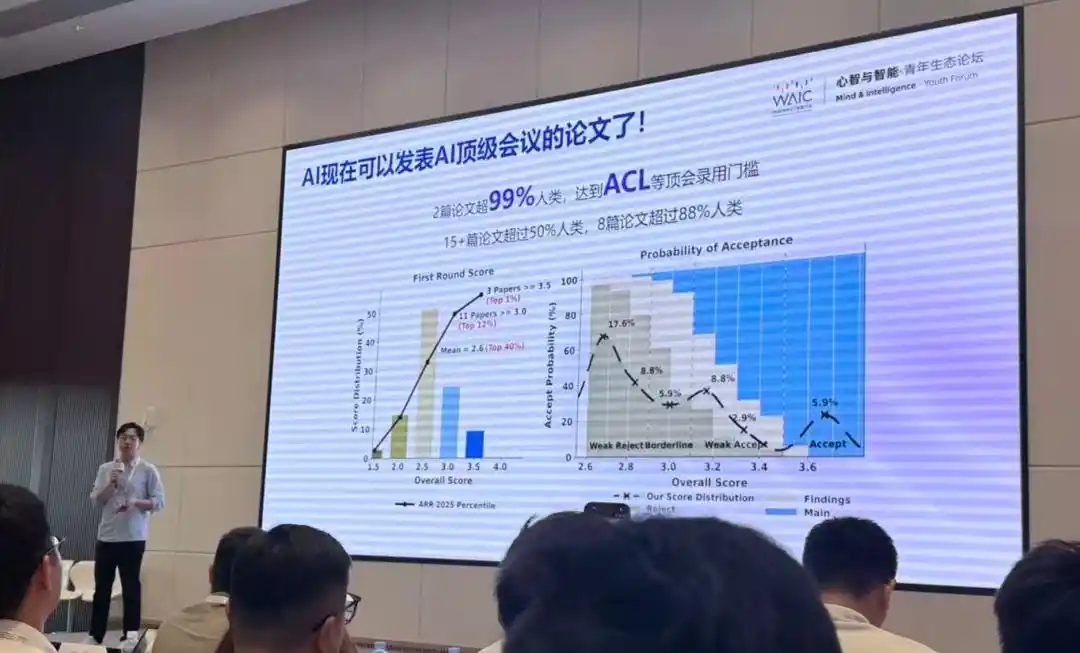
Some peer reviews even gave comments like “the first study in the field,” “rigorous experiments,” and “addresses key issues.”

In other words, AI-generated research results could already pass the first round of scrutiny by human reviewers.

But problems followed.

In the later “Changes in Society” panel, Wei Zhongyu, a professor at the School of Data Science, Fudan University, raised the question: if AI generates and submits dozens of papers at once, and a few receive high scores, how should we judge its research capabilities? Does this mean the system's research ability has reached top conference publication level, or has it merely found weak points in the existing peer-review mechanism?
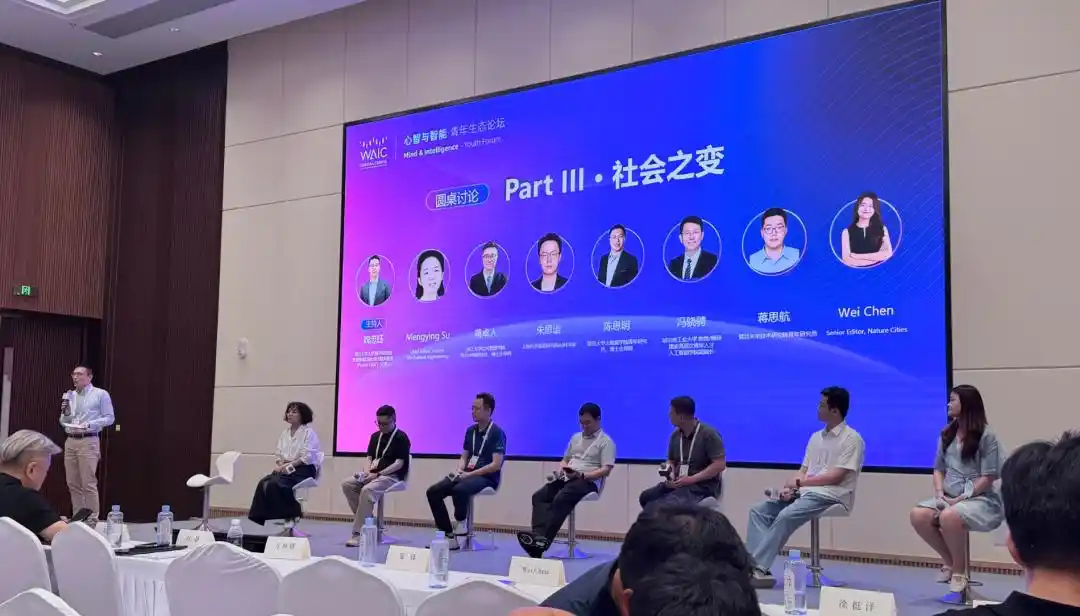
As papers are generated faster and faster, evaluation may become more difficult than generation itself.

Chen Yongchao himself left a series of questions. Can AI produce a breakthrough like Transformer? How to evaluate massive scientific discoveries? Who owns AI research outcomes? If the system is used for harmful research, how should responsibility be allocated?

Next on stage, Wang Tiandong, a tenure-track associate professor at the Shanghai Center for Mathematical Sciences, Fudan University, offered a clearer division of labor between humans and machines.
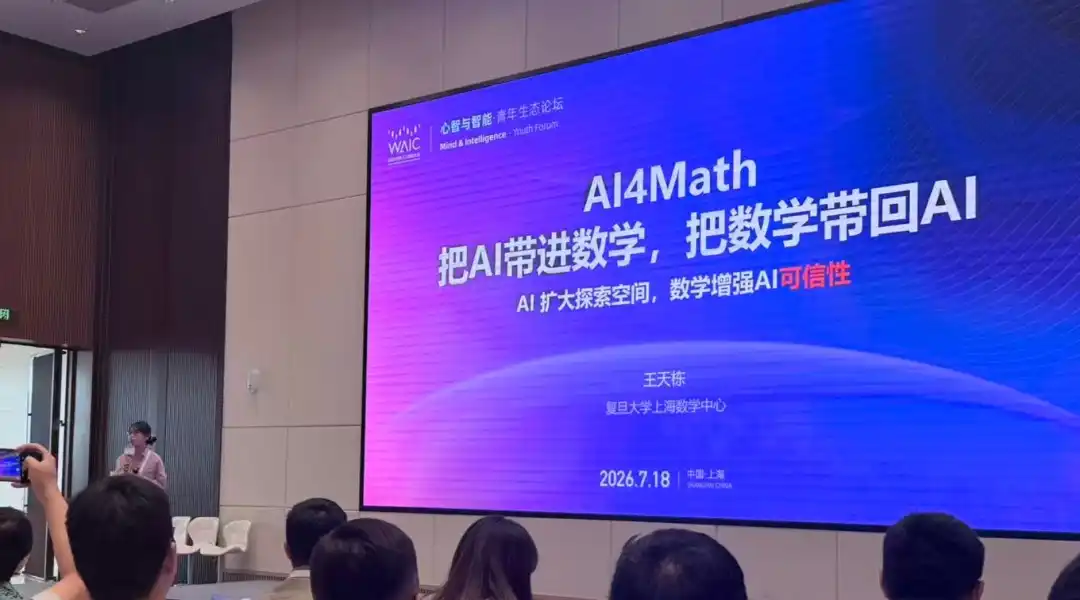
AI excels at retrieval, summarization, finding special and counterexamples, and generating dozens of candidate proof paths simultaneously. Mathematicians are responsible for judging the importance of problems, whether conjectures are worth studying, and applying rigorous concepts and structures to constrain results. Finally, machine verification is added to check for missing steps in reasoning or errors in calculations.

Simply put:

AI expands the search space, humans define value, and machines are responsible for verification.

In this process, mathematics can provide structural constraints, formal verification, error analysis, and applicability boundaries for AI. Trustworthiness does not mean never making mistakes; a more realistic standard is that errors can be discovered, risks can be defined, and conclusions can withstand review.

Subsequently, Yang Zixiong, an AI scientist at the Shanghai Institute for Science and Technology Artificial Intelligence, brought the trustworthiness issue into the more complex world of life.
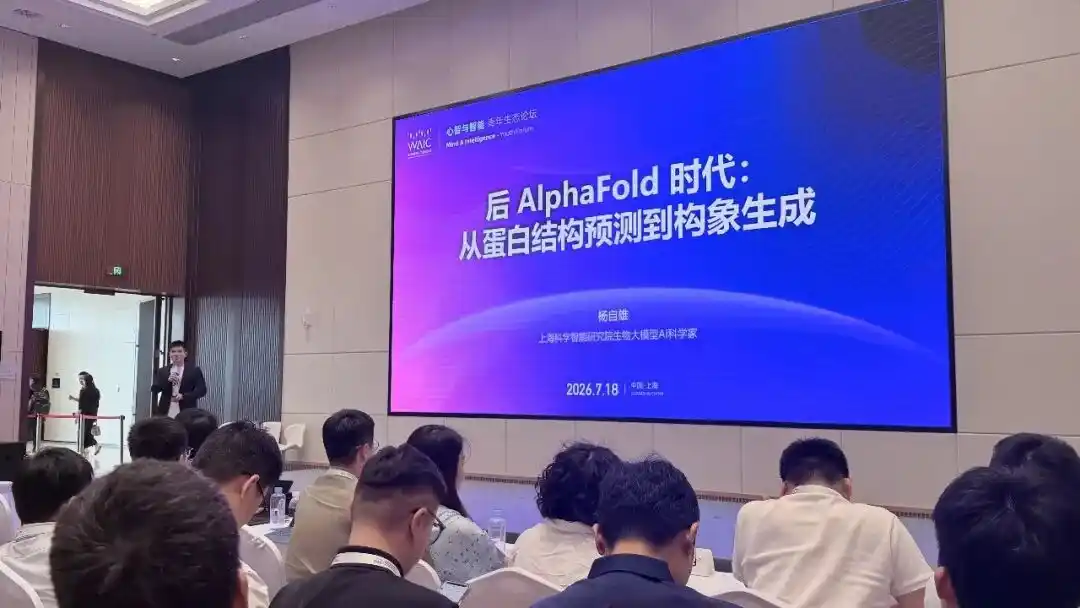
AlphaFold's core solution infers highly probable static structures from sequences. But biological molecules like proteins and RNA are always in motion, with many functions dependent on conformational distributions, state transitions, and timescales.

Therefore, the research goal in the post-AlphaFold era has shifted from “predicting a structure” to “generating a dynamic trajectory.”

This means the model must cover rare but important conformations, maintain structural stability over long generation times, and satisfy thermodynamics, kinetics, and physical laws. While static structures have accumulated vast data, dynamic molecular data is very limited, and related evaluation systems still need improvement.

From mathematical proofs to protein dynamics, AI can indeed explore faster and more broadly. But once it comes to effective scientific discovery, evidence, experiments, and real-world feedback are all indispensable.

If mathematics and life sciences have relatively clear verification paths, things get more complicated when AI starts simulating humans and society.

When Intelligence Enters Society, Governance Can’t Lag Behind

Qu Jingjing, a young scientist at the Shanghai AI Lab, researches precisely the intersection of AI and social sciences.
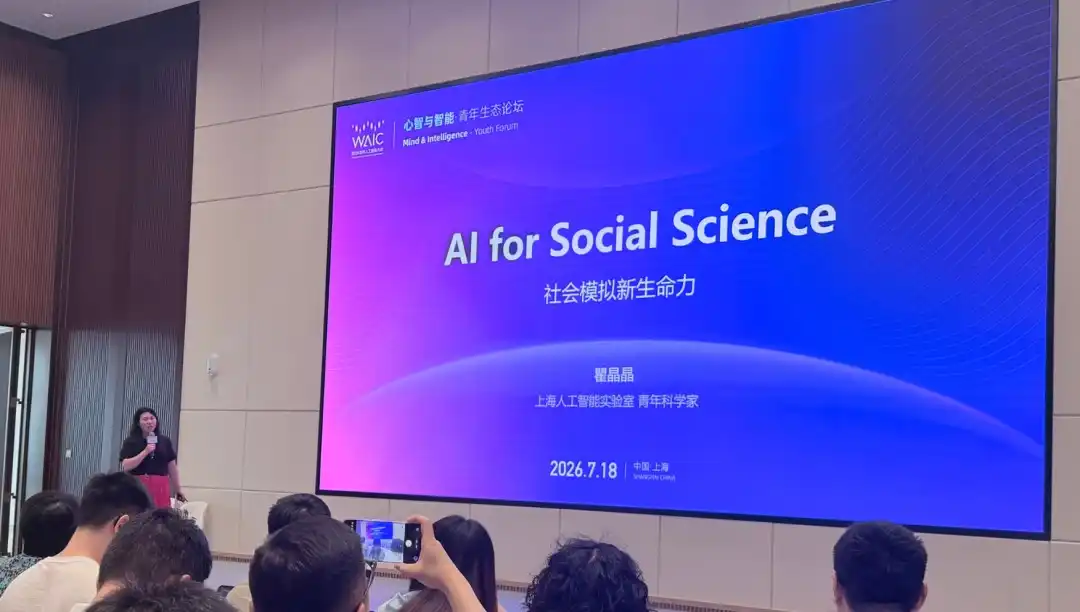
In her view, social sciences are a core foundation for AI development. Alan Turing's research on “whether machines can think” was published in the philosophy journal Mind. Herbert A. Simon proposed the theory of bounded rationality, co-founded the physical symbol system hypothesis with Allen Newell, initiating symbolic AI. Geoffrey Hinton combined psychology and cognitive science to develop neural networks simulating the human brain, paving the way for today's large models.

Now, this relationship is running in reverse, with AI bringing new experimental methods to the social sciences. However, as AGI develops socially and at scale, a core challenge remains: in large-scale, complex social evolutionary games, it's difficult to balance logical consistency with the credibility of experimental results.

Qu Jingjing showcased the social simulation platform Epitome. In terms of high-throughput efficiency, the platform can simulate thousands of virtual samples with one click, compressing a decade of social evolution into 14 hours. Researchers can freely adjust variables like intervention policies and group relationships to quickly observe their long-term social impacts.

This method is particularly suitable for experiments that are difficult to conduct directly in the real world.

For example, how to simulate a child growing from third to fifth grade? The model must reflect knowledge changes and simulate psychological, behavioral, and social relationships. Researchers also want to test different education policies in this virtual environment to observe which methods benefit child development.

While the idea is attractive, risks are also embedded.

After all, a large model can simulate an expert but may not accurately simulate a child in a specific family, region, and social context. Do the attitudes displayed by virtual roles come from real social patterns or stereotypes in the training data?

In the “Changes in Society” panel, Jiang Zhuoren, a Hundred-Talent-Plan researcher and doctoral supervisor at the School of Public Administration, Zhejiang University, shared a set of more cautionary data.

In a cross-national trust study, the correlation coefficient of data generated by large models at the national mean level could reach over 90%. But when entering regression analysis, the significance coverage dropped to 34%–37%; when researchers tried to recover country types using this data, the results were close to random.

In other words, the model looks very much like real society at a macro level, but once entering specific populations and causal relationships, biases are exposed.

More troublesome, social data can form a loop.

Real-world biases enter training data, models then participate in recruitment, education, content distribution, and public decision-making, and new results become materials for the next training round. Without auditing and correction, original biases may be continuously amplified in the loop.

Thus, a straightforward reminder appeared on the panel:

Large models can be used to simulate society, but don't take simulation results as the voice of real society.

Once AI enters society, governance cannot remain at the level of “is the model accurate.”

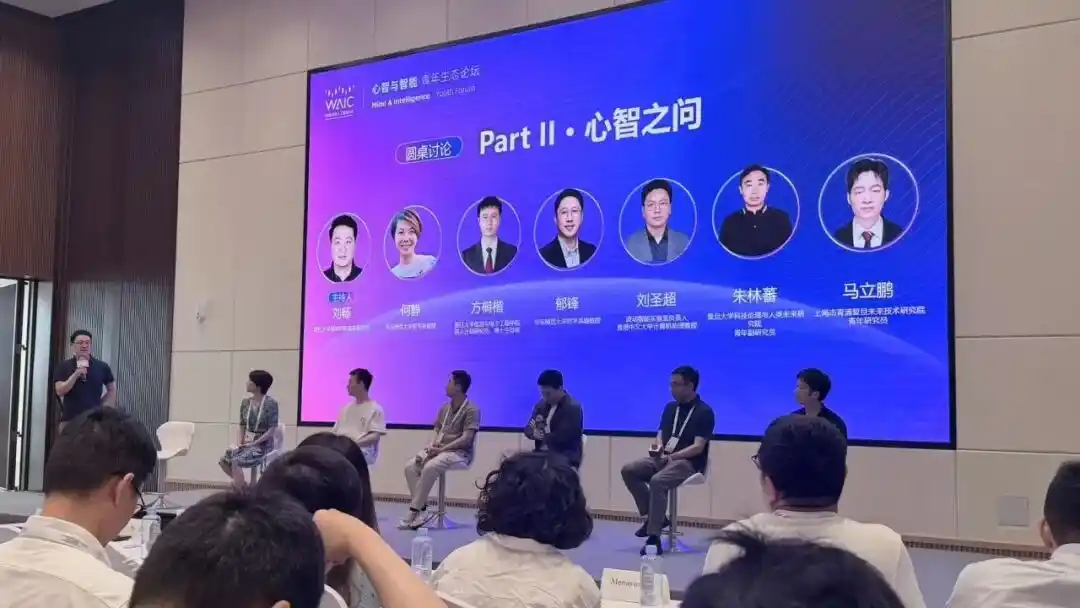
The “Questions of Mind” panel discussed risks like attacks, harmful biological research, and psychological dependence. Zhu Linfan, a young associate researcher at the Institute for Science, Technology and Human Future Ethics, Fudan University, also mentioned that current AI governance generally faces the dilemma of “over-regulation stifles, under-regulation leads to chaos,” requiring technology, policy, ethics, and international cooperation to find more nuanced solutions.

Ma Lipeng, a young researcher at the Qingpu Fudan Future Technology Research Institute, added a technical layer. Today's AI can answer almost anything but lacks the meta-cognitive ability to “know what it doesn't know.” Only by first helping AI recognize its own capabilities and boundaries can subsequent evaluation and governance have better handles. This also requires participation from different disciplines like philosophy, education, and computer science.
The responsibility issue is also becoming more complex.

When AI agents possess stronger initiative, can they become legal or moral actors? If they cannot bear responsibility independently, how should responsibility be divided among developers, deployers, users, and final decision-makers?

Given this, it's not hard to understand why the National Development and Intelligent Governance Comprehensive Laboratory of Fudan University appeared as an organizer of this Scientific Intelligence Forum.

This laboratory's research spans artificial intelligence, big data, humanities and social sciences, public governance, etc., and is one of the first Ministry of Education key laboratories for philosophy and social sciences. An important task it undertakes is observing technological changes within real social and institutional environments and then bridging academic research with policy needs.

The “2026 Blue Book on Intelligent Development in Humanities and Social Sciences,” compiled by the Fudan AI+New Liberal Arts ecosystem led by the lab, in collaboration with the Shanghai AI Lab, bringing together over 40 experts from nearly 20 disciplines, attempts to transform many seemingly abstract governance principles into actionable research and institutional processes.
For example, when AI enters research, the final output cannot just be a fluently written paper. The research question, data dictionary, analysis scripts, execution records, review comments, and human adjudication should also be preserved, allowing others to follow the evidence chain.

The STRIDES framework proposed in the Blue Book sets checkpoints at theory, method, data, execution, and review stages. Which hypotheses need to be stated, which evidence needs to be located, which low-confidence conclusions need to be referred back to human judgment—all are incorporated into the process.

In the field of public governance, the questions are more direct.

The Blue Book distinguishes between agentic and auxiliary AI embedding modes. The former allows the algorithm to participate all the way to the output decision, with humans often only appearing in case of system failure or appeal. The latter mode assigns AI tasks like retrieval, calculation, risk prompts, and solution generation, with the final decision still made by humans.

And so-called “human-in-the-loop” cannot just be a confirmation button. Humans need rights to intervene, correct, and explain.

From this perspective, governance is more like building roads for technology. Which scenarios can accelerate, which places need guardrails, who reviews, who explains, and who takes responsibility when problems arise must all be written into the rules beforehand.

Additionally, the 2026 Blue Book constructs the “Chinese Universities AI4SSH Index,” observing the integration level of AI and humanities/social sciences in universities from dimensions like core research capability, innovative development potential, and social dissemination capability.

The judgment it conveys is clear. For a field to develop long-term capacity, a few papers and models are not enough. Data, computing power, toolchains, talent cultivation, organizational collaboration, and evaluation systems all need to keep up.

This is the significance of the National Development and Intelligent Governance Comprehensive Laboratory connecting academia and policy. Technology provides new possibilities, social sciences explain impacts, economics studies incentives and distribution, and governance research transforms these understandings into procedures and institutions.

In Shanghai, Academia, Policy, and Industry Are Connected

Following governance issues further down, one eventually encounters industry.

Luo Xiaozhou, a researcher at the Shenzhen Institute of Advanced Technology, Chinese Academy of Sciences, and founder of SynbioTech, vividly described a key difference on-site.
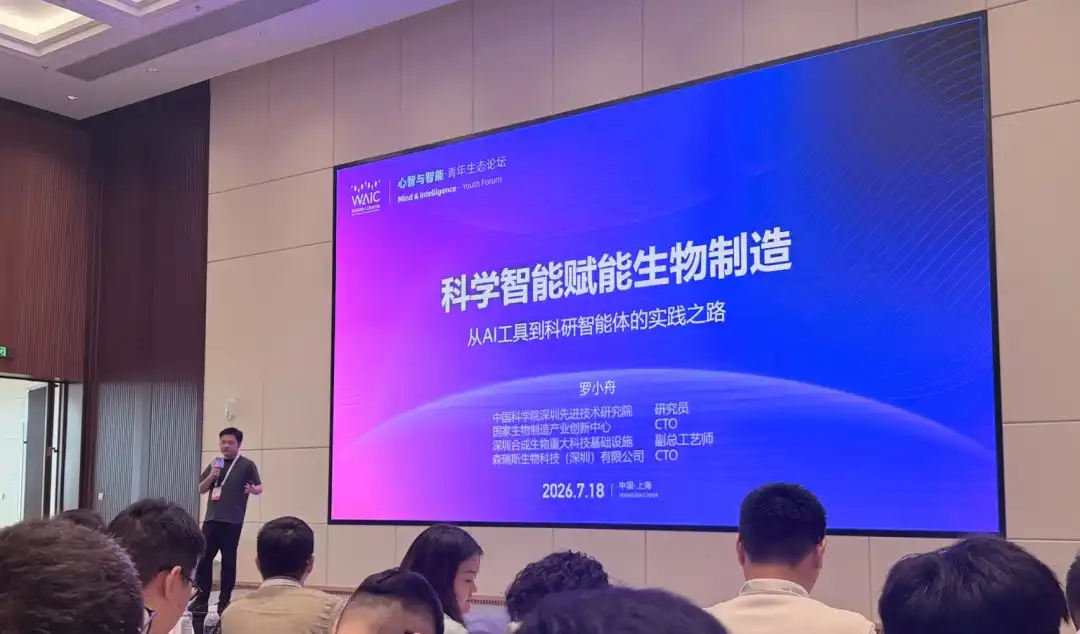
When AI writes code or does math, many processes can form closed loops within computers. But bio-manufacturing must cross the chasm between the digital and physical worlds.

After the model proposes a scientific hypothesis, experimental equipment must physically realize it, then feed the detection results back to the model. If any single link is broken, self-evolution stops.

Relying on the Shenzhen Synthetic Biology Major Science Facility with over 2 billion RMB investment, Luo Xiaozhou's team uses automated equipment as the “body and hands,” letting AI handle experimental design and decision-making. They hope that upon inputting a demand, the system can automatically design experiments, write scripts, execute operations, collect data, and proceed to the next round of optimization.

Related technologies have been used in R&D and production of products like squalene and squalane. Among them, squalene products have entered Merck's supply chain, and squalane has entered cosmetic supply chains.

But deep integration of research and industry involves more than just the model.

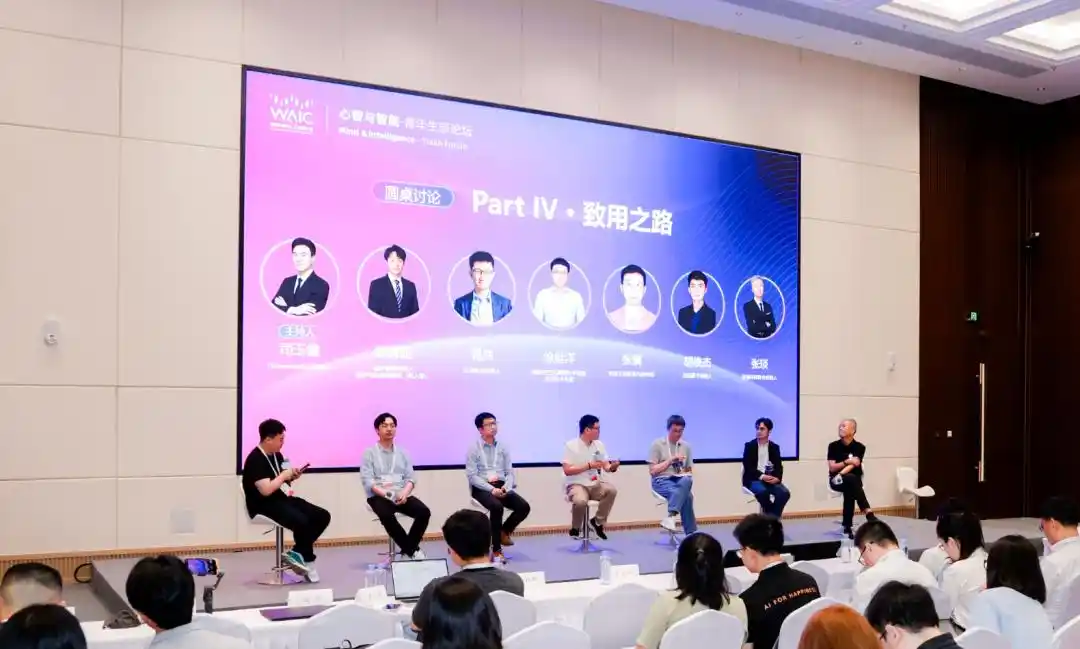
The “Path to Application” panel was quite candid. AI can accelerate antibody design, protein optimization, and strain engineering, but there are still wet lab experiments, clinical trials, approvals, process development, production, and markets.

Zhang Yan, co-founder and senior vice president of MGI Tech, summarized the difficulty as the “last mile” for AI landing in the physical world. In his view, lab automation and robotics technologies are relatively mature; the harder part is truly integrating AI, software systems, instruments, and specific disciplinary needs. To this end, MGI Tech attempts to control lab instruments and robots like computer peripherals, then connect models, automated experiments, and data feedback into a closed loop.
Upstream shortens R&D time, but bottlenecks may quickly shift to the next link. If regulatory systems, industry inertia, and organizational processes don't change simultaneously, the acceleration brought by technology is hard to pass along the value chain.

Of course, the money issue is also unavoidable.

When data providers, model developers, automation platforms, and industry clients jointly create a result, how should they charge, and how should revenue be distributed? Zhang Yan was also direct: new productivity changes production relations; besides “how to make money,” one must figure out “how to share the money” among parties in the chain.

It sounds down-to-earth but touches on deep changes as AI enters industry.

In the past, parties charged based on work stages; now, AI pushes industries from process delivery to outcome delivery, with participants beginning to share responsibility for the final result.

New productivity is also giving birth to new production relations.

This also falls within the scope of AI governance. Besides safety, ethics, and rights, how technological dividends are distributed, how industry rules adjust, and how traditional regulation adapts to new research speeds all require study.

Looking back, the composition of guests at this Youth Forum was actually quite interesting.

Some study self-evolving models, some build trustworthy boundaries for AI, some explore protein dynamics and social simulations, journal editors question what real problems AI research solves from an academic evaluation perspective; others move from labs to startups, advancing research results to automated experiments and industrial production.

They come from different specialties and institutions but gathered together in Shanghai.

That same afternoon, the main Scientific Intelligence Open Forum unfolded along the themes of “Path of Discovery, Foundation of Closed Loop, Road to Implementation,” with guests like Nobel laureate Arieh Warshel and Turing Award winner Gilles Brassard discussing scientific intelligence and original innovation.

The Youth Forum turned the lens towards research credibility, social governance, and industry chains.

One side discusses how far scientific intelligence can go, the other continues to ask how it can steadily enter reality.

Behind this lies a Youth Scientific Intelligence Ecosystem taking shape in Shanghai.

Shanghai provides universities, research institutions, industry resources, and policy research platforms, while young people cross disciplinary boundaries here, placing models, society, and industry within the same set of questions.

Therefore, philosophy heating up again in AI circles is just the visible part of this change.

Deeper down, AI has entered knowledge production and social operation, and technical issues have begun intertwining with governance, economics, ethics, and public policy.

The better AI answers, the more seriously humans must decide what to ask, what to believe, and where to steer the technology.

This article comes from the WeChat public account “QbitAI” (ID: QbitAI), author: Jin Lei.

Criptomoedas em alta

Perguntas relacionadas

QWhat is the core philosophical concept proposed by Professor Sun Ning regarding the development of true intelligence?

AThe core concept proposed by Professor Sun Ning is summarized as: 'Intelligence exists only after there is a world. Mind exists only after there are relationships.' He argues that a truly grounded intelligence requires embodiment (a body that incurs action costs), an environment (providing feedback), other agents (introducing norms), and history (where failures become experience).

QWhat are the main concerns raised about AI systems that autonomously conduct scientific research and generate papers?

AThe main concerns are: 1) How to accurately evaluate an AI's true research capability versus its ability to exploit weaknesses in peer review systems. 2) Ownership and attribution of AI-generated scientific discoveries. 3) Responsibility and liability if the AI system is used for harmful research. 4) The risk of generating papers faster than they can be properly assessed, making evaluation more difficult than generation.

QAccording to the article, what are the key limitations or risks when using large language models to simulate human society?

AKey limitations and risks include: 1) Models may replicate stereotypes and biases from training data rather than capturing real social dynamics. 2) While macro-level simulated data may correlate highly with real-world data, it often breaks down in specific causal relationships or population-level analyses. 3) A dangerous feedback loop can form where real-world biases in data train models, which then influence decisions (e.g., in hiring, education), and those outcomes become new training data, amplifying the biases. The article cautions against treating simulation results as the voice of real society.

QWhat is the STRIDES framework proposed in the '2026 Humanities and Social Sciences Intelligent Development Bluebook', and what is its purpose?

AThe STRIDES framework is a proposed system that sets checkpoints at various stages of AI-assisted research, including Theory, Method, Data, Execution, and Scrutiny. Its purpose is to translate abstract governance principles into actionable research and institutional workflows. It ensures that AI-driven research leaves behind not just a fluent paper, but a verifiable evidence chain including research questions, data dictionaries, analysis scripts, execution records, review comments, and human adjudication, allowing others to retrace the steps.

QHow is AI's integration into industries like biomanufacturing challenging traditional models of work and payment, according to the discussion in the 'Road to Application' roundtable?

AAI integration is shifting the industry from process-based delivery to outcome-based delivery. Traditionally, different parties were paid for their specific work环节 (process). Now, with AI driving towards a final result (e.g., a new molecule or manufacturing process), participants including data providers, model developers, automation platforms, and industrial clients are becoming jointly responsible for the final outcome. This new productivity is催生 new production relationships, forcing a re-evaluation of not just 'how to make money' but 'how to distribute the profits' across the entire value chain.

Leituras Relacionadas

Who Captures Value in Web 2.5?

Title: Who Captures Value in Web 2.5? Summary: For most of financial history, moving money was difficult and slow. Cryptocurrencies and stablecoins promised faster, cheaper transfers. However, their true potential is realized not by replacing traditional finance but by acting as an efficient, invisible settlement layer beneath it—a hybrid model called "Web 2.5." This fusion combines the regulation and familiar interfaces of traditional finance with the low-cost, programmable, always-on settlement of crypto. The critical question is: where does value accumulate in this new system? The answer lies in the coordination or "translation" layer that bridges the two financial worlds. History shows that the middleman connecting systems often captures immense value, as seen with Visa or SWIFT. This layer controls the flow of funds and can extract fees, collect float interest, and wield significant power (e.g., sanctions). Now, four main models are competing to become this dominant translation layer: protocols (like Chainlink), market utilities, banking cooperatives, and central bank clubs. For instance, Chainlink, in partnership with a consortium of banks, is piloting real-time FX settlement. SWIFT is building its own blockchain-based ledger layer. The Bank for International Settlements is testing tokenized central bank reserves. Ultimately, Web 2.5 is more promising than a purely decentralized utopia because it doesn't require abandoning existing systems. Instead, crypto becomes a commoditized, hidden infrastructure enabling faster, cheaper transactions within the traditional financial framework. The winning coordination layer will hold the power and capture the economic value in this new landscape.

链捕手Há 4h

Who Captures Value in Web 2.5?

链捕手Há 4h

Trading

Spot

Artigos em Destaque

O que é GROK AI

Grok AI: Revolucionar a Tecnologia Conversacional na Era Web3 Introdução No panorama em rápida evolução da inteligência artificial, a Grok AI destaca-se como um projeto notável que liga os domínios da tecnologia avançada e da interação com o utilizador. Desenvolvida pela xAI, uma empresa liderada pelo renomado empreendedor Elon Musk, a Grok AI procura redefinir a forma como interagimos com a inteligência artificial. À medida que o movimento Web3 continua a florescer, a Grok AI visa aproveitar o poder da IA conversacional para responder a consultas complexas, proporcionando aos utilizadores uma experiência que é não apenas informativa, mas também divertida. O que é a Grok AI? A Grok AI é um sofisticado chatbot de IA conversacional projetado para interagir com os utilizadores de forma dinâmica. Ao contrário de muitos sistemas de IA tradicionais, a Grok AI abraça uma gama mais ampla de perguntas, incluindo aquelas tipicamente consideradas inadequadas ou fora das respostas padrão. Os principais objetivos do projeto incluem: Raciocínio Fiável: A Grok AI enfatiza o raciocínio de senso comum para fornecer respostas lógicas com base na compreensão contextual. Supervisão Escalável: A integração de assistência de ferramentas garante que as interações dos utilizadores sejam monitorizadas e otimizadas para qualidade. Verificação Formal: A segurança é primordial; a Grok AI incorpora métodos de verificação formal para aumentar a fiabilidade das suas saídas. Compreensão de Longo Contexto: O modelo de IA destaca-se na retenção e recordação de um extenso histórico de conversas, facilitando discussões significativas e contextualizadas. Robustez Adversarial: Ao focar na melhoria das suas defesas contra entradas manipuladas ou maliciosas, a Grok AI visa manter a integridade das interações dos utilizadores. Em essência, a Grok AI não é apenas um dispositivo de recuperação de informações; é um parceiro conversacional imersivo que incentiva um diálogo dinâmico. Criador da Grok AI A mente por trás da Grok AI não é outra senão Elon Musk, um indivíduo sinónimo de inovação em vários campos, incluindo automóvel, viagens espaciais e tecnologia. Sob a égide da xAI, uma empresa focada em avançar a tecnologia de IA de maneiras benéficas, a visão de Musk visa reformular a compreensão das interações com a IA. A liderança e a ética fundacional são profundamente influenciadas pelo compromisso de Musk em ultrapassar os limites tecnológicos. Investidores da Grok AI Embora os detalhes específicos sobre os investidores que apoiam a Grok AI permaneçam limitados, é reconhecido publicamente que a xAI, a incubadora do projeto, é fundada e apoiada principalmente pelo próprio Elon Musk. As anteriores empreitadas e participações de Musk fornecem um forte apoio, reforçando ainda mais a credibilidade e o potencial de crescimento da Grok AI. No entanto, até agora, informações sobre fundações ou organizações de investimento adicionais que apoiam a Grok AI não estão prontamente acessíveis, marcando uma área para exploração futura potencial. Como Funciona a Grok AI? A mecânica operacional da Grok AI é tão inovadora quanto a sua estrutura conceptual. O projeto integra várias tecnologias de ponta que facilitam as suas funcionalidades únicas: Infraestrutura Robusta: A Grok AI é construída utilizando Kubernetes para orquestração de contêineres, Rust para desempenho e segurança, e JAX para computação numérica de alto desempenho. Este trio assegura que o chatbot opere de forma eficiente, escale eficazmente e sirva os utilizadores prontamente. Acesso a Conhecimento em Tempo Real: Uma das características distintivas da Grok AI é a sua capacidade de aceder a dados em tempo real através da plataforma X—anteriormente conhecida como Twitter. Esta capacidade concede à IA acesso às informações mais recentes, permitindo-lhe fornecer respostas e recomendações oportunas que outros modelos de IA poderiam perder. Dois Modos de Interação: A Grok AI oferece aos utilizadores a escolha entre “Modo Divertido” e “Modo Regular”. O Modo Divertido permite um estilo de interação mais lúdico e humorístico, enquanto o Modo Regular foca em fornecer respostas precisas e exatas. Esta versatilidade assegura uma experiência adaptada que atende a várias preferências dos utilizadores. Em essência, a Grok AI combina desempenho com envolvimento, criando uma experiência que é tanto enriquecedora quanto divertida. Cronologia da Grok AI A jornada da Grok AI é marcada por marcos fundamentais que refletem as suas fases de desenvolvimento e implementação: Desenvolvimento Inicial: A fase fundamental da Grok AI ocorreu ao longo de aproximadamente dois meses, durante os quais o treinamento inicial e o ajuste do modelo foram realizados. Lançamento Beta do Grok-2: Numa evolução significativa, o beta do Grok-2 foi anunciado. Este lançamento introduziu duas versões do chatbot—Grok-2 e Grok-2 mini—cada uma equipada com capacidades para conversar, programar e raciocinar. Acesso Público: Após o seu desenvolvimento beta, a Grok AI tornou-se disponível para os utilizadores da plataforma X. Aqueles com contas verificadas por um número de telefone e ativas há pelo menos sete dias podem aceder a uma versão limitada, tornando a tecnologia disponível para um público mais amplo. Esta cronologia encapsula o crescimento sistemático da Grok AI desde a sua concepção até ao envolvimento público, enfatizando o seu compromisso com a melhoria contínua e a interação com o utilizador. Principais Características da Grok AI A Grok AI abrange várias características principais que contribuem para a sua identidade inovadora: Integração de Conhecimento em Tempo Real: O acesso a informações atuais e relevantes diferencia a Grok AI de muitos modelos estáticos, permitindo uma experiência de utilizador envolvente e precisa. Estilos de Interação Versáteis: Ao oferecer modos de interação distintos, a Grok AI atende a várias preferências dos utilizadores, convidando à criatividade e personalização na conversa com a IA. Base Tecnológica Avançada: A utilização de Kubernetes, Rust e JAX fornece ao projeto uma estrutura sólida para garantir fiabilidade e desempenho ótimo. Consideração de Discurso Ético: A inclusão de uma função de geração de imagens demonstra o espírito inovador do projeto. No entanto, também levanta considerações éticas em torno dos direitos autorais e da representação respeitosa de figuras reconhecíveis—uma discussão em curso dentro da comunidade de IA. Conclusão Como uma entidade pioneira no domínio da IA conversacional, a Grok AI encapsula o potencial para experiências transformadoras do utilizador na era digital. Desenvolvida pela xAI e impulsionada pela abordagem visionária de Elon Musk, a Grok AI integra conhecimento em tempo real com capacidades avançadas de interação. Esforça-se por ultrapassar os limites do que a inteligência artificial pode alcançar, mantendo um foco nas considerações éticas e na segurança do utilizador. A Grok AI não apenas incorpora o avanço tecnológico, mas também representa um novo paradigma de conversas no panorama Web3, prometendo envolver os utilizadores com conhecimento hábil e interação lúdica. À medida que o projeto continua a evoluir, ele permanece como um testemunho do que a interseção da tecnologia, criatividade e interação humana pode alcançar.

518 Visualizações TotaisPublicado em {updateTime}Atualizado em 2024.12.26

O que é GROK AI

O que é ERC AI

Euruka Tech: Uma Visão Geral do $erc ai e as suas Ambições no Web3 Introdução No panorama em rápida evolução da tecnologia blockchain e das aplicações descentralizadas, novos projetos surgem frequentemente, cada um com objetivos e metodologias únicas. Um desses projetos é a Euruka Tech, que opera no vasto domínio das criptomoedas e do Web3. O foco principal da Euruka Tech, particularmente do seu token $erc ai, é apresentar soluções inovadoras concebidas para aproveitar as capacidades crescentes da tecnologia descentralizada. Este artigo tem como objetivo fornecer uma visão abrangente da Euruka Tech, uma exploração das suas metas, funcionalidade, a identidade do seu criador, potenciais investidores e a sua importância no contexto mais amplo do Web3. O que é a Euruka Tech, $erc ai? A Euruka Tech é caracterizada como um projeto que aproveita as ferramentas e funcionalidades oferecidas pelo ambiente Web3, focando na integração da inteligência artificial nas suas operações. Embora os detalhes específicos sobre a estrutura do projeto sejam um tanto elusivos, ele é concebido para melhorar o envolvimento dos utilizadores e automatizar processos no espaço cripto. O projeto visa criar um ecossistema descentralizado que não só facilita transações, mas também incorpora funcionalidades preditivas através da inteligência artificial, daí a designação do seu token, $erc ai. O objetivo é fornecer uma plataforma intuitiva que facilite interações mais inteligentes e um processamento eficiente de transações dentro da crescente esfera do Web3. Quem é o Criador da Euruka Tech, $erc ai? Neste momento, a informação sobre o criador ou a equipa fundadora da Euruka Tech permanece não especificada e algo opaca. Esta ausência de dados levanta preocupações, uma vez que o conhecimento sobre o histórico da equipa é frequentemente essencial para estabelecer credibilidade no setor blockchain. Portanto, categorizamos esta informação como desconhecida até que detalhes concretos sejam disponibilizados no domínio público. Quem são os Investidores da Euruka Tech, $erc ai? De forma semelhante, a identificação de investidores ou organizações de apoio para o projeto Euruka Tech não é prontamente fornecida através da pesquisa disponível. Um aspeto que é crucial para potenciais partes interessadas ou utilizadores que consideram envolver-se com a Euruka Tech é a garantia que vem de parcerias financeiras estabelecidas ou apoio de empresas de investimento respeitáveis. Sem divulgações sobre afiliações de investimento, é difícil tirar conclusões abrangentes sobre a segurança financeira ou a longevidade do projeto. Em linha com a informação encontrada, esta seção também se encontra no estado de desconhecido. Como funciona a Euruka Tech, $erc ai? Apesar da falta de especificações técnicas detalhadas para a Euruka Tech, é essencial considerar as suas ambições inovadoras. O projeto procura aproveitar o poder computacional da inteligência artificial para automatizar e melhorar a experiência do utilizador no ambiente das criptomoedas. Ao integrar IA com tecnologia blockchain, a Euruka Tech visa fornecer funcionalidades como negociações automatizadas, avaliações de risco e interfaces de utilizador personalizadas. A essência inovadora da Euruka Tech reside no seu objetivo de criar uma conexão fluida entre os utilizadores e as vastas possibilidades apresentadas pelas redes descentralizadas. Através da utilização de algoritmos de aprendizagem automática e IA, visa minimizar os desafios enfrentados por utilizadores de primeira viagem e agilizar as experiências transacionais dentro do quadro do Web3. Esta simbiose entre IA e blockchain sublinha a importância do token $erc ai, que se apresenta como uma ponte entre interfaces de utilizador tradicionais e as capacidades avançadas das tecnologias descentralizadas. Cronologia da Euruka Tech, $erc ai Infelizmente, devido à informação limitada disponível sobre a Euruka Tech, não conseguimos apresentar uma cronologia detalhada dos principais desenvolvimentos ou marcos na jornada do projeto. Esta cronologia, tipicamente inestimável para traçar a evolução de um projeto e compreender a sua trajetória de crescimento, não está atualmente disponível. À medida que informações sobre eventos notáveis, parcerias ou adições funcionais se tornem evidentes, atualizações certamente aumentarão a visibilidade da Euruka Tech na esfera cripto. Esclarecimento sobre Outros Projetos “Eureka” É importante abordar que múltiplos projetos e empresas partilham uma nomenclatura semelhante com “Eureka.” A pesquisa identificou iniciativas como um agente de IA da NVIDIA Research, que se concentra em ensinar robôs a realizar tarefas complexas utilizando métodos generativos, bem como a Eureka Labs e a Eureka AI, que melhoram a experiência do utilizador na educação e na análise de serviços ao cliente, respetivamente. No entanto, estes projetos são distintos da Euruka Tech e não devem ser confundidos com os seus objetivos ou funcionalidades. Conclusão A Euruka Tech, juntamente com o seu token $erc ai, representa um jogador promissor, mas atualmente obscuro, dentro do panorama do Web3. Embora os detalhes sobre o seu criador e investidores permaneçam não divulgados, a ambição central de combinar inteligência artificial com tecnologia blockchain destaca-se como um ponto focal de interesse. As abordagens únicas do projeto em promover o envolvimento do utilizador através da automação avançada podem diferenciá-lo à medida que o ecossistema Web3 avança. À medida que o mercado cripto continua a evoluir, as partes interessadas devem manter um olhar atento sobre os avanços em torno da Euruka Tech, uma vez que o desenvolvimento de inovações documentadas, parcerias ou um roteiro definido pode apresentar oportunidades significativas no futuro próximo. Neste momento, aguardamos por insights mais substanciais que possam desvendar o potencial da Euruka Tech e a sua posição no competitivo panorama cripto.

568 Visualizações TotaisPublicado em {updateTime}Atualizado em 2025.01.02

O que é ERC AI

O que é DUOLINGO AI

DUOLINGO AI: Integrar a Aprendizagem de Línguas com Inovação Web3 e IA Numa era em que a tecnologia transforma a educação, a integração da inteligência artificial (IA) e das redes blockchain anuncia uma nova fronteira para a aprendizagem de línguas. Apresentamos DUOLINGO AI e a sua criptomoeda associada, $DUOLINGO AI. Este projeto aspira a unir o poder educativo das principais plataformas de aprendizagem de línguas com os benefícios da tecnologia descentralizada Web3. Este artigo explora os principais aspectos do DUOLINGO AI, analisando os seus objetivos, estrutura tecnológica, desenvolvimento histórico e potencial futuro, mantendo a clareza entre o recurso educativo original e esta iniciativa independente de criptomoeda. Visão Geral do DUOLINGO AI No seu cerne, DUOLINGO AI procura estabelecer um ambiente descentralizado onde os alunos podem ganhar recompensas criptográficas por alcançar marcos educativos em proficiência linguística. Ao aplicar contratos inteligentes, o projeto visa automatizar processos de verificação de habilidades e alocação de tokens, aderindo aos princípios do Web3 que enfatizam a transparência e a propriedade do utilizador. O modelo diverge das abordagens tradicionais de aquisição de línguas ao apoiar-se fortemente numa estrutura de governança orientada pela comunidade, permitindo que os detentores de tokens sugiram melhorias ao conteúdo dos cursos e à distribuição de recompensas. Alguns dos objetivos notáveis do DUOLINGO AI incluem: Aprendizagem Gamificada: O projeto integra conquistas em blockchain e tokens não fungíveis (NFTs) para representar níveis de proficiência linguística, promovendo a motivação através de recompensas digitais envolventes. Criação de Conteúdo Descentralizada: Abre caminhos para educadores e entusiastas de línguas contribuírem com os seus cursos, facilitando um modelo de partilha de receitas que beneficia todos os colaboradores. Personalização Através de IA: Ao empregar modelos avançados de aprendizagem de máquina, o DUOLINGO AI personaliza as lições para se adaptar ao progresso de aprendizagem individual, semelhante às características adaptativas encontradas em plataformas estabelecidas. Criadores do Projeto e Governança A partir de abril de 2025, a equipa por trás do $DUOLINGO AI permanece pseudónima, uma prática frequente no panorama descentralizado das criptomoedas. Esta anonimidade visa promover o crescimento coletivo e o envolvimento das partes interessadas, em vez de se concentrar em desenvolvedores individuais. O contrato inteligente implementado na blockchain Solana indica o endereço da carteira do desenvolvedor, o que significa o compromisso com a transparência em relação às transações, apesar da identidade dos criadores ser desconhecida. De acordo com o seu roteiro, o DUOLINGO AI pretende evoluir para uma Organização Autónoma Descentralizada (DAO). Esta estrutura de governança permite que os detentores de tokens votem em questões críticas, como implementações de funcionalidades e alocação de tesouraria. Este modelo alinha-se com a ética de empoderamento comunitário encontrada em várias aplicações descentralizadas, enfatizando a importância da tomada de decisão coletiva. Investidores e Parcerias Estratégicas Atualmente, não existem investidores institucionais ou capitalistas de risco publicamente identificáveis ligados ao $DUOLINGO AI. Em vez disso, a liquidez do projeto origina-se principalmente de trocas descentralizadas (DEXs), marcando um contraste acentuado com as estratégias de financiamento das empresas tradicionais de tecnologia educacional. Este modelo de base indica uma abordagem orientada pela comunidade, refletindo o compromisso do projeto com a descentralização. No seu whitepaper, o DUOLINGO AI menciona a formação de colaborações com “plataformas de educação blockchain” não especificadas, com o objetivo de enriquecer a sua oferta de cursos. Embora parcerias específicas ainda não tenham sido divulgadas, estes esforços colaborativos sugerem uma estratégia para misturar inovação em blockchain com iniciativas educativas, expandindo o acesso e o envolvimento dos utilizadores em diversas vias de aprendizagem. Arquitetura Tecnológica Integração de IA O DUOLINGO AI incorpora dois componentes principais impulsionados por IA para melhorar as suas ofertas educativas: Motor de Aprendizagem Adaptativa: Este motor sofisticado aprende a partir das interações dos utilizadores, semelhante a modelos proprietários de grandes plataformas educativas. Ele ajusta dinamicamente a dificuldade das lições para abordar desafios específicos dos alunos, reforçando áreas fracas através de exercícios direcionados. Agentes Conversacionais: Ao empregar chatbots alimentados por GPT-4, o DUOLINGO AI oferece uma plataforma para os utilizadores se envolverem em conversas simuladas, promovendo uma experiência de aprendizagem de línguas mais interativa e prática. Infraestrutura Blockchain Construído na blockchain Solana, o $DUOLINGO AI utiliza uma estrutura tecnológica abrangente que inclui: Contratos Inteligentes de Verificação de Habilidades: Esta funcionalidade atribui automaticamente tokens aos utilizadores que passam com sucesso em testes de proficiência, reforçando a estrutura de incentivos para resultados de aprendizagem genuínos. Emblemas NFT: Estes tokens digitais significam vários marcos que os alunos alcançam, como completar uma seção do seu curso ou dominar habilidades específicas, permitindo-lhes negociar ou exibir as suas conquistas digitalmente. Governança DAO: Membros da comunidade com tokens podem participar na governança votando em propostas-chave, facilitando uma cultura participativa que incentiva a inovação nas ofertas de cursos e funcionalidades da plataforma. Cronologia Histórica 2022–2023: Conceituação O trabalho preliminar para o DUOLINGO AI começa com a criação de um whitepaper, destacando a sinergia entre os avanços em IA na aprendizagem de línguas e o potencial descentralizado da tecnologia blockchain. 2024: Lançamento Beta Um lançamento beta limitado introduz ofertas em línguas populares, recompensando os primeiros utilizadores com incentivos em tokens como parte da estratégia de envolvimento comunitário do projeto. 2025: Transição para DAO Em abril, ocorre um lançamento completo da mainnet com a circulação de tokens, promovendo discussões comunitárias sobre possíveis expansões para línguas asiáticas e outros desenvolvimentos de cursos. Desafios e Direções Futuras Obstáculos Técnicos Apesar dos seus objetivos ambiciosos, o DUOLINGO AI enfrenta desafios significativos. A escalabilidade continua a ser uma preocupação constante, particularmente no equilíbrio dos custos associados ao processamento de IA e à manutenção de uma rede descentralizada responsiva. Além disso, garantir a criação e moderação de conteúdo de qualidade num ambiente descentralizado apresenta complexidades na manutenção dos padrões educativos. Oportunidades Estratégicas Olhando para o futuro, o DUOLINGO AI tem o potencial de aproveitar parcerias de micro-certificação com instituições académicas, proporcionando validações verificadas em blockchain das habilidades linguísticas. Além disso, a expansão cross-chain poderia permitir que o projeto acedesse a bases de utilizadores mais amplas e a ecossistemas de blockchain adicionais, melhorando a sua interoperabilidade e alcance. Conclusão DUOLINGO AI representa uma fusão inovadora de inteligência artificial e tecnologia blockchain, apresentando uma alternativa focada na comunidade aos sistemas tradicionais de aprendizagem de línguas. Embora o seu desenvolvimento pseudónimo e o modelo económico emergente tragam certos riscos, o compromisso do projeto com a aprendizagem gamificada, educação personalizada e governança descentralizada ilumina um caminho a seguir para a tecnologia educativa no domínio do Web3. À medida que a IA continua a avançar e o ecossistema blockchain evolui, iniciativas como o DUOLINGO AI poderão redefinir a forma como os utilizadores interagem com a educação linguística, empoderando comunidades e recompensando o envolvimento através de mecanismos de aprendizagem inovadores.

491 Visualizações TotaisPublicado em {updateTime}Atualizado em 2025.04.11

O que é DUOLINGO AI

Discussões

Bem-vindo à Comunidade HTX. Aqui, pode manter-se informado sobre os mais recentes desenvolvimentos da plataforma e obter acesso a análises profissionais de mercado. As opiniões dos utilizadores sobre o preço de AI (AI) são apresentadas abaixo.

活动图片