The Night Before the AI Model Shakeout

marsbitPublicado em 2026-05-10Última atualização em 2026-05-10

Resumo

China's large language model (LLM) industry is entering a critical consolidation phase. In a concentrated wave of funding in May 2026, leading players Kimi, StepFun, and DeepSeek reportedly secured over $70 billion combined, signaling a dramatic capital rush towards the few remaining independent contenders. This frenzy masks an impending shakeout. The core dynamic has shifted from a pure technology race to a battle for survival and strategic positioning. LLM capabilities are rapidly commoditized; gaps between top models are narrowing. Consequently, investment logic has pivoted from betting on future potential to prioritizing cash flow, user access, and ecosystem integration. The economic model poses a fundamental challenge: while user growth previously meant profits, in the AI era, it drives soaring inference costs. Startups, lacking the cross-subsidy ability of tech giants like ByteDance or Tencent, face immense pressure to achieve financial sustainability. DeepSeek's open-source, high-performance, low-cost strategy has further compressed industry profit margins. Facing this reality, the top players are scrambling to lock in their status before the window closes. StepFun is accelerating its港股 IPO, embedding itself in hardware supply chains. Kimi is aggressively showcasing revenue growth (ARR doubling to $2 billion in a month) to prove viability. DeepSeek, with new state-backed investment, is solidifying its role as a strategic national asset. The parallel to China's prev...

By: Huahua, Banjun

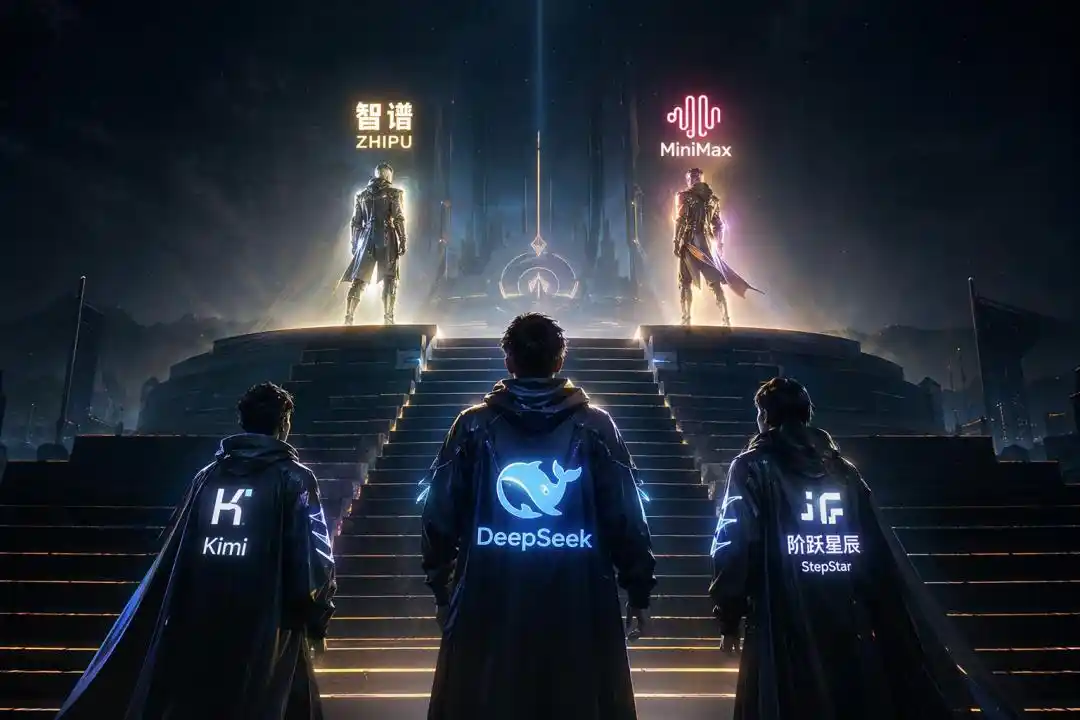
Over the past week, China's large model industry suddenly entered a state of nearly frenzied fundraising.

Kimi secured $2 billion in funding, with its valuation surpassing $20 billion.

StepFun was reported to be close to completing nearly $2.5 billion in funding, while accelerating the dismantling of its VIE structure, with its Hong Kong IPO entering the final sprint.

DeepSeek was rumored for the first time to be accepting external investment, with national-level funds stepping in, pushing its valuation range to $45–$50 billion.

Three companies, three days, over $7 billion flooded in simultaneously. This is no longer just supplementary investment post-funding; it's more like a collective scramble for future survival quotas.

On the surface, this seems like the hottest moment for the large model industry.

But truly dangerous industries are often the hottest.

When capital no longer spreads evenly but pushes all its chips toward the final few leading players, the industry appears exceptionally prosperous, but in reality, it has already entered the night before the shakeout.

The soaring valuations of Zhipu and MiniMax post-IPO have gradually made everyone realize:

The time left for independent large model companies may be running out.

I. Models Are Becoming Commoditized

Over the past two years, the biggest consensus in the large model industry was the existence of massive generational gaps in model capabilities.

GPT-4 was once seemingly unreachable. As long as a startup could get slightly closer in some dimension—long context, reasoning, multimodality, Agent—capital was willing to offer a high premium.

Everyone believed capability gaps would form long-term moats.

But the situation changed in 2026.

Long context is no longer scarce. Reasoning capability is no longer scarce. Multimodality is no longer scarce.

After DeepSeek V4 brought open-source capabilities close to the level of GPT-4 or even newer versions, the industry truly realized for the first time that model capabilities themselves might be easier to catch up with than everyone imagined.

Gaps still exist between Qwen, DeepSeek, Gemini, Claude, and GPT-5.5, but it's already difficult to form generational碾压.

Models are becoming commoditized.

Once commoditization occurs, the capital market will ask a question anew: What's left besides the model?

Thus, the industry's narrative suddenly switched scripts.

In 2023, all companies talked about stronger models, more parameters, better reasoning, longer context. Today, they talk about holding the end-user touchpoint, binding to the industrial chain, possessing user entry points, and having national strategic value.

This shift marks the large model industry's official move from a technology race into a phase of position consolidation.

Capital market data already reflects this.

During the 2023 "Hundred Models Battle," the number of domestic large model companies proliferated exponentially. Data from Yibang Power showed that year, the "Six Tigers" collectively raised over 6 billion RMB, accounting for more than half of the early-stage funding for domestic large models. 2024 was even crazier, with over 168 global large model industry chain funding rounds exceeding 100 million RMB, totaling over 400 billion RMB.

The Six Tigers collectively raised at least 20 billion RMB for the year, with single-round records constantly being broken.

Then came 2025. A sharp turn downward.

According to reports from Touzijie, AI model-layer companies completed only 22 investments for the full year, with a total disclosed amount of 9.4 billion RMB, a 52.9% drop from 2024. The proportion of large model funding in total AI investment plummeted from 51% in 2024 to 14%. Companies with single-round funding exceeding 2 billion RMB were only Zhipu, MiniMax, and Moonshot.

One hundred companies became less than ten that could get funding. Two years, an elimination rate over 90%.

So when we see these three funding rounds totaling $7 billion concentrated in one week in May 2026, its meaning is clear: money isn't flowing to the industry; it's flowing to the last few players.

The larger this funding, the higher the concentration. The higher the concentration, the smaller the space left for those behind.

II. The Music Hasn't Stopped, But the Seats Are Already Insufficient

The crazy surge of Zhipu and MiniMax post-IPO did something with profound impact on the entire industry: it established a reference point in the secondary market for how much domestic large models are worth.

Once this reference standard is set, all unlisted companies face a life-or-death sprint. If they don't lock in their valuation during the current window, and the market experiences aesthetic fatigue leading to a correction, their private market valuations could be instantly shattered.

The window wasn't opened by you; it was propped open by the first movers. If you don't jump in, it closes.

StepFun plans to submit its Hong Kong listing application by the end of June and complete its IPO by year-end. Its VIE structure has been dismantled. The shareholding system reform landed in April. All preparatory steps compressed within months.

Kimi's ARR rose from $100 million to $200 million within a month. Investors proactively disclosed this number to the media, which is extremely rare in the private market. Usually, only when preparing for the next funding round or sprinting towards an IPO would a company allow core financial metrics to leak.

This eagerness to "prove innocence" indicates the private market no longer believes in pure imagination; they want to see revenue, see the certainty of exit. (Extended reading: Kimi isn't short of money; it's short of DeepSeek)

DeepSeek had never previously accepted external funding. Now, state-level funds have entered.

The three companies seem to be doing different things, but the underlying logic is identical: lock in identity, lock in valuation, lock in exit channels. While the window is still open.

III. More Expensive, Yet Less Valuable

Why now? Why not wait?

The reason lies in the economic model of the large model industry, which is exposing an increasingly fatal contradiction.

On the cost side: GPU clusters, inference compute, long context, multimodality, Agent. Each new capability devours cash.

But what's truly terrifying isn't training. It's inference.

Training is a one-time investment. Inference costs grow in sync with user scale. Every token, every API call, every Agent task corresponds to real GPU consumption.

In the mobile internet era, more users meant more profit for the platform. In the AI era, more users might first make the model company poorer.

One more user for WeChat, Tencent's marginal cost hardly changes. One more user for Douyin, ByteDance gets one more ad slot. One more high-frequency user for Doubao, behind it lies continuously increasing inference expenses. (Extended reading: More Users, The Poorer ByteDance Gets)

Large model companies inherently require continuous fundraising ability. And private market money cannot be supplied infinitely.

The reason why going public suddenly becomes so crucial isn't just about exit; more critically, it's about obtaining a public capital channel for long-term blood transfusion.

This is what truly makes all independent model companies anxious today.

The revenue side is even more brutal.

DeepSeek truly brought a price war into the large model industry. High capability, open-source, extremely low price—these three things hold true simultaneously for the first time.

This is a devastating shock to the entire industry. The profit margin in the API market is directly compressed.

The entire industry suddenly realizes model capability might not be the scarcest thing. What's truly scarce is the ability to keep burning money, endure long-term losses, and withstand price wars.

And these abilities, startups inherently can't match giants.

The scary thing about giants isn't their models. It's that they possess cross-subsidization capabilities startups will never have. ByteDance can run Doubao for free long-term because its ad business continuously provides blood transfusions. Recent plans for Doubao to start charging also show it can't sustain the burn, indicating how crazy the spending is.

Tencent can push Yuanbao at low prices because its gaming and social businesses are still profitable. A startup's model must learn to support itself.

Giants compete on ecosystem. Startups compete on survival.

There's another change many haven't realized yet.

Back in 2023, when capital invested in large models, it was essentially buying "possibility."

Because everyone believed that as long as you built the next GPT-4, you could redefine the internet. So at that stage, funding looked at founder background, tech team, model capability, and imagination.

But today, capital is starting to look at another set of things.

It starts asking: Do you have cash flow? Do you have end-user entry points? Do you have ecosystem bindings? Can you survive the next price war?

This means the fundraising logic for the large model industry has shifted from venture capital towards infrastructure investment.

Venture capital believes in the future. Infrastructure investment only believes in survival rates.

Once an industry enters the infrastructure stage, capital naturally concentrates towards the top. Because infrastructure industries never need many players.

IV. The Sense of Deja Vu from the "Four AI Dragons"

This script isn't playing out for the first time.

Around 2018, the "Four AI Dragons" in the computer vision赛道—SenseTime, Megvii, Cloudwalk, Yitu—experienced almost identical plotlines: frenzied fundraising, soaring valuations, record-breaking rounds. Everyone believed the AI era had arrived.

What happened later?

Tencent, Alibaba, Huawei entered the field comprehensively. Computer vision was turned into a standard feature within cloud services. The technology premium of independent companies evaporated instantly, commercialization couldn't achieve scale, and finally, they could only experience prolonged post-IPO破发 and silence.

Today's large model赛道 is entering the same phase. The difference is the stakes are higher this round, the burn rate is faster, and the giants'碾压 is more direct. ByteDance's annual spending on AI might exceed the total funding of the entire "Six Tigers."

Global money is telling the same story. In Q3 2025, the overall funding scale for global AI startups reached $97 billion, of which nearly 46%, about $44.6 billion, concentrated in流向不超过 five leading foundational model companies like Anthropic and xAI.

Entering 2026, funding for leading model companies further accelerated, reaching new levels:

OpenAI completed a $122 billion funding round in March, with a post-money valuation of $852 billion; Anthropic then completed a $30 billion Series G in February, valued at $380 billion,紧接着又 launched a new pre-IPO round of about $50 billion, targeting a valuation直奔 $900 billion.

Capital is concentrating towards the very top with unprecedented intensity. Middle-layer companies are experiencing the longest liquidity winter.

This trend holds true in China as well. In the full year of 2025, large model funding's share of total AI investment dropped from 51% to 14%, but the top three took the vast majority of that. Money didn't disappear; it just stopped being evenly distributed.

And the淘汰速度 is far faster than the last generation. The mobile internet took nearly a decade to go from the "Hundred Groupons War" to AT monopoly. The large model industry might take only three years to go from the "Hundred Models Battle" to shakeout.

A year ago, Baichuan AI was still one of the companies most resembling a Chinese OpenAI. Wang Xiaochuan appeared in almost every large model discussion. Today, it rarely appears at the center of funding news. 01.AI was once a star startup team, with Kai-Fu Lee高调 announcing "All in AI." But the industry increasingly seldom discusses whether it can enter the next round.

The large model industry淘汰 companies doesn't require their technology to fall behind. It only requires the capital window to close first.

V. Three Paths, Three Bets

Today's large model startups have already diverged into three completely different paths.

DeepSeek chose to become a national-level technical asset.

Its $45 billion valuation doesn't come entirely from commercialization, but from the strategic significance of its technical moat and领先 in algorithmic efficiency, making it a kind of national reserve. The entry of national funds indicates its positioning has transcended commercial competition. Its risk lies elsewhere—fragile organizational structure, with several core researchers having departed.

StepFun chose to bind itself to the hardware industry chain. Huaqin, Longcheer, Omnivision, ZTE—core players in the consumer electronics supply chain collectively invested.

The logic of StepFun's Chairman Yin Qi is clear: foundational model capabilities will eventually level out. The real moat lies in who can embed the model into the end-device supply chain, making it impossible for competitors to replace you without replacing the entire chain. By the end of 2025, numbers like 42 million预装 phones, covering 60% of top brands—their importance lies not in scale, but in depth of嵌入.

Kimi chose user scale and speed. ARR growing from $100 million to $200 million in a month, paid subscriptions and API growing simultaneously. But its problems are also the sharpest: monthly active users dropping from a peak of 36 million to 8.33 million, ByteDance's Doubao with 350 million MAUs forming absolute压制, and its B2B API pricing又被 DeepSeek打穿.

Kimi's product is still excellent. But having an excellent product is no longer enough.

The three paths are completely different, but share one commonality: None of them are still talking about building the best model in China. Everyone has started talking about what position they have卡住了.

VI. The End Goal of Fundraising Isn't Expansion

Why did $7 billion flow in simultaneously within three days?

On the surface, it's industry heat. But when an industry is truly hottest, fundraising should be从容; companies would slowly挑选 investors,延长 cycles, waiting for higher valuations.

Now the keyword is only one: scramble.

StepFun scrambles to list. Kimi scrambles to prove revenue. DeepSeek scrambles to complete身份确认.

They aren't scrambling for money. Money is just the tool. What they are truly scrambling for is the last window for independent survival.

The large model industry might not end up leaving many independent players. Infrastructure industries have always been like this: cloud computing eventually归属 to a few giants; communication networks ultimately只剩 three operators; power systems are高度集中.

When model capabilities become commoditized, API prices approach zero, and giants harvest users with免费 strategies, independent model companies either go public to obtain continuous fundraising ability, get integrated into some ecosystem, or disappear.

Going public is obtaining an ID card. State-level endorsement is another form of ID card. An ID card doesn't guarantee you'll win. But without an ID card, you can't even enter the next round.

And for those names not appearing in this week's news, the silence itself is already the answer.

Words 【Off the Page】:

In 2023, the most frequently asked question about the domestic large model赛道 was: Who can build it?

In 2026, the question has become: Who can survive?

From building it to surviving it, only three years passed in between. But these three years are enough for an industry to jump directly from spring to autumn.

This article is from the WeChat public account "Off the Page," author: Huahua

Perguntas relacionadas

QAccording to the article, what is the fundamental shift in the funding logic for China's large model industry in 2026?

AThe funding logic has shifted from 'risk investment,' which bets on future potential based on technological capability and imagination, to 'infrastructure investment,' which focuses on survivability, cash flow, user access, and resilience against price wars.

QWhat does the article suggest is the main reason independent large model companies are urgently seeking massive funding or IPOs in mid-2026?

AThey are racing to secure the final window for independent survival. The urgency is to lock in valuations, establish their 'identity' (e.g., as a national asset or a key supply chain player), and obtain a sustained public financing channel before a potential market downturn or funding window closes.

QThe article draws a parallel between the current large model industry and a previous AI sector. Which sector is it, and what was the key lesson from that parallel?

AIt draws a parallel with the AI computer vision sector's 'Four Dragons' (商汤, 旷视, 云从, 依图). The key lesson is that when tech giants like Tencent, Alibaba, and Huawei fully entered the field, they turned the technology into a standard, low-margin feature within their ecosystems, erasing the premium and commercial scale of independent companies.

QWhat core dilemma does the article highlight regarding the business model of large model companies, contrasting it with the mobile internet era?

AIn the mobile internet era, more users meant higher profits with minimal marginal cost. For AI large model companies, more users, especially active ones, directly increase inference costs (compute power for each query). This creates a situation where scaling usage can make the company poorer unless monetization outpaces these rapidly growing costs.

QHow have the competitive narratives of leading Chinese large model companies like DeepSeek, StepFun (阶跃星辰), and Kimi changed, as described in the article?

AThey have stopped primarily competing on who can build the 'best model.' Instead, their narratives focus on securing a defensible strategic position: DeepSeek as a national-level strategic technology asset, StepFun as deeply embedded in the hardware supply chain, and Kimi on capturing user scale and growth speed.

Leituras Relacionadas

From KYC to KYA, Is It Time to Give AI Agents Their Own 'ID Cards'?

Titled "From KYC to KYA: Is It Time to Issue 'Identity Cards' for AI Agents?", this article discusses the emerging concept of Know Your Agent (KYA) as AI agents become increasingly autonomous. In Agent-to-Agent (A2A) scenarios, where agents execute contracts, payments, and trades without human intervention, the lack of a shared identity standard creates risks like unauthorized transactions, fraud, and accountability gaps. KYA acts as a trust layer to verify an agent's origin, authority, and accountability. The need for KYA is most critical outside centralized platforms (like Google or Coinbase), such as in decentralized exchanges (DEX), A2A payments, and merchant payments. Several key players are building KYA infrastructure: - **ERC-8004**: A proposed Ethereum standard that issues a unique AgentID as an NFT, building on-chain identity, reputation, and validation systems. - **Visa TAP**: Visa's solution issues agent identity credentials, with transactions verified via triple signatures (legitimacy, delegator, payment method). - **Trulioo**: Extends its KYC/KYB compliance infrastructure using a Digital Passport for Agents (DAP), issued after verifying both the developer and user, and refreshed per transaction. - **Sumsub**: Focuses on post-issuance real-time verification, detecting agent anomalies during transactions using its existing compliance systems. Regulatory bodies are also acting. The EU AI Act mandates operator identification in logs for high-risk AI systems, the US NIST prioritizes agent identity management standards, and Singapore has released a national AI governance framework. Similar to how the 2019 FATF Travel Rule impacted crypto exchanges, possessing KYA infrastructure may determine market entry in the AI agent era. The market is expected to segment rather than produce a single winner, with success depending on integrations with merchants, payment networks, and KYC client bases.

marsbitHá 27m

From KYC to KYA, Is It Time to Give AI Agents Their Own 'ID Cards'?

marsbitHá 27m

The Next Generation of Payments Lies Not in the Payment Layer

The Next-Generation of Payment is Not in the Payment Layer This is the second piece in a series analyzing Stripe's AI strategy. The series stems from Stripe's vision of becoming the economic infrastructure for the AI Agent era, announced at Stripe Sessions 2026. A key debate centers on whether Know Your Agent (KYA) is merely an upgrade to existing payment systems. The author argues the opposite: payment will become a subsystem of KYA, not the other way around. Historically, major payment innovations (online banking, mobile wallets, QR codes) emerged from new transaction scenarios that broke the underlying assumptions of old systems, not from optimization within the payment layer itself. Agent economy is that new scenario, and KYA is the foundational infrastructure growing to support it. KYA's proposed five layers—Agent Identity, Authorization Scope, Intent Signing, Liability Chain Auditing, and Credit Rating—extend far beyond payments. Only authorization and auditing directly touch the payment链路. Identity, intent, and credit layers serve broader needs like cross-platform calls, AI alignment, and permission management. Stripe's strategic moves validate this view. Its focus on "economic infrastructure for AI," investments in protocols like Agentic Commerce Protocol (an identity/session protocol), Shared Payment Tokens, stablecoin infrastructure, embedded wallets, and its own Tempo blockchain for settlement, all point to building the KYA layer, not just optimizing payments. Data shows the core challenge in AI commerce has shifted upstream: determining "who this is, what they intend to do, and if they deserve resources" happens long before checkout. This is why Stripe is moving its Radar fraud prevention from the transaction moment to the entire user lifecycle—a KYA-layer concern. Legally, ultimate responsibility will still fall on a human, as laws like AB 316 dictate. However, in a distributed,网状 liability chain involving users, Agent platforms, model providers, and payment protocols, KYA's role is to use cryptography to make every entity's actions and roles verifiable and traceable. This enables accountability where it was previously impossible to pinpoint evidence, fundamentally changing责任追溯, not just payment efficiency. The next-generation payment形态 will not be designed within the payment layer. It will emerge from the Agent economy scenario after the KYA infrastructure is established.

marsbitHá 2h

The Next Generation of Payments Lies Not in the Payment Layer

marsbitHá 2h

The Next Generation of Payments Is Not in the Payment Layer

The next generation of payments won't be designed within the payment layer itself. This article argues that historical payment innovations (e.g., online banking, mobile wallets) emerged from new transactional scenarios, not from optimizing existing payment systems. The new scenario is the Agent economy. Know Your Agent (KYA) is not merely a payment-layer upgrade for efficiency. It is the foundational infrastructure layer for the Agent economy. KYA’s five layers—Agent identity, authorization scope, intent signature, accountability chain audit, and credit rating—primarily serve broader needs like cross-platform identification, AI alignment, and permission management. Payment is just one application built on top of this KYA foundation. Stripe’s strategy exemplifies this shift. Its focus on "economic infrastructure for AI," investments in protocols like the Agentic Commerce Protocol (identity/session layer), stablecoin infrastructure, embedded wallets, and moving risk management (Radar) to the user lifecycle all indicate it is building the KYA layer, not just optimizing payments. While ultimate legal liability remains with a human (as laws like AB 316 stipulate), KYA enables traceability in a distributed,网状 responsibility chain involving multiple entities (user, Agent platform, model provider, etc.). It makes accountability verifiable where previously it was opaque. The conclusion: A new class of economic actors (Agents) forces a new infrastructure layer (KYA) to emerge. This layer redefines identity, authorization, and accountability. On top of it, the next generation of payment will reorganize and emerge from the demands of the scenario, not from within the traditional payment system.

链捕手Há 3h

The Next Generation of Payments Is Not in the Payment Layer

链捕手Há 3h

Trading

Spot
Futuros

Artigos em Destaque

O que é GROK AI

Grok AI: Revolucionar a Tecnologia Conversacional na Era Web3 Introdução No panorama em rápida evolução da inteligência artificial, a Grok AI destaca-se como um projeto notável que liga os domínios da tecnologia avançada e da interação com o utilizador. Desenvolvida pela xAI, uma empresa liderada pelo renomado empreendedor Elon Musk, a Grok AI procura redefinir a forma como interagimos com a inteligência artificial. À medida que o movimento Web3 continua a florescer, a Grok AI visa aproveitar o poder da IA conversacional para responder a consultas complexas, proporcionando aos utilizadores uma experiência que é não apenas informativa, mas também divertida. O que é a Grok AI? A Grok AI é um sofisticado chatbot de IA conversacional projetado para interagir com os utilizadores de forma dinâmica. Ao contrário de muitos sistemas de IA tradicionais, a Grok AI abraça uma gama mais ampla de perguntas, incluindo aquelas tipicamente consideradas inadequadas ou fora das respostas padrão. Os principais objetivos do projeto incluem: Raciocínio Fiável: A Grok AI enfatiza o raciocínio de senso comum para fornecer respostas lógicas com base na compreensão contextual. Supervisão Escalável: A integração de assistência de ferramentas garante que as interações dos utilizadores sejam monitorizadas e otimizadas para qualidade. Verificação Formal: A segurança é primordial; a Grok AI incorpora métodos de verificação formal para aumentar a fiabilidade das suas saídas. Compreensão de Longo Contexto: O modelo de IA destaca-se na retenção e recordação de um extenso histórico de conversas, facilitando discussões significativas e contextualizadas. Robustez Adversarial: Ao focar na melhoria das suas defesas contra entradas manipuladas ou maliciosas, a Grok AI visa manter a integridade das interações dos utilizadores. Em essência, a Grok AI não é apenas um dispositivo de recuperação de informações; é um parceiro conversacional imersivo que incentiva um diálogo dinâmico. Criador da Grok AI A mente por trás da Grok AI não é outra senão Elon Musk, um indivíduo sinónimo de inovação em vários campos, incluindo automóvel, viagens espaciais e tecnologia. Sob a égide da xAI, uma empresa focada em avançar a tecnologia de IA de maneiras benéficas, a visão de Musk visa reformular a compreensão das interações com a IA. A liderança e a ética fundacional são profundamente influenciadas pelo compromisso de Musk em ultrapassar os limites tecnológicos. Investidores da Grok AI Embora os detalhes específicos sobre os investidores que apoiam a Grok AI permaneçam limitados, é reconhecido publicamente que a xAI, a incubadora do projeto, é fundada e apoiada principalmente pelo próprio Elon Musk. As anteriores empreitadas e participações de Musk fornecem um forte apoio, reforçando ainda mais a credibilidade e o potencial de crescimento da Grok AI. No entanto, até agora, informações sobre fundações ou organizações de investimento adicionais que apoiam a Grok AI não estão prontamente acessíveis, marcando uma área para exploração futura potencial. Como Funciona a Grok AI? A mecânica operacional da Grok AI é tão inovadora quanto a sua estrutura conceptual. O projeto integra várias tecnologias de ponta que facilitam as suas funcionalidades únicas: Infraestrutura Robusta: A Grok AI é construída utilizando Kubernetes para orquestração de contêineres, Rust para desempenho e segurança, e JAX para computação numérica de alto desempenho. Este trio assegura que o chatbot opere de forma eficiente, escale eficazmente e sirva os utilizadores prontamente. Acesso a Conhecimento em Tempo Real: Uma das características distintivas da Grok AI é a sua capacidade de aceder a dados em tempo real através da plataforma X—anteriormente conhecida como Twitter. Esta capacidade concede à IA acesso às informações mais recentes, permitindo-lhe fornecer respostas e recomendações oportunas que outros modelos de IA poderiam perder. Dois Modos de Interação: A Grok AI oferece aos utilizadores a escolha entre “Modo Divertido” e “Modo Regular”. O Modo Divertido permite um estilo de interação mais lúdico e humorístico, enquanto o Modo Regular foca em fornecer respostas precisas e exatas. Esta versatilidade assegura uma experiência adaptada que atende a várias preferências dos utilizadores. Em essência, a Grok AI combina desempenho com envolvimento, criando uma experiência que é tanto enriquecedora quanto divertida. Cronologia da Grok AI A jornada da Grok AI é marcada por marcos fundamentais que refletem as suas fases de desenvolvimento e implementação: Desenvolvimento Inicial: A fase fundamental da Grok AI ocorreu ao longo de aproximadamente dois meses, durante os quais o treinamento inicial e o ajuste do modelo foram realizados. Lançamento Beta do Grok-2: Numa evolução significativa, o beta do Grok-2 foi anunciado. Este lançamento introduziu duas versões do chatbot—Grok-2 e Grok-2 mini—cada uma equipada com capacidades para conversar, programar e raciocinar. Acesso Público: Após o seu desenvolvimento beta, a Grok AI tornou-se disponível para os utilizadores da plataforma X. Aqueles com contas verificadas por um número de telefone e ativas há pelo menos sete dias podem aceder a uma versão limitada, tornando a tecnologia disponível para um público mais amplo. Esta cronologia encapsula o crescimento sistemático da Grok AI desde a sua concepção até ao envolvimento público, enfatizando o seu compromisso com a melhoria contínua e a interação com o utilizador. Principais Características da Grok AI A Grok AI abrange várias características principais que contribuem para a sua identidade inovadora: Integração de Conhecimento em Tempo Real: O acesso a informações atuais e relevantes diferencia a Grok AI de muitos modelos estáticos, permitindo uma experiência de utilizador envolvente e precisa. Estilos de Interação Versáteis: Ao oferecer modos de interação distintos, a Grok AI atende a várias preferências dos utilizadores, convidando à criatividade e personalização na conversa com a IA. Base Tecnológica Avançada: A utilização de Kubernetes, Rust e JAX fornece ao projeto uma estrutura sólida para garantir fiabilidade e desempenho ótimo. Consideração de Discurso Ético: A inclusão de uma função de geração de imagens demonstra o espírito inovador do projeto. No entanto, também levanta considerações éticas em torno dos direitos autorais e da representação respeitosa de figuras reconhecíveis—uma discussão em curso dentro da comunidade de IA. Conclusão Como uma entidade pioneira no domínio da IA conversacional, a Grok AI encapsula o potencial para experiências transformadoras do utilizador na era digital. Desenvolvida pela xAI e impulsionada pela abordagem visionária de Elon Musk, a Grok AI integra conhecimento em tempo real com capacidades avançadas de interação. Esforça-se por ultrapassar os limites do que a inteligência artificial pode alcançar, mantendo um foco nas considerações éticas e na segurança do utilizador. A Grok AI não apenas incorpora o avanço tecnológico, mas também representa um novo paradigma de conversas no panorama Web3, prometendo envolver os utilizadores com conhecimento hábil e interação lúdica. À medida que o projeto continua a evoluir, ele permanece como um testemunho do que a interseção da tecnologia, criatividade e interação humana pode alcançar.

425 Visualizações TotaisPublicado em {updateTime}Atualizado em 2024.12.26

O que é GROK AI

O que é ERC AI

Euruka Tech: Uma Visão Geral do $erc ai e as suas Ambições no Web3 Introdução No panorama em rápida evolução da tecnologia blockchain e das aplicações descentralizadas, novos projetos surgem frequentemente, cada um com objetivos e metodologias únicas. Um desses projetos é a Euruka Tech, que opera no vasto domínio das criptomoedas e do Web3. O foco principal da Euruka Tech, particularmente do seu token $erc ai, é apresentar soluções inovadoras concebidas para aproveitar as capacidades crescentes da tecnologia descentralizada. Este artigo tem como objetivo fornecer uma visão abrangente da Euruka Tech, uma exploração das suas metas, funcionalidade, a identidade do seu criador, potenciais investidores e a sua importância no contexto mais amplo do Web3. O que é a Euruka Tech, $erc ai? A Euruka Tech é caracterizada como um projeto que aproveita as ferramentas e funcionalidades oferecidas pelo ambiente Web3, focando na integração da inteligência artificial nas suas operações. Embora os detalhes específicos sobre a estrutura do projeto sejam um tanto elusivos, ele é concebido para melhorar o envolvimento dos utilizadores e automatizar processos no espaço cripto. O projeto visa criar um ecossistema descentralizado que não só facilita transações, mas também incorpora funcionalidades preditivas através da inteligência artificial, daí a designação do seu token, $erc ai. O objetivo é fornecer uma plataforma intuitiva que facilite interações mais inteligentes e um processamento eficiente de transações dentro da crescente esfera do Web3. Quem é o Criador da Euruka Tech, $erc ai? Neste momento, a informação sobre o criador ou a equipa fundadora da Euruka Tech permanece não especificada e algo opaca. Esta ausência de dados levanta preocupações, uma vez que o conhecimento sobre o histórico da equipa é frequentemente essencial para estabelecer credibilidade no setor blockchain. Portanto, categorizamos esta informação como desconhecida até que detalhes concretos sejam disponibilizados no domínio público. Quem são os Investidores da Euruka Tech, $erc ai? De forma semelhante, a identificação de investidores ou organizações de apoio para o projeto Euruka Tech não é prontamente fornecida através da pesquisa disponível. Um aspeto que é crucial para potenciais partes interessadas ou utilizadores que consideram envolver-se com a Euruka Tech é a garantia que vem de parcerias financeiras estabelecidas ou apoio de empresas de investimento respeitáveis. Sem divulgações sobre afiliações de investimento, é difícil tirar conclusões abrangentes sobre a segurança financeira ou a longevidade do projeto. Em linha com a informação encontrada, esta seção também se encontra no estado de desconhecido. Como funciona a Euruka Tech, $erc ai? Apesar da falta de especificações técnicas detalhadas para a Euruka Tech, é essencial considerar as suas ambições inovadoras. O projeto procura aproveitar o poder computacional da inteligência artificial para automatizar e melhorar a experiência do utilizador no ambiente das criptomoedas. Ao integrar IA com tecnologia blockchain, a Euruka Tech visa fornecer funcionalidades como negociações automatizadas, avaliações de risco e interfaces de utilizador personalizadas. A essência inovadora da Euruka Tech reside no seu objetivo de criar uma conexão fluida entre os utilizadores e as vastas possibilidades apresentadas pelas redes descentralizadas. Através da utilização de algoritmos de aprendizagem automática e IA, visa minimizar os desafios enfrentados por utilizadores de primeira viagem e agilizar as experiências transacionais dentro do quadro do Web3. Esta simbiose entre IA e blockchain sublinha a importância do token $erc ai, que se apresenta como uma ponte entre interfaces de utilizador tradicionais e as capacidades avançadas das tecnologias descentralizadas. Cronologia da Euruka Tech, $erc ai Infelizmente, devido à informação limitada disponível sobre a Euruka Tech, não conseguimos apresentar uma cronologia detalhada dos principais desenvolvimentos ou marcos na jornada do projeto. Esta cronologia, tipicamente inestimável para traçar a evolução de um projeto e compreender a sua trajetória de crescimento, não está atualmente disponível. À medida que informações sobre eventos notáveis, parcerias ou adições funcionais se tornem evidentes, atualizações certamente aumentarão a visibilidade da Euruka Tech na esfera cripto. Esclarecimento sobre Outros Projetos “Eureka” É importante abordar que múltiplos projetos e empresas partilham uma nomenclatura semelhante com “Eureka.” A pesquisa identificou iniciativas como um agente de IA da NVIDIA Research, que se concentra em ensinar robôs a realizar tarefas complexas utilizando métodos generativos, bem como a Eureka Labs e a Eureka AI, que melhoram a experiência do utilizador na educação e na análise de serviços ao cliente, respetivamente. No entanto, estes projetos são distintos da Euruka Tech e não devem ser confundidos com os seus objetivos ou funcionalidades. Conclusão A Euruka Tech, juntamente com o seu token $erc ai, representa um jogador promissor, mas atualmente obscuro, dentro do panorama do Web3. Embora os detalhes sobre o seu criador e investidores permaneçam não divulgados, a ambição central de combinar inteligência artificial com tecnologia blockchain destaca-se como um ponto focal de interesse. As abordagens únicas do projeto em promover o envolvimento do utilizador através da automação avançada podem diferenciá-lo à medida que o ecossistema Web3 avança. À medida que o mercado cripto continua a evoluir, as partes interessadas devem manter um olhar atento sobre os avanços em torno da Euruka Tech, uma vez que o desenvolvimento de inovações documentadas, parcerias ou um roteiro definido pode apresentar oportunidades significativas no futuro próximo. Neste momento, aguardamos por insights mais substanciais que possam desvendar o potencial da Euruka Tech e a sua posição no competitivo panorama cripto.

463 Visualizações TotaisPublicado em {updateTime}Atualizado em 2025.01.02

O que é ERC AI

O que é DUOLINGO AI

DUOLINGO AI: Integrar a Aprendizagem de Línguas com Inovação Web3 e IA Numa era em que a tecnologia transforma a educação, a integração da inteligência artificial (IA) e das redes blockchain anuncia uma nova fronteira para a aprendizagem de línguas. Apresentamos DUOLINGO AI e a sua criptomoeda associada, $DUOLINGO AI. Este projeto aspira a unir o poder educativo das principais plataformas de aprendizagem de línguas com os benefícios da tecnologia descentralizada Web3. Este artigo explora os principais aspectos do DUOLINGO AI, analisando os seus objetivos, estrutura tecnológica, desenvolvimento histórico e potencial futuro, mantendo a clareza entre o recurso educativo original e esta iniciativa independente de criptomoeda. Visão Geral do DUOLINGO AI No seu cerne, DUOLINGO AI procura estabelecer um ambiente descentralizado onde os alunos podem ganhar recompensas criptográficas por alcançar marcos educativos em proficiência linguística. Ao aplicar contratos inteligentes, o projeto visa automatizar processos de verificação de habilidades e alocação de tokens, aderindo aos princípios do Web3 que enfatizam a transparência e a propriedade do utilizador. O modelo diverge das abordagens tradicionais de aquisição de línguas ao apoiar-se fortemente numa estrutura de governança orientada pela comunidade, permitindo que os detentores de tokens sugiram melhorias ao conteúdo dos cursos e à distribuição de recompensas. Alguns dos objetivos notáveis do DUOLINGO AI incluem: Aprendizagem Gamificada: O projeto integra conquistas em blockchain e tokens não fungíveis (NFTs) para representar níveis de proficiência linguística, promovendo a motivação através de recompensas digitais envolventes. Criação de Conteúdo Descentralizada: Abre caminhos para educadores e entusiastas de línguas contribuírem com os seus cursos, facilitando um modelo de partilha de receitas que beneficia todos os colaboradores. Personalização Através de IA: Ao empregar modelos avançados de aprendizagem de máquina, o DUOLINGO AI personaliza as lições para se adaptar ao progresso de aprendizagem individual, semelhante às características adaptativas encontradas em plataformas estabelecidas. Criadores do Projeto e Governança A partir de abril de 2025, a equipa por trás do $DUOLINGO AI permanece pseudónima, uma prática frequente no panorama descentralizado das criptomoedas. Esta anonimidade visa promover o crescimento coletivo e o envolvimento das partes interessadas, em vez de se concentrar em desenvolvedores individuais. O contrato inteligente implementado na blockchain Solana indica o endereço da carteira do desenvolvedor, o que significa o compromisso com a transparência em relação às transações, apesar da identidade dos criadores ser desconhecida. De acordo com o seu roteiro, o DUOLINGO AI pretende evoluir para uma Organização Autónoma Descentralizada (DAO). Esta estrutura de governança permite que os detentores de tokens votem em questões críticas, como implementações de funcionalidades e alocação de tesouraria. Este modelo alinha-se com a ética de empoderamento comunitário encontrada em várias aplicações descentralizadas, enfatizando a importância da tomada de decisão coletiva. Investidores e Parcerias Estratégicas Atualmente, não existem investidores institucionais ou capitalistas de risco publicamente identificáveis ligados ao $DUOLINGO AI. Em vez disso, a liquidez do projeto origina-se principalmente de trocas descentralizadas (DEXs), marcando um contraste acentuado com as estratégias de financiamento das empresas tradicionais de tecnologia educacional. Este modelo de base indica uma abordagem orientada pela comunidade, refletindo o compromisso do projeto com a descentralização. No seu whitepaper, o DUOLINGO AI menciona a formação de colaborações com “plataformas de educação blockchain” não especificadas, com o objetivo de enriquecer a sua oferta de cursos. Embora parcerias específicas ainda não tenham sido divulgadas, estes esforços colaborativos sugerem uma estratégia para misturar inovação em blockchain com iniciativas educativas, expandindo o acesso e o envolvimento dos utilizadores em diversas vias de aprendizagem. Arquitetura Tecnológica Integração de IA O DUOLINGO AI incorpora dois componentes principais impulsionados por IA para melhorar as suas ofertas educativas: Motor de Aprendizagem Adaptativa: Este motor sofisticado aprende a partir das interações dos utilizadores, semelhante a modelos proprietários de grandes plataformas educativas. Ele ajusta dinamicamente a dificuldade das lições para abordar desafios específicos dos alunos, reforçando áreas fracas através de exercícios direcionados. Agentes Conversacionais: Ao empregar chatbots alimentados por GPT-4, o DUOLINGO AI oferece uma plataforma para os utilizadores se envolverem em conversas simuladas, promovendo uma experiência de aprendizagem de línguas mais interativa e prática. Infraestrutura Blockchain Construído na blockchain Solana, o $DUOLINGO AI utiliza uma estrutura tecnológica abrangente que inclui: Contratos Inteligentes de Verificação de Habilidades: Esta funcionalidade atribui automaticamente tokens aos utilizadores que passam com sucesso em testes de proficiência, reforçando a estrutura de incentivos para resultados de aprendizagem genuínos. Emblemas NFT: Estes tokens digitais significam vários marcos que os alunos alcançam, como completar uma seção do seu curso ou dominar habilidades específicas, permitindo-lhes negociar ou exibir as suas conquistas digitalmente. Governança DAO: Membros da comunidade com tokens podem participar na governança votando em propostas-chave, facilitando uma cultura participativa que incentiva a inovação nas ofertas de cursos e funcionalidades da plataforma. Cronologia Histórica 2022–2023: Conceituação O trabalho preliminar para o DUOLINGO AI começa com a criação de um whitepaper, destacando a sinergia entre os avanços em IA na aprendizagem de línguas e o potencial descentralizado da tecnologia blockchain. 2024: Lançamento Beta Um lançamento beta limitado introduz ofertas em línguas populares, recompensando os primeiros utilizadores com incentivos em tokens como parte da estratégia de envolvimento comunitário do projeto. 2025: Transição para DAO Em abril, ocorre um lançamento completo da mainnet com a circulação de tokens, promovendo discussões comunitárias sobre possíveis expansões para línguas asiáticas e outros desenvolvimentos de cursos. Desafios e Direções Futuras Obstáculos Técnicos Apesar dos seus objetivos ambiciosos, o DUOLINGO AI enfrenta desafios significativos. A escalabilidade continua a ser uma preocupação constante, particularmente no equilíbrio dos custos associados ao processamento de IA e à manutenção de uma rede descentralizada responsiva. Além disso, garantir a criação e moderação de conteúdo de qualidade num ambiente descentralizado apresenta complexidades na manutenção dos padrões educativos. Oportunidades Estratégicas Olhando para o futuro, o DUOLINGO AI tem o potencial de aproveitar parcerias de micro-certificação com instituições académicas, proporcionando validações verificadas em blockchain das habilidades linguísticas. Além disso, a expansão cross-chain poderia permitir que o projeto acedesse a bases de utilizadores mais amplas e a ecossistemas de blockchain adicionais, melhorando a sua interoperabilidade e alcance. Conclusão DUOLINGO AI representa uma fusão inovadora de inteligência artificial e tecnologia blockchain, apresentando uma alternativa focada na comunidade aos sistemas tradicionais de aprendizagem de línguas. Embora o seu desenvolvimento pseudónimo e o modelo económico emergente tragam certos riscos, o compromisso do projeto com a aprendizagem gamificada, educação personalizada e governança descentralizada ilumina um caminho a seguir para a tecnologia educativa no domínio do Web3. À medida que a IA continua a avançar e o ecossistema blockchain evolui, iniciativas como o DUOLINGO AI poderão redefinir a forma como os utilizadores interagem com a educação linguística, empoderando comunidades e recompensando o envolvimento através de mecanismos de aprendizagem inovadores.

399 Visualizações TotaisPublicado em {updateTime}Atualizado em 2025.04.11

O que é DUOLINGO AI

Discussões

Bem-vindo à Comunidade HTX. Aqui, pode manter-se informado sobre os mais recentes desenvolvimentos da plataforma e obter acesso a análises profissionais de mercado. As opiniões dos utilizadores sobre o preço de AI (AI) são apresentadas abaixo.

活动图片