The Game of Giants, The Table for Newcomers: The 7 Hidden Cards of the Prediction Market in 2026

比推Publicado em 2026-02-12Última atualização em 2026-02-12

Resumo

By 2026, new players are expected to enter the prediction market space, competing with established platforms by leveraging seven key differentiators: product quality, market selection, capital efficiency, oracle reliability, liquidity provision, regulatory compliance, and strategic focus (vertical vs. horizontal integration). While leading platforms currently hold advantages in liquidity and regulation, they often suffer from technical debt and inflexibility. New entrants can differentiate through superior user experience, API stability, exclusive markets, yield-generating collateral, innovative oracle systems, and tailored regulatory approaches. Strategies may include embedding with major platforms like Robinhood, offering specialized markets, or building vertically integrated products. The competition mirrors earlier battles in NFTs and perpetual exchanges, where differentiation drove rapid market capture.

Author: Jake Nyquist, Founder of Hook Protocol

Compiled by: Blockchain Knight

Original Title: The Battle of Prediction Markets in 2026: 7 Differentiation Strategies for New Players to Break Through


By 2026, major institutions are launching new prediction markets.

From the competitive battles of NFTs and perpetual contract exchanges over the past five years, we have learned that differentiated products can quickly capture market share.

While existing leading platforms enjoy liquidity and regulatory advantages, they are burdened with heavy technical debt, making it difficult to respond flexibly to new players' challenges.

So how should newcomers compete? In my view, the differentiation in prediction markets revolves around seven key dimensions:

1. Product Quality

Founding teams can differentiate in areas such as front-end user experience, API stability, development documentation, market structure, and fee mechanisms.

Currently, many established platforms have obvious shortcomings: unreasonable tick sizes, opaque fee rules, slow and unstable APIs, and limited order types.

High-quality product experience, especially services for API-based programmatic traders, is itself a lasting core advantage, allowing them to hold their ground even against competitors with stronger channel capabilities.

2. Asset Categories and Market Selection

Currently, the trading volume in prediction markets is mainly concentrated in sports betting and crypto-native markets.
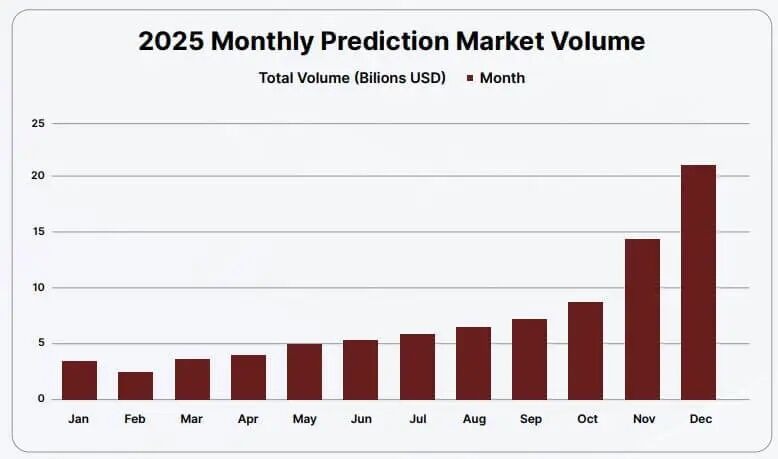
New exchanges can list exclusive markets that other platforms cannot offer. This advantage is further amplified when combined with a vertical strategy (point 7).

3. Capital Efficiency

Capital efficiency determines the effectiveness of traders' collateral usage. Currently, there are two core levers:

First, interest-bearing collateral: Instead of letting idle funds earn only treasury yields, offer higher returns, similar to Lighter supporting LP deposits as collateral or HyENA's USDC-margined perpetual contract model.

Second, margin mechanisms. Due to gap risk, the market generally underestimates the value of leverage in prediction markets, but platforms can offer limited leverage for continuous markets or implement portfolio margin for hedged positions.

Exchanges can also subsidize lending pools or act as market-making counterparties to internalize gap risk, rather than having them distributed among users.

4. Oracles and Market Settlement

Oracle reliability remains a systemic weakness in the industry. Settlement delays and incorrect results significantly amplify trading risks.

Beyond improving stability, platforms can implement innovative oracle mechanisms: human-machine hybrid systems, zero-knowledge proof-based solutions, AI-driven oracles like those from Context, etc., unlocking new markets that traditional oracles cannot support.

5. Liquidity Provision

Exchange survival depends on liquidity. Viable paths include: paying to onboard professional market makers, incentivizing ordinary users to provide liquidity with tokens, or adopting Hyperliquid's HLP aggregated liquidity model.
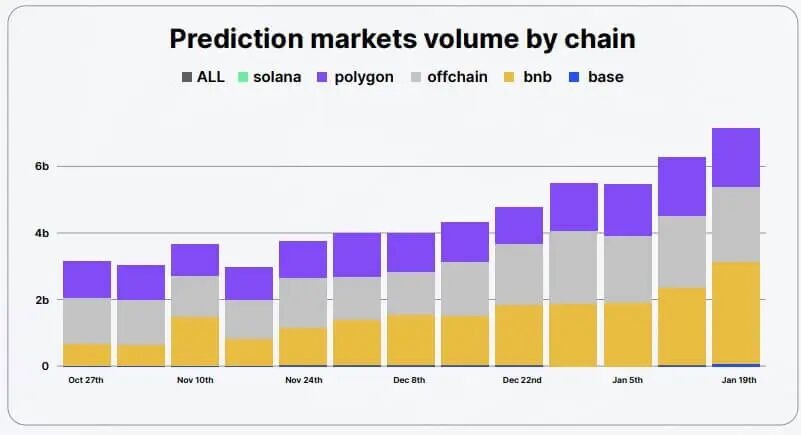
Some platforms can also completely internalize liquidity, emulating FTX's model of relying on Alameda as an internal trading team.

6. Regulatory Compliance

Kalshi, with its US regulatory license, has achieved embedded distribution through Robinhood and Coinbase, capturing retail traffic that Polymarket cannot reach.

There are still numerous jurisdictions and regulatory frameworks available for deployment. Compliant prediction markets can unlock similar channels, such as adapting to US state-level gambling regulations.

7. Vertical Strategy vs. Horizontal Strategy

Horizontal Strategy: Similar to Hyperliquid in the perpetual contracts space, focusing on building top-tier underlying trading infrastructure, inviting third parties to build front-ends and vertical scenarios, and encouraging ecosystem builders to add markets and develop revenue-generating front-ends (e.g., Phantom) through proposals.

Vertical Strategy: Exemplified by Lighter, controlling the front-end themselves, launching mobile apps, and creating a full-process user experience, focusing on integrated experience and direct user connection.

Polymarket's resistance to deep embedded partnerships versus Kalshi's open attitude is a clear reflection of the trade-offs between these two strategies.


Twitter:https://twitter.com/BitpushNewsCN

Bitpush TG Discussion Group:https://t.me/BitPushCommunity

Bitpush TG Subscription: https://t.me/bitpush

Original link:https://www.bitpush.news/articles/7611385

Perguntas relacionadas

QWhat are the seven key dimensions for differentiation in the prediction market competition according to the article?

AThe seven key dimensions are: 1. Product Quality, 2. Asset Categories and Market Selection, 3. Capital Efficiency, 4. Oracles and Market Settlement, 5. Liquidity Provision, 6. Regulatory Compliance, and 7. Vertical Strategy vs. Horizontal Strategy.

QHow can new prediction market exchanges gain an advantage in 'Asset Categories and Market Selection'?

ANew exchanges can list exclusive markets that other platforms cannot offer, and this advantage can be amplified when combined with a vertical domain strategy.

QWhat are the two main approaches to improving capital efficiency in prediction markets mentioned in the article?

AThe two main approaches are: 1. Interest-bearing collateral, which allows idle funds to earn higher yields, and 2. Margin mechanisms, such as offering limited leverage for continuous markets or portfolio margin for hedging positions.

QWhat role do oracles play in prediction markets, and what innovative solutions are suggested?

AOracles are crucial for reliable market settlement, and their failure can significantly increase trading risk. The article suggests innovative mechanisms like human-machine hybrid systems, zero-knowledge proof-based solutions, and AI-driven oracles to support new types of markets.

QWhat is the difference between a vertical strategy and a horizontal strategy in the context of prediction market platforms?

AA horizontal strategy focuses on building top-tier underlying trading infrastructure and allowing third parties to develop front-ends and vertical scenarios. A vertical strategy involves controlling the entire user experience, including the front-end and mobile applications, to provide an integrated experience directly to users.

Leituras Relacionadas

In Conversation with Ray Dalio: We Are Currently in an AI Bubble, with 1% of My Portfolio in Bitcoin

Ray Dalio, founder of Bridgewater Associates, warns in an interview that the current AI boom shows classic bubble characteristics, which could lead to significant economic downturns as seen in past cycles like 1929 or 2000. He explains that speculative enthusiasm, fueled by debt and overvaluation, often precedes a crash when rising rates or taxation force asset sales, causing widespread losses and recession. Dalio also outlines his "Big Cycle" theory, describing an approximate 80-year pattern where widening wealth gaps, massive government deficits, and shifting geopolitical power (like China's rise) create internal conflict and global instability. He emphasizes that we are in a late-cycle, transitional phase where traditional powers like the US and UK face decline. For personal wealth protection, Dalio advises diversification beyond cash into assets like stocks, bonds, real estate, and particularly gold, which he prefers over Bitcoin. While he holds about 1% of his portfolio in Bitcoin as a non-printable hard asset, he views gold as more secure from technological or governmental threats. Regarding AI's impact, Dalio believes it will disproportionately benefit capital owners, worsening inequality by replacing both physical and cognitive labor. He suggests that human intuition and emotional intelligence, combined with AI, will be key for future workers. On taxation, Dalio argues that wealth taxes are impractical and risk triggering asset sell-offs, reducing productive investment. He points to the UK as a cautionary example of debt, low productivity, and political strife. Geopolitically, Dalio foresees a more regionalized world, with the US showing weakness in prolonged conflicts like with Iran, akin to past imperial declines. The ideal outcome, he suggests, is coexisting powerful blocs (e.g., Americas, China-Asia Pacific) without major war.

marsbitHá 3h

In Conversation with Ray Dalio: We Are Currently in an AI Bubble, with 1% of My Portfolio in Bitcoin

marsbitHá 3h

Daily 7.2 Trillion KRW: Foreign Capital's Record Net Buying on Friday! Wall Street Says Headwinds for Korean Stock Fund Flows Have Subsided

South Korean stock market sees a dramatic shift in fund flows. On July 31, foreign investors made a record net purchase of approximately KRW 7.2 trillion in KOSPI stocks, marking a fundamental reversal from the persistent large-scale net outflows seen in previous months. This contributed to a significant narrowing of foreign net selling in July to KRW 9.8 trillion, down sharply from KRW 48.4 trillion in June and KRW 44.5 trillion in May. Simultaneously, domestic institutional pressure eased. South Korean pension funds and asset managers turned to a net buying position in July, purchasing KRW 1.0 trillion worth of KOSPI shares, contrasting with net sales in May and June. Market volatility is expected to be dampened by new financial regulations. Effective July 31, the Financial Services Commission tightened access for retail investors to single-stock leveraged ETFs by raising the minimum cash deposit requirement. Trading volumes for these products subsequently dropped to about 50% of their monthly average. Citigroup Research maintains its year-end KOSPI target of 10,000 points. The firm cites several supportive factors: the substantial easing of headwinds from capital outflows, a robust fundamental outlook for the semiconductor sector, historically low market valuations, strong economic fundamentals, and the potential for policy support from financial authorities if needed.

marsbitHá 3h

Daily 7.2 Trillion KRW: Foreign Capital's Record Net Buying on Friday! Wall Street Says Headwinds for Korean Stock Fund Flows Have Subsided

marsbitHá 3h

Thanks to Dice Rolls, Bitcoin Keys Are Stored Offline, But Not Everyone Will Do It

The article discusses using dice rolls to generate secure Bitcoin wallet seeds, providing entropy independent of potentially flawed hardware random number generators. It explains that each fair dice roll offers about 2.585 bits of entropy, with around 50 rolls needed for a standard 12-word seed phrase and 99+ recommended for higher security. This method gained attention after a vulnerability was revealed in some Coldcard hardware wallets, where a faulty firmware RNG (dating back to 2021) compromised generated keys. The analysis notes that while a dice-generated main seed was safe from this specific flaw, other Coldcard functions (like creating paper wallets, backup keys, or passwords) could still be vulnerable if they used the defective RNG. The piece argues that while dice-based entropy is technically robust, the manual process is error-prone, tedious, and unrealistic for most new users, who might make mistakes in recording or inputting rolls. It concludes that while manual entropy generation should remain an option for advanced users, the long-term goal is to develop reliable, user-friendly hardware and software that securely generates randomness without requiring specialized knowledge. Coldcard users are advised to check their firmware version and replace any secondary secrets (like paper wallet keys) created with vulnerable devices, while also considering multi-signature setups with devices from different manufacturers for added security.

cryptonews.ruHá 8h

Thanks to Dice Rolls, Bitcoin Keys Are Stored Offline, But Not Everyone Will Do It

cryptonews.ruHá 8h

Trading

Spot
活动图片





