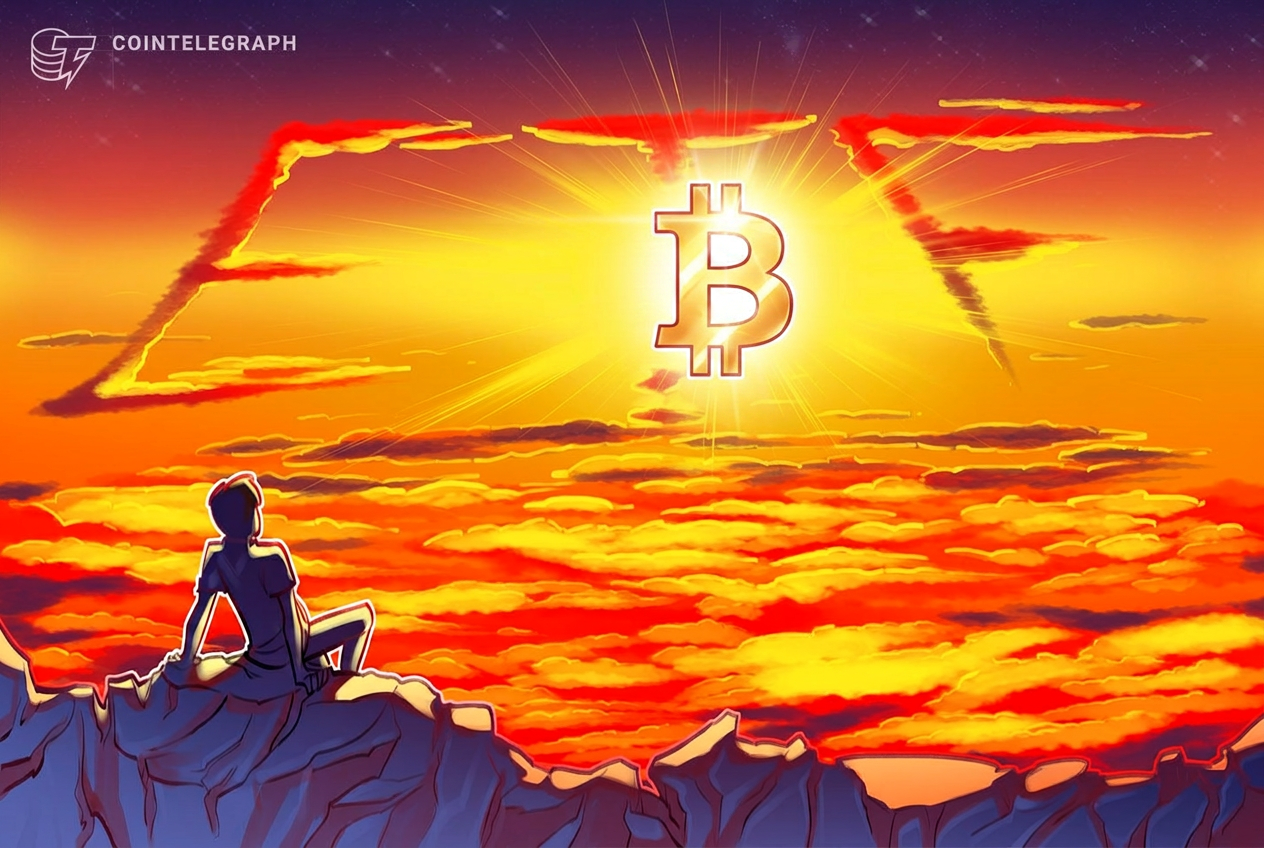
The Four-Year Cycle Concludes, Crypto Market Embarks on a Decade-Long Protracted War

marsbitPublicado em 2025-12-24Última atualização em 2025-12-24

Resumo

In a recent article, Bitwise CIO Matt Hougan addresses the question of whether Bitcoin's historical four-year cycle—characterized by three years of gains followed by a crash in the fourth—remains relevant. He argues that the cycle, driven by factors like Bitcoin halvings, interest rate spikes, and post-bubble crashes, is losing significance due to changing conditions. The 2026 halving may have reduced impact, interest rates are likely to decrease, and the market hasn’t seen the extreme euphoria of previous cycles. Instead, Hougan proposes a "decade-long grinding advance" as the new framework, where sustained positive forces—such as institutional adoption, regulatory clarity, and real-world applications like stablecoins—gradually outweigh intermittent negative shocks like macroeconomic events or leverage-induced selloffs. This shift suggests more moderate long-term returns, lower volatility, and periodic 20-40% corrections, marking a maturation of the crypto market since the approval of Bitcoin ETFs in early 2024. Investors should expect a prolonged tug-of-war between these forces, requiring patience and a focus on fundamentals despite short-term downturns.

Author: Matt Hougan, Chief Investment Officer of Bitwise

Compiled by: Luffy, Foresight News

Over the past few weeks, the question I've been asked most frequently in meetings with institutional investors is: Is the four-year cycle of Bitcoin still relevant?

The so-called four-year cycle refers to the historical pattern in Bitcoin's price movement: 'three years of gains, followed by a crash in the fourth year.'

This question is crucial because, according to the logic of the four-year cycle, next year would be a difficult one for Bitcoin and the entire cryptocurrency market.

Although I cannot accurately predict cryptocurrency prices next year, I believe that blindly adhering to the idea that the four-year cycle will mechanically repeat is unwise. After all, the four-year cycle is not an immutable law carved in stone by the god of cryptocurrency; its formation actually stems from three specific driving factors:

  • Bitcoin Halving Events: The mining reward on the Bitcoin blockchain halves approximately every four years.

  • Interest Rate Fluctuations: The two interest rate surges in 2018 and 2022 both contributed to cryptocurrency market corrections.

  • Boom-and-Bust Market Cycles: The crash years for cryptocurrency (2014, 2018, 2022) invariably followed years of strong gains. For example, Bitcoin rose 5530% in 2013, 1349% in 2017, and 57% in 2021. During periods of market euphoria, fraud and speculative bubbles proliferate. The bursting of these bubbles, such as the regulatory crackdown on ICOs in 2018 and the collapse of FTX in 2022, directly triggered the market crashes in those years.

Today, these three driving factors have either significantly diminished in influence or are trending in the opposite direction compared to previous cycles. The impact of the Bitcoin halving is not as strong as it was four years ago; interest rates in 2026 are more likely to fall than rise; and the cryptocurrency market in 2025 has not experienced the kind of狂热暴涨 (frenzied surge) seen in previous cycles.

Meanwhile, more decisive forces, particularly the large-scale entry of institutional investors and the gradual improvement of regulatory policies, are gathering momentum for 2026. In our latest "2026 Market Outlook" report, we predicted that Bitcoin will reach a new all-time high next year. Currently, I still believe this is the most likely outcome.

What Will Replace the Four-Year Cycle?

If the four-year cycle is indeed over, a logical question follows: What new framework should we establish for thinking about the cryptocurrency market in 2026 and beyond?

The four-year cycle once provided clear guidance for investors. Knowing whether the market was in a recovery phase, a bull market, or a crypto winter helped investors hold on during bear markets and remain rational during bull markets.

So, what framework can replace it now?

The answer is: A Decade-Long Protracted War.

I know this phrase sounds far less catchy than 'four-year cycle.' But hear me out, because I firmly believe this is the essence of the current market.

By 'protracted war,' I mean the long-term struggle between two forces: one is a strong, persistent, and gradual positive driving force; the other is an intermittent, fierce but short-lived negative shock force.

The positive driving forces currently gaining momentum include: accelerated adoption by institutional investors, continuous improvement of regulatory frameworks, concerns about fiat currency devaluation, and the implementation of practical use cases like stablecoins and asset tokenization.

The goal of these trends is to disrupt deeply entrenched traditional systems such as capital markets, global payment systems, and international monetary regimes. Their full realization will inevitably take over a decade. Early signs of this process are already visible: billions of dollars flowing into crypto ETFs, cryptocurrency-related bills steadily advancing in Congress, rapid expansion of the stablecoin and tokenization markets, and so on.

But progress will inevitably meet resistance. Potential negative shock forces include: macroeconomic shocks, waves of leveraged position liquidations, and恶性事件 (malicious events) such as hacks, scams, and rug pulls. The impact cycle of such negative shocks typically lasts weeks, months, or quarters.

Overall, the long-term influence of the positive driving forces far exceeds that of the negative shock forces, but the negative shocks erupt rapidly and can suppress the positive forces in the short term. The market crash on October 10, 2025, is a classic case: a macro shock triggered large-scale liquidations of cryptocurrency leveraged positions, leading directly to a cliff-like drop in the market.

It is precisely this protracted war dynamic that has caused the severe divergence in the current cryptocurrency market: retail investors are in deep despair, while many institutional investors are full of bullish confidence. The root cause lies in the completely different time horizons they focus on. Retail investors are focused on the aftermath of the October liquidation event; institutions are looking ahead to the prospect of stablecoin assets surpassing $3 trillion by 2030.

Both views have their validity, just based on different time scales.

Implications of the Protracted War for Investors

For the past few months, I have been using the 'protracted war' framework to analyze the market, and it has proven extremely valuable. The protracted war格局 (situation) suggests the market will exhibit the following characteristics:

  • Substantial but not outrageously夸张离谱 (outlandish) returns over the long term

  • Overall decreased volatility

  • Periodic corrections of 20%—40%

This means that investors must take every market correction seriously, as they could last for a considerable time. But as long as the fundamentals remain strong, one can be confident that prices will eventually rebound.

Looking back, I believe the cryptocurrency market officially entered the protracted war phase in January 2024 with the approval of the Bitcoin spot ETFs. This milestone event unleashed a wave of institutional investment, a trend I believe will last a full decade. The facts bear this out: since the ETFs launched, the price of Bitcoin has risen 93% cumulatively, while also experiencing three deep corrections of over 20%.

I believe the market will maintain these return characteristics for a long time to come. The protracted war might not be as thrilling as the previous boom-and-bust cycles, but it signifies a deeper transformation正在迎来 (is ushering in) for the cryptocurrency industry. When an asset class matures, the era of the protracted war arrives.


Perguntas relacionadas

QWhat are the three specific drivers that historically formed Bitcoin's four-year cycle according to the article?

AThe three drivers are: Bitcoin halving events, interest rate fluctuations, and boom-bust market cycles (including speculative bubbles and subsequent crashes like ICO crackdowns or exchange collapses).

QWhy does the author believe the four-year cycle is no longer reliable for predicting crypto market behavior?

ABecause the three historical drivers have significantly weakened or reversed: halving impact has diminished, interest rates are likely to decrease in 2026, and the 2025 market lacks the extreme euphoria seen in previous cycles.

QWhat new framework does the author propose to replace the four-year cycle for understanding crypto market dynamics?

AThe author proposes a 'decade-long persistent war' framework, describing a long-term tug-of-war between sustained positive forces (e.g., institutional adoption, regulation) and intermittent negative shocks (e.g., macro events, leverage unwinding).

QHow does the 'persistent war' framework explain the current divergence between retail and institutional investor sentiment?

ARetail investors focus on short-term negative shocks (e.g., recent market crashes), while institutions focus on long-term positive trends (e.g., stablecoin growth to $3 trillion by 2030), leading to contrasting perspectives based on different time horizons.

QWhat market characteristics does the author associate with the 'persistent war' phase starting from January 2024?

AThe phase features solid long-term returns (but not extreme), lower overall volatility, and periodic 20-40% drawdowns, requiring investors to take corrections seriously while maintaining confidence in eventual recoveries if fundamentals remain strong.

Leituras Relacionadas

North Korean Hackers Loot $500 Million in a Single Month, Becoming the Top Threat to Crypto Security

North Korean hackers, particularly the notorious Lazarus Group and its subgroup TraderTraitor, have stolen over $500 million from cryptocurrency DeFi platforms in less than three weeks, bringing their total theft for the year to over $700 million. Recent major attacks on Drift Protocol and KelpDAO, resulting in losses of approximately $286 million and $290 million respectively, highlight a strategic shift: instead of targeting core smart contracts, attackers are now exploiting vulnerabilities in peripheral infrastructure. For instance, the KelpDAO attack involved compromising downstream RPC infrastructure used by LayerZero's decentralized validation network (DVN), allowing manipulation without breaching core cryptography. This sophisticated approach mirrors advanced corporate cyber-espionage. Additionally, North Korea has systematically infiltrated the global crypto workforce, with an estimated 100 operatives using fake identities to gain employment at blockchain companies, enabling long-term access to sensitive systems and facilitating large-scale thefts. According to Chainalysis, North Korean-linked hackers stole a record $2 billion in 2025, accounting for 60% of all global crypto theft that year. Their total historical crypto theft has reached $6.75 billion. Post-theft, they employ specialized money laundering methods, heavily relying on Chinese OTC brokers and cross-chain mixing services rather than standard decentralized exchanges. Security experts, while acknowledging the increased sophistication, emphasize that many attacks still exploit fundamental weaknesses like poor access controls and centralized operational risks. Strengthening private key management, limiting privileged access, and enhancing coordination among exchanges, analysts, and law enforcement immediately after an attack are critical to improving defense and fund recovery chances. The industry's challenge now extends beyond secure smart contracts to safeguarding operational security at the infrastructure level.

marsbitHá 28m

North Korean Hackers Loot $500 Million in a Single Month, Becoming the Top Threat to Crypto Security

marsbitHá 28m

Circle CEO's Seoul Visit: No Korean Won Stablecoin Issuance, But Met All Major Korean Banks

Circle CEO Jeremy Allaire's recent activities in Seoul indicate a strategic shift for the company, moving away from issuing a Korean won-backed stablecoin and instead focusing on embedding itself as a key infrastructure provider within Korea’s financial and crypto ecosystem. Despite Korea accounting for nearly 30% of global crypto trading volume—with a market characterized by high retail participation and altcoin dominance—Circle has chosen not to compete for the role of stablecoin issuer. Instead, Allaire met with major Korean banks (including Shinhan, KB, and Woori), financial groups, leading exchanges (Upbit, Bithumb, Coinone), and tech firms like Kakao. This approach reflects a broader industry transition: the core of stablecoin competition is shifting from issuance rights to systemic positioning. With Korean regulators still debating whether banks or tech companies should issue stablecoins, Circle is avoiding regulatory uncertainty by strengthening its role as a service and technology partner. The company is deepening integration with trading platforms, building connections, and promoting stablecoin infrastructure. This positions Circle to benefit regardless of which entity eventually issues a won stablecoin. Allaire also noted the potential for a Chinese yuan stablecoin in the next 3–5 years, underscoring a regional trend of stablecoins becoming more regulated and integrated with traditional finance. Ultimately, Circle’s strategy highlights that future influence in the stablecoin market will belong not necessarily to the issuers, but to the foundational infrastructure layers that enable cross-system transactions.

marsbitHá 56m

Circle CEO's Seoul Visit: No Korean Won Stablecoin Issuance, But Met All Major Korean Banks

marsbitHá 56m

SpaceX Ties Up with Cursor: A High-Stakes AI Gambit of 'Lock First, Acquire Later'

SpaceX has secured an option to acquire AI programming company Cursor for $60 billion, with an alternative clause requiring a $10 billion collaboration fee if the acquisition does not proceed. This structure is not merely a potential acquisition but a strategic move to control core access points in the AI era. The deal is designed as a flexible, dual-path arrangement, allowing SpaceX to either fully acquire Cursor or maintain a binding partnership through high-cost collaboration. This "option-style" approach minimizes immediate regulatory and integration risks while ensuring long-term alignment between the two companies. At its core, the transaction exchanges critical AI-era resources: SpaceX provides its Colossus supercomputing cluster—one of the world’s most powerful AI training infrastructures—while Cursor contributes its AI-native developer environment and strong product adoption. This synergy connects compute power, models, and application layers, forming a closed-loop AI capability stack. Cursor, founded in 2022, has achieved rapid growth with over $1 billion in annual revenue and widespread enterprise adoption. Its value lies in transforming software development through AI agents capable of coding, debugging, and system design—positioning it as a gateway to future software production. For SpaceX, this move is part of a broader strategy to evolve from a aerospace company into an AI infrastructure empire, integrating xAI, supercomputing, and chip manufacturing. Controlling Cursor fills a gap in its developer tooling layer, strengthening its AI narrative ahead of a potential IPO. The deal reflects a shift in AI competition from model superiority to ecosystem and entry-point control. With programming tools as a key battleground, securing developer loyalty becomes crucial for dominating the software production landscape. Risks include questions around Cursor’s valuation, technical integration challenges, and potential regulatory scrutiny. Nevertheless, the deal underscores a strategic bet: controlling both compute and software development access may redefine power dynamics in the AI-driven future.

marsbitHá 1h

SpaceX Ties Up with Cursor: A High-Stakes AI Gambit of 'Lock First, Acquire Later'

marsbitHá 1h

Trading

Spot
Futuros

Artigos em Destaque

Como comprar CFG

Bem-vindo à HTX.com!Tornámos a compra de Centrifuge (CFG) simples e conveniente.Segue o nosso guia passo a passo para iniciar a tua jornada no mundo das criptos.Passo 1: cria a tua conta HTXUtiliza o teu e-mail ou número de telefone para te inscreveres numa conta gratuita na HTX.Desfruta de um processo de inscrição sem complicações e desbloqueia todas as funcionalidades.Obter a minha contaPasso 2: vai para Comprar Cripto e escolhe o teu método de pagamentoCartão de crédito/débito: usa o teu visa ou mastercard para comprar Centrifuge (CFG) instantaneamente.Saldo: usa os fundos da tua conta HTX para transacionar sem problemas.Terceiros: adicionamos métodos de pagamento populares, como Google Pay e Apple Pay, para aumentar a conveniência.P2P: transaciona diretamente com outros utilizadores na HTX.Mercado de balcão (OTC): oferecemos serviços personalizados e taxas de câmbio competitivas para os traders.Passo 3: armazena teu Centrifuge (CFG)Depois de comprar o teu Centrifuge (CFG), armazena-o na tua conta HTX.Alternativamente, podes enviá-lo para outro lugar através de transferência blockchain ou usá-lo para transacionar outras criptomoedas.Passo 4: transaciona Centrifuge (CFG)Transaciona facilmente Centrifuge (CFG) no mercado à vista da HTX.Acede simplesmente à tua conta, seleciona o teu par de trading, executa as tuas transações e monitoriza em tempo real.Oferecemos uma experiência de fácil utilização tanto para principiantes como para traders experientes.

204 Visualizações TotaisPublicado em {updateTime}Atualizado em 2026.03.19

Como comprar CFG

O que é WL

I. Introdução ao ProjetoWorldLand é uma L2 ou side chain do Ethereum, concebida como uma solução de baixo para cima para melhorar o ecossistema Ethereum.II. Informação sobre o Token1) Informação BásicaNome do token: WL (WorldLand)III. Links RelacionadosWebsite:https://worldland.foundation/Exploradores:https://bscscan.com/address/0x8aaB31fbc69C92fa53f600910Cf0f215531F8239Redes Sociais:https://x.com/WorldLand_space Nota: A introdução ao projeto provém dos materiais publicados ou fornecidos pela equipa oficial do projeto, que é apenas para referência e não constitui aconselhamento de investimento. A HTX não se responsabiliza por quaisquer perdas diretas ou indiretas resultantes.

173 Visualizações TotaisPublicado em {updateTime}Atualizado em 2026.03.28

O que é WL

Como comprar WL

Bem-vindo à HTX.com!Tornámos a compra de WorldLand (WL) simples e conveniente.Segue o nosso guia passo a passo para iniciar a tua jornada no mundo das criptos.Passo 1: cria a tua conta HTXUtiliza o teu e-mail ou número de telefone para te inscreveres numa conta gratuita na HTX.Desfruta de um processo de inscrição sem complicações e desbloqueia todas as funcionalidades.Obter a minha contaPasso 2: vai para Comprar Cripto e escolhe o teu método de pagamentoCartão de crédito/débito: usa o teu visa ou mastercard para comprar WorldLand (WL) instantaneamente.Saldo: usa os fundos da tua conta HTX para transacionar sem problemas.Terceiros: adicionamos métodos de pagamento populares, como Google Pay e Apple Pay, para aumentar a conveniência.P2P: transaciona diretamente com outros utilizadores na HTX.Mercado de balcão (OTC): oferecemos serviços personalizados e taxas de câmbio competitivas para os traders.Passo 3: armazena teu WorldLand (WL)Depois de comprar o teu WorldLand (WL), armazena-o na tua conta HTX.Alternativamente, podes enviá-lo para outro lugar através de transferência blockchain ou usá-lo para transacionar outras criptomoedas.Passo 4: transaciona WorldLand (WL)Transaciona facilmente WorldLand (WL) no mercado à vista da HTX.Acede simplesmente à tua conta, seleciona o teu par de trading, executa as tuas transações e monitoriza em tempo real.Oferecemos uma experiência de fácil utilização tanto para principiantes como para traders experientes.

235 Visualizações TotaisPublicado em {updateTime}Atualizado em 2026.03.28

Como comprar WL

Discussões

Bem-vindo à Comunidade HTX. Aqui, pode manter-se informado sobre os mais recentes desenvolvimentos da plataforma e obter acesso a análises profissionais de mercado. As opiniões dos utilizadores sobre o preço de A (A) são apresentadas abaixo.

活动图片