The Founder of Coinbase Is Going to Research Immortality

marsbitPublicado em 2026-06-03Última atualização em 2026-06-03

Resumo

Coinbase founder Brian Armstrong has co-founded NewLimit, a longevity biotech startup, which just raised $435 million in a Series C funding round led by Peter Thiel’s Founders Fund. The round values the company at $3.1 billion, more than triple its valuation from a year ago. NewLimit is developing drugs aimed at reversing cellular aging to extend human healthspan. Its approach builds on Nobel Prize-winning research on cellular reprogramming (Yamanaka factors), with a focus on identifying specific gene combinations that can restore younger cell function. The company plans to begin human clinical trials next year, initially targeting alcohol-related liver disease as a form of accelerated aging. Founded in 2021 by Armstrong alongside biotech investor Blake Byers and scientist Jacob Kimmel, NewLimit has now raised over $700 million across multiple rounds. It joins a growing field of well-funded longevity ventures backed by tech billionaires, including Sam Altman’s Retro Biosciences and Jeff Bezos-backed Altos Labs, reflecting a surge of interest in using science to combat aging and extend healthy lifespan.

Author | Azuma(@azuma_eth)
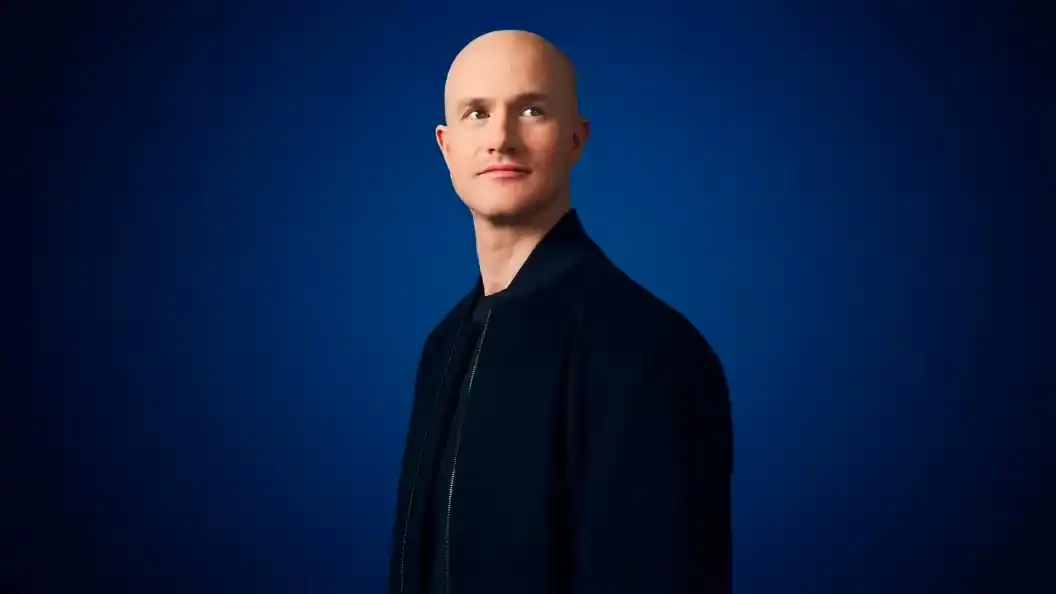
At 3:00 AM Beijing time on June 3, longevity technology startup NewLimit announced the completion of a $435 million Series C funding round. This round was led by Peter Thiel's fund Founders Fund, with continued participation from Abstract Ventures, Kleiner Perkins, NFDG, Eli Lilly Ventures, Valor Equity Partners, among others, while also introducing new investors such as Thrive Capital, Greenoaks, and Quiet Capital.

A WSJ report indicated that NewLimit's valuation in this round reached $3.1 billion, more than triple its valuation from a year ago.
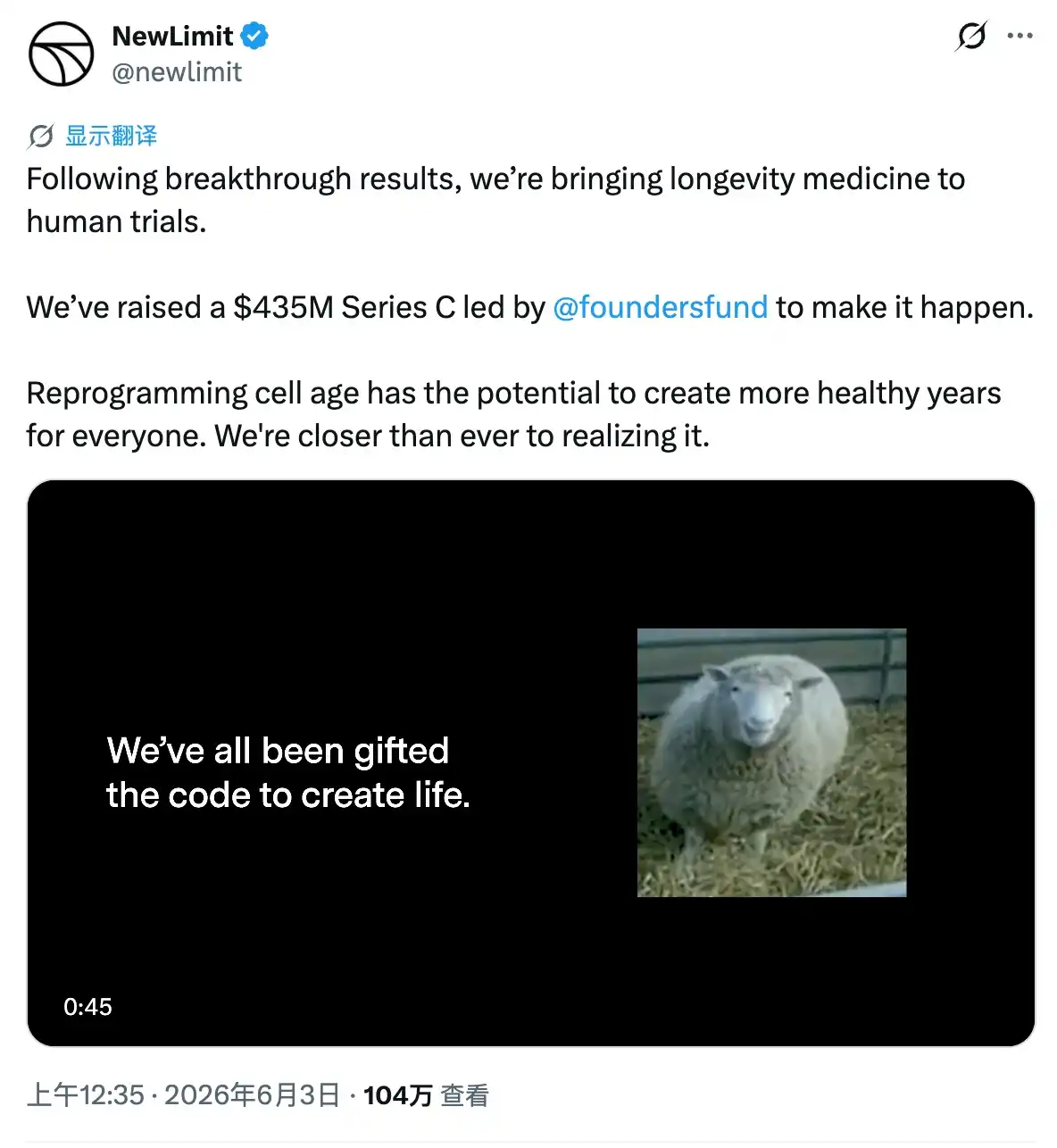
In its funding announcement, NewLimit revealed that following breakthrough research achievements, the company is advancing longevity medicine into the human clinical trial stage. Its first drug targeting alcohol-related liver disease is expected to commence clinical trials next year.

NewLimit also emphasized: "By reprogramming cell age, humans may achieve longer health spans, and now, we are closer than ever to the goal of delaying or even reversing aging."

The Founder Turns Out to Be an Old Acquaintance

It is worth mentioning that one of NewLimit's co-founders is none other than our old acquaintance — Coinbase founder and CEO Brian Armstrong.

In 2021, Brian Armstrong, together with former GV partner and bioengineer Blake Byers and stem cell biologist Jacob Kimmel, invested $110 million to establish NewLimit in South San Francisco.
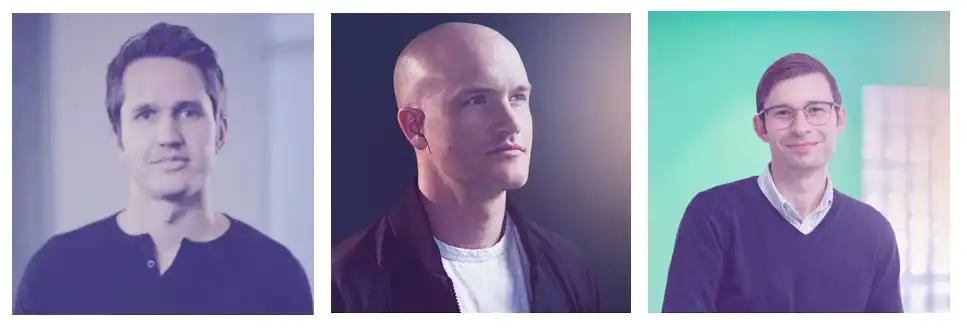
Picture: The NewLimit founding team

Prior to this funding round, NewLimit had already completed three rounds of financing, as detailed below.

  • May 2023: Completed a $40 million Series A round, with investors including Dimension, Founders Fund, and Kleiner Perkins;
  • May 2025: Completed a $130 million Series B round, reaching a valuation of $810 million, led by Kleiner Perkins, with participation from Founders Fund, Khosla Ventures, and Human Capital, among others;
  • October 2025: Received an additional $45 million investment, bringing the post-money valuation to $1.62 billion, with investors including Lilly Ventures, Duke University, Section 32, etc.;

According to NewLimit's official introduction, the company is dedicated to developing drugs that can extend human health span — "As humans age, cellular function gradually declines, making people more susceptible to diseases. It was once believed that aging was inevitable, but emerging science shows that the aging process can be reversed at the cellular level. We are developing the first drugs based on these discoveries to restore the youthful function of aging cells."

In simpler terms, NewLimit is using scientific methods to research immortality!

Reversing Aging is Not a Fantasy

Over the past few decades, while the scientific community has long recognized the link between aging and cellular functional decline, it could not precisely find a way to make cells "rejuvenate." The turning point came in 2006 when Japanese scientist Shinya Yamanaka discovered that activating just a few specific transcription factors could reprogram adult cells into a youthful state resembling embryonic stem cells. This discovery was later named "Yamanaka Factors" and helped him win the 2012 Nobel Prize in Physiology or Medicine.

Odaily Note: Picture shows Shinya Yamanaka speaking in Tokyo

Yamanaka's research first proved something previously considered impossible — that cellular age is not irreversible. And the story told by NewLimit is built precisely upon this discovery.

NewLimit writes on its website: "Our drugs can reprogram a cell's epigenome to a younger state by activating specific transcription factor genes. We already know this reversal is possible. However, for different cell types, exactly which combinations of transcription factors are needed to restore their youthful function remains unknown. Finding and discovering these effective payloads is the core challenge of our work."

NewLimit's strategy is to first target a specific disease to obtain drug approval, and then explore broader applications. As mentioned earlier, NewLimit is advancing a drug for alcohol-related liver disease into clinical trials.

NewLimit Co-founder and CEO Jacob Kimmel further explained, "Liver disease can actually be viewed as an 'accelerated version of aging,' it just presents the aging process that everyone experiences in a faster and more intense manner."

The Biggest Investors in This Sector Are All Billionaires

NewLimit is not the only tech company currently targeting "immortality."

In 2022, Sam Altman invested $180 million in Retro Biosciences, which is developing drugs to rejuvenate aging cells. Last month, Retro Biosciences disclosed its valuation had reached $1.8 billion.

Furthermore, Altos Labs, reportedly backed by Jeff Bezos's funding, also launched in 2022 with $3 billion and has since raised nearly twice that amount in total funding.

It's easy to see that from Peter Thiel to Sam Altman to Jeff Bezos, the biggest investors in this sector are without exception super-rich individuals at the pinnacle of technology and wealth. Peter Thiel has publicly expressed extreme aversion to death, advocating similar views on multiple occasions: "Death is humanity's greatest enemy, yet we treat it as a natural law..."

The logic behind these tech titans' willingness to invest hundreds of millions is not hard to understand — when wealth and power reach their peak, time becomes the only enemy, the only luxury that cannot be bought directly with money.

Having earned enough money, "how to live longer" becomes the greatest challenge.

Perguntas relacionadas

QWhat is NewLimit, and what is its primary goal?

ANewLimit is a longevity biotechnology startup. Its primary goal is to develop drugs to extend human healthspan by reversing the aging process at the cellular level.

QWho is the notable co-founder of NewLimit mentioned in the article?

AThe notable co-founder is Brian Armstrong, who is also the founder and CEO of the cryptocurrency exchange Coinbase.

QWhat scientific breakthrough is NewLimit's research based on?

ANewLimit's research is based on the discovery of the 'Yamanaka Factors' by Japanese scientist Shinya Yamanaka in 2006, which showed that adult cells can be reprogrammed into a younger, pluripotent state.

QHow much funding did NewLimit recently raise and at what valuation?

ANewLimit recently raised $435 million in a Series C funding round, which valued the company at $3.1 billion.

QWhy are super-wealthy tech figures like Peter Thiel and Sam Altman investing in longevity companies?

AFor super-wealthy individuals, time is seen as the ultimate luxury that money cannot directly buy. After achieving immense wealth and power, extending their healthspan and potentially reversing aging becomes a primary focus.

Leituras Relacionadas

Fei-Fei Li's Team Clarifies the Concept of 'World Models', Sora Merely a Renderer

"World Models" has become a widely used yet confusing term in AI. To address this, a team led by Fei-Fei Li and World Labs proposed a functional taxonomy based on the Partially Observable Markov Decision Process framework. This taxonomy categorizes systems called "world models" into three distinct projections: Renderers, Simulators, and Planners. Renderers, like OpenAI's Sora and other video generation models, focus on producing photorealistic visual outputs for human perception. They prioritize visual fidelity over physical accuracy. Simulators, such as NVIDIA Omniverse, aim to compute precise future environmental states for computational tasks like engineering analysis or digital twins. Planners, like Vision-Language-Action models, take in observations and goals to output executable actions for robots or agents. The article clarifies that most current "world models," including Sora, are primarily Renderers. They generate convincing visuals but lack the core ability to simulate state transitions based on actions, a key requirement for a true world model in classic reinforcement learning definitions. This conceptual confusion has practical implications, leading to potential misalignment in technology selection, investment, and public understanding of AI capabilities. Clear categorization is crucial. It helps enterprises avoid costly mistakes (e.g., using a renderer for robot training), allows investors to accurately assess markets, and enables researchers to build comparable benchmarks. While future systems may integrate these functions, recognizing current boundaries is essential for honest assessment and progress.

marsbitHá 4m

Fei-Fei Li's Team Clarifies the Concept of 'World Models', Sora Merely a Renderer

marsbitHá 4m

Bloomberg Uncovered: How Do China's Wealthy Circumvent the Annual $50,000 Limit to Transfer Assets?

**Summary: How Wealthy Chinese Circumvent $50,000 Annual Foreign Exchange Limits** Despite China's strict capital controls, including an annual $50,000 per person foreign exchange quota, an estimated $150 billion in funds still leaves the country annually via various gray and underground channels. This report outlines the evolution of China's "capital wall" and the methods used to bypass it. **The Evolving Capital Controls:** * **Foundation (1994):** The system of "current account convertibility with strict capital account controls" was established. * **Quota Set (2007):** The $50,000 individual annual forex purchase limit was formalized. * **Crackdown Begins (2015-2017):** Following market volatility, enforcement tightened. Banks were required to scrutinize transactions, and channels like using UnionPay cards for Hong Kong insurance premiums or buying overseas property were blocked. * **Digital & Legal Upgrades (2024-2026):** Enhanced algorithms now flag suspicious patterns (e.g., "smurfing"). The Common Reporting Standard (CRS) provides Chinese tax authorities with data on citizens' offshore accounts. Unlicensed cross-border brokers have been targeted. **Five Primary Methods for Moving Capital:** 1. **Underground Banking / "Hawala" (Duiqiao):** The largest-scale method. No money crosses borders. Clients pay RMB to a domestic account; an overseas associate deposits equivalent foreign currency into the client's offshore account. Risks include high fees, account freezes, and legal penalties. 2. **"Smurfing" or "Ant Moving":** Using multiple individuals' $50,000 quotas to pool funds for one offshore recipient. Increasingly detected by anti-money laundering algorithms. 3. **Trade Invoice Manipulation:** Businesses over-invoice imports or under-invoice exports via offshore shell companies, creating a pretext to transfer excess funds abroad under the guise of trade. 4. **Channel Migration:** After a crackdown on internet brokers, funds flow toward more compliant but costly channels like major banks' cross-border wealth management services or Qualified Domestic Institutional Investor (QDII) quotas. 5. **Structural Arrangements:** High-net-worth individuals use complex, high-cost legal structures involving offshore trusts, insurance, and investment migration programs to transfer asset ownership. **Regulatory Response: Focusing on People, Not Just Money** The current strategy extends oversight from enterprises to **individual residents**. Tools like CRS allow retroactive visibility into offshore assets. Cryptocurrencies, once seen as a potential loophole, are now actively monitored and prosecuted as an illegal channel. The underlying driver remains: with significant wealth concentrated among millions of affluent households seeking diversification amid domestic economic shifts, the incentive to move assets offshore persists despite regulatory barriers.

marsbitHá 23m

Bloomberg Uncovered: How Do China's Wealthy Circumvent the Annual $50,000 Limit to Transfer Assets?

marsbitHá 23m

Ethereum's Ballmer Moment: As Everyone Is Bearish, the Circulating Supply Is Disappearing

"Ethereum's Ballmer Moment: Circulation Shrinks Amid Bearish Sentiment" Amid widespread bearish sentiment, with prominent figures like Bankless founder David Hoffman selling ETH and young developers flocking to Solana, some argue Ethereum is entering its "Ballmer era"—akin to Microsoft's perceived stagnation under Steve Ballmer. While surface-level criticisms about slow protocol development, cautious leadership, and competitive pressure are valid, underlying fundamentals tell a different story. Approximately 30% of ETH is staked, major holders like BitMine are accumulating, and spot ETFs continue to absorb supply. Regulatory clarity, including the SEC/CFTC's March ruling on staking rewards and the potential passage of the CLARITY Act, is transforming crypto from a regulatory threat into a legitimized framework. This institutionalization, alongside a shrinking circulating supply (with net issuance around 0.23% annually), creates significant buy-side pressure independent of fee-based value capture. The broader crypto total addressable market is expanding through regulated stablecoins, tokenized assets, and institutional adoption. While public chains face competition from permissioned alternatives, the winning model appears to be permissioned assets settling on public chains like Ethereum and Solana. The author advocates a non-maximalist, barbell strategy: holding ETH for its institutional role and supply squeeze, SOL for consumer/throughput trends, BTC as a macro hedge, and a basket of next-gen L1s. Key bullish drivers for ETH include rapid circulation shrinkage, potential Q2 staked ETF approvals, regulatory tailwinds solidifying its role as a default settlement layer, and the optionality of an eventual "Satya moment" leadership shift. Despite bearish consensus, the current setup—where crypto is "not hot" and regulatory groundwork is being laid—presents a compelling investment opportunity. The crypto cycle's focus may have shifted to AI, but blockchain infrastructure is gaining a legal and institutional foothold precisely while attention is elsewhere.

marsbitHá 24m

Ethereum's Ballmer Moment: As Everyone Is Bearish, the Circulating Supply Is Disappearing

marsbitHá 24m

Trading

Spot
Futuros
活动图片





