The Evolution of Crypto Market Makers: Strategies, Infrastructure, and Emerging Opportunities

marsbitPublicado em 2025-12-19Última atualização em 2025-12-19

Resumo

The article explores the evolution of crypto market making, covering strategies, infrastructure, and emerging opportunities. It begins with classic strategies like spot vs. ETF arbitrage across exchanges and highlights the role of RFQ systems in Web3, enabling direct interaction with retail users through DEXs, aggregators, and wallets. The discussion moves to multi-chain infrastructure, from wrapped assets to intent-based protocols and solutions like THORChain and Harbor, which facilitate native cross-chain trading. Arbitrage between CeFi and DeFi is identified as a key opportunity, though it requires advanced infrastructure to combat MEV and front-running. The piece also covers derivatives, including perpetuals and options on platforms like Hyperliquid and Ethena, and token market making, often involving structured agreements with protocols. Finally, it emphasizes the importance of venture investing for market makers to gain early access to new opportunities and align with emerging ecosystems.

Author: Techub Selected Compilation

Written by: Michael Oved

Compiled by: Tia, Techub News

Earlier this year, as a major market maker was preparing for the inevitable expansion into the crypto market, I put together a roadmap for them. The opportunities here are vast and still evolving. This list is not intended to be exhaustive, but rather serves as a practical reference for trading firms seriously considering establishing or expanding their crypto business.

This is also an update to an article I wrote in 2018, as many of the protocols and conclusions mentioned back then are now outdated.

Classic Strategies: Spot vs ETF and Exchange Arbitrage

The most basic strategy in the crypto market almost entirely replicates the traditional market making model: connecting to multiple exchanges (such as Coinbase, Binance, etc.) and executing arbitrage between different trading venues. The goal is to align prices across different markets by executing arbitrage trades and efficiently allocating funds between exchanges. Prime brokerage infrastructure plays a supporting role, providing intraday loans and facilitating fast settlement. The execution layer relies on existing infrastructure optimized for low latency, but needs to be adapted to the APIs of crypto exchanges and the custody layer.

In spot vs ETF arbitrage opportunities, market makers typically participate as Authorized Participants (APs) for the primary product (e.g., iShares ETF). This role grants them "create/redeem" functionality, allowing APs to settle in cash or, under newer mechanisms, in-kind. Market makers hedge the ETF through crypto exchanges and related tools, executing trades simultaneously across multiple venues, products, currencies, and jurisdictions—areas where they already possess deep operational expertise.

RFQ Access to Web3 Products

Request for Quote (RFQ) systems are gradually becoming the mainstream model for market makers to interact directly with retail users in Web3. RFQ access takes various forms, including through Decentralized Exchanges (DEXs), Web3 product frontends, aggregators, or directly embedded in wallet interfaces. The access requirements are relatively low, primarily involving Fireblocks infrastructure for moving assets to and from counterparties, and usually permissioned API access.

DEXs designed around RFQ, such as AirSwap and 0x Matcha, are early, representative cases. In these systems, counterparties negotiate prices off-chain, while settlement is completed on-chain via smart contracts. This model retains the characteristics of traditional OTC bilateral trading while eliminating counterparty risk through atomic settlement. Market makers respond to quote requests in real-time, using signed messages and off-chain communication channels, ensuring gas efficiency, privacy, and flexibility for institutional-sized orders.

Compared to the Automated Market Maker (AMM) model, the RFQ model eliminates inherent price inefficiencies. Consequently, many AMMs have integrated RFQ quotes into their native frontends, allowing users to compare on-chain liquidity pool prices with direct quotes from market makers. Platforms like UniswapX and Jupiter aggregate liquidity from both their internal AMMs and RFQs, presenting users with a combined result when they request a quote. In practice, RFQ often wins out, so connecting and providing quotes through these interfaces is also a significant opportunity for market makers.

Aggregators like 1inch, acting as a "meta-layer" on top of existing DEXs and RFQ infrastructure, also connect directly with market makers. They send quote requests to all DEXs and market makers simultaneously and present the best option to the user. Aggregators are often directly integrated into wallets, gaining broad distribution from the start.

Wallets are evolving into complete DeFi execution gateways. Products like Metamask, Phantom, and Exodus have built-in Swap functions that aggregate quotes from both aggregators and direct market makers, effectively acting as "aggregators of aggregators." The core issue here is cost. Since wallets control user traffic, they aim to internalize as much of the spread as possible, as this is the core of their business model.

Going Multi-Chain: From Wrapped Assets to Intent Protocols, to Harbor

It's necessary to emphasize the evolution of multi-chain infrastructure, as market makers can also provide liquidity and/or execute arbitrage around these solutions. Including BTC in this should be considered the biggest opportunity in terms of trading volume and profit. Initially, "cross-chain" meant wrapping or bridging, i.e., locking assets in a smart contract on one chain and minting a representation on another. This method saw limited adoption, as users preferred holding native assets over wrapped tokens.

Intent-based protocols are a relatively new concept in the Web3 execution layer. Users submit their intent or generalized transaction goals, and market makers, known as "solvers," compete to execute these intents by finding the optimal path and/or price. Essentially, these solvers play the role of RFQ responders, with final settlement occurring on-chain, often involving multiple chains. In many ways, AirSwap can be seen as the earliest intent protocol, and we have very deep practical knowledge of its advantages and limitations.

THORChain is a significant protocol that introduces native BTC into the cross-chain system by combining an AMM model with threshold signatures and a multi-party validator set. The protocol enables direct swaps between BTC and EVM-based assets without relying on wrapped tokens or bridges. This design provides a scalable framework for native asset trading between heterogeneous chains.

Finally, @Harbor_DEX integrates and optimizes the above concepts, ultimately providing a way for market makers to directly quote for any asset (native or wrapped) on any chain within Web3 wallets. Harbor launched as a cross-chain CLOB, offering familiar APIs, deterministic price control, and native cross-chain settlement capabilities. It operates entirely as backend infrastructure, integrating directly with wallets without maintaining its own frontend or interacting directly with retail users. Once scaled, Harbor could provide market makers with a unified interface to seamlessly quote across all Web3 wallets and ecosystems.

Arbitrage Between CeFi and DeFi

Compared to traditional order books, AMMs are structurally a less price-efficient model. This inefficiency gives rise to MEV extraction and competition among bots attempting to capture arbitrage opportunities between liquidity pools and centralized markets, or to arbitrage the AMM itself in the case of sufficiently large orders.

Price discrepancies between AMMs and centralized exchanges are often significant, presenting highly attractive opportunities for many current participants. AMM pool prices frequently deviate, and market makers pull them back to reasonable levels, immediately profiting from the spread.

However, executing such strategies requires both a different way of interpreting prices compared to CLOBs and node-level infrastructure support. AMM quotes are not discrete order book levels but curves related to trade size, so market makers must dynamically calculate executable size and actual execution price before analyzing the trade. Furthermore, successful on-chain arbitrage relies on efficient blockchain infrastructure, including direct node access, optimized transaction propagation, and reliable block inclusion strategies to reduce the risk of front-running or failed transactions.

In practice, the biggest challenge is "winning the block," as multiple arbitrageurs have often identified the same opportunity. Transactions must be not only fast but also stealthy, typically broadcast through private relays or dedicated builders to avoid exposure in the public mempool and being front-run. With the right infrastructure and blockchain systems, arbitrage between CeFi and DeFi can be a substantial profit-making business.

Derivatives, Perpetuals, and Options

The decentralized derivatives market is rapidly evolving, represented by perpetual contracts (perps) and options protocols that replicate leverage and hedging tools from traditional markets. Among these protocols, Hyperliquid stands out, with its perpetual contract design balancing the supply and demand of long and short positions through a market-determined funding rate mechanism.

Hyperliquid also pioneered HLP, introducing a vault-style pool that allows users to passively participate in the profit and loss sharing of active market makers while reducing the capital requirements for market makers. Essentially, the exchange's margin system is funded by deposit vaults, allowing users to share both funding rate income and trading profits and losses. This design aligns incentives between liquidity providers, market makers, and the exchange, representing a significant innovation in decentralized leverage mechanisms.

Another important development is Ethena, which generates synthetic dollars through derivatives. Ethena's model maintains a stable asset and issues a stablecoin by simultaneously establishing a hedged position of a spot long and a perpetual short. Each user's minting or redemption action requires market makers to complete the hedge in real-time, creating continuous trading volume and arbitrage opportunities.

Expanding into the futures and options space is a natural extension of market makers' existing capabilities. Core skills such as basis management, funding rate arbitrage, inventory hedging, and capital efficiency optimization can be directly transferred to this new environment. With suitable custody and execution infrastructure, market makers can operate in these venues just as they do in traditional derivatives markets, capturing structural inefficiencies and emerging trade flows.

Token Market Making

When a new protocol token launches, it typically requires immediate liquidity provision on centralized exchanges. Market makers often enter into structured agreements with the protocol foundation or treasury. These arrangements usually take the form of "loan + options," where the market maker receives a loan of a certain amount of tokens and simultaneously receives call options allowing them to purchase tokens at a fixed strike price. For example, if the token's price doubles after launch, the market maker can exercise the option to purchase some of the borrowed tokens at the pre-agreed strike price, realizing substantial profits.

Over time, this practice may evolve or fade away due to its lack of transparency, benefiting market makers at the expense of retail investors and protocol foundations. Regardless, newly launched tokens will continue to need liquidity support, so variants of this structure are expected to persist in some form.

At Harbor, we are exploring a model that is more conducive to aligned incentives, pairing market makers directly with token teams and having them distribute liquidity through Web3 wallets rather than centralized exchanges. This approach keeps settlement on-chain, increases transparency, and allows users to trade directly with professional liquidity counterparts without relying on intermediated venues.

Regardless of the approach, there remains a huge opportunity for institutional participants to collaborate with token issuers in designing structured liquidity solutions, bringing professional market making discipline and greater transparency to this evolving segment of the crypto market.

Venture Capital and New Market Entry

In the crypto space, new markets and structural opportunities emerge approximately every 6 to 12 months, such as mining, exchanges, OTC, smart contract chains, ICOs, DEXs, yield farming, stablecoins, RFQ, perpetuals, and recently ETFs / DATs. This cycle of constant invention and reinvention has existed since Bitcoin's inception and is likely to continue as the ecosystem matures. The first movers into these new areas often capture the vast majority of the benefits, due to lower initial competition and information asymmetry.

Many crypto market makers have dedicated venture capital teams, whose purpose is not only investment itself but also to gain early insight into upcoming market structures and liquidity needs. These investments create aligned exposure to the upside of equity or tokens, as the institution can leverage its own infrastructure to drive usage and key metrics. I believe that for firms like Jump, Flow, and Wintermute, VC investment itself constitutes a significant source of their returns. In my view, establishing a strategically positioned VC fund and providing capital market capabilities, including but not limited to liquidity support, will help early teams grow, thereby enhancing the value of the VC investment. Taking Harbor as an example, our cap table includes four market makers; we brought them in at the seed stage for early alignment, and we expect them to be long-term and important partners for our protocol.


Perguntas relacionadas

QWhat are the main strategies used by crypto market makers in the evolving landscape?

ACrypto market makers employ several key strategies, including spot vs. ETF and exchange arbitrage, RFQ-based interactions with Web3 products, cross-chain liquidity provision and arbitrage, CeFi-DeFi arbitrage, derivatives and perpetuals trading, and token market making for new protocol launches.

QHow does the RFQ (Request for Quote) model function in Web3, and which platforms support it?

AThe RFQ model allows market makers to interact directly with retail users in Web3. Users request quotes, and market makers respond in real-time via off-chain communication, with settlement occurring on-chain via smart contracts. Platforms like AirSwap, 0x Matcha, UniswapX, Jupiter, and 1inch support RFQ, often aggregating both AMM and RFQ liquidity for optimal pricing.

QWhat role does multi-chain infrastructure play for crypto market makers, and what are some key protocols?

AMulti-chain infrastructure enables market makers to provide liquidity and execute arbitrage across different blockchains. Key protocols include THORChain, which allows native BTC swaps with EVM-based assets without wrapped tokens, and Harbor, which offers a cross-chain CLOB API for market makers to quote any asset on any chain directly to Web3 wallets.

QHow do market makers capitalize on arbitrage opportunities between CeFi and DeFi markets?

AMarket makers exploit price inefficiencies between centralized exchanges (CeFi) and automated market makers (AMMs) in DeFi. They use node-level infrastructure, direct blockchain access, and private transaction relays to avoid front-running. By quickly executing trades when AMM pools deviate from CeFi prices, they capture spreads and profit from structural inefficiencies.

QWhat is the significance of venture capital investments for crypto market makers?

AVC investments allow market makers to gain early insight into emerging market structures and liquidity needs. By investing in new protocols or platforms, they align with upside potential and can leverage their infrastructure to drive adoption. This strategic approach helps capture value from new opportunities like ETFs, perpetuals, or intent-based protocols, often contributing significantly to overall returns.

Leituras Relacionadas

IOSG Founder: Web3 Is 'Losing Blood,' How Can Practitioners Survive Better?

IOSG Founder: Web3 Is "Bleeding Out" – How Can Practitioners Survive Better? In a candid reflection, the founder of IOSG Ventures voices deep concerns about the current state of Web3, describing an ecosystem experiencing severe "blood loss." Despite the recent MuShanghai event showcasing a successful pivot towards a more diverse, global community, a somber reality persists: many crypto-native attendees were there exploring exits or new labels in biotech, AI, and robotics. The core issue is identified as a breakdown in the ecosystem's positive feedback loop. Alarmingly, underestimated "low-probability bad events" are occurring simultaneously: a significant brain drain of Chinese developers to AI, a lack of breakout applications despite massive funding, and a widening credibility gap for practitioners globally, often stigmatized as scam artists. This has created a dire接班人 (successor) problem, with the next generation seeing little professional prestige or financial upside in crypto compared to fields like AI. A significant portion of the critique focuses on Ethereum and Vitalik Buterin. While not pessimistic about Ethereum's technology, the founder worries that critical development windows were missed by focusing on niche technical narratives like ZK and L2 instead of mass-market applications. A more urgent concern is that Vitalik may be isolated in an "information bubble," shielded from the grassroots community's hardships by layers of intermediaries, preventing crucial feedback from reaching him. The call is for Vitalik to return to a founder's mindset, re-engage directly with the community, and rally efforts for the next decade. The divergence between U.S. and Chinese OG (Original Gangster) ecosystems is stark. While many U.S. builders reinvest their wealth into the ecosystem, the Chinese scene suffers from a severe lack of "造血能力" (blood-making ability), with most market-driven funds struggling and many early success stories cashing out entirely. This threatens the entire Asian Web3 ecosystem's survival. For individual practitioners, survival advice is pragmatic: find your core "why," maintain life balance beyond token prices, continuously learn new skills (like AI), form small, trusted alliances for mutual support, and practice self-compassion. The industry's greatest need is not money or tech, but lighthouses—individuals at all levels who offer mentorship, grants, referrals, and honest reflection to guide others. The piece concludes with a direct appeal: OGs must pay forward the opportunities the industry gave them; founders must not struggle alone; and builders must continue their work, ensuring it remains a viable profession. The survival of Web3's "cathedral" depends not on any single leader but on the collective responsibility of everyone who remains.

marsbitHá 21m

IOSG Founder: Web3 Is 'Losing Blood,' How Can Practitioners Survive Better?

marsbitHá 21m

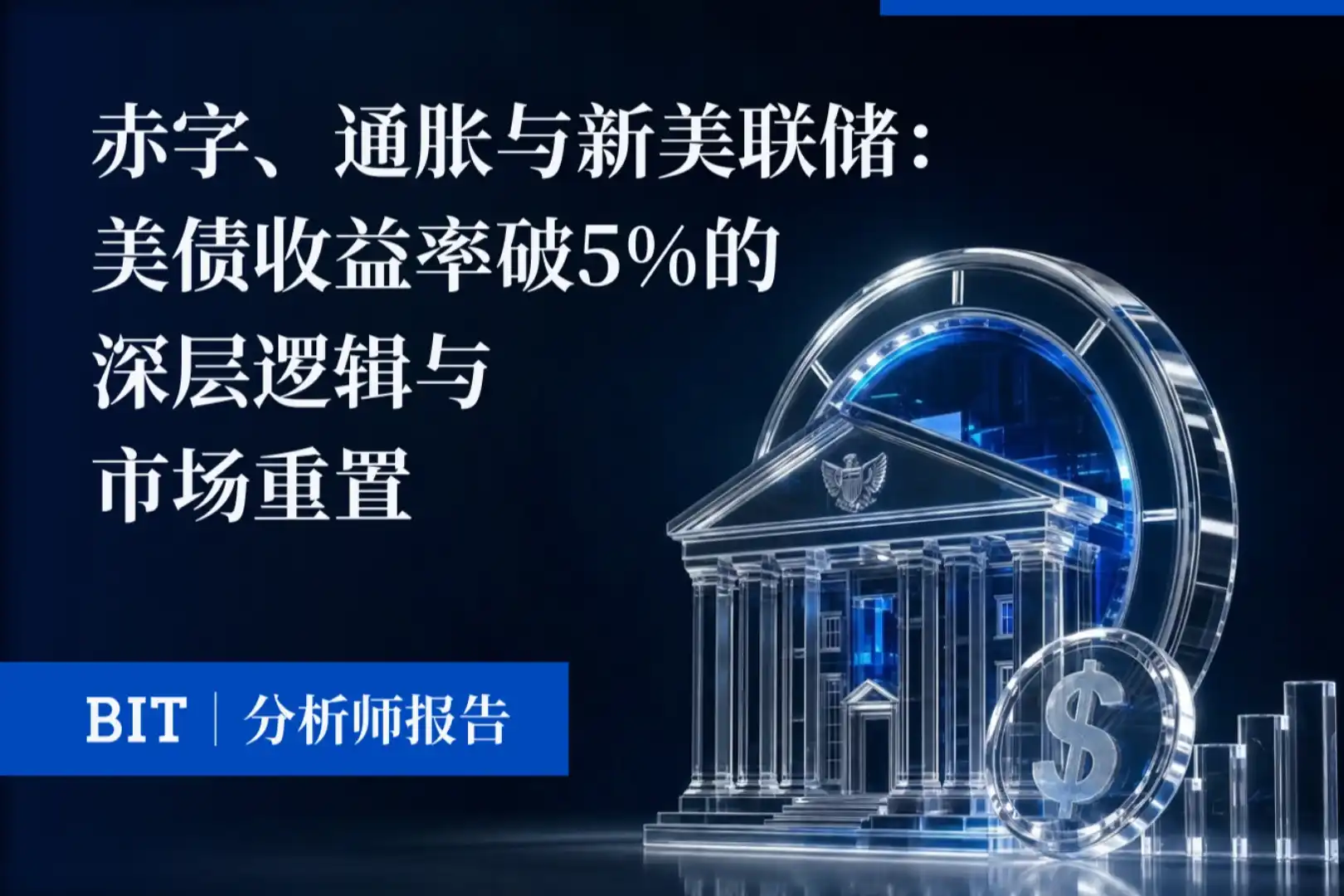
Deficits, Inflation, and the New Fed: The Deep Logic Behind US Bond Yields Breaking 5% and the Market Reset

In the week of May 15-19, 2026, U.S. long-term Treasury yields surged to multi-year highs, with the 30-year yield hitting 5.2%, a level unseen since 2007, and the 10-year yield climbing to 4.687%. Equity markets declined in response. Four primary factors are driving the rise in yields. First, stubborn inflation persists, with April wholesale prices rising 6% year-over-year, fueling expectations of potential future Fed rate hikes instead of cuts. Second, newly confirmed Fed Chair Kevin Warsh inherits a complex inflation battle, with markets closely awaiting his first FOMC meeting. Third, deteriorating U.S. fiscal health, marked by large deficits and rising debt servicing costs, is eroding the traditional "safe-haven" premium for Treasuries. Fourth, the "One Big Beautiful Bill" tax cuts are projected to add trillions to the national debt, contributing to Moody's recent credit rating downgrade. Rising yields pressure stocks through several channels: a higher discount rate reduces the present value of future earnings (especially for growth stocks); rising risk-free rates compress equity risk premiums, making bonds relatively more attractive; higher borrowing costs impact consumers and corporations; and a stronger dollar affects multinational earnings. For investors, the environment favors value and financial stocks over long-duration growth stocks. Bond investors find attractive yields in short to intermediate maturities, while income investors see the best fixed-income opportunities in over a decade. Key developments to watch include Chair Warsh's first FOMC meeting, upcoming inflation data, Treasury auction demand, and whether the 30-year yield approaches 6%, a level that could trigger a more sustained equity valuation reset. The bond market's message is clear: the era of cheap government borrowing is over, posing a central challenge for markets in late 2026.

marsbitHá 22m

Deficits, Inflation, and the New Fed: The Deep Logic Behind US Bond Yields Breaking 5% and the Market Reset

marsbitHá 22m

Is MicroStrategy Selling Bitcoin Not a Bearish Signal? Deconstructing the 5 Financial Logics Behind Corporate Bitcoin Divestment

The article "Is Strategy Selling Bitcoin Not a Bearish Signal? Decoding 5 Financial Logics Behind Corporate Bitcoin Divestment" analyzes why companies might sell their bitcoin holdings, arguing it's not necessarily negative. It begins by noting the market's surprise at Strategy's potential sale, contrasting its previous "never sell" stance. The core argument is that corporate decisions prioritize shareholder value, and selling bitcoin can be a rational strategic choice. The article outlines five key financial reasons for such sales: 1. **Increase Bitcoin Holdings Per Share:** Companies can use proceeds from bitcoin sales to repurchase shares when the stock price is undervalued relative to its bitcoin assets. This reduces the outstanding share count, potentially increasing the bitcoin amount backing each remaining share. 2. **Optimize Capital Structure & Reduce Financing Costs:** Building cash reserves through bitcoin sales can improve credit ratings (as favored by agencies like S&P), leading to lower future borrowing costs. Repaying debt with sale proceeds also reduces financial leverage. 3. **Legitimate Tax Planning:** In the absence of wash-sale rules for bitcoin in the US, companies can sell to realize capital losses, then repurchase, lowering the tax basis of their holdings and creating tax offsets. 4. **Counter Negative Market Narratives:** A controlled, non-disruptive sale could demonstrate market resilience and disprove fears that corporate selling would crash the market, thereby normalizing bitcoin as a corporate treasury asset. 5. **Repurchase Preferred Stock at a Discount:** If a company's preferred stock trades significantly below its face value, using bitcoin sale proceeds to repurchase it can retire expensive liabilities at a profit, saving on future dividend payments. The conclusion emphasizes that bitcoin's monetary properties offer flexibility. Strategic sales can protect corporate and shareholder interests, making asset utilization more important than rigid "hold" mandates.

marsbitHá 52m

Is MicroStrategy Selling Bitcoin Not a Bearish Signal? Deconstructing the 5 Financial Logics Behind Corporate Bitcoin Divestment

marsbitHá 52m

Why Did Zhipu Surge Nearly 30% in a Single Day?

"Global AI Model Unicorn" Zhipu's stock surged nearly 30% in a single day, reaching a new market cap high. The catalyst was the launch of its GLM-5.1-highspeed API, boasting a generation speed of **400 tokens per second**, setting a new global benchmark. This speed, roughly 3-5 times faster than industry leaders like OpenAI's GPT-4o and Anthropic's Claude, is achieved **without compromising the full-scale model's capabilities**. In the era of AI Agents requiring dozens of self-calls, such latency reduction is critical, transforming speed from a system metric into a determinant of intelligence limits. The breakthrough stems from a three-layer technical overhaul: 1. **TileRT Inference Engine**: Compiles the entire model into a continuous, always-on computation pipeline using "Warp Specialization," minimizing GPU idle time by having different processor groups handle data loading, computation, and communication in parallel. 2. **Heterogeneous Parallelism for MLA**: To efficiently run the GLM-5.1 model using the MLA attention mechanism, TileRT employs a heterogeneous strategy. One GPU handles sparse indexing/routing, while the others perform dense computation, optimizing for MLA's unique workflow. 3. **ZCube Network Architecture**: Replaces the standard Spine-Leaf (ROFT) network topology with a flat, dual-group interconnect. This design creates a single optimal path between any two GPUs, eliminating network congestion at scale and reducing latency. The business impact is significant: a 15% increase in cluster throughput (free extra capacity), a 40.6% reduction in tail latency (improved stability), and a one-third cut in networking hardware costs. Long-term, this innovation challenges the dominance of NVIDIA's integrated hardware-software stack (GPU+NVLink+InfiniBand), potentially benefiting manufacturers of high-density Leaf switches and optical modules while lowering the software barrier for domestic AI chips like Huawei's Ascend. The innovation proves that more can be achieved with the same compute, reshaping the infrastructure beyond just GPUs.

marsbitHá 2h

Why Did Zhipu Surge Nearly 30% in a Single Day?

marsbitHá 2h

Trading

Spot
Futuros

Artigos em Destaque

Como comprar TIA

Bem-vindo à HTX.com!Tornámos a compra de Celestia (TIA) simples e conveniente.Segue o nosso guia passo a passo para iniciar a tua jornada no mundo das criptos.Passo 1: cria a tua conta HTXUtiliza o teu e-mail ou número de telefone para te inscreveres numa conta gratuita na HTX.Desfruta de um processo de inscrição sem complicações e desbloqueia todas as funcionalidades.Obter a minha contaPasso 2: vai para Comprar Cripto e escolhe o teu método de pagamentoCartão de crédito/débito: usa o teu visa ou mastercard para comprar Celestia (TIA) instantaneamente.Saldo: usa os fundos da tua conta HTX para transacionar sem problemas.Terceiros: adicionamos métodos de pagamento populares, como Google Pay e Apple Pay, para aumentar a conveniência.P2P: transaciona diretamente com outros utilizadores na HTX.Mercado de balcão (OTC): oferecemos serviços personalizados e taxas de câmbio competitivas para os traders.Passo 3: armazena teu Celestia (TIA)Depois de comprar o teu Celestia (TIA), armazena-o na tua conta HTX.Alternativamente, podes enviá-lo para outro lugar através de transferência blockchain ou usá-lo para transacionar outras criptomoedas.Passo 4: transaciona Celestia (TIA)Transaciona facilmente Celestia (TIA) no mercado à vista da HTX.Acede simplesmente à tua conta, seleciona o teu par de trading, executa as tuas transações e monitoriza em tempo real.Oferecemos uma experiência de fácil utilização tanto para principiantes como para traders experientes.

165 Visualizações TotaisPublicado em {updateTime}Atualizado em 2025.03.21

Como comprar TIA

Discussões

Bem-vindo à Comunidade HTX. Aqui, pode manter-se informado sobre os mais recentes desenvolvimentos da plataforma e obter acesso a análises profissionais de mercado. As opiniões dos utilizadores sobre o preço de TIA (TIA) são apresentadas abaixo.

活动图片