The Endgame for DATs: Liquidation or Self-Rescue?

marsbitPublicado em 2026-02-18Última atualização em 2026-02-18

Resumo

More than a year ago, becoming a digital asset treasury (DAT) seemed like an easy way for companies to boost their stock prices. They would buy cryptocurrencies, issue shares at a premium to their net asset value (NAV), and use the proceeds to buy more crypto, creating a financial flywheel. However, as the crypto market's total capitalization dropped over 45% in four months, most DATs now trade at a discount to their NAV, breaking this cycle. DATs are not just asset wrappers; they are companies with operational costs. The premium was the product, allowing them to raise cheap capital. Without it, they struggle to fund operations and acquisitions. While some, like MicroStrategy, have cash reserves and an operating business to weather the bear market, newer DATs without sufficient reserves or revenue face significant pressure. They must now prove their operational viability beyond simply holding crypto, as investors question why they should pay a premium for indirect exposure when direct options are cheaper. Survival will depend on managing dilution, debt, and real-world cash flow obligations.

Author: Prathik Desai

Compiled and edited by: BitpushNews

Over a year ago, becoming a digital asset treasury seemed like an easy decision for many companies seeking to boost their stock prices.

Some Microsoft shareholders gathered, urging the board to evaluate the benefits of incorporating some Bitcoin into its balance sheet. They even mentioned Strategy (formerly MicroStrategy), the largest publicly traded Bitcoin DAT.

At that time, there was a financial flywheel attracting everyone to follow.

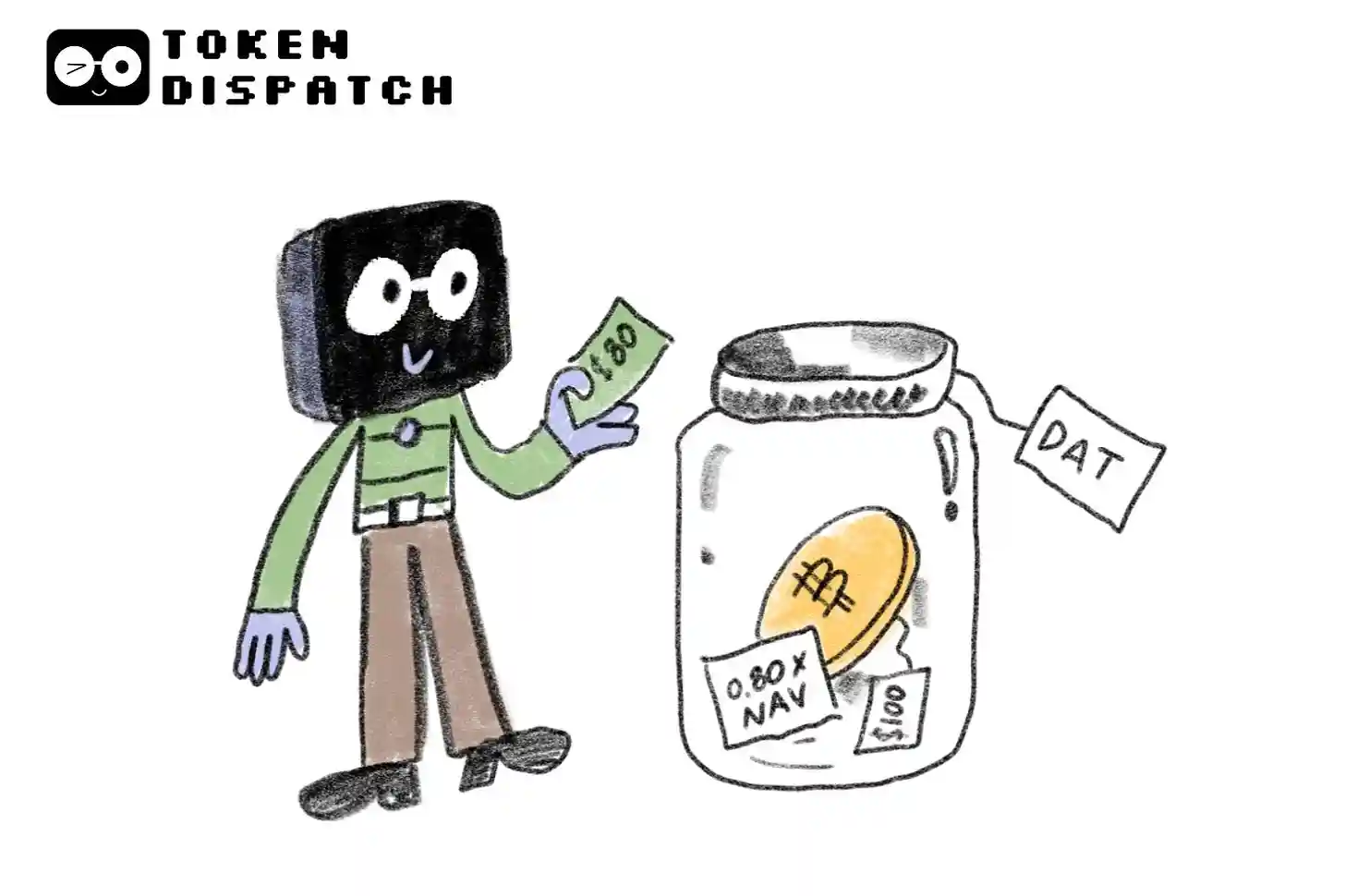
Buy large amounts of BTC/ETH/SOL. Watch the stock price exceed the value of these assets. Issue more shares at a premium. Use the proceeds to buy more cryptocurrency. Repeat. This financial flywheel supporting publicly traded stocks seemed nearly perfect, enough to tempt investors. They paid over two dollars for just one dollar's worth of indirect Bitcoin exposure. Those were crazy times.

But time tests the best strategies and flywheels.

Today, with the total crypto market capitalization evaporating over 45% in the past four months, the market capitalization to net asset value ratio for most of these wrapper companies has fallen below 1. This indicates the market values these DAT companies below the value of their crypto treasuries. This changes how the financial flywheel operates.

Because a DAT is not just a wrapper for assets. In most cases, it is a company with operating expenses, financing costs, legal and operational fees. In the era of mNAV premiums, DATs funded their cryptocurrency purchases and operating costs by selling more shares or raising more debt. But in the era of mNAV discounts, this flywheel falls apart.

In today's analysis, I will show you what sustained mNAV discounts mean for DATs and whether they can survive the crypto bear market.
Between 2024 and 2025, over 30 companies rushed to transform into DATs. They built treasuries around blue-chip coins like Bitcoin, ETH, and SOL, and even meme coins.

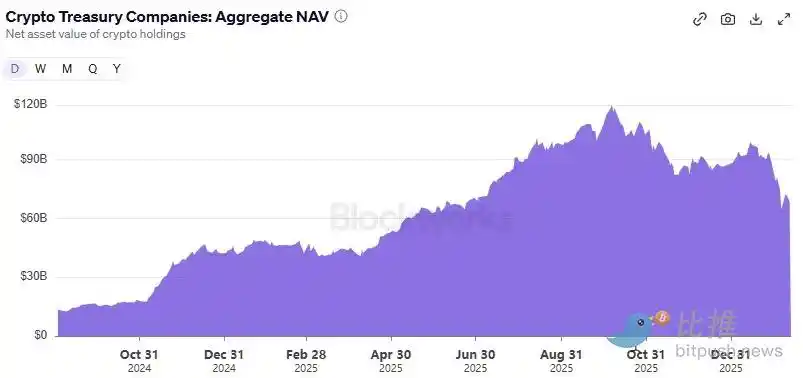
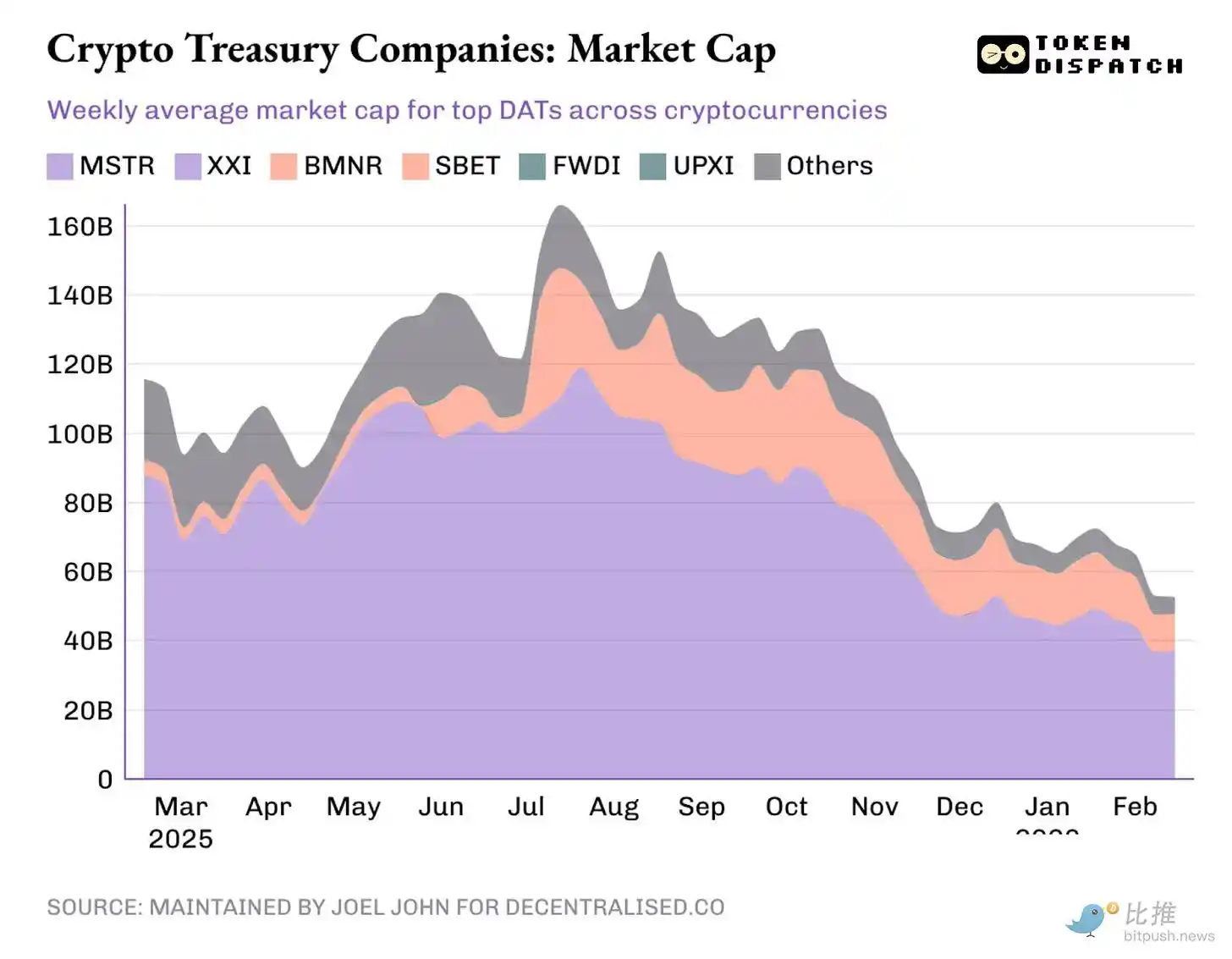
At their peak on October 7, 2025, DATs held cryptocurrencies worth $118 billion, and the total market capitalization of these companies exceeded $160 billion. Today, DATs hold cryptocurrencies worth $68 billion, while their discounted total market capitalization is just over $50 billion.
All their fates hinge on one thing: their ability to wrap assets and weave a story that makes the wrapper's value higher than the asset's value. This difference becomes the premium.

The premium itself became the product. If the stock traded at 1.5 times mNAV, a DAT could sell $1 worth of stock, then buy $1.5 worth of crypto asset exposure, and describe the transaction as "value-accretive." Investors were willing to pay the premium because they believed the DAT could continue to sell shares at a premium and use the proceeds to accumulate more cryptocurrency, thereby increasing the crypto asset value per share over time.
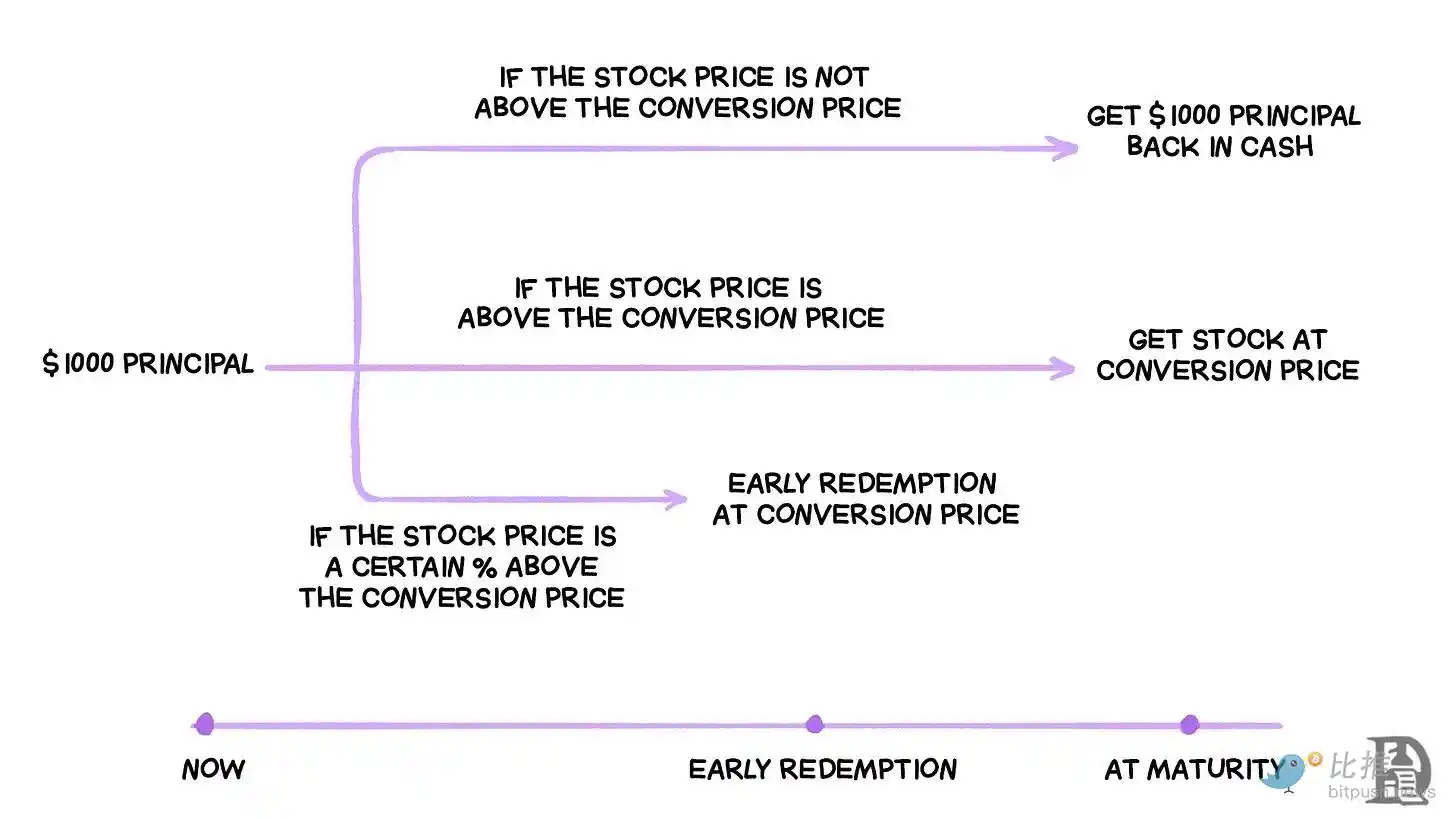
The problem is, the premium doesn't last forever. Once the market stops paying extra for this wrapper, the "sell stock to buy more crypto" flywheel gets stuck.

When the stock no longer trades at 1.5 times its asset value, each new share issued buys less cryptocurrency. The premium is no longer a tailwind, it becomes a discount.

Over the past year, the stock prices of leading BTC, ETH, and SOL DATs have fallen more than the cryptocurrencies themselves.
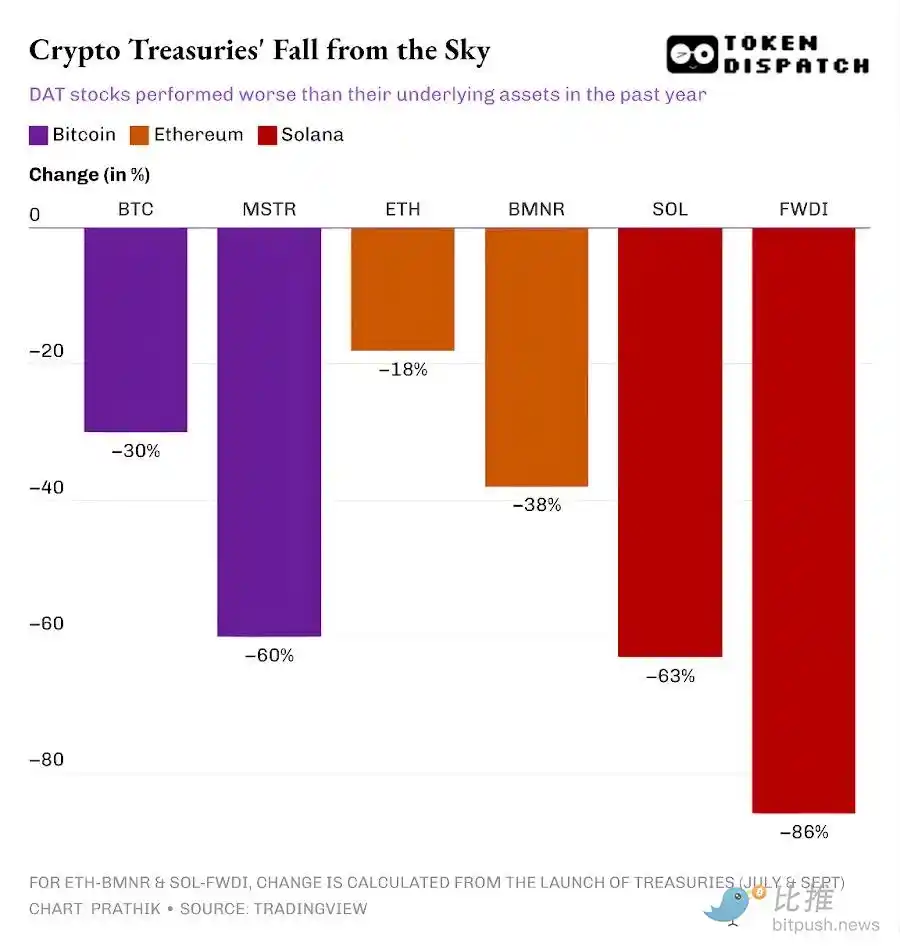
Once the premium of the stock relative to the underlying asset disappears, investors naturally ask why they can't buy the cryptocurrency directly elsewhere, such as on decentralized or centralized exchanges, or through exchange-traded funds, at a cheaper price.

Matt Levine from Bloomberg raised an important question: If DATs are trading below net asset value, let alone at a premium, why don't investors force the company to liquidate its crypto treasury or buy back shares?

Many DATs, including the sector leader Strategy, have tried to convince investors that they will hold cryptocurrency through the bear market cycle, waiting for the return of the premium era. But I see a more critical issue. If DATs cannot raise additional funds for the foreseeable long term, where do they get the money to sustain operations? These DATs have bills and salaries to pay.

Strategy is an exception for two reasons.

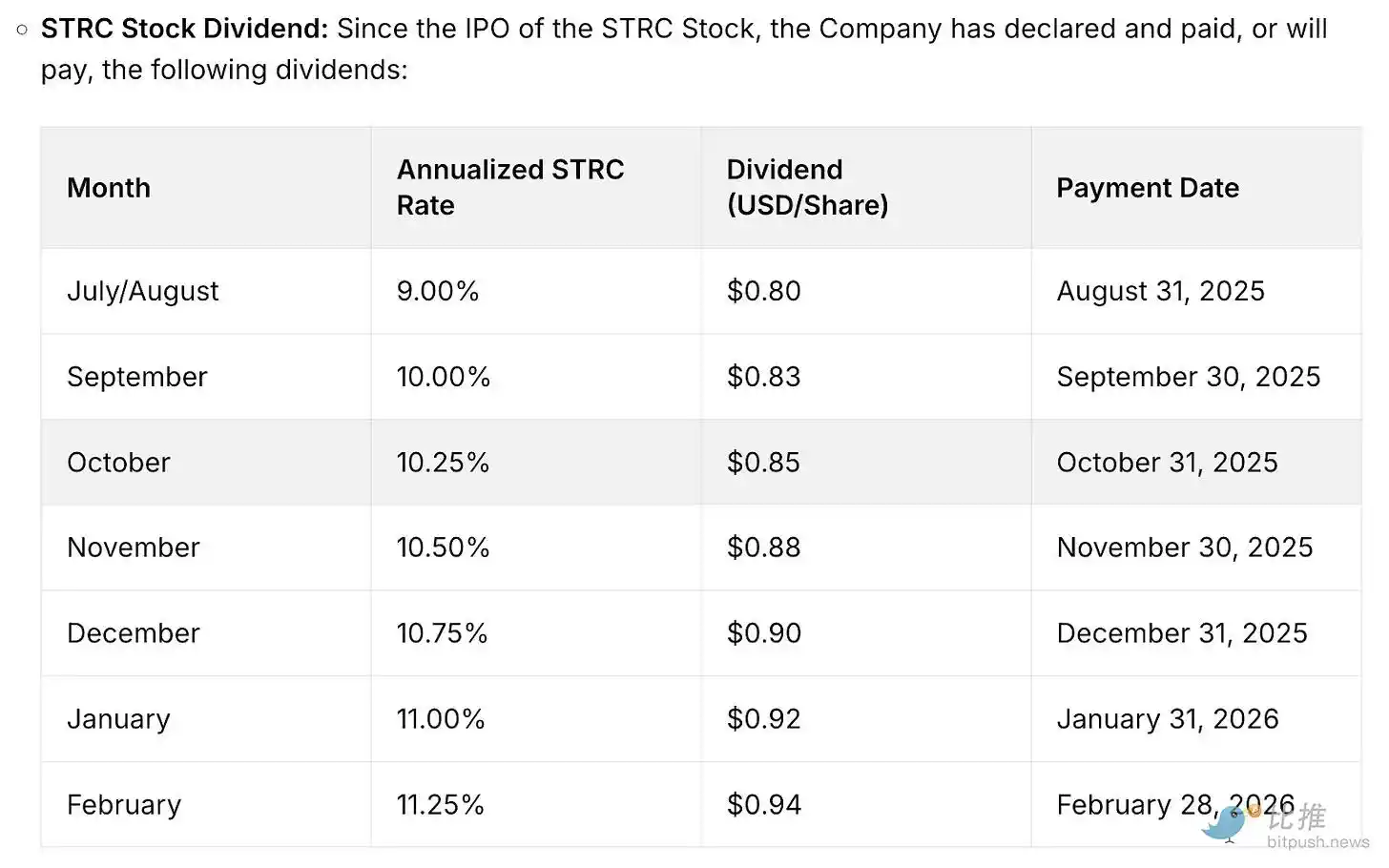
  • It reportedly holds $2.25 billion in reserves, enough to cover its dividend and interest obligations for about 2.5 years. This is important because Strategy no longer relies solely on zero-coupon convertible bonds to raise funds. It has also issued preferred instruments that require paying substantial dividends.
  • It also has an operating business, however small, that still generates recurring revenue. In Q4 2025, Strategy reported total revenue of $123 million and gross profit of $81 million. Although Strategy's net profit can fluctuate significantly due to mark-to-market changes in crypto asset prices each quarter, its business intelligence division is its only tangible source of cash flow.

But this still doesn't make Strategy's strategy foolproof. The market can still punish its stock—as has happened over the past year—and weaken Strategy's ability to continue raising funds at low cost.

While Strategy might weather the crypto bear market, the newer DATs that lack sufficient reserves or operating businesses to cover their inevitable expenses will feel the pressure.

This distinction is even more pronounced among ETH DATs.

The largest Ethereum-based DAT—BitMine Immersion, has a marginal operating business supporting its ETH treasury. In the quarter ended November 30, 2025, BMNR reported total revenue of $2.293 million, including consulting, leasing, and staking income.

Its balance sheet shows the company holds $10.56 billion worth of digital assets and $887.7 million in cash equivalents. BMNR's operations resulted in a net negative cash flow of $228 million. All its cash needs were met by issuing new shares.

Last year, as BMNR's stock traded at an mNAV premium for most of the year, raising funds was relatively easy. But over the past six months, its mNAV has dropped from 1.5 to around 1.

So what happens when the stock no longer trades at a premium? Issuing more shares at a discount could lower the ETH price per share, making it less attractive to investors than buying ETH directly from the market.

This explains why BitMine said last month it would invest $200 million to acquire shares in Beast Industries, a private company owned by YouTube blogger Jimmy "MrBeast" Donaldson. The company said it would "explore ways to collaborate on DeFi initiatives."

ETH and SOL DATs might also argue that staking income—something BTC DATs cannot boast—can sustain them during a market crash. But this still doesn't solve the problem of meeting the company's cash flow obligations.

Even with staking rewards (accrued in cryptocurrencies like ETH or SOL), as long as these rewards are not converted into fiat currency, DATs cannot use them to pay salaries, audit fees, listing costs, and interest. Companies must either have sufficient fiat revenue or sell or re-mortgage their treasury assets to meet cash needs.

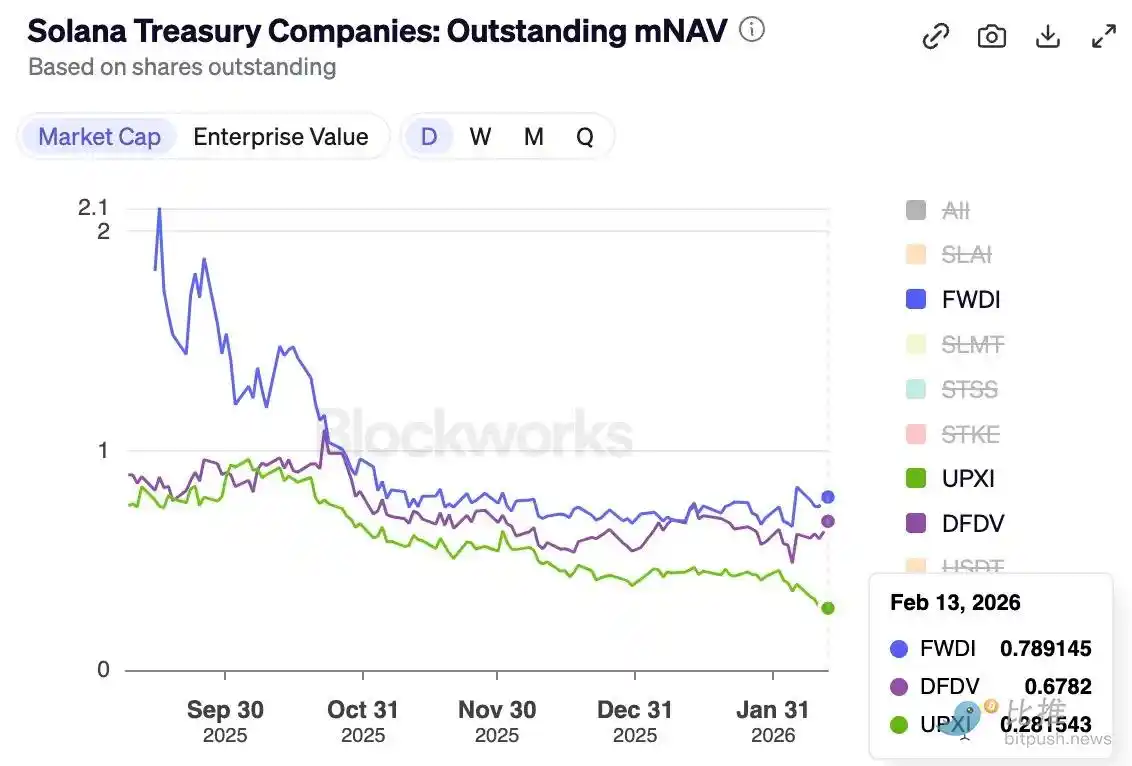
This is evident in the largest SOL-holding DAT—Forward Industries.

FWDI reported a net loss of $586 million in Q4 2025, despite earning $17.381 million in staking and related income.

Management clearly stated that its "existing cash balance and working capital are sufficient to meet our liquidity needs for at least until February 2027."

FWDI also disclosed an active capital raising strategy, including at-the-market stock offerings, buybacks, and a tokenization experiment. However, if the mNAV premium does not exist long-term, all these attempts might fail to manage its wrapper price successfully.
The Path Forward

The core of last year's DAT frenzy was the speed of asset accumulation and the ability to raise funds by issuing shares at a premium. As long as the wrapper traded at a premium, DATs could continue converting expensive equity into more crypto assets per share and call it "beta." Investors also pretended the only risk was the asset price itself.

But the premium doesn't last forever. Crypto cycles can turn it into a discount. I wrote about this issue shortly after observing the premium decline following the 10/10 liquidation event last year.

However, this bear market will prompt DATs to assess whether they should continue to exist once their wrapper no longer trades at a premium.

One way to resolve this dilemma is for companies to enhance their operational efficiency, supplementing their DAT strategy with a business that generates positive cash flow or surplus reserves. This is because when the DAT story can no longer attract investors in a bear market, a regular corporate story will determine its survival.

If you've read the article 'Strategy & Marathon: Belief and Power', you'll recall why Strategy has remained standing through multiple crypto cycles. However, the new batch of companies, including BitMine, Forward Industries, SharpLink, and Upexi, cannot rely on the same strength.

Their current attempts with staking yields and weak operating businesses might crumble under market pressure unless they consider other options to cover real-world obligations.

We observed this with ETHZilla, the Ethereum treasury company that sold about $115 million worth of ETH holdings last month and bought two jet engines. Subsequently, the DAT leased the engines to a major airline and hired Aero Engine Solutions to manage them for a monthly fee.

Looking ahead, people will evaluate not only the digital asset accumulation strategy but also the conditions under which it can survive. In the ongoing DAT cycle, only those companies that can manage dilution, liabilities, fixed obligations, and trading liquidity will weather the market downturn.


Perguntas relacionadas

QWhat is the core financial mechanism that Digital Asset Trusts (DATs) relied on during the bull market, and why has it broken down?

ADATs relied on a financial flywheel where they bought cryptocurrencies, saw their stock trade at a premium to the net asset value (mNAV), issued more stock at that premium to raise capital, and used the proceeds to buy more crypto, increasing the per-share crypto value. This mechanism broke down because the market capitalization to net asset value ratio for most DATs has fallen below 1, meaning their stocks now trade at a discount. This makes raising capital by issuing new shares dilutive and unattractive to investors, halting the flywheel.

QAccording to the analysis, what are the two key factors that make MicroStrategy (Strategy) an exception and potentially able to survive a prolonged crypto bear market?

AThe two key factors are: 1) It holds a substantial reserve of $2.25 billion, which is sufficient to cover its dividend and interest obligations for approximately 2.5 years. 2) It has an operational business (its commercial intelligence division) that generates recurring revenue and positive gross profit, providing a tangible source of cash flow independent of crypto asset sales.

QWhy is staking income, which ETH and SOL DATs earn, not a complete solution for covering their operational costs during a market downturn?

AStaking rewards are accrued in cryptocurrencies like ETH or SOL. To pay real-world obligations such as salaries, audit fees, and interest in fiat currency, the DAT must either have sufficient fiat revenue from other operations or sell/remortgage their staked assets. The staking income itself, if not converted to cash, does not solve the company's cash flow needs for covering these expenses.

QWhat strategic shift did ETHZilla make to address the challenge of its DAT trading at a discount to its NAV?

AETHZilla sold approximately $115 million worth of its ETH holdings and used the proceeds to purchase two jet engines. It then leased these engines to a major airline and hired a management company to handle them for a monthly fee, diversifying its asset base and creating a new stream of operational, fiat-based revenue.

QWhat is the fundamental question investors are now asking about DATs since their shares trade at a discount to the net asset value (NAV)?

AInvestors are asking why they should pay for indirect exposure to cryptocurrencies through a DAT stock trading at a discount when they can buy the underlying cryptocurrencies (BTC, ETH, SOL) directly on decentralized or centralized exchanges, or through ETFs, at or near their market value, thus getting more crypto for their money.

Leituras Relacionadas

Must-Watch Events Next Week|CLARITY Act Could Face Senate Vote; SpaceX, Circle to Report Earnings (8.3-8.9)

**Summary: Key Events and Developments to Watch (August 3-9)** The upcoming week is marked by significant financial disclosures, key legislative deadlines, and notable product updates. **Major Financial Events:** Several companies are scheduled to release their Q2 2026 earnings. American Bitcoin (ABTC) will report on August 3, followed by SpaceX and Hut 8 Mining Corp. on August 4, and Circle on August 5. Notably, a significant portion of SpaceX shares (up to 12% of total shares) will be unlocked on August 6 following their earnings release. **Key Legislative Deadline:** The U.S. Senate faces an August 7 deadline to secure 60 votes for the CLARITY Act, a bipartisan bill aiming to establish a federal regulatory framework for cryptocurrencies. The Senate may hold a full vote on the bill during the week. **Economic Data:** The U.S. July Non-Farm Payrolls report will be released on August 7, providing crucial labor market data. **Technology & Product Updates:** * **Shutdowns:** DeFi portfolio tracker Zapper and wallet app Ctrl Wallet will cease operations on August 3. * **Upgrades:** LayerZero will deprecate its v1 relayers on August 3. XRP Ledger's new version 3.3.0, featuring five new functions, is expected next week. * **AI:** Elon Musk announced that the advanced Grok 4.6 AI model is set for release around August 7. * **Bitcoin:** The BIP-110 forced signaling for a potential Bitcoin network change is scheduled to begin around August 8. **Other Notable Events:** Chinese robotics firm Unitree Tech has set its preliminary price inquiry for its IPO for August 5. South Korean exchange Upbit will delist AQT and AERGO tokens on August 3.

marsbitHá 53m

Must-Watch Events Next Week|CLARITY Act Could Face Senate Vote; SpaceX, Circle to Report Earnings (8.3-8.9)

marsbitHá 53m

Stocks Are Plummeting More Sharply Than Cryptocurrencies. Where Has the Money Gone?

Stock Markets Plunge Deeper Than Cryptocurrencies: Where Did the Money Go? In late July, Seoul's Kospi index triggered circuit breakers for two consecutive days, plummeting over 40% from its June high. The collapse was led by heavyweight stocks like SK Hynix, whose record profits still disappointed investors, and devastating leveraged ETFs, with one major product losing over 83% of its value. This signaled a global, forced deleveraging targeting the most crowded trades. Interestingly, while stocks exhibited extreme volatility akin to crypto markets, Bitcoin rose nearly 15% in July after a prior steep drop. Analysis shows the money fleeing equities did not flow into Bitcoin. Instead, Bitcoin had already absorbed its sell-off in May-June, when U.S. spot Bitcoin ETFs saw historic outflows. The true safe-haven beneficiary was gold, whose price rose over 20% year-on-year, highlighting a decoupling between Bitcoin and gold as "digital gold." The sell-off was a targeted unwinding of leveraged positions in tech and semiconductors, accelerated by broker-dealer risk management and shifts in the AI narrative, including new competition from Chinese memory chipmakers. The retreat path was clear: from high-valuation tech stocks to cash and U.S. Treasuries, then to gold. For Bitcoin to attract sustained institutional inflows, conditions like eased global liquidity pressure, a "soft-landing" Fed rate cut, and U.S. regulatory clarity via legislation like the stalled CLARITY Act are needed. Currently, Bitcoin is not a safe haven but an already-cleared asset. Its low correlation with tech stocks, however, makes it a potential diversification play for institutional portfolios once the storm passes. The money isn't here yet, but the positioning is underway.

marsbitHá 53m

Stocks Are Plummeting More Sharply Than Cryptocurrencies. Where Has the Money Gone?

marsbitHá 53m

In Conversation with Ray Dalio: We Are Currently in an AI Bubble, with 1% of My Portfolio in Bitcoin

Ray Dalio, founder of Bridgewater Associates, warns in an interview that the current AI boom shows classic bubble characteristics, which could lead to significant economic downturns as seen in past cycles like 1929 or 2000. He explains that speculative enthusiasm, fueled by debt and overvaluation, often precedes a crash when rising rates or taxation force asset sales, causing widespread losses and recession. Dalio also outlines his "Big Cycle" theory, describing an approximate 80-year pattern where widening wealth gaps, massive government deficits, and shifting geopolitical power (like China's rise) create internal conflict and global instability. He emphasizes that we are in a late-cycle, transitional phase where traditional powers like the US and UK face decline. For personal wealth protection, Dalio advises diversification beyond cash into assets like stocks, bonds, real estate, and particularly gold, which he prefers over Bitcoin. While he holds about 1% of his portfolio in Bitcoin as a non-printable hard asset, he views gold as more secure from technological or governmental threats. Regarding AI's impact, Dalio believes it will disproportionately benefit capital owners, worsening inequality by replacing both physical and cognitive labor. He suggests that human intuition and emotional intelligence, combined with AI, will be key for future workers. On taxation, Dalio argues that wealth taxes are impractical and risk triggering asset sell-offs, reducing productive investment. He points to the UK as a cautionary example of debt, low productivity, and political strife. Geopolitically, Dalio foresees a more regionalized world, with the US showing weakness in prolonged conflicts like with Iran, akin to past imperial declines. The ideal outcome, he suggests, is coexisting powerful blocs (e.g., Americas, China-Asia Pacific) without major war.

marsbitHá 4h

In Conversation with Ray Dalio: We Are Currently in an AI Bubble, with 1% of My Portfolio in Bitcoin

marsbitHá 4h

Daily 7.2 Trillion KRW: Foreign Capital's Record Net Buying on Friday! Wall Street Says Headwinds for Korean Stock Fund Flows Have Subsided

South Korean stock market sees a dramatic shift in fund flows. On July 31, foreign investors made a record net purchase of approximately KRW 7.2 trillion in KOSPI stocks, marking a fundamental reversal from the persistent large-scale net outflows seen in previous months. This contributed to a significant narrowing of foreign net selling in July to KRW 9.8 trillion, down sharply from KRW 48.4 trillion in June and KRW 44.5 trillion in May. Simultaneously, domestic institutional pressure eased. South Korean pension funds and asset managers turned to a net buying position in July, purchasing KRW 1.0 trillion worth of KOSPI shares, contrasting with net sales in May and June. Market volatility is expected to be dampened by new financial regulations. Effective July 31, the Financial Services Commission tightened access for retail investors to single-stock leveraged ETFs by raising the minimum cash deposit requirement. Trading volumes for these products subsequently dropped to about 50% of their monthly average. Citigroup Research maintains its year-end KOSPI target of 10,000 points. The firm cites several supportive factors: the substantial easing of headwinds from capital outflows, a robust fundamental outlook for the semiconductor sector, historically low market valuations, strong economic fundamentals, and the potential for policy support from financial authorities if needed.

marsbitHá 4h

Daily 7.2 Trillion KRW: Foreign Capital's Record Net Buying on Friday! Wall Street Says Headwinds for Korean Stock Fund Flows Have Subsided

marsbitHá 4h

Trading

Spot
活动图片




