The CLARITY Act Enters a Critical Review Today: What You Should Focus On?

marsbitPublicado em 2026-05-14Última atualização em 2026-05-14

Resumo

The CLARITY Act (Digital Asset Market Clarity Act), a landmark bill to establish a regulatory framework for cryptocurrencies, enters a crucial committee markup in the U.S. Senate Banking Committee. While it has a significant chance of advancing to a full Senate vote, its path is narrowing with over 130 proposed amendments. Key tensions surround the bill: whether stablecoin rewards constitute unfair competition for bank deposits, if the legislation genuinely protects investors or merely enables industry expansion, and the push from Democrats to include ethics provisions related to the Trump family's crypto dealings. Banking lobbyists strongly oppose the stablecoin reward compromise, and with the summer recess and midterm elections approaching, the window for passage is tightening. Prediction markets currently assign about a 60% probability of the bill becoming law this year.

Editor's Note: On May 14th, at 10:30 AM Eastern Time (10:30 PM Beijing Time) today, the U.S. Senate Banking Committee will conduct a committee review of the "Cryptocurrency Market Structure Act" (known as the CLARITY Act). This is a critical step in the legislative process. If passed, the CLARITY Act will advance to a full Senate vote.

The committee's official website shows that this Executive Session has been scheduled on the agenda. Previously, Senate Banking Committee Chairman Tim Scott, along with Cynthia Lummis and Thom Tillis, released the latest version of the market structure bill text on May 12th. They stated its goal is to provide "clear rules" for digital assets, protect ordinary investors, combat illicit financial activities, and keep financial innovation within the United States.

This article is from Fortune, focusing on the political maneuvers on the eve of the CLARITY Act's review by the Senate Banking Committee. The most noteworthy aspect is not whether the bill is "pro-crypto," but how, as it nears passage, it exposes three key tensions in U.S. crypto regulation: First, whether stablecoin yields are payment incentives or de facto deposit competition; Second, whether the crypto market structure legislation is protecting investors or opening an institutional pathway for industry expansion; Third, given the deep involvement of the Trump family in crypto businesses, whether ethical constraints must be simultaneously incorporated into the market structure reforms.

From the current situation, the CLARITY Act still has a relatively good chance of entering a full Senate vote, but its margin for error is narrowing. Fortune reports that members of the Senate Banking Committee have already submitted over 130 amendments before the review, with Elizabeth Warren alone proposing 44. Meanwhile, the banking industry is concerned that stablecoin reward mechanisms could siphon off bank deposits and has sent a large number of opposition letters to Senate offices.

Although the key Republican swing vote John Kennedy has indicated a tendency to support it, and the chance of the bill entering full Senate consideration remains high, with the summer recess and midterm elections approaching, the window for the CLARITY Act's passage is narrowing. Prediction markets have also lowered its probability of passing this year to about 60%.

Below is the original text:
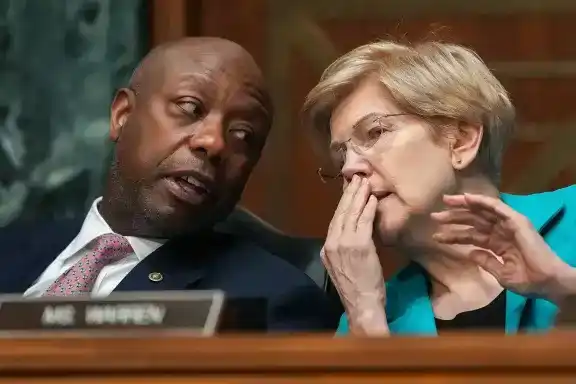
The CLARITY Act is a landmark bill aimed at establishing a regulatory framework for the U.S. crypto industry. The bill will begin its markup review process in a Senate committee starting Thursday. Its passing prospects have boosted investor sentiment, but there remain several significant hurdles to cross before Congress can send the bill to President Trump's desk.

CLARITY is short for the "Digital Asset Market Clarity Act." The bill passed the House of Representatives last year but encountered resistance in the Senate Banking Committee due to disputes between banks and stablecoin companies over whether and when rewards can be paid on stablecoin balances. Now, as senators prepare to propose amendments, Democrats are pushing to include ethical constraint clauses related to the Trump family's crypto businesses.

According to a copy of proposed amendments reviewed by Fortune, members of the Senate Banking Committee have submitted over 130 proposed amendments ahead of Thursday's markup, with Senator Elizabeth Warren alone submitting 44.

Some of the proposed amendments are minor, but others aim to advance the positions of the bill's opponents. These opponents include banking interests concerned that stablecoins could weaken the deposit base of banks, as well as those worried about ethical and national security risks accompanying the crypto industry's expansion.

"I think it will pass, based on the progress made in both chambers of Congress so far and the White House's support for this bill," Steve Yelderman, general counsel for the Ethereum-focused initiative Etherealize, told Fortune. "Having said that, this is Washington, and anything can happen."

Earlier this year, the CLARITY Act came close to entering a Senate Banking Committee markup, but Coinbase withdrew its support for the bill over a proposed ban on stablecoin rewards. Since then, Senator Thom Tillis (R-N.C.) and Senator Angela Alsobrooks (D-Md.) reached an agreement on the stablecoin yield issue. However, banking lobbying groups now complain that this compromise is too friendly to stablecoin companies. Reportedly, members of the American Bankers Association have sent over 8,000 letters to Senate offices criticizing this yield compromise.

A Senate aide told Fortune that during tomorrow's markup, Senate Banking Committee Chairman Tim Scott (R-S.C.) is expected to emphasize protecting "ordinary people," safeguarding national security, and keeping crypto innovation in the United States as the main goals of the CLARITY Act. Another Senate aide said Democrats are expected to focus on the ethical issues raised by President Trump's numerous crypto connections.

"Democrats are increasingly concerned that if ethics provisions are not included in the version of the bill marked up by the Banking Committee, they may not be included later," the staffer said. They added that Democrats are focused on addressing the issue of the Trump family profiting from cryptocurrencies within the market structure legislation. Republicans and Democrats have met several times this week to discuss how to add ethics clauses to the CLARITY Act.

For now, the bill's chances of reaching a full Senate vote remain significant. A key Republican who had previously been hesitant about the CLARITY Act in the Banking Committee, Senator John Kennedy of Louisiana, told Semafor he plans to support the bill. However, with the summer recess and midterm elections approaching, the margin for error for the CLARITY Act remains quite limited. Traders on Polymarket have become less optimistic about the bill's prospects this week. The prediction market currently puts the probability of the bill passing this year at 60%.


Perguntas relacionadas

QWhat is the CLARITY Act and what is its primary goal?

AThe CLARITY Act refers to the 'Digital Asset Market Clarity Act'. It is a landmark bill aimed at establishing a regulatory framework for the crypto industry in the U.S., with the primary goal of providing clear rules for digital assets while protecting retail investors, combating illicit finance, and keeping financial innovation in the United States.

QWhy was the progression of the CLARITY Act in the Senate Banking Committee previously stalled?

AThe bill's progress in the Senate Banking Committee was previously stalled due to disputes between banks and stablecoin companies over the question of whether and when stablecoin balances could pay rewards.

QWhat are the key tensions in U.S. crypto regulation highlighted by the CLARITY Act's progress?

AThe article highlights three key tensions: 1) Whether stablecoin rewards are a payment incentive or a form of indirect deposit competition; 2) Whether the crypto market structure legislation protects investors or opens a regulatory pathway for industry expansion; 3) Whether market structure reform must incorporate ethical constraints given the deep involvement of the Trump family in crypto businesses.

QWhat is one major concern Democrats are trying to address with proposed amendments to the CLARITY Act?

ADemocrats are trying to address ethical concerns by pushing to incorporate ethical constraint clauses related to the Trump family's crypto business profits into the market structure legislation.

QAccording to prediction markets, what is the current estimated probability of the CLARITY Act passing in 2025?

AAccording to the prediction market Polymarket, the estimated probability of the CLARITY Act passing in 2025 is currently around 60%.

Leituras Relacionadas

In Conversation with Ray Dalio: We Are Currently in an AI Bubble, with 1% of My Portfolio in Bitcoin

Ray Dalio, founder of Bridgewater Associates, warns in an interview that the current AI boom shows classic bubble characteristics, which could lead to significant economic downturns as seen in past cycles like 1929 or 2000. He explains that speculative enthusiasm, fueled by debt and overvaluation, often precedes a crash when rising rates or taxation force asset sales, causing widespread losses and recession. Dalio also outlines his "Big Cycle" theory, describing an approximate 80-year pattern where widening wealth gaps, massive government deficits, and shifting geopolitical power (like China's rise) create internal conflict and global instability. He emphasizes that we are in a late-cycle, transitional phase where traditional powers like the US and UK face decline. For personal wealth protection, Dalio advises diversification beyond cash into assets like stocks, bonds, real estate, and particularly gold, which he prefers over Bitcoin. While he holds about 1% of his portfolio in Bitcoin as a non-printable hard asset, he views gold as more secure from technological or governmental threats. Regarding AI's impact, Dalio believes it will disproportionately benefit capital owners, worsening inequality by replacing both physical and cognitive labor. He suggests that human intuition and emotional intelligence, combined with AI, will be key for future workers. On taxation, Dalio argues that wealth taxes are impractical and risk triggering asset sell-offs, reducing productive investment. He points to the UK as a cautionary example of debt, low productivity, and political strife. Geopolitically, Dalio foresees a more regionalized world, with the US showing weakness in prolonged conflicts like with Iran, akin to past imperial declines. The ideal outcome, he suggests, is coexisting powerful blocs (e.g., Americas, China-Asia Pacific) without major war.

marsbitHá 3h

In Conversation with Ray Dalio: We Are Currently in an AI Bubble, with 1% of My Portfolio in Bitcoin

marsbitHá 3h

Daily 7.2 Trillion KRW: Foreign Capital's Record Net Buying on Friday! Wall Street Says Headwinds for Korean Stock Fund Flows Have Subsided

South Korean stock market sees a dramatic shift in fund flows. On July 31, foreign investors made a record net purchase of approximately KRW 7.2 trillion in KOSPI stocks, marking a fundamental reversal from the persistent large-scale net outflows seen in previous months. This contributed to a significant narrowing of foreign net selling in July to KRW 9.8 trillion, down sharply from KRW 48.4 trillion in June and KRW 44.5 trillion in May. Simultaneously, domestic institutional pressure eased. South Korean pension funds and asset managers turned to a net buying position in July, purchasing KRW 1.0 trillion worth of KOSPI shares, contrasting with net sales in May and June. Market volatility is expected to be dampened by new financial regulations. Effective July 31, the Financial Services Commission tightened access for retail investors to single-stock leveraged ETFs by raising the minimum cash deposit requirement. Trading volumes for these products subsequently dropped to about 50% of their monthly average. Citigroup Research maintains its year-end KOSPI target of 10,000 points. The firm cites several supportive factors: the substantial easing of headwinds from capital outflows, a robust fundamental outlook for the semiconductor sector, historically low market valuations, strong economic fundamentals, and the potential for policy support from financial authorities if needed.

marsbitHá 3h

Daily 7.2 Trillion KRW: Foreign Capital's Record Net Buying on Friday! Wall Street Says Headwinds for Korean Stock Fund Flows Have Subsided

marsbitHá 3h

Thanks to Dice Rolls, Bitcoin Keys Are Stored Offline, But Not Everyone Will Do It

The article discusses using dice rolls to generate secure Bitcoin wallet seeds, providing entropy independent of potentially flawed hardware random number generators. It explains that each fair dice roll offers about 2.585 bits of entropy, with around 50 rolls needed for a standard 12-word seed phrase and 99+ recommended for higher security. This method gained attention after a vulnerability was revealed in some Coldcard hardware wallets, where a faulty firmware RNG (dating back to 2021) compromised generated keys. The analysis notes that while a dice-generated main seed was safe from this specific flaw, other Coldcard functions (like creating paper wallets, backup keys, or passwords) could still be vulnerable if they used the defective RNG. The piece argues that while dice-based entropy is technically robust, the manual process is error-prone, tedious, and unrealistic for most new users, who might make mistakes in recording or inputting rolls. It concludes that while manual entropy generation should remain an option for advanced users, the long-term goal is to develop reliable, user-friendly hardware and software that securely generates randomness without requiring specialized knowledge. Coldcard users are advised to check their firmware version and replace any secondary secrets (like paper wallet keys) created with vulnerable devices, while also considering multi-signature setups with devices from different manufacturers for added security.

cryptonews.ruHá 9h

Thanks to Dice Rolls, Bitcoin Keys Are Stored Offline, But Not Everyone Will Do It

cryptonews.ruHá 9h

Trading

Spot
活动图片




