The AI Bear Market Lasting Two Days Is Over; Why Did Funds Buy Back Storage Stocks First?

marsbitPublicado em 2026-06-09Última atualização em 2026-06-09

Resumo

After a severe two-day selloff in early June that erased over $1 trillion from U.S. chip stock market value, capital is flowing back first to the memory sector. The correction was not driven by a collapse in AI demand but rather a market reassessment of high expectations. Stocks like Broadcom faced selling pressure despite strong AI revenue guidance, signaling a shift in focus from who has an "AI story" to who can most rapidly translate AI demand into verifiable profits and earnings per share (EPS). Memory companies, such as Micron and SK Hynix, are leading the recovery because their EPS growth is more immediately verifiable. The AI server boom directly increases demand for high-bandwidth memory (HBM) and high-capacity server DRAM, tightening supply and driving up contract prices for conventional DRAM and NAND Flash. This price increase, coupled with a shift to higher-margin products, flows directly into near-term revenue and profitability, as evidenced in recent earnings reports. In contrast, other AI semiconductor segments like GPUs, ASICs, and optical modules, while central to the long-term AI infrastructure story, face longer and less certain paths to EPS validation. Their growth depends more on future product cycles, customer adoption timelines, and capital expenditure plans. The rebound in memory stocks highlights a market preference for assets with shorter, more transparent EPS conversion cycles following the recent de-risking phase. However, this does not negate th...

Following the semiconductor crash on June 5th, the market's focus quickly shifted from 'why it fell' to another question: after the drop, who will recover first.

The answer is not uniform. According to Reuters, the market value of US-listed chip stocks once evaporated over $1 trillion, with the Philadelphia Semiconductor Index falling nearly 8.5% intraday. At the individual stock level, Micron fell about 13.25%, NVIDIA fell about 6.2%, AMD fell about 10.86%, and Broadcom fell about 7.92%. However, by June 8th, Micron rebounded nearly 10%; on June 9th, SK Hynix and Samsung Electronics in the Korean market also strengthened simultaneously.
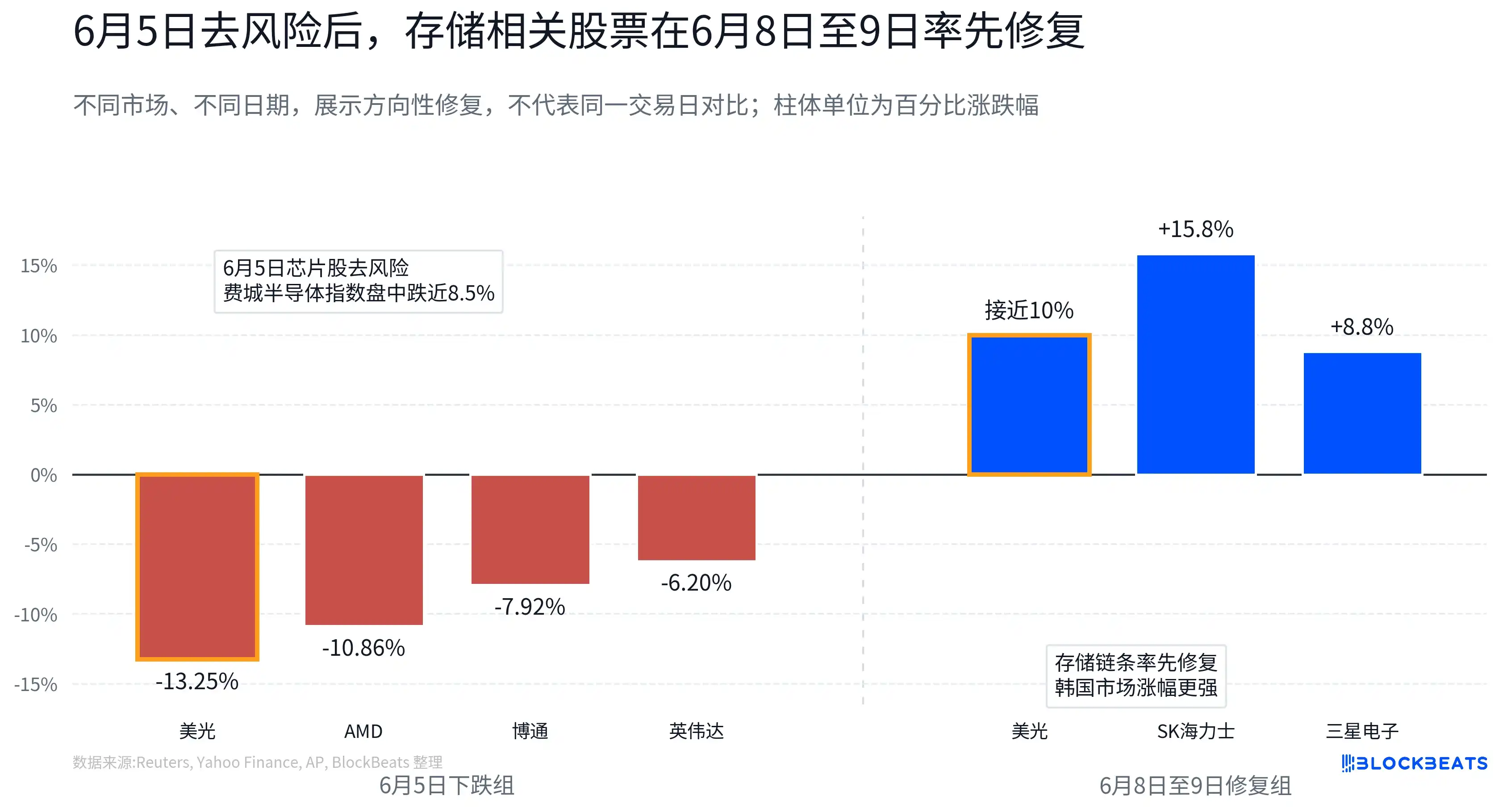
Funds did not leave AI semiconductors but are re-screening within the sector. As valuations begin to be tested, the market's focus has also shifted from 'who has the AI story' to 'who can convert AI demand into profits the fastest'. Compared to some AI hardware segments that are still trading on expectations of future product cycles, customer adoption, and capital expenditure expansion, the demand growth for memory is already more directly reflected in orders, prices, and financial reports.

This is also why memory is the first to receive fund inflows. What the market is buying back is not just memory itself, but the EPS growth logic behind it that is easier to verify.

A Plunge Means High-Expectation Trades Are Being Re-evaluated

One of the triggers for this de-risking was the expectations gap after Broadcom's earnings report.

Looking at absolute numbers, Broadcom's fundamentals are not weak. According to the company's announcement, FY2026 Q2 revenue was $22.2 billion, a year-on-year increase of 48%. The company expects FY2026 Q3 total revenue to be approximately $29.4 billion, with AI semiconductor revenue expected to reach $16 billion, a year-on-year increase of over 200%.
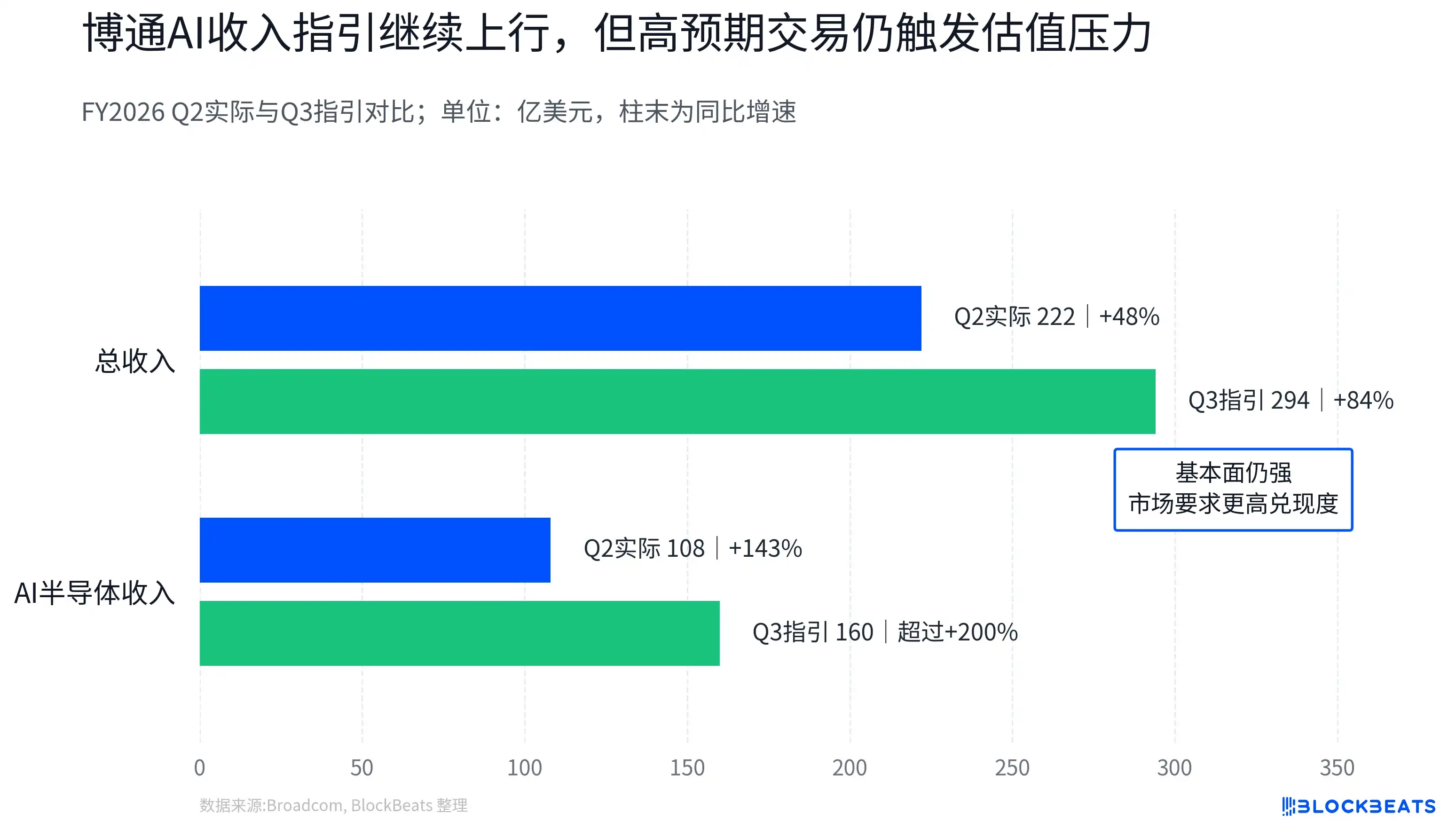
Yet the market chose to sell. The reason is not that AI demand suddenly disappeared, but that AI semiconductor assets have accumulated very high expectations over the past year. When a company with strong fundamentals can also trigger selling pressure because its AI revenue guidance falls short of some expectations, it indicates the market's pricing threshold has changed. Simply being part of the AI chain is no longer enough; the growth trajectory, profit realization, and next-quarter guidance must all justify the valuation.

This is the meaning of the June 5th plunge. It was not a test of demand collapse, but a stress test for high-expectation trades.

The main narrative for AI semiconductors in the past was more like 'who is closer to AI CAPEX (capital expenditure)'. GPU, ASIC (custom chips), high-speed optical modules, copper interconnects, equipment materials—as long as they could be placed in the AI cluster expansion chain, their valuations could receive a premium. But when the market begins to worry about crowded trades, excessive valuations, and the pace of guidance fulfillment, the question shifts from 'who has the AI story' to 'who can turn AI demand into financial reports the fastest'.

For the stock market, what ultimately determines valuation is not the orders themselves, but whether orders can translate into earnings per share (EPS). Because stock prices, in the long run, are essentially a pricing of corporate profitability. When the market starts focusing on next-quarter profits rather than a story three years from now, changes in EPS often become more important than the narrative itself.

Broadcom's role is thus also of signaling significance. It is one of the core assets in the AI ASIC and networking chip chain. Precisely because it is strong, the stock price reaction after its earnings report shows that the AI semiconductor chain is being subjected to higher verification standards.

Why Memory: Prices and Profits Are Already in the Model

The advantage of memory is that its EPS transmission chain is shorter.

AI server demand first alters the supply-demand relationship for high-value-added products like HBM (High Bandwidth Memory), server DRAM, and eSSD (enterprise Solid State Drives). As cloud providers and AI system vendors need more computing power, they also require more GPU-compatible memory, higher-capacity server memory, and larger-scale data center storage.

When memory manufacturers shift capacity towards HBM and high-end server products, the supply of conventional DRAM and NAND will be further squeezed, leading to increases in contract prices. This chain of events does not rely entirely on distant imagination but will enter revenue, gross margins, and EPS relatively quickly.

Micron's earnings report already reflects this change. According to the company's announcement, FY2026 Q2 set records across multiple metrics including revenue, gross margin, EPS, and free cash flow, with data center-related revenue surging year-on-year. The company also guided for FY2026 Q3 to continue to set significant new highs. For Micron, AI memory is no longer a distant vision but a source of revenue entering the current quarter's statement.

SK Hynix's report is more direct. According to the company's announcement, 1Q26 revenue was 52.5763 trillion won, operating profit was 37.6103 trillion won, and the operating profit margin reached 72%. The company attributed the growth to high-value-added products such as HBM, high-capacity server DRAM modules, and eSSD. For investors, this kind of profit margin reflects the combined entry into the financial statements of product mix, supply-demand gap, and pricing power.

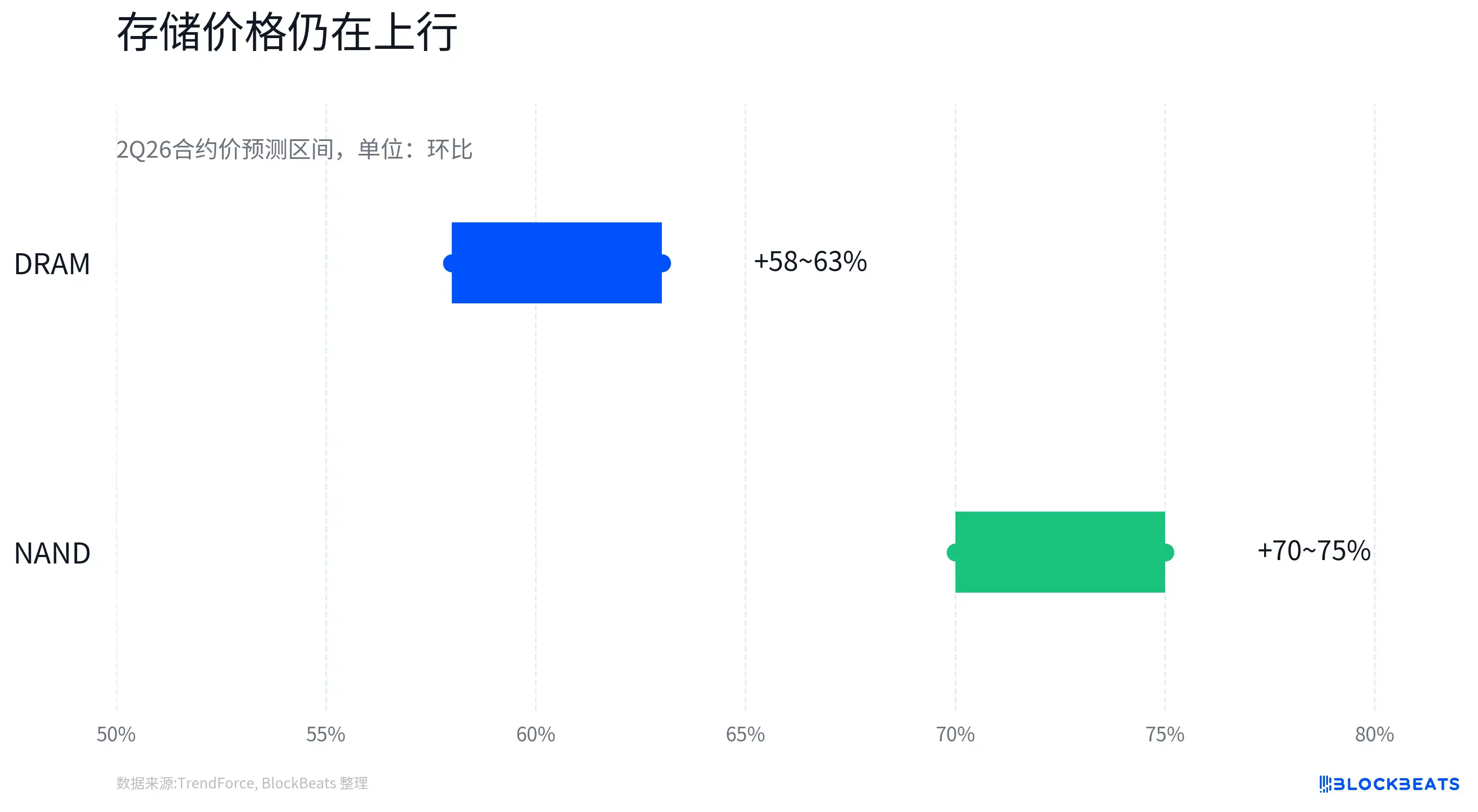
Industry price data also supports the same logic. TrendForce expects 2Q26 conventional DRAM contract prices to increase 58% to 63% quarter-on-quarter, and NAND Flash contract prices to increase 70% to 75% quarter-on-quarter. Its report also shows that 1Q26 DRAM industry revenue grew 81% quarter-on-quarter.

Prices are not equal to profits, but during periods of tight supply, shifting product mix upward, and strong demand, rising prices will improve market modeling of EPS for the coming quarters. Korean export data also provides an industry-level leading indicator. According to Reuters and Korean media reports, Korea's May 2026 exports hit a record, with semiconductor exports growing 169.4% year-on-year to approximately $37.16 billion. Chips accounted for over 40% of total exports for the first time.

This cannot be directly equated with SK Hynix or Samsung Electronics' earnings per share, but it shows that the memory boom is already reflected in the accelerating revenue at the national export level.
Memory Is Not a Stronger Narrative, But Faster Verification

In this round of revaluation, the difference between memory and other AI semiconductor directions is not whether there is growth, but how the growth is verified.

NVIDIA remains the main valve for AI demand. GPU platform iterations determine AI server architecture, HBM capacity requirements, and supply chain qualifications. However, the market is already highly familiar with NVIDIA's growth and profits, and valuations have long been concentrated on the strongest AI assets. In the short term, it is more susceptible to influences such as export controls, supply chain constraints, platform transition pace, and expectation gaps.

The ASIC direction also has genuine logic. Cloud vendors' in-house chip development, custom accelerators, and rising AI inference demand are driving the long-term potential of assets like Broadcom and Marvell. But ASIC is more like a project-based business, and factors such as customer concentration, the pace of single-project adoption, mass production windows, and next-generation platform transitions all affect the market's judgment of revenue visibility.

Optical modules and copper interconnects also have EPS realization paths. Companies like Coherent and Credo benefit from bandwidth upgrades within AI clusters; 1.6T, 3.2T optical modules, and changes in cluster interconnect architecture bring demand. However, pricing in these directions relies more on future architecture roadmaps, customer certification, shipment schedules, and capital expenditure cycles. When the market is willing to give a premium, their elasticity is strong. When the market starts demanding verification, they are also more likely to be questioned about when orders will enter revenue.

In contrast, the current pricing basis for memory is more direct. HBM demand pulls high-end products, capacity shifts squeeze conventional DRAM/NAND supply, rising contract prices improve revenue, a shifting product mix upward pushes gross margins higher, ultimately entering EPS.
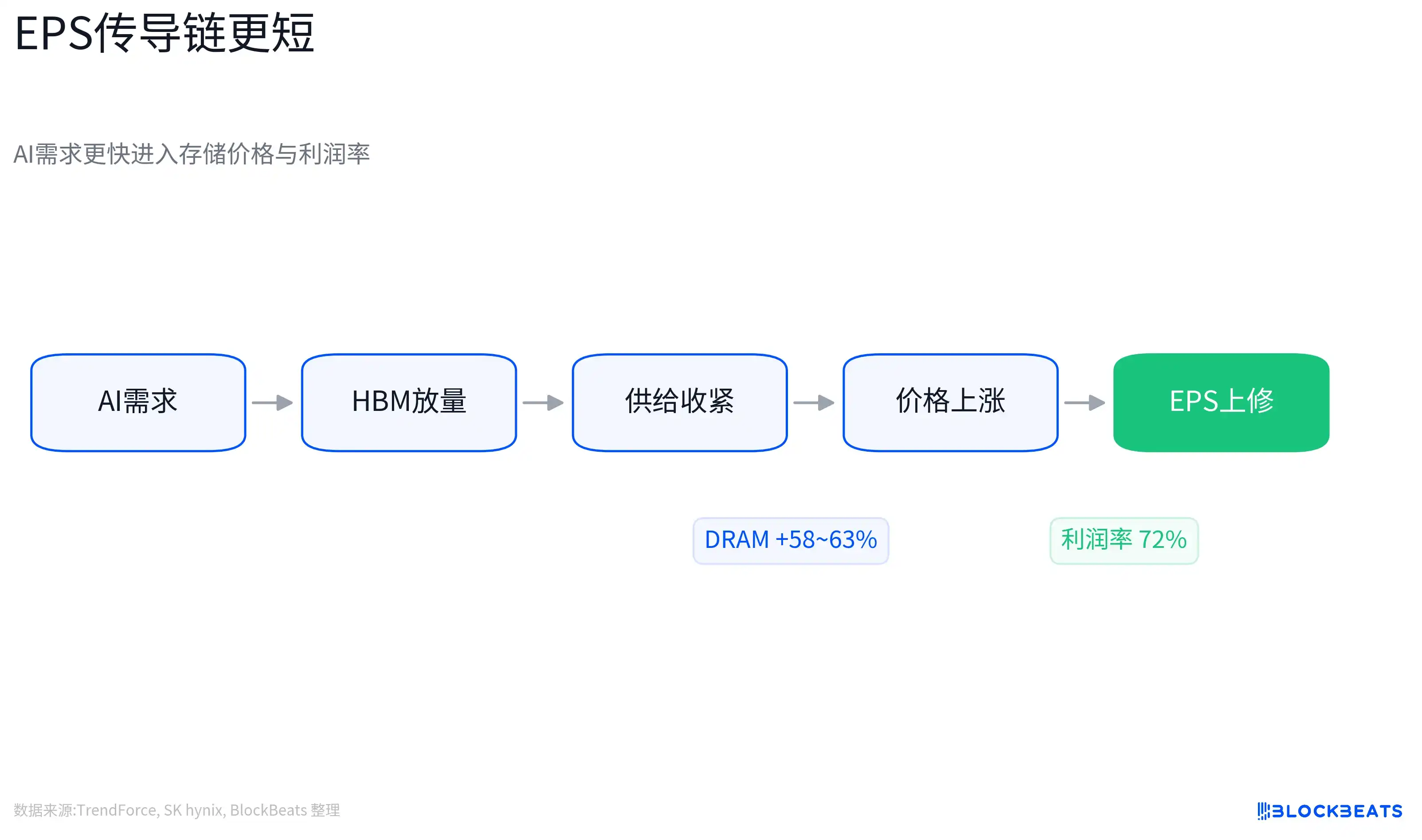
This chain does not mean there are no risks, but it is easier to be verified by the next quarter's earnings report than 'future generations of architecture will bring massive orders'. This is the meaning of memory being easier to model. It's not saying memory is more important than GPU, ASIC, or optical modules, but rather that in this round of de-risking AI semiconductors, the market prefers assets that can be verified through a combination of price, orders, profit margins, and export data.

The EPS Logic Is Strengthening, But Not Yet a Consensus

A one-day or two-day rebound does not prove that AI semiconductor trading has completely shifted from PE expansion to EPS verification.

Micron's nearly 13% drop on June 5th and its nearly 10% rebound on June 8th may include technical recovery, short covering, and risk appetite recovery. SK Hynix's rise was also catalyzed by news related to data center cooperation with NVIDIA. News, positioning, and fundamentals are often superimposed in short-term market movements; not all gains can be attributed to EPS certainty.

Memory itself remains a cyclical industry. Rapidly rising DRAM and NAND prices may improve supplier profits, but may also stimulate supply expansion or suppress purchasing intentions of some end customers. HBM's annual contracts, yield ramp-ups, customer qualifications, and share allocations are still changing; one cannot simply assume all price increases will enter the profit statement without loss.

SK Hynix and Micron are already highly watched AI memory stocks, and stock price elasticity is not always synchronized with fundamental elasticity. If the future rate of DRAM/NAND price increases slows, HBM market share falls short of expectations, or customer duplicate ordering is disproven, the EPS upward revision logic will also face challenges.

Similarly, one cannot conversely negate ASIC, optical modules, copper interconnects, and equipment materials. If these directions deliver stronger orders, clearer customer adoption, or better-than-expected guidance, the market may still re-grant valuation premiums. AI semiconductors are not left with only memory as a direction; rather, at the current stage, memory can more easily explain through financial reports why it should be bought back.

A more prudent judgment of this round of market action is that the June 5th plunge raised the verification threshold for AI assets. The recovery from June 8th to 9th shows that funds, within the AI chain, currently prefer segments with shorter EPS realization paths. Memory happens to be in a position where orders, prices, capacity, and profit margins are all visible simultaneously.


Perguntas relacionadas

QAccording to the article, what is the main reason for the capital flowing back to the memory sector after the recent AI semiconductor sell-off?

AThe capital is flowing back to the memory sector because its EPS growth logic is easier to verify. Unlike other AI hardware segments that are still trading on future expectations, memory demand growth is already directly reflected in orders, prices, and financial reports. The path from AI server demand to revenue and profit for memory companies (through HBM, server DRAM, eSSD, and resulting supply constraints and price increases for conventional products) is shorter and more visible in upcoming earnings.

QWhat was the signal sent by Broadcom's strong earnings report and subsequent stock price reaction, as interpreted by the article?

ABroadcom's strong earnings followed by a stock price drop signaled a change in the market's pricing threshold for AI semiconductor assets. It indicated that the market is no longer satisfied with just having an 'AI story.' Instead, it has started demanding higher validation standards, focusing on the slope of growth, profit realization, and whether the next quarter's guidance can support the current high valuations. The sell-off was a pressure test on high-expectation trades.

QHow do memory companies like Micron and SK Hynix demonstrate the 'faster verification' advantage mentioned in the article?

ACompanies like Micron and SK Hynix demonstrate faster verification through their recent financial reports. Micron reported record revenue, gross margin, EPS, and free cash flow for FY2026 Q2, with data center revenue surging and guidance for further records. SK Hynix reported a 72% operating profit margin for 1Q26, driven by high-value products like HBM, high-capacity server DRAM modules, and eSSD. These results show that AI-related demand is already translating into current quarterly revenue and profits, not just future visions.

QWhat supporting data does the article provide for the improved EPS modeling in the memory sector?

AThe article provides several data points supporting improved EPS modeling: 1) Industry price forecasts from TrendForce predicting significant quarter-over-quarter increases for conventional DRAM (58%-63%) and NAND Flash (70%-75%) in 2Q26, and a 81% QoQ increase in DRAM industry revenue for 1Q26. 2) Macro-level export data showing South Korea's semiconductor exports surged 169.4% year-over-year in May 2026, with chips exceeding 40% of total exports. This indicates the memory upcycle is already visible at the national export level.

QAccording to the article's conclusion, what is the more prudent interpretation of the market's behavior between June 5th and June 9th?

AThe more prudent interpretation is that the sharp sell-off on June 5th raised the market's verification threshold for AI assets. The subsequent rebound from June 8th to 9th showed that capital, while not leaving the AI semiconductor sector, began preferring segments with shorter and more verifiable EPS realization paths. The memory sector happened to be in a position where orders, prices, capacity shifts, and profit margins were simultaneously visible, making it the preferred choice during this risk-reassessment phase.

Leituras Relacionadas

7 Months After the Collapse of Huiwang, Southeast Asia's Escrow Platforms Undergo a Major Reshuffle

Following the collapse of Huione Pay—dubbed the "Alipay of Southeast Asia"—seven months ago, the region's underground financial guarantee platform sector is undergoing a significant reshuffle. This power vacuum has been swiftly filled by emerging platforms such as XinBi, Tiger/Navigator, JinBei (renamed JinBo), Dali/Tiancheng, and FullyLight. These platforms, operating largely via Telegram and offering services like escrow for illicit transactions, have absorbed the vast user base and markets left behind by Huione. While positioning themselves as "trust intermediaries," their primary clientele consists of networks involved in online scams, money laundering, illegal gambling, and even human trafficking. For instance, the Tiger/Navigator platform explicitly provides "escrow" services for kidnapping-for-ransom operations ("强押车交易"). Data underscores the immense scale: Huione alone processed over $103 billion in cryptocurrency payments and facilitated over $31 billion through its escrow market before its downfall, linking it to Cambodia's notorious Prince Group. Since its collapse, competitors have seen explosive growth. For example, the XinBi platform has accumulated over $1.6 billion in total USDT revenue, while platforms like NewPay, OkPay (under Dali), and FullyLight Wallet collectively processed over $4.8 billion in USDT in a single year. This ecosystem thrives in regions like Cambodia and Myanmar, where regulatory gaps allow these platforms to act as critical financial infrastructure for sprawling cybercrime industries, from scam compounds to online casinos. The article concludes that the moniker "Southeast Asian Alipay" is a misnomer, obscuring the platforms' fundamental role in enabling serious criminal enterprises rather than representing legitimate financial innovation.

Odaily星球日报Há 55m

7 Months After the Collapse of Huiwang, Southeast Asia's Escrow Platforms Undergo a Major Reshuffle

Odaily星球日报Há 55m

The Changing Landscape: What Are Crypto VCs Experiencing?

Title: The Shifting Landscape of Crypto Venture Capital The era of dedicated crypto venture capital funds is undergoing a significant transformation. Once essential for navigating the sector's complexity and high risk, these specialized funds are now facing an identity crisis as the market matures. This shift mirrors historical patterns in other specialized investment classes like cleantech and SPACs, where initial information advantages dissipate as technologies become mainstream and integrated into existing industry frameworks. The article argues that crypto is reaching a critical inflection point, transitioning from a "building phase" to an "integration phase." Major players like Stripe, BlackRock, and Visa now engage with crypto not for its novel mechanics but as a foundational financial infrastructure. Their needs—regulatory compliance, banking partnerships, distribution channels—align with traditional fintech, a domain easily understood by large, generalist funds like Sequoia and Founders Fund. This evolution creates a "barbell effect" within the VC landscape. On one end are massive, diversified platforms that can incorporate crypto as one vertical among many. On the other are small, nimble funds focused on niche, experimental projects. The middle ground—medium-sized dedicated crypto funds—is being squeezed out. Their typical fund size makes it impossible to generate sufficient returns solely from early-stage crypto bets, yet they cannot compete with giants for later-stage deals. Consequently, leading crypto-native firms like Paradigm and Framework Ventures are expanding into AI, robotics, and other sectors, driven partly by LP pressure for better returns amid a broader VC DPI crisis. Others, like Dragonfly and a16z, have narrowed their crypto focus predominantly to financial infrastructure like stablecoins, reframing the sector's core narrative. For crypto entrepreneurs, this consolidation presents challenges. While generalist funds offer larger checks and broader resources, crypto projects now compete fiercely with AI for attention and capital within these firms. Furthermore, the long-term, non-commercial foundational work that built the ecosystem—funded by dedicated crypto VCs—is less likely to attract generalist capital focused on direct returns. The conclusion is that "crypto investor" as a standalone category is becoming obsolete, akin to "internet investor." Crypto is becoming a baseline infrastructure layer. The future will see a barbell structure: large-scale growth financing handled by generalist funds, while pioneering, speculative projects are funded by small, specialized vehicles. The dedicated crypto funds of the 2017-2021 boom, which incubated core infrastructure, are giving way to this new, bifurcated reality.

Foresight NewsHá 1h

The Changing Landscape: What Are Crypto VCs Experiencing?

Foresight NewsHá 1h

As Consensus Accelerates, What Are Young Investors Betting On?

Title: As Consensus Forms Faster, What Are Young Investors Betting On? In the rapid evolution of tech investment, a new generation of young investors is navigating a landscape where AI, robotics, commercial aerospace, and quantum computing are advancing simultaneously. Traditional investment logic based on financial models is giving way to a need for deep technical understanding and the ability to act before industry consensus forms. An analysis of trends from the "WAIC FUTURE TECH" list of young investment leaders reveals key shifts in focus. The first major trend is the movement of AI from the digital screen into the physical world. Investment is shifting from large language models and chatbots towards embodied AI, robotics, AI hardware, and edge computing. While demonstrations generate excitement, the real challenge lies in achieving scalable, reliable, and cost-effective delivery in complex real-world environments like factories and logistics. Success depends not just on algorithms but on the integration of sensors, actuators, and control systems. Second, the competitive focus for large models is moving beyond raw capability toward building an "intelligence flywheel." The goal is to create self-reinforcing systems where user interaction generates data, improving the model, which in turn enhances the user experience and attracts more engagement. Companies that successfully embed AI into workflows to create these closed-loop systems can build lasting value that isn't easily erased by the next model upgrade. Third, facing a potential bottleneck in high-quality human-generated data, investors are looking at new underlying technologies. Reinforcement learning and self-play, as demonstrated by AlphaGo Zero, offer paths for AI to generate its own experience. Scientific foundation models, which aim to build general AI capabilities for fields like life sciences and materials discovery, represent a non-consensus direction that could unlock new frontiers of knowledge and data. Finally, in deep-tech areas like quantum computing, commercial aerospace, and space-based infrastructure, patient capital is essential. These fields have long, uncertain development and validation cycles involving complex engineering, supply chains, and regulations. Investment here requires a long-term view, focusing on foundational team capabilities and the eventual emergence of market demand, even if commercial returns are distant. Collectively, these trends illustrate how young investors are adapting to a new era. They are learning to make earlier, technically-informed judgments, balance hype with real-world viability, and provide the patient capital needed to build the deep-tech foundations of the future.

marsbitHá 1h

As Consensus Accelerates, What Are Young Investors Betting On?

marsbitHá 1h

Trading

Spot
活动图片




