The $13 Trillion Repo Market Is Quietly Being Rewritten by Blockchain

marsbitPublicado em 2026-05-13Última atualização em 2026-05-13

Resumo

The $13 trillion repurchase agreement (repo) market, a crucial artery for global short-term funding, is experiencing a significant transformation through blockchain technology. After years of limited impact in finance, blockchain is finding substantial adoption in repo transactions. Major institutions like JPMorgan Chase, HSBC, and Broadridge are deploying tokenized repo platforms, with daily volumes already reaching tens of billions of dollars. Traditional repo markets operate with fixed hours, rely on intermediaries, and involve manual, time-consuming processes. Tokenized repos, by contrast, use blockchain to create digital tokens representing cash and securities collateral. This enables near-instantaneous settlement, 24/7 trading, automated execution, and enhanced auditability. The key drivers for adoption include maturing technology, more receptive regulators, and growing client recognition of tangible benefits like reduced operational friction and capital efficiency. Analyses, such as one from Broadridge, indicate that moving a portion of repo activity onto blockchain can significantly reduce a bank's required liquidity buffers, potentially freeing up billions in capital. The infrastructure is also seen as foundational for a future of round-the-clock trading for traditional assets. Challenges remain, including the existence of fragmented blockchain networks, the need for stress testing under extreme market conditions, and the loss of operational flexibility compared t...

Written by: Anna Irrera, Bloomberg

Compiled by: Chopper, Foresight News

JPMorgan Chase invested hundreds of millions of dollars over more than a decade to develop blockchain systems, an innovative technology once touted as poised to revolutionize financial markets, yet it struggled to trigger industry-wide transformation. Today, however, banks and blockchain technology are finally achieving a substantial breakthrough in a key area: the repo market.

The nearly $13 trillion repo market is not the flashiest track on Wall Street, yet it serves as the financial lifeline that maintains the flow of global capital. In simple terms, a repurchase agreement (repo) is a transaction where an institution borrows cash, usually overnight, using government bonds as collateral. It provides the short-term funding foundation for trading, settlement, and market-making activities across the entire financial system.

Currently, JPMorgan and its Wall Street peers have found that the blockchain technology underlying cryptocurrencies is highly compatible with repo operations. It enables precise, customizable transactions, allowing funds and collateral to move faster and be deployed more flexibly, helping traders unlock idle capital, improve funding efficiency, and simultaneously hedge market risks.
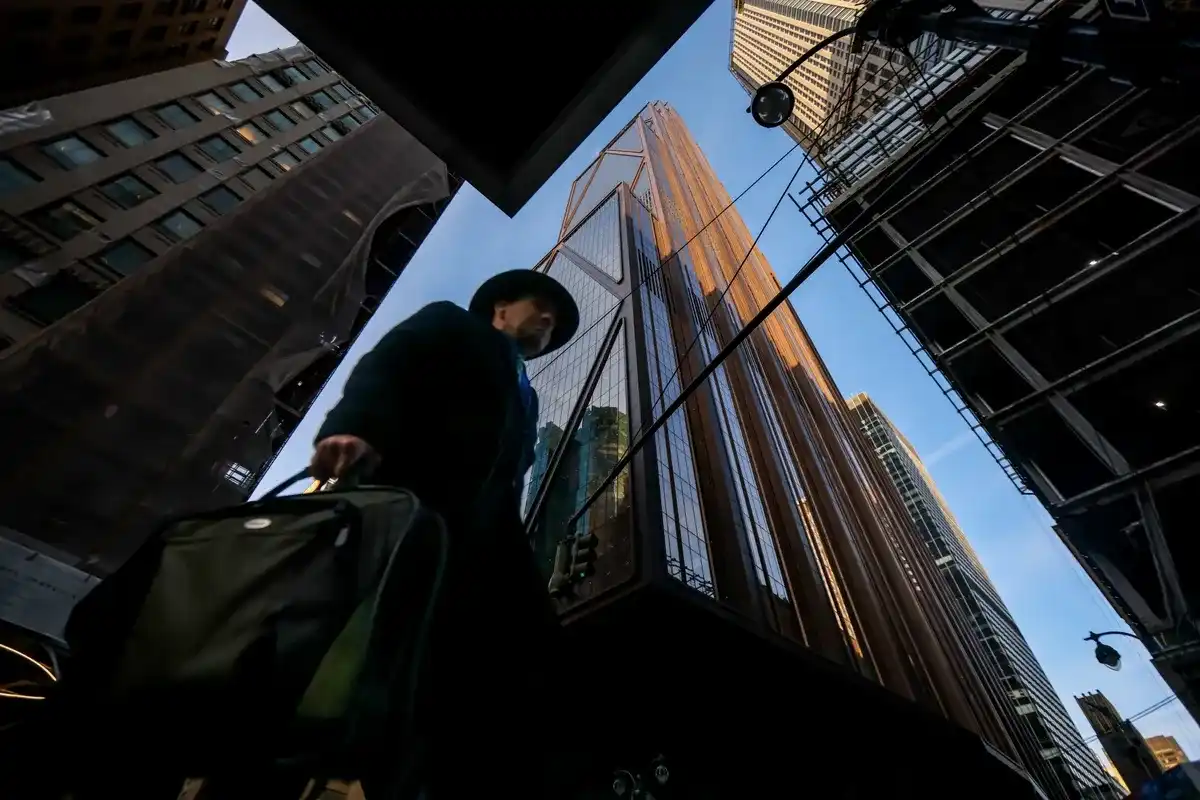
Eddie Wen, JPMorgan's Global Head of Digital Markets, stated, "The logic for applying blockchain solutions to repo business is completely sound." JPMorgan is one of the largest banks in the repo trading space, and Eddie added that clients use this product daily.

Six years ago, JPMorgan officially launched its blockchain-based funding product. To date, the platform has cumulatively processed approximately $3 trillion in repo transactions. Currently, the platform handles billions of dollars in daily client repo financing volume, with cross-departmental daily transaction volume within JPMorgan reaching around $5 billion.

For this giant, whose traditional repo market daily trading volume reaches hundreds of billions of dollars, this volume, while still a small percentage, marks a crucial step in the industry leader's formal embrace of blockchain technology.

Industry-wide Rush into Tokenized Repo

Beyond JPMorgan, institutions including HSBC, market makers DRW Holdings and Virtu Financial, as well as financial infrastructure service providers like Broadridge and trading platform Tradeweb, are collectively intensifying their focus on the tokenized repo sector. Daily tokenized repo trading volumes across various blockchain platforms have now reached tens of billions of dollars. Although the depth of participation and transaction frequency vary among institutions, joining the fray has become an industry consensus.

Objectively, the market will not transform overnight, and the scale of blockchain repo trading still lags significantly behind the traditional market. To achieve widespread adoption, more banks, dealers, and financial infrastructure providers need to adopt compatible systems. Simultaneously, the industry faces new regulatory requirements like mandatory central clearing for repos, forcing most institutions to prioritize adapting to existing workflows in the short term.

But even in its early stages, the growth momentum is already established. While most other blockchain applications in capital markets remain in pilot or proof-of-concept stages, the scale of blockchain implementation in the repo market by institutions far surpasses most mainstream financial scenarios. Tokenized repo has thus become one of blockchain's most solidly implemented and potentially impactful applications within traditional finance.

Elisabeth Kirby, Head of Market Structure at Tradeweb, which launched its blockchain repo platform late last year, stated bluntly, "This is not a proof-of-concept, nor is it a pilot project to be shelved and observed. It is a genuine growth sector."

Why Is It Booming Now?

Over the past year, tokenized repo trading has noticeably accelerated, driven by multiple converging factors. Blockchain networks have moved from testing to real business implementation; regulatory acceptance for migrating repo activities onto blockchains has significantly increased. Given the crucial role of institutions like the Federal Reserve during market turmoil, the shift in regulatory attitude is vital. A more favorable digital asset policy environment under the Trump administration has also encouraged Wall Street institutions to increase their deployments.

Meanwhile, a growing number of clients are experiencing the tangible advantages of blockchain, leading to a complete shift in industry perception: blockchain is no longer just a niche tool for the crypto world, but a universal financial infrastructure capable of optimizing transaction processes and reducing operational costs.

Yuval Rooz, CEO of digital asset firm Digital Asset Holdings, said, "The biggest change is that the industry is no longer debating whether the technology works, but focusing on how fast we can scale implementation." The company, backed by giants like JPMorgan, Goldman Sachs, DRW, Citadel Securities, and Virtu, has built the Canton Network, now one of the most mainstream blockchain foundations in traditional finance.

In February this year, the Canton Network completed several cross-border repo transactions using tokenized UK government bonds as collateral; its technology also underpins Broadridge's distributed ledger repo platform, serving institutions like UBS, HSBC, and Societe Generale.

Bloomberg L.P., the parent company of Bloomberg News, recently partnered with data service provider Kaiko to integrate Bloomberg data into the Canton Network, serving tokenized US Treasuries and on-chain repo transactions.

Operating Logic: Traditional Repo vs. Tokenized Repo

Models differ slightly across platforms, but the core distinction lies in how funds and securities flow.

The traditional repo market has fixed opening, order placement, and closing times, halting overnight and on weekends; operations heavily rely on intermediaries to handle collateral and settlement processes, involving numerous middlemen and high fees; ad-hoc changes often require phone coordination. Cross-border transactions are particularly cumbersome due to time zone and holiday mismatches, leaving idle funds tied up for hours; they are also frequently interrupted or canceled due to missed deadlines, insufficient collateral, or system failures.
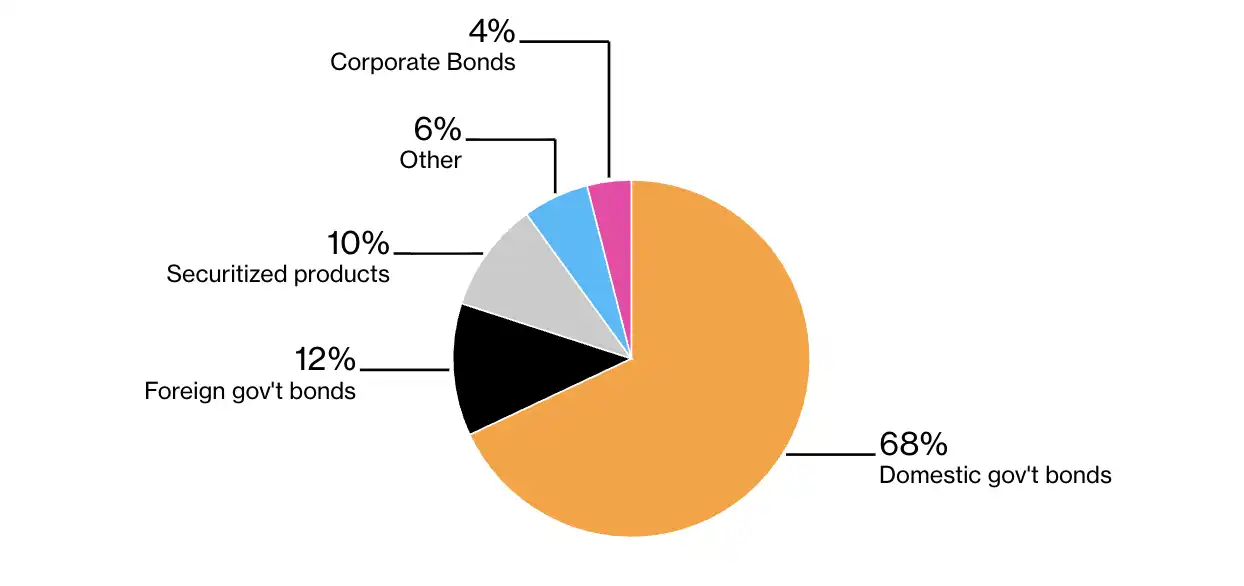
Composition of collateral types in global repo transactions

Tokenized repo perfectly addresses these pain points. A borrower initiates a funding request via a digital interface, and after confirmation by the lender, both cash and securities collateral are mapped as on-chain tokens; both parties confirm and the transaction is recorded on the chain, with terms automatically executed as agreed, and the entire process is auditable and traceable. The most significant advantage is 7x24 continuous tradability, unrestricted by traditional business hours.

Sonali Das Theisen, Head of Fixed Income, Currency, and Commodities (FICC) Electronic Trading and Market Strategy at Bank of America, commented, "Blockchain can effectively reduce friction in capital flows. The industry's movement in this direction is an inevitable trend."

Tangible Financial Benefits

For repo market giants, blockchain implementation delivers real financial gains. Banks like JPMorgan not only save on fees and transaction time but can also reduce the regulatory capital requirements for their trades.

A recent Broadridge analysis shows that if a large bank migrates 15% of its repo business onto blockchain, its daily liquidity buffer funds could decrease by 8%–17%. Specific savings depend on the institution's size, business region, asset structure, and risk appetite, but overall it can significantly unlock idle capital.

The Broadridge research report cites data from an unnamed major European bank, which needs to reserve approximately €1.1 billion (equivalent to $1.3 billion) daily to meet intraday liquidity needs. If the buffer funds were reduced by 15%, about €175 million could be freed up for other business uses or to reduce reliance on external financing.

Horacio Barakat, Global Head of Digital Innovation at Broadridge, stated, "The scale of capital savings is considerable. Even a modest optimization can save tens of millions of dollars annually in costs." The company's platform reported a daily average repo trading volume of $368 billion in April, with monthly volume nearing $8 trillion, and a 268% year-over-year increase in daily trading volume.

The industry ecosystem is also moving towards unification. DTCC, Wall Street's core clearinghouse, recently announced it will tokenize highly liquid assets held in its custody, covering US Treasuries, Russell 1000 constituent stocks, and ETFs. This move will significantly expand the pool of eligible collateral for tokenized repos, allowing institutions to directly reuse their existing custodied assets on blockchain ledgers, greatly lowering the barrier to entry.

Enabling 24/7 Trading for Traditional Assets

Industry insiders say that new financing models like tokenized repo are crucial infrastructure supporting the move toward 24/7 continuous trading for traditional assets. Nasdaq has announced plans for 24/7 trading, and the New York Stock Exchange is also developing a tokenized continuous trading platform.

DRW founder Don Wilson pointed out, "For markets to move towards 24/7 trading in the future, the ability to borrow cash at any time is essential. On-chain repos are precisely the core infrastructure supporting this transformation." As an early investor in Digital Asset, DRW has completed several tokenized transactions on the Canton Network over the past year.

DRW Founder Don Wilson

Any new technology faces similar challenges, and the large-scale application of blockchain in repo trading is no exception. While Canton has become mainstream, the industry still consists of multiple independent on-chain systems that are not interconnected. Institutions must adapt to multiple platforms and invest significant manpower in maintenance, with trading volume fragmented across them. Secondly, blockchain systems have not yet endured a full market cycle and extreme stress tests. The traditional repo market has weathered multiple risk shocks since 2008, while on-chain systems have not been tested in real-world scenarios like late-night failures or extreme market volatility.

Furthermore, traditional traders are long accustomed to existing inefficient yet established processes, with rules, error tolerance mechanisms, and post-event contingency plans becoming routine. On-chain transactions follow the principle of "code is law," leaving no room for flexibility.

Sandy Kaul, Head of Innovation at asset management giant Franklin Templeton, admitted, "Traditional business leaves a lot of room for flexible buffers. On-chain, there's zero tolerance for error. Everything is hard-coded; you can't negotiate for a few extra minutes."

Nonetheless, the prevailing industry view is that these are implementation issues to be solved, not reasons to turn back. "We are at a critical inflection point. Blockchain's entry into the traditional financial repo market has officially begun."


Perguntas relacionadas

QWhat is the primary financial market that is currently being transformed by blockchain technology, according to the article?

AThe near $13 trillion repo (repurchase agreement) market.

QWhich major bank has developed a blockchain-based system for repo transactions, and what is its reported transaction volume?

AJPMorgan Chase has developed a blockchain-based system. It has reportedly processed approximately $3 trillion in repo transactions cumulatively.

QWhat are the key operational advantages of tokenized repos over traditional repos, as highlighted in the article?

AKey advantages include 24/7 trading capability (vs. fixed market hours), automated execution via smart contracts, reduced operational friction and intermediaries, and greater speed and flexibility in managing collateral and cash.

QWhat concrete financial benefit can banks achieve by moving a portion of their repo business onto blockchain, according to Broadridge's analysis?

AA large bank moving 15% of its repo business onto blockchain could reduce its intraday liquidity buffer by 8-17%, potentially freeing up hundreds of millions of euros/dollars for other uses or reducing external funding needs.

QWhat is the name of the main blockchain network mentioned that is used by several major financial institutions for tokenized repo transactions?

AThe Canton network, developed by Digital Asset Holdings.

Leituras Relacionadas

After Three Consecutive Quarters of Decline, Can the Crypto Market Find a Window for Stabilization in Q3?

The cryptocurrency market has just concluded its worst-performing quarter since 2022, with total capitalization dropping 12.6% to $2.1 trillion. All core metrics indicate capital is leaving the sector, not just rotating within it. Bitcoin fell 14.2% and Ethereum dropped 25.4% in Q2, breaking their previous correlation with US tech stocks. A key driver is the reversal in US spot Bitcoin ETF flows, which saw a net outflow of approximately $4.67 billion in Q2, including a record monthly outflow near $4.5 billion in June. While recent data suggests long-term holders are accumulating again, sustained ETF outflows mean continued selling pressure. Market focus is now singularly on the Federal Reserve. The upcoming July FOMC meeting is seen as the most critical event for Q3. A dovish signal could support Bitcoin reclaiming a $68,000-$84,000 range, while a hawkish stance might establish a new trading band around $50,000-$56,000. Additionally, regulatory uncertainty persists, with the progress of the crucial *CLARITY Act* stalling in the Senate, reducing its perceived 2026 passage probability to 40-45%. Despite the broad downturn, a few sectors showed growth. Prediction markets saw nominal volume surge 48.7% year-over-year to $113.8 billion, and tokenized collectibles transaction volume rose 143% quarterly to $1.4 billion. The Real-World Asset (RWA) tokenization sector also continued steady growth, now representing ~$28.1 billion in on-chain value. The market's foundation for an extreme crash appears limited, with Bitcoin price hovering near its 200-week moving average. However, the trading paradigm has shifted from narrative-driven speculation to decisions based on price action, policy developments, and interest rate expectations, making a broad sentiment-driven rally unlikely in the near term.

marsbitHá 5h

After Three Consecutive Quarters of Decline, Can the Crypto Market Find a Window for Stabilization in Q3?

marsbitHá 5h

BIT Trading Moment: BTC Still Suppressed by Weekly 200 EMA, Rejection May Restart Decline; Storage and Semiconductors that Surged Last Night Begin Falling in Evening Trading

**Crypto & Stock Market Wrap: Bitcoin Tests Resistance, Stocks Retreat After AI Surge** Bitcoin consolidates around $66,000, facing key resistance near $68,000—an area seen as a major psychological and technical hurdle where previous rallies have failed. Analysts note the cryptocurrency is caught between its 200-week moving average (~$63,333) and 200-week EMA (~$68,328). A clear break above $68k is needed to signal a stronger bullish trend, while a rejection could lead to a retest of $63k support. Market sentiment remains cautious, with low futures open interest pointing to a low-liquidity rebound rather than a full bull market. Bitcoin spot ETFs saw another $203 million inflow. US stock futures pointed lower after a strong Tuesday session led by a massive rebound in semiconductors and memory stocks. The rally was fueled by renewed optimism about AI-driven hardware demand, with Micron, SanDisk, and SK Hynix surging. However, those gains reversed in pre-market trading. Super Micro Computer (SMCI) soared over 20% after hours on strong guidance and a record backlog. Other standouts included Rocket Lab and nuclear energy plays Oklo and X-Energy. Rising oil prices (Brent above $91) and climbing Treasury yields (10-year near 4.64%), however, are reigniting inflation concerns and acting as a headwind for equities. In Asia, markets were mixed. South Korea's KOSPI pared early gains to close slightly higher as semiconductor stocks like SK Hynix gave back initial surges. Japan's Nikkei edged lower as the yen hit a fresh 38-year low against the dollar, raising fears of potential market intervention. Key events to watch include the Samsung Galaxy launch, AMD's AI event, and a slew of major tech earnings from Alphabet, Tesla, and IBM after the close on Wednesday, followed by the ECB meeting and Intel's earnings on Thursday.

marsbitHá 6h

BIT Trading Moment: BTC Still Suppressed by Weekly 200 EMA, Rejection May Restart Decline; Storage and Semiconductors that Surged Last Night Begin Falling in Evening Trading

marsbitHá 6h

Former CFTC Chairman, Circle President Tarbert: Preaching Long-Termism While Cashing Out $30 Million Himself

Former CFTC Chairman and Circle President Heath Tarbert has consistently advocated for a long-term vision in public, urging patience from investors as Circle’s stock price has fallen significantly from its peak. However, it has been revealed that since Circle’s IPO, Tarbert has continuously sold his CRCL shares through pre-arranged trading plans, cashing out approximately $30 million, without making any public market purchases. This contrast between his public messaging and personal actions has drawn criticism. Tarbert joined Circle in July 2023 as Chief Legal Officer, leveraging his regulatory experience to help guide the company through its IPO and expansion. Despite promoting stablecoins as long-term infrastructure, he established a 10b5-1 trading plan just before Circle went public, leading to substantial stock sales over the following year. In March 2026, he initiated another plan to sell more shares. His career trajectory highlights a pattern of moving between high-level regulatory roles and influential positions in the financial sector. After resigning as CFTC Chairman in early 2021, he joined Citadel Securities as Chief Legal Officer just 27 days later, during a period of intense regulatory scrutiny for the firm. He later joined Circle, aiding its efforts to navigate regulatory challenges for its public listing. While Tarbert's expertise in policy and compliance is valuable to companies like Circle, his actions—advocating long-term confidence while personally divesting—raise questions about the alignment between his public statements and his private financial decisions, leaving investors who followed his advice to bear the market risks.

marsbitHá 6h

Former CFTC Chairman, Circle President Tarbert: Preaching Long-Termism While Cashing Out $30 Million Himself

marsbitHá 6h

Gate Research Institute: The 'Wall Street-ization' Wave of Crypto Financial Products – Competition or Integration?

The article titled "Gate Research Institute: Are Crypto Financial Products Sparking a 'Wall Street' Wave—Competition or Convergence?" explores the evolving relationship between the crypto ecosystem and traditional finance (TradFi). The piece begins by reflecting on Bitcoin's original 2009 vision of decentralization, disintermediation, and moving away from banks. It then contrasts this with the 2024 landscape, where key crypto assets like Bitcoin are increasingly held through Wall Street products like ETFs issued by giants like BlackRock. The article questions whether this signifies that TradFi is systematically taking over the rights to issue, price, custody, and distribute crypto financial assets. The core argument is that this is not a zero-sum takeover but rather a bidirectional convergence where each side addresses the other's weaknesses. Crypto offers 24/7 global markets, programmable settlement, and open access but lacks compliant channels, institutional-grade custody, deep fiat liquidity, and mainstream distribution. TradFi possesses these but is constrained by legacy systems, limited operating hours, and slow settlement. Two primary convergence paths are highlighted: * **Path A (CEX to TradFi):** Exemplified by Gate, which has progressed from offering tokenized stocks and CFDs to providing direct, real stock trading (US, Hong Kong, South Korea) within its platform, using USDT. * **Path B (TradFi to Crypto):** Exemplified by Robinhood, which has integrated crypto trading, acquired exchanges like Bitstamp, and is moving traditional assets like stocks onto the blockchain via tokenization and its own Layer 2. Both paths are ultimately competing to become the next-generation, unified financial account—a "super account" where users can seamlessly trade cryptocurrencies, stocks, ETFs, RWA (Real World Assets), and tokenized treasury products in one interface. The growth of RWA and tokenized treasuries (e.g., BlackRock's BUIDL) is presented as the asset-layer fusion, providing stable, yield-bearing assets on-chain and acting as a bridge between the two worlds. In conclusion, the "Wall Street-ization" of crypto is framed as a mutual transformation. Decentralized ideals persist in the protocol layer, while at the application layer, a more efficient, global, and accessible unified capital market is emerging from this convergence. The future competition lies not between crypto exchanges and stockbrokers, but between platforms vying to offer the most comprehensive asset coverage, liquidity, and user experience within a single account.

marsbitHá 6h

Gate Research Institute: The 'Wall Street-ization' Wave of Crypto Financial Products – Competition or Integration?

marsbitHá 6h

Trading

Spot
活动图片




