Tether Freezes $182 Million in One Day: Is USDT Still a Neutral Currency?

marsbitPublicado em 2026-01-14Última atualização em 2026-01-14

Resumo

Tether, the issuer of USDT, froze approximately $182 million worth of USDT in a single day across five wallets on the Tron blockchain, marking one of its largest single-day enforcement actions. The frozen funds are widely suspected to belong to the Venezuelan government, potentially representing oil revenue, and the action is believed to have been conducted in coordination with U.S. authorities. This event has raised significant concerns about USDT’s role as a neutral financial tool, particularly in developing and sanctioned regions like Venezuela, where the stablecoin has become deeply embedded in the economy. Reports indicate that up to 80% of Venezuela’s oil revenue may be received in cryptocurrencies like USDT, creating a direct channel between its oil trade and the crypto economy. However, this incident demonstrates that Tether is willing to comply with law enforcement, even at the risk of undermining its reputation as a censorship-resistant alternative to traditional finance. The situation has drawn comparisons to the Euroclear moment, where frozen Russian assets sparked concerns about the safety of foreign-held euro-denominated assets. Similarly, Tether’s actions may lead international users to reconsider the perceived neutrality and safety of stablecoins. While Tether has maintained its peg so far, sustained outflows or loss of trust could pose existential risks to its offshore business model. The event underscores Tether’s growing role in global finance—and its vul...

Editor's Note: Tether's freezing of approximately $182 million USDT on the Tron chain has been regarded by some analysts as its "Euroclear moment"—that is, when a financial infrastructure originally seen as a neutral channel begins cooperating with law enforcement to freeze assets, it ceases to be just a stablecoin and becomes part of the boundaries of power.

This article delves into the controversy surrounding funds related to Venezuela, discussing how this event may impact USDT's narrative as a "dollar alternative" in the Global South and sanctioned regions, while redefining the perception of risks associated with stablecoins.

Below is the original text:
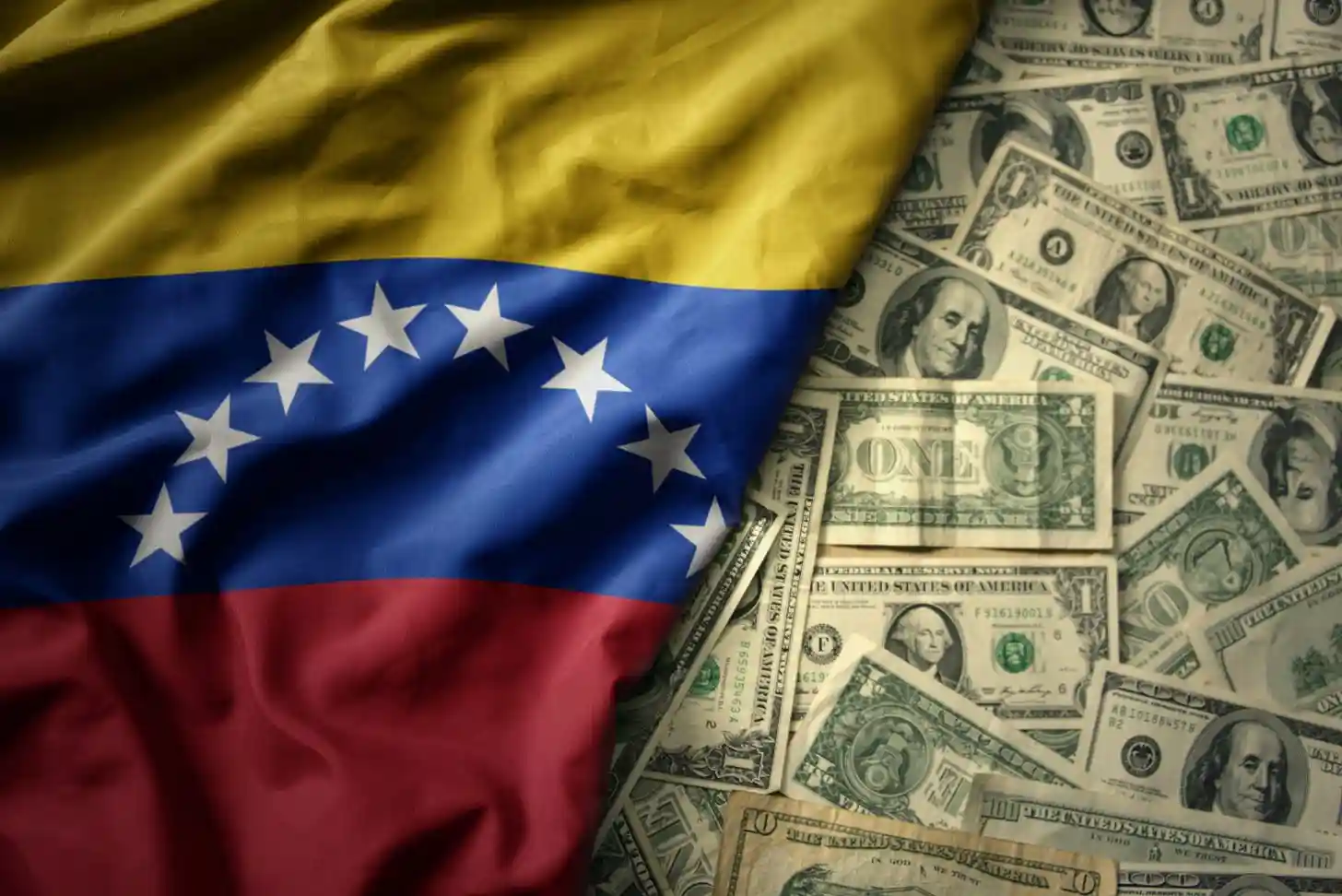
The biggest news this week was Tether's freezing of about $182 million USDT across five wallet addresses on the Tron chain in a single day, marking one of its largest single-day actions to date.

There is speculation that these assets may belong to the Venezuelan government, and Tether—long seen as a "safe haven for illicit fund flows"—is now seizing (or freezing) sovereign assets at the behest of the U.S. government.

What we can confirm so far is that this operation was indeed carried out under compliance and law enforcement procedures. Although officials have not confirmed that these addresses hold "Venezuelan oil revenues," analysts and on-chain observers widely interpret the situation as such.

Online discussions also suggest that some of the frozen funds may overlap with wallet addresses used for Venezuela-related activities. Given the country's heavy reliance on USDT, such speculation is not unfounded.

According to The Wall Street Journal, Venezuela's oil trade is deeply intertwined with Tether stablecoins. The report cited a podcast by Venezuelan economist Asdrúbal Oliveros, who mentioned that stablecoins have established a "direct channel" between Venezuela's economy and the crypto world, primarily driven by the oil industry.

In the podcast, Oliveros pointed out that nearly 80% of the country's oil revenues are being received in the form of cryptocurrencies or stablecoins. He added that this large-scale inflow of digital assets has made USDT a recurring keyword in Venezuela's commercial exchanges and corporate operations.

However, Oliveros also emphasized that the government faces difficulties converting these crypto assets into liquidity usable in the real economy, as the process requires a series of compliance reviews. This has left substantial funds "locked" on-chain. As a result, Venezuela's oil revenues are not flowing back into the domestic economy, impacting the official exchange rate and causing it to soar.

Oliveros further suggested that the Venezuelan government has not been professional in managing its cryptocurrency and stablecoin wealth. He mentioned that due to overreliance on individual wallets and a lack of internal compliance processes or regular reconciliation mechanisms, some wallets' seed phrases/private keys may have been mishandled or even lost amid managerial chaos.

An Existential Question?

If the frozen funds are indeed confirmed to belong to Venezuela, the pressing question for everyone is: How will this impact Tether's reputation as an "alternative monetary system" in developing countries, especially in regions with financial instability or under international sanctions?

On Tuesday, at the launch of Bytetree's new Bitcoin + gold combined exposure ETN product, BOLD, on the London Stock Exchange, prominent figures in London's crypto and gold investment circles speculated that this event could deliver a strong blow to stablecoins, with repercussions extending even further.

Bitcoin investor, advocate, and comedian Dominic Frisby (also a vocal supporter of digital privacy) told The Peg that he was not surprised this event would—much like the discussions around the "formal seizure of Russian assets held by Euroclear"—make international sovereign investors uneasy about euro/dollar-denominated assets, potentially triggering panic among crypto capital.

Although Tether is often portrayed as "lacking regulation, high-risk, and non-compliant," over the past year, the stablecoin giant has not concealed its increasingly close cooperation with global law enforcement agencies, even as it maintains its base in the relatively regulation-light, crypto-friendly El Salvador.

Tether CEO Paolo Ardoino told The Peg in October that Tether is the only stablecoin and crypto company that regularly collaborates with the U.S. Department of Justice (DoJ) and has also integrated the FBI and the U.S. Secret Service into its cooperation framework.

"We froze Garantex's (a Russian exchange) assets with them," he said, confirming the action while also noting that Tether is expanding its presence in commodity-related supply chain financial markets.

According to The Wall Street Journal, blockchain monitoring company TRM Labs has a partnership with Tether to help track illegal activities involving USDT on the Tron chain. TRM Labs' global policy head Ari Redbord told the media that the role of stablecoins in Venezuelan society is complex: "They (stablecoins) can be a lifeline for civilians, but they can also become tools for evasion under sanctions pressure."

This statement underscores a core reality: USDT, as a financial lifeline, is deeply embedded in Venezuela's economy, helping ordinary people combat hyperinflation. At the same time, its technology can be exploited by bad actors to move funds, raising concerns about sanctions compliance.

However, Tether has now demonstrated that when addresses are flagged for sanctions or illegal associations, it is willing to freeze USDT on networks like TRON. In other words, even if stablecoins serve as critical financial infrastructure locally, they are not exempt from human enforcement.

More importantly, this action comes after a recent policy "slam on the brakes" in Brussels (EU): After years of posturing, planning, and legal preparations, the EU ultimately hesitated at the final step of "explicitly seizing frozen Russian assets," fearing it would weaken the appeal of euro-denominated assets to international investors.

Thus, the signal to markets and nations may be that storing funds in stablecoins like Tether might be riskier than holding official assets.

Whether this reality will pose an "existential threat" to Tether's offshore business model in the coming weeks or months remains to be seen. But within crypto circles, a strong view is spreading: international investors may never look at stablecoins the same way again.

At the very least, this incident shows that the influence of the so-called "Donroe Doctrine" is no longer confined to geopolitics and national gamesmanship but is entering the core of global financial markets. And from any perspective, Tether is at the very center of this sphere of influence.

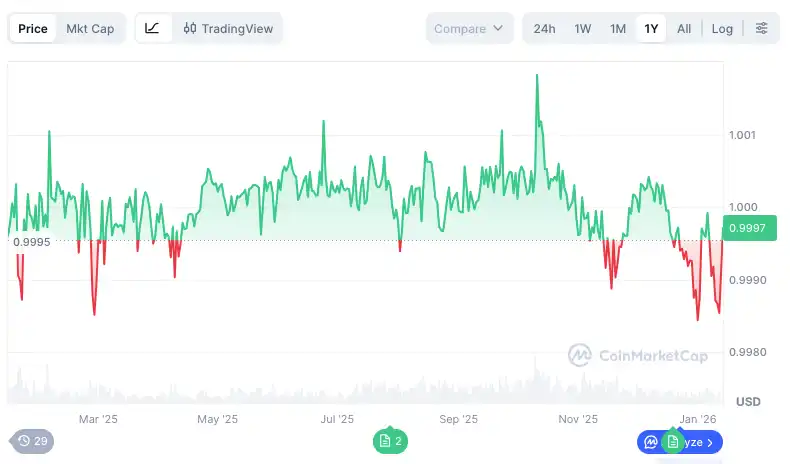
So far, aside from minor fluctuations over the past month, Tether's peg has remained stable. The real pressure signal would be a significant slowdown in inflows—or, more dangerously, a shift from net inflows to net outflows.

Tether's next reserve attestation is expected to be released in late January or early February.
Perguntas relacionadas

QWhat was the significance of Tether freezing $182 million USDT on the Tron network, and why is it being compared to the 'Euroclear moment'?

ATether's freezing of $182 million USDT is significant because it represents one of its largest single-day actions and is seen by analysts as its 'Euroclear moment.' This term refers to a financial infrastructure, originally perceived as a neutral channel, beginning to cooperate with law enforcement to freeze assets. This action shifts Tether's role from merely a stablecoin to becoming part of the power boundary, impacting its narrative as a neutral monetary tool.

QHow is USDT deeply embedded in Venezuela's economy, particularly in the oil trade?

AUSDT is deeply embedded in Venezuela's economy, with nearly 80% of the country's oil revenues being received in cryptocurrencies or stablecoins. This digital asset inflow has made USDT a key term in commercial exchanges and business operations. However, converting these crypto assets into usable liquidity for the real economy requires compliance reviews, often leaving funds locked on-chain and not reintegrated into the domestic economy, affecting official exchange rates.

QWhat are the potential risks to Tether's reputation as an 'alternative monetary system' in developing countries following this freezing event?

AThe freezing event poses a potential risk to Tether's reputation as an 'alternative monetary system' in developing countries, especially those with financial instability or under international sanctions. If the frozen funds are confirmed to belong to Venezuela, it could undermine trust in USDT as a reliable financial lifeline, as it demonstrates that stablecoins are not exempt from human enforcement actions and may be subject to geopolitical pressures.

QHow does Tether's cooperation with global law enforcement agencies, such as the DOJ and FBI, influence its operational dynamics?

ATether's cooperation with global law enforcement agencies, including the DOJ and FBI, shows its commitment to compliance and tracking illegal activities. For instance, Tether has worked with these agencies to freeze assets linked to entities like Garantex, a Russian exchange. This collaboration enhances its legitimacy but also highlights that USDT transactions are monitorable and actionable, affecting its perception as a decentralized or neutral asset.

QWhat broader implications does this event have for the stability and future of stablecoins like USDT in the global financial system?

AThis event has broader implications for stablecoins like USDT, suggesting that they may carry higher risks than official assets due to their susceptibility to enforcement actions. It could lead to reduced inflows or even net outflows, challenging Tether's offshore business model. The situation indicates that geopolitical doctrines, such as the 'Donroe Doctrine,' are influencing global financial markets, with Tether at the center, potentially altering how international investors view stablecoins.

Leituras Relacionadas

How to Do Research Well: Deliberately Practice the Real Skills That Matter

No one truly teaches you how to do research. You're often given a desk, a pre-selected problem, and vague instructions to "create something new." Consequently, many people reverse-engineer the job based on visible outputs—papers, posts, announcements—learning only how to *appear* like a researcher rather than how to *become* one. True research capability is built from stacking small, trainable skills, nearly all of which can be developed through deliberate practice. **Pick Your Own Problem:** Most researchers absorb problems from advisors or trends, lacking the underlying reasoning. Choosing a problem you genuinely care about, as John Schulman advises, leads to original work. Develop "taste" like a muscle: predict experiment outcomes, guess paper results from methods, and track which findings remain important over time. **Upgrade Your Inputs:** Relying on shared reading lists (arXiv hot lists, filtered group chats) leads to unoriginal conclusions. Undervalued old literature often holds crucial insights (e.g., MoE, LSTM, backpropagation). Richard Sutton's "The Bitter Lesson" or Claude Shannon's 1952 talk on creative thinking are more predictive than lengthy modern surveys. Breadth matters as much as depth: draw from neuroscience, mechanism design, hardware knowledge, and honest statistics. Read papers directly, especially appendices and limitations sections. **Write Everything Down:** As Paul Graham noted, writing exposes flaws in seemingly mature ideas. Writing is the cheapest defense against self-deception. Following Feynman's principle, Darwin programmatically wrote down facts contradicting his theory to combat memory bias. Maintain a detailed log of hypotheses, setups, predictions, results, and updated understandings. Reviewing past logs fosters essential humility.

marsbitHá 1h

How to Do Research Well: Deliberately Practice the Real Skills That Matter

marsbitHá 1h

Following US Ban on Fable 5, Zhipu AI's Stock Soars 47%

On June 15th, shares of Zhipu AI surged dramatically on the Hong Kong stock market, peaking at a 47.6% gain before closing 32.82% higher. This sharp increase was directly triggered by two recent industry events. On June 12th, Anthropic announced it was suspending global access to its latest flagship models, Claude Fable 5 and Claude Mythos 5, to comply with a U.S. government export control order. The next day, Zhipu AI announced it would open access to its latest open-source flagship model, GLM-5.2, under the permissive MIT license. The Anthropic incident highlighted a critical issue beyond raw model capability: the risk of sudden, unpredictable loss of access to advanced AI models, especially for developers and enterprises deeply integrated with them. This has shifted industry and market focus toward factors like stability, sustainable access, and controllability. Zhipu's move, promoting "frontier intelligence for all," positions its openly available model as a reliable and accessible alternative. The GLM-5.2 model emphasizes "Long Horizon Task" capabilities with a 1M context window, targeting complex, multi-step coding and engineering workflows where maintaining context is crucial. Analysts note this event exposes the risk of dependency on closed-source models subject to single jurisdictional controls, potentially accelerating a shift toward domestic base models and localized deployments. The market's reaction signals a new valuation dimension in AI: providers who can offer stable, long-term, and sustainably accessible AI capabilities are gaining strategic importance.

marsbitHá 1h

Following US Ban on Fable 5, Zhipu AI's Stock Soars 47%

marsbitHá 1h

Fully Entering the AI Era: Alipay Bets on Conversation, WeChat Holds Fast to Social

In May 2026, Alipay announced over 300 million AI payment transactions. Shortly after, WeChat opened its mini-programs for AI integration, sparking controversy by requiring developer source code access. This highlights their diverging approaches to AI integration. Alipay is testing "Project Treasure," an optional AI-native interface replacing traditional app grids with a conversational window. Users can command complex tasks (e.g., "book a ride and order coffee") handled end-to-end by AI. This shift follows an abandoned standalone AI app, focusing instead on enhancing its existing user base. For unmodified mini-programs, Alipay's AI uses "screen-reading" to simulate user interactions, bypassing the need for developer overhaul. It also introduced "Token Pay" for micro-transactions and "AI Wallets" for autonomous agent spending. WeChat, prioritizing its core social function, is taking an embedded approach. Its AI agent will operate within existing contexts like group chats and official accounts, assisting without a separate interface. To enable this, WeChat offers developers two paths: granting source code access for direct AI control ("Automatic Mode") or manually encapsulating services into standardized "Skills." Both place significant burden on developers. Key differences emerge in handling legacy services: WeChat demands developer cooperation (code or labor), while Alipay's screen-reading offers immediate, if potentially less stable, compatibility. Alipay's 3 billion AI transactions demonstrate user acceptance of AI-driven commercial actions. The divergent strategies may reshape mini-program ecosystems—Alipay passively "AI-fying" services, WeChat potentially favoring resource-rich developers—and set competing technical standards. Ultimately, the competition centers on where users entrust the command to "help me get things done."

marsbitHá 1h

Fully Entering the AI Era: Alipay Bets on Conversation, WeChat Holds Fast to Social

marsbitHá 1h

Trading

Spot
Futuros

Artigos em Destaque

Como comprar ONE

Bem-vindo à HTX.com!Tornámos a compra de Harmony (ONE) simples e conveniente.Segue o nosso guia passo a passo para iniciar a tua jornada no mundo das criptos.Passo 1: cria a tua conta HTXUtiliza o teu e-mail ou número de telefone para te inscreveres numa conta gratuita na HTX.Desfruta de um processo de inscrição sem complicações e desbloqueia todas as funcionalidades.Obter a minha contaPasso 2: vai para Comprar Cripto e escolhe o teu método de pagamentoCartão de crédito/débito: usa o teu visa ou mastercard para comprar Harmony (ONE) instantaneamente.Saldo: usa os fundos da tua conta HTX para transacionar sem problemas.Terceiros: adicionamos métodos de pagamento populares, como Google Pay e Apple Pay, para aumentar a conveniência.P2P: transaciona diretamente com outros utilizadores na HTX.Mercado de balcão (OTC): oferecemos serviços personalizados e taxas de câmbio competitivas para os traders.Passo 3: armazena teu Harmony (ONE)Depois de comprar o teu Harmony (ONE), armazena-o na tua conta HTX.Alternativamente, podes enviá-lo para outro lugar através de transferência blockchain ou usá-lo para transacionar outras criptomoedas.Passo 4: transaciona Harmony (ONE)Transaciona facilmente Harmony (ONE) no mercado à vista da HTX.Acede simplesmente à tua conta, seleciona o teu par de trading, executa as tuas transações e monitoriza em tempo real.Oferecemos uma experiência de fácil utilização tanto para principiantes como para traders experientes.

312 Visualizações TotaisPublicado em {updateTime}Atualizado em 2026.06.02

Como comprar ONE

Discussões

Bem-vindo à Comunidade HTX. Aqui, pode manter-se informado sobre os mais recentes desenvolvimentos da plataforma e obter acesso a análises profissionais de mercado. As opiniões dos utilizadores sobre o preço de ONE (ONE) são apresentadas abaixo.

活动图片













