# Tokenized Stocks Related Articles

HTX News Center provides the latest articles and in-depth analysis on "Tokenized Stocks", covering market trends, project updates, tech developments, and regulatory policies in the crypto industry.

BREAKING: Kraken Parent Payward Adds 200+ UK and European Stocks to xStocks

Payward, the parent company of crypto exchange Kraken, has expanded its xStocks platform by adding more than 200 tokenized UK and EU stocks, bringing major traditional-exchange-listed companies onto blockchain networks. Announced on November 11, the expansion includes FTSE 100 and Germany's DAX 40 companies such as Shell, Siemens, SAP, LVMH and Allianz. The new tokens are available through Kraken and supported xStocks Alliance platforms, with further listings expected. Each token is backed 1:1 by the corresponding underlying share, purchased and held with a regulated custodian, allowing eligible investors to gain exposure to traditional stock prices via blockchain-based assets without directly holding shares. The rollout is part of Payward's partnership with fintech company GTN, which handles execution and custody of the traditional securities backing the tokens. The new listings take xStocks beyond 1,500 tokenized assets across stocks, ETFs and IPO-related products. Payward reported over $1.1 billion in assets under management, more than $45 billion in cumulative transaction volume and over 550,000 unique holders worldwide. Tokens are available across several blockchain networks, including Solana, Ethereum, TON, Ink and X Layer, and can be transferred to compatible self-custody wallets for use in decentralized finance applications. The platform supports 24/7 trading on supported venues, though availability and hours depend on platform and jurisdiction. Payward also plans to add hundreds of Hong Kong-listed stocks in coming weeks, extending into Asian equity markets. Despite including UK-listed companies, xStocks remains unavailable to investors in the UK and US under existing distribution restrictions. The company is also working with the London Stock Exchange on a separate tokenization initiative, with the exchange planning to introduce xStocks trading through its LSE 24 platform in 2027, subject to regulatory approval.

TheNewsCrypto11/11 20:20

BREAKING: Kraken Parent Payward Adds 200+ UK and European Stocks to xStocks

TheNewsCrypto11/11 20:20

SEC Greenlights On-Chain US Stocks: Five-Year Regulatory Exemption, Uniswap v4 Targets $79 Trillion Market

The SEC's innovation exemption, effective September 17, 2026, creates a new category called Tokenized Securities Venues (TSVs), granting qualifying venues a five-year exemption from registration as exchanges or ATSs, provided they trade tokenized NMS stocks through permissioned liquidity pools on public blockchains. Liquidity providers meeting the order's conditions would also avoid dealer registration. Over $20 billion in tokenized stocks has already traded on Uniswap, and the US equity market represents $79 trillion. AMMs automate much of the work of professional market makers, letting anyone supply liquidity via smart contracts, broadening participation and competition. Pools run 24/7, support trading pairs beyond USD (e.g., NVIDIA paired with tokenized S&P 500 funds), and reach global distribution through thousands of frontends. On TSVs, trading and settlement occur atomically on-chain without a central counterparty, and listed companies must receive 30-day notice with an opportunity to object. To meet compliance requirements such as fee disclosure, access controls, listing and volume limits, and trading halts, Uniswap v4 hooks—especially Permissioned Pools—provide the infrastructure. Uniswap has processed over $4.5 trillion across 30+ chains without core contract exploits. Uniswap Labs invites TSV operators, asset issuers, and LPs to collaborate, while noting it does not operate any TSV and that the exemption is temporary and conditional.

marsbit11/11 14:36

SEC Greenlights On-Chain US Stocks: Five-Year Regulatory Exemption, Uniswap v4 Targets $79 Trillion Market

marsbit11/11 14:36

NYSE Picks Avalanche, Why AVAX May Not Capture the Settlement Flow

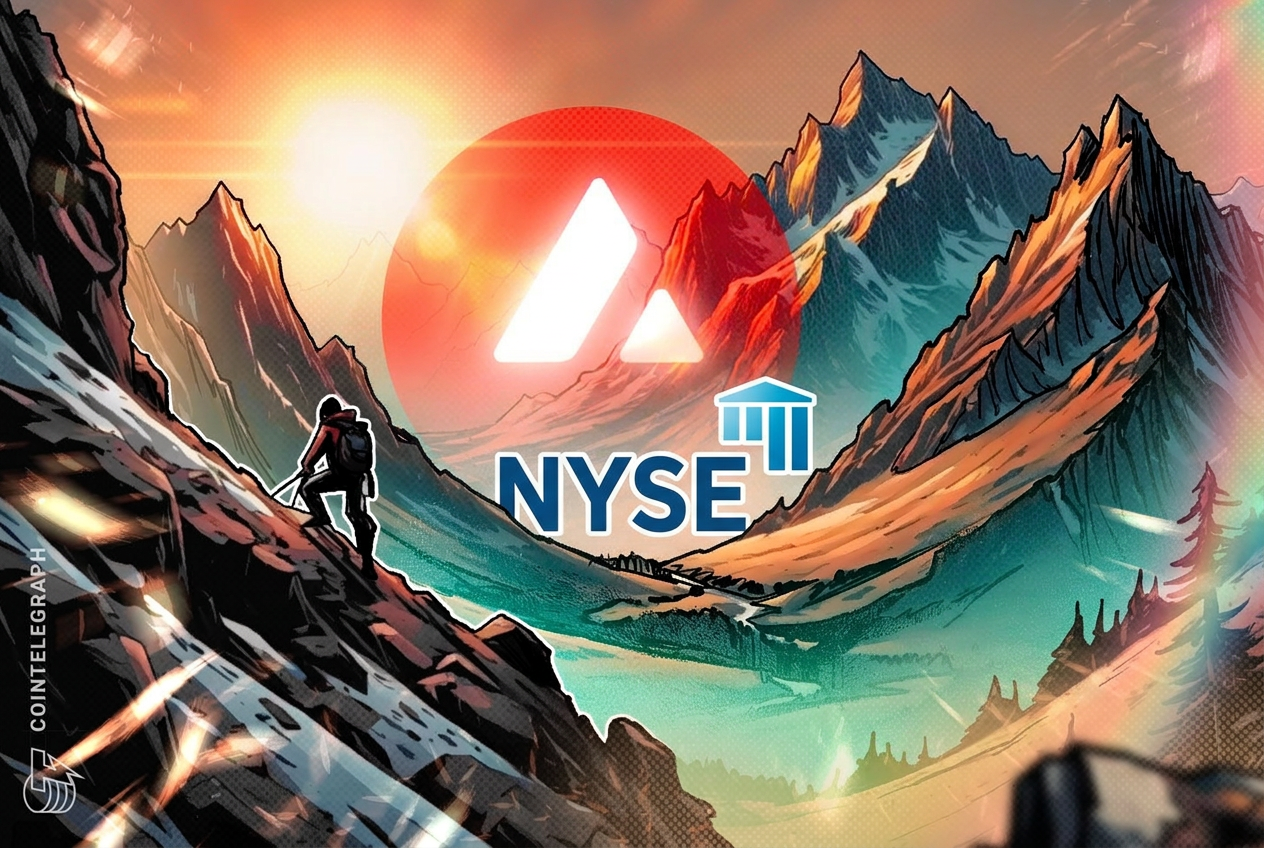
On November 9, Ava Labs announced that a tokenized securities trading platform affiliated with the NYSE had selected Avalanche to provide core ledger technology for its clearing firm. The platform is a regulated alternative trading system (ATS) designed for 24/7 trading, clearing, and settlement, pending regulatory approval. The Wall Street Journal reported a stronger version: the NYSE would "exclusively" use Avalanche to settle tokenized stocks, with matching still handled by existing technology and a Q4 launch target—though Ava Labs' announcement gave no launch date and did not name the clearing firm. Markets traded the headline first, with AVAX rising roughly 8–11% to near $9 intraday. But the announcement places Avalanche at the clearing-ledger layer, not the main board on a public chain—a distinction that determines whether AVAX captures narrative or verifiable demand. Matching (who trades with whom at what price) stays on the NYSE's Pillar engine; settlement (how cash and securities transfer) goes to the blockchain ledger. Ava Labs said it provides core ledger tech for the clearing firm of the NYSE-affiliated ATS, without disclosing the firm's identity, contract value, or timeline. Tokenized stocks involve three layers: issuance, matching, and settlement. NYSE digital issuance head Dennis Lee said the platform will support stocks listed across multiple chains, but the settlement ledger must be fast, reliable, permissioned, and cost-predictable. Issuance can be multi-chain; settlement converges on one controlled system. The "exclusive" label refers to the settlement ledger, not the whole value chain. ICE previously said the platform combines Pillar with blockchain post-trade systems supporting multi-chain settlement and custody. Ava Labs CBO John Nahas said the NYSE will run a custom Avalanche-based chain tailored to regulatory needs, not use the public Avalanche chain—two very different things. A permissioned chain lets the exchange control access, node deployment, and fee pricing. Founder Emin Gün Sirer cited round-the-clock atomic settlement, predictable performance and cost, and regulatory control. This explains why AVAX's price reaction outpaced fundamental certainty: brand association arrived first, while fee capture remains undisclosed—whether the custom chain uses AVAX for pricing, staking, or fees was not answered. Charles Schwab's same-day addition of AVAX to retail trading offers a competing explanation for the gains. Three unresolved variables determine the significance: regulatory approval (no public status), the clearing firm's identity (unnamed legal entity), and token economics. AVAX's economic link is distant—a custom chain does not equal public-chain lockup or AVAX becoming a settlement asset. Issuer willingness also matters; the NYSE recently expanded transfer agents for issuer-sponsored tokenized securities to six, with Broadridge handling on-chain voting and governance, but whether tokenized equities enter this ATS depends on liquidity, compliance costs, and shareholder communication. Until the platform launches and the clearing firm appears, vendor selection is a necessary step, not realized demand.

marsbit11/10 10:11
NYSE Picks Avalanche, Why AVAX May Not Capture the Settlement Flow

marsbit11/10 10:11

Avalanche’s AVAX leads crypto gains following NYSE tokenization deal

Avalanche's AVAX token rose as much as 10% on Monday, becoming the top gainer among the 100 largest cryptocurrencies, after the New York Stock Exchange announced plans to use Avalanche's blockchain to settle trades on a new platform for trading tokenized stocks around the clock. AVAX later eased to $8.86, still up over 8% on the day, with a market cap of around $3.95 billion and $439.7 million traded in the past 24 hours. Avalanche's total value locked stands at $633 million, up 4% over the past day. NYSE's head of digital issuance, Dennis Lee, said the exchange is examining how blockchain technology can expand its equities offerings and is picking the right technology for each job. The deal underscores Wall Street's growing effort to use blockchain to make stock trading faster and enable trading outside regular market hours; traditional US markets are open 9:30 am to 4:00 pm EST on weekdays, with trades often taking at least one business day to settle. The NYSE first announced plans for the platform in January, and Ava Labs revealed in September that the exchange had spent about a year testing Avalanche, though the final selection was not confirmed until Monday. Avalanche will record stock trades and help complete transactions on the platform, which will let investors buy and sell digital versions of stocks across different blockchains. Lee said the settlement ledger needs to be fast, reliable, permissioned, cost-predictable, and backed by a large developer community—all of which Avalanche meets. The platform could launch before the end of 2026 pending regulatory approval. Ava Labs chief business officer John Nahas said first conversations with the NYSE began nearly a year ago and called it an important step toward blockchain becoming foundational financial infrastructure. The news comes as other major firms invest in blockchain for faster, round-the-clock trading: Nasdaq plans to invest $100 million in Kraken's parent Payward to launch tokenized stocks by Q2 2027, and the DTCC launched a service in October allowing firms to turn traditional securities into digital tokens. The NYSE deal follows other efforts to bring traditional assets onto Avalanche, including Progmat moving over 452 billion yen in digital securities onto a dedicated Avalanche blockchain in July and Aave Labs' plans for a lending service using tokenized assets as collateral.

cointelegraph11/10 01:51

Avalanche’s AVAX leads crypto gains following NYSE tokenization deal

cointelegraph11/10 01:51

Europe’s largest asset manager Amundi tokenizes equity index fund on Ethereum

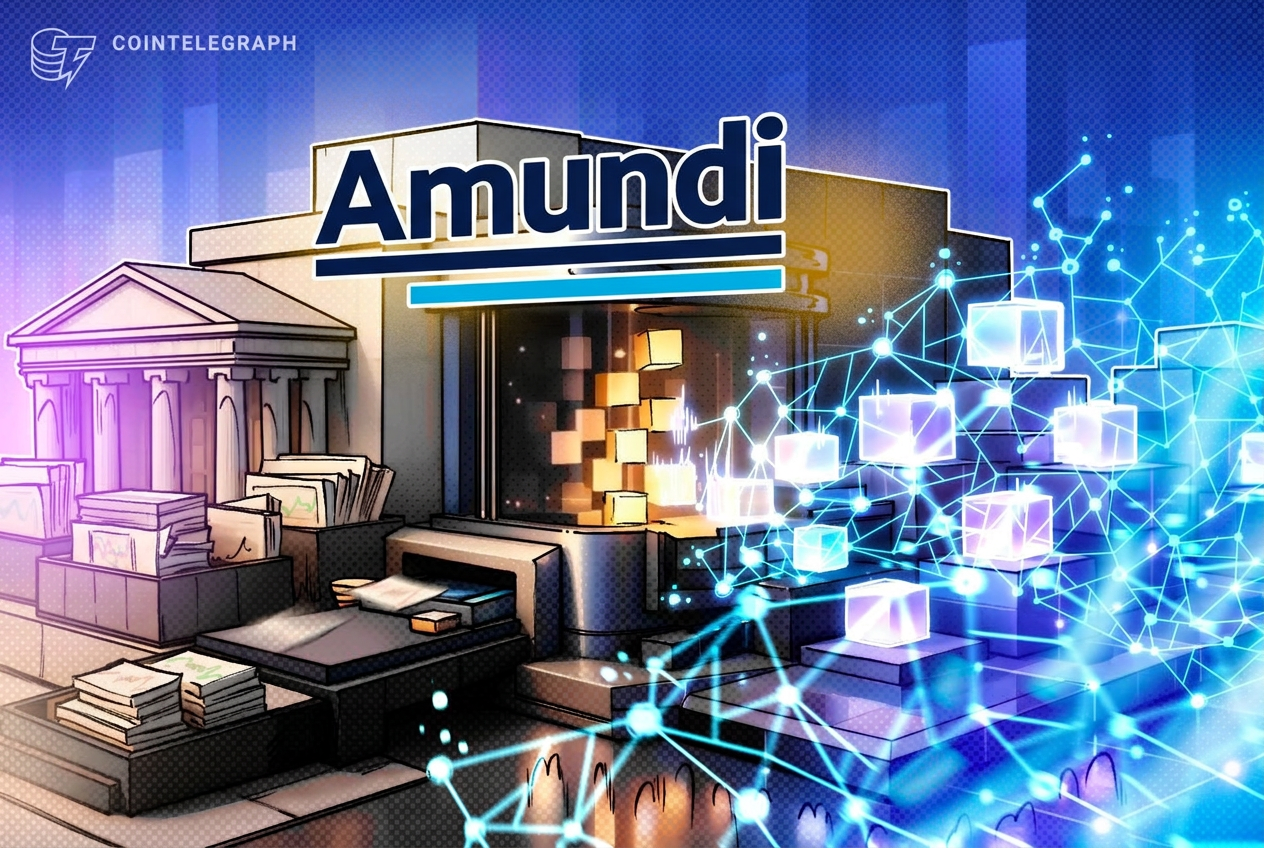
Amundi, Europe's largest asset manager, has launched a tokenized share class of its STOXX Europe 600 equity index fund on Ethereum, expanding its blockchain-based offerings beyond money market funds. The new share class was issued in collaboration with European asset-servicing company CACEIS, which provided the tokenization infrastructure, and will remain available through traditional investment channels as well. The fund tracks the STOXX Europe 600 Index, covering 600 large-, mid- and small-cap companies across developed European markets. Amundi said it plans to develop a broader range of tokenized funds for institutional clients and digital platforms, citing potential improvements in accessibility, settlement speed and operational efficiency. The launch follows the asset manager's first tokenized money market fund share class in November 2025, also developed with CACEIS on Ethereum. The move comes amid rapid growth in the global tokenized equities market, though the largest products remain concentrated in US-related assets. The value of tokenized stocks reached $4.24 billion as of Nov. 4, up nearly 27% over the past 30 days, according to RWA.xyz data, with the platform's 10 largest tokenized equity products all tied to US companies or US-listed securities, including Securitize, SpaceX, Circle and Alphabet. Meanwhile, European financial firms have pressed regulators to accelerate reforms; in April, a coalition of 39 companies and industry groups warned that the EU risked falling behind the US in tokenized finance, calling for expanded asset eligibility, higher volume limits and the removal of time restrictions on licenses under the bloc's Distributed Ledger Technology (DLT) Pilot Regime.

cointelegraph11/06 02:21

Europe’s largest asset manager Amundi tokenizes equity index fund on Ethereum

cointelegraph11/06 02:21

Nasdaq-listed Canton Strategic Holdings plans tokenized stock trading from Nov. 2

Nasdaq-listed Canton Strategic Holdings, formerly biotechnology firm Tharimmune, plans to tokenize its common shares on the Canton Network, with trading expected to begin as soon as Nov. 2. The company partnered with TSV LLC, a trading venue for tokenized securities, and Fairmint, an SEC-registered transfer agent, to bring its shares onto the blockchain. The tokenized shares would carry the same shareholder rights as its Nasdaq-listed stock. The Nasdaq-traded issue, ticker CNTN, currently trades an average daily volume of 757,704 shares; the stock was recently up over 4.5% at roughly $2.13 per share, with a market cap of $170 million. Tokenized share trading would be available around the clock through an automated market maker, with transactions settling immediately on the Canton Network, while Fairmint would maintain ownership records and oversee compliance with share transfer requirements. The announcement follows the SEC's September innovation exemption, which the companies said provides a regulatory path for trading tokenized US stocks on domestic platforms. Canton Strategic Holdings shifted its focus to digital assets in November 2025 after raising $545 million to build a business around Canton Coin. It changed its name in February and now holds the cryptocurrency, helps operate the Canton Network, and invests in projects built on the blockchain. Despite its name, the company is not behind the Canton Network, which was developed by Digital Asset, though it has ties to the Canton Foundation through investments and participation in network governance.

cointelegraph10/30 00:35

Nasdaq-listed Canton Strategic Holdings plans tokenized stock trading from Nov. 2

cointelegraph10/30 00:35

The Rise of Tokenized US Stock Collateral Loans: Weekend Price Freezes Become the Biggest Liquidation Risk

Tokenized US stocks are moving into DeFi lending. Aave launched borrowing against Coinbase-issued stock tokens in September, and Morpho followed on Robinhood's chain in October, letting holders pledge tokenized equities for stablecoins. This unlocks liquidity for overseas investors who cannot open margin accounts—Indian residents, for example, are barred from pledging US equities—turning static tokenized shares into productive collateral. Roughly 60% of Robinhood's $3.7B monthly stock-token volume occurs outside market hours, and most Aave borrowing happens when Wall Street is closed. The economics stack up across layers: issuers (Robinhood, Coinbase, Kraken/Backed) sit atop the value chain; wrappers like PendleLoop offer up to 4.2x leverage; Kraken accepts xStocks as futures margin; and Robinhood Earn deposits via Steakhouse-managed Morpho vaults effectively fund loans for assets Americans themselves cannot buy. Yet volumes remain tiny—Aave's market is ~$4M versus $1.05T in Interactive Brokers margin loans—so upside is vast. The core risk is the time gap. Chainlink price feeds freeze from Friday 8pm to Sunday 8pm ET while lending and liquidation run 24/7. Weekend bad news lets borrowers max out at stale prices before a Monday gap-down, saddling protocols with bad debt. Using thin weekend DEX prices instead invites manipulation—Hyperliquid's SK Hynix oracle incident liquidated 960 accounts for $57M on a single anomalous print. Honest borrowers also get hit: a 60% LTV position could be liquidated on a 17% gap at feed restart. Solutions include tight pool caps, freezing liquidations on weekends (Paboxo), and fixed-term loans (Jupiter). US exchanges' 23-hour trading from December shrinks but doesn't eliminate the gap. Ultimately the invisible risk gets priced into higher haircuts, leaving tokenized stocks with less leverage than real equities—but still a breakthrough for excluded global investors.

marsbit10/29 14:36

The Rise of Tokenized US Stock Collateral Loans: Weekend Price Freezes Become the Biggest Liquidation Risk

marsbit10/29 14:36

Wall Street's Crackdown on 'Shadow Stocks': Bullish Teams Up with Multiple Financial Giants to Give Tokenized US Stocks True Shareholder Rights

In the wake of Wall Street giants publishing full-page ads denouncing unauthorized "shadow stock tokens," the compliant wing of US equity tokenization is accelerating. Bullish, an institutional-grade crypto trading platform, announced that top quantitative firm Qube Research & Technologies (QRT), compliant digital transfer agent Vertalo, and B2B crypto infrastructure provider Zero Hash have joined the Issuer Sponsored Token Coalition. Co-founded by Bullish and global securities registrar Equiniti (EQ), the coalition already includes clearing and brokerage giants Apex Fintech Solutions, Alpaca, and DriveWealth. By pioneering a new paradigm of "issuer-authorized on-chain issuance directly linked to authoritative cap tables," the alliance fully preserves on-chain investors' voting and dividend rights, aiming to end the chaos of third-party synthetic tokens and unlock compliant tokenization of trillion-dollar US equities. Traditional listed companies have opposed early stock tokenization because third-party platforms issued unauthorized synthetic wrappers without company consent, leaving on-chain investors without legal shareholder status, voting rights, or direct dividends, and exposing them to pricing deviations, AML gaps, and bankruptcy risks. The Issuer-Sponsored Token model reverses this by having listed companies actively authorize, participate in, and endorse on-chain issuance, eliminating the compliance stigma of "shadow stocks." The coalition directly connects to authoritative cap tables. Equiniti and Vertalo seamlessly synchronize blockchain smart contracts with traditional central securities depository ledgers in real time, ensuring both traditional and on-chain investors are instantly mapped onto official shareholder registers. Proxy voting, dividend distribution, and corporate actions are automatically executed via smart contracts and transfer agent systems. This architecture aligns perfectly with the SEC's "Innovation Exemption" framework proposed in September, which requires trading venues to verify that on-chain token holders enjoy full rights identical to traditional shareholders. With deep involvement from Bullish (chaired by former NYSE president Tom Farley), Apex, and Qube, US equity tokenization is moving from niche experiments into deep capital markets waters, offering 7x24 trading, T+0 atomic settlement, and improved collateral efficiency. By linking brokerage distribution networks with institutional order books through unified token standards, the coalition breaks down closed liquidity silos. The rapid growth of the Issuer Sponsored Token Coalition shows that RWA tokenization is not a brutal disruption of traditional finance but a deep institutional reconstruction alongside established giants, accelerating a compliant, efficient, seamlessly interconnected new paradigm for global capital markets.

marsbit10/27 16:21

Wall Street's Crackdown on 'Shadow Stocks': Bullish Teams Up with Multiple Financial Giants to Give Tokenized US Stocks True Shareholder Rights

marsbit10/27 16:21

活动图片