# Payment System Related Articles

HTX News Center provides the latest articles and in-depth analysis on "Payment System", covering market trends, project updates, tech developments, and regulatory policies in the crypto industry.

Is Your Account Still Blocked? Rosfinmonitoring Gets Direct Access to SBP and 'Mir'

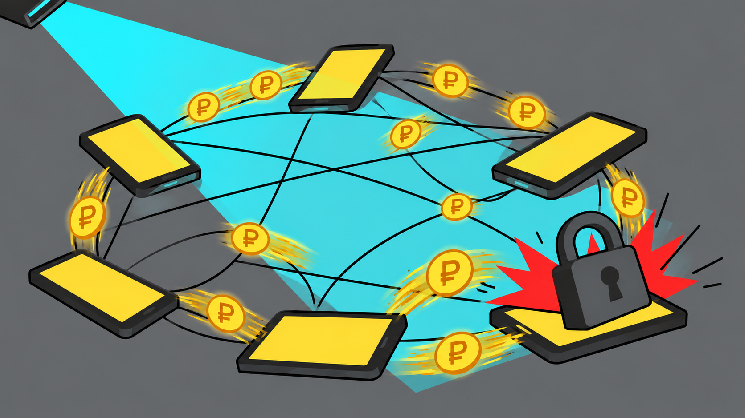
Starting September 1, 2026, Russia's Federal Law No. 461-FZ grants Rosfinmonitoring (the Federal Financial Monitoring Service) direct access to transaction data from the National Payment Card System (NSPK), the operator of the Mir payment card system and the Faster Payments System (SBP). This allows the agency to bypass individual banks when reconstructing transaction trails for anti-money laundering (AML) purposes. The data, provided free of charge and without requiring customer consent or court orders, includes information on operations via SBP, the unified QR-code, and Mir cards, with no minimum transaction threshold. Customers will not be notified when their data is shared. The law does not introduce new taxes, automatic account freezes, or new enforcement powers. If suspicious activity is identified under existing AML laws, existing procedures with banks and law enforcement will apply. The agreement's specific terms between Rosfinmonitoring and NSPK, including the scope and historical depth of accessible data, are not public. The change centralizes access to a vast volume of domestic payments, potentially speeding up financial investigations. However, it also creates a single point of concentration for sensitive data and reduces transparency for cardholders, as customers are not informed about data requests. Observers note a global trend of expanding supervisory powers, with differences in the Russian model being the non-public agreement and the lack of customer notification.

cryptonews.ru08/25 17:23

Is Your Account Still Blocked? Rosfinmonitoring Gets Direct Access to SBP and 'Mir'

cryptonews.ru08/25 17:23

Digital Banks No Longer Rely on Banking for Profit; The Real Goldmines Are Stablecoins and Identity Verification

Digital banks are no longer competing on user scale but on revenue per customer, as seen in Revolut's diversified income streams versus Nubank's reliance on credit. The real value lies in stablecoins and identity authentication. Stablecoins, especially those backed by reserves, generate profit from interest on assets like treasury bonds—a revenue stream captured by issuers, not front-end platforms. This has pushed firms like Stripe and Circle to build proprietary settlement networks (e.g., Tempo, Arc) to control profitability, privacy, and transaction efficiency. Stablecoins disrupt traditional payment systems by enabling direct, low-cost transfers, forcing digital banks to integrate stablecoin channels or become obsolete. Simultaneously, identity authentication is evolving into a portable, cross-platform system. Initiatives like the EU Digital Identity Wallet and crypto projects (Worldcoin, Gitcoin Passport, Polygon ID) aim to create reusable digital identities, reducing redundant KYC processes. This shifts digital banks from controlling identity to becoming service providers within a trusted identity framework. Future digital banks will succeed by focusing on one of three models: 1. **Interest-driven**: Profit from user deposits via stablecoin interest and staking. 2. **Payment flow-driven**: Generate revenue from high transaction volumes as the default transfer channel. 3. **Infrastructure-driven**: Control stablecoin issuance, reserves, and settlement for the highest profitability. The market will split between consumer-facing apps (low switching costs) and infrastructure players (high stickiness, core to value flow).

marsbit12/15 18:05

Digital Banks No Longer Rely on Banking for Profit; The Real Goldmines Are Stablecoins and Identity Verification

marsbit12/15 18:05

活动图片