# NEAR Related Articles

HTX News Center provides the latest articles and in-depth analysis on "NEAR", covering market trends, project updates, tech developments, and regulatory policies in the crypto industry.

ZEC Pushes Cross-Chain Quantum-Resistant Proposal, Deepens Alliance with NEAR: Is the Privacy Sector Brewing New Catalysts?

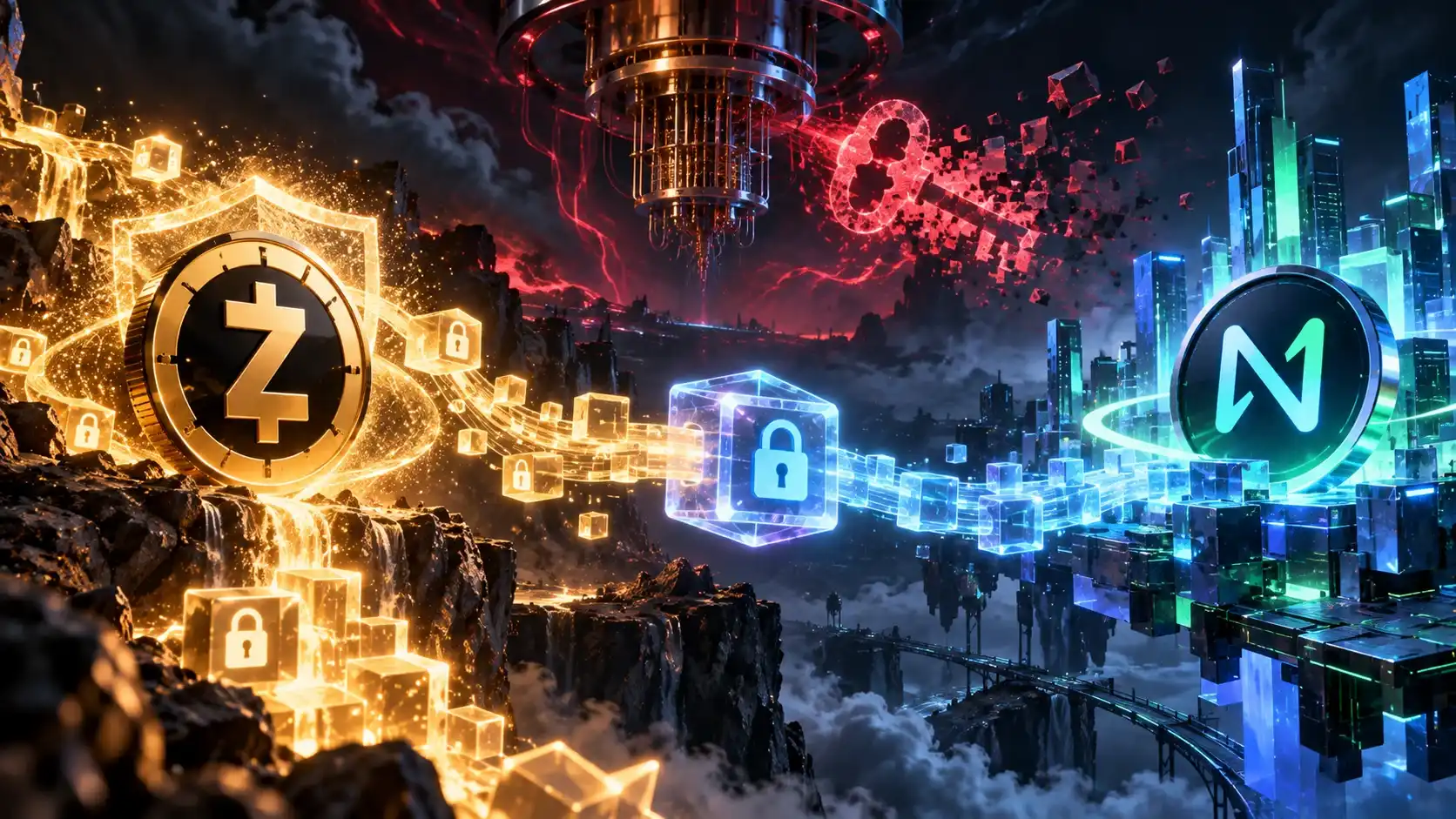
Zakura, the team behind Zcash node software, has submitted a cross-chain privacy patch that addresses growing concerns about quantum computing breaking public-key cryptography. The vulnerability: when users swap ZEC via NEAR Intents, the system must store a public refund address on the NEAR blockchain to handle failed transactions. Under "harvest now, decrypt later" attacks, a future quantum computer using Shor's algorithm could crack that exposed refund address, derive the account's viewing key, and decrypt the user's entire historical transaction history—undermining ZEC's privacy narrative. The fix is straightforward: derive a unique one-time private key for every cross-chain swap. Each NEAR-routed transaction generates a disposable viewing key, so even if a refund address is eventually compromised, only that isolated transaction is exposed—never the user's main wallet or core assets. To prevent key bloat from slowing wallet recovery, the team added Private Information Retrieval (PIR), letting users query on-chain data without the server learning which addresses are being queried. Timing matters most. Zcash's official roadmap targets a January quantum-resistance upgrade covering roughly 70% of transparent addresses with hash-based signatures. Zakura's patch, however, requires no network fork and can ship in compatible software wallets within weeks—an early defensive answer for the most sensitive cross-chain interoperability layer. For markets, this won't directly drive buying pressure, but it strengthens fundamentals ahead of coming catalysts. It cements ZEC's technical moat as the privacy leader and confirms NEAR Intents as a secure privacy-focused cross-chain hub, positioning both assets for the "privacy plus quantum resistance" narrative as January approaches.

marsbit10/19 21:01

ZEC Pushes Cross-Chain Quantum-Resistant Proposal, Deepens Alliance with NEAR: Is the Privacy Sector Brewing New Catalysts?

marsbit10/19 21:01

Zcash Developer Proposes Quantum Privacy Fix for ZEC Swaps Through NEAR Intents

Zcash infrastructure developer Zakura has proposed a wallet feature to protect transaction privacy against future quantum computing attacks. The proposal assigns a separate incoming viewing key to every Zcash (ZEC) swap made through NEAR Intents, limiting the payment history an attacker could expose if they eventually break the cryptography behind a publicly visible address. NEAR Intents publishes Zcash addresses on its public blockchain so unused funds can be returned if a transaction fails or does not use the full deposit, and those addresses remain visible even when no refund is required. Zcash's shielded transactions hide transaction details, but addresses within a wallet typically share an incoming viewing key. A sufficiently powerful quantum computer running Shor's algorithm could theoretically recover that key from an exposed address, potentially revealing amounts and private memos of payments received. No such quantum computer has been demonstrated. Under Zakura's proposal, outlined by developer Adam Tucker on October 18, each swap would use its own incoming viewing key while the wallet's existing spending key remains unchanged. If a future attacker recovered one viewing key, the information revealed would be limited to payments linked to that address rather than the wallet's wider transaction history. The design also addresses restoring wallets with many separate keys using private information retrieval (PIR), which lets a wallet locate relevant transactions without revealing which addresses it is searching. The change would not require a Zcash network upgrade. Zakura says software wallets built with its open-source libraries, including Vizor, could integrate the feature in coming weeks, with hardware-wallet support expected later. The proposal comes as Zcash developers work toward broader quantum-resistant protections, including the planned Tachyon upgrade, but remains a wallet-level safeguard, not a network-wide fix already deployed to all users. The immediate goal is to reduce private transaction information exposed in a hypothetical future quantum attack while allowing users to continue spending funds through existing wallet accounts.

TheNewsCrypto10/19 20:00

Zcash Developer Proposes Quantum Privacy Fix for ZEC Swaps Through NEAR Intents

TheNewsCrypto10/19 20:00

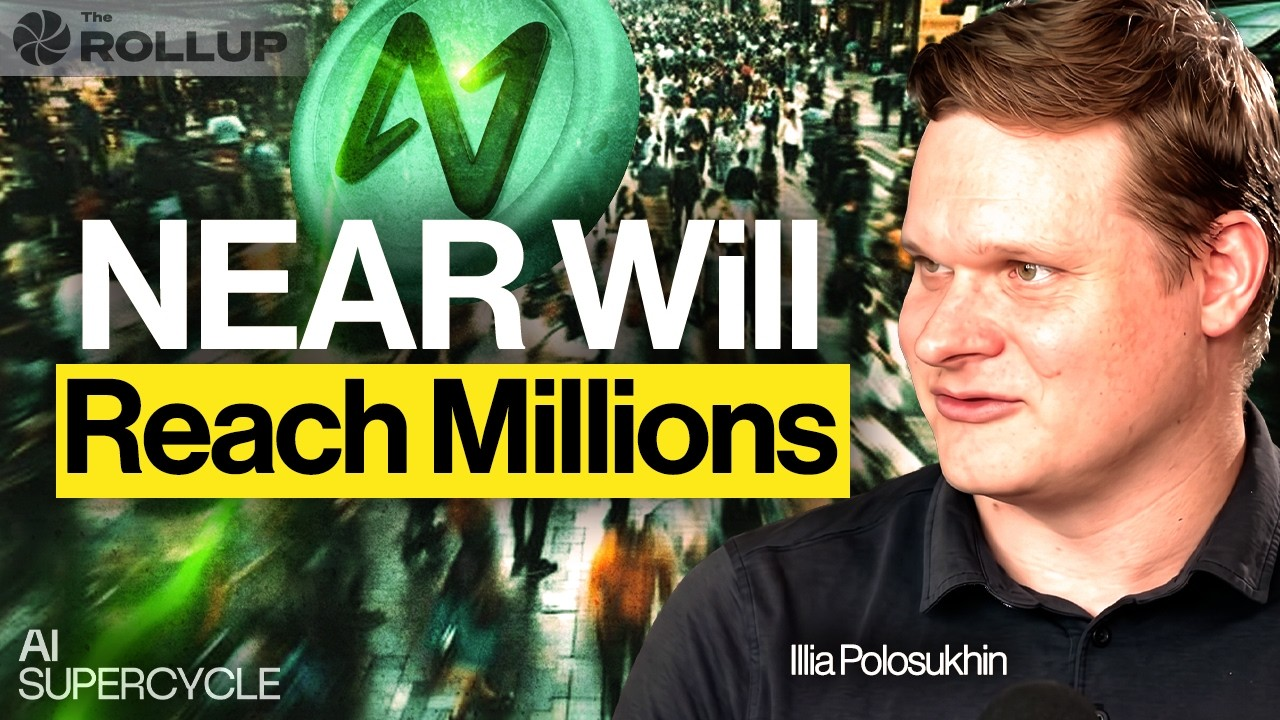
Dialogue with NEAR Co-founder Illia: Connecting to NASDAQ, Launching Anti-Quantum Features, Why NEAR is Considered the Ethereum of This Bull Cycle?

Guest: Illia Polosukhin, NEAR Co-Founder Host: Robbie (The Rollup) NEAR is gaining significant traction, with some comparing it to Ethereum in this cycle, but the focus is on converting hype into product momentum. The core vision is NEAR Intents, a universal transaction aggregation layer. It acts as a "market of markets," finding the best counterparties for any user intent, now extending beyond crypto to include real-world assets like Nasdaq and NYSE stocks. This makes NEAR a primary venue for speculative on-chain assets (e.g., Quantus, Pearl), which often list exclusively on platforms like SafeTrade, offering smooth private trading and good liquidity on near.com. The roadmap includes evolving from chain abstraction to natural language intents, where a complex command (e.g., "build a skyscraper in NY") is broken down and executed by sub-agents. NEAR positions itself as a universal liquidity layer, collaborating with protocols like Aave and other chains rather than competing in a zero-sum game. For example, integrating Aave allows users to borrow against assets (e.g., Hyperliquid positions, stocks) without selling or triggering taxes. A key differentiator is post-quantum security. NEAR's account model, designed from the start for cryptographic agility, allows easy key rotation and addition of new schemes (adding a new curve requires ~200 lines of code). In July, the Dilithium (ML-DSA) post-quantum scheme was deployed on mainnet. Users can upgrade accounts to quantum-resistant with one click in Meteor Wallet, without moving assets or paying taxes. The future ML-KEM standard, already used in Chrome, will be integrated next. Furthermore, NEAR accounts can natively hold assets from other chains (e.g., Bitcoin, Ethereum), and privacy modes hide public keys, shrinking the quantum attack surface. The Shield system provides proactive risk alerts.

marsbit10/13 18:16
Dialogue with NEAR Co-founder Illia: Connecting to NASDAQ, Launching Anti-Quantum Features, Why NEAR is Considered the Ethereum of This Bull Cycle?

marsbit10/13 18:16

Altcoin Season Index Hits One-Year High, 20 out of 26 Categories in Decline

Altseason Index Hits One-Year High Amid Narrowing Breadth On October 12, 2026, CoinMarketCap's Altseason Index reached 66, its highest level in a year. This index, measuring how many of the top 100 cryptocurrencies have outperformed Bitcoin over 90 days, is trending upward from 39 a month prior. However, underlying market breadth is contracting sharply. Only 6 out of 26 tracked narrative sectors posted gains over the past week, down from 24 sectors two weeks earlier. Leadership has rotated from consumer-facing themes like Social, Meme, and Solana Ecosystem—all among the weakest performers—towards infrastructure for moving assets and data. The top three gaining sectors were On-Chain Voting, Cross-Chain Bridge tokens (driven solely by Wormhole's 91.4% surge), and Data Availability. Within the top 50 assets, only Internet Computer (ICP) and NEAR significantly outperformed on the day, with gains of 13.09% and 12.42%, respectively. ICP's move was news-driven, while NEAR's continued a strong technical momentum rally of 150% over 30 days, though it now faces significant liquidation fuel below its current price. Despite the rising altseason reading, Bitcoin's dominance increased slightly to 59.34%, as Ethereum's market share declined. Market sentiment, measured by the Fear & Greed Index, fell to "Neutral" at 58, down from recent highs, indicating a divergence between broad market sentiment and the relative performance metric. Key near-term factors to watch include the upcoming US CPI data, whether the narrow sector leadership broadens, and the sustainability of extreme volume in outliers like Wormhole.

marsbit10/13 12:46

Altcoin Season Index Hits One-Year High, 20 out of 26 Categories in Decline

marsbit10/13 12:46

The Strength of Altcoins and Investor Fears. What to Expect in Cryptocurrency This Week

The article analyzes the cryptocurrency market outlook for the week of October 12-16, focusing on Bitcoin's recent volatility and the potential for an altcoin season. Bitcoin started the week by rising above $84,000 but later fell below $83,000. Experts state that for the price to avoid a significant drop, it must hold support at $82,000; a break below could lead to a retest of $80,000. To signal a new upward move, Bitcoin needs to consolidate above $85,000. Market attention is centered on key U.S. economic indicators, including inflation data and Federal Reserve interest rate expectations. A slowdown in inflation could support markets, while strong data or hawkish Fed rhetoric could pressure risky assets like Bitcoin. Geopolitical tensions surrounding Iran also pose a risk, with de-escalation supporting markets and renewed threats potentially causing a correction. Key support levels are identified at $82,000 for BTC and $2,500 for ETH. The "Altcoin Season Index" recently hit a yearly high, indicating that 65 of the top 100 cryptocurrencies outperformed Bitcoin over the past three months. While this suggests increasing capital flow into altcoins, analysts say a formal altcoin season would require the index to surpass 75 and hold there. Certain altcoins like NEAR, SUI, and ARB are noted for their strong performance, driven by project-specific developments like new ETFs and increased protocol activity. Experts suggest the current environment may be suitable for trading top altcoins, though many good entry points have already passed.

cryptonews.ru10/13 02:58

The Strength of Altcoins and Investor Fears. What to Expect in Cryptocurrency This Week

cryptonews.ru10/13 02:58

活动图片