# Hype Coin Related Articles

HTX News Center provides the latest articles and in-depth analysis on "Hype Coin", covering market trends, project updates, tech developments, and regulatory policies in the crypto industry.

BTC Short-Term Bottoming and Gathering Momentum, HYPE Triple Support Faces Critical Test | Guest Analysis

Last week, the crypto market was driven by news. On Nov 4, midterm election news sparked a 3.92% Bitcoin rally above $80K, but a day later, US stock declines triggered a 5.48% drop to ~$75,222, a new low since Sept 21, with fear index near 25. HYPE also fell 15.19% weekly, erasing prior gains and returning to ~$75. Key points: Bitcoin has held above the 52-week MA for eight weeks, satisfying the "price breakout principle," but the pullback confirmation signal is not yet issued and the 52-week MA (~$76,110) remains downward-sloping. The rebound from the July 1 low of $57,820 is still classified as an oversold bounce, not a confirmed bull market. On the daily chart, price remains in a descending channel, has broken below the key MA crossover (~$77,200), but holds above the 0.382 Fibonacci level ($76,130). The correction (wave i) has run 48 trading days with a max drawdown of 15.9%; a wave ii rebound is expected but not yet started. The "Shijie Ribbon" model still signals a long market. Strategy: mid-term stay in cash; short-term use 30% position for range trading, favoring buying dips near $72,500–73,500 with strict stops. HYPE: the weekly bearish engulfing candle was driven by external shocks, not fundamentals. Three support layers: the ribbon upper band (~$74.05, lower ~$71), the box lower edge (~$75, which triggered a 20% bounce on Oct 24), and the long-term uptrend line (~$68). Key support zones: $74–75 (ribbon upper + box bottom), $71 (ribbon lower), $68 (long-term trendline). Strategy: if price stabilizes at $74–75 or $68–71, consider light long positions (≤30%) with strict stops. Special rules: set initial stop at entry; move to breakeven at +1% profit; trail stop 1% per 1% gain. All analysis is personal technical opinion, not investment advice; markets carry risk.

Odaily星球日报11/10 10:52

BTC Short-Term Bottoming and Gathering Momentum, HYPE Triple Support Faces Critical Test | Guest Analysis

Odaily星球日报11/10 10:52

Hyperliquid Strategies seeks futures registration for perps

Hyperliquid Strategies, a Nasdaq-listed HYPE treasury company, announced that its subsidiary has applied to become a futures commission merchant (FCM) in a bid to bring Hyperliquid-based perpetual futures to the US. CEO David Schamis said owning HYPE captures economics tied to the Hyperliquid protocol, while setting up an FCM is intended to help bring markets deployed on Hyperliquid onshore. Hyperliquid's HIP-3 framework lets independent operators launch custom perpetual futures markets by staking 500,000 HYPE ($38.8 million), with proposed features allowing permissioned markets restricted to approved addresses. The subsidiary would handle US customer accounts for such permissioned markets; both the FCM application and the proposed markets require regulatory approval. Separately, Intercontinental Exchange, parent of the NYSE, announced an agreement with Trade[XYZ] on Oct. 29 to bring Hyperliquid-based perpetual markets to the US, subject to approvals, and plans a dedicated market and clearing structure. During the quarter, Hyperliquid Strategies raised $911 million in equity capital, spent $785 million to acquire 9.1 million HYPE and $17 million to repurchase 2.7 million PURR shares, holding 38.5 million HYPE as of Sept. 30, valued at $3.5 billion at the time. Schamis said Hyperliquid is winning the parts of onchain finance that generate real fees, with nearly all that value flowing back to HYPE holders through programmatic buybacks. Hyperliquid Strategies' shares fell 9.6% Thursday, closing at $8.76.

cointelegraph11/06 16:51

Hyperliquid Strategies seeks futures registration for perps

cointelegraph11/06 16:51

When Token Holding Time Is Only a Few Seconds Left, What Kind of Crypto Assets Can Survive the Next Cycle?

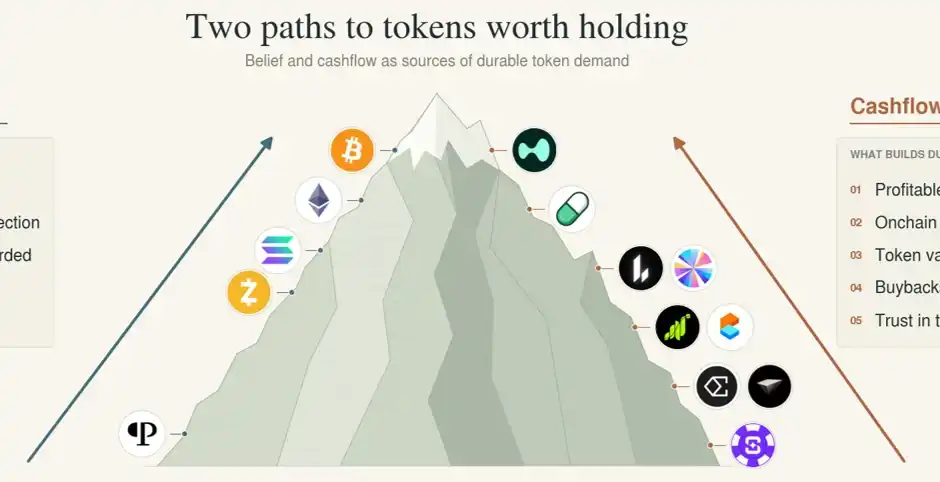
The crypto token issuance game has been fully conquered, with launchpads like Pump.fun industrializing the pump-and-dump process and average holding periods collapsing to seconds. Creating new tokens is now trivially easy, but building a durable asset worth holding for over a year has become harder than ever. Brevan Howard Digital investor Tze Donn Ng proposes a "two-peak endgame model" identifying two distinct paths for tokens that survive cycles. The first is "belief assets"—tokens with no underlying cash flow whose value rests purely on collective conviction. Durable belief assets share five traits: a sacred figurehead (Satoshi, Vitalik, Anatoly, Jeff), a near-death experience survived (Mt. Gox, The DAO, FTX, JellyJelly), massive early believers' wealth creation, a fanatical community with unique symbols and memes, and a simple one-line slogan. BTC, ZEC, and early HYPE fit this mold; such traits cannot be manufactured. The second path is "cash flow assets"—tokens backed by verifiable on-chain real profits, with no equity entity siphoning value, and enforced buybacks or dividends. Five key questions apply: Is there persistent economic surplus (HYPE, PUMP earn $1–2M daily)? Is revenue verifiable on-chain? Does value accrue to the token rather than equity (SHFL is a cautionary tale)? Are buybacks/dividends automatic via smart contracts (HYPE, LIT, SKY) rather than discretionary? And if profits are reinvested for growth, is the team trustworthy (GRASS, ENA, CHIP)? Only HYPE, LIT, PUMP, and SKY currently satisfy all five. The author expects a boom in cash-flow tokens—potential Polymarket issuance or a Shuffle on-chain casino with 90% of net gaming revenue auto-buying tokens could top the list. Ultimately, only two narrow paths lead to multi-cycle durability: the left "mountain of belief" (BTC, ZEC, early HYPE) and the right "mountain of cash flow" (HYPE, LIT, PUMP). HYPE stands out as the most comfortable hold, combining high-certainty cash flow with belief-asset potential. Most other tokens—over-supplied L1s, legacy DeFi without real revenue, and shallow AI narrative plays—will inevitably fall.

marsbit11/02 09:41

When Token Holding Time Is Only a Few Seconds Left, What Kind of Crypto Assets Can Survive the Next Cycle?

marsbit11/02 09:41

Partnering with Kraken's Parent Company, How Far Is Hyperliquid from Entering the U.S. Market?

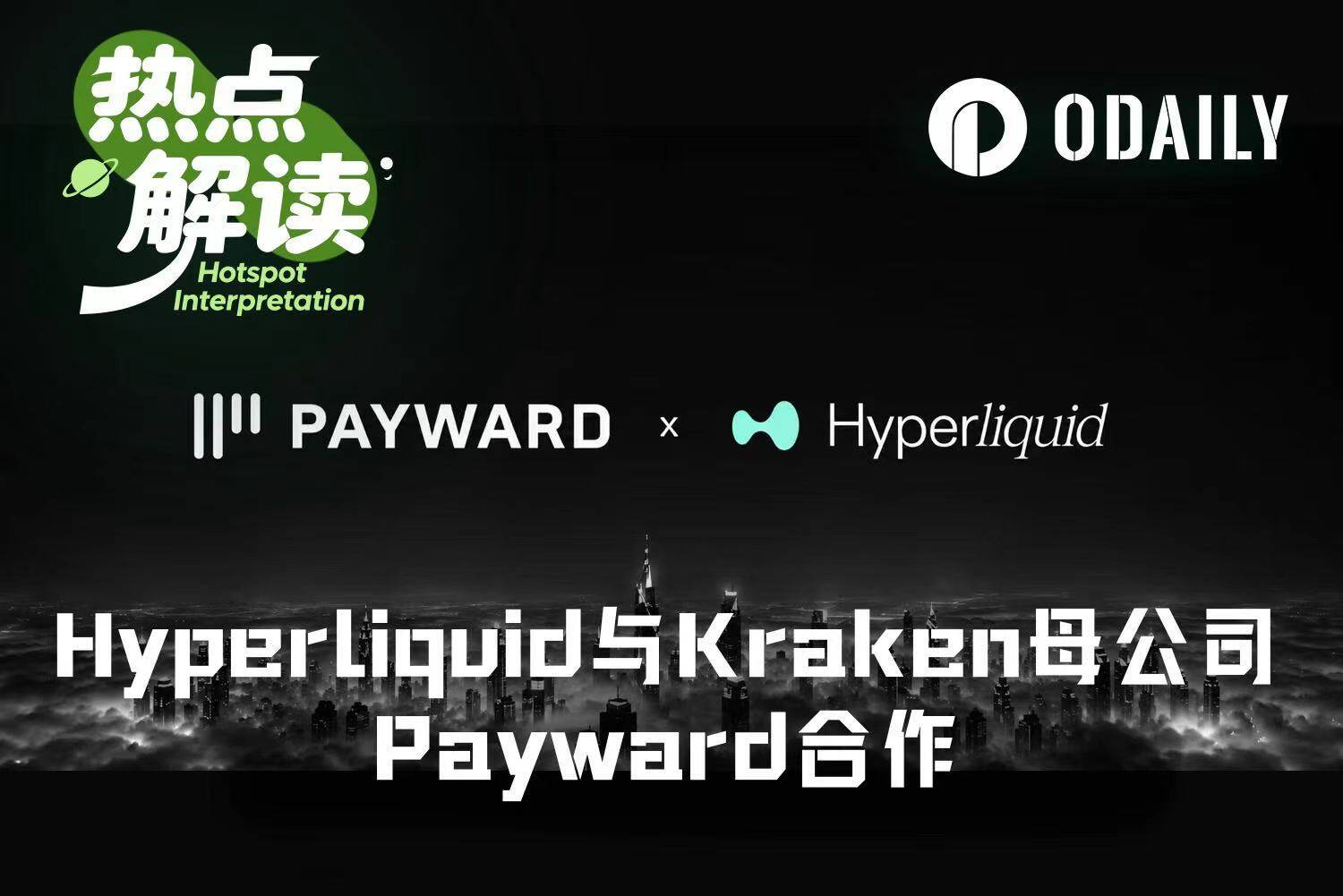
Hyperliquid co-founder Jeff announced a partnership with Payward, Kraken's parent company, to bring on-chain perpetual futures to the U.S. using Hyperliquid's infrastructure, sending HYPE back above $80. Under the proposed plan, Payward would become the first CFTC-regulated deployer of a HIP-3* market, though regulatory approval is still required and related features remain on testnet. The arrangement divides responsibilities: Hyperliquid provides the public chain and on-chain orderbook; Bitnomial's exchange and clearing entities create and manage markets and handle clearing and settlement; NinjaTrader Clearing handles customer accounts, with licensed entities bearing regulatory obligations. U.S. customers must open accounts through NinjaTrader and be on both NinjaTrader and Bitnomial access lists. HIP-3*, an optional feature building on HIP-3, lets deployers maintain on-chain allowlists so customer verification results map to trading permissions; it is currently in testnet and awaits a network upgrade for full support. The partnership offers Hyperliquid a path to serve U.S. clients through licensed institutions, while Payward expands its perpetual contract offerings. However, CFTC approval remains key—the agency is still exploring crypto market rules, with its advance notice comment period ending December 14 and no new regime yet in effect. No launch date or full contract list has been disclosed, and whether the collaboration generates real business will depend on product selection, liquidity, trading costs, and user experience. HYPE has already risen, but Hyperliquid still needs to clear both approval and launch hurdles.

Odaily星球日报10/28 10:21

Partnering with Kraken's Parent Company, How Far Is Hyperliquid from Entering the U.S. Market?

Odaily星球日报10/28 10:21

Hong Kong Star Alex Fong's Unspoken NFT Losses Unveil the Other Side of Celebrity Involvement

Hong Kong actor and singer Alex Fong revealed in an October 2026 interview that during the pandemic, after buying a property and with his acting work halted, he invested in popular NFTs. The losses exceeded his previous stock market losses and were so significant he dared not tell his family. This confession highlights the other side of the celebrity-driven NFT boom of 2021-2022. During that peak, stars like Justin Bieber, Kevin Hart, and Neymar publicly purchased high-profile NFTs like Bored Ape Yacht Club avatars for hundreds of thousands of dollars. In Asia, celebrities including Jay Chou (with his Phanta Bear project), Edison Chen, and Stephen Chow launched or promoted their own NFT collections, often selling out in minutes. However, years later, the market has drastically cooled. Bieber's $1.3 million Bored Ape is estimated to be worth around $12,000. Many celebrity-backed projects, such as ZombieClub by Shawn Yue and RED NVLPE by Edison Chen, now have floor prices down over 99% from their minting price, with often zero trading volume. Fong's story reflects a common narrative: celebrities often received NFTs for free or for promotion, while fans and collectors who bought in faced major losses when hype faded and sustained demand vanished. His personal lesson was a move away from seeking get-rich-quick schemes towards more financial caution for his family.

marsbit10/14 19:53

Hong Kong Star Alex Fong's Unspoken NFT Losses Unveil the Other Side of Celebrity Involvement

marsbit10/14 19:53

BTC Daily Adjustment in Progress, HYPE Nears Short-term Directional Decision | Invited Analysis

This weekly analysis examines the recent price action of Bitcoin (BTC) and HYPE, focusing on key technical developments and outlining potential trading strategies. **Bitcoin (BTC) Analysis:** * **Market Trend Assessment:** The analysis applies a "52-week moving average confirmation method" to assess the broader trend. While BTC's weekly closing price has broken above this key average, the moving average itself remains in a downtrend, and a proper pullback confirmation is still lacking. The conclusion is that the rally from the July 1st low is still classified as a technical rebound, not yet confirming a new bull market. * **Daily Chart Structure:** The report argues that the five-wave rally (a-e) from the July low likely concluded at the September 21st high. The recent breakdown below the key support of $82,500, followed by a weak-volume rebound, supports this view. If the e-wave is complete, a larger corrective decline (potentially in three sub-waves) is anticipated. The first leg of this correction is underway, with an initial target around $78,000. * **Weekly Outlook & Strategy:** * **Outlook:** The focus is on the downside targets from the September 21st high. Key resistance is seen at $85,500 and the $87,500-$90,000 zone. Support levels are identified at $80,500-$82,500, $75,000-$78,000, and $69,100-$70,500. * **Strategy:** The medium-term posture is neutral/cautious, recommending watching for a potential pullback to a "channel" for confirmation. For short-term traders, two scenarios are outlined: (A) Selling into strength near the $85,500-$87,500 resistance if bearish signals appear, or (B) Selling a confirmed breakdown below the $80,500-$82,500 support zone. A 30% position size with strict stop-loss management is advised. **HYPE Analysis:** * **Daily Chart Structure:** HYPE broke below the lower boundary of its two-month ascending channel on October 8th. Price is currently in a "pullback confirmation" phase, testing this breached support-turned-resistance. A failure to reclaim this level would signal weakness and open the path towards the $75-$77 support area. The longer-term uptrend line, however, remains intact. * **Weekly Outlook & Strategy:** * **Outlook:** The critical watchpoint is the outcome of the current test of the former channel support. Resistance levels are noted at $88-$90, $94, and $102. Key support zones are $80-$82 and $75-$77. * **Strategy:** Two bullish scenarios are proposed for short-term trades: (1) A light long position if price convincingly reclaims and holds above the former channel support, or (2) A light long position if price falls to the $75-$77 support area and shows signs of stabilization. A 30% position size with strict stop-loss discipline is emphasized. **Risk Management Reminder:** The article includes a standard trailing stop-loss protocol (moving stop to breakeven at +1% profit, then locking in profits progressively). It strongly cautions that all analysis is for informational purposes only, not investment advice, and strategies must be adapted to changing market conditions.

marsbit10/13 07:26
BTC Daily Adjustment in Progress, HYPE Nears Short-term Directional Decision | Invited Analysis

marsbit10/13 07:26

Why Are Liquid Staking and Yield Vaults Difficult to Sustain on Hyperliquid?

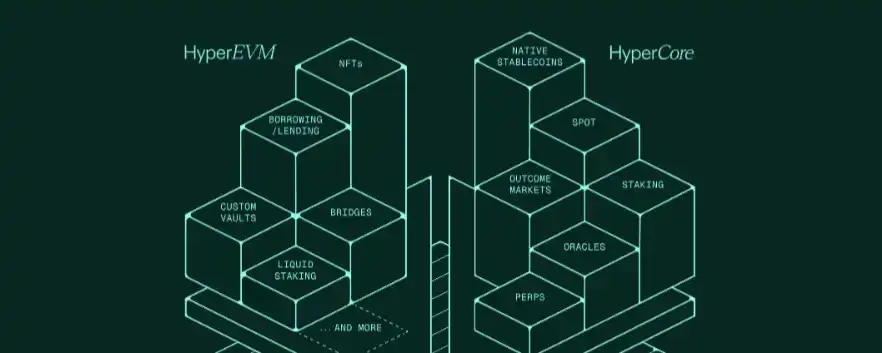
The article explores why traditional DeFi primitives like liquid staking and yield vaults struggle on Hyperliquid. The core issue is Hyperliquid's native combined margin system, which fundamentally reshapes the market structure. Unlike typical lending pools (e.g., AAVE), this system does not support re-hypothecation or circular lending, instead siphoning liquidity—especially USDC for margin—from the DeFi layer (HyperEVM) directly into the core trading engine (HyperCore). This makes the leveraged yield flywheels essential to most existing DeFi economically unviable. Furthermore, staking rewards on Hyperliquid serve a limited role in consensus, as HYPE's value stems more from utility (e.g., fee discounts, market deployment rights via HIPs) than from inflationary yield. As combined margin attracts HYPE liquidity, projects like LSTs face structural fragility and frequent de-pegging. The proposed path forward involves building new DeFi primitives that complement, rather than compete with, HyperCore's growth. This includes LSTs that tokenize utility (like fee discounts), creating markets for unique, non-homogeneous staking benefits, and designing systems where HyperCore handles price risk (USDC margin) while HyperEVM manages derivative risk. The key is to construct a DeFi layer rooted in HYPE's unique utility and access privileges, not in replicating unsustainable circular yield strategies.

marsbit10/08 09:30

Why Are Liquid Staking and Yield Vaults Difficult to Sustain on Hyperliquid?

marsbit10/08 09:30

活动图片