Supreme Court 'Hits the Brakes', Trump 'Hits the Gas': Tariff Battle Reignites!

比推Publicado em 2026-02-21Última atualização em 2026-02-21

Resumo

The US Supreme Court ruled 6-3 on February 20 that the Trump administration lacked legal authority under the International Emergency Economic Powers Act (IEEPA) to impose broad tariffs. In response, former President Trump announced a new 10% global tariff using alternative legal authority, aiming to maintain similar tariff levels. The court’s decision challenges the legal foundation of Trump’s tariff framework and may lead to large-scale refunds and further legal battles. Market reactions were initially positive but tempered as policy uncertainty persisted. The ruling highlights ongoing tensions between presidential power and trade policy, with economic and political implications for U.S. trade strategy and revenue policy.

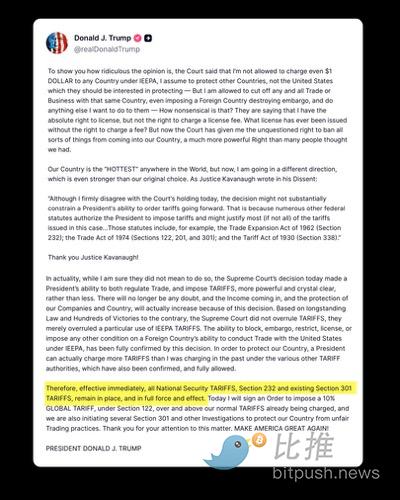
Lunar New Year’s fifth day, traditionally a day for Chinese to "welcome the God of Wealth," saw markets hoping for prosperity and smooth sailing. But in Washington, what arrived was a judicial "headwind." On February 20 local time, the U.S. Supreme Court ruled 6:3 that the Trump administration’s broad tariffs implemented under the International Emergency Economic Powers Act (IEEPA) lacked legal authorization. Within hours, the White House shifted course, with Trump announcing a 10% global tariff on top of existing duties. All current national security tariffs are fully effective immediately.

A tug-of-war over trade and presidential power has entered a new round.

Sources told The New York Times that when the Supreme Court decision was announced, Trump was meeting with governors at the White House. An assistant handed him a note, and he immediately called it "disappointing." Later, at a press conference, Trump angrily criticized the Supreme Court justices, calling them "fools and lackeys."
More Than Just Tariffs Halted

The Supreme Court’s majority opinion held that IEEPA does not grant the president unilateral authority to impose widespread tariffs on global goods. In other words, the president can declare an emergency but cannot use it to establish a常态化 tariff system.

The practical impact of this ruling is evident at least on two levels.

First, at the policy implementation level. The core tariff framework Trump relied on over the past year has been overturned. Although some tariffs based on national security provisions (Section 232) or 301 investigations may remain, the most efficient and broad-reaching tool has been judicially否决.

Second, at the fiscal level. Multiple institutions estimate that if the relevant tariffs are ultimately deemed invalid, the U.S. government could face massive refund pressures, potentially amounting to hundreds of billions of dollars. Bloomberg cited trade lawyers stating that the refund issue "will become the focus of the next round of litigation."

More importantly, policy certainty is declining. Businesses cannot predict the structure of trade costs for the next six months—precisely the variable global supply chains most fear.

Trump’s "Backup Button"
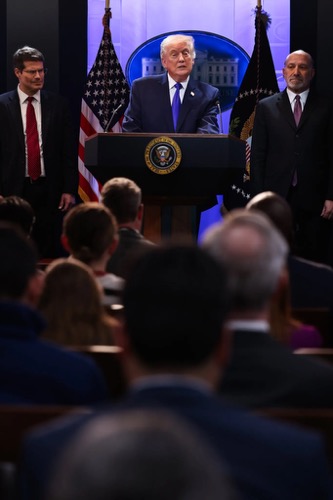
Facing the ruling, Trump’s response was very强硬. He stated at the White House, "There are many methods, many powers."

The White House plans to implement a 10% global temporary tariff within days under Section 122, lasting 150 days. If Congress does not extend it, the measure automatically expires. This clause has rarely been used historically and was originally designed as a short-term tool to balance trade deficits.

Simultaneously, Trump has not ruled out pushing Congress to legislate, granting the president clearer tariff authority. Some Republican lawmakers have publicly expressed support. However, given the narrow seat margins in both chambers of Congress, whether it can顺利推进 remains uncertain.

A Republican strategist told media that tariffs are the "cornerstone" of Trump’s economic agenda, and "he won’t give up easily."

Yale University’s Budget Lab has been simulating the impact of tariff policies during Trump’s potential term and released a new report based on the president’s latest remarks.

According to the Budget Lab’s estimates, before today’s Supreme Court ruling, the overall effective tariff rate (the average tax paid on all imported goods) was 16.9%. If the tariffs rejected by the Supreme Court become无效 and are not replaced, this number would drop to 9.1%.

But if Trump follows through on his plan to levy a 10% tariff on all goods using different legal grounds, and if he can maintain this policy, the Budget Lab estimates the effective tariff rate would eventually reach 15.4%—almost returning to the level before the day began.

Market Reaction Muted

Market volatility was limited that day. The three major U.S. stock indices rose, as investors believed corporate cost pressures might阶段性下降. In the S&P 500, manufacturing and retail sectors reliant on imported components saw relatively明显的 gains. The crypto market experienced a short-term boost. Bitcoin briefly approached $68,000, with some altcoins rising over 5%. Analysts pointed out that reduced expectations of trade friction boosted risk appetite.

However, as Trump announced the new tariff plan, the rally became more克制. The market quickly realized this wasn’t the end of policies but a路径重组.

Dual Economic and Political Pressures

The complexity of the tariff issue lies in its dual nature as both an economic tool and a political topic.
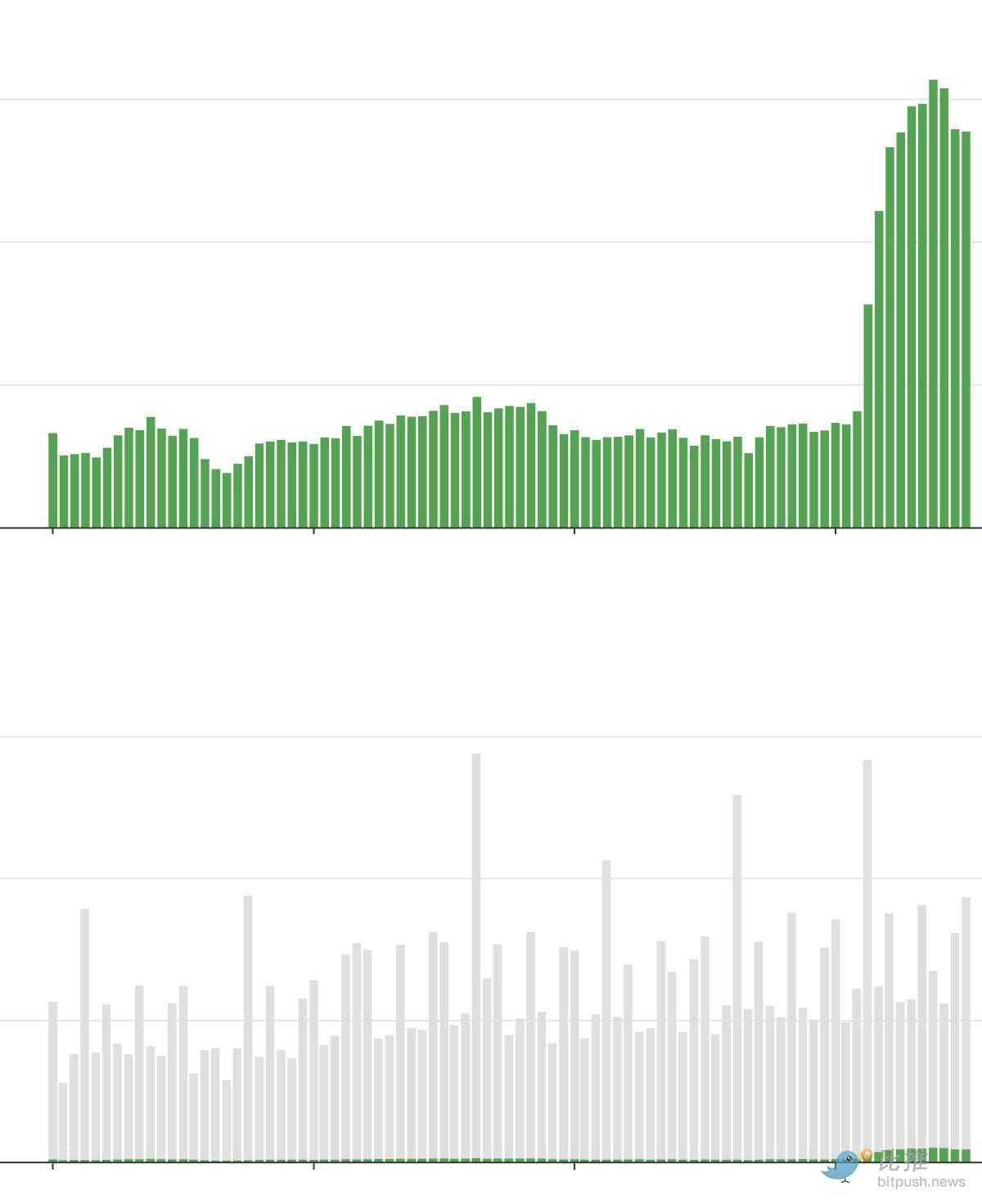
On the economic front, tariffs are generally seen as policies that raise import costs and potentially push up prices. Some Republicans私下 believe the drag on economic growth from tariffs cannot be ignored, especially with midterm elections approaching.

John Iselin, Deputy Director of Economic Analysis at Yale's Budget Lab, stated that Trump’s tariff policies have so far not achieved their goals of revitalizing U.S. manufacturing or reducing the trade deficit, but even economists who generally oppose import taxes acknowledge that tariffs have successfully increased fiscal revenue.

John said: "Frankly, compared to other viable revenue-raising options, tariffs are a more regressive way to raise revenue; there is a vast body of economic literature demonstrating the negative economic impacts of tariffs. But at the same time, we truly need significant fiscal revenue in the coming decades."

On the political front, Democrats have made "rising living costs" a primary attack point. A Democratic strategist in Pennsylvania told NBC that the price pressures from tariffs "have already had a real impact."

Meanwhile, the Trump camp emphasizes trade balance and manufacturing回流, viewing tariffs as a necessary means.

The core of this debate is not just trade itself, but the boundaries of U.S. presidential power during economic emergencies.

What Happens Next?

In the coming weeks, three issues warrant attention:

First, whether the newly announced 10% temporary tariff is implemented as scheduled and whether its scope expands;

Second, whether the refund issue enters judicial proceedings and the scale of its fiscal impact;

Third, whether Congress attempts to legislate to grant clearer tariff authority.

In the short term, markets may oscillate between "risk alleviation" and "policy volatility."

In the medium term, business decision-makers may delay some investment and expansion plans, awaiting policy clarity.

In the long term, this ruling could reshape the legal framework of U.S. trade policy.

A former federal trade official told Bloomberg: "What truly matters is not this particular tariff, but what the president can do in the future."

Author: Seed.eth


Twitter:https://twitter.com/BitpushNewsCN

Bitpush TG Discussion Group:https://t.me/BitPushCommunity

Bitpush TG Subscription: https://t.me/bitpush

Original link:https://www.bitpush.news/articles/7613431

Criptomoedas em alta

Perguntas relacionadas

QWhat was the U.S. Supreme Court's ruling regarding the tariffs imposed by the Trump administration?

AThe U.S. Supreme Court ruled 6:3 that the Trump administration's broad tariffs implemented under the International Emergency Economic Powers Act (IEEPA) lacked legal authorization.

QHow did President Trump respond to the Supreme Court's decision on tariffs?

APresident Trump responded by announcing a new 10% global tariff on all imports, to be implemented using a different legal authority, and he criticized the Supreme Court justices, calling them 'fools and lackeys'.

QWhat are the potential economic impacts of the Supreme Court's ruling on tariffs?

AThe ruling could lead to large-scale refunds potentially totaling hundreds of billions of dollars, and it creates policy uncertainty for businesses regarding future trade costs, which could disrupt global supply chains.

QWhat alternative legal mechanism is Trump planning to use to implement new tariffs?

ATrump plans to use Section 122 to implement a 10% global temporary tariff for 150 days, a provision rarely used historically that was designed as a short-term tool to balance trade deficits.

QHow did financial markets initially react to the Supreme Court's tariff decision?

AFinancial markets showed limited volatility initially, with U.S. stock indices rising as investors anticipated reduced corporate cost pressures. Cryptocurrencies like Bitcoin also saw short-term gains approaching $68,000, though the rally became more restrained after Trump announced new tariff plans.

Leituras Relacionadas

IPO Imminent, OpenAI Faces Major Personnel Upheaval

OpenAI, preparing for a potential IPO, is experiencing significant leadership turmoil. In mid-August 2026, longtime "GPU geek" Scott Gray quietly left, and within three days, Chief Operating Officer Brad Lightcap (8-year veteran) and Chief Revenue Officer Denise Dresser (8-month tenure) departed. This follows a broader exodus of at least 10 senior executives in 2026, including heads of product, safety, and ethics. Analysts view this as a strategic "surgery" to transform from a research lab into a sales-driven enterprise company before going public. Revenue now tilts toward enterprise clients, surpassing consumer income sooner than expected, with annualized revenue reaching $40 billion. The new CRO, Dali Rajic, is a veteran enterprise sales leader. Concurrently, OpenAI has disbanded independent safety teams like "Preparedness," which assessed catastrophic risks, integrating their functions into core research. Critics warn this removes dedicated "brakes" on AI development. The leadership vacuum raises questions about who is the clear second-in-command after former apps CEO Fidji Simo moved to an advisory role. Co-founder Greg Brockman appears to be consolidating power. As OpenAI races against rival Anthropic ($47B annualized revenue), it faces the dual challenge of commercial execution while managing the departure of foundational technical talent and ensuring responsible AI development remains a priority.

marsbitHá 1h

IPO Imminent, OpenAI Faces Major Personnel Upheaval

marsbitHá 1h

AI Can 'Have Moods Too'! New Research from USTC: Confusion and Anxiety Make AI Work Better

The article discusses research from the University of Science and Technology of China and Oxford, revealing that allowing AI to recognize and act upon simulated "internal emotions" can significantly improve its performance. The study demonstrates a coherent pairing between specific emotional states in AI agents and their subsequent skill choices. For instance, an agent feeling curious and desirous will search for products, while one feeling confused and tense will rephrase queries. This mirrors human decision-making influenced by emotions. Statistical validation showed a 76.5% semantic consistency in these pairings. Crucially, the research challenges the traditional view of AI errors as flaws to be eliminated. It found that "bad" emotions like confusion, tension, or frustration serve as useful metacognitive signals, indicating a mismatch between the current strategy and the environment. By responding to these signals, AI can proactively adjust before a failure occurs. This is particularly effective in complex tasks prone to failure. For example, in tasks like "heating an item" and "picking up two items," success rates surged from 9.6% to 56.9% and 4.4% to 31.3%, respectively, when using the emotion-driven skill selection method (EMOTION2SKILL). The AI's "nervous" state about a closed microwave, for instance, prompted it to check and open it first, preventing failure. The article also mentions related work from Tianjin University, which embeds emotional prediction into world models (Large Emotional World Model, LEWM), significantly improving prediction accuracy in human-centric environments. Removing emotional data was found to degrade performance even in unrelated logical reasoning tasks. These studies build on earlier findings, like those from Anthropic, that identifiable emotional representations exist within large language models (LLMs). The focus is shifting from philosophical debate about AI emotion to practically harnessing these internal states as functional signals to enhance AI robustness and capability.

marsbitHá 2h

AI Can 'Have Moods Too'! New Research from USTC: Confusion and Anxiety Make AI Work Better

marsbitHá 2h

Trading

Spot

Artigos em Destaque

Como comprar GAS

Bem-vindo à HTX.com!Tornámos a compra de GAS (GAS) simples e conveniente.Segue o nosso guia passo a passo para iniciar a tua jornada no mundo das criptos.Passo 1: cria a tua conta HTXUtiliza o teu e-mail ou número de telefone para te inscreveres numa conta gratuita na HTX.Desfruta de um processo de inscrição sem complicações e desbloqueia todas as funcionalidades.Obter a minha contaPasso 2: vai para Comprar Cripto e escolhe o teu método de pagamentoCartão de crédito/débito: usa o teu visa ou mastercard para comprar GAS (GAS) instantaneamente.Saldo: usa os fundos da tua conta HTX para transacionar sem problemas.Terceiros: adicionamos métodos de pagamento populares, como Google Pay e Apple Pay, para aumentar a conveniência.P2P: transaciona diretamente com outros utilizadores na HTX.Mercado de balcão (OTC): oferecemos serviços personalizados e taxas de câmbio competitivas para os traders.Passo 3: armazena teu GAS (GAS)Depois de comprar o teu GAS (GAS), armazena-o na tua conta HTX.Alternativamente, podes enviá-lo para outro lugar através de transferência blockchain ou usá-lo para transacionar outras criptomoedas.Passo 4: transaciona GAS (GAS)Transaciona facilmente GAS (GAS) no mercado à vista da HTX.Acede simplesmente à tua conta, seleciona o teu par de trading, executa as tuas transações e monitoriza em tempo real.Oferecemos uma experiência de fácil utilização tanto para principiantes como para traders experientes.

377 Visualizações TotaisPublicado em {updateTime}Atualizado em 2026.06.02

Como comprar GAS

Discussões

Bem-vindo à Comunidade HTX. Aqui, pode manter-se informado sobre os mais recentes desenvolvimentos da plataforma e obter acesso a análises profissionais de mercado. As opiniões dos utilizadores sobre o preço de GAS (GAS) são apresentadas abaixo.

活动图片