Strongest Earnings Report in 15 Years Fails to Mask Trillion-Dollar Debt; Oracle Rumored to Lay Off 30,000 in 'AI Replacement' Move—Can It Fill the Computing Power Pit?

marsbitPublicado em 2026-03-11Última atualização em 2026-03-11

Resumo

Oracle reported its strongest financial results in 15 years, with Q3 revenue reaching $17.2 billion, a 22% year-over-year increase, and cloud revenue surging 44%. The company's remaining performance obligations (RPO) grew 325% to $553 billion. Despite these gains, Oracle faces significant financial challenges, including negative free cash flow of -$13.18 billion over the past 12 months and total debt exceeding $100 billion, with an additional $248 billion in off-balance-sheet lease commitments. To fund its aggressive data center expansion—with capital expenditures projected to reach $50 billion this year—Oracle is reportedly planning to lay off up to 30,000 employees. Analysts estimate these cuts could save the company $8–10 billion in free cash flow. The shift toward an asset-light “AI infrastructure management” model, where clients prepay or supply their own GPUs, reduces balance sheet pressure but also transforms Oracle into a lower-margin service operator. Competitive pressures are mounting: key clients like OpenAI have canceled expansion plans due to rapid chip obsolescence, as NVIDIA’s new Vera Rubin chips offer significantly better performance. This reflects a broader industry trend where tech giants are cutting jobs to fund AI investments, transferring the cost of technological advancement onto their workforce.

Author: C Labs Crypto Watch

Today (March 10), Oracle released an earnings report that drew applause from Wall Street.
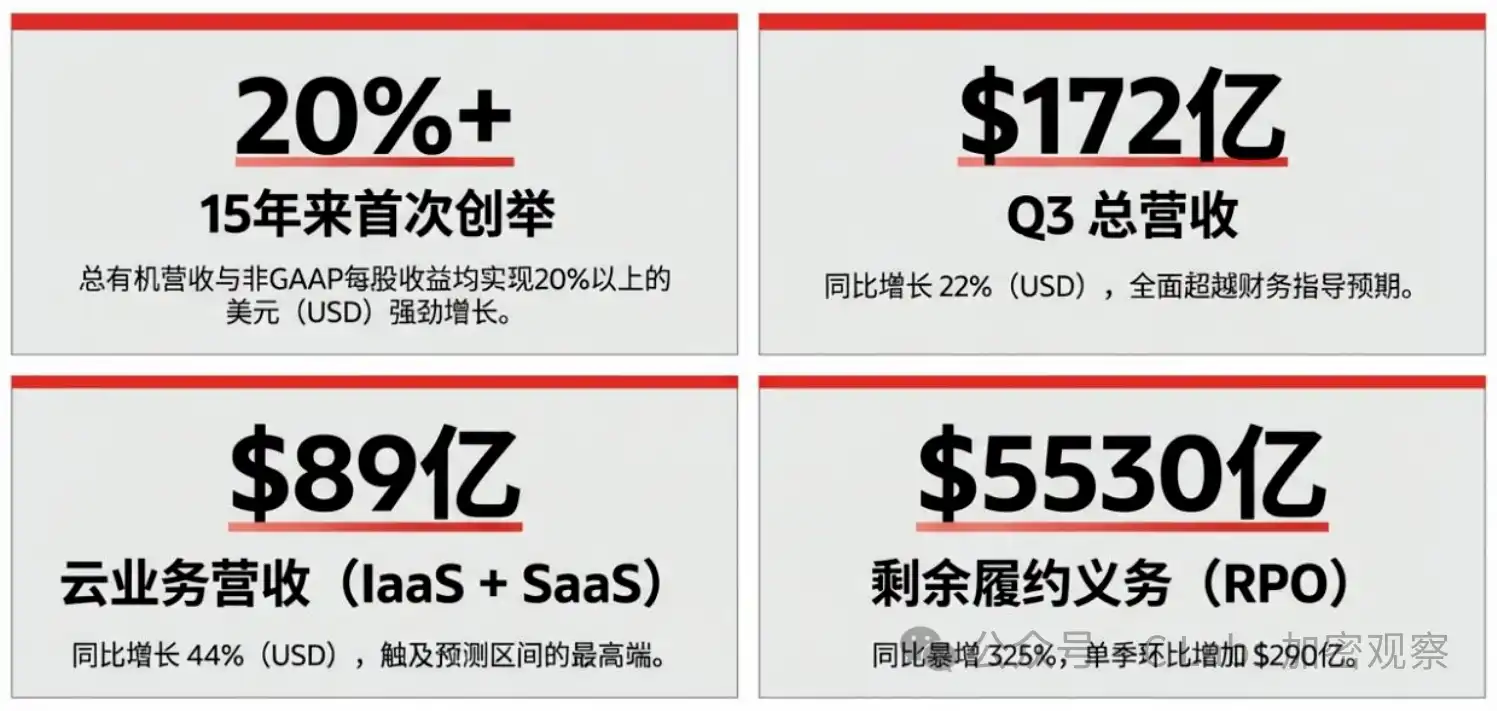
Total revenue reached $17.2 billion, a 22% year-over-year increase. Cloud business grew by 44%. The remaining performance obligation (RPO) surged to $553 billion, up 325% year-over-year. Oracle claimed this was the first time in 15 years that both revenue and profit achieved over 20% growth simultaneously. The stock price rose over 10% in after-hours trading.
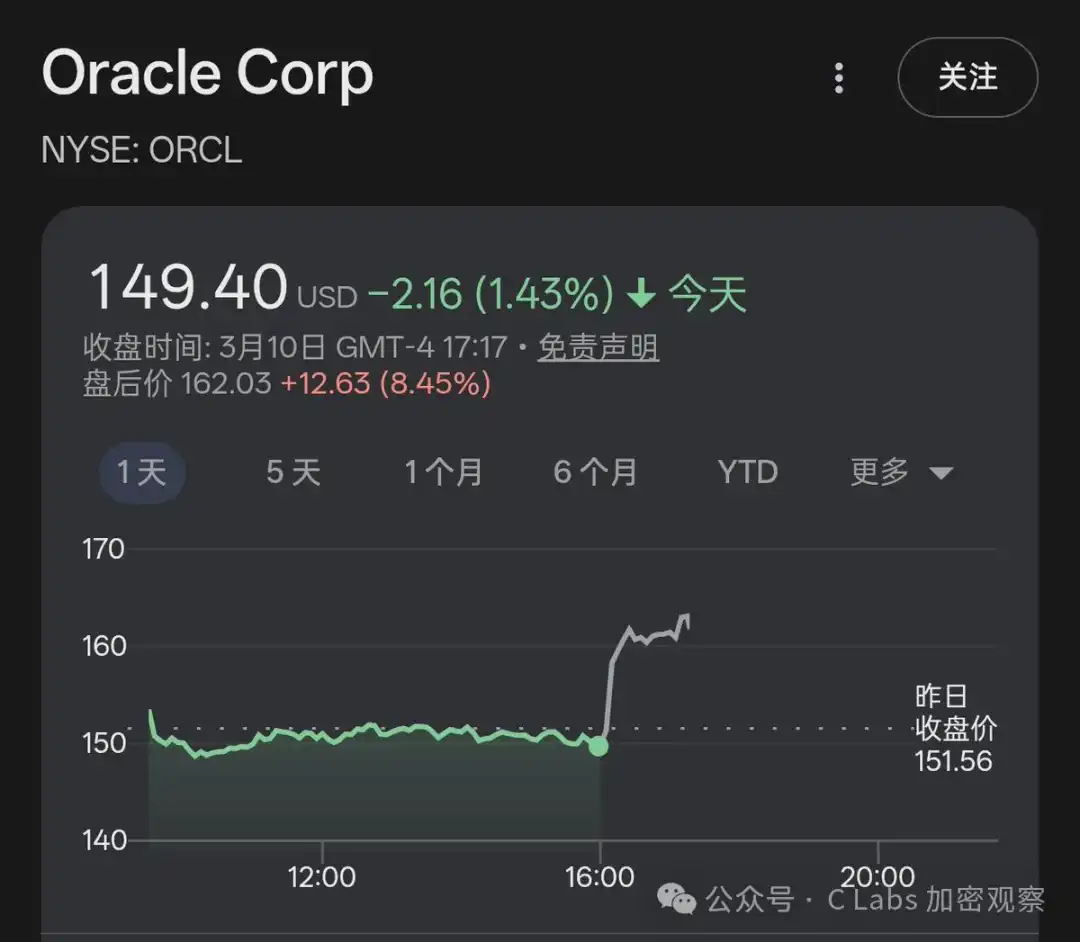
But in the same week, other news was also circulating:

  • Several banks are quietly withdrawing from Oracle's data center projects;

  • A private credit institution refused to finance Oracle's $10 billion data center;

  • Oracle is preparing to lay off tens of thousands of employees.

These two sets of news come from the same company and occurred during the same period.

01. Oracle's Financial Problems
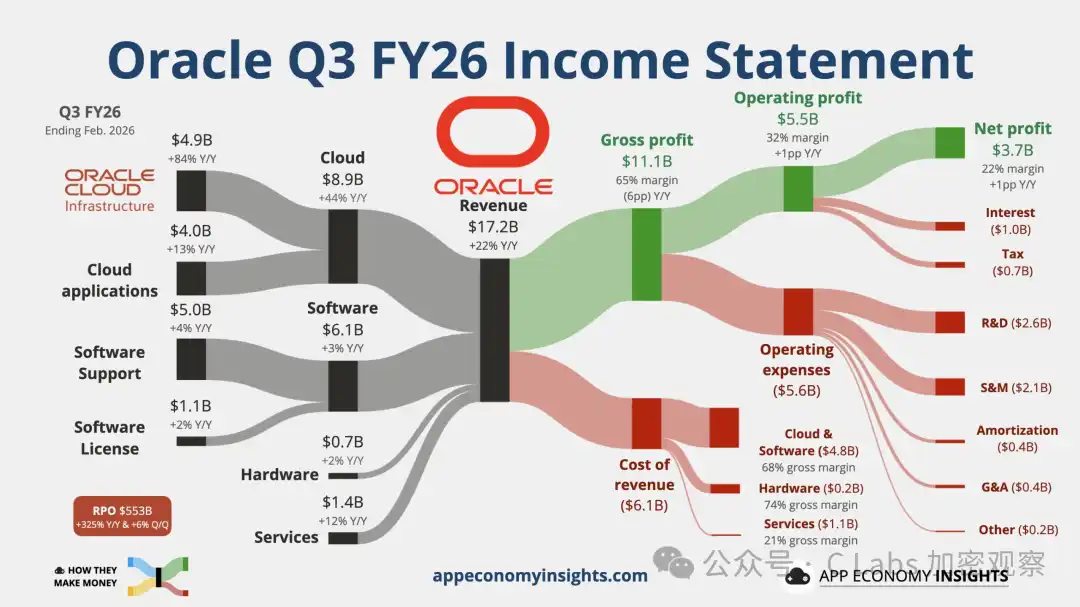
First, free cash flow is negative, and significantly so

Over the past 12 months, Oracle's free cash flow was negative $13.18 billion. Operating cash flow was positive at $23.5 billion, but capital expenditures consumed even more—the full-year capital expenditure guidance for this year is $50 billion, more than seven times that of two years ago. Revenue is growing, but so is accelerating.

Second, debt continues to expand

This quarter, Oracle raised an additional $30 billion through investment-grade bonds and convertible preferred stock, bringing total debt to over $100 billion. Hidden in the footnotes of the earnings report is an even larger number: $248 billion in off-balance-sheet lease commitments. This means Oracle currently owes over $100 billion in loans and has signed long-term leases totaling $248 billion over more than a decade—this money hasn't been paid yet, but it's already owed.
Oracle promised during the earnings call not to issue new debt in the 2026 calendar year. Publicly committing to "not borrowing new money this year"—this speaks volumes: creditors are becoming uneasy, and Oracle had to step in to reassure them.

Third, data centers become obsolete as soon as they're built!

The $553 billion RPO is the most attractive number in the entire earnings report, up 325% year-over-year. But Oracle explained the source of these contracts during the call: most of the equipment is either prepaid by customers or brought by customers themselves for Oracle to operate.
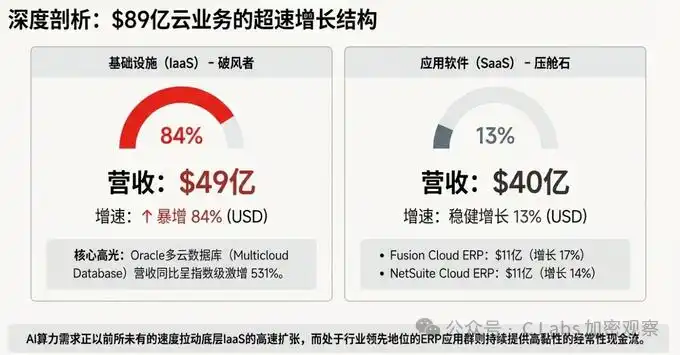
In plain terms: Oracle is increasingly playing the role of an "operator" rather than using its own money to build data centers and then leasing them out. This shift in business model reduces balance sheet pressure but also means Oracle is no longer a capital-intensive, high-margin computing power landlord; instead, it has become a computing power property management company. It's akin to the digital center version of "Wanda Commercial Management." Meanwhile, Oracle's largest customer, OpenAI, has canceled the expansion contract for its Texas data center.
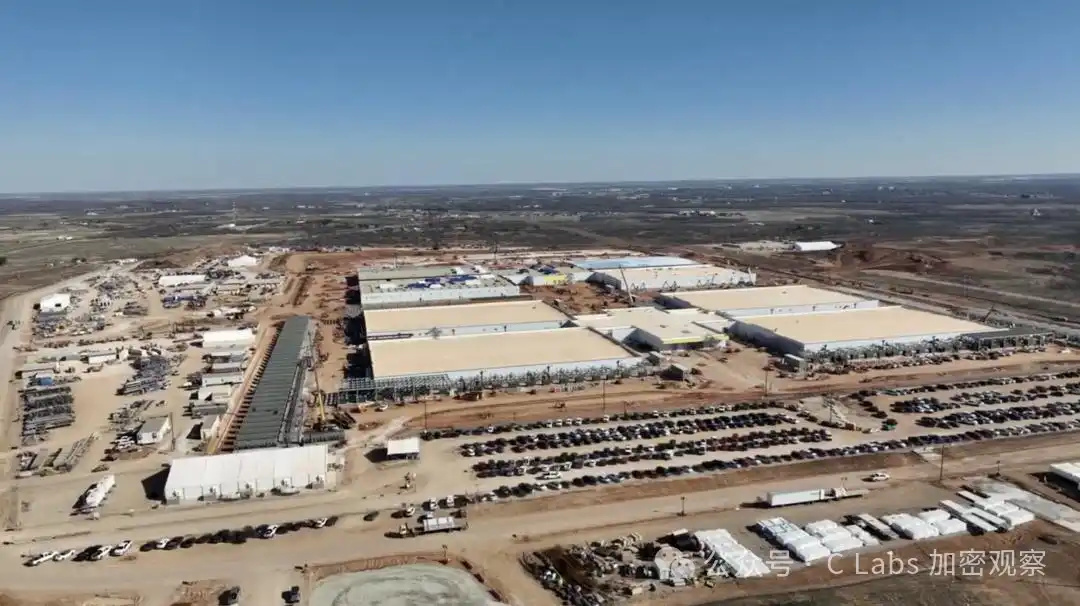
The reason is that Oracle's data centers are equipped with Blackwell chips, while Nvidia's next-generation Vera Rubin offers five times the inference performance of Blackwell. OpenAI doesn't want to be tied to an infrastructure that is about to become outdated. Data center construction cycles take 12 to 24 months, but chip update cycles have been compressed to 12 months by Jensen Huang—building a data center only for it to become obsolete upon completion is a contradiction with no simple solution. This is a significant pitfall for Oracle, which focuses on data center business but does not control chip production.

02. "Replacing Humans with AI": Oracle's Financial Self-Rescue Strategy

How to fill the financial gap? Oracle has found a politically correct answer for the current times: layoffs, justified by AI replacement.

Oracle currently has about 162,000 employees. A TD Cowen research report estimates that Oracle will lay off 30,000 employees, which could free up $8 to $10 billion in free cash flow for Oracle—specifically to fill the funding gap caused by data center expansion.

The logic is very clear: lay off workers and use the saved money to build data centers that run AI.

03. Tech Giants Rushing to Emulate Layoffs

Oracle is not an isolated case. Any tech company that has over-invested in the AI arms race and is under cash flow pressure faces the same bill. "Replacing humans with AI" provides a financially reasonable, narratively legitimate, and shareholder-acceptable way out.

Currently, North American giants like Amazon and Meta are adopting this strategy, and the capital market has welcomed it.

The bill for the AI arms race ultimately has to be paid by someone.

It's just that, once again, it's the employees who are footing the bill.

Related reading: Block Lays Off Nearly Half, Soars 24%! CEO: AI Improves Efficiency, Most Companies Will Make Similar Adjustments in the Next Year


Perguntas relacionadas

QWhat were the key financial highlights from Oracle's recent earnings report?

AOracle reported total revenue of $17.2 billion, a 22% year-over-year increase. Its cloud business grew by 44%, and its Remaining Performance Obligations (RPO) surged 325% to $553 billion. The company stated it was the first time in 15 years that both revenue and profit grew by over 20% simultaneously, leading to a more than 10% increase in its stock price after hours.

QWhat major financial challenges does Oracle face despite its strong revenue growth?

AOracle faces significant financial challenges, including negative free cash flow of -$13.18 billion over the past 12 months. Its total debt has exceeded $100 billion, and it has an additional $248 billion in off-balance-sheet lease commitments. Capital expenditures are projected to be $50 billion for the year, which is seven times higher than two years ago.

QWhat is the reported reason behind Oracle's potential plan to lay off 30,000 employees?

AAccording to a TD Cowen research report, Oracle plans to lay off approximately 30,000 employees to free up $8 to $10 billion in free cash flow. This financial strategy, framed as 'AI replacement,' aims to cover the funding gap created by the massive expansion of its data centers.

QHow is Oracle's business model for its data centers changing, as mentioned in the article?

AOracle's business model is shifting from building and renting out its own data centers to acting more as a 'operator' or 'property management' company for compute power. A significant portion of its $553 billion RPO comes from contracts where equipment is either pre-paid by customers or where customers provide their own GPUs for Oracle to operate, reducing pressure on its balance sheet but also transforming it into a lower-margin service provider.

QWhy did OpenAI cancel its data center expansion contract with Oracle in Texas?

AOpenAI canceled its data center expansion contract with Oracle because the facility was equipped with Blackwell chips. Nvidia's next-generation Vera Rubin chips, which offer five times the inference performance of Blackwell, made OpenAI reluctant to be locked into an infrastructure that would soon become outdated, highlighting the rapid pace of chip innovation in the AI industry.

Leituras Relacionadas

From Gas Limit to 'Keyed Nonces', How to Understand the Next Step in Ethereum Scalability?

Ethereum’s scalability efforts are shifting toward a user-centric approach—focusing not only on higher TPS, but on translating technical upgrades into lower costs, smoother operations, and better wallet experiences. Two recent developments highlight this direction: - **Raising the Gas Limit to 200 million**: Following the Fusaka upgrade that increased it to 60 million, a consensus has formed around a potential future increase to 200 million. This would boost Ethereum’s execution capacity, but it is planned alongside other upgrades—such as ePBS, Block-Level Access Lists (BAL), and EIP-8037—to manage state growth and keep node operation viable for average participants. - **Keyed Nonces (EIP-8250)**: This proposal aims to improve how transactions are queued. Instead of a single linear nonce per account, it introduces multiple independent nonce domains. This prevents different types of transactions—such as private payments, session keys, or batch operations—from blocking each other. Vitalik Buterin views this as a foundational step toward better privacy support and more flexible state scalability. Together, these upgrades are part of a broader move to push complexity from wallets, DApps, and relays back into the protocol layer. For everyday users, this means future Ethereum interactions could become less congested, more intuitive, and safer—especially as core improvements in account abstraction, cross-L2 interoperability, and node decentralization continue to progress. Ultimately, Ethereum is evolving to handle not just more transactions, but more varied and complex on-chain use cases while preserving its decentralized foundation.

marsbitHá 13m

From Gas Limit to 'Keyed Nonces', How to Understand the Next Step in Ethereum Scalability?

marsbitHá 13m

Leaving OpenAI, How Much Has Their Net Worth Increased?

Former OpenAI employees have collectively accrued near-trillion dollar valuations through ventures and investments, charting AI's future. The article highlights two main paths: founding high-value companies like Anthropic and Perplexity, or applying insider insights as investors. Leopold Aschenbrenner exemplifies the investor path. After being fired from OpenAI, he leveraged firsthand knowledge of AI's massive energy demands to make hugely successful public market bets on nuclear and fuel cell companies, practicing "cross-industry cognitive arbitrage." Other alumni, like the Zero Shot VC fund founders, use their technical foresight for early-stage investing. Their key advantage lies not just in picking winners, but in knowing which technical approaches are likely dead ends—a "veto list" derived from internal OpenAI experience. Angel investing within the network, as seen with Mira Murati and Sam Altman, operates on deep, pre-existing understanding of a founder's capabilities, reducing due diligence to near zero. This creates an ecosystem bound by a shared belief in AGI's imminent arrival, differing from networks like the "PayPal Mafia" which were built on shared past struggles. The shift of these builders to investors signals a profound conviction: their situational awareness of the AI landscape is now so clear that deploying capital based on that judgment is more efficient than building themselves. They are allocating bets on the future they helped shape from the inside.

marsbitHá 24m

Leaving OpenAI, How Much Has Their Net Worth Increased?

marsbitHá 24m

Countdown to the AI Bull Market? Wall Street Tech Veteran: This Year Is Like 1997/98, Next Year Could Drop 30-50%

"AI Bull Market Countdown? Wall Street Veteran: This Year Feels Like 1997/98, Next Year Could Drop 30-50%" In an interview, veteran tech analyst Dan Niles draws parallels between the current AI boom and the 1997-98 period of the internet boom, suggesting the bull run isn't over yet. The core new driver is identified as "Agentic AI," which performs multi-step tasks and consumes vastly more computing power than conversational AI. This shift is expected to boost demand for cloud infrastructure and benefit CPU makers like Intel and AMD, potentially pressuring GPU leader Nvidia. However, Niles warns of significant short-term overbought conditions in semiconductors. His central warning is for a potential major market correction of 30-50% starting in early 2027. Drivers include a slowdown from high growth comparables, the outsized capital demands of companies like OpenAI, and a wave of massive tech IPOs sucking liquidity from the market. A J.P. Morgan survey of 56 global investors aligns with this view, finding that 54% expect a >30% U.S. stock correction by 2027. Among mega-cap tech, Niles favors Google due to its full-stack AI capabilities and cash flow, expresses concern about Meta's user growth, and sees potential for Apple's AI Siri and foldable iPhone. Niles advises investors to be nimble, hold significant cash, and closely monitor the conflicting signals from equities, oil prices, and bond yields, which he believes cannot all be correct simultaneously.

marsbitHá 57m

Countdown to the AI Bull Market? Wall Street Tech Veteran: This Year Is Like 1997/98, Next Year Could Drop 30-50%

marsbitHá 57m

Trading

Spot
Futuros

Artigos em Destaque

Como comprar MOVE

Bem-vindo à HTX.com!Tornámos a compra de Movement (MOVE) simples e conveniente.Segue o nosso guia passo a passo para iniciar a tua jornada no mundo das criptos.Passo 1: cria a tua conta HTXUtiliza o teu e-mail ou número de telefone para te inscreveres numa conta gratuita na HTX.Desfruta de um processo de inscrição sem complicações e desbloqueia todas as funcionalidades.Obter a minha contaPasso 2: vai para Comprar Cripto e escolhe o teu método de pagamentoCartão de crédito/débito: usa o teu visa ou mastercard para comprar Movement (MOVE) instantaneamente.Saldo: usa os fundos da tua conta HTX para transacionar sem problemas.Terceiros: adicionamos métodos de pagamento populares, como Google Pay e Apple Pay, para aumentar a conveniência.P2P: transaciona diretamente com outros utilizadores na HTX.Mercado de balcão (OTC): oferecemos serviços personalizados e taxas de câmbio competitivas para os traders.Passo 3: armazena teu Movement (MOVE)Depois de comprar o teu Movement (MOVE), armazena-o na tua conta HTX.Alternativamente, podes enviá-lo para outro lugar através de transferência blockchain ou usá-lo para transacionar outras criptomoedas.Passo 4: transaciona Movement (MOVE)Transaciona facilmente Movement (MOVE) no mercado à vista da HTX.Acede simplesmente à tua conta, seleciona o teu par de trading, executa as tuas transações e monitoriza em tempo real.Oferecemos uma experiência de fácil utilização tanto para principiantes como para traders experientes.

291 Visualizações TotaisPublicado em {updateTime}Atualizado em 2025.03.21

Como comprar MOVE

Discussões

Bem-vindo à Comunidade HTX. Aqui, pode manter-se informado sobre os mais recentes desenvolvimentos da plataforma e obter acesso a análises profissionais de mercado. As opiniões dos utilizadores sobre o preço de MOVE (MOVE) são apresentadas abaixo.

活动图片