Starting from 9.9 RMB, Three Major Carriers Enter the Token Business. Will Using AI Be Like Paying a Phone Bill in the Future?

marsbitPublicado em 2026-05-19Última atualização em 2026-05-19

Resumo

China's three major telecom operators—China Telecom, China Mobile, and China Unicom—have officially entered the AI token business, launching low-cost token packages for individuals and businesses. China Telecom introduced six trial commercial token plans. For individuals and families, prices start at 9.9 yuan/month for 10 million tokens. For developers and SMEs, plans range from 39.9 yuan/month for 15 million tokens to 299.9 yuan/month for 150 million tokens. Shanghai Mobile launched a token service offering 400,000 tokens for 1 yuan, payable via phone bill. It also started an "AI Hui Shen Huo" upgrade plan for smart home products. China Unicom's cloud division released personal and team token plans. Personal plans start at 15 yuan/month for 6 million tokens, while team plans begin at 198 yuan/month (approximately 200 million tokens). Local branches in Sichuan and Shanghai have also rolled out their own token packages and AI strategies. This move marks a shift for operators, repackaging AI model usage (tokens) into familiar, subscription-based services like data plans. By leveraging their vast user base, billing systems, and distribution channels, they aim to make AI access as simple and widespread as paying a phone bill, potentially establishing tokens as a new fundamental utility.

ZHIDONGSHE, May 18 — In recent days, China Telecom, China Mobile, and China Unicom have successively launched Token packages and related AI services, selling large model call volume to users such as individuals, families, developers, and small and medium-sized enterprises.

This marks the first formal entry of the three major carriers into the Token business, which was previously dominated by large model manufacturers, internet giants, and cloud service providers.

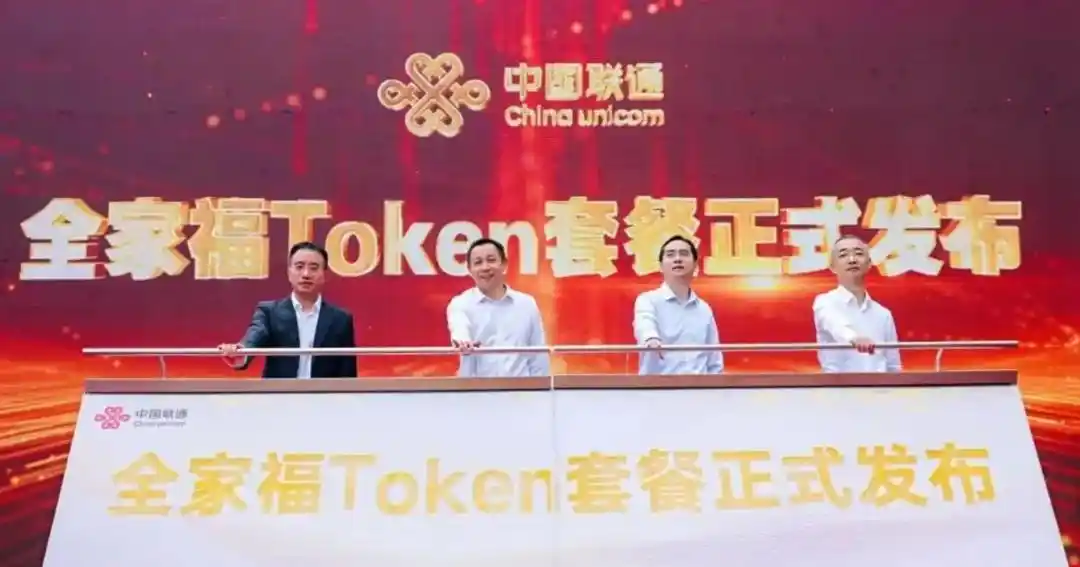
Yesterday, China Telecom launched a series of trial commercial Token packages. Personal and family customers can obtain 10 million Tokens for as low as 9.9 RMB/month; on the same day, Shanghai Mobile launched a Token general service, where 1 RMB can buy 400,000 Tokens, supporting payment via phone bill; Unicom Cloud recently collaborated with Unicom Yuanjing to launch Token Plan Personal Edition and Team Edition dual-track products. China Unicom's Sichuan and Shanghai branches also released local Token packages and AI strategy upgrades.
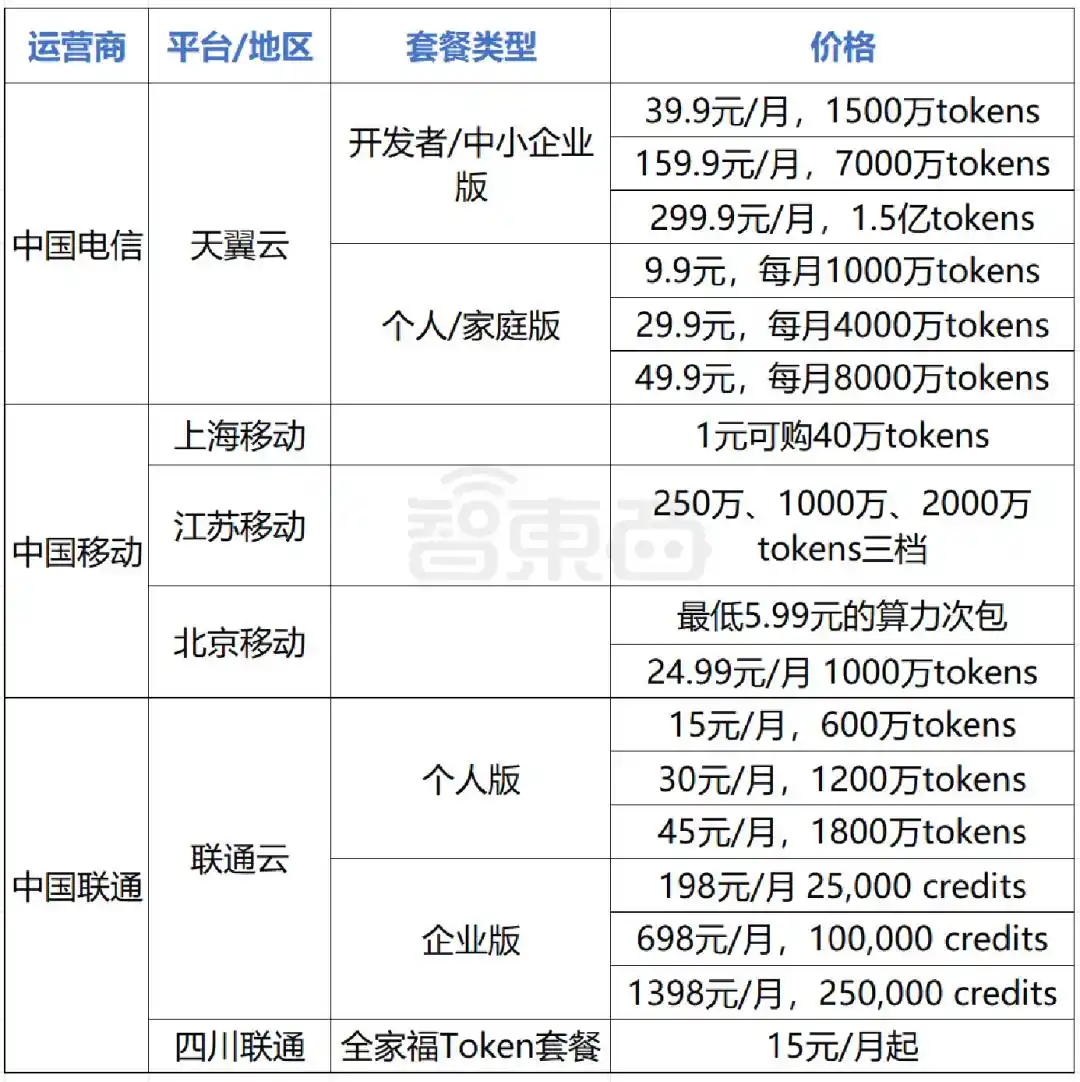
Comparison of Token Packages from the Three Major Carriers (Chart by ZHIDONGSHE)

The Token packages from the three major carriers have lowered the price threshold to tens of RMB or even single-digit RMB. China Telecom and China Mobile adopt tiered sales for individuals and enterprise teams, while China Mobile and China Unicom introduce special policies for different provinces.

It can be seen that all three major carriers are packaging large model call volume from a backend cloud platform capability into a basic service similar to data packages or broadband packages. In the past, data traffic was one of the core businesses for carriers. Now, in the AI era, the three major carriers launching Token packages are, to some extent, attempting to get a share in the Token consumption track, and may even become new primary operators leveraging their massive customer base.

01. China Telecom Launches Six-Tier Token Packages, Starting from 9.9 RMB/Month

Yesterday, China Telecom launched a series of trial commercial Token packages, offering six tiers of Token Plans for developers and SME customers, as well as personal and family customers, along with uplink speed boost packages for broadband and security protection packages.

For developers and SME customers, China Telecom provides an integrated service of "Token + Connectivity + Security", introducing three tiers of Token Plans: Basic, Professional, and Premium, with monthly fees of 39.9 RMB, 159.9 RMB, and 299.9 RMB, corresponding to 15 million Tokens, 70 million Tokens, and 150 million Tokens per month, respectively. This package integrates China Telecom's Xingchen Large Model and GLM-5 and other mainstream domestic large models, suitable for scenarios like AI programming and creation, code development and debugging, and intelligent agent setup and operation.

For personal and family customers, China Telecom launched three tiers of Token Plans: Light, Standard, and Premium, with monthly fees of 9.9 RMB, 29.9 RMB, and 49.9 RMB, corresponding to 10 million Tokens, 40 million Tokens, and 80 million Tokens per month, respectively. This package integrates China Telecom's Xingchen Large Model and DeepSeekV3.2 and other ecosystem large models, suitable for scenarios like daily office assistance, learning and creation, and copywriting.
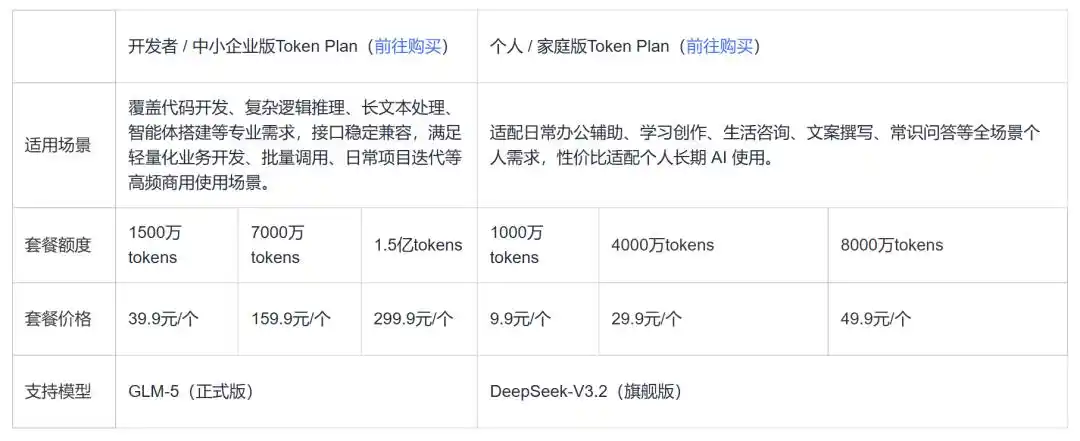
China Telecom Launches 6-Tier Token Plan (Image Source: Tianyi Cloud)

Users can subscribe through channels like the Tianyi Cloud official website and the China Telecom App. Customers who already have local hardware terminals (e.g., Mac Mini) can set their own API keys for applications like China Telecom's TeleClaw, third-party OpenClaw, and Hermes; customers without local hardware terminals can directly use them by purchasing Tianyi AI Cloud Computers with built-in intelligent agents like TeleClaw, OpenClaw, and Hermes.

Additionally, China Telecom will launch Tianyi Token Coins and Token Benefits for Token ecosystem partners. Customers can use points to exchange Token volume packages and AI applications. China Telecom will also collaborate with more AI ecosystem application partners to operate Token benefits.

02. Shanghai Mobile Launches Token General Service, 1 RMB Buys 400,000 Tokens

According to a report from the Shanghai Municipal Commission of Economy and Informatization, on May 17, China Mobile Shanghai Company launched a Token general service at the World Telecommunication Day press conference and jointly launched the co-branded WorkBuddy Intelligent Agent Workbench with Tencent. 1 RMB can buy 400,000 Tokens, supporting phone bill payment and multi-model universality.

Shanghai Mobile also simultaneously launched the "AI Hui Shen Huo" upgrade plan, introducing products like Super Portable Wi-Fi, Dual Vivid Jingcai Audio-Visual, AI Smart Viewing, and Love Home Lingxi Screen for citizens, accelerating the entry of embodied intelligence and Token inclusive services into home scenarios.
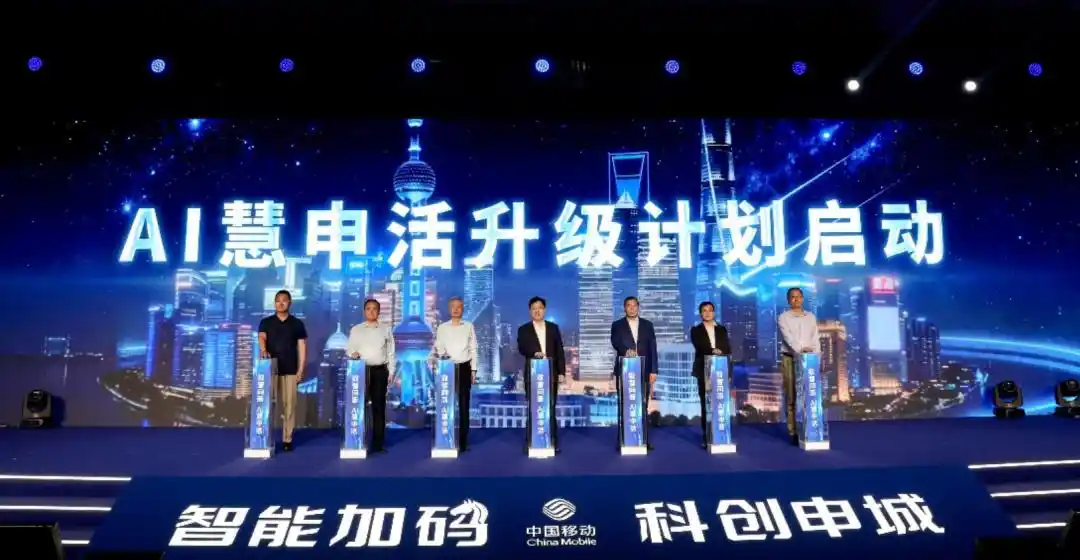
Shanghai Mobile Launches "AI Hui Shen Huo" Upgrade Plan (Image Source: Shanghai Securities News)

Previously, some local branches of China Mobile had conducted pilot AI Token packages. Jiangsu Mobile launched three packages of 2.5 million, 10 million, and 20 million Tokens, each valid for 1 month; Beijing Mobile launched a 5.99 RMB computing power sub-package and a 24.99 RMB/10 million Token monthly package for cloud computer users. Overall, China Mobile is accelerating the launch of AI computing power services through pilot projects by local branches and the group's Token operation ecosystem.

03. China Unicom Advances with Cloud Products and Local Packages, Personal Edition Starting from 15 RMB/Month

Recently, Unicom Cloud, in collaboration with Unicom Yuanjing, officially launched the Token Plan Personal Edition and Team Edition. This Token Plan relies on the Yuanjing MaaS platform, self-developed intelligent agent toolkit, and AI-selected Unicom Cloud computing power, covering scenarios from personal light office work, content creation, and student learning to enterprise R&D, government and enterprise office work, and industry digitization.

The Token Plan is divided into Personal Edition and Team Edition, with a total of 6 tiers. The Personal Edition targets users like independent creators, professionals, students, and self-media bloggers, offering three packages: Lite, Pro, and Max, priced at 15 RMB/month (including 6 million tokens), 30 RMB/month (including 12 million tokens), and 45 RMB/month (including 18 million tokens) respectively.

The Team Edition targets enterprise R&D teams, government and enterprise office teams, and industry solution teams, offering three packages: Team Lite, Team Pro, and Team Max, priced at 198 RMB/month (including 25,000 credits), 698 RMB/month (including 100,000 credits), and 1398 RMB/month (including 250,000 credits) respectively.

The Credits consumed per instance are dynamically determined by factors such as model type, token usage (input/output/cache), thinking mode, and tool calls. Taking DeepSeek-V4-Pro as an example: 25,000 credits are approximately 200 million tokens; 100,000 credits are approximately 800 million tokens; 250,000 credits are approximately 2 billion tokens.
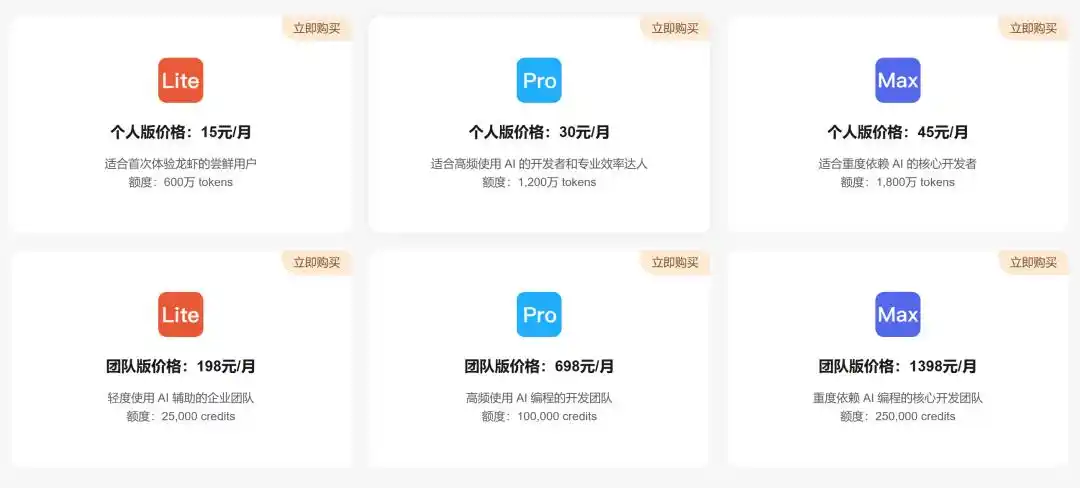
Unicom Cloud Launches Personal and Team Edition Token Plans (Image Source: Unicom Cloud)

In terms of models, the Personal Edition supports DeepSeek V4-Flash and MiniMax-M2.5, while the Team Edition unlocks DeepSeek V4 and provides models such as DeepSeek V4-Flash, DeepSeek V4-Pro, and MiniMax-M2.5.

Additionally, Unicom's self-developed office assistant UniClaw can handle tasks like file processing, document generation, data analysis, deep research, and multimodal content processing, and supports local private deployment.

Besides the unified products from Unicom Cloud, local branches of China Unicom are also simultaneously promoting the landing of Token packages. Yesterday, China Unicom Sichuan Branch released the "Family Token Package", with a fixed monthly fee starting as low as 15 RMB. Combined with Unicom Cloud Desktop and the WorkBuddy intelligent agent application, it allows users to process files and generate reports in the cloud without complex technical deployment.
Sichuan Unicom Releases Family Token Package

On May 16, China Unicom Shanghai Branch comprehensively upgraded the "UniAI·Zhi Lian Shen Cheng" artificial intelligence strategy, building a "National Chip, National Model, National Cloud" security foundation. Simultaneously, relying on ten-thousand-card domestic computing power and self-developed scheduling platforms, it launched three types of computing power services, released multiple Token products and integrated packages, and initiated the "Computing Power Inclusive Season".

04. Conclusion: Carriers Collectively Launch Token Packages, AI Computing Power Enters the Mass Market

The consecutive launch of Token packages by the three major carriers signifies, to some extent, that AI computing power is gradually transforming into a basic service for the masses. Compared to the traditional API calling model, carriers' advantages lie in user accounts, phone bill payment, broadband and mobile network access, and service channels targeting families and SMEs.

As Tokens are packaged into monthly packages, instance packages, benefit packages, and integrated packages, ordinary users no longer need to understand model platforms and API calls to use AI. For carriers, Tokens may also become a new category of basic billing unit following voice calls, data traffic, and broadband.

This article is from the WeChat public account "Zhixidongshe" (ID: zhidxcom), author: Yang Jingli, editor: Li Shuiqing


Perguntas relacionadas

QWhat are the price ranges and token allowances for China Telecom's token plans?

AChina Telecom offers six trial commercial token plans. For developers and SMEs, the Basic, Professional, and Premium plans cost 39.9, 159.9, and 299.9 yuan per month, providing 15 million, 70 million, and 150 million tokens respectively. For individual and family users, the Lite, Enjoy, and Premium plans cost 9.9, 29.9, and 49.9 yuan per month, offering 10 million, 40 million, and 80 million tokens respectively.

QHow is Shanghai Mobile promoting AI token services?

AShanghai Mobile has launched a token service where 1 yuan can purchase 400,000 tokens, and this supports payment via phone bill. They have also partnered with Tencent to launch a co-branded WorkBuddy smart agent workbench. Furthermore, they initiated the 'AI for a Better Shanghai Life' upgrade plan, introducing products like Super Portable Wi-Fi and AI Smart Viewing to bring embodied intelligence and token services into household scenarios.

QWhat are the main differences between China Unicom's 'Personal Edition' and 'Team Edition' token plans?

AChina Unicom's 'Personal Edition' is aimed at individual users like creators and students, with three tiers: Lite (15 yuan/month, 6 million tokens), Pro (30 yuan/month, 12 million tokens), and Max (45 yuan/month, 18 million tokens). The 'Team Edition' targets business teams, with tiers offering Credits: Team Lite (198 yuan/month, 25,000 credits), Team Pro (698 yuan/month, 100,000 credits), and Team Max (1398 yuan/month, 250,000 credits). Credits dynamically translate to tokens based on model usage; for example, 25,000 credits roughly equals 200 million tokens for the DeepSeek-V4-Pro model.

QWhat strategic advantage do telecom operators have in the AI token market?

ATelecom operators like China Telecom, China Mobile, and China Unicom possess significant strategic advantages for the AI token market. These include their massive existing customer bases, established billing and payment systems (like phone bill integration), extensive service channels for households and SMEs, and their core infrastructure in broadband and mobile networks. This allows them to package AI token usage as simple, accessible monthly plans, similar to data or voice packages, lowering the technical barrier for mainstream adoption.

QWhat does the article suggest about the future of AI compute power consumption?

AThe article suggests that the entry of major telecom operators into the token business signals a shift where AI compute power is becoming a mainstream, consumer-facing utility service. By packaging tokens into monthly bundles, pay-per-use packs, and integrated service plans, operators are making AI model usage as straightforward as paying for mobile data or a phone plan. This trend indicates that tokens could evolve into a new fundamental billing unit for operators, alongside traditional services like voice, data, and broadband.

Leituras Relacionadas

Why Not Short Even When Bearish? Munger Did the Math on a 'Losing Trade'

Why Not Short Even When Bearish? Charlie Munger's Calculated "Loss-Making Account" Many traders, drawn to speculative tools like futures contracts, often face repeated failures. As the article notes, unless one is a genius, such instruments should be avoided for long-term profit-seeking. Similarly, the practice of short selling is viewed with caution. The author firmly states a policy of not shorting, even when bearish, preferring to simply wait. The core reason? Successful short selling requires exceptionally difficult conditions to profit. Legendary investors Warren Buffett and Charlie Munger have themselves reflected on painful short-selling experiences. Munger highlights two critical flaws in the mathematical logic of shorting: 1. Asymmetrical Risk/Reward: A long position has a maximum loss of 100% but unlimited upside. A short position caps profit at 100% (if a stock falls to zero) but carries theoretically unlimited loss potential. 2. The "Promoter" Problem: Fraudulent or struggling companies can prolong their decline. As Munger said, "You can run out of money before the promoter runs out of ideas," meaning short sellers may be forced to cover positions at a loss before the company's true fate unfolds. The article cites Stanley Druckenmiller, a famed hedge fund manager. He once shorted 12 companies that all eventually went bankrupt. However, intense market rallies forced him to cover his positions within three weeks, resulting in massive losses—$200 million of his capital plus an additional $600 million. He concluded he likely never made money shorting in his career. His experience perfectly illustrates Munger's points: facing unlimited losses and being wiped out before being proven right. The conclusion is clear: for most investors, complex instruments like short selling and derivatives are not viable paths to stable, long-term gains. Self-reflection is advised before repeatedly wasting time and capital on such speculative strategies.

marsbitHá 17m

Why Not Short Even When Bearish? Munger Did the Math on a 'Losing Trade'

marsbitHá 17m

For Hedging, Buy Gold and Oil; For Explosive Growth, Buy AI; Bitcoin, the 'Outdated' Asset, Enters a Bear Market

Bitcoin’s price has recently fallen sharply, hitting a two-month low near $66,000, with Ethereum also dropping to a three-month low. While surface explanations point to ETF outflows, geopolitical tensions, and corporate selling, a deeper issue is emerging: Bitcoin is losing a crucial asset competition. For years, Bitcoin thrived in a low-rate environment where investors sought alternatives amid inflation fears and dissatisfaction with traditional options. Now, the market landscape has shifted, leaving Bitcoin stuck in an "awkward middle ground," facing challenges on three fronts: 1. **As an inflation hedge, gold is winning.** Investors worried about persistent inflation are turning to tangible assets like gold, energy stocks, and commodity producers, which offer more direct pricing power and physical backing. 2. **For growth exposure, AI is winning.** Those seeking high growth now favor AI-related companies with actual revenues and profits, an area where Bitcoin's lack of cash flow puts it at a disadvantage. 3. **Within crypto, infrastructure and stablecoins are winning.** Even investors wanting crypto exposure have alternatives like exchanges, stablecoin issuers, and tokenization firms, whose performance is directly tied to real-world adoption and offers clearer operational leverage. The recent market reaction to inflation warnings highlights this shift. Instead of boosting Bitcoin as "digital gold," such news now drives flows toward traditional inflation-sensitive assets. Therefore, recent events like ETF outflows and corporate selling are seen not as causes, but as symptoms of this new reality. Capital has more compelling options, and investors are becoming more selective. The emerging bear case for Bitcoin is no longer about it being a fraud or failed technology, but rather that **scarcity alone is no longer enough**. It is no longer seen as the best hedge, the best growth asset, or the only crypto play.

marsbitHá 33m

For Hedging, Buy Gold and Oil; For Explosive Growth, Buy AI; Bitcoin, the 'Outdated' Asset, Enters a Bear Market

marsbitHá 33m

SaaS Battle Royale: The Survivors Who Win All Share One Common Trait

**Summary** The AI revolution has triggered a "SaaS apocalypse," forcing a brutal market shakeout. The key dividing line is the pricing model. Companies like Snowflake and Datadog, which charge based on consumption (e.g., data processed or compute used), are thriving. AI workloads actively *generate* more demand for their services, fueling growth. Datadog's accelerating revenue is a prime example. Microsoft and Palantir, as platform/ecosystem players, also benefit by acting as essential channels for AI deployment. In contrast, traditional SaaS firms built on per-seat or per-task licensing (e.g., Intuit, Adobe) face direct pressure, as AI threatens to automate the very human tasks their software supports. Companies like Salesforce, a per-seat giant, are caught in the middle. While showing strong AI monetization (e.g., its Agentforce platform) and experimenting with consumption-based "Flex Credits," its stock remains under pressure, illustrating that the market rewards *completed* transitions, not just the intent. The recent Microsoft Build conference underscored key trends: AI is evolving from an assistant to an autonomous "agent," and platform providers like Microsoft are consolidating their control. The market's recovery is highly selective, focused on identifying which companies are "fed by AI" versus "eaten by AI." Future focus will be on the diffusion of this recovery to transforming companies and the real-world adoption data of AI agents like Microsoft Copilot.

marsbitHá 50m

SaaS Battle Royale: The Survivors Who Win All Share One Common Trait

marsbitHá 50m

Trading

Spot
Futuros

Artigos em Destaque

Como comprar BILL

Bem-vindo à HTX.com!Tornámos a compra de Billions Network (BILL) simples e conveniente.Segue o nosso guia passo a passo para iniciar a tua jornada no mundo das criptos.Passo 1: cria a tua conta HTXUtiliza o teu e-mail ou número de telefone para te inscreveres numa conta gratuita na HTX.Desfruta de um processo de inscrição sem complicações e desbloqueia todas as funcionalidades.Obter a minha contaPasso 2: vai para Comprar Cripto e escolhe o teu método de pagamentoCartão de crédito/débito: usa o teu visa ou mastercard para comprar Billions Network (BILL) instantaneamente.Saldo: usa os fundos da tua conta HTX para transacionar sem problemas.Terceiros: adicionamos métodos de pagamento populares, como Google Pay e Apple Pay, para aumentar a conveniência.P2P: transaciona diretamente com outros utilizadores na HTX.Mercado de balcão (OTC): oferecemos serviços personalizados e taxas de câmbio competitivas para os traders.Passo 3: armazena teu Billions Network (BILL)Depois de comprar o teu Billions Network (BILL), armazena-o na tua conta HTX.Alternativamente, podes enviá-lo para outro lugar através de transferência blockchain ou usá-lo para transacionar outras criptomoedas.Passo 4: transaciona Billions Network (BILL)Transaciona facilmente Billions Network (BILL) no mercado à vista da HTX.Acede simplesmente à tua conta, seleciona o teu par de trading, executa as tuas transações e monitoriza em tempo real.Oferecemos uma experiência de fácil utilização tanto para principiantes como para traders experientes.

152 Visualizações TotaisPublicado em {updateTime}Atualizado em 2026.06.02

Como comprar BILL

Discussões

Bem-vindo à Comunidade HTX. Aqui, pode manter-se informado sobre os mais recentes desenvolvimentos da plataforma e obter acesso a análises profissionais de mercado. As opiniões dos utilizadores sobre o preço de BILL (BILL) são apresentadas abaixo.

活动图片












