Standard Chartered To Launch Crypto Prime Brokerage Through VC Unit – Report

bitcoinistPublicado em 2026-01-13Última atualização em 2026-01-13

Resumo

Standard Chartered is reportedly planning to launch a cryptocurrency prime brokerage through its venture capital unit SC Ventures, according to a Bloomberg report. The initiative, still in early stages, would expand the bank’s digital asset offerings and operate under the previously announced Project37C joint venture, which focuses on custody, tokenization, and market access. This move aligns with the bank’s growing involvement in crypto, including backing custodians, offering Bitcoin and Ethereum trading, and partnering with platforms like OKX and Coinbase. Launching the brokerage through its VC arm may help Standard Chartered navigate strict global banking capital requirements for crypto, which impose high risk charges on direct holdings. Global regulators are currently reviewing these rules, with the US leading calls for amendments ahead of their planned 2026 implementation.

Banking giant Standard Chartered is reportedly planning to launch a prime brokerage for cryptocurrency trading amid a global push by banks to establish digital asset ventures and compete in the sector.

Standard Chartered Plans Crypto Expansion

On Monday, Bloomberg reported that London-based Standard Chartered is allegedly preparing to expand its crypto efforts with the launch of a prime brokerage for digital assets trading.

According to sources familiar with the matter, discussions are in the early stages, and an official timeline for the launch has not been defined. However, they revealed that the major global bank plans to launch the new crypto business within its venture capital (VC) unit SV Ventures.

Notably, Standard Chartered’s VC unit recently announced that it is developing Project37C, a joint venture related to digital assets, but did not specifically call the platform a crypto prime brokerage. The joint venture is set to offer custody, tokenization, and market access, and “complement the broader Standard Chartered digital asset ecosystem.”

At the time, Harald Eltvedt, Operating Member and Head of Venture Building at SV Ventures, affirmed that “as we see institutional engagement with digital assets accelerating, there is similarly a growing need for platforms that combine innovation with a high standard.”

As the report noted, the banking giant has been one of the most active global financial institutions in the digital assets sector. Notably, it has backed multiple crypto ventures, including custodians and institutional trading platforms.

In July, the institution became the first global systemically important bank to offer spot Bitcoin and Ethereum trading for institutional clients. In Q4 2025, Standard Chartered announced its partnership with crypto exchange OKX in the European Economic Area (EEA) and its collaboration with DCS Card Center as the banking partner for a credit card that enables users to make stablecoin transactions.

Last month, Standard Chartered expanded its partnership with Coinbase to develop a suite of crypto prime services for institutional clients, including trading, staking, custody, and lending.

Global Banking Rules’ Challenge

Bloomberg highlighted that Standard Chartered could benefit from launching the new business through SC Ventures, as it may help circumvent some strict capital requirements for digital assets in corporate and investment banks.

It’s worth noting that the Basel Committee on Banking Supervision (BCBS) released its standard for the “prudential treatment of banks’ exposures to cryptoassets” in 2022, including tokenized traditional assets, stablecoins, and unbacked digital assets.

Under Basel III rules, banks that hold cryptocurrencies face a risk charge far higher than with any other risk assets. The institutions are required to comply with a 1,250% risk charge for exposure to permissionless crypto assets such as Bitcoin and Ether. Meanwhile, some VC investments under the latest Basel capital package only face a 400% charge.

As reported by Bitcoinist, global regulators are in talks to review and potentially overhaul rules for banks’ crypto holdings, set to come into force in 2026. Senior executives stated that banks have largely interpreted the standards as a signal to avoid crypto “since they imposed a heavy capital burden on such holdings.”

However, the recent global shift toward the crypto industry has sparked debates at the BCBS regarding the suitability of these rules under the current environment, with major jurisdictions, including the US and UK, not committing to implementing them on time.

The US has been reportedly leading calls to amend these standards, arguing that the rules are “incompatible with the industry’s evolution,” particularly in the stablecoin sector. Moreover, some countries seem to agree with the US’s reasoning and favor reviewing the standards before they are widely implemented.
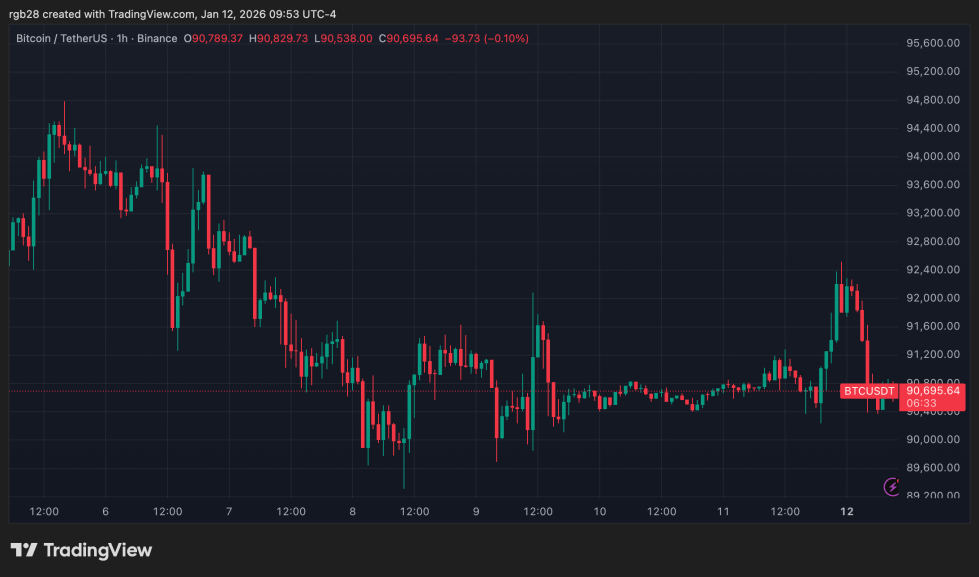
Bitcoin (BTC) trades at $90,695 in the one-week chart. Source: BTCUSDT on TradingView


Perguntas relacionadas

QWhat is Standard Chartered reportedly planning to launch in the crypto space?

AStandard Chartered is reportedly planning to launch a prime brokerage for cryptocurrency trading through its venture capital unit, SC Ventures.

QThrough which specific unit does Standard Chartered plan to launch its new crypto business?

AThe bank plans to launch the new crypto business within its venture capital (VC) unit, SC Ventures.

QWhat is the name of the joint venture Standard Chartered's VC unit is developing, and what services will it offer?

AThe joint venture is called Project37C, and it is set to offer custody, tokenization, and market access for digital assets.

QWhat is a key regulatory challenge for banks holding cryptocurrencies under the Basel III rules?

AUnder Basel III rules, banks face a punitive 1,250% risk charge for exposure to unbacked crypto assets like Bitcoin and Ether, which is a major capital burden.

QWhy might launching the crypto business through its VC unit be beneficial for Standard Chartered from a regulatory perspective?

ALaunching through the VC unit may help the bank circumvent the strict capital requirements for digital assets that apply to corporate and investment banks, as some VC investments face a lower 400% charge.

Leituras Relacionadas

You Bet on the News, the Pros Read the Rules: The True Cognitive Gap in Losing Money on Polymarket

The article explains that the key to profiting on Polymarket, a prediction market platform, lies not just predicting real-world events correctly, but in meticulously understanding the specific rules that govern how each market will be resolved. It illustrates this with examples, such as a market on Venezuela's 2026 leader, where the official rules defining "officially holds" the office overruled the intuitive answer of who was in practical control. Other examples include debates over the definition of a "token" or what constitutes an "agreement." The core argument is that a "reality vs. rules" gap creates pricing discrepancies that savvy traders ("车头" or "whales") exploit. The platform has a formal dispute resolution process managed by UMA token holders to settle ambiguous outcomes. This process involves proposal submission, a challenge window, a discussion period, and a final vote. However, the article highlights a critical flaw in this system compared to a traditional court: the lack of separation between the arbiters (UMA voters) and the interested parties (traders with financial stakes in the outcome). This conflict of interest undermines the discussion phase, leads to herd mentality, and results in opaque final decisions without explanatory rulings. Consequently, the system lacks a body of precedent, making it difficult for users to learn from past disputes. The ultimate takeaway is that success on Polymarket requires a lawyer-like scrutiny of the rules to identify and capitalize on the cognitive gap between how events appear and how they are contractually defined for settlement.

marsbitHá 27m

You Bet on the News, the Pros Read the Rules: The True Cognitive Gap in Losing Money on Polymarket

marsbitHá 27m

Will the Fed Still Cut Interest Rates? Tonight's Data Is Crucial

The core debate surrounding the Federal Reserve's potential interest rate cuts is intensifying amid geopolitical conflict and rebounding inflation. The key question is whether high energy prices will cause persistent inflation or weaken consumer demand enough to force the Fed to cut rates. Citigroup presents a bullish case for cuts, arguing that oil supply disruptions from the Strait of Hormuz are temporary and will not lead to lasting inflationary pressure. They point to receding bond yields and oil prices as evidence the market is pricing in a short-lived shock. Citi's data also shows tightening financial conditions, a stabilizing labor market, and healthy tax returns, supporting their view that the path to lower rates remains open. Conversely, Deutsche Bank offers a starkly contrasting, more hawkish outlook. They argue the Fed's current policy is already neutral and expect rates to remain unchanged indefinitely. Their view is based on stalled disinflation progress and a shift toward more hawkish rhetoric from key Fed officials like Waller, who cited risks from prolonged Middle East conflict and tariffs. Other officials, including Williams and Hammack, signaled rates would likely stay on hold for a "considerable time." The market pricing has shifted dramatically, now forecasting zero cuts in 2026. The imminent release of the March retail sales "control group" data is highlighted as a critical test. This metric, which excludes gas station sales, will reveal if high gasoline prices are eroding consumer spending in other areas. A weak reading could support the case for imminent rate cuts, while a strong one would bolster the argument for the Fed to hold steady. This data is pivotal for determining the near-term policy path.

marsbitHá 48m

Will the Fed Still Cut Interest Rates? Tonight's Data Is Crucial

marsbitHá 48m

Trading

Spot
Futuros
活动图片