Standard Chartered Bank’s 50-Fold Fantasy: Predicting AAVE to Reach $3,500

链捕手Publicado em 2026-06-25Última atualização em 2026-06-25

Resumo

Standard Chartered Bank has issued an optimistic research report predicting that the AAVE token could surge 50-fold to $3,500 by 2030. This forecast is based on the projection that the total value locked (TVL) in DeFi will grow 37x to approximately $2.7 trillion, driven by stablecoin expansion and the tokenization of real-world assets (RWA). The bank's model links Aave's potential valuation directly to its protocol revenue, which is primarily driven by net interest margins. The report highlights Aave's current dominant position, noting it captures over 80% of the net earnings ("protocol retained earnings") in the lending sector while holding only about half of its TVL. It also points to the recent launch of the Aave V4 architecture and a healthy revenue stream of $142 million in 2025 as positive fundamentals. Grayscale's separate analysis, applying traditional valuation metrics like DCF, concluded AAVE is currently undervalued. However, the article notes significant challenges. Aave's peer-to-pool lending model suffers from inherent capital inefficiency, with an estimated $52 million annual "deadweight loss" due to idle funds needed for liquidity buffers. This structural flaw was exposed during the April KelpDAO exploit, which locked a WETH pool at 100% utilization for days. Emerging protocols like Morpho, with more efficient point-to-point models, are cited as growing competitive threats. In summary, while institutional forecasts paint a macro picture of massive growth fu...

Author: Jae, PANews

Following its bullish call on UNI, Standard Chartered Bank has made another bold statement to the crypto industry: AAVE could surge 50-fold by the end of 2030, reaching $3,500.

Related reading:Standard Chartered Opens 40x "Bet," Calls for UNI to Rise to $100

Aggressive rhetoric, exaggerated multiples, coupled with a familiar script: AAVE’s price surged past $80, with 24-hour gains once approaching 20%. The on-chain lending market is in an uproar—some cheer the traditional giant’s bullish stance on AAVE, while others mock Standard Chartered as another sell-side entity carried away by hype.

Aave’s next battle will unfold at the intersection of fantasy and reality.

Standard Chartered Uses Excel to Draw a 50x "Candlestick" for AAVE

If one were to condense Standard Chartered’s AAVE research report into one sentence, it would be:Deposit scale determines lending capacity, lending capacity drives fee income, and fee income ultimately translates into token market capitalization. Over the past 12 months, approximately 90% of Aave’s fee revenue came from the net interest spread between deposits and loans.

The traditional valuation framework based on linear mapping logic has been directly applied by Standard Chartered to the lending protocol. According to its pricing model, AAVE will follow a stepwise upward trajectory.
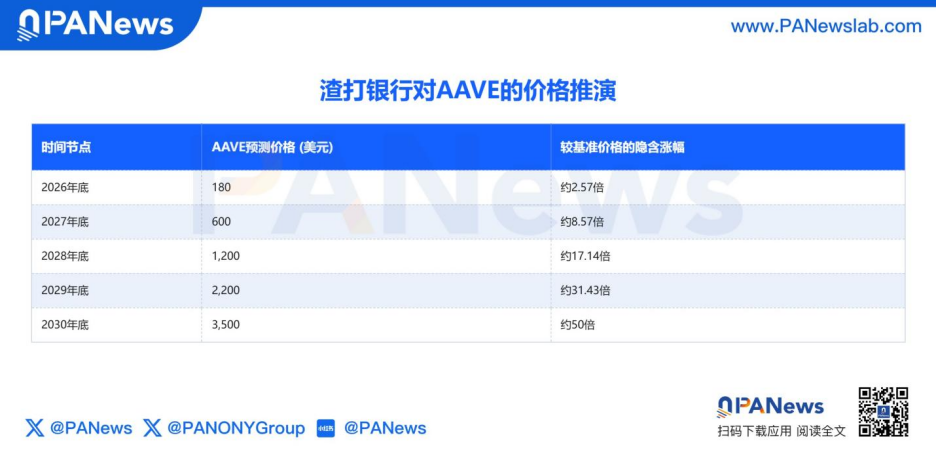
Standard Chartered’s assumptions stem from predictions about two major trends in the DeFi sector:

  • DeFi TVL (Total Value Locked) will grow 37-fold. Standard Chartered predicts that by 2030, the total value of active assets in DeFi will grow 37 times from current levels, reaching approximately $2.7 trillion. This will be driven by a $2 trillion expansion in stablecoin scale and the massive wave of on-chain migration of RWAs (Real World Assets).

  • RWA penetration in DeFi will increase from 3.5% to 30%. This means trillions of dollars in traditional assets will flow into on-chain lending protocols.

Looking back at its peak in October last year, Aave once managed deposits as high as $75 billion. If viewed as a traditional bank, this scale would place it among the top 35 banks in the United States.

Standard Chartered believes that Aave’s operational efficiency far surpasses that of traditional banks reliant on physical branches and redundant manpower. Once the tokenization wave arrives, Aave will leverage its Horizon permissioned lending market and the fee capture from its stablecoin GHO to convert the benefits of RWA on-chain into tangible protocol revenue.

Regarding the capital outflow triggered by the KelpDAO rsETH bridging security incident in April, Standard Chartered Bank characterizes it as a short-term fluctuation during the bottoming phase, not a collapse in the long-term protocol fundamentals.

Even setting aside the long-term narrative and focusing on a medium-to-short-term perspective, Aave’s fundamentals remain robust enough.

On June 18, Grayscale released an in-depth report on Aave, applying the traditional finance DCF (Discounted Cash Flow) model and P/E (Price-to-Earnings) ratio method to value a DeFi protocol for the first time.

Grayscale concluded:AAVE is a typical cash-flow-driven asset, currently trading at undervalued levels.
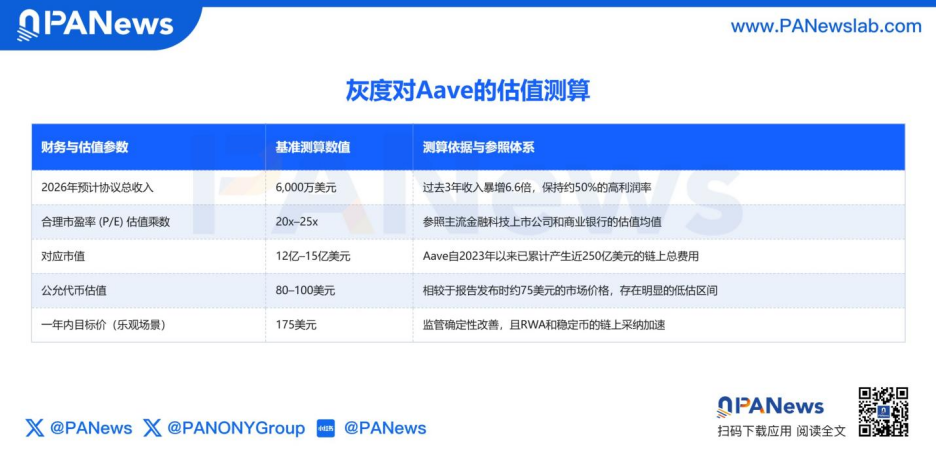
Grayscale emphasized that Aave’s full-year protocol revenue for 2025 was as high as $142 million, indicating healthy cash flow. More importantly, the token buyback and burn plan launched by Aave DAO in April last year, as well as the "Aave Will Win" proposal’s shift of product revenue to token holders, have institutionally established the transmission path from "protocol revenue generation → token value appreciation.”

Monopolizing 80% of Profits with Half the Sector's TVL, Idle Funds Remain Its Achilles' Heel

Beyond the macro vision painted by institutional capital, Aave has also built a deep moat at the micro level.

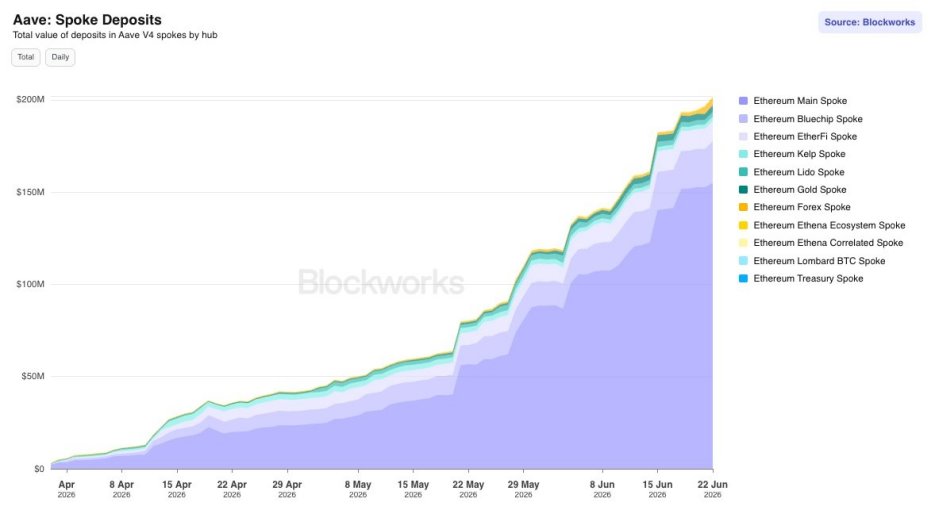
First, there is the breakthrough of the new-generation technical architecture, Aave V4. As the largest underlying architecture rewrite since the protocol’s inception in 2020, V4 employs a "liquidity hub-and-spoke" design to break the silo effect of single-chain liquidity. To date, V4’s total deposits have surpassed $200 million, with loan volumes nearing $60 million.
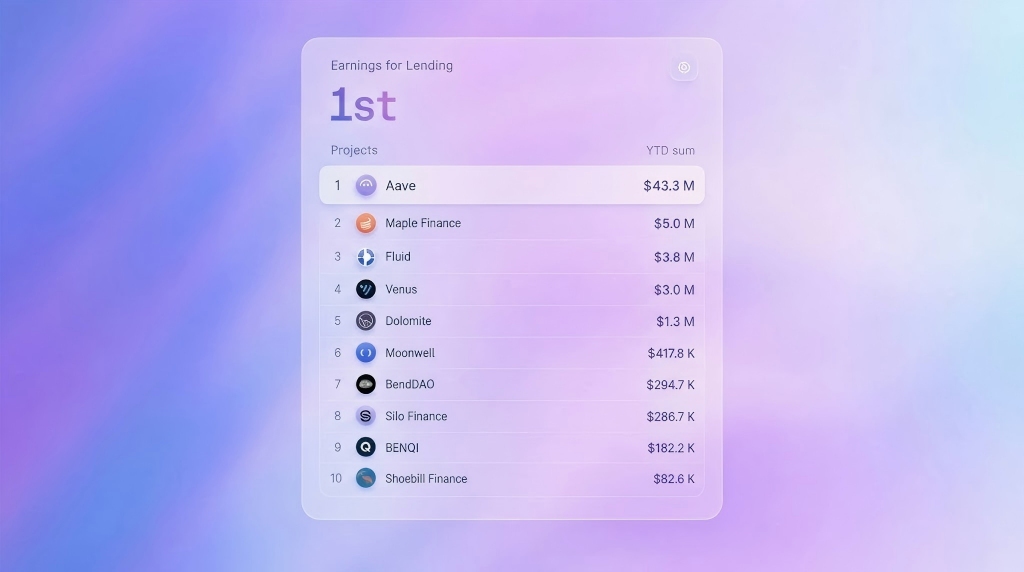
More remarkable is its profitability. On-chain data analytics firm MSB Intel pointed out that year-to-date, Aave has accumulated approximately $43.3 million in "protocol retained earnings" within the lending sector, accounting for 80.7% of the entire sector’s profits. Protocols like Maple Finance, Fluid, Venus, ranked behind it, each generating less than $5 million in profit, not on the same scale as Aave.

In the traditional business world, a company’s substance is often determined by net profit, not total assets. Retained earnings are an indicator that, after deducting relevant operational costs and token inflation incentives, truly reflects a protocol’s on-chain net revenue generation capability.

In other words, Aave uses roughly half of the sector’s TVL to capture over 80% of its net profit. This near-monopolistic profit structure is the hardest cornerstone in Standard Chartered’s 50-fold prediction.
On the flip side, the structural flaw once highlighted by crypto research firm Delphi Digital remains an unresolved challenge. The root of the problem lies within Aave’s peer-to-pool lending model.

According to Delphi Digital’s estimates, in the three primary markets of WETH, USDT, and USDC, Aave incurs an annual invisible loss (Deadweight Loss) of approximately $52 million due to idle funds, a scale almost equivalent to half of its annualized net revenue for Q1 2026.
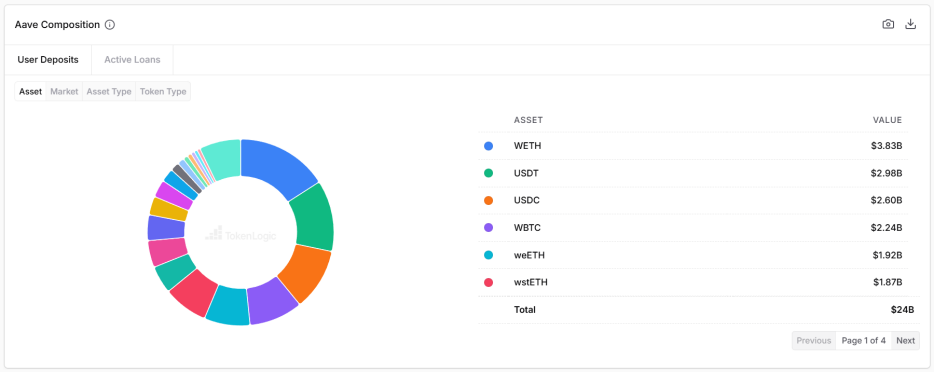
The systemic disconnect between deposit and borrowing rates is an inherent defect of the peer-to-pool model. To ensure depositors can redeem their funds at any time without loss, Aave must maintain a massive idle liquidity buffer within its pools. This results in depositors receiving rates typically 25% to 35% lower than what borrowers pay. The difference is the opportunity cost of idle funds. Even if the DAO governance layer sets the reserve factor to 0, the invisible loss from idle funds would still be as high as $36 million.

The KelpDAO incident in April further revealed the fragility of this model. After hackers drained nearly $200 million worth of WETH, the WETH pool utilization rate was locked at 100% for five days. Ordinary depositors could neither withdraw nor participate in liquidations, leaving a scar on Aave that has yet to fully heal.

This structural flaw makes Aave susceptible to "upstream risk" contagion. Coupled with the inherent shortcoming of low capital efficiency, it also gives latecomers an opportunity to break through. Emerging lending protocols like Morpho, focusing on modular isolation, peer-to-peer matching, and minimalist underlying design, are encroaching on Aave’s market share from an efficiency standpoint, becoming its most formidable challenger beneath the throne.

Looking back from the midpoint of 2026, Aave stands at the corner of fantasy and reality.

The "$3,500" pie chart drawn by Standard Chartered Bank reflects traditional finance’s ambition for asset tokenization. Beyond mere TVL growth, Aave’s future focus will be on finding a viable path to support a trillion-dollar asset scale.

The throne of DeFi lending remains, but the foundation beneath it still requires a process of reconstruction or reinforcement.


Criptomoedas em alta

Perguntas relacionadas

QWhat is Standard Chartered Bank's price target for AAVE by the end of 2030, and what multiple increase does this represent from its current price?

AStandard Chartered Bank's price target for AAVE by the end of 2030 is $3,500, which represents a 50-fold (or 5,000%) increase from its price at the time of the report.

QWhat are the two major DeFi trends that Standard Chartered's prediction for AAVE is based on?

AStandard Chartered's prediction is based on two major DeFi trends: 1) DeFi TVL (Total Value Locked) growing 37-fold to approximately $2.7 trillion by 2030, driven by stablecoin expansion and the tokenization of real-world assets (RWA). 2) The penetration rate of RWA in DeFi increasing from 3.5% to 30%.

QAccording to Grayscale's report, what makes AAVE a 'cash flow-driven asset', and what valuation methods did they apply?

AGrayscale's report states that AAVE is a cash flow-driven asset because it generated substantial protocol revenue of $142 million in 2025 and has mechanisms like token buyback/burn plans that link protocol earnings to token value. They applied traditional financial valuation methods, specifically the DCF (Discounted Cash Flow) model and P/E (Price-to-Earnings) ratio, to value the DeFi protocol.

QWhat is AAVE's key competitive advantage in terms of profitability within the lending sector, as highlighted by MSB Intel?

AAccording to MSB Intel, AAVE's key competitive advantage is its dominant profitability. Year-to-date, it has generated approximately $43.3 million in 'Protocol Retained Earnings', accounting for 80.7% of the entire lending sector's profits, despite holding only about half of the sector's TVL.

QWhat is the fundamental structural flaw in Aave's peer-to-pool lending model identified by Delphi Digital, and what is its consequence?

AThe fundamental structural flaw identified by Delphi Digital is the systemic disconnect between deposit and borrowing rates, necessitating a large idle liquidity buffer in the pool. This leads to significant 'deadweight loss' or opportunity cost, estimated at $52 million annually for major markets, representing low capital efficiency. A consequence of this model was evident during the KelpDAO hack, where the WETH pool was locked at 100% utilization for days, preventing user withdrawals.

Leituras Relacionadas

STRC 跌破面值,比特币财库实验进入下半场

The price of STRC, Strategy's dividend-paying preferred stock, has fallen below its $100 face value, triggering a re-evaluation of the "bitcoin treasury" corporate model. This highlights a critical tension: the company's asset base consists of high-volatility, non-cash-flow-generating Bitcoin, while its capital structure requires continuous cash payouts for dividends and interest. The decline of STRC signals that market pressure is shifting from asset price volatility to the pricing of the company's financing tools. Strategy's core model involves a three-step conversion: turning equity into Bitcoin exposure, converting Bitcoin holdings into capital market credit, and packaging non-yielding BTC into cash-paying securities like STRC. While Strategy holds a massive 847,363 BTC, the focus is now on cash flow mismatches. The company faces annual preferred stock dividend obligations of approximately $1.7 billion, far exceeding the cash flow from its legacy software business. Its ability to meet these obligations relies on continued access to capital markets. The market is now scrutinizing which of three potential costs becomes untenable first: rising dividend costs to attract investors, dilution costs from issuing more common stock, or the reputational cost of selling BTC—a move contrary to its "hodl" narrative. For the broader crypto market, a constrained Strategy means the potential loss of a predictable, narrative-driven marginal buyer for Bitcoin. The STRC discount serves as a reminder that the longevity of such models depends not just on Bitcoin's price, but also on financing windows, cash reserves, and investor willingness to pay a "trust premium" for the structure.

marsbitHá 7m

STRC 跌破面值,比特币财库实验进入下半场

marsbitHá 7m

Tidal Investment: We Remain Bullish on the AI Industry Chain, But the Reasons Have Changed

Tidal Investment remains optimistic about the AI industry chain, but the rationale has shifted. The market narrative has changed. While recent large-scale IPOs (e.g., SpaceX) and major fundraising plans by tech giants like Alphabet and Meta have caused some nervousness, this isn't a sign of an AI peak. The focus has moved from the initial question of AI's viability to the sustainability of massive investment cycles. The key players—primarily the major cloud providers—are not slowing down; their capital expenditure (Capex) guidance for 2026 has been increased across the board (e.g., Alphabet to $180B, Amazon to $200B). This investment cycle is proving resilient and difficult to stop. Unlike traditional hardware cycles, current AI Capex is distributed across multiple physical layers—computing, memory, networking, and critically, power infrastructure. Bottlenecks are shifting from chips to elements like electricity, transformers, and cooling systems, which have much longer lead times and cannot be easily pre-built like fiber optics during the dot-com bubble. Supply chain data (e.g., Eaton's 240% YoY data center orders) confirms this broad-based, project-driven expansion. Market concerns are acknowledged but viewed differently. First, while Capex growth currently outpaces revenue growth, raising ROI questions, this mirrors the early scaling phase of cloud computing itself. A change in view would require concrete signals like downward Capex revisions or missed AI product targets, which haven't materialized by mid-2026. Second, comparisons to the 2000 dot-com bust are flawed. That crash was driven by a massive, parallel oversupply of cheap capacity (fiber). The current cycle faces *supply constraints* in critical, capital-intensive physical infrastructure that cannot be overbuilt as easily. In conclusion, the wave of fundraising reflects the next, more complex act of the AI story. Physical bottlenecks and sustained high Capex plans suggest this is not the finale but an ongoing, capital-intensive build-out phase. The script has changed, but the play is far from over.

marsbitHá 2h

Tidal Investment: We Remain Bullish on the AI Industry Chain, But the Reasons Have Changed

marsbitHá 2h

Tidal Investment: We Remain Bullish on the AI Industry Chain, But for Different Reasons Now

Tidal Investments remains optimistic about the AI industry chain, but the rationale has shifted. The market is concerned about massive concurrent fundraising by tech giants like SpaceX, OpenAI, Alphabet, and Meta, fearing an AI peak. However, the authors argue this signals the next act of AI development, not its end. Capital expenditure (Capex) from major cloud providers (Alphabet, Amazon, Meta, Microsoft, Oracle) continues to surge aggressively into 2026. This investment cycle is more resilient than past hardware cycles due to its scale and complexity. Bottlenecks have shifted from chips to critical physical infrastructure like power grids, transformers, cooling, and data center construction—areas with long lead times and limited capacity for rapid expansion. Supply chain data (e.g., Eaton's orders) confirms substantial, tangible progress. Key market concerns are addressed: 1. **ROI vs. Capex Growth**: While Capex growth outpaces revenue, the authors note cloud giants have historically overcome similar phases through scale. The cycle will only be in danger if Capex guidance is cut, orders are canceled, or AI product demand falters—none of which are currently observed. 2. **Comparison to the 2000 Dot-com Bubble**: Unlike the telecom bubble, where cheap, oversupplied fiber crashed prices, AI infrastructure (especially power) is constrained, customized, and subject to lengthy approvals, making a similar supply glut and crash unlikely. In conclusion, the wave of fundraising reflects the immense, ongoing capital needs for AI's next phase, constrained by slow-moving physical bottlenecks. The AI cycle is not over; the script has simply changed.

链捕手Há 2h

Tidal Investment: We Remain Bullish on the AI Industry Chain, But for Different Reasons Now

链捕手Há 2h

Grayscale: These 15 Profitable Crypto Protocols Are Severely Undervalued

Grayscale Research identifies 15 top-revenue crypto protocols trading at significant valuation discounts, with many at single-digit or even 1x revenue multiples. Protocols like Pump.fun, PancakeSwap, and Meteora have market capitalizations roughly equal to their annual revenue. The report argues these financially-focused protocols (DEXs, lending, staking) are fundamentally undervalued and could benefit from the potential passage of the CLARITY Act, expected as soon as next month. This legislation aims to clarify digital asset regulation, potentially reducing institutional barriers and driving on-chain activity. The analysis breaks down the protocols into three groups: the "1x Club" (market cap ≈ revenue), mid-tier protocols with 3-9x multiples (e.g., Aave, Lido, Jupiter), and high-multiple protocols like Hyperliquid (15x) and Uniswap (37x), where valuation reflects future potential rather than current cash flows. Grayscale applies a traditional DCF model to Aave, suggesting a one-year price target of ~$175, representing ~130% upside from current levels. The report notes a risk-off macro environment since the Iran conflict has further compressed valuations, creating a potential entry window. The conclusion highlights that while the valuation data presents an intriguing opportunity, the investment thesis is contingent on the CLARITY Act's passage and subsequent institutional capital flows. Investors are cautioned to consider Grayscale's inherent conflict of interest as a crypto asset manager with products tied to these assets.

marsbitHá 2h

Grayscale: These 15 Profitable Crypto Protocols Are Severely Undervalued

marsbitHá 2h

Trading

Spot
Futuros

Artigos em Destaque

O que é $BANK

Bank AI: Um Passo Revolucionário no Futuro da Banca Introdução Em uma era marcada por avanços rápidos na tecnologia, o Bank AI está na interseção da inteligência artificial (IA) e dos serviços bancários. Este projeto inovador visa redefinir o panorama financeiro, melhorando a eficiência operacional, as medidas de segurança e as experiências dos clientes através do poder da IA. Ao embarcarmos nesta exploração do Bank AI, iremos aprofundar no que o projeto implica, suas dinâmicas operacionais, seu contexto histórico e marcos significativos. O que é o Bank AI? No seu cerne, o Bank AI representa uma iniciativa transformadora com o objetivo de integrar a inteligência artificial em várias operações bancárias. Este projeto aproveita as capacidades da IA para automatizar processos, melhorar os protocolos de gestão de risco e melhorar a interação com os clientes através de serviços personalizados. Os principais objetivos do Bank AI incluem: Automatização das Funções Bancárias: Ao aproveitar as tecnologias de IA, o Bank AI visa automatizar tarefas rotineiras, reduzindo o peso sobre os recursos humanos e aumentando a eficiência. Gestão de Risco Melhorada: O projeto utiliza algoritmos de IA para prever e identificar riscos, fortalecendo assim as medidas de segurança contra fraudes e outras ameaças. Personalização dos Serviços Bancários: O Bank AI foca em oferecer produtos e serviços financeiros ajustados, analisando dados e comportamentos dos clientes. Melhoria da Experiência do Cliente: A implementação de soluções impulsionadas por IA, como chatbots e assistentes virtuais, visa proporcionar aos usuários interações mais humanizadas, revolucionando a forma como os clientes se envolvem com os bancos. Com esses objetivos, o Bank AI posiciona-se como um ator crucial para tornar a banca mais eficiente, segura e centrada no usuário. Quem é o Criador do Bank AI? Os detalhes sobre o criador do Bank AI permanecem desconhecidos. Assim, nenhuma pessoa ou organização específica foi identificada nas informações disponíveis. O anonimato que cerca a origem do projeto levanta questões, mas não diminui a sua ambiciosa visão e objetivos. Quem são os Investidores do Bank AI? Semelhante ao criador do projeto, informações específicas sobre os investidores ou organizações que apoiam o Bank AI não foram divulgadas. Sem essas informações, é difícil delinear o apoio financeiro e institucional que pode estar impulsionando o projeto para frente. No entanto, a importância de ter uma sólida base de investimento é fundamental para sustentar o desenvolvimento em um campo tão inovador. Como Funciona o Bank AI? O Bank AI opera em várias frentes inovadoras, focando em fatores únicos que o diferenciam das estruturas bancárias tradicionais. Abaixo estão as principais características operacionais: Automatização: Ao aplicar algoritmos de aprendizado de máquina, o Bank AI automatiza vários processos manuais dentro dos bancos. Isso resulta na redução dos custos operacionais e permite que os trabalhadores humanos redirecionem os seus esforços para atividades mais estratégicas. Gestão de Risco Avançada: A integração da IA nas práticas de gestão de risco equipa os bancos com ferramentas para prever com precisão potenciais ameaças, como fraudes, garantindo que as informações e ativos dos clientes permaneçam seguros. Recomendações Financeiras Personalizadas: Através do aprendizado contínuo a partir das interações com os clientes, os sistemas de IA desenvolvem uma compreensão sutil das necessidades dos usuários, permitindo oferecer conselhos adaptados sobre decisões financeiras. Interações Melhoradas com os Clientes: Utilizando chatbots e assistentes virtuais alimentados por IA, o Bank AI permite uma experiência de cliente mais envolvente, permitindo que os usuários tenham suas dúvidas resolvidas rapidamente, reduzindo assim os tempos de espera e melhorando os níveis de satisfação. Juntas, estas características operacionais posicionam o Bank AI como um pioneiro no setor bancário, estabelecendo novos padrões para a prestação de serviços e a excelência operacional. Cronologia do Bank AI Compreender a trajetória do Bank AI requer uma análise do seu contexto histórico. Abaixo está uma cronologia que destaca marcos e desenvolvimentos importantes: Início de 2010: A conceituação da integração da IA nos serviços bancários começou a ganhar atenção à medida que instituições bancárias reconheciam os potenciais benefícios. 2018: Ocorreu um aumento significativo na implementação de tecnologias de IA, quando os bancos começaram a usar ferramentas de IA como chatbots para atendimento ao cliente básico e sistemas de gestão de risco para melhorar o tratamento de segurança. 2023: A sofisticação da IA continuou a avançar, com a introdução de IA generativa para tarefas mais complexas, como processamento de documentos e análise de investimentos em tempo real. Este ano marcou um salto significativo nas capacidades proporcionadas aos bancos pela tecnologia de IA. 2024-Estado Atual: Neste ano, o Bank AI está em uma trajetória ascendente, com pesquisas e desenvolvimentos em andamento prontos para aprimorar ainda mais as capacidades nas operações bancárias. A exploração contínua das aplicações de IA sugere desenvolvimentos emocionantes por vir. Pontos Chave Sobre o Bank AI Integração da IA na Banca: O Bank AI foca na adoção da inteligência artificial para simplificar os processos bancários e melhorar as experiências dos usuários. Automatização e Foco em Gestão de Risco: O projeto enfatiza fortemente essas áreas, visando transferir o peso das tarefas rotineiras enquanto melhora as estruturas de segurança através de análises preditivas. Soluções Bancárias Personalizadas: Ao aproveitar os dados dos clientes, o Bank AI possibilita serviços bancários ajustados que atendem às necessidades individuais dos usuários. Compromisso com o Desenvolvimento: O Bank AI permanece comprometido com contínuas pesquisas e esforços de desenvolvimento, garantindo a sua adaptabilidade e relevância contínua à medida que a tecnologia continua a evoluir. Conclusão Em resumo, o Bank AI exemplifica um passo crucial em frente na indústria bancária, aproveitando a inteligência artificial para remodelar paradigmas operacionais, melhorar a segurança e promover a satisfação do cliente. Apesar das lacunas de informação em torno do criador e dos investidores, os objetivos claros e os mecanismos funcionais do Bank AI fornecem uma base sólida para sua evolução contínua. À medida que a tecnologia de IA continua a avançar e se fundir com o setor bancário, o Bank AI está bem posicionado para impactar significativamente o futuro dos serviços financeiros, aprimorando a maneira como entendemos e interagimos com a banca.

54 Visualizações TotaisPublicado em {updateTime}Atualizado em 2024.12.03

O que é $BANK

Como comprar BANK

Bem-vindo à HTX.com!Tornámos a compra de Lorenzo Protocol (BANK) simples e conveniente.Segue o nosso guia passo a passo para iniciar a tua jornada no mundo das criptos.Passo 1: cria a tua conta HTXUtiliza o teu e-mail ou número de telefone para te inscreveres numa conta gratuita na HTX.Desfruta de um processo de inscrição sem complicações e desbloqueia todas as funcionalidades.Obter a minha contaPasso 2: vai para Comprar Cripto e escolhe o teu método de pagamentoCartão de crédito/débito: usa o teu visa ou mastercard para comprar Lorenzo Protocol (BANK) instantaneamente.Saldo: usa os fundos da tua conta HTX para transacionar sem problemas.Terceiros: adicionamos métodos de pagamento populares, como Google Pay e Apple Pay, para aumentar a conveniência.P2P: transaciona diretamente com outros utilizadores na HTX.Mercado de balcão (OTC): oferecemos serviços personalizados e taxas de câmbio competitivas para os traders.Passo 3: armazena teu Lorenzo Protocol (BANK)Depois de comprar o teu Lorenzo Protocol (BANK), armazena-o na tua conta HTX.Alternativamente, podes enviá-lo para outro lugar através de transferência blockchain ou usá-lo para transacionar outras criptomoedas.Passo 4: transaciona Lorenzo Protocol (BANK)Transaciona facilmente Lorenzo Protocol (BANK) no mercado à vista da HTX.Acede simplesmente à tua conta, seleciona o teu par de trading, executa as tuas transações e monitoriza em tempo real.Oferecemos uma experiência de fácil utilização tanto para principiantes como para traders experientes.

404 Visualizações TotaisPublicado em {updateTime}Atualizado em 2026.06.02

Como comprar BANK

Discussões

Bem-vindo à Comunidade HTX. Aqui, pode manter-se informado sobre os mais recentes desenvolvimentos da plataforma e obter acesso a análises profissionais de mercado. As opiniões dos utilizadores sobre o preço de BANK (BANK) são apresentadas abaixo.

活动图片