Stablecoins could reach $1.5 quadrillion by 2035 – Here’s how

ambcryptoPublicado em 2026-04-09Última atualização em 2026-04-09

Resumo

Stablecoin usage has surged over the past decade, with significant growth accelerated by the passage of the GENIUS Act in 2025, pushing the stablecoin value to $319 billion. According to Chainalysis, adjusted volume rose 133% from 2023 to reach $28 trillion in 2025, with monthly volume hitting a record $7.2 trillion—surpassing major traditional payment channels like U.S. ACH and Visa. Transaction volume exceeded 8.1 trillion through March 2026, and active addresses grew to 51.6 million. Chainalysis projects that, if current growth continues, stablecoin volume could exceed $1.5 quadrillion by 2035, driven by generational wealth transfers ($80–100 trillion moving to crypto-friendly younger generations) and point-of-sale adoption. This would surpass the estimated $1 quadrillion in global cross-border payments. Further adoption, including real-world asset tokenization and supportive legislation like the Clarity Act, could accelerate this trajectory.

Stablecoin usage has surged over the past decade with rising adoption and mainstream acceptance. The passage of the GENIUS Act by the U.S. Congress in 2025 accelerated this growth, pushing stablecoin value to $319 billion.

This global financial shift is driving the integration of traditional and decentralized finance, with stablecoins at the center of market transformation and projected to outpace traditional finance.

Stablecoin monthly volume hits $7.2T

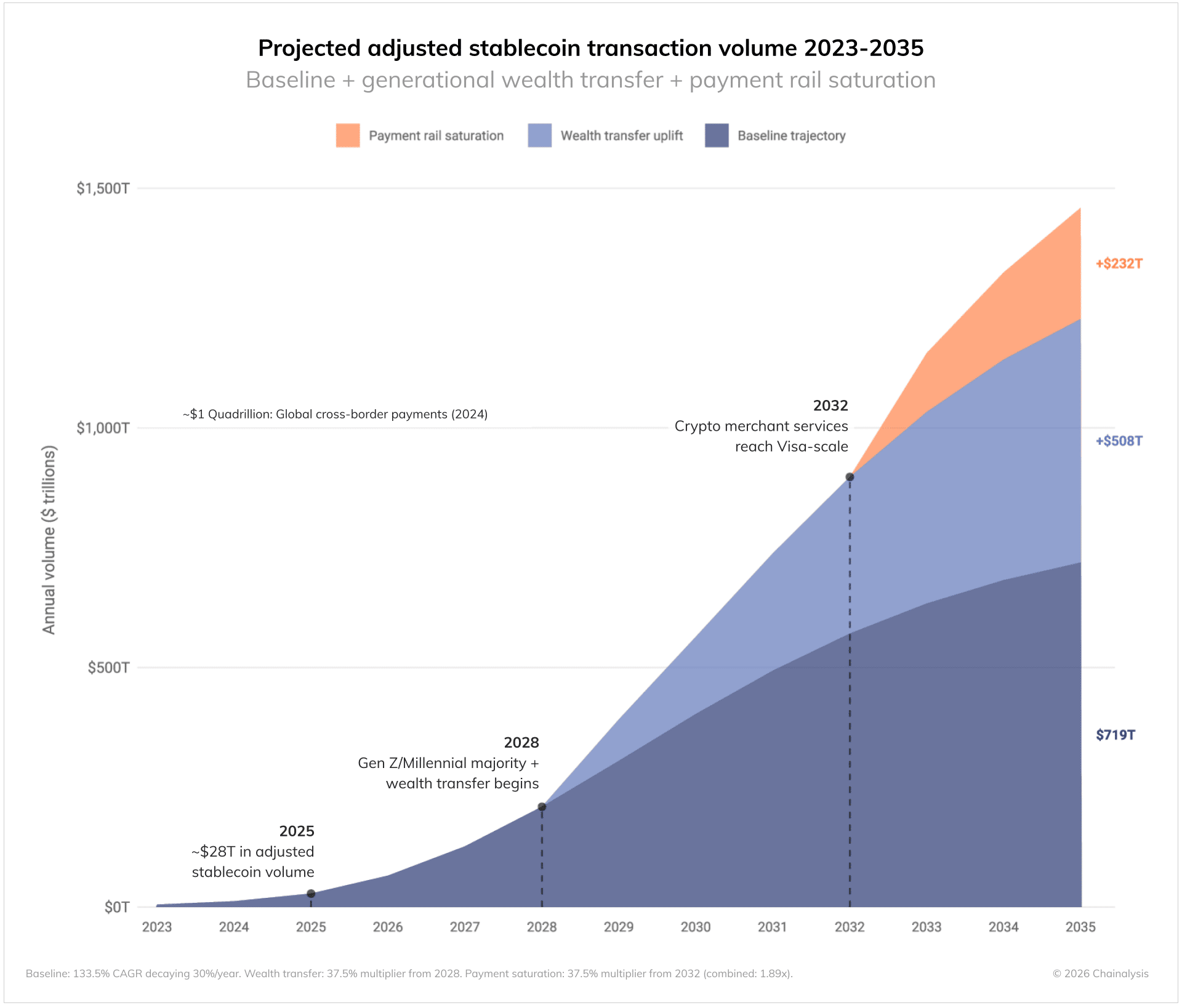
According to the Chainalysis report, Stablecoin Adjusted Volume rose 133% from 2023 to hit $28 trillion in 2025. This showed extensive growth in the economic value of stablecoins.
Source: Chainalysis

At press time, monthly volume reached a historical high of $7.2 trillion, surpassing major traditional payment channels such as U.S. ACH and Visa.

The growth has indicated the extensive usage of stablecoin in everyday life across all walks of life. In fact, Artemis data showed that both transactions and addresses have also risen significantly.
Source: Artemis

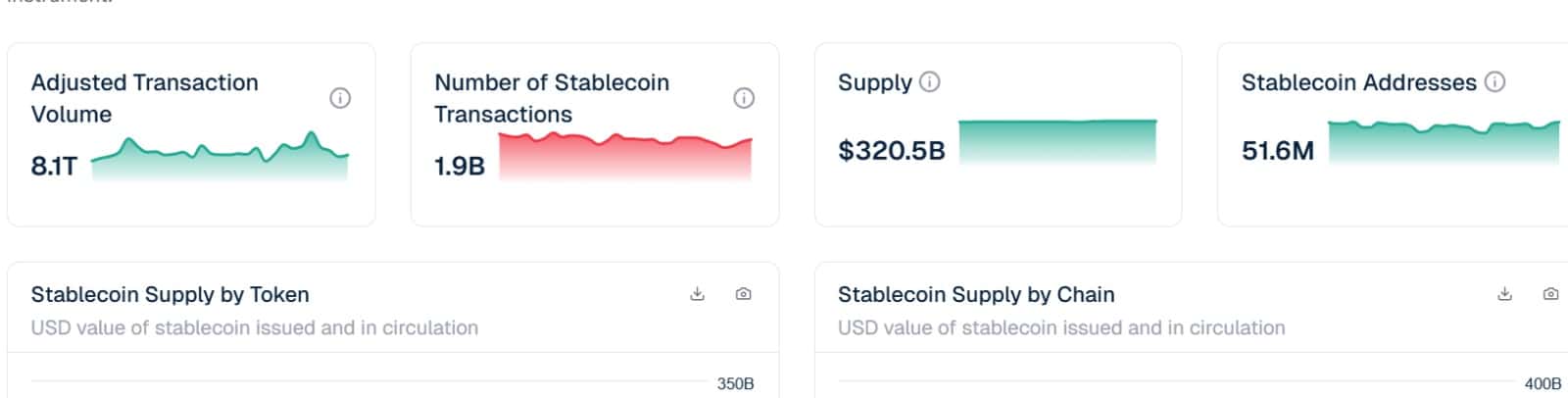
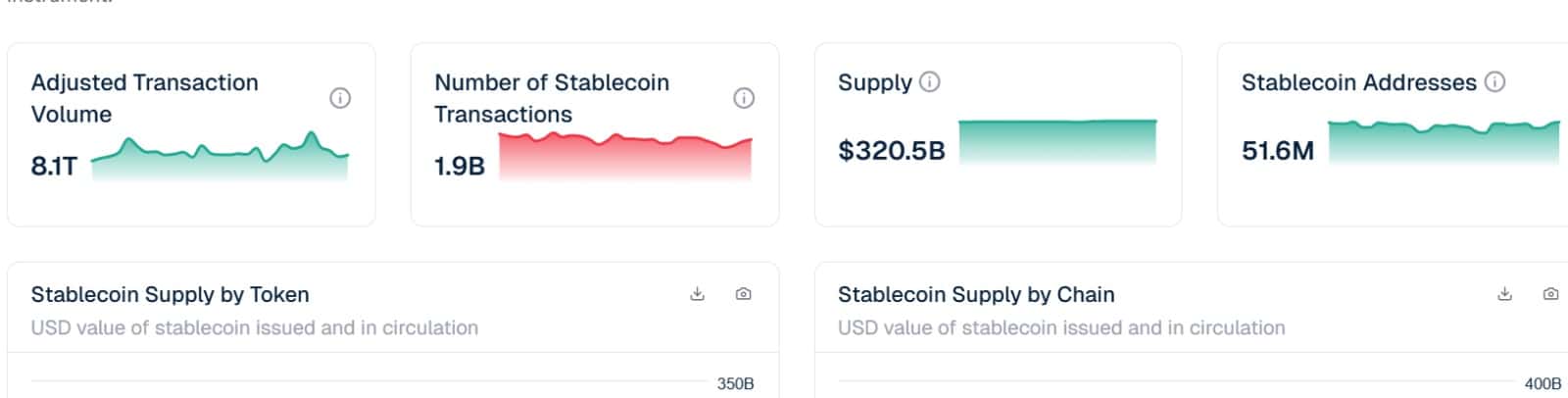
Adjusted Transaction Volume exceeded 8.1 trillion through March 2026, with the number of transactions nearing 2 trillion. At the same time, Stablecoin Addresses have surged to 51.6 million over the last 30 days, reflecting this sustained usage.

Usage to surpass $1.5 quadrillion by 2035

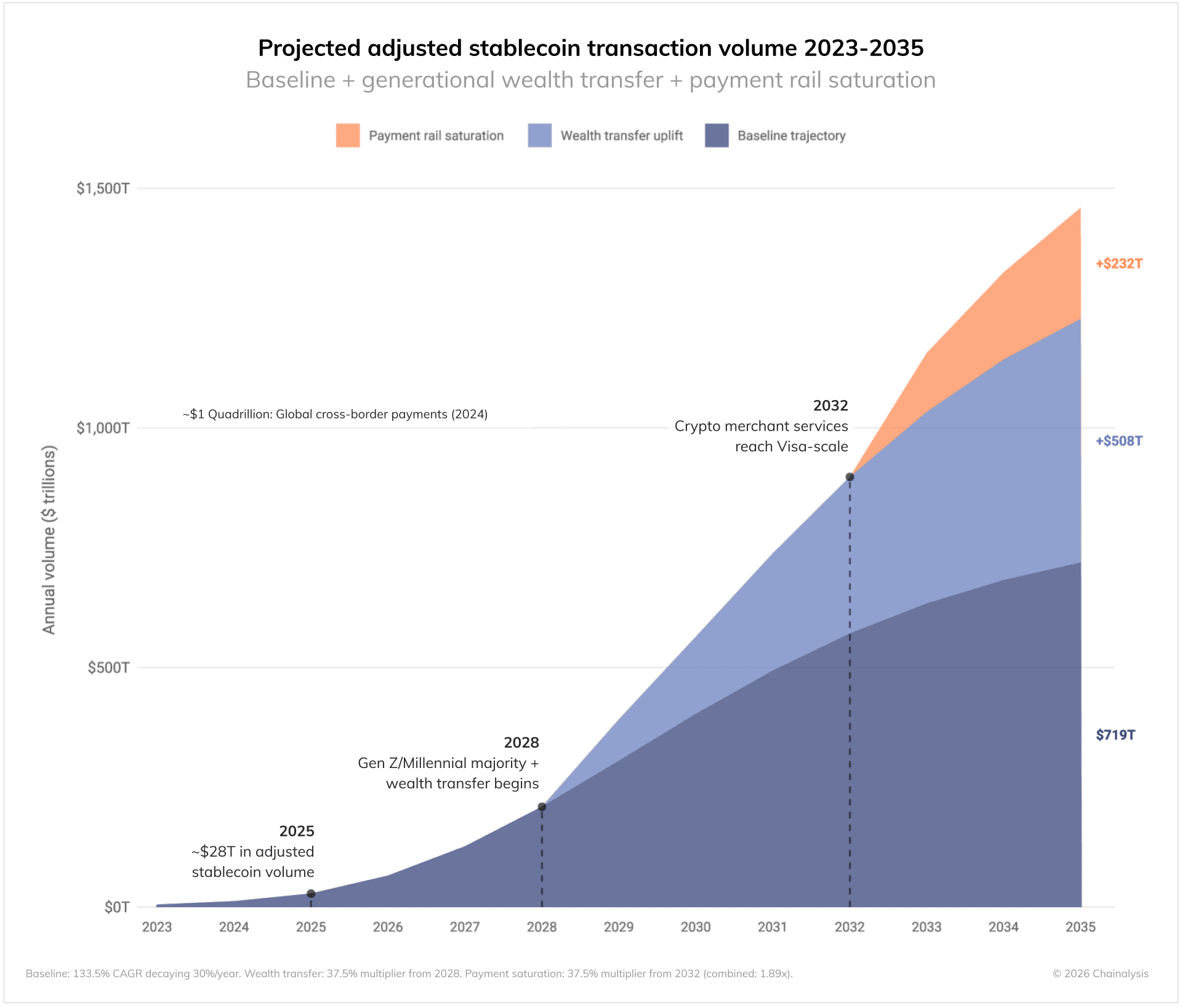
Chainalysis projects that if current growth continues, stablecoin volume could exceed $719 trillion by 2035. Notably, two key drivers are generational wealth transfers and point‐of‐sale adoption. Between $80 and $100 trillion in wealth is expected to move from boomers to millennials and Gen Z, nearly half of whom already hold crypto.

This transition alone could add more than $508 trillion in stablecoin transaction volume. At the same time, stablecoins may become default payment systems, further accelerating growth. Together, these forces could push stablecoin volume to $1.5 quadrillion by 2035, surpassing the estimated $1 quadrillion in global cross‐border payments.
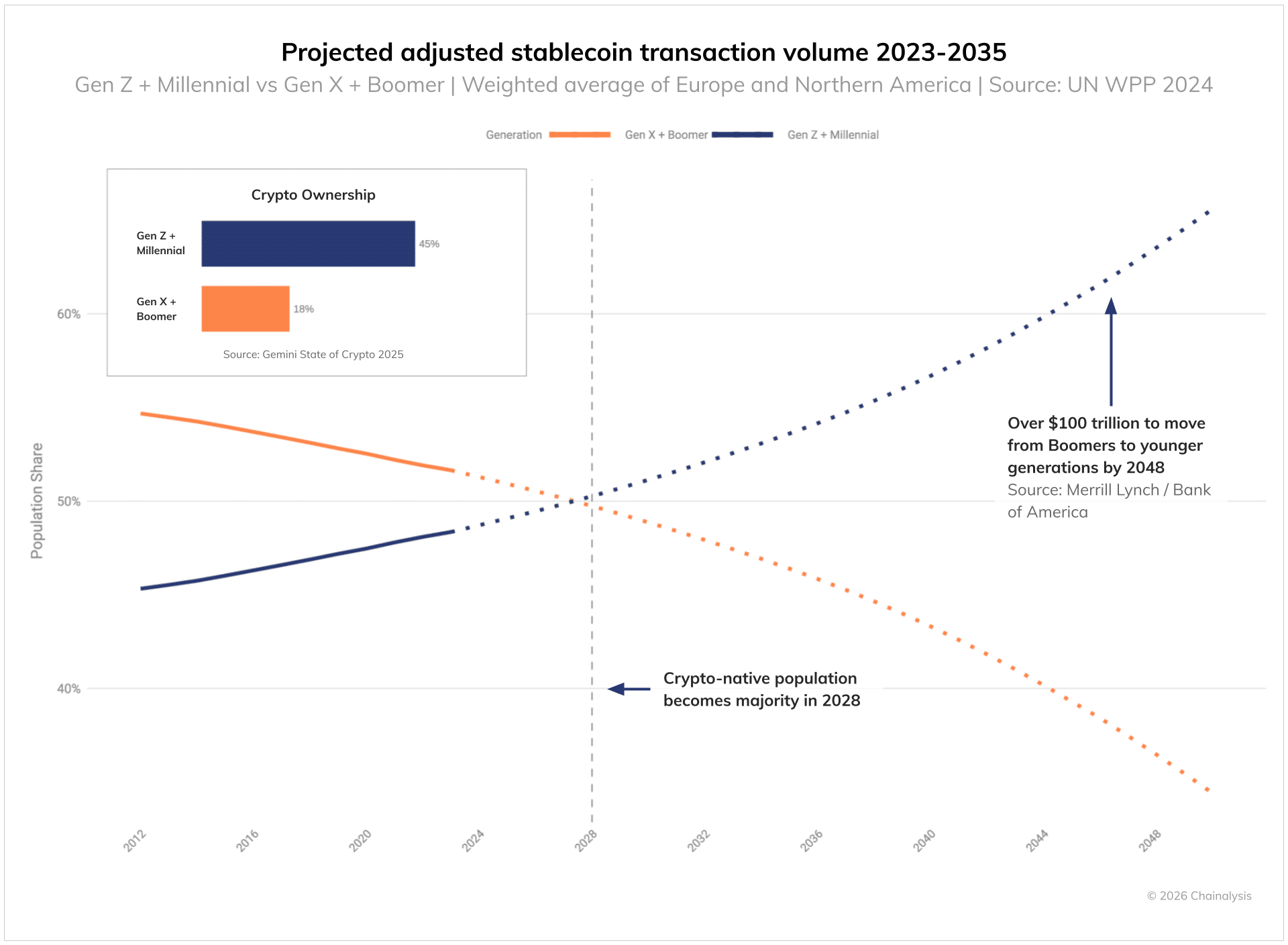
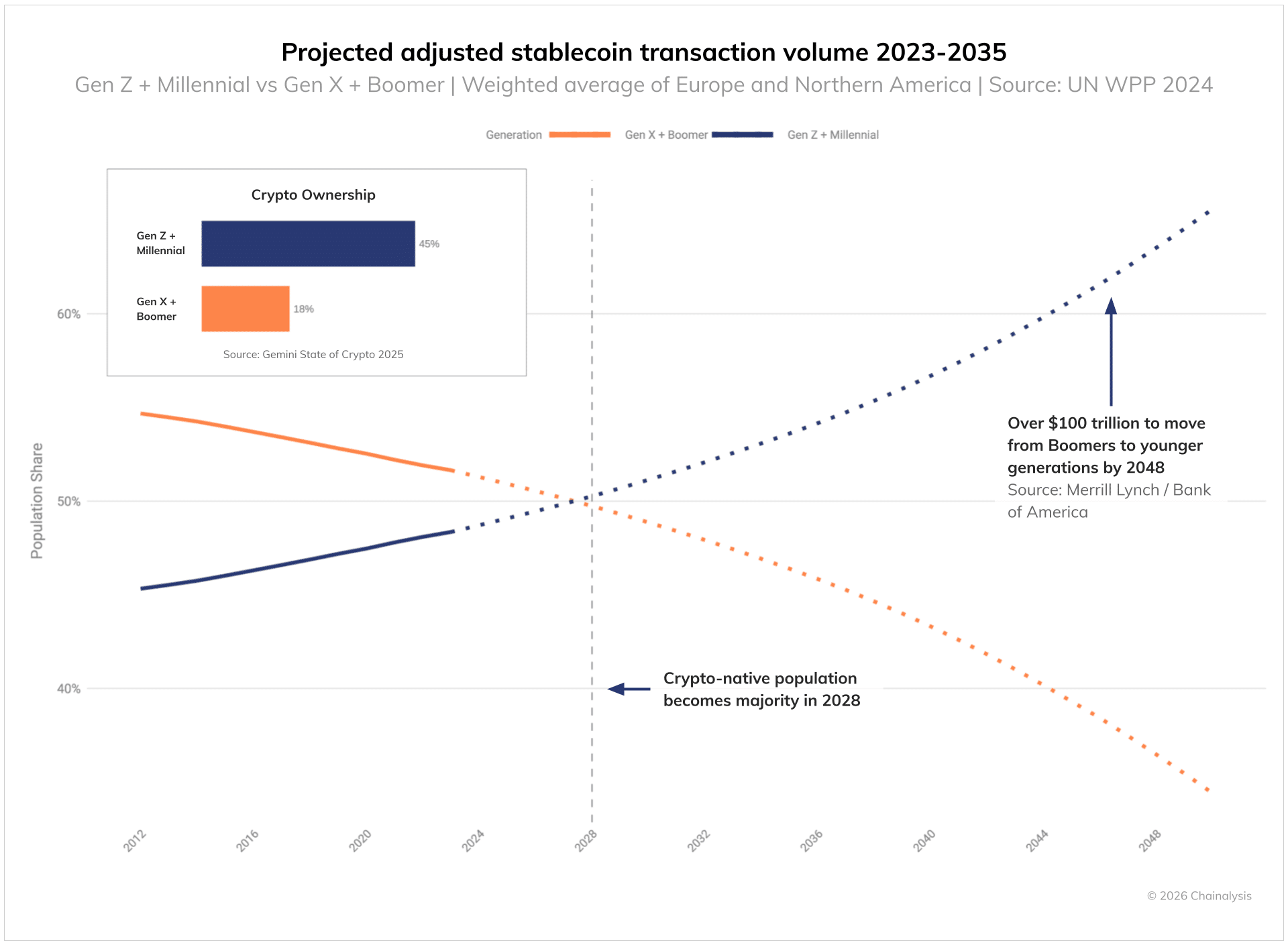
Source: Chainalysis

Even more importantly, intergenerational wealth transfers and shifts in payment infrastructure could accelerate adoption. This will see a surge in real-world asset tokenization, prediction markets, and other TradFi-to-crypto products.

Institutions and other players in TradFi will be left at a crossroads: either fully embrace crypto or see assets migrate. As many users continue to adopt stablecoin, the growth is barely starting.

Finally, if the Clarity Act, currently stalled in the U.S. Senate, is passed, stablecoins will gain a clearer growth path.


Final Summary

  • Stablecoin Adjusted Volume rose 133% from 2023 to hit $28 trillion in 2025, with a monthly volume of $7.2 trillion.
  • Stablecoin volume is projected to hit $1.5 quadrillion by 2035, surpassing the estimated $1 quadrillion in global cross-payments


Perguntas relacionadas

QWhat was the percentage increase in Stablecoin Adjusted Volume from 2023 to 2025, and what was the total value reached in 2025?

AStablecoin Adjusted Volume rose 133% from 2023 to hit $28 trillion in 2025.

QWhat is the projected total stablecoin transaction volume by 2035, and how does it compare to the estimated value of global cross-border payments?

AStablecoin volume is projected to reach $1.5 quadrillion by 2035, surpassing the estimated $1 quadrillion in global cross-border payments.

QWhat are the two key drivers identified by Chainalysis that could push stablecoin volume to $1.5 quadrillion by 2035?

AThe two key drivers are generational wealth transfers (from boomers to millennials and Gen Z) and the adoption of stablecoins as a default payment system at the point-of-sale.

QWhat recent U.S. legislation is credited with accelerating the growth of stablecoins, and what is the name of the act currently stalled in the Senate that could provide further clarity?

AThe GENIUS Act, passed by the U.S. Congress in 2025, accelerated stablecoin growth. The Clarity Act is currently stalled in the U.S. Senate and could provide a clearer growth path if passed.

QWhat does the article state about the current monthly stablecoin volume compared to traditional payment channels like U.S. ACH and Visa?

AAt press time, the monthly stablecoin volume reached a historical high of $7.2 trillion, surpassing major traditional payment channels such as U.S. ACH and Visa.

Leituras Relacionadas

iQiyi Is Too Impatient

The article "iQiyi Is Too Impatient" discusses the controversy surrounding the Chinese streaming platform IQiyi's recent announcement of an "AI Actor Library" during its 2026 World Conference. IQiyi claimed over 100 actors, including well-known names like Zhang Ruoyun and Yu Hewei, had joined the initiative. CEO Gong Yu suggested AI could enable actors to "star in 14 dramas a year instead of 4" and that "live-action filming might become a world cultural heritage." The announcement quickly sparked backlash. Multiple actors named in the list issued urgent statements denying they had signed any AI-related authorization agreements. This forced IQiyi to clarify that inclusion in the library only indicated a willingness to *consider* AI projects, with separate negotiations required for any specific role. The incident, which trended on social media with hashtags like "IQiyi is crazy," is presented as a sign of the company's growing desperation. Facing intense competition from short-video platforms like Douyin and Kuaishou, as well as Bilibili and Xiaohongshu, IQiyi's financial performance has weakened, with revenues declining for two consecutive years. The author argues that IQiyi is "too impatient" to tell a compelling AI story to reassure the market, especially as it pursues a listing on the Hong Kong stock exchange. The piece concludes by outlining three key "AI questions" IQiyi must answer: defining its role as a tool provider versus a content creator, balancing the "coldness" of AI with the human element audiences desire, and properly managing the interests of platforms, actors, and viewers. The core dilemma is that while AI can reduce costs and increase efficiency, it risks creating homogenized, formulaic content and devaluing human performers.

marsbitHá 52m

iQiyi Is Too Impatient

marsbitHá 52m

Trading

Spot
Futuros
活动图片